
October 12, 2026
EP. 47 Nick Jonsson on Executive Loneliness: 5 Pathways to Recovery from Isolation, Burnout & Stress
Listen
Sound bites
What you want is you want to be healthy.
It's about cleaning up our side of the street, making amends and setting things right.
In this episode
Nick Jonsson joins Stuart Cline to discuss executive loneliness, recovery, and his five pathways for moving from isolation and burnout toward purpose.
- Writing the book after losing a friend to suicide and while in his own recovery.
- Taking stock by honestly checking habits, stress, and what is no longer serving you.
- Asking for help in safe spaces first, then widening the circle as trust grows.
- Getting healthy through movement, better habits, sunlight, and fresh air.
- Repairing close relationships before digging into purpose and meaning.
Transcript
ShowHide
Automatic captions of the conversation. They can contain errors and do not name who is speaking.
Welcome back to Sobriety... Now What? I'm your host, Stuart Cline, and today, I'm sharing a shorter conversation with Nick Jonsson, author of the number one international bestseller, Executive Loneliness, the 5 Pathways to Overcoming Isolation, Stress, Anxiety and Depression in the modern business world. Nick and I connected online. He was in Thailand, I was here in New Mexico, and technical issues cut our time short. What we were able to salvage is roughly eight minutes, but it's packed with practical insight. Nick decided to write the book in 2019 after losing a friend to suicide.
While he was about a year into his own recovery, he walks through his five pathways, taking stock, asking for help, getting healthy, nurturing healthy relationships, and finding your purpose. He also touches on burnout, the cost of strained relationships, and how purpose often emerges once the basics are in place. He also shares how he found his own purpose. Even as a shorter episode, I believe this can give you the useful direction around loneliness, isolation, and building a life with more purpose, passion and meaning.
Let's get into it. When did you decide to write a book? I decided in 2019 as I lost a friend of mine to suicide. That's when I decided to write the book. Until then, I was living one year sober, one year in my own recovery. With that, that was basically the start. I started writing that book. How did you come up with the 5 Pathways to Recovery? Yeah. My first year in recovery, I tested everything and it seemed like it worked. I belonged to some of the 12-step recovery programs. I worked with coaches. I had therapists.
I worked with child psychologists to repair the relationship with my son. I spent a lot of time and money with the best resources I could. I spent all my money basically that year on working on myself. Then as I did that, I thought, I want to pass this on. That's why I wrote the book and I blogged about it. I shared articles about it. I became a volunteer about it because I didn't want to keep this gift to myself. I wanted to pass it on. With that then, as I started to write the book, I was the publisher and people had written the book before.
I said, Nick, we need to develop this into a step model. And they helped me to do that. So while I had all the materials and the stories in me, they helped to put it into a system. Share with the audience a little more and your 5 Pathways to Recovery. If I mention each one of those, you just... Yeah, we can do that. Sure. Let's see. Number one. Yeah. So taking stock. Imagine if you are a shop owner and we would take audit, right? Now, if you have a stock in a shop, you will take stock count maybe every day, once a week, once a quarter, at least once a year to know where you're at.
But how often do we do that as a human being? How often do we really look at ourselves in a mirror to see where are we now? So that's what I mean with taking stock. And it's really to be honest with ourselves. And that can be done by the help of another person, or at least looking at ourselves in the mirror. Is there something that is not serving me anymore? Am I drinking too much alcohol, watching too much TV, spending too much time on social media? Those kind of things. Number two is asking for help. This is something that's really hard for a lot of people who are in leadership positions, because they're the ones who are supposed to give the help, and it's a little harder to receive it.
Yes, absolutely. And that's why many times we are not asking for help. And so it's about practicing that in safe spaces first, and perhaps in the 101 levels with a coach or with a mentor or with a sponsor, and then widen that circle to build some trust back in our lives. It doesn't mean that we are oversharing and asking the whole world for help, or we pick and choose where we can. These days, of course, with AI, we can only grow as a first result to ask, Shabti Vitek, I have an issue with this, who would be a good person to talk to about that?
So asking for help, perhaps it's a little bit easier now, than even when I wrote the book a few years ago. And number three is, I love this one, getting healthy. A lot of my clients will say, I just want to be normal. And I keep saying, I promise you, you don't want to be normal. Normal in America is really dysfunctional. What you want is you want to be healthy. So can you share a little more on that? We have some unhealthy habits. So I was overeating, I was overdrinking, my cholesterol was high. And it's about working on ourselves and fixing ourselves internally first.
A lot of the challenges and problems that we have, if we are depressed or have issues, then it comes from just getting a bit more healthy. And I say that we are born to move. There is this book called We Are Born To Run. And I would disagree with that. Not everyone is born to run, but everyone have something we love to do. Some prefer to use a skateboard, for me it is a swim cycle and run. Someone else might love hiking. And it is just to double down, to move our body and ideally getting some sunlight and breathing some fresh air.
That is essentially what I mean with getting healthy. I love it. And number 4, it continues with healthy nurturing, healthy relationships. What are your suggestions as far as how to do that? Because I would imagine communication would be a key factor in that. And some people have a hard time communicating effectively. Yeah. So here it's about starting with the people very close to us. We cannot have any broken relationships with the people close to us. Like Robert Waldinger found in his study in The Good Life, the biggest study on happiness and health at Harvard, is really about the quality of our close relationship.
It's what makes us happy and healthy. But if they're not, it's almost as dangerous as smoking 14 cigarettes a day. If we walk around with strained relationships. So it's about cleaning up our side of the street, making amends and setting things right. And especially if someone is coming from having been burnt out or have some issues, then there could be some cleanup to do there. So the book gives some simple steps to that. And that's what I do in my work now as a coach and also to help them with this process, to recognize are there some broken relationship that we can heal and repair.
And the fifth is finding your purpose. I have that as a last step here in this because you have to get a little bit healthy first and be on a positive path because then you can go a little bit deeper in digging there. And I think finding our purpose doesn't mean that we have to find one purpose. The most important is to be curious and open and see if life give us some signals there. Yes. How did you find your life purpose? Cause a lot of people are struggling on meaning and what are my gifts? What's my purpose? Yeah.
So I did that in a deeper search myself in the program for one year with John Matone and through ITD, well, I ran a coaching program, life coaching program where I had to go back into my childhood and ask myself the question, what did I used to love to do as a child? And what I found then was that it was, for example, I used to cycle as a little boy. That was what I learned. And then it was, how can I bring more of that gift positive energy in my life today? So that's been a journey that I went through for one year.
And through that, I came closer to my purpose. And it was started with getting to know that little boy in me, more curious on the things I did when I was younger and bringing that thing to my life now. Here we call it inner child worker, or at least that's what I grew up with it. And you mentioned when we were talking about the nurturing healthy relationship, she said the word burnout. I find even with therapists now more and more are burning out. And when I was early in my counseling career, I burnt out and took a year off.
You find with your suicide prevention and awareness burnout, that's a factor for a lot of people? Yeah, there's a lot of burnout out there because especially now when a lot of things in the workplace is tight, right? It's getting more competitive, jobs are scared, there's layoffs, everyone is working harder and harder to prove their worth and they want to hang on to their jobs, it becomes more competitive. So it is stressful and as companies are trying to reduce costs, perhaps they let go of some people and therefore you have suddenly more responsibilities.
I know leaders who are working across two or three different time zones, that means there's longer days, less rest and therefore we see more burnout. Do you have any thoughts that could help some people that are out there that might be burning out that could help move them in a way that they could be a little more less burnt out? Yeah, I think asking themself as the first step, where am I on a scale of one to ten? If one is that I'm completely burnt out and I'm completely drained and ten is being fine, for example, if it's really low on that scale, the question is maybe take out the pen and paper, write down how they are feeling and so on.
And then the next question is, who do I feel safe about having a conversation about this? Is it a friend? Is it a family member? Is it someone at work or do I belong to some group who cannot reach out to a counselor or a therapist who would be qualified to have a conversation about this? The worst is if we sit with these kind of feelings alone, then that could be the first step to work on it. Thank you for coming on today. That's the portion we were able to recover from my conversation with Nick Johnson. Despite the connectivity challenges, he laid out a clear framework, taking honest stock, asking for help, getting healthier, repairing close relationships, and then digging into purpose.
That applies whether you're in recovery, if you're a leader under pressure, or simply feeling the weight of modern isolation and burnout. If this resonated, pick up Nick's book, Executive Loneliness. You can find it and more of his work at nickjonsson.com. I will have that in my notes. He also hosts the Limitless Podcast, and coaches leaders around these exact themes. Quick personal note before I go. I want to thank everyone who's been listening and supporting this show. We're about 18 downloads away from 5,000 total, and that's a big deal to me.
The podcast has reached people in 82 countries and 732 cities. That still is amazing to me, and I'm so grateful for all of you who have taken part in listening and passed this on. If this episode or any of them has been useful, the simplest way to help keep it going is to send it to one or more who might need it, or leave a quick review wherever you listen. You can also drop me a note if something landed for you, or if there's a topic you'd like covered. I read everything. Even if I can't always reply right away, no pressure either way.
As many of you know, this show is getting a name change from Sobriety Now What? into Live Unclouded, focused on living with greater clarity, purpose, passion, and meaning. More on that soon. In the meantime, take one small step this week on whichever of these 5 pathways feels most relevant right now. Until next time, live free, evolve fully, and live unclouded. Oh, and be nice to each other, including yourself. Alright, until next time. Thank you for joining me for today's episode. I hope it left you feeling uplifted, inspired, and just all around better.
I encourage you to take a moment to reflect on something that stood out for you. Maybe it was a phrase or feeling that can guide you throughout your day, and possibly ripple goodness back into your life in unexpected ways. So keep a watch out. I believe the world is a better place with you in it sober and happy, and I hope this podcast is helping with that. If this episode helped you, I would love to hear from you. I would also love your support in helping others on their journey. Share, like, or follow Sobriety Now What?
to reach more people who need this message. If someone comes into your mind while listening to this, and you feel it could help them, please let them know. Whether it's through text, email, or social media, your small act is a big deal to me, and could be a gift that keeps on giving for someone else. I do not know about you, but I need all the help I can get. And I believe others do too. You reaching out to them could be the help that they need. Thank you for all that you're doing to stay sober. You're worth it, my friend.
Until next time, keep up the amazing work, and I just want you to know that Sobriety looks good on you. And you make Sobriety look good for others.
About Nick Jonsson
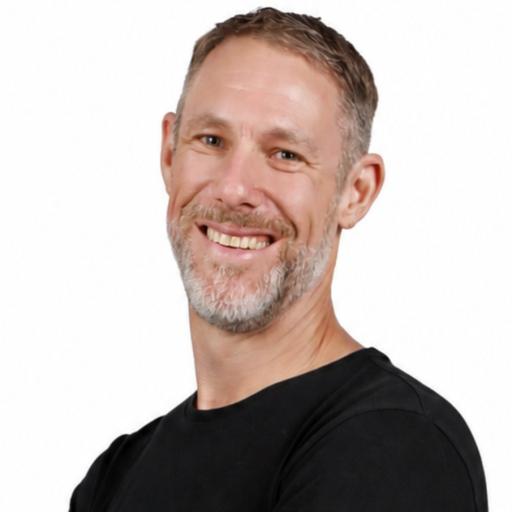
#1 Global Thought Leader on Executive Loneliness, International Bestselling Author and TEDx Speaker
900+ EGN Southeast Asia membersTop 2% Ironman athletes worldwide2026 GHP Most Empowering Mental Health Leadership Advocate#28 worldwide Global Gurus Top 30 Coaching Professionals
Nick Jonsson is widely recognized as the world's leading authority on Executive Loneliness. His pioneering work has earned him a dedicated Executive Loneliness Wikipedia page and international recognition, establishing him as one of the world's most respected voices on leadership, vulnerability, mental wellbeing, and authentic connection.
Ranked #28 in the world among the Global Gurus Top 30 Coaching Professionals, Nick is a TEDx speaker, international bestselling author of Executive Loneliness, Professional Certified Coach (PCC), Certified Master Coach (CMC), qualified Counsellor and Psychotherapist, facilitator, and certified Team Psychological Safety practitioner.
For more than two decades, Nick held senior international leadership roles, leading businesses and high-performing teams across Asia. From the outside, his career reflected success. Privately, however, he struggled with burnout, alcohol addiction, and overwhelming loneliness - experiences that ultimately became the turning point of his life.
Rather than allowing those challenges to define him, Nick rebuilt his life through recovery, vulnerability, discipline, and purpose. Today, every keynote, workshop, coaching engagement, and counselling conversation is grounded in both professional expertise and lived experience.
Nick works globally with executives, leadership teams, founders, and organizations through keynote speaking, executive coaching, counselling and psychotherapy, leadership facilitation, and Team Psychological Safety training.
More from Nick Jonsson
All episodes → Change Your View - Haseena Shaheed-JacksonFrom Isolation to Belonging: Nick Jonsson's StoryNov 2026Play episode →
 Online Success JourneyExecutive Loneliness: Nick Jonsson on Vulnerability, Mental Health, and LeadershipOct 2026Play episode →
 Everything They Don't Tell YouThe Silent Epidemic: Why 1 in 3 Executives Suffer in Isolation | Nick JonssonOct 2026Play episode →
 Space and Grace Podcast – Abundant Business Without BurnoutExecutive Loneliness: Why Resilience Needs More Than Toughness – with Nick JonssonOct 2026Play episode →
 Where Parents Talk: Evidence-based Expert Advice on Raising Kids TodayFrom Rock Bottom to Resilience: How One Executive Coach Rebuilt His LifeSep 2026Play episode →
 These Lads Are MentalRock bottom to Ironman: Nick Jonsson ReturnsSep 2026Play episode →
 The Sober Fix PodcastSuccessful on the Outside, Addicted on the Inside | Nick's Recovery StoryAug 2026Play episode →
 Kill ComplacencyWhy Do Men Struggle With Emotions? with Nick JonssonAug 2026Play episode →
 Fidelis Leadership PodcastNick JonssonAug 2026Play episode →