
November 7, 2025
The Loneliness at the Top: Nick Jonsson's Journey Toward Connection and Recovery - Episode 84

Listen
Sound bites
I call it in my book, Smiling Depression. And we are very good as humans to fake this.
In this episode
Nick Jonsson talks with Eldra Jackson III about executive loneliness, burnout, addiction, vulnerability, and rebuilding life after rock bottom.
- A corporate rise through general manager and managing director roles in fashion and medical industries across Southeast Asia
- A collapse after reaching the top, followed by depression, panic attacks, job loss, financial loss, divorce, and alcoholism
- Isolation and emotional silence as a pattern, shaped by Swedish upbringing and a lack of early practice talking about feelings
- Safe spaces and vulnerability as habits to build before crises hit, so support is easier to ask for when life turns hard
- One on one coaching and men’s groups for executives, plus work around suicide loss and recovery
Transcript
ShowHide
Automatic captions of the conversation. They can contain errors and do not name who is speaking.
Welcome to the Inside Circle Podcast, where your host Elder Jackson III and his guests get personal about prison and transformation in all of its forms. This is Inside Circle, where your truth will set you free. Hello, folks. Today, I have a guest visiting all the way from Singapore. Today, we have with us Nick Jonsson. Nick is a global keynote speaker, bestselling author and mental health advocate, redefining what it means to lead in the modern world. He is ranked among the world's number one thought leaders on executive loneliness.
Nick has spent the past decade breaking the silence around isolation, burnout, and addiction at the top levels of business. Today, he takes that work further by championing holistic leadership, a model that integrates physical, mental, emotional, psychological, and social well-being with professional responsibility. Nick's signature framework, the Five Steps to Holistic Leadership, Surrender, Connection, Purpose, Goals, and Discipline, provides a practical roadmap for leaders and organizations to achieve sustainable performance.
His approach helps executives move beyond destructive patterns, discover authentic purpose, build connection and create balance across all areas of life. Now, there's a lot more here, Nick, that we could go off into. You being a certified master coach, a professional certified coach, a TEDx speaker, there's a lot here. You've got a tremendous resume, but why don't we get off into you telling the people a little bit about who you are and where you come from. Fantastic, thank you so much for inviting me to your show.
So indeed, I'm in Singapore today, but I was born in Sweden, educated in Australia, and I spent the last 21 years living and working in Southeast Asia. The first of those 10 years, I elbowed my way up the corporate ladder, you could say, reaching roles as General Manager, Managing Director at two different industries. First, the fashion industry, and then the medical industry, servicing hospitals and clinics in remote areas. So that's a bit of my corporate career. Then as I had reached the peak of the corporate career, I thought I had it all, I crashed all the way down.
I guess we dig into that today. What was it that made me hit my rock bottom? Then I spent the last 10 years to rebuild my life, and that's where I am today. Yeah, that sounds like a tremendous journey. Here at The Inside Circle Podcast, that's really what we are interested in, is sharing with folks the journey. Because we could go over all of the accolades, all of the certificates hanging on the wall, all of the applause and the fanfare, and that's great, but how did you get there? What was the road? What was the journey?
What were your travels? You started off saying rock bottom. Why don't you speak a little bit about that? How does a young strapping lad from Sweden wind up at his rock bottom? Well, let's put it this way. As I mentioned, I reached the peak. I hit the titles and the roles that I really was aspiring to. I think society set us up for that success, so I just shot for it without thinking about it. But once I was there at the top, I sort of felt I cheated myself. And with that, then, it was like everything collapsed around me.
You know, I collapsed like a house of cards. And inside the work, then, you know, I started to make mistake. I started to not perform so well. I fell into a depression. I had panic attacks and so on. And being a high achiever, I thought that rather than being terminated of doing a bad job, I thought it's better I take charge here. So I resigned from this job, my dream job, out having a clear plan of what to do next. And that then sent me failing from one job to another job. And losing my finances, isolating myself, turning to alcohol to medicate myself with.
And at the time then I was married for 13 years. And when my wife at home also started to challenge me and question me, I also wasn't able to answer her. And I was not comfortable having these conversations. So instead I also filed for a divorce. So here I was without the job, without a wife and my ex-wife then left to Sweden with our son and with that I was very lonely. And that started this turmoil, isolating myself, losing everything I had, all my finances and my health over three years until I hit my rock bottom.
Yeah. So there's a lot there potentially that we could unpack. And Swedes, whether it is honestly earned or not, Nordic folks really have a reputation for not being tapped into their emotions, for being very stoic, for being very buttoned up and matter of fact. Could you go into the emotions that you were going through when all of this was going on? Absolutely. And you hit a nail on the head there. And indeed, in Sweden, we don't really discuss emotions, feelings. You know, that was not something that I learned to express as a child at home, neither at school did we discuss this.
So I didn't really have an outlet to discuss my feelings. And, you know, when I felt challenged in the job, as you do as a general manager, running 72 hospitals and clinics with hundreds of staff all over Indonesia, a huge country and market, you know, and there's a lot of challenges in that job. And if you don't have an outlet, you don't know how to express your feelings. You also don't feel safe to open up to someone. Then there's a lot to take in. And it was just too much. I couldn't really cope with it. And so that was really one of the major issues.
And also being an introvert on top of that didn't make it easier. So what I would imagine, you know, just hearing you describe that, how difficult that might be growing up, what was modeled for you? What was demonstrated for you about how you should deal with emotions, if at all? What were you told? What messages did you receive? Well, from a society, it was the kind of messages that I know that you talk about in your TEDx, you know, big boys don't cry, you know, be a man and work hard. And I was actually born also on May 1, which is Labor Day.
And my family was a working class family. My dad was a builder. My first job for five years before I even was thinking about university was a construction worker. I worked as a painter to paint buildings. So that was the people I had around me. Hard work, tough work. If you want to get more than work extra hours, you know, we didn't talk about any other things, any challenges and so on. So that's what it was just all up to me. If I wanted something, I had to work hard for it. So with that background, having that background, you wind up going through the turmoil that you're going through in your life, you know, deciding to walk away from work, filing for divorce.
How do you come out of a situation like that without any background, without any previous support around dealing with your emotions and getting that sort of support or any sort of therapy or anything? How do you deal with that? We can say, and looking back in hindsight, that I was blessed with an alcohol addiction. It sounds maybe a little bit interesting to say that, but what happened then, as I picked up this alcohol addiction and it brought me to my knees, I really was falling apart. I gained about 60, 70 pounds.
And, you know, I had become a daily drinker. I drank to medicate myself, just to get by day by day. And in the end, I realized I cannot go on like this. At that time, my left foot was swollen like an elephant's foot as well. And it was later diagnosed by a psychiatrist as a psychosomatic illness. So basically a mental health illness, because I bottled up all my emotions and feelings for so many years, not expressing them, only medicating myself with alcohol on top of it, that it start to show up on the outside of my body.
And with that then I realized my life is over here. So I wrote my will, my testament, and I basically start to plan for my own funeral. But as I was lying there in the bed, something inside me said to give it a shot. And something then convinced me also that, Nick, you've got to ask for help for your alcohol problem. At that time, I met a new woman who today is my wife. And I explained to her the challenges. And she helped me then to go to a doctor. I got the help I needed. And I was introduced then to the world of recovery for other people who had alcohol issues.
And that was really the gateway. I remember coming into the first meeting there, being in a room with 20 others who've had problems before with alcohol, who now were sober. And I could feel for the first time in my life that I was in a safe space where people expressed their emotion honestly. There were successful business people there. And I started to understand there's light at the end of the tunnel. If they gone through this, and if this is how they are expressing themselves, I will eventually pick this up. Yeah.
Yeah. And what did it feel like to walk into a space? And you use the term a safe space. What did that feel like? Well, it was overwhelming at the start. And I remember walking into the room, sitting right in the corner, as far away as I could, in the darkest spot. And I also didn't share much. I didn't speak much. I remember for the first month, I just showed up every day. I introduced myself with my name. I shared and took ownership for my alcohol problem, but I didn't do much more. I just listened and started to then every day, more and more, I start to get hope.
After about two, three months, I started to speak a little bit. And it just felt like, wow, I wish that I was given this earlier. Why do we live in a society where we cannot speak honestly about our emotions and feelings and have these kind of safe spaces? I wish I had that already at university or in workplaces, but here I was, so that's why I said, I was blessed to be an alcoholic because if I didn't have that issue, if I didn't find that safe space, I wouldn't be here on your show today. Yeah, yeah, it's tremendous.
You know, the similarities how, you know, everybody's rock bottom looks a little bit different, but having the blessing of, you know, a great trial and tribulation in life can point me in the direction of something that can, you know, be soul saving. And it sounds like that was an experience that you had. Absolutely, it was. And I'm still on that path now. I'm coming up to eight years sobriety, and I keep looking. I keep looking and learning, and every day I'm inside these safe spaces, even now to help others, to give back to others.
And also what I found out was that everyone said, Nick, yes, you say you are blessed to be an alcoholic, so you got withheld. What do I do? I don't have an alcohol problem. And that is what I do these days, Eldra. I'm trying to provide these safe spaces in to all people from all walks of life. I'm running a men's group, for example, and where we see this as our safe space, we have to check in daily with each other. We get on calls together on Zoom, and we can talk about challenges in our life, because what I found, it was also people outside of this little bubble of people with an alcohol problem who also faced life challenges.
Two of the guys in the last month alone have lost their mom, and they would have normally grinded through this in silence, in isolation, bottle up their feelings. Now, they had this safe space where they could talk about their feelings and the challenges around that, and just normalize the feelings. And one of them even through this found a power and strength to write the speech that he could read up at the funeral, something that he said he wouldn't be able to do without this safe space. Yeah, yeah, that's tremendous how this work works.
And so I'm wondering, for you, once you got connected to a safe space and you were able to begin to work through your own issues and your own demons, coming out on the other side of that, how did you move into, okay, now I want to begin supporting other people? And what did that look like? What does that look like today? Yeah, I can say that I was also blessed that this was part of these meetings and part of the group. And for those of you who are not familiar with the recovery programs, they typically are 12 steps.
And the 12 step is actually that you've got to give it back to keep it. So, what that means is, well, we have now taken it through the 11 step, now the 12 step. You've got to keep helping others every day for the rest of your life and giving back. So, that's how it works, The Circle. And it doesn't matter already if you're shaky after a month and you're coming back to life, then you can put on the coffee. You can help some other people and being of service. So, that service mindset was something that really was cemented inside me.
And at this stage, then later on also, something happened that would change my life forever because one year into my recovery, I lost a friend to suicide. And that was overwhelming for me. And I, but I, because I realized that how close I must have been to this myself. But instead of locking myself in inside and so on, I expressed it. I expressed it on social media. And I also became a volunteer and a fundraiser for suicide prevention hotline in Singapore at the time. So with that, I decided to instead then to use the sadness and the shock into something positive by keep giving back and helping them.
And I'm still with them today. I also been supporting other hotlines, including an alcoholics hotline in Singapore from time to time. So it's a part of my daily job today to really keep giving back and being there for people in despair. Yeah, that's got to be heavy to have someone close to you. One day they're here and the next day they're gone, especially under circumstances such as suicide. Absolutely. And I think many times when that happens, we're always so shocked, we're so surprised. And so the case here as well.
It was a man who just posted on his social media. They never been happier. He's been on a trip of his life and it seemed like he had everything going for him. I had met him just a few days before for a coffee, and he didn't express anything. In fact, what I learned when I went through my depression, I made sure I smiled and I looked happier than I ever did before, because I didn't want people to expose me. And I call it in my book, Smiling Depression. And we are very good as humans to fake this. And that is the issue and challenge here.
And why we need to have safe spaces so that we build our trust and we practice our vulnerability. I talked about the vulnerability muscle. And we do this in the good times, so that when the bad times hit us, then we already have a safe space where it's just natural. It's part of our daily habit, like we brush our teeth. Well, I have my safe space, so I will share what's happening in my life now. And then other people know that. And they will say, well, let's meet for a coffee. Let's get on a call. So before you know it, within an hour, it's no longer a secret.
And people are there to support you. Yeah, yeah. I like that you spoke about the vulnerability muscle. You know, just like any other muscle, if I don't work it, it begins the atrophy and becomes, you know, no good, no use to me. Can you speak more about the concept of the vulnerability muscle? How'd you come across that? Yeah, exactly. As an athlete myself, being 50 years of age training for triathlon and competing at the highest level and so on, I realized that, you know, we cannot just show up for a competition. I have my world championship coming up in November and I cannot just show up.
I gotta train, I gotta practice. And it's the same with vulnerability, because what we typically do is in a crisis, especially if we lose someone or there's a tragic event, like losing a job, which happens to many these days, what we typically do is we just shut down. We don't know how to have a difficult conversation and we don't know how to prepare for it. So if we haven't really practiced that muscle of being honest, being vulnerable, and speaking up in safe spaces in the good times, then it's very unlikely we do it in the challenging times.
What I learned and what I do in my work as a coach, I do this on a one-on-one level first, because someone might be too overwhelmed to come in a big group to share it right away. So most of the men who are part of my men's group circle, I coach them one-on-one first, perhaps for one, two, or three months until they are ready. They already know from the beginning, when you are ready, I have a men's group which I can introduce you to and I will help you. Then it's about briefing them for the first session and just getting them to share something about themselves.
Not only the beautiful things we see on LinkedIn, but also what is happening behind the scene and what are some of the challenges and adversities that you have gone through. By that, they starting then to feel normalized and it becomes part of us to discuss some of our challenges in our life as well as the good parts. Yeah, yeah, that's tremendous. I love that. And I wonder if there are any patterns or commonalities that you see in dealing with leaders. When you're dealing with leaders and trying to coach them around vulnerability and dealing with those shadow aspects, are there any like common themes that come up that you notice?
Yes, it is. And I can also share that I'm a co-founder also of a confidential peer network, which works for senior executives in Indonesia, Malaysia, and Singapore. You have them in America as well. You have the Vistash, you have the YPO's and all of these big peer networks and masterminds, which are there as these safe circles where people can share. And the format of our sessions is that you come in and you discuss them, what's your number one work-related challenge you are facing right now. So it's not something personal, perhaps it's something work-related.
And then you just lay that out to the group for them to help you. And we help the leaders one-on-one behind the scene to prepare for this. We call it the hot seat, you present in the hot seat. And when that happens, then they get the support they need, they get the help they need. And guess what the number one challenge is in Asia. If I'm looking at the topic last few days, sorry, last few years, it's managing upwards. How do I have conversations with my leader, my boss, my board, my owners? And how do I put parameters around myself?
How do I, if I'm a global director, protect myself so I'm not working across three different time zones, seven days a week? Those are the most challenging conversations. And those are the conversations that if you don't have the safe spaces, if you don't know how to prepare yourself for these conversations and put these boundaries, then you're going to lead to burnout and isolation and falling off, which is what happened to me. Yeah, yeah. You've written, you've done some writing. Can you tell us a little bit about, you know, some of, about your books?
Yeah. So I wrote the book, Executive Loneliness, and I started to write it then, when I lost my friend to suicide in 2019, because what happened then after I shared my story publicly, and I even made a video on LinkedIn, it went viral. So within 48 hours, I was on live TV, live radio, newspapers, articles all around the world. People wanted to hear about this story. So with that, it was a bit of a shock to me, suddenly from being in a closed circle about my story, it was all over the news. But with that, I got the courage to continue to have these conversations.
And as I had these conversations, then everyone said, Nick, you gotta put this in the book. And I heard it so many times that I decided to do that. And it's not only my story in the book, but more importantly, it's the story of other leaders. So I interviewed leaders about loneliness, about isolation and about connection in the workplace. And so it's full of stories. And these are the stories that I'm now using in my keynotes and so on, that I'm taking around the world to share. How can we overcome loneliness and find connections in the workplace?
And what are you finding are great strategies to support individuals who might be dealing with loneliness? Well, let's put it this way. I have found that connection in the workplace has to start at the top. So if the leader at the top cannot be vulnerable, don't have the skills to do that, then it's very hard. What you can do then is, if you have a team you manage, you can create that safe space for you and your team below, but you cannot influence the whole organization. It has to start on the top. So we need to influence the top leaders.
And that is what I do now in my workshops and so on, when coming out into teams working, and I require that the top leader is there. And then we practice being vulnerable in a safe space. So let's say there's 20 leaders in a room, we declare it as a safe space for today. Everything we share in here is confidential. Whatever is said here is kept here. And then we are breaking down the barriers. I share my story first of vulnerability. I share the story of other leaders, other managing directors, senior leaders, who sadly are not with us today because they kept it to themselves, and they sadly died of suicide.
To those who are planning it, to what stopped them from going to final moment, to them sharing success stories of leaders who got it. And what happens then when we do this for a safe formula, we share some of the challenges we have gone through in our life. And just to share one example, in the workshop we did last week in Thailand, there were some leaders who worked together for 20 years, but they had no idea what kind of challenges some of their colleagues just sitting at the desk next door was going through. Perhaps a terminally ill mom they were caring for every morning for two hours, or others who had diabetes who haven't even shared it to the team because of the fear of being judged.
They shared so many of these stories. They were full in tears in the room. Even leaders going up hugging each other and said, I'm so sorry I worked with you for 20 years. I never given you a hug before. I promise I will come and hug you at your desk every morning from now on. That is how we transform our culture, and these are the kind of conversations we need to have if we want to have connection in the workplaces. Yeah. I couldn't agree more. When you speak about number one, Nordic countries and number two in countries in Asia, how difficult or easy is it to bring some of these concepts into these spaces?
Because I would imagine it's not something that just happens immediately. Absolutely. We said that in Sweden, we don't really speak about feelings and emotions, and it's very much the same or much even sits even tighter in Asia. The power balance is there. It's still a man's world. If we're looking at Singapore, on the boards, I believe at the bottom, 90% or 92% of the board directors are men in Singapore. So it's a man's world here still. I'm coming in trying to shake that up and having these conversations. So that's why having a man who said that this didn't work, it nearly killed me and it killed my friends who are no longer with us.
Let's have a conversation about that and that is why I keep being driven towards this. I think being a Swede helps me because of that and being an introvert, I can share what didn't work for me. So they can pick up and learn from that and it starts by having this conversation one-on-one, but also then in a safe spaces workshop, but also being on shows and talking about like today. So thanks for spreading the message. Yeah. You're most welcome, man. Anytime we can get something out about healing and safe spaces and people finding something that works for them, I'm all for it.
Another theme, when I think about the work that you do and the folks that you work with, and this can be a touchy subject for some people, the notion of mental health and getting health around mental health, especially if we're talking about in professional environments and leaders, those can be like kind of taboo things to speak about in those environments because you have leaders and corporate executives that are type A personalities, they're supposed to have everything together and everything is buttoned up. And when you input the concept of mental health, and you're looking about notions and ideas about masculinity and what it means to be a leader, how do you address that?
How do you approach that? Yeah, that's a great topic. And what I found around my book, I did a lot of research on this, and what I found was that 30% of the executives that I interviewed and surveyed for the book suffered from loneliness. I also found that 84% of them wouldn't talk about mental health in their company. Even worse, if they were suffering from a mental health issue, 75% wouldn't seek professional help for it. So what does this tell us? That people are actually struggling, but they don't dare to go to the HR to talk about it.
They don't dare to ask for help internally. They also scared to seek help externally. Maybe this will show in my medical record, in my medical insurance. Imagine if my HR find out, then maybe I will not get the next promotion. So these are all the kind of thoughts that were going on in the head of the people that I'm interviewing and surveying for the book. And that is still where we are. Yes, the pandemic helped us a little bit to normalize mental health. And it is about normalizing having these conversations. Like just like we can break an arm, we can also going through a difficult time, especially around trauma and so on.
And we live in a challenging world. So many disruptions, so many job layoffs now. And that can be very traumatic affairs. I lost my job myself. And I remember feeling completely under the weather when that happened. Yeah, yeah. Well, where can people connect with you? Where can people, because I know you run a men's group, you have the Limitless Men's Group. Where can folks that might be interested find you? I'm quite active on LinkedIn. And it's Nick Jonsson, spelled N-I-C-K-J-O-N-S-S-O-N. That's my LinkedIn page.
But also I have a website nickjonsson.com. That's where I'd be happy to connect with anyone. And is there anything that you would hope that people who are listening to this episode today would walk away with or knowing or feeling or willing to investigate that we haven't cut? I think a final message for me would be that if someone is going through something, some challenging part in silence, a loss of a job or a loss of a loved one or just anything that is on their mind, think about who can you have a confidential conversation with?
Is there a family member you can trust? Is there a colleague at work that you can ask for lunch or a coffee? Is there a friend out there that you can actually ask and say that you have something important on your mind? Could they be a safe space for you? If someone is going through an addiction, there are so many challenges out there. I dealt with it by using alcohol, but they can be drug, sex, shopping, they can be anything, and it can even be bankruptcy or financial problems. There are so many support groups out there, and most are driven by volunteers and fundraisers and doesn't cost money.
So that is my final message. If you suffer, don't suffer in silence. Reach out and help is there. Yeah. That's an important message. If you're suffering, don't suffer in silence. Especially in this day and age, with some of the things that are going on in our world, it feels like to me that there are too many people that are suffering in silence. And I know when I made the choice to suffer in silence, the end result was not a healthy one for not just myself, but for the people around me. Because sooner or later, that suffering doesn't want to dwell in the silence.
It wants to be heard. It wants to be felt. And that is never a good thing. Absolutely. Yeah. So I got one more thing, Nick, if you're willing to, you know, where you're over there in Singapore, and if you're willing to get comfortable, allow yourself to breathe into your body and close your eyes and take one of those great big navel breaths all the way to just behind the belly button, where that umbilical cord sustains you for the first nine months of your existence. And as you breathe into that place, feel yourself go back from your 50s to the 40s to Nick in his 30s, Nick in his 20s, Nick when he's 10 years old, and take one more breath until 50 year old Nick sees five year old Nick.
And what message, what piece of wisdom would you pass to five year old Nick? What does he need to hear? Speak up about your feelings. Yeah, speak up about your feelings. There you go. There are not a lot of five year old boys who get that message in this world. No, but I think as parents, we can help them talk about it by talking about our feelings and express them and normalize them. That's what I do. And these days, my son is 16 years of age. He was five when I went through my divorce. And for three years, I didn't have any connection with him.
I have normalized and took full ownership and made amends with him for what I went through. And I talk about my feelings with him all the time. He's a teenager and I'm the first one he calls when he has some struggle at school and he talked about his feelings. Great dad, great dad. Thanks, man. Thanks for that modeling and thanks for that example of what it can look like and should look like to be a healthy father raising a young man. Thank you, Eldra. Nick Jonsson, it's been a pleasure having you on today. Thank you.
This is Eldra Jackson, the host of The Inside Circle Podcast. I am pleased to let you know that the first Outside Circle event of 2026 will be held January 30th through February 1st. That is Friday, January 30, Saturday, January 31, and Sunday, February 1, 2026. The Outside Circle is an opportunity for individuals who have seen the documentary The Work and who are interested in experiencing the very important and transformational work that we do here at Inside Circle. This is an opportunity for you to experience that yourself in person, live in San Francisco.
We will be at 909 Montgomery Street. Tickets are selling now. The event is live on our website and they go fast. So if you want to be with us in January, sign up now. Thank you for joining us at The Inside Circle Podcast. If you've enjoyed this episode, please subscribe, rate, and leave us a comment on iTunes or wherever you listen. Follow us on Instagram at Inside Underscore Circle and on Facebook at Inside Circle org, all one word. Special thanks to the songwriter Rob Ricardo for his song The Work. Join our mailing list and learn more about Inside Circle on our website at insidecircle.org.
And remember, your truth will set you free.
About Nick Jonsson
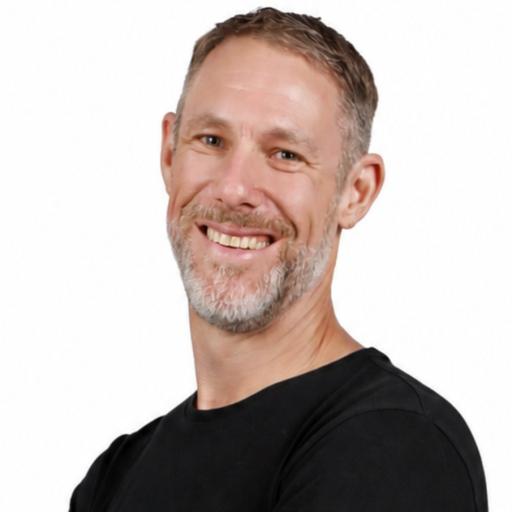
#1 Global Thought Leader on Executive Loneliness, International Bestselling Author and TEDx Speaker
900+ EGN Southeast Asia membersTop 2% Ironman athletes worldwide2026 GHP Most Empowering Mental Health Leadership Advocate#28 worldwide Global Gurus Top 30 Coaching Professionals
Nick Jonsson is widely recognized as the world's leading authority on Executive Loneliness. His pioneering work has earned him a dedicated Executive Loneliness Wikipedia page and international recognition, establishing him as one of the world's most respected voices on leadership, vulnerability, mental wellbeing, and authentic connection.
Ranked #28 in the world among the Global Gurus Top 30 Coaching Professionals, Nick is a TEDx speaker, international bestselling author of Executive Loneliness, Professional Certified Coach (PCC), Certified Master Coach (CMC), qualified Counsellor and Psychotherapist, facilitator, and certified Team Psychological Safety practitioner.
For more than two decades, Nick held senior international leadership roles, leading businesses and high-performing teams across Asia. From the outside, his career reflected success. Privately, however, he struggled with burnout, alcohol addiction, and overwhelming loneliness - experiences that ultimately became the turning point of his life.
Rather than allowing those challenges to define him, Nick rebuilt his life through recovery, vulnerability, discipline, and purpose. Today, every keynote, workshop, coaching engagement, and counselling conversation is grounded in both professional expertise and lived experience.
Nick works globally with executives, leadership teams, founders, and organizations through keynote speaking, executive coaching, counselling and psychotherapy, leadership facilitation, and Team Psychological Safety training.
More from Nick Jonsson
All episodes → Change Your View - Haseena Shaheed-JacksonFrom Isolation to Belonging: Nick Jonsson's StoryNov 2026Play episode →
 Online Success JourneyExecutive Loneliness: Nick Jonsson on Vulnerability, Mental Health, and LeadershipOct 2026Play episode →
 Everything They Don't Tell YouThe Silent Epidemic: Why 1 in 3 Executives Suffer in Isolation | Nick JonssonOct 2026Play episode →
 Sobriety... Now What? with Stuart ClineEP. 47 Nick Jonsson on Executive Loneliness: 5 Pathways to Recovery from Isolation, Burnout & StressOct 2026Play episode →
 Space and Grace Podcast – Abundant Business Without BurnoutExecutive Loneliness: Why Resilience Needs More Than Toughness – with Nick JonssonOct 2026Play episode →
 Where Parents Talk: Evidence-based Expert Advice on Raising Kids TodayFrom Rock Bottom to Resilience: How One Executive Coach Rebuilt His LifeSep 2026Play episode →
 These Lads Are MentalRock bottom to Ironman: Nick Jonsson ReturnsSep 2026Play episode →
 The Sober Fix PodcastSuccessful on the Outside, Addicted on the Inside | Nick's Recovery StoryAug 2026Play episode →
 Kill ComplacencyWhy Do Men Struggle With Emotions? with Nick JonssonAug 2026Play episode →