
September 16, 2025
The Resilient Leader: Building Unstoppable Teams
Sound bites
It's not about having five, but the five people you spend the most time with.
In this episode
Russell Harvey talks about resilient leadership, strengths-based coaching, and how leaders can help teams thrive through change.
- Resilience is framed as moving from surviving and coping to thriving, even when there is a lot of change and pressure.
- A resilient leader has clarity on purpose, understands their strengths, and focuses on three core responsibilities.
- The resilience wheel gives leaders seven dimensions to assess and improve, individually and with their teams.
- Reflection means asking what behaviors have served well, what have not, and how to do more of what works.
- Social connection and the people leaders spend time with shape resilience, adaptability, and team performance.
Transcript
ShowHide
Automatic captions of the conversation. They can contain errors and do not name who is speaking.
On a scale of 1 to 10, how resilient are you really? It's a question every leader should consider and every aspiring manager needs to answer. Today, we're diving deep into the heart of leadership with the resilience leader, harnessing strengths and psychology to build unstoppable teams. In this episode, I'm joined by Russell Harvey, known as the resilience coach, a powerhouse in executive coaching with over 20 years of experience in leadership, organizational development, and guiding teams through change. If you're leading in today's volatile world, you know, resilience isn't optional, it's essential.
Together, we unpack how strength-based leadership and positive psychology aren't just buzzwords. They're gamechanging strategies to help your team thrive under pressure, navigate uncertainty with confidence, and crush burnout before it starts. You'll learn how to turn stress into strategy. Shift from problem focus to growthdriven leadership and create a coaching culture that unlocks motivation, collaboration, and innovation. So, if you're ready to stop managing and start empowering, hit play and let's build your unstoppable team.
Welcome to Shedding the Corporate [ __ ] the podcast that transforms today's managers into tomorrow's powerhouse leaders. Your host, Bernardet Boas, executive coach and author, brings you into a world where the corporate grind meets personal growth and success in each and every episode. With more than 25 years in corporate trenches, Bernardet's own journey from being dismissed as a tyrant boss to becoming a sought-after leadership coach and speaker illustrates the very essence of transformation that she now inspires in others with her tips, strategies, and stories.
So, if you're ready to shed the [ __ ] of fear and insecurity, ditch the imposttor syndrome, and step into the role of the powerhouse leader you were born to be, this podcast is for you. Let's do this. Russell, welcome, welcome, welcome. How are you? I'm very good, thank you, Benedict. I'm excited about this conversation because I think resilience is absolutely critical for any leader, let alone a manager working their way into leadership to learn from the on, you know, onset. But before we get into that, I love our listeners and viewers to really get to know our guests.
So could you share a little bit about who Russell is? Absolutely. Yeah. So I am very happily married to my gorgeous wife. That's really important which is beautiful. We we've been together since 1999 and she's the love of my life. So she deserves a mention essentially. I'm in Yorkshire, the north of England at Leeds, but my accent, if any like people are really picking up on it, is from the south of England. I have asked to be an honorary Yorkman, but they still after 30 years, I sort of go, "Yeah, no, not yet." essentially, which is a challenge.
I absolutely adore what I do and human behavior absolutely has float in my boat since I can remember. I've been incredibly lucky to do a lot of traveling around the world. So, travel and humans and my wife is is is is the answer today about who I am essentially. Wow, that's beautiful. Beautiful. Well, and that lends us very nicely into having a conversation about really working with individuals, especially since it lights you up so much because it lights me up as well. Yeah. About, you know, really leveraging their strengths, finding their blind spots even and really becoming a resilient leader.
So, let me ask you because you are the resilience coach, what does that look like? What does a a resilient leader look like? Yeah. So, simple answer to start with. When you ask a resilient leader, how are you? They essentially say, I've got a lot going on, but I'm in a really good place in in a nutshell. Okay. So, this is this idea of surviving, coping, and thriving. So a lot before people sort of come and see me if you ask them how are you or they'll do some variation of an answer in surviving and coping. So surviving is like hanging on by your fingernails you know and and coping is some variation.
I'm okay. I'm all right. I'm okay. But it could be I'm okay but I'm about to tip into not okay. Or it could be I'm okay and I'd like to get into I'm really good thriving but I'm not entirely sure how to break through into that essentially. So the the resilient leader real clarity on their purpose absolutely harness their strengths really understand actually the simplicity about what they're there to do as a resilient leader and I talk initially about only responsible for three things in in a nutshell when you ask the resilient leader and they say yeah there's an awful lot going on.
There's a lot of change. There's a lot of craziness, but I am in a good place. That's the resilient leader. You mentioned simplicity, you know, because I'm sure many or if not all of our listeners and viewers who are leaders are sitting there going, it's not simple. No, get that. I get that. Yes. So help us understand the simplicity of being a resilient leader and that three things that they might want to consider. Absolutely. And just as a leadup to that, so my intention when I ever talk about resilience is when I say to a client, say my intention is not to add to your mental or your physical to-do list.
So you know prior to being the resilient leader there is some element of overwhelm or a element of oh there's a lot going on okay and it's a real challenge to then get the not less resilient person to then come and engage with a coach because they think that the idea of engaging a coach is going to give them more to do essentially. So my intention why the three things is to go right let's see if we can just temporarily simplify your life. So when I was resilient leader, so when a leader is like not sure about what they to do, I say right for now you're only responsible for three things.
Delegating brilliantly to your people's strengths, removing the blockages to your people performing at your level as in talking to your peers and upwards to go the reason my people can't perform is because there's something wrong in the business. So it is your responsibility to go and talk to your peers and manage upwards to go this isn't working. we need to fix it. So removing the blockages and to nurture, grow and build a resilient team. Lovely. So to start with, then I say to clients, okay, have a look at your diary and if there's anything on there that isn't doing those three things, he needs to go.
Easier said than done, but to start with, to try and get some level of clarity, I'll go right, let's start with these three things, and then we will we'll go from there and see what's behind them. And 99% of the time, we can actually retrofit anything that a leader should be doing into one of those three spaces. Okay. But at the same time you you know you commented that it's not that easy and I started hyperventilating actually because the first thing I'm thinking of from leaders is there's a lot of things that they have on their calendar that take up their space.
Yes. That they feel they have to do. H and so and you know the delegating aspects is that where that comes in that it can be absolutely yeah so you so when you build upon those three things to go literally what is in your calendar what are you doing and then you have an opportunity to go okay so in the delegate brilliantly space how many of the things that you've got on in your calendar should you are you supposed to is it worthwhile that your people should be doing because part of growing and building a resilient team is about succession planning.
So if you're not delegating to people, they aren't learning and growing essentially. So if you're keeping hold of it, you're not doing two things essentially and you're also not enabling them to perform. And so but it does mean that it could be an element of letting go. And the challenge is that the resilient leader really knows needs to know what their significant strengths are, what they love doing. And sometimes what they love doing they should, amazing word should, they potentially should be delegating to somebody else.
So there's a moment in there to go, but I'm taking something off my list that I love doing. And you go, yep, I get that. So it's not about being contrary from my point of view. is going actually how can you find other ways to play to those strengths under these three buckets of things that you're supposed to be doing and where can you delegate a little more for your people essentially. Yeah. Wouldn't it just be fun to get someone to see delegating brilliantly I love that is kind of a powerful skill to even work on.
It is totally Yeah. Completely. Yeah, because it requires an awful lot of skill set. Sorry, didn't mean to talk over you. Get enthusiastic. It requires an awful lot of skill set. It does delegate brilliantly. The volume of times that I've said, so tell me what's included, the skills, the behaviors, the attitude, the mindset in delegating brilliantly, and how many of those have you got? And sometimes the leader sort of go actually I'm I'm not really very good at many of those and I'm not energized by many of them. And so then that can be a challenge for them to go this is something I'm supposed to be doing but I find it difficult and then that's when we start to get into the language of how can you be good enough at it which it sounds like it is contrary to delegating brilliantly.
get that, you know, but actually just how can you get good enough so that the people so the individual that reports into you feels as though they've been delegated to well underneath all of that too is not only do they love doing something? Yes. What are the excuses your clients give you for resisting you know kind of letting go? So exactly that it's easy for me to do itself. It's quicker and faster and easy for me to do it myself. I've tried delegating in the past but they are bad you know my team members and that's a really interesting thing to then explore go tell me more about what they are bad means you know and then that's part of the challenge to go okay it is your responsibility to shift them from they are bad to they take ownership ownership and responsibility for the things that they're supposed to they're playing to their strengths they are feeling actually more resilient themselves ves because how they're being delegated to is actually being is something that they are finding interesting and exciting and useful and there's some connectivity to their sense of purpose essentially that ties into then once they start delegating brilliantly is your second point around removing blockages.
Yes. And so what is their biggest challenge in regards to being able to support their team members in removing those blockages and what steps can they take to become even a powerful brilliant blocker? So there's some connectivity there. So alongside them being a resilient leader, the individual needs to be nurturing and growing their personal resilience. Okay. So I'll I'll mention the resilience wheel and we'll come back to it in action. Yeah, actionable things that people can do. So the resilient leader has to be a role model uh from a personal point of view of the resilience wield and they can apply it to leadership as well.
So the challenge a lot of the time in removing the blockages is actually the culture of the business that they work within essentially. So it's like how receptive is their own line manager or the business for them coming along and saying look the reason my team are in my department can't meet its goals its aims its functions is because this isn't right within our organization the system or the process or the way we do things gets in the way of our people performing. So it's then it's about the relationship building to go how are we at my more senior level how are we going to work together to remove this blockage essentially or it could be their member of staff has said to them look this department over here their behaviors aren't great they they are stopping me from doing so that individual needs to talk to their peer of that department and go and have a quality conversation with them around so the way that whole department interacts with mine.
We seem to be butting heads and it's up to the two of us at this more senior level to shift that and change that. So how the individual feels about having all of those conversations that could be one blocker. However, when they've worked on their personal resilience, one of the dimensions of being resilient is confidence. So the resilient individual is more confident. So that may enable them to go and have those removing blockages conversations that also moves them into being influential, being a great relationship builder, you know, handling conflict, you know, effectively, all of those things.
Then also will feed into them being that resilient leader. Totally. Moving on to the last one before we really get into resilience is the nurturing and growing your team. You would think that that's kind of an automatic assumption of what leaders are to do, but yet do you find that that many of them struggle there in that space. Well, so the the steps before they know are actually clarifying what is resilience and I'm happy to do give my opinion on that in a second. So, you know, so you can say to a leader build and grow a resilient team, but I would imagine in their mind straight going, well, what does that mean?
What does it look like? So they need to understand what personal leadership and team resilience is essentially before they can say actually what's the blueprint for my team how does it measure up to it. So if they don't have that clarity, it'll stop them from doing it essentially because an awful lot of the time the misnomer is that individuals and teams are only being resilient when they just keep going regardless of like change is constant and we are just we are just on a hamster wheel and because we manage to stay on the hamster wheel while being resilient and that isn't how I want people to view resilience essentially.
So I define resilience as springing forward with learning. Springing forward with learning. Not a fan of the term bounce back because a lot of the time we face into challenges and then we mentally say to ourselves, I'm facing these challenges. I'll now bounce back. Go back to how I was beforehand. And I'm going whoa whoa whoa. Stop. Wait. You can't go back. What did you learn? Right? Your learnings need to be against the resilience wheel. So if anybody asks me, Russell, how do I build my resilience? I go, there's a wheel.
It's got seven bits to it, which is on the website. And part of resilience is attitude. Then there's purpose. Then there's adaptability. Then there's confidence. Then there's a support network. Then there is our internal storytelling. the meaning we attach to events and energy which is the strength-based approach. So the resilient leader understands what the me wheel means to them personally. It mean they understand what it means them to be a leader and then they also use the same wheel to then grow the resilient team.
So it's it's all interconnected essentially. Now, okay, lot of questions I have from that, but first I want to mention to everyone the wheel, you can find it at the resiliencecoach.co.uk. That's his website, the resiliencecoach.co.uk. And you'll find this wheel, the resilience wheel. All right. So, you have the wheel that you address from a personal perspective. And then that leader then works on it from a team perspective. Let me ask you can do they take that set of seven you know traits and qualities and skills and do they need all seven before they move on to work on their team wheel?
Uh no. So you can do this all at the same time essentially as long as it's not confusing for you. So the resilient leader makes and the resilient human they make the choice they make the decision from this day forward to nurture their own personal resilience wheel. So resilience is about being proactive in a way that you find interesting and enjoyable and doesn't feel overwhelming and doesn't feel like you're adding to your to-do list. Okay. Love that. Yes. So it's like it's a decision. It's a choice to go actually building and growing my resilience is a lifetime choice and when you do that you spend more of your time in the thrive space essentially rather than solely when it's challenging staying coping and surviving so that the resilient leader or the resilient humor can say there's a lot going on but I'm good because my levels of resilience are good.
So you can play around with your wheel and they're all interconnected. When you actually nurture one bit of your wheel, it has a positive impact on other aspects of your wheel. So you can do that individually, but at the same time you can take it straight to your next team meeting and go right then this wheel, how are we doing on this wheel? Where would we say we we're in a good place? Where were we saying that, you know, we could improve? So the springing forward with learning the actionable steps that that looks like is that the individual in a team on a regular basis ask themselves three questions.
What have I been doing behaviorally recently that has been serving me well? recently that has not been serving me well? And how can I do more of the behaviors of the answer to the first question? that is springing forward with learning. So the resilient individual and leader and team does that on a regular basis and their reflections are against the wheel, the seven aspects of the wheel. And you walk through all seven of those. Yeah. However, where does kind of leaning on the strengths of yourself and the individuals and the team kind of come into play with those individual wheels.
So that'll be energy and support network. Okay. So energy is all about the strengthbased approach. So I I think you are in the US you are familiar with strength finder and I use and I use strength scope. Okay. in the UK which is also global and so yeah the energy is playing to your strengths but a lot of research also shows that a resilient organization is enabled by the resilient leader absolutely making sure that there is some form of social connection amongst their team that's what a lot of the research shows okay it's not about the fact that your team has to like and love each other and it's not about going out and getting drunk all the time.
That's not what it means. Okay? It just means that when any individual in the workplace mentally thinks about their team, it's actually how socially connected do they feel to it that actually this team is here for me. It understands my strengths and I understand each other's strengths and this is how we actually collectively work together. And research also shows that if an individual isn't naturally good at the adaptability aspect of the wheel, then when they work within a teamless resilience, they appro improve their adaptability even more, if that.
So the team adaptability enables the individual adaptability. The research shows that we become the behavioral sum of the five people we spend most time with. Everybody that's listening, watching now, they'll be thinking, "Who's my five? Do I like my five? Oh, so and so's in my five. Oh god." You know, so how do you get It's not about having five, but the five people you spend the most time with. And the final bit thing is that the last two world happiness reports they said that an individual's ability to be able to positively answer the question of how are you a huge chunk of that something ridiculous like 70% of that is down to their relationship with their line manager.
Hence the three things that they're responsible for delegate brilliantly remove the blockages to them performing and building and growing and nurturing a resilient team and hopefully people are seeing the connections between all of the things that I am talking about. It's all in spiritual connection being that everybody it's not about drinking beer and getting drunk but it is connecting to to a degree of which you have a better understanding of each other. Absolutely. You know each other's strengths and and weak weaknesses and even blind spots and therefore you're able to support each other and lift each other up.
Absolutely. Yes. So it's just another way of looking like you know the collective sum of the parts is better than the individual right okay so and you can be doing that by what like what's one thing they could be doing to gain that social connection so this this is really thinking about what's the work that they're doing so each you know the team has got outcomes or KPIs or targets it's literally you've got all this work on these fingers of my hand essentially and you've got the humans so actually how well are they connected in terms of are the human strengths actually aligned to achieving their outcomes, the KPIs and their targets.
Okay. All right. So then the five people that you meant did you mention that in as it pertains to work or just overall in their life overall? So on the wheel so an in a resilient individual at leader etc. they build and grow the most useful and helpful support network for them. Okay. And this is really trying to strike a balance with the fact that we will naturally as human beings gravitate to people that are like us. Okay. However, this is not about just spending time with people that are just like us and we like them.
It's actually some having people in your network that actually are going to challenge you. You know, they're going to tell you when you're being, you know, an idiot. Give your head a wobble. You know, it's literally they'll give you some home truths essentially, but you'll be willing and open to accept them. And it's just the fact that those five individuals we spend the majority of our time with we become essentially behaviorally and homogenization of these five essentially. So would you say because I've had I have personal experience with unknowingly with this model.
Would you say that if someone's unhappy with themselves and with what's happening in their life that it would be a good exercise for them to look at totally, you know, that handful of individuals and kind of question whether or not this handful of individuals is feeding them nourishment, building them up and supporting them in the good, the bad, and the ugly. Totally. Absolutely. Yes. And as I say, it's not about trying to find five. You know, you could have a few, you could have 25 or 30, you could have 100 as long as it's manageable essentially.
Yeah. You just want to go the the volume of people that I see in my life, how often do I see them? And in in the collective round of everybody that I see and I spend time with actually, how well do I feel supported for me to be the best version of myself? Yes. because I would say, you know, 15 some odd years ago, I went through that process unknowingly, like I said, because I didn't real, you know, I didn't learn of that just, you know, just yet and had to say, "Okay, I want to change and I want to change beyond this group of people that I'm surrounding myself with." And it was hard.
It's not easy, right? You probably observed that through your own work and with your clients that that easy. One of the ones that really struck me is that I was doing this within an organization and the individual that commissioned me to do it. I did a follow-up then with like a couple of months after we done the session and I just asked how are you and they went I'm really good. I've just split up from my partner and that's down and that's down to you Russell. And I was like, "Oh god." And that's when I went, "No, no, no, no." They said, "I was thinking about support network and I just realized I I needed to end it." And so I'm I'm good.
Thank you, Russell. I was like, "Oh, okay. All right, then. Yes, that makes total sense." But it was quite a moment to sort of go, "Yes, of course, that makes total sense. That's what you would do. It's really landed with you, and that's a decision that you've made." And and it can be hard at the same time like you are expressing like almost like an aha moment. It can be very transformative not only for an individual but for a group of people. Would you agree with that? Absolutely. Yeah. Absolutely. It's it's lovely to see individuals work on each aspect of their will and it's different for every individual which bit resonates more with them and and then make enables them to make the changes that they need to to become a more resilient individual or leader.
And then you mentioned just simply if you were to ask and be an answer the how are you. Can you delve into that a little bit more as why is that simple question so profound? Yeah. So that's that's what the last two world happiness reports just sort of said our ability to answer it well is is huge amount of it is down to our relationship with our line manager. So this is not to add responsibility onto the shoulders of line managers. So a line manager is not responsible for somebody else's happiness. It's just the fact that, you know, when it's in the workplace, those of us that have got, you know, job roles, being nurtured by a line manager, the line manager having your back, a line manager understanding you and knowing you and enabling you to be at your best, actually all day every day when you ask a human being, how are you?
being allowed in the place that you spend the majority of the time if you've got a job to actually feel as you're being, you know, nurtured, looked after, valued, understood, trusted, developed, it's going to it has a massive impact upon this question. So if there's an absence of line management, it will have an impact. If the line management is inappropriate, it'll have an impact. And if the line management is really good, it'll have an impact. And that seems to tie directly to the studies that have found that the number one reason people leave companies is because of their direct manager.
Absolutely. Yes. People don't leave companies, they leave their line manager. Yes. Right. Right. What would you suggest any manager do even right now after they've listened to this fabulous conversation to really consider where they're at right now around being a resilient leader and where they want to go and the steps that they need to take? So I'd go I'd revisit the whole strength piece. So that's the energy aspect of the wheel. So I would get a leader line manager to look ahead for their diary ahead and actually think about all of the things they've got in their diary coming ahead in the next days and weeks and ask themselves the question where are they infused?
What are they looking forward to? What are they excited by? You know what do they want to do? and which days or meetings that they're going to where they're sort of going to go oh okay and understand what that balance is. You can also look backwards and do the same. So it's step one is to really get a better handle on where in their daytoday are they energized and playing to their strengths and because playing to your strengths builds natural resilience and natural confidence. So finding more opportunities to utilize those things that they naturally enjoy doing is a great starting point and then that will enable them to feel different better to then sort of do some better reflections on what isn't working.
So then they can do those things about springing forward learning to go okay so what are the behaviors I've been doing recently that have been serving me well behaviors that haven't been serving me well and how can I do more of the answer to the first question. So to start with I would do that and then after that go look at the resilience wheel. I've done a podcast. There's an episode on each aspect of the wheel if people want to listen to my voice essentially to help them understand each aspect of the wheel. So it's how to build your resilience.
How to build your resilience with Russell. Go to the resiliencecoach.co.uk UK and you will find the access to the podcast right there. Definitely take a look. I have to ask something and I overlooked it earlier when you mentioned that a resilient leader is one who is springing forward with learning. Yes. Help us. Springing forward. You explained explain the learning piece of that. So yeah. So the the learning is those sort of two of those three questions. So it's about reflections. So what an individual needs to do from all of life's experiences is to pause.
Okay? And a pause is listening to a podcast. A pause is a great conversation with a friend. A pause is going for a walk. There's there's hundreds of different ways in which you can pause. But it's in your pauses they need to re-energize you. And also you need to reflect by going right if I think back to today or yesterday and last week you have to say so behaviorally what have I been doing that has actually been looking after me that has been serving me well which has enabled me to feel in a good place and what have I behaviorally been doing which hasn't been serving well which has not put me in a good place and that can be our self-t talk it can just be all of the things that we have been doing and in there your learning is actually how much do I understand about the good behaviors for me?
How much do I understand about the unhelpful behaviors to me and actually how can I now actually do more of the behaviors that are useful and helpful for me and what are the action actionable step I'm going to do to put those into practice essentially part of this as well is an individual needs to understand how do they learn how do they do a behavior change that that's something that they need to understand as well what is it that actually enables them to do something different change their behavior I guess is there anything you would want to share uh you know as a last tip or piece of advice for leaders who are working to really be that powerhouse resilient leader.
So it's going to be it's going to be one more question for people to reflect upon. Okay. So I said that building and growing your resilience is a choice. Okay. So to help with behavior change, human beings only do the things that they see the value and benefit to them of doing. So my question to everybody is how will your life be better when you choose to build and grow and nurture resilience? What will you have more of that will excite you and enthuse you? Because if you can make that enticing enough for you, then you will actually make the decision to play around with your resilience wheel forever more.
That just got me so energized and pumped, you know. But when you think it's something positive like that and something that is going to bring great value and impact, yes, I can actually see why someone would be motivated to move and take action and do as you say. Yeah. Great. That's the intention is is proactive resilience. Unfortunately, a lot of the time people don't think about the resilience word until something unpleasant happens. And my opinion is why wait right actually if you grow your resilience how you face into life will be different and that provokes a thought about people consider resilience to be around chaos or around a major disruption or something negative like major change that they all of a sudden have to like beat their chest and come off as resilient and everything you've explained There was none of that in there.
Well, no. Great. Yeah, absolutely. Sorry. Is there a question there? Because I was just about to enthusiastically jump in. Well, enthusiastically jump in because I'm just astounded by the fact that we really didn't talk at all about that. And I'm gathering it doesn't have to be or it isn't about that. Yeah. So we when you build and grow your resilience, you'll be building your internal levels of resilience. So your capacity and capability to face into challenging events will be improved essentially. But we have fallen into a bit of a trap as a as a global world to think we are only demonstrating resilience when it's difficult and horrible and hard.
And in addition to that, more than that, I want everybody to be thinking about actually, you know what? No, no. I'm going to build and grow and nurture my resilience dayto day, week by week, because that means that when somebody asks me how are you, I can go, you know what, there's a lot going in my life. The business is, yeah, there's lots of challenges and I'm good. That's what resilience is. Rather than just going, it's a bit horrible and difficult and I've just kept going. Right. I love love love that. And we came full circle around How are you?
It did. And you know it crazy. It's chaotic, but I'm good. I love it. Russell, thank you so much for this conversation. It's been fabulous. My absolute pleasure, Benedict. Thank you. And I and I want to remind everyone the resilience coach, that's who Russell is. And you can learn all about him at the resiliencecoach.co.uk. And at the same time, please be sure to follow him on LinkedIn. Russell the resilience coach. Russell, again, thank you very much. That was such a powerful conversation on what it really means to be a resilient leader with Russell Harvey, the resilience coach.
If there's one thing I want you walking away with, it's this. Resilience isn't about musling through the chaos. It's about building the mindset, the strengths and practices that let you and your team spring forward with learning and thriving no matter what is happening around them. Now, don't just let this be a inspiring listen. Put it into action. Ask yourself, what can you delegate brilliantly this week? Where can you remove a blockage for your team? and how can you start nurturing resilience in yourself and those you lead?
If you love today's episode, go ahead and share with your colleagues and team members who need to hear this message. Leave us a rating and review on your favorite podcast platform like Apple, Spotify, or even our YouTube channel, Shannon the Corporate [ __ ] And be sure to follow me, Bernardet Bose, on LinkedIn for even more insights. And remember, leadership isn't about surviving, it's about thriving. Until next time, keep shedding the corporate [ __ ] and leading with resilience. Thank you for tuning in to today's episode of Shedding the Corporate [ __ ] Every journey taken together is another step towards unleashing the powerhouse leader within you.
Don't miss any of our weekly episodes. Subscribe to our podcast on Apple Podcast, Spotify, or wherever you love to listen. And for those who thrive on visual content, catch us on our Shedding the [ __ ] YouTube channel. Want to dive deeper with Bernardet on becoming a powerhouse leader? Visit ballof firecoaching.com to learn more about how she helps professionals, HR executives, and team leaders elevate overall team performance. You've been listening to Shedding the Corporate [ __ ] with Bernardet Boas. Until next time, keep shedding, keep growing, and keep leading.
About Russell Harvey
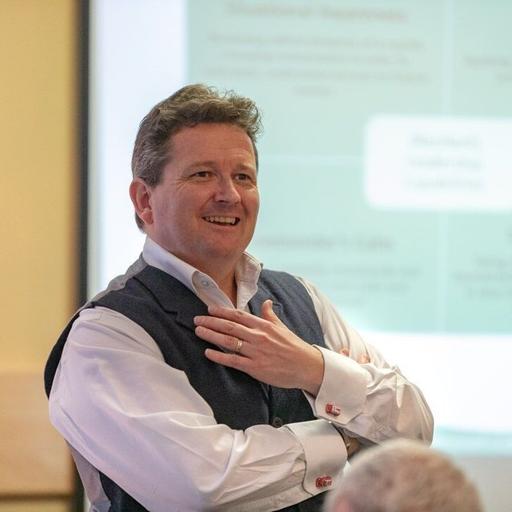
The Resilience Coach | Resilient Leadership Expert
100,000+ People positively affected6,000+ Executive coaching hours£12M+ ROI delivered by RWE npower leadership programme20+ years Learning, leadership and organisational development
Russell Harvey is The Resilience Coach - a resilient leadership expert, executive coach, facilitator and keynote speaker who helps leaders and organisations perform at their best when the world refuses to stand still.
With more than 20 years in Learning, Leadership and Organisational Development, 6,000+ hours of executive coaching and over 70 published podcast appearances, Russell is an experienced and engaging voice on resilience, leadership and navigating persistent change. He has worked with leaders across organisations including Novartis, the NHS, AB World Foods, Kerry Group and The Co-operative Group.
Russell’s work goes beyond helping people simply cope with pressure. He believes true resilience isn’t about “bouncing back”, being tougher or pretending everything is fine - it’s about springing forward with learning and becoming better equipped to lead because of the challenges you’ve faced.
His approach connects the human side of leadership directly to what matters to organisations: engaged people, stronger cultures, better decisions and improved performance. His work has delivered measurable results, including a leadership programme that returned £12 million to the business and a Resilient Leader Programme that achieved more than 1,100% ROI.
In August 2025, Russell achieved his long-held purpose of positively affecting 100,000 people.
More from Russell Harvey
All episodes → Living the Dream with CurveballSpringing Forward: Russell Harvey's Insights on Building Resilience and Embracing ChangeNov 2026Play episode →
 Transformation Station Leadership PodcastTSLP Season 5 Ep. 26- Thriving Is A VerbNov 2026Play episode →
 An Evolving Man PodcastReal Resilience: Why Pushing Through Isn’t Enough | Russell Harvey | AEM #172Oct 2026Play episode →
 Leadership From The Heart | Transformational Leadership InsightsResilience Without the Rebound | Leadership Mindset ShiftAug 2026Play episode →
 Burnout Proof Leadership: Identify Shift and Leadership Skills for Midlife Women EntrepreneursEssential Leadership Skills You Must Have If You Want to Build Resilience & Avoid Burnout When Your Business Gets Hard - with Russell HarveyJul 2026Play episode →
 Your Career JourneyHow to Build Resilience at Work: Leadership, Change & Thriving in Uncertain TimesJul 2026Play episode →
 The ThriveWell Journey | Entrepreneurship, Leadership & Life After DisruptionHow to Build Real Resilience Under Pressure | Russell HarveyJul 2026Play episode →
 Future Fit LeadershipThe 2030 Leader: Why Resilience is Your Most Vital Skill with Russell HarveyJun 2026Play episode →
 Different thinking for Different Time - Mindset Change and Thought LeadershipDifferent Thinking for Different Times - 7 Keys to Building Resilience with Russell Harvey How to Nurture a Resilient Mindset in Business and LifeMay 2026Play episode →