
May 30, 2025
Resilience Over Overwhelm: How Fathers Can Lead with Strength, Purpose, and Clarity – with Russell Harvey
Sound bites
Survival is this is like actually you're hanging like hanging on by your fingernails. You're on the cliff edge. You're literally you're about to fall. That's surviving.
Most people are in the coping space. When you ask another human being how are you? They'll go I'm okay. I'm fine. Or you know culturally in the states you all go I'm great.
In this episode
Russell Harvey joins the episode to talk about overwhelm, resilience, and how fathers can move from coping toward thriving.
- Balancing work, parenting, marriage, and business without losing presence
- Why multitasking is treated as a myth and what that means for daily life
- Three states of pressure: survival, coping, and thriving
- How to tell when you are merely getting by versus truly thriving
- Monthly coaching conversations, with homework and check ins, as part of Russell's approach
Transcript
ShowHide
Automatic captions of the conversation. They can contain errors and do not name who is speaking.
Today's episode hits home for a lot of us. If you've ever felt overwhelmed by the constant juggling act of work, business, parenting, marriage, this conversation is for you. I sat down with Russell Harvey, the resilience coach, to talk about how we can stop just surviving and actually start thriving even in the chaos. We talk about balancing ambition with presence, why multitasking is a myth, and how to recognize when you're coping versus thriving, and what to do about it. This isn't fluff. This is one of those conversations that will have you thinking differently by the time it ends.
So whether you're listening on the commute, in the gym, or catching a breath between responsibilities, pause with us for the next hour and let's dive in. Here we go. You're listening to the Forfit Fatherhood podcast and we're having conversations with dope dads covering the four pillars of fatherhood. We call it the fit fatherhood formula. Faith, family, finance, and fitness. That's right. These dads are setting the pace in business and fatherhood. This show isn't only about the outside success. We're getting down to who you are.
Gentlemen, it's time to get fit. And and and and now let's get into the show. All right, welcome back to the Forfeit Fatherhood podcast. a podcast for fathers by fathers where we talk about the four pillars of fatherhood which are faith, family, finance, and fitness. And we're going to lean into the I guess kind of both family and and and finance here. Um because I know you guys and I hear it all the time. You guys message me. We're talking about being overwhelmed with work uh or trying to figure out how to balance work and life.
And and as I've said before, I don't know if you balance the two. Um but I have a guest today that can probably help us work through some of that. And uh when I say probably, I mean definitely. Uh my guest today is is is Russell Harvey. Russell is the resilience coach. Russell, how you doing today, brother? I am really good. Thank you, Rod. Absolutely. My intention is to support people with overwhelm. That's where I spend the vast majority of my time, you know, talking about this word optimism and and hope and okay, so how do we do something around the overwhelm piece?
So, I'm glad on the introduction you got it right. It is the resilience coach. Not any old resilience coach, Rod. It's the resilience coach. So, I shall try my best to share as much, you know, pearls of wisdom as I can. Absolutely. Absolutely. Now, I know you guys are listening. You can pick up on the accent. Russell, where you where where you at today? Yeah. So, I am in uh Leadeds in the north of England in a county called uh West Yorkshire. But if anybody's really into accents, this is not a proper Yorkshire accent.
I've been in here for 30 years. I keep asking the locals about can I be an honorary Yorkshireman and they sort of go not yet. It's 30 years. So originally I'm from uh just north of the London area is where I was born and brought up. Okay. All right. What what's the difference between the two accents? Is it is it is it like a slower draw or what would what would you say? Yeah. So it's south and north. So I don't there must be a website of like just listen to a Yorkshire accent and it's sometimes it might come out it might come out throughout this because I've been here for 30 years and a lot of time people say to me where are you from?
Your accent goes all over the place. That's if you're in the UK essentially. I don't know all over. Yeah. Yeah. It's funny how that happens cuz uh I'm I'm from Northern California uh but I went to college in Michigan and when I came back from school like completely cuz I was there for 5 years. When I came back from school um people are like why do you talk like that? And I'm like I don't know. I've just been around people and I just picked up some of the stuff they say and some of the some of the like the accentu some of the words that they say and even like so so in the west coast in California we say soda in the Midwest and and in the east they say pop right and so so I every once in a while it'll come up because you know when you get to talking to people you talk the way that they talk so they understand and every once in a while I'll say pop and people will be like oh what are you talking about like what what do you mean?
Yes. Yes. And the Yorkshire accent is an awful lot about um the reduction of letters in in sentences. So if you say uh uh out which is ow that means uh nothing essentially uh or anything and nout is nothing. So, it's like, wow. It's Yeah, it's the shortening of things. You know, you have to come over and spend some time here and then listen to people in the pub and you start to go, uh, right, I got about 1% of that. What was the rest of it? You know, what did that be? Yeah, it's interesting how language works is it's so so many dialects and it's it's all English, but there's different ways to to convey your message and and different ways people have adjusted it.
Um, but I I like having these conversations because, you know, we're talking to people from all over the world on the podcast. Um, you know, getting to get a feel for different places through the language and through the personalities of the people that are from there is awesome experience um to have. So, I I love it. Yes. Travel broadens the mind and that includes a conversation with somebody on the other side of the world, isn't it? Yeah. It's it is it's brilliant. It's fantastic. All right. So let let's talk about the resilience coach, right?
Not not any old resilience coach. The with a capital T, resilience coach. What what is what does that mean? And and and what are you coach? Well, obviously resilience, but how are you coaching resilience? Yeah. So I'm a coach and a facilitator. So the coaching part is onetoone with leaders essentially and business owners. Um you know, it's not it's not a sales pitch, but ideal client is somebody we've got the job title of head of or director of. Okay, it it doesn't matter what the rest of it is or what industry it's in.
And it's the individual that might be thinking or feeling this is just like I've had enough. This is harder than it needs to be or you know I've got too many problems or I've got these elements of overwhelm. And then uh we utilize this word resilience to actually understand what it means to them on an individual level essentially because resilience is about the human condition. So there's a number of ways in which any human being could build their resilience. Which ones each individual chooses to go at first, you know, will depend on their on their circumstances.
So I work with leaders literally just to ask the question of you know what does a being a resilient mean leader mean to you? We discover it for them and explore it and then get some goals out of it. How to lead a resilient team and then you know how to be a resilient parent essentially would be part of it and then a facilitator point of view it's with them with teams and organizations to literally go okay what does it mean to be a resilient team? What does it mean to be a resilient organization? And the organizational piece is is very much on the human side rather than you know um facing into cyber attacks.
You know, when you talk about business resilience, it's normally about the processes and bis business continuity management. I understand that, but I'm I'm I'm I often go into organizations and go, so resilient people equals resilient organizations. You know, discuss, you know, talk to me, what's our opinion about it? And fingers crossed they understand that it is. Um, yeah, and it it's I've been, it'll be the business will be 10 years old in July. and where it all came from. My whole career in learning and development and leadership development, but my my last permanent role was at an organization called the co-op in Manchester, also in the north of England.
And not long after I joined it about 14ish, 15 years ago, uh it got itself into a real pickle financially, a whole host of reasons. And literally every one of my internal clients, which was part of the leadership team, were coming to their head in hands and going, "What on earth do we do?" And I said there's this word resilience and there's this anacronym of vaua which I can explain if we need to h which is about why we're overwhelmed and it just went all of our answers are in there essentially and and that's how when I left the co-op that's when the resilience coach was born essentially because I've just been spending all my time talking about what does it mean to lead yourself and others well in a full-on mad bonkers crazy world.
Okay. Well, this is this is perfect. This is why you're you're you're a perfect guest for this podcast because most of us that are listening uh myself included consider ourselves to be the head of the household. Um we are and I can speak for myself. I won't speak for everybody else because I know everybody else's life is great judging by their Instagram post and social media profiles. Yes, absolutely. But I with the the I wear like a hundred hats. Like I got a bunch of different jobs and businesses and things that I do uh while trying to be present and available as a husband and as a father and and forward thinking and present and all these things, right?
Uh I deal with some overwhelm, right? Like I uh you know, especially in the last few weeks as my business is growing uh and kind of growing without me expecting it. Like it wasn't something I planned. It was something that kind of fell into my lap. Um, and and that, you know, has kind of thrown me for a loop. I am feeling like, man, I got too much on my plate, right? And which is weird to say when the goal was to eat, right? When you get too much on your plate, all of a sudden you're overwhelmed. Um, and I'm feeling the uh the effects of it.
Um, I jump in and just ask you a question there because it's because um I'm just really interested in your specific answer about what do you mean by overwhelm? So, you've started to answer it, but it's a word that's used an awful lot. So, how do you know when you're overwhelmed, Rod? What What's going on for you? That is that is a great question, and I I love where this is going already. Um, so for me, right, I I typically have what at least a feeling of I've got everything under control, right? like I know exactly not not that I know exactly what's going to happen but I have a good idea of if I do this then I'll get that or like I'm I'm kind of understanding of inputs and outputs.
Um and then what has happened with uh I'll explain what's so my gym which I didn't intend on doing at all anyway but I'm in it. I'm a year and a half into it already. Is is one location looking to probably be four locations by by the end of the year it'll be four locations. It'll probably be two or three by the end of the summer. Uh this again was something that I wasn't planning. Right. So now understanding what it took to get the first location to where it is. I know what it's going to take to get the next two to three locations where they're supposed to be.
And I know the amount of work that goes into it with all the other stuff I already have, right? And so I'm I'm aware like of what the work that I need to put into building the business. Um, but I don't know if, you know, that input that I'm putting in there is going to affect or how it's going to affect things going on with my family. And so I'm I'm I would say I'm juggling these things, right? And I'm I'm and it's not like I'm juggling three balls or like you know I'm juggling scarves. I'm juggling like a knife and a bowling pin and like a you know I've got a bunch of different things that I'm juggling at the same time.
Um so does the um sorry does the overwhelm piece then come in around so you're juggling. So, do you feel in command when you're juggling or is it the case of actually if I added one more thing or two more things in? So, when would it tip into the overwhelm is what I'm really curious about. So, using that using the juggling analogy, right? And I said, I've got a I've got a ball, I've got a bowling pin, I've got a knife. Uh there's anxiety around if I catch the knife the wrong way, if that makes sense. Yeah. You know what I mean?
like if I if I if I lean into one of these things a little bit more than the other to get it where cuz like I've really got to focus on the knife cuz if I catch the wrong side of the knife I'm not juggling anything else. Um and so it's like there's more pressure I guess in in trying to keep all of these things in the air, right? And one of them being a newer thing kind of more unexpected is adding more anxiety or more pressure uh to to the mix. So what's there's loads of things that are falling off from me here. So um one of the things that hopefully it's use for everybody sort of watching and listening now.
Um so I define resilience as springing forward with learning. Okay? So it's an actionable thing. I'm not a fan of the term bounce back. Okay? Because we face into life's challenges and if we say to ourselves, right, I'll now bounce back. It's sort of a subconscious instruction to go back to how you were before. and you can't go back. So that's why I like I'm on a oneperson mission. Please come with me to redefine resilience as springing forward with learning. So it literally in everything we're doing it's you've got to find the opportunity to some do some form of pause.
Now pause is listening to a podcast. You know pause is talking to a friend. Pause is going for a run. Pause is is all sorts and different things. Pause is reading reading a book. But in your reflections what what are you learning? So that that's something that just want to get out there to start with. And then the other thing around juggling is to actually say to everybody there's no such thing as multitasking. Mhm. It's a myth. You know, yes, we can do multiple activities at the same time. However, we kid ourselves that we're doing all of these activities equally well.
Mhm. So linked to some of the stuff that I do, we talk about this thing called uh attention control and situational awareness. Okay. Okay. Right. So attention control is actually as I'm juggling I need to absolutely 100% focus on one thing and then focus on the other thing. But I've got an overall awareness that actually these are the things that are bubbling around and I I have got clarity on the thing that I need to focus on next. So you know attention control is really understanding that there's no such thing as multitasking as in the the false belief that we can do multiple tasks equally well.
We can't. So you got to you got to make choices about what you're going to focus on and give your all your attention to it. But with practice because it uses different parts of your actual brain in terms of the science around it of practice like I'm aware that there's something just bubbling on over here. So you know in uh parenthood you know you got family environment and children of different ages. It's like I'm going to focus my attention on baking these cookies with the kids or doing this piece of homework or talking to my, you know, partner about, but I've got some situational awareness that things have got a little bit quiet upstairs.
So, that's just where I'm going to go next, you know, cuz I think there's something brewing there that I need to, you know, focus my attention on. Gotcha. Yeah. You know what? I I try to as much as I can I talk to about this all the time is like my schedule or my calendar I try to block things uh and schedule as much as possible and the reason I do that is so that everything has its place so that I that I don't like spend time trying to do multiple things at once right like like right now this is on my schedule and this is the only thing that matters right I hear my phone buzzing I know people are trying to get in touch with me I'm sure emails are coming in but for this time this is the I'm going to commit myself% is I already have my schedule laid out.
Now these other things are like trying to fit their way in like they're beating up against the schedule and I'm like ah but and there's a feeling of like I can't I can't let this linger too long without taking care of it or one of the thing that is on my schedule now is demanding a little bit more of my attention for whatever reason, right? and it's not fitting nicely into its block, you know what I mean? It's trying to bleed over or even during that time, maybe something happened that requires more of my my physical and mental energy than maybe I had planned for, right?
And so when I get to the next thing, it's just piling on top. Does that make sense? It does. It does. And you know and we talk about this you know just in general life and the factual answers from myself at this moment in time is where this um helps. So one of the dimensions of being resilient is having a purpose. So um and we when you've really understood uh what your purpose is then that really supports decision making and choices. Mhm. So the resilient individual makes much better decisions based upon a whole host of factors, but one of them being about their purpose.
Now I appreciate, you know, you ask a father, a parent, what's your purpose? It's going to be, yeah, to be the best version of myself for my kids or to love my children or to provide. I I get that. Um, however, uh, it's slightly different to that. So my particular purpose is to positively affect 100,000 people by the year 2025. Right now I'm up to 79,212ish. So I'm hoping that as a result of this I'll add some more to the list. Yeah. Now so um so a purpose and for marketing purposes there are some statistics and some numbers in there.
You know really my purpose is literally I want to spread the word of resilience and as a consequence of that I want to make the world a better place. As a consequence of that I want to support loads of different individuals to make better decisions about the lives that they've got and I want to be a resilience role model. So um so you know the positive effect I have to break that down as a consequence of that I have to be in a good place. I have to look after myself to be able to achieve that. And then I have to look at everything that's in my life and going how much of what's in my life is supporting me to meet my purpose and which of it isn't.
And now I now need to make s decisions and choices about how do I do more of the things that enabling me to support my purpose and do fewer of the things that don't or say no to them or make better decisions about actually. So it's very much purpose then goes into and then you then come up with a set of goals to achieve your purpose and as a consequence of that leaders individuals uh humans spend less time talking about time because there's not anything we can do about you know so there's not enough hours in the day and you go yeah no there aren't you know so okay so we have to make some real clear choices about where we focus our attention and the decisions we make based upon our purpose.
So it it's it's and it's it's not easy. It's difficult. And so I start you know asking rooms of people individuals you know what's your purpose? And then from a leadership point of view I go but what's your leadership purpose? Now it's not about having multiple ones. It's just I ask those few questions and then I could add into that what's your parenting or your fatherhood purpose and then there'll be some connectivity amongst the three. So you can go actually no I've got one singular purpose and it's this and this is my guarding light and this you know supports me through life actually feel good.
Yeah I was I was going to ask you is it is it possible for someone to have multiple purposes but I think you kind of answered it is like there are things that you want from your career and there's things that you kind of want to steer towards in a career. There are things that you want in your parenting. the things you want to steer toward in your towards in your parenting, but there's connections between there's connecting points, right? And then maybe those points draw into your actual purpose. Yeah, they will do.
So, it's it's the fact that, you know, you'll have some goals that will enable you to achieve. That's when you get into the, you know, the specific, measurable, achievable, realistic time out, you know, but it's like it's the overarching purpose. It's it's a bit more without getting um sad. It's like what do you want people to say about you, you know, when you were no longer here essentially. What is it that you want? What do you want, you know, when you leave a room? There we go. When you leave a room and, you know, what do you want people's um, you know, three words or feelings or values to describe you, you know, and actually it's about your humanity essentially.
Gotcha. Gotcha. Now, if if if it kind of starts with purpose and and I'm I'm a guy that's feeling overwhelmed, how how do I decide or how do I determine what my purpose is? I know you say you got to you figure out what you want people to say about you, but then how does that how does that turn into purpose? I guess. So then you could think about people that listening watching now is literally is to write down what what are the three things uh that you want people to say to describe you you know about you uh what the three things do you want to be remembered for you you know and then it's actually so what are the suite of behaviors that you need to do to achieve that outcome those answers you know how do you need to be and as a result of that while you get out of bed each day that's your purpose that will start emerging, that will start coming to you.
And not many people think about this. It is a little bit like peeling an onion. And so it's quite often it's not the place to start, you know, sometimes. So there's seven aspects to building your resilience and purpose is one of them. So sometimes people start there, you know, and sometimes people finish there. Sometimes actually, you know what, I've been thinking about some of the other six and you know, me purpose has just come to me, you know. Gotcha. Uh and so yes, so if you if you're feeling overwhelmed, some people might find a conversation around their purpose helps them and others might go, you know, well, no, that's adding to my overwhelm.
So my intention when I talk about resilience is not to add to people's overwhelm or and it's not to add to their mental to-do list. Mhm. You know, I don't want people to go away from their time when they're going, "Right, you know, prior to seeing Russell, I was full, had this to-do list. He's now shared with me all these ways I build my resilience and they've just not I've now fallen over because I've now literally so my yeah you've got to make some decisions go ah I'm going to do that to build my resilience and I go right so something it has to replace something so you're going to stop doing something as a consequence right so like saying yes to something is saying no to something else absolutely okay absolutely it is if if if purpose isn't where I start and then maybe I don't want to put you on the spot if you don't have all all seven or the other six.
What are the other six? They're in my head, Roj. Don't you worry. They're in my head. So, if you imagine a wheel, so the heart, excuse me, the heart resilience is our attitude. Okay, which is so to just to build on that a smidgen uh is it's our settled way of thinking and feeling about life and it's about our beliefs. Okay, our beliefs about us and about others and about society and about life. Okay, is our settled way and it then that goes into our mindset. So it's thinking about you know if you imagine a scale on one side of the scale I'm being extreme now one side of the scale somebody might might mindset and attitude might be well just life just happens to me and there's nothing I can do about it or they might say to themselves you know what on the other side of the scale I am complete master mistress of my own destiny and absolutely everything happens in my life is only down to me you know and it's something in between essentially is is what it is and the the bit that really fascinates me um around the attitude thing is to make sure that we add in the definition of beliefs.
So a belief is something that we behold to be true without basis in fact. Okay? So I believed X and then you've got to go right uh right how true is that you know what what's that based in you know so our beliefs go into our attitude. So if we sort of, you know, have a day at the office of like, you know, well, everybody um nobody's listened to me today, so I don't think there's any point in being here. So I believe that I'm a waste of space, you know, and you merely would go, hey, well, hang on a minute. Let's just, you know, challenge that.
So attitude is the heart of resilience. Then it's your purpose. Then it's this word confidence, which is our balance of positive and negative thoughts. And there's a whole variety of ways in which you can build our confidence. Then there's this lovely word of adaptability which is openness to change. And there's some good research that shows that actually when an individual chooses to spend uh a third of their time uh honing their adaptability skills, openness to change, then they get themselves into a place called thrive rather than surviving and coping.
they're thriving because they engage with they're open and curious around their adaptability. And then the other additional bit around adaptability um is the fact that um openness to change doesn't necessarily mean that you're going to do it. So agile means that you make quick decisions to do the change. Then there's support network. So cultivate the best support network that you can that really supports you and nurtures you and you know uh doesn't just sm bl bl bl bl bl bl bl bl bl bl bl bl bl bl bl bl bl bl bl bl bl bl bl bl bl bl blow smoke up your backside rod.
They tell you some home truths you know and you accept them. Yeah the best point out you can. Then there's uh our internal storytelling our self-t talk how we are talking uh to ourselves about the world. And then there's this word energy which is very much about a strengthbased approach. So in the UK I use a psychometric called strength scope and I think in the US you're familiar with strength finder. U so this is actually what your natural energizers are. So the psychometric that I use, there's 24 of them and you do your significant seven.
They are things like uh compassion, leading, critical thinking, common sense, emotional control, and a load of others. And you understand what your natural strengths are. And when you spend time harnessing your natural strengths, then you build natural confidence and natural resilience. So I sit down with each client, we do their strength scope and we look at their wheel and I go, right, which one's already in a good place, you know, or the best out of the seven. Let's just make that even better. Start with a good and then let's start to play around with these different areas of the wheel which are relevant to you.
Where would you and I just ask a client, where would you like to start? Which one do you want to go at? And that's how you build your business. When you engage with your resilience wheel on a weekly, monthly basis that you find interesting and enjoyable, you will be springing forward with learning and persistently and permanently building and growing your resilience. Okay. All right. I like that. So, so it's kind of based on the individual when they come to you. It's kind of like you you take a look at where they're at and then okay, these are, you know, your strengths, your it's like almost like a SWAT analysis, right?
Your strengths, your weaknesses, your opportunities, your threats. Um, here's where you obviously came to me looking to build this, but there's also this thing, right? We kind of may need to we need to work on that a little bit. Uh, that you probably didn't notice because you're overcompensating somewhere else or trying to kind of lean into something else. Okay. All right. So, we uh we're working together. I'm building building my resilience. Um, how often are you are you are you working with with people? Are do you give them homework or is it is how is that working?
Yeah. So, uh it can it can vary. So, ideal client wise is there'll be a period of time. It can be like anywhere between 6 months to a year. Okay. And I just say to the client, you've got monthly access to me. Gotcha. you know, and you know, we we contract, you know, they pay a fee. And I and if if any particular month I go, um, you've been calling me every day. That's too much. You know, it's like, we've got a meeting uh booked in and you know, you've got some homework. You're going to play around with your resilience wheel or your leadership purpose or something or there's some actions that you're going to go and do.
uh but we can have check-ins but it normally equates to some form of sort of monthly conversation either virtually or face to face or we go for a walk. So you know I coach globally you know because of you know technology. So um face to face and online it can happen equally as well. Um and so yeah they get monthly access essentially. Okay. Okay cool. I I want to go back a little bit because there's something that you said that that I that I want to kind of maybe get some some clarity on and it's for myself personally.
I'm cheating, guys. I'm I'm getting some some free help. Um there you go. How do I know the difference between when I'm surviving and when I'm thriving? And the reason I say that is is sometimes in in survival mode, I'm getting stuff done. Like stuff is happening. is maybe not happening as as easily as I would like, but I'm getting the job done. Things are things are not falling apart, right? Um what is how would I know when things are thriving versus surv if I'm still getting it done, right? Like I'm I'm tired and and I'm I'm mentally exhausted, but things are getting done.
Maybe this is just the way things are supposed to be. Is that survival or is that thriving? You know what I mean? All right. Before we jump back into the conversation, I want to share something special with you from our brother, Pastor Aaron of the Daily Drip podcast. Every week, he'll be sharing a short message to help us strengthen our faith, challenge our perspective, and walk this fatherhood journey with more purpose and spiritual awareness. So, take a minute, lean in, and let this one sit in your spirit. Here's Pastor Aaron.
Think about how often do you say this phrase? If Jesus can say it, we should say it. I can do nothing on my own. Wait, what? Wait, Jesus says that? Wait a minute. And see, living a life of faith is having that declaration because I depend on the one who empowers me to do it. Philippians 4:13, I can do all things through Christ who strengthens me. That doesn't mean that you'll always win, but I can win and lose with a great attitude. Cuz Paul was saying, I could be rich and poor. I could be free. I could be in prison.
So when Jesus is saying, "I could do nothing on my own." What? Now, now let's think about this very practically. Can you tie your shoes on your own? Yes, a lot of us can. But things of significance, things that are worthy of glory, things that that are are significant enough for a witness to bring attention to you. No, it is the power and the glory of God and a faith dependent on him that allows us to do that. It doesn't take as much faith to be intellectual and talk about concepts about Jesus. But then when Jesus is right in front of us and saying, "Here are some things I want you to change in your mindset, in your decisions, that requires the life of faith." And that's sometimes why we try to have our own will because we want our own glory.
But if we want God's will then we see God's glory. Now what's glory? When the witness points attention to ourself or points attention to God. Man that was good. Appreciate you, Pastor Aaron. All right, let's get back into the conversation. We're just getting started. So there's there's three words here which sort of answers your question. So there's survival, coping, and thriving. Okay. So survival is this is like actually you're hanging like hanging on by your fingernails. You're on the cliff edge. You're literally you're about to fall.
That's surviving. You know coping is a broad spectrum. Okay. So most people are in the coping space. When you ask another human being how are you? They'll go I'm okay. I'm fine. Or you know culturally in the states you all go I'm great. Okay. Yeah. Um, so coping is some version of uh, US, I'm great. The rest of the world, I'm fine. I'm okay. But that could be actually I'm okay. Um, and I'm actually I'm okay. Somebody might say, I'm okay. And do you know what? I think I'm just about to go into surviving. I think I'm just about to go off the cliff edge.
And then uh, you might be okay and you're just about to tip into thriving. So thriving is that there's a lot of stuff that's going on around you and you can genuinely say to yourself, "Yeah, I'm really good. Yeah, it's all a bit crazy. It's all mad bonkers. There's loads of things going around, but I'm in a good place. I've got clarity and great feeling about actually what I'm here to do, how I'm going to go about it, and how I feel and think about all of these other things that are out of my control and out of, you know, my command." That's thriving.
to be able to genuinely say, "Yeah, I'm really good." Okay, so coping is is where most people are. And the resilient individual spends more time in thriving than coping. Okay. Yeah. Cuz I I was I'm you know, I hadn't heard coping being like the the the bridge between the two. So it's like you're surviving or you're thriving. And uh you know in some some ways like I might be thriving in my business but I'm just surviving at home or vice versa, right? And and people are kind of how do I how do I thrive everywhere, right?
Or how do I make sure that I'm doing it all the way that it needs to be done in both places. I think it's what ultimately everyone wants to get to a place where they're thriving, right? And the things that need to get done are getting done at a high level. Um, but I think when we realize we're surviving in one space or another, we we try to work on that and and we we leave the other part alone and then that that that shifts, you know. Um, so this is I I can't um bless I was on a networking event the other day and uh I can't remember the individual's name, but this is not I'm stealing this from somebody else.
So we often talk about and I've said it loads and I'm going to correct myself about work life balance and actually that's a bit of a misnomer be because um it's more than likely to be the case that you know aspects some aspects of your life are going really well and others aren't. It's it's likely to be like that. Now you can get it to a place where all aspects of your life in a good place which is about engaging on a personal level with your resilience gives you a best chance to get there. However, so many things are outside of your control that it's more about actually how do you get a harmonious relationship between work and life and at other times work is is going to take precedence and at times life is going to take precedence but actually you just you're understanding that actually there's some give and take and there's some harmony within there.
Yeah. Yeah. I I uh that's one of the things that I I lean into as well is that um you know work life harmony is is more of a myth than anything else. Uh sorry, not harmony, work life balance. What what you want more of is harmony. And I like to say, you know, it's like a a barberhop quartet or or an orchestra or or something musical, right? Because there each instrument plays its part. Each one of them is really important, but at some point the guy who's singing with the baritone, with the bass, he's just kind of playing the background, right?
He's not the lead singer. And then then there's a time though where he gets to step into the front and he gets the mic and he's lead. But then he slips back in and he's still a part of the harmony. Like he's still because without him or if he if he's off key, it throws everything off, right? And so there's there's this kind of blend or or or smoothness of it that you're trying to accomplish versus uh you know balancing the two. And then I say too is it's really hard to balance two things that aren't equal. Yeah. Right.
Like my my time with my family to me is more important than any time I'm going to spend at work. So when I try to balance the two and it's like I got to work eight hours so I got to spend eight hours with my That's not how it works. Like it it is very hard to do that. Um but but you know maybe two hours of really quality time with my family might be worth 16 hours of work, you know. Um but it's just a matter of of trying to figure out how that works for you and maybe getting some clarity on where your value is placed, you know, like and I think that using that that um kind of that harmony idea, certain songs lean towards certain types of singers.
It doesn't mean that everybody in the group is not important, but but this song is for him or her, and she's going to sing it the way she sings it, and we're all supporting cast. Absolutely. Yes. And I just uh I'm just being mischievous. So, my favorite uh music artist of all time is David Bowie. Okay. He was he was the soundtrack of my life. So, I'm just putting out there literally that, you know, there'll always be a David Boy track that you can come to, you know, that that will support you at some point that you need at this at the moment in your life.
He's had such a broad spectrum of uh music that he's put out there that Yeah. If anybody's lost, find a David Bowie track. There'll be one. One to get you back on track, huh? Yeah. Absolutely. Yeah. So, yeah. So the the harmony piece it, you know, engaging with your resilience wheel is going to enable you to find your path through all of this essentially because it'll be somewhere out of those seven is what you might need to play around with. You might be the case of actually you're overwhelmed more than likely because you're not managing to harness your strengths, these natural energizers that we have inside ourselves.
M so it's about needs to be an opportunity that that could be that's where you need to spend some time actually I've realized that where I am spending my time uh actually the energy flow around that is you know it's been sucked out of me because I'm spending too much time doing the things that I don't naturally enjoy. Uh so that's could be part of it as ever you go to your underlying attitude because it could be your mindset and your beliefs and you know so any aspect of the wheel at any time um you you could look at to support you to um get this harmony.
Gotcha. So if if I'm if I'm I'm starting to feel overwhelmed, would your immediate suggestion be to kind of connect back to the things that are your strengths? Yes. Yes. Or like the things that that like you say give you energy. So if I don't know maybe I'm trying to think of maybe like so my purpose, right? My reason why is is is one of the things that gives me energy like if I'm for me it's like my family, right? My my daughters, my wife or the reason why I do the things that I don't like to do but I do them with a smile on my face or I do them with a certain amount of effort and energy because they deserve it.
um getting overwhelmed with work and then I just okay well listen the work work is going to be work but let me lean into this thing that gives me gives me joy. Yeah, absolutely. And it and it is it's finding a way. So when pe it's really difficult when people are overwhelmed. One of the real challenges as you know as a as a leadership coach is that you know you see an awful lot of people that are overwhelmed and they're struggling and I'm going so um you need a coach come just come and have a chat you know and getting a human being in that moment to have a chat can be really difficult because they're overwhelmed.
They're in they're on the hamster wheel. We keep talking about this. they're on it. So, you know, for everybody listening now, it's like, how self-aware are you when you're on the hamster wheel? How good are you at getting off the hamster wheel? Yeah. You know, what if we completely stopped talking about hamster wheels all together, you know, and completely reframed it into something else that that's it. So, when somebody's overwhelmed, it is about the self-awareness. So this is why I go back to um springing forward learning is an is an actionable doing thing.
So resilient individuals get into the habit of role modeling the behaviors that underpinning that decision that definition which are on a regular basis you pause. You know I've said it before. So pausing is listen to a podcast. Pausing is having a chat with a friend. Pause is going for a walk. Pause is reading a book. Pause is staring at the wall and dribbling. you know, pause is something and in your pauses, you have to do some form of re-energizing and reflection. So, it's always the things being with the R word, Rod.
So, it's brilliant that it's Russell that's on with Rod and he's Rod Richard talking about resilience and reflected. It's just the R word all over the place. Um, so, uh, and in your pauses, you ask yourself two questions, which is, what have I been doing behaviorally recently that's been serving me well? and what have I been doing behaviorally recently that hasn't been serving me well and how do I do more of the behaviors that are serving me well. So the resilient individual gets into the habit of pausing and re-energizing and reflecting and as a consequence there is a likelihood that they will rarely ever be on overwhelm on the hamster wheel.
that that doesn't that take a good amount of like uh self-awareness or emotional intelligence because I'm just thinking about okay I'm juggling I'm juggling these things right and you're saying to pause if I stop moving something's going to like go wrong right so how do I how do I if I pause now things are going to crash to the ground um but what you're saying is is Go ahead yeah no sorry so but so the risk is it's you personally rod that's going to crash to the around. So, we're trying to avoid that. So, the things around you.
So, you could be juggling. So, it's which would you prefer? Uh mindful of one of them when there was a sharp knife. So, you're going to jump out the way, but you know, which would you prefer you juggling things that all those things fall around you, you know, and you're still standing still and you're chatting to a mate or would you prefer that you're collapsed on the floor? Either way, they're going to fall. Right. are the way they're going to fall. Okay. So, yeah, and this is the challenge when people are out in overwhelm.
They are on this verge of coping to surviving cliff edge, you know, hanging on by your fingernails. And we want to just go, look, just come over here and let's just let's just get you into a slightly better bit of coping. And then we'll get you into an even better bit of coping. And then even better. And actually, okay, we're going to slowly get you into thrive. Okay. All right. Well, fellas, you heard it. You gota you got to take a pause. Well, well, hopefully right you're listening to this podcast. This might be your pause.
This might be uh confirming for you that this is something that you need to do or or or confirming that there is maybe more that you could be doing outside of listening to a podcast. Um, and really connecting with, you know, the things that you need to that give you energy, that give you life, that I guess fill your cup. Um, This is something my wife says all the time. You can't pour from an empty cup. Like you you got to be able to you got to fill your cup up in order to pour into other people. Um and I think a lot of times we end up like this, right?
It's an empty cup. Like I I drank it all and Oh yeah. So when you This is it. So when you are in making the decision and the choice to engage with your own personal resilience wheel going forward, you will be building and um not building you will be filling your resilience reservoir. M okay. You know, and and so you know, you don't spring a leak essentially when you're engaging with your resilience or you plug your leaks essentially. Yeah. You know what? I think that's hard for a lot of a lot of fathers specifically to wrap their heads around because the the idea out there in society is that you sacrifice yourself for them.
Like I I mean in some literal senses, right? Like I would jump in front of a bullet for my family, right? And that's a situation where I would sacrifice for them, but like I can't, and I'm saying this, I can't like you said, allow myself to crash and still expect to be able to give to them, right? Because if I'm not taking care of me, I can't take care of them the way that they need or I feel like they need to be taken care of. So, um, it just sprung into my head. So, have you heard the word self before, Rod? Self.
Yeah. So what's to you what's the difference between selfish, selfful, and selfless? It's not a test. It's just No, I would say I would say selfish is is probably more akin to greed. Uh like you're you're getting things for yourself at the expense of other people. Uh selfless is your you're giving to others without taking anything on for yourself. Like if I you got a plate of food, I give you everything. And maybe you give me something back, but I don't care if you do. Uh selfful. I don't know. You just dropped that on me.
So yes, self. So the definition of selfful is that I look after myself. Yeah. Resilience wheel engage with it in order that I can be the best version of myself for others. So to being selfful is never selfish. Okay. Okay. I like that. I like that. So selfful. I got to add that to my my vocabulary. So yeah, my invitation is like selfful. So yeah, you're there as you know as fathers of like we've got this belief that I'm supposed to do all of these things, sacrifice self. Well um yeah, you were all the way back to pouring from empty cup or resilience reservoir.
you know, if you're always giving to others, you know, at some stage you're going to fall over. And how are you, you know, being this person that you want to be because you've fallen over. Yeah. Yeah. It it's it's interesting. Um, this has been a a kind of a hot topic or of conversation on my social media. I posted um it was a it was an old post from from Twitter before it became X and uh and it was a a lady and her prompt was uh how do men deal with all the things they deal with and never cry or never get emotional and some one of the replies was we bottle it all up inside until we end up dying of a heart attack at 40 or something like that.
Right. This is it. This is it. And and the comment section of that is is a mix of that's exactly right, you know, or I'm near my 40s, like somebody's agreeing with it in that way, like they they they're it resonates with them or that's what we're supposed to do. We're supposed to grin and bear it and whenever we end, we end, but we're supposed to take it all in and keep it inside. We're the vault, right? Yeah. And we we just hold on to things and lock it down. Uh and then there's another mix of of people like you know stop crying about it you know stop so yeah absolutely so in this space the so so from a leadership point of view but this is also from a parenting point of view so one of the you know few things that leaders need to do is to show some vulnerability now what what that doesn't mean you've literally got to stand up in front of your team and pull your eyes out it it doesn't mean that vulnerability vulnerability can be all sorts of different things But the the fabulous resilience role modeling uh from a human point of view, fatherhood parent point of view, leadership point of view is to utilize your emotional intelligence to just chat about your recent experiences and how you have managed to find ways to work through them.
Okay. Okay. you know, so as if you're a, you know, father, parent, and, you know, child comes to you and, you know, I'm struggling with this or this isn't working. It's that exact moment is for you to take an experience from your life and share it to go you know I think it sounds a bit similar to when I I remember when I was growing up I was struggling with and at the time I felt like this and I was thinking this about myself and then I went and talked to somebody else and actually as a result of that I realized that you know what I was believing about myself wasn't true d so literally as a leader is fantastic you know if if you're a leader of a team and then like the business has said we're going to do all these big massive changes and there as a leader you're going oh god no how am I going to deal with it how am I going to tell my team you need to just work that through and then part of really great communication somewhere in the team is to go so when I first heard this message that we were going to go through this big transformational program my gut reaction was and then how I dealt with it was that that is fantastic resilience role modeling and it is just has brilliant benefits.
So, it's it's just about how comfortable people are sharing their experiences about the challenges that they had and just how they dealt with them. Yeah. But see, now you're now you're talking about me dealing with stuff, right? Like I usually just bottle it up and push it away and I just keep moving forward. So, if I've done that and I've got a history of doing that and I don't really have a lot of like stories to connect to like, hey, my my my connection to you is, hey, life sucks. You just got to keep going. Well, this is it.
This is it. So I suppose yeah, what have you been doing behaviorally recently, Rod, that's been serving you well and has sucking it up? How well has that served you? How's your ulcers right now? You know, yeah, but that's that's what I hear from from guys a lot is like, you know, the unfortunate thing is that like there's been like this this like other end of the spectrum, like stoicism to an extreme, like to the max. Like we don't stoicism isn't the fact that you don't have emotions at all or like you don't feel the things that humans feel.
You you have resilience. You have the ability to feel those things, find solutions and then continue to move forward. I think we have taken that and and bastardized it for a lack of a better word and gone well that's emotion like we we don't connect to emotion right we don't get em I think I think what it is is we don't get emotional and we have taken that and gone well we don't have to have don't have emotions if you don't have emotions you won't get emotional right being emotional isn't isn't manly or it isn't masculine and so yeah we're having emotions all the time though Rod it's it's just literally you know there's been hundreds of emotions that we've had in this conversation and people that are listening.
So, we have been emotional and haven't been any tears. And that wasn't too frightening for anybody, was it? Has every all right with it? You know. Yeah. Yeah. I think I think that might be it though is that we're we're we we're afraid to some degree that vulnerability will be taken as weakness or someone will use our vulnerability against us. And that is compounded with the fact that we are not working through or solving our own problems. We're just either running from them or pretending they didn't happen, right? Stuffing them down and moving on.
Absolutely. Um so there is there is a level of work that you have to do as a leader in order to better lead, right? to to be more resilient as as you're saying because if I have never if I've never gone through it and found a solution to to solve it then as your leader I can't support you in this situation. No, no, you can't. You can't. I've just I've just had a thought in my head. So, it's it's it's a positive challenge to everyone that's listening. So, if people do if if fathers parents are doing this now, great.
But I just encourage you over the coming weeks that fingers crossed your children will ask you how was your day or how are you dad? Yeah. But if it's a work thing, how was your day? I would start to share a little bit of some of the challenges that you had. Mhm. Yeah. And just talk very simplistically about the challenges and one of the things two things you did to overcome them. That's my challenge to everybody that's listening now and see how it goes. You're talking about having like level level three level four conversation.
Most of us want level one. Like how is it? What's good? Period. Exclamation point. Like we don't want to we like to to answer to follow it up with a question would get us to level two. But now you're talking about giving up like our feelings and like the real things that happened. Oh man. But it it's what a resilient individual does, Rod. You know, if you want it, you've got to do some work on it, you know. Come on. You're asking too much. I just want to be on the surface, right? Just dip my toe in. The water's fine.
All right, cool. I don't need to I don't need to I don't need to feel the bottom of the pool. I just wanted to get on top. No, I listen I I agree with you. I think uh I think it's something that obviously, right? I think it's something that's extremely important. um whether it's leading your your family or leading your team at work um or just leading your your friends or your group of people that you surround yourself with whatever it is um even as an leading yourself right like guiding yourself and the things that you do on a daily basis or the things that you don't do um I think these things are extremely important just to you as an individual and I think they build a foundation for whatever additional title you put on top of That totally.
Yeah. Absolutely. And and you said it in there. I think you sort of said springing forward learning somewhere in there, Rob. You I think I think you might have said it. Yes. Yeah. Yeah. Yeah. You definitely have to spring forward while you learn. Um and not not assume assume that you're going to fall back on it or or or or you know what I mean? Like I think I think that happens a lot too and obviously you you would agree is that we uh something happens and we just fall back on what we done what we've done in the past right we don't find a way to to be different and learn okay this in this situation I can do this but I think the conversation's been going really well man I I I think I think I even even though I've lean I've been leaning into leadership and trying to understand how to be a better leader for for my family.
Um, I'm hearing things that you're saying and like, okay, I got to look at this thing a little bit differently. Um, you know, there's some things that I've got to I've got to work on because as I mentioned, the last few months, I've I've felt overwhelmed in a way that I haven't felt in a very long time. Um, and so you saying leaning into some of the things that that are my strong strong points, right? Like I'm not I'm I can honestly say I'm not doing that, right? I'm not I'm leaning into the things that are that are my weaknesses a little bit more and that's just more draining, right?
Cuz I suck at that and it just makes it worse. Um so so I I uh I know that I'm learning a lot from this conversation and I hope that the guys are too. I'm glad uh that it's like just resonating in in so many different ways. That is my intention essentially that we don't just think about this in one particular way. Yeah. Yeah. Yeah. Um, so I I got a question for you. I I I uh obviously we're talking about leaders and fathers are leaders. Um, if you could I don't know in maybe a couple of sentences maybe describe or or give us an idea of of what what fatherhood or leadership means to you.
Yeah. So I think fatherhood and the leadership is about your value system. So from a fatherhood point of view, have conversations within the family about actually what are our family values? What is it that is important and is relevant to us? And as a consequence of that, let actually let's talk about you know our purpose and who we are. I know I've mentioned purpose an awful lot, but if a family unit has got some grounding about some consistencies of some behaviors, that is just going to be really useful because that's what you benchmark things against essentially.
Um, so fatherhood for me is about actually really understanding what your values are and what your intent around being a father is. I like that. I like that. There's something that we uh we did a couple of years ago is we got together and kind of looked at some attributes and values. Um my wife and I did and then I brought my wife in and she added to it. And then after we kind of got some things that we liked, we brought our kids in and had them pick a couple. Um and we we uh created we went on Canva and created a canvas and it's actually out in our our entryway of our house.
It's our our family mission statement and it has all of the values and how they apply to us. Um, and it's something as a reminder of who this family is and how we show up for each other and for the world. Um, so I do think that's really, really important. Really important. Um, before we go. Yeah, that's really good. It's really good. And yeah, and you need to use it as a feedback loop as well. You need to revisit it and sort of So, when was the last time you revisited it essentially? Yeah. Yeah. It's necessary because you lose track of it.
You lose sight of it, right? like you put a lot of work into figuring out what those things are, but then life starts happening and you lose your connection to it. Um, I got one more question for you before we go. Um, if you had a message, and I'm sure you do, but if you had a message that you wanted to give all fathers, uh, we are lucky enough to get them all listened and they're all on right now. What would that message be? Yeah, a message for all fathers at springforward with learning. That's the message. That's it.
I I love it. I love it. Way to stick to it, right? Stick to it. That is it. Um lean into it. Spring forward and learning. Well, spring forward with learning. Um I think I think like I said, I gained a whole lot from this episode. Um things that I'm going to take right away and start applying or looking at or being a little more self-reflective of. Um obviously, I hope the guys are doing that as well. If if guys are want to reach out to you or get in touch with you uh you know outside of this this episode, what is the best way for them to do that?
Just go to my website. So it's www.theresiliencecoach.co.uk and then there's a little popup form on there that they can just fill in. Same with the details, you know. That's it. I'm all over LinkedIn and social media as the resilience coach. So that's the best way to get hold of us. Awesome. Awesome. Hey fellas, if that was if you that was too difficult for you and it was super straightforward, so I hope I hope it wasn't, but it'll be in the show notes in the guest profile. We'll have all that information there. I know sometimes we're driving or we're working out while we're listening to a podcast and so we're not really grasping.
Um, but I I'll make it easy for you. I'll put it all in there so you guys know what it is. U make sure you guys reach out to Russell. Um, I think if you're a leader, this is something that you definitely need to be working on building your resilience. Um because it it it's tough. It's tough. It's not an easy job to be the leader of anything. Um and if you can solidify your leadership with the support uh that Russell has and the knowledge that Russell has, you'll definitely be doing yourself a favor. Thank you. Very kind words.
No, you're you're welcome. You're welcome. I I appreciate you uh taking the time to join us to share your expertise. Um, and I'm not just saying this because it's, you know, a podcast and you're on it. Um, I really, like I say, I really did learn some things that I'm going to use, um, and some things that I need to connect with and work on and continue to build, especially in this season of of overwhelm that I've been experiencing and working through. Um, so I really appreciate you taking the time, and I'm sure the guys do as well.
Thank you. Thank you so much. You're very welcome. Thank you, too. All right. Now you you enjoy the rest of your day and uh I I'll look forward to talking to you soon. All right, you just tuned into another episode of the Forfeit Fatherhood podcast and I hope I sincerely hope that you walk away from this episode with something that you can use in your fatherhood journey. Um if you aren't already, please make sure you go like, subscribe, share the podcast. There's fathers out there who need this information just like you did.
Make sure that they get it. Remember, if our goal is to improve the world, we're trying to do that one father at a time. Mean one household at a time, one community at a time. And the only way we can do that is if we share the message with other brothers. All right. So, see you guys next time.
About Russell Harvey
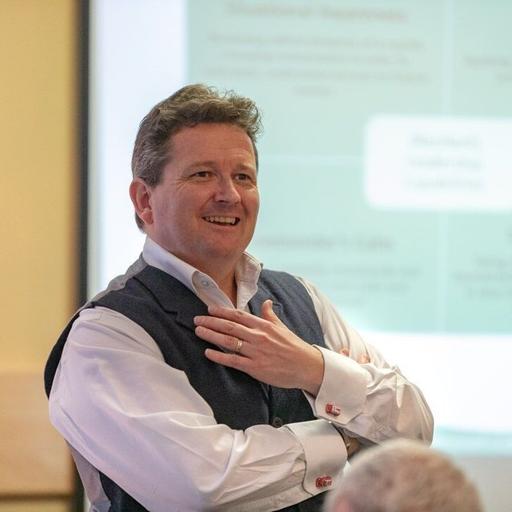
The Resilience Coach | Resilient Leadership Expert
100,000+ People positively affected6,000+ Executive coaching hours£12M+ ROI delivered by RWE npower leadership programme20+ years Learning, leadership and organisational development
Russell Harvey is The Resilience Coach - a resilient leadership expert, executive coach, facilitator and keynote speaker who helps leaders and organisations perform at their best when the world refuses to stand still.
With more than 20 years in Learning, Leadership and Organisational Development, 6,000+ hours of executive coaching and over 70 published podcast appearances, Russell is an experienced and engaging voice on resilience, leadership and navigating persistent change. He has worked with leaders across organisations including Novartis, the NHS, AB World Foods, Kerry Group and The Co-operative Group.
Russell’s work goes beyond helping people simply cope with pressure. He believes true resilience isn’t about “bouncing back”, being tougher or pretending everything is fine - it’s about springing forward with learning and becoming better equipped to lead because of the challenges you’ve faced.
His approach connects the human side of leadership directly to what matters to organisations: engaged people, stronger cultures, better decisions and improved performance. His work has delivered measurable results, including a leadership programme that returned £12 million to the business and a Resilient Leader Programme that achieved more than 1,100% ROI.
In August 2025, Russell achieved his long-held purpose of positively affecting 100,000 people.
More from Russell Harvey
All episodes → Living the Dream with CurveballSpringing Forward: Russell Harvey's Insights on Building Resilience and Embracing ChangeNov 2026Play episode →
 Transformation Station Leadership PodcastTSLP Season 5 Ep. 26- Thriving Is A VerbNov 2026Play episode →
 An Evolving Man PodcastReal Resilience: Why Pushing Through Isn’t Enough | Russell Harvey | AEM #172Oct 2026Play episode →
 Leadership From The Heart | Transformational Leadership InsightsResilience Without the Rebound | Leadership Mindset ShiftAug 2026Play episode →
 Burnout Proof Leadership: Identify Shift and Leadership Skills for Midlife Women EntrepreneursEssential Leadership Skills You Must Have If You Want to Build Resilience & Avoid Burnout When Your Business Gets Hard - with Russell HarveyJul 2026Play episode →
 Your Career JourneyHow to Build Resilience at Work: Leadership, Change & Thriving in Uncertain TimesJul 2026Play episode →
 The ThriveWell Journey | Entrepreneurship, Leadership & Life After DisruptionHow to Build Real Resilience Under Pressure | Russell HarveyJul 2026Play episode →
 Future Fit LeadershipThe 2030 Leader: Why Resilience is Your Most Vital Skill with Russell HarveyJun 2026Play episode →
 Different thinking for Different Time - Mindset Change and Thought LeadershipDifferent Thinking for Different Times - 7 Keys to Building Resilience with Russell Harvey How to Nurture a Resilient Mindset in Business and LifeMay 2026Play episode →