
August 11, 2023
The Resilience Coach, Russell Harvey. Spring Forward with Learning
Sound bites
I always talk about springing forward with learning just from my years of experience around resilience. I'm not a fan of this idea of bounce back.
The conversation I have with you is different better than any other conversation I have in my life.
In this episode
Russell Harvey talks about resilience, coaching, and how to spring forward with learning instead of simply bouncing back.
- Strength based development over focusing on weaknesses
- Personal development plans built around what people love doing, do naturally, and enjoy
- Resilience as pausing, reflecting, and re energizing after difficult experiences
- Natural resilience mixed with life circumstances and learned resilience skills
- Optimism grounded in reality, weighing the challenge against available strengths and support
Transcript
ShowHide
Automatic captions of the conversation. They can contain errors and do not name who is speaking.
So we do look at people's weaknesses but we think about it differently so sometimes or the vast majority of time when people look at their strengths profile their eyes go to where am I weak where are my problem areas where do I need to focus a bit so it's absolutely fascinating and it's brilliant the volume of my clients when I say to them stop doing that okay your personal development plan going away from our conversation is for you not to focus on your weaknesses I want
You to just put those to one side for now these are these things here that you've identified you love doing you do them naturally and you're good at them and they excite you and they Infuse you and you enjoy them for your personal development plan and your tasks now is to do more of that and a lot of people will turn around and go what you want me to do more of the things that I love and I went yes you don't want me to spend
Loads of time on these things that I don't like doing no why would you bother we will over time need to revisit the things that they don't enjoy doing to make sure that there's not some things they need to really watch out for if there's something really important that they need to do for their job or a life but it doesn't energize them and they're really not good at it but they've got to do it and we do need to face into that look at it
But if we look at it from a strength based approach the resilient on broadcast that that thing all around the world and from all walks of life sharing their expertise Tales of their business Journey with the hope that what they share will resonate with you in some way to make your journey that much richer Russell Harvey is joining us today from Leeds in the UK he's an engaging leadership coach and facilitator he's a public speaker a managing director a podcaster of a podcast called how to
Build your resilience and he's a radio host Russell is passionate about positively affecting a hundred thousand people by the year 2025 and has already impacted more than fourteen thousand how do you not lose cam of that well welcome Russell thank you so much thank you so much I actually need to update that because it was just every year ago the 14 have got to like 40 000. so it might be about 42 000 uh now how do I measure it thank you so much for letting
Me on how do I measure it it's in that space of I Adorn I love supporting people it's why I do what I do so when somebody in front of me has a realization moment or a light bulb moment or actually they have a moment that when we've tatted or have supported them and they've gone ah I know how I can use that and you can see that their mind is working about the Practical implication of what we've talked about that goes into the bucket of
Positively effect to everything I do I'm just aiming to get to let's have a Target 000 it's it did start out with actually yeah I just want to sort of positively impact people and then the world the sensors in the world when how do you measure it we have to make it smart and I was like oh gosh we have to make things smart so that's where the hundred thousand by 2025 came from oh you're almost halfway there so it might be time to that goal
Again so Russell you specialize in resilience and we are certainly in a world of uncertainty ambiguity let's start our conversation on that this is normally a last question in other episodes the question is what is resilience what does it mean to you what it means to me it means everything so that's one answers the question it's literally it's about the human condition and it means everything because if we aren't resilient then what are we or if we don't build and grow resilience what do we do
And as well the meaning of resilience to me is also about springing forward with learning I always talk about springing forward with learning just from my years of experience around resilience I'm not a fan of this idea of bounce back so if we think about we go through life as human beings things happen to us happened around us and then if we say okay I've faced into that it was like that was an enjoyable thing not an enjoyable thing I'll now go back I'm sort of
Standing there or sitting there going just wait just hang on a minute okay if you go back you can't what did you learn essentially so there's a risk there's a bit of a subconscious instruction to the brain that if you bounce back you won't learn from the experience so I'm on a one-person Mission which you can join me on about changing that to resiliences springing forward with learning now to do that from all of life's events you need to be able to pause and reflect which
Is where the learning is and re-energize and recuperate so if you imagine that you do something that you love doing you're tired it's a nice tired how do you re-energize from a nice tired but then you do something that actually is really difficult really challenging really struggles with you're a different version of tired you're a little bit broken so how do you re-energize from that really difficult horrible diet and there'll be different things that you do so deciding to make the choice of buying into springing
Forward you're learning so you pause you re-energize and reflect my question for everybody is how would your life be better when you choose to do that so if I was listening now it's like what will you have more of if you choose to do more spring forward with learning learning about resilience where you weren't resilient what worked for you what didn't work for you how would your life be better what would you have more of that you would like to have so it means everything to
Me because I'm the resilience coach and I also like people to think about spring forward with learning that's where I come from around the whole resilience piece I really like the idea of this is spring forward because you pull back for a spring to get it to shoot forward right so it's that pulling back where you take stock you learn build some resilience and go for that's brilliant it's so simple and so clear if you work with your clients like in what ways do you and
What type of clients do you work with a perfect ideal client it is so without doing any form of sales pitch it's like somebody that's got the job title of head of so it doesn't matter what industry that they're in so it's like somebody's got director of or head of it's that's you know a leadership coach so that anybody that's thinking actually you know what the job's going really well it's brilliant everything seems to be working absolutely in those moments you need a coach to go
How clear is it to you about how come it's working what's the whys what you're doing well and then uh others it's occasion if you are finding actually that facing into a volatile uncertain and complex and ambiguous world is sort of depleting you and diminishing in you and you're just like I don't mean I've had enough I don't quite know what to do then they're also my ideal clients and how I work with them is then taking a strengths-based approach it's really curious around how much
Do people genuinely understand what their strengths are those natural things that energize them that they really enjoy doing I use a psychometric to do that but you don't necessarily have to but I use it because it's a good conversation tool essentially for them to specifically clarify what their seven significant strengths are out of 24. uh and I may also get people as much as possible to think about their top three so the idea is that when you can spend as much time as possible utilizing your
Strengths the things that you love doing you naturally enjoy doing to achieve all the things that you want to achieve and you've harnessed them they build natural resilience and natural confidence and one of the dimensions of being resilient and I've got that resilience wheel that I talk about is confidence as well and so that's how I work with clients in the first instance just to understand where they are now no classic coaching it's like where would you like to get to and how can we manage
You to to get there so I work with individuals and I work with teams and it's also about taking a general line management and Leadership approach if you understand your strength as a leader and align manager how clear is it to you all of your team's strengths so we do look at people's weaknesses but if we think about it differently so sometimes or the vast majority of time when people look at their strengths profile their eyes go to where am I weak where are my problem
Areas where do I need to focus on it so it's it's absolutely fascinating and it's brilliant that the volume of my clients when I say to them stop doing that okay with your personal development plan going away from our conversation is for you not to focus on your weaknesses I want you to just put those to one side for now these are these things here that you've identified you love doing you do them naturally and you're good at them and they excite you and they Infuse
You and you enjoy them for your personal development plan and your tasks now is to do more of that and other people will turn around and go well uh you want me to do more of the things that I love when I went yes you don't want me to spend loads of time on these things that I don't like doing no why why would you bother we will over time need to revisit the things that they don't enjoy doing to make sure that there's not some
Things they need to really watch out for if there's something really important that they need to do for their job or in life but it doesn't energize them and they're really not good at it but they've got to do it then we do need to face into that look at it but if we look at it from a strength based approach that's quite revolutionary can say the two of his brains are going all right okay it's a rhetorical question for both of you but are you
Really clear well if you could only do a few things for the rest of your life that you loved doing well what would they be yeah you know and if you could spend more of your time doing those and you utilize those things that you love doing to support you with the things that you don't enjoy doing imagine that what would happen What would be different it's exciting isn't it I think my biggest trouble would be working out what the top three are because things I
Love doing and I'm lucky in that I get to do them and a lot of them is are work related right because we are working for ourselves and we are building our own business and of course we're going to gravitate towards the things that are most fun or that are the most rewarding that feel good to do yeah I think if someone's just building business which a lot of our audience is there are so low entrepreneurs they're doing this all on their own they feel like
It's all on them and quite often it is all on them until their budget allows that to be different so your your kind of recipe for Success the problem the sound of it is they just should keep doing more of what they enjoy and what the rest kind of takes care of itself so to start it can so so a lot of the clients I work with are business owners so absolutely with the caveat of like the principle would be when you've identified those things that
You're really not great at and really don't have any lots of natural energy for the idea would be actually well you get somebody else to do that or or you find a way to I may be systematized that if you can if it's possible so I appreciate budget wise but the principle B will don't be over time so everybody's listening now uh and and yourselves so just imagine a grid a horizontal line and a vertical line so the the activity that you do is it's from
A point of view of running your own business do Post-it notes or do a list think of every single thing that you do in terms of running your business on a daily weekly monthly and a quarterly basis for each individual activity that you do for each one of those individual activities on a Post-It note and we're going to do is you're going to plot these Post-it notes on this grid so the top right hand side of the grid is things that you love doing and are
Good at okay so the vertical access of the grid is your strengths is this word energy and the horizontal access is this word skills so the top right of the grid is that you love doing them highly energized by them and you're good at them the bottom right of the grid is things that you are good at but you haven't got the energy for it it's like if you're asked to do them you're like meh I've got two however people ask you to do them because
You're good at them so ironing I'm good at ironing but I don't have a lot of enthusiasm for it I have to lead myself up and then the bottom left hand side of the grid are those things that you are neither highly energized by nor good at but you need to do them it's not yet something that you could delegate top left of the grid is something that you love doing but you're currently you're a bit at it you're not very good at it right now
But you love it so if you imagine that you took up uh playing a new instrument which a lot of people did through the pandemic to start with sounds and the noises they made were terrible however uh they were highly infused by it so uh you plot all of your Post-it notes on this grid and it's not about trying to have something in every one of the four spaces uh it's just a case of where do your Post-it notes go and so step one is to
Notice as a business owner or anybody that's listening now actually what's the makeup of your grid where's the concentration of the Post-it notes and then you work through it over time to get as many things in the top right hand corner of the grid as you can the things that you love doing and then it's about strategies about what you do with the things in the bottom half of the grid so this is not a tool to move things from the bottom to the top because
If it's in the bottom that's where it stays if you don't have natural energy for something you can't magic it out of anywhere you just recognize ah these things in the bottom half where they are so if you if I'm being a bit sort of extreme if you've got a business owner there that's literally got the vast majority of their things in the bottom half of their of their grid and just one or two in the top right then they need to really understand actually at
The moment if they can't pay us to do it or they can't delegate it just how much of their time is going to be de-energizing for them and it's going to just weigh them down so with spring forward with learning they're going to have to do lots of re-energizing because each time they face into their business the fair amount of it actually could be draining for them and holding them back and what you want to do over time is just get your Post-it notes most in
The top right and have strategies for the bottom half the only thing that will shift is something from uh the top left to the top right because if you love doing something you love it but you're currently not very good at it the more you do it you'll get better yeah you've got to put in those 10 000 hours no matter what to get really masterful yeah there's so many repetition yes that you need to do yes the ten thousand hours thing is interesting yes it
Sometimes it gets misinterpreted but it's it's just you do need to put in some effort and repetition around things but please don't do ten thousand thousands on something that you hate doing because it will absolutely batter your resilience I think that's a really good point and something that a new entrepreneurs really need to listen to and I love this idea of the grid of really taking stock of where you're at and what you love and what you don't because we often talk about your finding your
Zone of the genius staying in there delegating out what you're not good at because like you said keeps you energized and we've had a podcast guest not too long ago talk about adrenal fatigue syndrome which is the medical term for Burnout which was a big aha for me not realizing how much burnout actually as a medical thing and recognize as a medical problem and often what leads to a burnout is doing all these things that we have no energy for we're not good at we hate
But we still have to do finding that balance how do we figure it out which is where coaching comes in to really help people I think understand if you also think about the three words that are used in resilience around coping surviving and thriving which I know there's lots of buzzwords in it so the thriving I work with the clients to go what really does thriving mean to you in a resilient you mean it's about getting them into the top right so the top right of
The grid is where thriving is actually really loving life uh enjoying it facing into challenges you feel good so you when you're in the thrive in the top right your optimism has improved your confidence is improved your natural resilience has improved so what you used to see is challenges it's probably potentially maybe diminished and so in the bottom half of the grid that's where you could be coping and surviving and for my years of 15 years now working with the word resilience that sometimes I notice
That people believe that they are being resilient when they're coping and surviving I would like people to start to think more about that isn't really resilience that is keeping going regardless and it's really difficult in those moments to do the pause and do the step back and go actually I am just I'm batting my head against the brick wall here whilst I believe I'm being resilient and myself and many others are going that's not really the resilience that we want people to think about we want
To understand actually being in the top right is where the true resilience piece is and the there's a significant amount of search that how you get as well into Thrive is around the lovely word of adaptability openness to change one of the key components of being resilient but there's research that shows that actually those people that are in thrive they spend a third of their time working upon their openness to change so we're in the space of actually everybody's listening now how much of your time
Do you actually spend working upon about the idea of doing something new the idea of challenging yourself the idea of facing into something that you don't like or you don't enjoy or you're not sure about but you're going to try it out trial and error essentially so yes the adaptability you're suggesting that people can train themselves to like change I wasn't making sure that in this that I don't sort of because in the Learning and Development field we can often sort of say yes really quickly
So I'm pausing people can't see it now but over my shoulder I've got something called phrenology which is somebody's head so there's an old bunkum like idea from way back when that you've used different parts of your head it tells you that at the back right is love in the middle is like stress and then it's rubbish so I'm pausing while I'm just making sure Vicky that I definitely am comfortable saying yes you can train yourself to like change more and that's part of being resilient
To like change more absolutely yeah so all of the aspects of resilience so I've mentioned the resilience wheel there's seven aspects to it and it's a build upon research from Robinson Cooper when you play around with all different aspects of your resilience wheel they're all interconnected so when you work one bit of it it improves another bit so when you're building your general resilience you will be more comfortable with doing more new things sorry but if you try doing new things from a depleted State a
Tired state the idea of doing something is just go oh thank you I just haven't got the energy for it so this is why spring forward learning pause reflect and re-energize that's why I keep talking about resilience in that way you can train yourself to like change more and different types of changes more and uh what about resilience is it uh something that some people are born with more than others or do we all learn it so we so there are so it's three types of
Resilience there is our natural resilience that we're born with that is out there we're born with some and then life circumstances are then actually how much of that resilience that we attain so then that's the whole sort of nature nurture debate of like we go through life there is also uh interesting research that shows that those people that have had more challenging upbringings if somebody in their lives either by happenstance or on purpose encourages them from an early age to play to their strengths even though
That they have had a difficult upbringing or difficult background or some challenges they are more resilient than those that aren't encouraged to do that from an early stage so we've got the natural type resilience we've been born with the whole nature nurture debate isn't about that then it is about actually uh working Upon Our you know resiliency skills right just our resiliency all of it everything to do with the resilience will the hundreds of thousands of resilient skills that are there emotion resilience optimism anything else
That you can think of around tips to build your resilience is like work upon those essentially so we are born with some but we also have to put some work and effort into it as well and no doubt coaching helps I'm totally biased but yes so you might know somebody who could help coach somebody into more resilience I think so I think I think I think standing very close to them right now I think all right so let's talk about coaching just quickly like the statistics
Show that 80 of Executives who receive coaching have reported increased self-confidence and 70 of them improved work performance so why do you think that is what is it about coaching what happens for an executive or anyone who's coached versus someone who isn't yeah so I I try and Role Models so I ask for a lot of feedback about my coaching with my clients because I really want to know what I'm doing well and what can do more of less of and the thing that I don't
Know why it surprises me but I think it's most common uh in the feedback is the type of conversation I have with you Russell is unique I don't talk to anybody else in my life the way in which we talk to each other so I think it is actually generally what goes on in a coaching conversation it's the fact that somebody is getting a very different better form of support and positive challenge in that conversation it's highly independent it's one of the ethics of coaching is
That you need to make sure that you hold all of your clients in unconditional positive regard so the lack of judgment there is in a coaching conversation it's really free although that is absolutely my intention is that people can contain say and do and think what they need to and it's okay it's all right then it's about actually how useful are these thoughts and what you're saying what they're doing how are they benefiting you how are they not benefiting you so that that's I've had lots
Of lovely feedback but the most common thing is I've noticed that many times clients are sort of say I I just the conversation I have with you is different better than any other conversation I have in my life so I think that makes the difference essentially and as a result of that people can leave the conversation and actually genuinely behave differently better in the way that they need to to achieve the things that they need to achieve and quite rightly when you feel good you're self-confidence
Belief in yourself your strengths your skills what you're capable of going away so you know what I'll be spending my whole life working on these things I hate doing and something else says well stop that that is revolutionary I think we will be like what what mind blown is there a type of client you can't help you ever had to fire a client so yes I had to fire one I think I might have asked a good question yeah I think we've through the Contracting that
You do we do talk about actually if it's not working how we depart from our relationship so I have brought that to an end earlier I wouldn't surprise the client it's it goes down to state of Readiness oh there there was actually so there's some clients you don't take on there's sometimes there were there's a couple of clients that have come along and said I want to work with you Russell because I've seen sound so in my business work and behave like this and they get
Ahead and then they tell me the behaviors of the person that they want to copy and be like and I'm going I don't want to produce another one of those types of people in the world so I'm not going to take you on which was a light bulb moment for them to go what on Earth you want about it's like how do I think those behaviors are necessarily the right behaviors to be doing to get ahead so if you want to copy that I don't want
To support you to get there so that was one so it's the state of Readiness of learning so that that's where I know in those moments um I'm not enabled them to support them because you can keep talking about things but if actually if there's no shift and you you can't work with a person to get them to understand that their willingness to shift is not there then that's when for my own personal well-being I need to step away because coming to those conversations it's not
Great for me well I have to understand actually when I have all of my coaching clients there needs to be that I'm adding some value that I'm actually enjoying it it may have absolutely some really difficult subject matter sometimes with clients about where they are and what's going on for them but you you can work through those and they're part of ultimately enjoying shifting somebody into a different place so it's the state of Readiness to actually take some ownership and responsibility if that's not there then
We need to part ways see the reason I ask that is because so many entrepreneurs are really afraid of saying no to a client especially when you're starting out well you've still got to pay the bills you don't have that buffer you don't have The oversubscribe Client List waiting to work with you and a client comes along and they've got the money they're ready to pay you but you know you can't either work with them or impact them or like you said they're just not ready
So it's a really hard thing for a lot of entrepreneurs to say no but the reality is we all also know that by saying no you open yourself up to more yeses absolutely and so for me I'm reminded there of one of the dimensions of being resilience is the purpose so hence that's why I've got positively affect 100 000 people by the age 2025. so for me to achieve my purpose because that's my purpose that's about my value system who I want to positively impact where
I want to work clients I want to say yes to and no to so it's about my value system who I will work with and who I won't work with so in terms of me running my own business for eight years now it has had to be trusting the process of if you live to your purpose Russell and your values the clients where you can add yourself most value get the most trip return get the greatest feedback and get more clients is about actually understanding who
You will and won't work with hand on heart pragmatic there are times when I've worked with people because I needed the money in the business it's a commercial business so absolutely is striking a balance between I can't sit there eating fresh air for tea because at the moment there aren't the clients that I want to work with I have to pay the mortgage but in the round over the growing my business is actually making sure that that as many right now all of the clients that
I work with are in that space of actually I can do something to support them and there is some connection around our values and say that you must have values aligned because that's when you know that absolutely absolutely so values I think are quite easy to come by it's I wasn't so easy but it's easier in my opinion it's easier to identify your values than it is to identify your purpose would you agree I suppose they're feeling a bit like chicken and egg to me they
Come up in the when you ask the question what's your purpose I think people retro understand retro pick out what their values are by defining their purpose so I think they just sort of happen in sync ah okay so that wasn't my experience so I could say yeah I know my values I know what I believe my beliefs are that what's right in the world and what I want perceive for this world but finding my purpose and articulating that has probably been the Holy Grail that's
The one thing that's always off as far as the Horizon you never quite get to it so as a coach Russell I'm not going to ask you to coach me here on the spot that would take too long and it could just get a little too revealing but as a coach how do you help people find their purpose so hopefully without being facetious it literally ask the question first of all have you got any idea what your purpose is you know yeah and they say heck
No and and it literally is it's a I don't know it feels about 50 50 of like yeah I've got some idea if it's this of like what on Earth are you on about okay so then it's journey of Discovery it's multiple questions around either what's important to you or what you like doing or how come you get out of bed each day uh why'd you do the things that you do tell us about the time in your life when you've felt most proud that one's
A really great one so once again everybody listening now you feel free to do this uh start to think about actually in your whole life whenever you have that sort of warm fuzzy feeling that there was something that you were involved in and actually made you feel really good it had gave you this feeling of Pride so think back through your whole life in and outside of work in and outside of school and just sort of pick one some people find this really easy some people
Have to go away and think about it lots but once that door opens nine times out of ten it Cascades when when you think about the first one others come and maybe just pick a number oh you might you want sort of 10 stories five stories the a number of stories of pride in your life and then you break them down into the an acronym of challenge action result car c-a-r car so when you've thought about that thing that made me feel proud it's like right
Just break it down at the start of this story of this experience you had in your life what was the challenge what was the problem what was wrong what were you challenged to do what you're asked to what's the starting point then what were your actions what we are involved in were you were a leader were you a follower how did you behave what strengths did you use what skills what conversations did you have what did you enjoy about it what were your actions what were
Your behaviors and what was the result of what you did you know challenge action result and then however three five ten of those examples just think about actually some form of headline to that story what was the starting point and then as a result of that keep looking at the letter A the action bit because in there is all of the Gold Dust around value and purpose because what your strengths were what you love doing the conversations they had when it was tough what did you
Do how did you behave what were you actually working upon who were you working with who what did you like about the people that you worked with if any of it was challenging what was that about and in there when you do a few of these stories there'll be some similarity and that will link to who you are as assuming your values and your purpose because he said right if we take all those things in the letter A from your example if you could do that
For the rest of your life that's where the purpose would be and so all business owners that are listening now and entrepreneurs it's this thing about you set up a business for a reason it might be useful to double check if you did challenge action result of all the things you felt proud of in your life how much of that is still the case with the business that you've set up the business that you're doing because sometimes you might feel as though you've lost your way
So it's an opportunity for sort of entrepreneurs business owners to go actually I realized I've been taken off course circumstances of taking me down some paths I didn't want to go down so then you could regroup this thing forward with learning pause and reflect and re-energize do the stories example challenge action result and then you can spring forward with more energy for actually you know what my business was this purpose I started out like that I remembered that I'd forgotten it along the way and actually
I need to go back and focus on that was my reason for setting up the business and make sure that I do more of that yeah I think that reflection especially after you've been in business for for quite a while and everything's just kind of ticking along and you kind of feel like ugh I think as an entrepreneur we're very um wanting to build the next I think it's it's kind of a natural entrepreneurship trait is like that excitement in the build the growth the startup
We kind of love that phase but I really like that question like to ask what are you proud of and I recently heard that's a great question to ask a teenager instead of what do you want to be when you grow up what are you going to do when you graduate you know what are you going to study start asking them what they're proud of doing and it's even in the small things where I think it comes out like one of the things like what are
You proud of doing maybe a kid answers well you know my friend fell on the playground and got really hurt but I comforted them and then I went and got the ice pack and because my daughter talks like this she's 10 and so I ask you these questions and she tells me stuff like this I'm thinking back my mind maybe the medical field for you you might want to think about because you you love that and you love helping and caring for people maybe they teach
Somebody something and they're really proud that they helped somebody to understand something they didn't understand well maybe education's a great thing to go into or when you're older it's what type of business you might want to build I think that's brilliant I love that question I think I'm going to ask that a lot more often now absolutely well you know with all of your clients about your business what makes you proud then how would the two of you support them will be linked to that that's
They're telling you essentially what they want you to help them with at that moment in time yeah anybody that's markets marketeers or social media or Business Development support that's just loads of clues in there Russell what are you most proud of so I'm proud of the fact that the resilience coach is is still here after eight years I'm really proud of that most small businesses for old after three years I came through the pandemic did lots of pivoting really proud of that I'm proud that I'm
Living my values and had specific sort of piece of work is that recently it did leadership development program for a retail Bakery in the UK and uh we delivered a program a modular program to lots of leaders and we had approvable about 1400 return on investment there was half a million pounds it was 500 000 pounds worth of provable return on investment as a result of the program so if somebody said something to me many years ago decades ago but we never know if Learning and
Development actually adds any value and that annoyed me uh it got on my Wick so it was much extremely possible there's two times when I've done that so when I was working the corporate world I was leading a whole program that was UK wide wearing its first year it was uh a 4.2 million pound return on investment but this many years later with this uh retail Bakery firm piece of work I did with them half a million pound return on investments they they really make me
Feel proud give me that warm and fuzzy feeling essentially so um I do have a question for you was there ever a time when you just thought you weren't gonna make it no it's just like there were absolutely times when it was proper scary it was really scary you know I wasn't entirely sure where the next bit of work was going to come from and it never went into me going yeah do you know what I think I'm in that box of like a failed business
Owner in those moments in terms of learning yourself it's like it's that behavior in those moments I did something different so those moments of like I really don't know what to do next drove me to try something different they in those moments they made me do pause reflect spring forward learning in a different way you can't you have to adapt Russell it was the cell coaching element of I have a underlying uh element I'm so lucky of optimism but I think I'm also really lucky because
I spent all my time talking about this word resilience and all the time I do do that so Russell are you are you a hypocrite are you are you doing this are you working upon this so I really try and make sure that I am and the optimism piece is something that I really believe and I've worked upon which I'll talk more about in a second but whilst it was really tough and difficult I never wanted to quit but in those moments it sort of drove
Me to actually do something different otherwise asked for help or go do something that really scared me or put me in stretch Zone essentially and as my learning is actually don't use that absolutely sort of sheer Terror moment to wait to do that next time so my learning is actually this change that you did or a different way you behaved or something different you asked or you you changed your approach it's like actually I need to be more open to changing my Approach spending more of
My time working on my openness to change helped me in those moments what got you into being a resilience coach what was it that led you in that path so my whole career has been learning leadership organizational development so always supporting people you're a lifelong learner been there but then at my last permanent role as an organization called the co-op group so there are cooperatives all over the world the co-op is a big retail Insurance Pharmacy funeral care business in the UK and it was a
Corporate role leadership development corporate role not long after I joined the business so nothing to do with me historical decisions that the business had made came to light that put them in an incredibly incredibly difficult position uh as a whole business this is an enormous business that has a hundred and almost almost a 200 year history and it came close to not being there anymore so I was there and that happened it came out to go we're in trouble so all of my clients in the
Business who are literally coming to me with their head in their hands and going Russell what on Earth do we do and I was going don't worry I've been looking at this word resilience and I've been looking at this in acronym called vuca V you say ca the world living volatile uncertain complex and ambiguous and I went our Solutions are in there in vuca and resilience so trust me you know that's where our answers are we we role model those we put roller sleeves that we
Think about those we understand truly what resilience means because we're going to have to do some coping and surviving but we need to move into the thriving so let's not get stuck in the coping and surviving and then so I did that for a number of years with the co-op group I also knew that my time with them would come to an end so much change that was going on there was an awful lot of restructure and there's an awful lot of redundancies so I knew
That that would come my way too and it did and it was in that moment there went timing is right for me to set up my own business went and did a yet another coaching qualifications through a diploma in coaching and did some Naval gazing about who am I what's my USP is a business and I went ah you're the resilience coach Russell you've literally just spent the last five years just working on the resume so you are the resilience coach hence the marketing name I'm
Not any old resilience coach I am the experience I like it emphasis on the absolutely and it's such an incredible alignment for you to join us today because we are big Believers in everything you've said right the resilience coach or the happy chappie it's just so fun listening and talking to you thank you I appreciate that that's nice I like it and the optimism piece you were saying that optimism was important to you so the optimism piece it's just thinking about this the real sort of
Nuance between optimism and positivity so they're highly interconnected if you look up the definition of optimism in the dictionary positivity is part of the answer but I would I'd like people to think about is optimism is grounded in reality so the starting point of optimism is like if we've got this challenge you absolutely must be clear about what the challenge is how difficult it is but not put yourself in a place of like giving up or depression it's like you just need to be clear the
Size and the scale and the state the challenge we've got so grounded in reality and then from there you think about what strengths and skills and capabilities and experiences and attitude and mindset and resilience that I have and the people that around me have and actually as a result of understanding what all of that is you weigh up against there's the challenge and here's all of our strength skills capabilities attitude and mindset and it's like actually as a result of looking at that I genuinely believe
And genuinely hopeful not full soap that we'll be able to face into this Challenge and overcome it and as a result of that you get feelings of positivity so it's just moving away from the knee Jack reaction of like is a problem we just need to be positive just think about it actually let's be really clear about what the size of the challenge is and then think about everything that we've got to counteract The Challenge and is there enough of that for us to believe that
We can come out the other side and then when you go actually you know what I do I do you suddenly feel positive well we've had the resilience coach on resilient entrepreneurs I mean it couldn't have been a better fit it's such a joy listening to your stories and not just stories but absolutely Sage advice I'm actually going to re-listen to this episode on numerous occasions and I'm going to press pause and I'm going to do the exercises that you've offered us so generously thank you
Russell this has just been a joy to have you on resilient entrepreneurs and my absolute pleasure and I love the idea of the happy chappie I'm cool with that that's good thank you so much for having me on and yes good luck for everybody and just trying things out around springing forward good learning thank you and that's a wrap for today's episode of resilient entrepreneurs we hope you enjoyed hearing from our amazing guest and learn something new about resilience and Entrepreneurship the number of resilience isn't
Just a treat it's a skill that can be learned and developed and if you want to stay connected with us and hear more inspiring stories be sure to hit that subscribe button and follow us on social media and if you know somebody who's a resilient entrepreneur and would be a great guest on our show we want to hear from you please reach out thanks for tuning in and we'll catch you on the next episode of Brazilian entrepreneurs foreign
About Russell Harvey
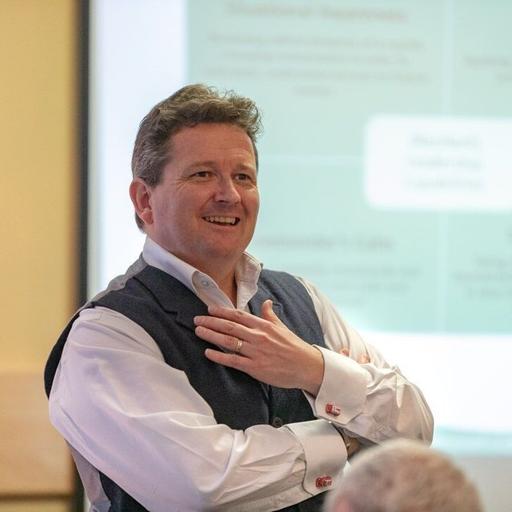
The Resilience Coach | Resilient Leadership Expert
100,000+ People positively affected6,000+ Executive coaching hours£12M+ ROI delivered by RWE npower leadership programme20+ years Learning, leadership and organisational development
Russell Harvey is The Resilience Coach - a resilient leadership expert, executive coach, facilitator and keynote speaker who helps leaders and organisations perform at their best when the world refuses to stand still.
With more than 20 years in Learning, Leadership and Organisational Development, 6,000+ hours of executive coaching and over 70 published podcast appearances, Russell is an experienced and engaging voice on resilience, leadership and navigating persistent change. He has worked with leaders across organisations including Novartis, the NHS, AB World Foods, Kerry Group and The Co-operative Group.
Russell’s work goes beyond helping people simply cope with pressure. He believes true resilience isn’t about “bouncing back”, being tougher or pretending everything is fine - it’s about springing forward with learning and becoming better equipped to lead because of the challenges you’ve faced.
His approach connects the human side of leadership directly to what matters to organisations: engaged people, stronger cultures, better decisions and improved performance. His work has delivered measurable results, including a leadership programme that returned £12 million to the business and a Resilient Leader Programme that achieved more than 1,100% ROI.
In August 2025, Russell achieved his long-held purpose of positively affecting 100,000 people.
More from Russell Harvey
All episodes → Living the Dream with CurveballSpringing Forward: Russell Harvey's Insights on Building Resilience and Embracing ChangeNov 2026Play episode →
 Transformation Station Leadership PodcastTSLP Season 5 Ep. 26- Thriving Is A VerbNov 2026Play episode →
 An Evolving Man PodcastReal Resilience: Why Pushing Through Isn’t Enough | Russell Harvey | AEM #172Oct 2026Play episode →
 Leadership From The Heart | Transformational Leadership InsightsResilience Without the Rebound | Leadership Mindset ShiftAug 2026Play episode →
 Burnout Proof Leadership: Identify Shift and Leadership Skills for Midlife Women EntrepreneursEssential Leadership Skills You Must Have If You Want to Build Resilience & Avoid Burnout When Your Business Gets Hard - with Russell HarveyJul 2026Play episode →
 Your Career JourneyHow to Build Resilience at Work: Leadership, Change & Thriving in Uncertain TimesJul 2026Play episode →
 The ThriveWell Journey | Entrepreneurship, Leadership & Life After DisruptionHow to Build Real Resilience Under Pressure | Russell HarveyJul 2026Play episode →
 Future Fit LeadershipThe 2030 Leader: Why Resilience is Your Most Vital Skill with Russell HarveyJun 2026Play episode →
 Different thinking for Different Time - Mindset Change and Thought LeadershipDifferent Thinking for Different Times - 7 Keys to Building Resilience with Russell Harvey How to Nurture a Resilient Mindset in Business and LifeMay 2026Play episode →