
July 29, 2025
VUCA-Proof Your Leadership
Sound bites
My specialism is how to lead yourself and others well in a volatile, uncertain, complex, and ambiguous world.
In this episode
Russell Harvey joins Team Building Saves The World to talk about leading yourself and others in a volatile, uncertain, complex, and ambiguous world.
- A resilience model built around attitude, purpose, confidence, adaptability, support network, meaning, and energy.
- Resilience defined as springing forward with learning, not simply bouncing back.
- Purpose explored at three levels: personal purpose, leadership purpose, and team purpose.
- Strength based energy work used to connect individual strengths with team and organisational resilience.
- Leadership choices and resilience habits linked to helping teams handle change and uncertainty.
Transcript
ShowHide
Automatic captions of the conversation. They can contain errors and do not name who is speaking.
on this episode of Team Building Saves the World. So my specialism is how to lead yourself and others well in a volatile, uncertain, complex, and ambiguous world. They actually want us to have a conversation with them. And ooh, am I equipped? Please don't fall into the trap of believing that you can feel somebody else's feelings, right? And when organizations said, right, everybody back into the office, many of the humans went, um, no. Hello team. It's me, your old friend Rich Renins, host of Team Building Saves the World.
And I'm wondering, how's your VUA today? What's VUA you ask? We're going to find out in this episode as I speak with leadership coach, facilitator, public speaker, fellow podcaster, and radio host, Russell Harvey. But first, I have to share some love with all of my supporters at Team Bonding. If your team is ready to experience teamwork through the power of play, then visit teambonding.com to learn more. Now team, let's learn about VUA as I talk with the resilience coach, Russell Harvey. Russell Harvey, thank you so much for coming on the show, man.
I appreciate you being here all the way from across the pond. Where are you coming from? Uh, thank you. It's very nice to be here. So I'm I'm in the north of England leadeds in the county of Yorkshire and it has got the moniker of God's own country rich. So uh you know allegedly when you come into the Yorkshire Dales that's it. You're in God's own country apparently. Ah well I'm from Jersey and they said the same thing there. So I'm not sure. Okay. All right then. That's New Jersey. Not to be confused with your Jersey.
But Russell now normally here's the thing. I start the show like this and I I I introduce the guest and then I have them talk a little bit about themselves, introduce themselves to the team out there who are listening ju just to get that feel of who they are before we dig into the topics. But it's only like a 40minute show and you have done so much. Uh I'm looking over your CV that I have up on my computer here. Your 20 years experience in just the coaching industry. You've also been a national training awards judge.
The assoc you've been a member of the association of training. You are certified in training education and coaching. You I mean are you just bored? Is that what's going on? No, no, no. I I think it's just I love like uh human development essentially. Beautiful. Just literally just what makes us tick. How come we do the things we do and how come that person is over there doing that thing which is just oh my god and logically you'll go well yeah the textbook says that they would do that and you go okay yeah it's fine but you look at it and go but I yeah I don't I don't get it I don't get it but what made you start this way I mean what what made this the direction your life was going to take yeah so as a kid really interested in human behavior and then so genuinely Um it was 1996 in Hong Kong.
So I know I don't look old enough obviously to have got that time scale. Um and I was traveling around part of traveling around world for around the world for a year and I was teaching English in Hong Kong and when people in the room were having light bulb learning moments. Yeah. Yeah. Yeah. I suddenly went oh I want to do this for a living. So I knew I didn't want to be a teacher uh in a school that wasn't me. So when I came back to the UK it was like the job title was I think I want to be a business trainer and recruitment agencies go what do you know what you qualified in and I went nothing and out and then that's when all of the qualifications so a career in learning and development and then today and for a number of years I listen I am a coach and I am a facilitator rich it's it's who I am and it's just I love supporting individuals to have light bulb realization and learning moments.
Excellent. And over the past 18 years, you've specialized in, and this is a new term for me. Is it called VUOA or just VUCA? No, it's called, it's VUOA. Yeah, absolutely. All right. Now, now explain to my team, I even had to Google it and do a background search on it myself. Explain to my team what it is and how this became your focus. So, the simple version is we hear the sentence a load of times of change is constant and we will all and we'll all just nod. exactly as you are now. Right? However, the vaua model brings that to life for me.
So my specialism is how to lead yourself and others well in a volatile, uncertain, complex and ambiguous world. Okay. So that's four buzzwords there. You know, volatile, uncertain, complex, ambiguous. And I've got four more. So to counterbalance the first four buzzwords, four more are you need vision, understanding, clarity, and agility. Oh, lovely. However, when you put all these together and you look behind the definitions of all of these eight words, you start it bring to life to you about how come change is constant and then as a leader and as a human how you can face them and they all link to resilience.
So the resilience and the vaua piece are all interconnected. The vaua model is not mine. It's from the 1990s and the ex head of the armed forces Afghanistan Iraq and an occupational psychologist called Louis Soaker came together and brought it into the business world. So that's that's where I've been for the last years. So you have been quoted um as talking about mojo corporate mojo. Is that resilience to you or what does mojo and the the fact that you're British is blowing my mind that we're even using this term but is that does it mean resilience or or what is it for you?
Yeah. So so mojo you could equate to the word thrive. So you've got you know in in my space you know you have got these words that are out there. So there's surviving, coping and thriving. M so surviving is hanging on by your fingernails literally I am I am not in a great place. Coping can be a broader spectrum of like I'm okay but it could be I'm okay and you know what I'm about to tip into not okay or it could be I'm okay and I'm about to tip into good. So when somebody has their mojo you and they are thriving you can they legitimately say there's a lot going on.
There's there's a huge amount of change going on and because I have built and grown my resilience, I am in a good place. Is it just resilience though? And how is it that we can just to backtrack a bit more, how is it we can recognize we're losing our mojo in a corporate sense? Like if I am a leader out there, someone mid-management or above who feels like maybe something is slipping, how do I know it is? So it's all in response to the lovely question of or questions of how are you and how's work? Okay. So it it's it's like so there's um it's all in that space.
So prior to working with me sweeping generalization clients responses to how are you how's work will be some variation of there's too much change or I used to have a lot more energy for this or I'm not entirely sure how I'm going to do XY Z we seem to have the same problems are coming up and it's all about this word of energy this internal feeling of energy so during and after work with me you ask them how are you how's work they'll So, ah, yeah, I'm really good. I've got total clarity about my purpose and what I'm here to do.
I understand what it means to me personally to be resilient and I am engaging with that and and spending enjoyable time doing it. I know what it means to be a resilient leader. I have clarity on the questions I'm supposed to be asking. I've got clarity on the decisions I'm supposed to be making. Right? That that's the difference between the two. And one just little build upon that just hopefully bring to life the relevance of this is that the last two world happiness reports there was some research in there that really intrigued me.
So our ability to answer well the question of how are you? How's work? Yeah. Something ridiculous like 70% of our ability to do the answer it well is down to our relationship with our line manager. Okay. Define that for me. So it's literally you've got your boss. Yeah. Your line manager. Yeah. And how good your relationship is with them about how well they nurture you, grow you, coach you, develop you, provide, you know, work for you that is nurturing you and making you feel good, that has an impact upon your answer to the question, how are you?
Because when we turn up for work each day and we know that somebody is there for us, they're there to support us, they're there to understand what our strengths are, they're there to enable us to grow and develop. Mhm. And we are going to answer this question. Well, essentially when did that flip or was it always that way? Because I can remember back in my days of corporate life where I showed up and I was expected to bring the energy with me to bring those good feelings. I had to be the motivator and when everybody on my level was motivating themselves along, then the managers got to pass that good feeling up.
When did this change? Was it just the pandemic or has this been a slowly shifting mass all throughout? Yeah. So, so it'll always have been around, but then it'll be alongside, you know, the traditional level of work. So, it's a case of from a a corporate point of view, it's like does the corporate see the humans? How do they see the humans? Are they people that just part of a sausage machine to do what we do tell them, right? Yeah. Or actually have we understood that actually uh when we nurture enable our people to be at their best you know actually their performance and their engagement and the productivity actually really improves and so how do we do that actually you know what we need quality line management relationships and the pandemic absolutely did have an impact upon that because a lot of people globally right turned around and said actually I've had the opportunity to reflect upon how work is done you know and then when it's just a simple version when organizations said right everybody back into the office many of the humans went um no um I I there's we have understood that there's a better way of doing this so employee power increased okay as a result of that okay for the management and above did that in fact increase vaua levels or help decrease vuka levels.
No, it definitely increased it when when the when the power shifted. Yeah, it did because they because it was, you know, line managers in more senior leadership were going, "Oh, we're just I'm being really simplistic now, but they used to say, yeah, we're just well, we're telling our people what to do and they do it." And now they're answering back and actually have understood that just telling them harder and more isn't working. they they actually want us to have a conversation with them and oh am I equipped you know as a leader to have this conversation and actually I've got to adapt so we keep talking about adaptability is a huge element of being resilient right um but you know um this is goes into the whole place of like when changes happens around us that we didn't instigate we struggle with them or we can struggle with them so You deal a lot with both in America and Europe, correct?
Yes. Yeah. UK. Yeah. Globally. Okay. How has the VUA been since the pandemic? I mean, we've been back to work. You know, no one's in lockdown anymore. No. Nobody is forced to shutter. So, how has it been in the past few years that you've seen? So, it's it's been equally voua. So I don't know. Uh can we make it a verb? Is that okay? Oh man, I'm vukerid. I am just vuked like you wouldn't believe. So this this is a case of when people really face into this lovely voua terminology, they really get the fact that this what it really means that change is constant that always there's always something somewhere going on and it's understanding when and how it will impact me or if it won't impact me essentially.
So yes, so both UK and US there have been changes of government and there have been changes of leadership style essentially and um we have had a variety of financial challenges. Yeah. You know so what still unfortunately in the UK one of the only industry that's doing really well is uh insolveny. Okay. which is, you know, not great essentially, right? And we have there's this funny new thing, Rich, that, you know, I don't know if you've heard of it called artificial intelligence. I'm I've heard some words. I've heard there's this, you know, God knows what on earth it is.
So, you know, artificial intelligence is absolutely going to vuker us into the most voua place that we've ever been vuker essentially. I think you just used it as three different parts of a sentence, right? Absolutely. Yes. Yes. I'm married to an English teacher, so I don't know if that helps. But why? I mean, because there are so many people who are counting on it and there are so many people who are dreading it. Why? Why is AI, you know, either going to voua us out of everything or and if that's the case, then why do so many people believe that it's the savior that they're treating it to be?
Well, well, I suppose simple answer is like it's the newest latest big shiny thing. Okay. You know, so when television first came along or whatever the you know, it's like um so yeah, anything. the newest shiniest thing. And so then the human race is going to face into that against the age-old question of do you like change? Right? And most of the time people turn around and go it depends. Okay? You know, and and so uh we don't yet um so only certain individuals uh fully understand what artificial intelligence is going to do, right?
I'd like I'd like to meet them. just want I just want to sit down with a beer for an hour and just go just tell me where's it going and then I can either go and cry and dribble in a corner or I can go oh okay then all right yeah I can I can I can go with the flow on that one essentially right yeah it's all about it's like do you like change and when you've got this big shiny amazing thing that a lot of people are sort of saying this is going to revolutionize the world people react differently to that statement essentially And it's well it's amazing to me how many people look at it and they say it is a great thing that right now we can put everything in it.
It is like this magic box that everything fits within and then we will constantly be having good practice and great flow and so on and so without even understanding what it is that it's a tool for people to use. And I was talking exactly like this. So, um, not doing extra self-promotion, but I've just literally been talking earlier today with my, uh, guy that helps me with my blogs, okay? And the next series of blogs is around what on earth is this thing called human augmentation, you know, what is it? and and I'm so and I'm really my concern is that I'm in the space where I'm working with humans all the time about what does it mean to be resilient and resilient teams and there's massive areas for improvement still around that you know a high performing team is a resilient team right so um then you sort of say right let's throw artificial intelligence into the mix because it's going to augment users make us better however if that set of human beings isn't currently got good levels of resilience then AI is going to have a detrimental impact upon so the resilient team will actually give itself a best chance that AI will it augment it make it better rather than everybody turn around and go oh my god I we we we are struggling to work together how on earth we get this AI thing to work with us I don't know so yeah what on earth is human augmentation when I don't believe we are fully there yet and what it means to actually do human interactions really well.
Okay. So, I'm a leader who believes that the resilience that the mojo is not flowing the way that it should. I've recognized it. I don't want you to give away the candy store here. I still want people to be able to, you know, call you up and say, "Russell, save me. I'm I'm vuked beyond belief." But can you just give me give me a sample of some of the ways that you have seen where leadership has actually improved the resilience of the team that they're working over. Uh yeah. So um what's the easiest way to talk about this?
So without naming names or getting me that is No, no, no. It's it's so uh it's like so they engage with their resilience wheel. So what I mean by that is if anybody asks me a question of like so Russell how do I build my resilience I go there's a wheel seven bits to it and when you make the choice to engage with your resilience wheel you will build personal resilience leadership resilience and if you do that with your team the wheel with your team you build team resilience so what the resilient leader does is they make the decision and the choice to engage with their um resilience wheel.
So I define resilience as springing forward with learning. Okay, springing forward with learning. I'm not a fan of the term bounce back essentially because a lot of the time we face into life's challenges and we say to ourselves and now bounce back which is there is the risk it's a subconscious instruction that you'll go back to how you were and I'm going look you can't. Yeah. Okay. Yeah. I understand that. I mean there are many times many times in my personal life where I thought if I can just get myself back to here then I can strive ahead again.
Not not even understanding in my mind that well I did that the first time and I wound up here where I realized I needed to back up in the first place. So okay. So give me something on the wheel. Let's I let's start this ball rolling for the for the team out there. Yeah absolutely. So uh I'll do all seven really quickly. Once again it's words but we'll bring them to life. So part of resilience is attitude. Okay. Then you've got purpose, confidence, adaptability, support network, meaning which is about our internal storytelling and this word energy which is about playing to our strengths.
So they're all interconnected and what the resilient leader does is they engage with their resilience wheel and they nurture it. Okay. How in a way that they find interesting and enjoyable. So for themselves. For themselves. All right. And when they get it working for themselves, then they can start figuring out how to make it happen for the team. Absolutely. So one of the So you can apply this wheel to individual leadership team and organizations. So for example, purpose is one of the dimensions of being resilient and it's the one where generally speaking people uh don't have as greater clarity on it.
So you only need one purpose but when I engage with a leader I ask them three questions to ultimately get so I sort of say look what's your personal purpose how come you get out of bed each day then actually what's your leadership purpose so what are you here to do and actually what's your team's purpose and then playing around with those three questions that individual will identify land on this is my purpose this is what I am here to do and I've nailed it and then you will make your decisions and your face into your work and your life against your purpose as a blueprint.
Have you ever had people who talk about their purpose and it has nothing to do with the business that they're in? Totally. Yeah. Absolutely. Yeah. Okay. What do you what do you how do you help them make the connection? How do you help them make that purpose fuel the the wheel for their business as well? So, one of the connectivities So, if we go to the energy part of the wheel. Okay. Yep. Yep. So, they're all interconnected. Um this is about this strengthbased approach. So in the USA I think you're familiar with strength finder as a psychometric and I use strength scope.
Okay so there's 24 strengths. So the reason outside of work somebody sort of say yeah I've got this purpose I'm infused. I'm genetized. They'll be playing to their strengths in that moment and then mainly be talking about work and going yeah just like I turn up to work and so they're not playing. So we understand those two things and when and how and if they can be interconnected. Can they bring these natural energizers into the workplace? Can they harness them into the workplace? Or there are many individuals that have turned around and gone, there's literally nothing that energizes me about my job and it never will.
And so then I say to the clients, well, you know what my next question is going to be, don't you? You know what? You know, where do you want why you doing this? Yeah. Yes. Why are you doing this? And where do you want to work? Yes. And there have been individuals that have gone, yeah, I need to turn up tomorrow and hand my notice in. And there have been individuals that have done that, you know. I mean, yeah. Yeah. Know one individual. So they were operations director in um essentially they were taking stuff outside out of the ground and they realized that actually they wanted to nurture the earth.
So they shifted from sort of uh construction industry to actually being on an oyster farm in Scotland. Oh my god, that's enormous. Yeah. That they were energized, resilient, feeling good, happy, thriving, rediscovered their mojo, you know. Oh, so you did do a follow-up with them. Yeah. Yeah. Yeah. Absolutely. Yes. Yes. Nice. And that was actually one of the nicest things. So, uh, I met them face to face and they just quietly turned to me and said, cuz, you know, it's the male thing. They don't males don't give each other compliments.
And they just quietly said to me, "Do you know, Russell, you've changed my life." Good for you. Yeah. Because I was reading how you've impacted over 78,000 people so far. Abs. So, as of today, 83,512ish. And your goal is 100,000. Yes. 100,000 by the end of this year. 100,000 by the end of this year. Nice, nice, nice. Do you have um because I love that story, but do you have another story that you can that can show us that transformation? Just a number of different individuals. Actually, this Yeah, there's one lady that is a consultant and she was really struggling with how could she could get her head, her heart and her gut in an alignment.
You know, so a lot of people in life will have been given some feedback when when an individual's at their best. They're feeling great. They come off in a particular way and they they feel like they like literally you know they are achieving so much and you know got a bit of feedback of like that's too much. Okay. Okay. That's over the top. You it's like we're we can you tone it down essentially. So with sporting this particular individual, we got to the stage where literally they could they could ignore that feedback because it wasn't legitimate.
Yeah. Good. It's literally I am absolutely at my best when I'm doing these things, right? And actually I need to seek out those people that are never going to turn around to me and go that's too much. Tone it down. That is crazy. That is a crazy thing to say to actually hear. Yes. Yes. I mean, I and I hate to say this because I remember times when I was a child and I would hear that from my parents or adult group that I happen to be around. It's like, you are a lovely, wonderful child, but you're a bit much right now.
And it doesn't make me want to continue conversing with these people at all. No. No. But and it's also it is a difficult balance to strike of because we can do this thing something called strengths in overdrive. Okay. So without sounding hypocritical there is a risk that that can happen when somebody's absolutely playing to their strengths but it's not appropriate that that moment to use those particular strengths. They have to think about maybe dialing something down and dialing something else up essentially. Gotcha.
Gotcha. Gotcha. Gotcha. Gotcha. So So it's about balance. It's it's always about balance, It's always about balance. Okay. Yes. But I bring this up with you because you have run confidence workshops for students and executives. Not I assume not at the same time. Not at the same time. No, not at the same time. But I'd like to I'd like to. Well, what can leaders learn from the work you've done with kids? like what has come up in the kids workshops that you think this is something that adults need to either relearn or that I can bring this up as an example and then I'll tell them it's about a 14 15 year old.
Yeah, it's openness and curiosity essentially. Yeah, that's it. You know, we we it understand it and when we're younger there are there are fewer barriers, the fewer mental barriers, right? know about how come this can't be done. Why why has it got be done that way? So we there's a real significant risk that as we grow up we lose our curiosity. Okay. And resilient people are open. So heart resilience is attitude. So if at any time we're sort of saying well that can't be done because I live in the real world and I'm pragmatic and I I understand there are legitimate times you can say that can't be done because and I go no I get it.
I get it. you know, however, if it is a general mindset, then it closes things down. So, curiosity is just actually exploration. Okay. So, um and so I think so leadership teams can get better at exploration I have found, you know, and just yeah, going down um different avenues and exploring things without any understanding that it's going to get us anywhere. we're just doing it for the sake of it because actually sometimes the more often do we we do it we actually learn more. Do they feel that they're usually stifled in that?
Yeah. Yeah. Because well I'm I'm thinking is would it be considered a waste of time if nothing grows from it or so it goes into the whole sort of uh societal approach this lovely word creativity. So as well as confidence workshops I get lots of requests of like ooh you know can you come and do some creativity and innovation with us Russell and a lot of the time when I then talk to the client around just tell a little bit more about why the organization sort of says so essentially when we ask them like maybe on a monthly basis like 10:00 on a Tuesday to come up loads of ideas we want him to do that but the rest of the time we just want to be quiet and it's it's me as a kid Yeah.
So creativity is is a specifically different part of our brain to you know you know decision- making or potentially strategic thinking. Apologies if there's any brain scientists around but it's a different part of our brain essentially. Sure. So um we so we have to make it as a general part of the culture that uh idea generation and creativity and curiosity is part of the norm and you can't just sort of say to people just do it do it just do it then once a month when we need some ideas and the rest of the time just don't because we just want you to do the work.
It's like actually to nurture creative and innovation, it has to become part of the general culture. Okay. What about empathy? Yeah. Where where does that stand within all of this? And because it seems to me like the higher the levels of vaua around you, it almost becomes an every man for themselves. Yeah. So empathy and compassion are two distinctly different strengths out of the 24 strengths. Right? So it is it's really um supporting people to understand the difference. So I'll explain it please. Um so everybody that's watching listening now if so the human race is energized differently around these 24.
You can't be highly energized by all 24. You do a test and you get your significant seven essentially. Okay. Some of the human race is highly energized by compassion. And the strength definition of that is that they've got natural energy inside themselves to deeply care about the well-being of another human being. And as a consequence of that, I want to make sure that you're okay and I want to look after you. Compassion. Okay. Some people have got energy for empathy. So the definition of the empathy strength is somebody's got energy to go I'm really curious about who you are or what makes you tick and how come you think and feel in a particular way or tell me more about you know how you come to that decision.
So they that sort of metaphor of like I want to spend a little bit of time in your shoes to see what it's like from your world. Okay. But a little caveat around that please don't fall into the trap of believing that you can feel somebody else's feelings. Right? because you can't essentially you can understand you know that they might be feeling happiness, sadness etc etc but their version of it is different to yours. Yeah. So striking the balance between empathy and compassion is what we need to do. So empathy is supportive and compassion is helping.
So we need to understand what's the value and the benefit at any particular moment around either help or support. Okay. What benefits have you seen in that in either? Yeah. So, there's a there's an a very big piece of work we're doing for some time uh called uh quality conversations which is essentially coaching skills for health care professionals. Okay. Mhm. So, the health care profession is a helping profession, right? essentially, but it falls too much into the health care professional doing the things that the patient should be doing.
Ah, yes. Yeah. Yeah. Yeah. That is that is a pretty classic trap. I'm I don't need to take care of my heart and health. You're doing that for me. Don't you have pills that that mean I don't have to run on a treadmill all day? Yes, exactly. This is it. So, quality conversation coaching skills is with health care professionals uh and anybody is to go actually. So if you're unsupportive, then this is when you are being curious and you're asking open questions and you're encouraging the person in front of you to take ownership and responsibility for the behavior changes that they need to do alongside the treatment that you are giving them.
So as a result of that um you know all of the um data and statistics and spreadsheets all the numbers go in the right direction and there is less financial drain on the service essentially. Um so yeah that's the empathy side is asking questions and the compassion side has the risk of doing it for the patient. Yeah ma'am and speaking of which healthcare wise I mean you have in your 20 years handled healthcare retail you know big business banking. Yes. What can you give me like one universal truth about the dynamics that hold for all the various industries that you've been a part of or that you've worked with line manager relationship okay that I talked about before y you know it's it's it's the when the quality of the line manager so the resilient leader is a great line manager y and it it doesn't matter what industry because that is a humanto human conversation so that's a universal truth.
Essentially, you need to be able to uh nurture a good relationship with your line manager and the line manager needs to understand actually that's part of their responsibility to do that. This has been fantastic, Russell. I've I mean, there's so much information that I feel I could glean from you. But again, this is only like a 40minut show. I do want to ask though if you could for our listeners out there, our team, g give them a challenge, give them an action that they can take that will strengthen their team's resilience as well as their own.
Absolutely. So need to get into the habit. The action is so from all of life's events, pause. So listening to a podcast is pausing. Okay. Okay. Uh having a good conversation with a mate is pausing. Having a great conversation with the team is pausing. going for a walk is pausing. So the action is to go pause and ask themselves three questions. Okay. Okay. What have I been doing behaviorally recently that's been serving me well? What have I been doing behaviorally recently that has not been serving me well? And how can I do more of the behaviors in the answer to the first question?
Nice. So go away and do that because that is role modeling springing forward with learning. Excellent. Russell Harvey, my team out there, give him a big round of applause. That's amazing. Thank you, Russell. Seriously, you have you have filled my mind with so much that that I could be doing. I'm going to take a lot of this into into uh retrospective as as we as I move. Can I put you on the spot, Rich, and go, what's the one thing that you're going to do? Well, uh, I have right now a multitude of different careers that I'm going through right now as we speak.
One of the things I'm going to do for myself is to clarify which one of them I get the most out of. Perfect. And I'll go from there. Perfect. Great. Thank you for answering that. I appreciate No, no, not at all. Not at all. I I love being put on the spot, Russell. Which is great because I'm going to turn around and put you back on the spot again. It's time for my speed round. I got to ask, as a radio host, do you love having a a sound button next to you as well? It's good fun. There is that playful side of me, isn't it?
There is indeed. So, um, in case you had forgotten what I had told you before the show started, what's going to happen now is for 60 seconds, I am going to play some music. That music just keeps me in track of of what the timing is. During that 60 seconds, I'm going to ask you a series of completely silly, innocuous questions. These are just to have fun and to get my team to know you a little bit better. But because this show did start as facilitators talking to facilitators, there's also a competitive edge to it. So, if you're feeling at all competitive, um, we have topped 17 questions asked within 60 seconds.
Okay. Okay. You think you can do it? I'll I I'll try. I absolutely will try. Fantastic. All right, Russell. So, when you hear the music, I'm going to ask the first question. Let's have some fun. What's your name? Russell. What would you like your last meal to be? Oh, prawns and sausages. Wow. Pancakes or waffles? Pancakes. Do you have a go-to karaoke song? Uh, yes. Um, I do. Suffragette City. David Bowie. Nice. First job? Uh, paper round? Something from your bucket list? Uh, visit Japan. Most unusual job you've ever had?
Um, selling insulation products. What job would you be terrible at? Um, finances. Go to summer vacation spot? Summer vacation. Oh, it it's the Yorkshire Dales. Biggest inspiration? My wife. Favorite TV series? Fluffy the Vampire Slayer. Favorite Guilty Pleasure TV show? A guilty pleasure. A punk IPA TV show? Um, probably. Yeah, the Westwing actually. Favorite way to stay creative? Uh, conversation. Excellent. 13, man. 13. That is not bad at all. Okay. Has anybody done 17? You easily could have done 17. You gave me a little more information than I asked for.
That's the only thing that I would say. You you have a tendency to get deeper in than I think you the question needed. But you did fantastic, Russell. Thank you so very very much. And thank you for all the information you've given us today. Pleasure. Let me just ask you one more question. If there was a way my f my team out there wanted to find out more about you and the work that you do, where could they go? Uh the website essentially all with the W's.theresiliencecoach.co.uk. Just go on there. And what about your radio show?
Where's that? H So uh that has just changed. So it was Ya Radio and it's now going to be Yolvic Radio uh where I'm doing some tips on there. So you can find that online. Russell Harvey, everybody. Thank you very much, my friend. Thank you.
About Russell Harvey
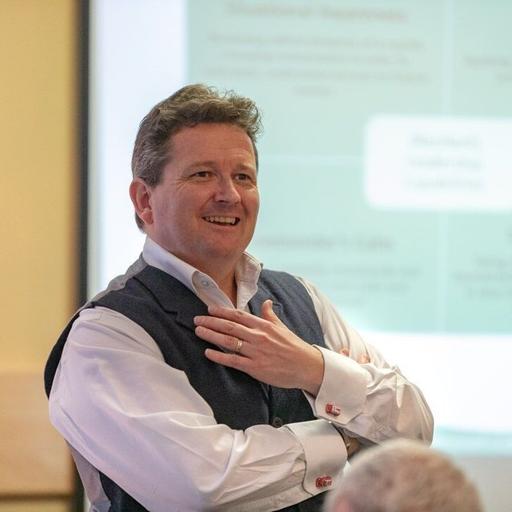
The Resilience Coach | Resilient Leadership Expert
100,000+ People positively affected6,000+ Executive coaching hours£12M+ ROI delivered by RWE npower leadership programme20+ years Learning, leadership and organisational development
Russell Harvey is The Resilience Coach - a resilient leadership expert, executive coach, facilitator and keynote speaker who helps leaders and organisations perform at their best when the world refuses to stand still.
With more than 20 years in Learning, Leadership and Organisational Development, 6,000+ hours of executive coaching and over 70 published podcast appearances, Russell is an experienced and engaging voice on resilience, leadership and navigating persistent change. He has worked with leaders across organisations including Novartis, the NHS, AB World Foods, Kerry Group and The Co-operative Group.
Russell’s work goes beyond helping people simply cope with pressure. He believes true resilience isn’t about “bouncing back”, being tougher or pretending everything is fine - it’s about springing forward with learning and becoming better equipped to lead because of the challenges you’ve faced.
His approach connects the human side of leadership directly to what matters to organisations: engaged people, stronger cultures, better decisions and improved performance. His work has delivered measurable results, including a leadership programme that returned £12 million to the business and a Resilient Leader Programme that achieved more than 1,100% ROI.
In August 2025, Russell achieved his long-held purpose of positively affecting 100,000 people.
More from Russell Harvey
All episodes → Living the Dream with CurveballSpringing Forward: Russell Harvey's Insights on Building Resilience and Embracing ChangeNov 2026Play episode →
 Transformation Station Leadership PodcastTSLP Season 5 Ep. 26- Thriving Is A VerbNov 2026Play episode →
 An Evolving Man PodcastReal Resilience: Why Pushing Through Isn’t Enough | Russell Harvey | AEM #172Oct 2026Play episode →
 Leadership From The Heart | Transformational Leadership InsightsResilience Without the Rebound | Leadership Mindset ShiftAug 2026Play episode →
 Burnout Proof Leadership: Identify Shift and Leadership Skills for Midlife Women EntrepreneursEssential Leadership Skills You Must Have If You Want to Build Resilience & Avoid Burnout When Your Business Gets Hard - with Russell HarveyJul 2026Play episode →
 Your Career JourneyHow to Build Resilience at Work: Leadership, Change & Thriving in Uncertain TimesJul 2026Play episode →
 The ThriveWell Journey | Entrepreneurship, Leadership & Life After DisruptionHow to Build Real Resilience Under Pressure | Russell HarveyJul 2026Play episode →
 Future Fit LeadershipThe 2030 Leader: Why Resilience is Your Most Vital Skill with Russell HarveyJun 2026Play episode →
 Different thinking for Different Time - Mindset Change and Thought LeadershipDifferent Thinking for Different Times - 7 Keys to Building Resilience with Russell Harvey How to Nurture a Resilient Mindset in Business and LifeMay 2026Play episode →