
January 15, 2024
43. LeadStrong: Navigating Resilience in Leadership
Sound bites
I Define it as springing forward with learning.
In this episode
Russell Harvey joins The Leadership Zone to talk about resilience in leadership, how to build it proactively, and why culture matters more than quick fixes.
- Resilience as springing forward with learning, not bouncing back to how things were before.
- Working on resilience before a crisis, so leaders can face challenges with more perspective and confidence.
- The difference between surviving and thriving, and why coping alone is not the goal.
- Self full leadership: looking after yourself first so you can support others better.
- Organizational culture as the real driver of resilience, not one off workshops or sticking plaster solutions.
Transcript
ShowHide
Automatic captions of the conversation. They can contain errors and do not name who is speaking.
Okay welcome to the leadership Zone today we have Russell Harvey with us and I'm going to get Russell to introduce himself but what I think is going to be really helpful about this discussion is that Russell specializes in resilience and he's a coach and we're going to be able to pick his brains about really specific things that maybe go a Miss in the traditional conversation so Russell would you tell us a little bit about yourself first and then we can kick off the interview absolutely yes
I will why should we start geographically I'm mean leads in Yorkshire God's own country it's described as accent wise I'm from born and brought up down south but I've been leads for about 30 years almost so yes I am the resilience coach marketing went into that not any old resilience coach the resilience coach whole career learning leadership organizational development today I describe myself as a facilitator and a coach specializing in supporting leaders and teams about how to lead yourself and others well in this full on
Crazy always changing world that we are in essentially that sounds really good cuz I think at the moment it feels like there's this constant build of more stuff going on in the world and I know that that will come into every leaders and every individual's life when they turn up to work or when they go about their business these things aren't separate even if we're not discussing them just before we press record I said oh I always have a little thing around resilience so I think
It might be good to start with this piece which is and actually I was at an event this week senior leaders in Ireland spoke about very senior leaders in Ireland spoke about what helps them be successful in their work what they think we need to do some said develop your resilience and others said don't overly rely on resilience it can end up being the straw that breaks the camel's back and yeah I suppose I'd like you to talk about that kind of balance and that Nuance
That you have to Grapple with when you're working with leaders yeah that's really interesting so about so don't being the straw actually if you're working upon your resilience in a way that that I'm in and I talk about which we'll explain today then it shouldn't become the straw so something's gone wrong somewhere if Al leader is saying don't rely on resilience as at the be all and end all is where my brain's just gone because me know resilience is about the human condition we don't know
How resilient we are until generally speaking until something sort of unpleasant or really challenging happens to us so our philosophy is don't wait for that you know do work upon your resilience in a way that you find enjoyable and engaging now all day every day because when you are being resilient which is more on the thriving side then how you view life's challenges actually will be different better okay so we absolutely will go into coping and surviving at time but when you are working on your
Resilience or how I support my clients to understand what I mean is that even though there might be a lot that's going on in their lives and lots of challenges they can genuinely State and I'm good and I'm okay or I'm I co to good even though there's all these things that going on actually I've been working my upon my resilience so that it puts me into a better place so I think sometimes we assume that if we do surviving and coping that we are being
Resilient by just being in that space and myself and many others are like I understand that that's where you are however getting yourself into the Thrive place is going to be way of demonstrating more of the resilience that we would like people to be thinking and feeling today I love that definition because I think that often people are asked to be more resilient when they are in the coping space and what has brought them to the coping space might have nothing to do with them and
Everything to do with the environment or you know things that have happened so how do you define resilience if you were going to sum it up quickly for someone how would you define that so I always talk about it and I'm on a a oneperson mission so please you and all your listeners come with me I Define it as springing forward with learning springing forward with learning I'm not a fan of this term bounceback partially because we with resilien is like you know we have a
Life event that's you know adverse could be challenging and I mean if we say to ourselves right I'll now go back bounce back you can't go back you can only go forward so there just sometime there's a risk that people say I'll faced into that I'll I'll go back to how I was and I'm going whoa who well hang on a minute pause um so for to be able to spring forward with learning from all of life's events you need to get into the habit of
Pausing and re-energizing and reflecting learning and then moving forward and ask yourself two simple questions from my experiences what do I want to keep doing because it worked well for me and what do I want to leave behind because it didn't work well for me so getting into the habit of pausing re-energizing Which is far more in the you know what people see as the well-being space but it's also it's not a case of like facing to the challenge do nothing with your resilience and then
Recuperate facing it's not that it's like perpetually you're always working upon your resilience you know on a day-to-day weekly monthly basis so that you can build and maintain it I talk about I think you're too young for this she there was an adver with a ready Breck kid where a guy took some ate some porridge a child and had an orange glow around them and went out into the weather and the weather bounced off them so work upon your resilience to get your yourself a resilience
Glow so that actually things some things bounce off you a little bit more so it's spring forward with learning I love that the first things I wish I was too young to know that and I I like that idea of that kind of glow and and also it's really interesting because I know that bounce back theory was kind of pushed around a bit and people would assume that also the way our brains worked was that we would repeat it but it turned out we don't at
All you know so it's really interesting that this idea of going back and in a way I find and I work with a lot of people who are facing you know quite difficult things not necessarily because of their work just different things happen in life to lots of people and this idea of going back I find really fascinating because it's almost like I want to ignore the learning part but I also don't want the negative impact of the learning but I don't also want to cultivate
It for the positive learning that I can bring forward like what can I do with this situation yeah so take the strength based approach so how you do reflection is what's really useful to people to understand so summary says that we have about 50,000 thoughts a day over half of them are negative and 90% of those thoughts are about from the previous day so it's about you're now going to have to sort of adapt which is a key comment of being resilient um how you do
Your reflection so it's reflecting on what's working well for me getting into the habit of actually what am I doing that's working well for me anything any one thing you know if there not a lot and actually building that and growing those so how you do your reflective practice you are going to have to be actually challenging uh your brain Norm a lot of the time I'm totally aligned with you when you say that I think that that's one of the biggest challenges is that often
Reflection itself is replicating something rather than creating something yes so I think that even acknowledging that is quite helpful and when you're working with people and they are thinking about resilience usually people who think about resilience know they need resilience it's a bit like somebody said to me recently people who come for leadership coaching know that they need leadership coaching but the ones who really need it are the ones who don't come right so and I have to say that that's often very true so I'm
I'm wondering for you when you're like I have a way of looking at people I'm like the people who are ready and are aware that they need it the people who are unaware but are ready and then the people who don't think they need it and aren't ready that's you know very broad but roughly I kind of think through those lenses and there's there's a bit more science behind it than what I've just said but for you when you're thinking about working with someone around resilience
What are the kind of things you're trying to assess in terms of what might be helpful or where to start with somebody what are the things you're you're clocking I guess so that you can kind of inform your way forward so it's the incredible answer to the very simple question of how are you it is the starting point for me it's literally how are you talk to me so my style me from that how people respond to that question it starts to give me some Clues
You know it's it's the case of what's going on how come we're having this conversation you've turned up here today and you know it's A variation sometimes they've been sent you know and it's actually some people are like you know what I'm grateful I've been sent you know and others are going I really don't know why I'm here you know and I'm not entirely sure what the point of purpose of this is and then in those situations you do a little bit more about trying to
Delve behind whether you can open them up but sometimes you have to sort of say look you're not ready you know yes you've been sent so somebody has has thought that you could do with some support however you're not in that space you know so this this conversation doesn't need to be an argument you know it's a case of like I'm here to support you with what you would like to talk about where you would like to get to what is working for you and what
Isn't so one of the dimensions I have I have the resilience wheel which is a build upon the Robertson Cooper work so the wheel's got seven bits to it and one of them is meaning which is the stories we tell ourselves the meanings we attach to events so when I ask people how are you what's going on how's the workplace how's life they'll be telling me the meaning that they are attaching to events about you know their interpretation of it and every time you answer the
Question how are you if you say well Sheila you know this day started at 7 a.m. and then it went downhill from there you know uh every meeting that I went to you know nobody listen to me and I think I'm just a blithering idiot and what's the point so that might be the truth but you've also just instilled the memory that you're an idiot and you're a pois w of space okay and so what does that do for your confidence so I am listening for
How people are telling me about their experiences what story are they telling at that moment in time and then offer up the opportunities to start to reframe it and then start to talk about well take a strength based approach I talk about spring forward with learning so how do you learn you know what Reflections do you do and we go from there essentially that's really interesting so what I'm wondering about now Russell is why this space why you what's your relationship with this topic yeah because
I'm always curious about how we land where we land you know especially in this world of coaching yeah so timing is incredible so you know the resilience coach as a business is almost eight and a half years old which is brilliant surprises me all of the time in a nice sense so yeah vast majority of my career in learning and Leadership and organizational devs have always always is I think since I was very very small being just totally curious around human behavior how come humans do
Do the things they do and don't do the things to do that still fascinates me about what was behind that choice or how come somebody said that done that behaved in in that particular way and the start of it is 1996 in Hong Kong when I was teaching Around the World trip I was doing 4-Hour English language lessons to people off the street and some magic was happening in the room and I didn't know what it was and and they essentially was people learning people having
Light bulb moments people have realization moments I thought this is Magic I'll do this for a living came back to the UK and started out in a sales environment because I had no experience in training and no qualifications but knew that was it so it was literally how do I get myself into be oh a trainer oh it's learning development oh it's coaching oh it's facilitation and they've been made redundant six times in my career and you know on the seventh time it happened that's when
The timing was right for the resilience coach to be born because the organization I was working for which was wonderful and amazing called the C group whilst I was there it got itself into an extremely difficult challenging situation as a business and all of my clients the internal leadership team came to me literally with their head in their hands going what the hell do we do what's going on I said well there's this word resilience and there's this anacronym vuka with which is about change is
Constant I said our answers and our Solutions are in there and then when I left the C and did the naval gazing of like the timing feels right to set up by myself it's like business name business name actually all I've been doing is talking about resilience I am the resilience coach so that's how it came about I love that I think it's really interesting like especially the redundancy piece because there's a lot of talk right now about this there's a lot of talk about economies
There's I'm always nervous when I hear the chatter not of what they're chattering about but of the impact the chatter has itself on people and their fears and it's interesting because some people are made redundant and I hear and I see that that's where they stop actually they might find another job but their kind of hope their tenacity stops at that redundancy point and then others it was like the key they needed and I think time is an interesting one also because I I do having
Worked with like thousands of leaders over the last 12 years there are things you can do and then there's things you have to be ready for but the timing has to meet you as well and I think this is true in work I think it's true in love I think it's true in lots of things but what I do find is and I actually just spoke to this morning actually to a group that I supervise about the choice by Edith Edgar have you heard of Edith
No I haven't she was in the concentration camper in World War II and she went on to become a psychologist and she talks actually quite aligned with some of the stuff you've talked about and you've said I'm sure when you read it it'll feel like you're reading stuff you've already read cuz in a way it's so it's so simplified actually into the kind of choices you make but we were talking about how when things are changing things happen we have choices and unfortunately whether we're in
Growth or fixed mindset about the situation depending on how we regulate our emotions our circumstances whether we have the support around us or not or whether we comfort of being able to be upset about it and stay there or not all of these things come to inform where we go but out of all of them if you remove resilience they themselves Aren't Enough like in terms of the combination resilience is absolutely Central for those combinations to be effective whether you have the support or not whether
You know you feel good about it or not whether you can get into growth mindset or fixed mindset if you don't have the resilience you can't unlock that combination because that's kind of the piece that brings it together totally I yes I couldn't agree more and so that's why I go with this prise of when people are listening it's it's this invitation of like actually you know what was it going to enable you to make the choice to to engage in this word resilience now and
For the rest of your lives in a better way you know and I I need some help with like as I say work upon your resilience that doesn't feel interesting and exciting enough essentially because it doesn't need to be like a negative effort yes you'll need to put some effort in and so when you are working upon your resilience it enables you to be more open and more Curious it enables you to have perspective that the benefits are exponential it means that you are more likely
To be in a growth mindset more often and you are going to be open to change because it is a and it builds your confidence so your ability in any moment to what your mindset how you think and feel your ability to face into life challenges is improved by working upon your resilience so this is where I'm going why wa until the adverse thing happens actually do it now because it's got this really great opportunity for you to have potentially a different type of life and
I think that this might be a good one if any of the listeners are saying oh this term sounds better let us know because it is really hard sometimes to get language for like you said working upon isn't it isn't sexy it isn't like we're not jumping out you know to do it and I also think that when we work on our resilience depending on how we do that there's a relationship with self that deepens so that that's what I found with my relationship with resilience
Is actually you know yourself better you have a stronger sense of self you can inform yourself better absolutely than being moved around by the outside world and kind of you know moved by stimuli or circumstances that occur so I really love that so if anyone has any like better language let us know I'll share with Russell it would be very helpful if you on of engage with your resilience is where I've got but just on what you just said there Sheil that's why I talk about
Self full which is like look after yourself first be engaged with your resilience in order that you can support others you know so there you know there's some value systems Beyond there there's going to be some individuals that are literally just bed about themselves and there's lots of individuals that focus on supporting others and forget about themselves and so actually self fors the balance you know you you support yourself initially in order that you can be a better person a better better human being better partner
Better family member you know better member of a team better leader whatever it is and so the rhetorical question I ask everybody is how will your life be better when you choose to be more sful and sful is engaging with your personal resilience I really love that because it's bringing up I spent a couple of years working with people in recovery both from mental ill health from addiction and then also families in recovery from either of those two things and one of the the things that
Can often be said is it's a selfish program you know and I would always kind of now I would say m that's really dangerous I think it is I like your term self full but it comes back to the resilience piece I need to have a relationship with myself and what I need to do so that I can then also exist within the communities or the ecosystem that I exist within in a way that is nurturing and nourishing if I'm doing one over the other whether
That's selfishness or codependency over the other side we're going to miss the actual thriving the flow the strengths all of the what I would say like that positive psychology side of resilience and we're going to get stuck in coping and usually also stuck in some other unrealistic expectations of ourselves and other people GNA get stuck Sheila yeah yeah stuck yeah yeah stuck is a big enough word for that so if somebody is sitting listening and most of the listeners are leaders or HR professionals or lots
Of coaches training and development anyone usually the listeners are either thought leaders social leaders or formal leaders in the space who have an investment in this type of thinking how would they know that that it's the right time to come to you or that you're the right kind of coach for them in terms of the the resilience what is the kind of questions they need to ask themselves or things they need to notice that would say oh yeah give Russell a call it's similar to The
Good Old Linkedin you know strap L and it's also on the website so if people are listening now predominately if you feel like you've lost your mojo you know or there's just like that um that energy the enthusiasm the excitement or there's you know similar projects that are coming around again and you sort of go this again type thing so if you feel like you're sort of waiting through tree and want to ReDiscover your moo that's a brilliant way and time to come to me um
And it is yeah ideal clients of people with a sort of job title of head of you know could be any head of Staples head of marketing head of you know but at the same time because it's a positive psychology approach it's also equally those individuals that go you know what it's brilliant everything's working really well they also need to come to somebody like me because it's like how do we maintain that how do we make sure that how clear is it to you about how
Come it's going really well are you how clear are you about how come it's working so let's build upon that and give yourself the opportunity to enable it to continue to keep working for as long as possible that's brilliant and I have a couple of questions but I want to add to that because this is one thing that comes up quite a bit in the work and also from listeners is often people are doing really well in one setting and they move to another and they
Find that actually that is a whole other ball game you know rebuilding social networks I also think that's a perfect time if you know you're going to make a move work with somebody on your resilience work with the liks of russle to talk about what you might need to have when you enter an environment that has a different set of rules about what good looks like and how things are done and I think that's one of the biggest gaps that I see for people actually is
That when they go to make a move that's significant but not realizing that they have an ecosystem they've designed here and they're about to enter one that they haven't that takes a lot more personal resilience than remaining within an ecosystem that you've developed totally and it's also I find in myself as well whenever we put ourselves into something new or a challenging situation it's like come AC coper because we have a lot of subconscious expectations about how it's going to be and so in a perfect
World if somebody's going to go from one thing to another and it'ss a new job it's excitement it's actually sort of going so talk to me about how you expect it's going to be what's going to happen and then what I found where people really get into a pickle is they weren't aware of what all of their subconscious expectations were and then they get chipped away at and their confidence gets knocked and the absolutely become all at Sea completely all at se because all of these
You know expectations were not being met and they question themselves so being able to have a conversation with a mate or a coach about actually I'm going into this new situation am I really clear with myself actually what I'm assuming is going to happen what it's going to be like and what do I just need to watch out for and then regardless of any of that one of the key dimensions of being resilient is the lovely word of adaptability openness to change and so in general
In terms of engaging with your personal resilience there's some research shows that people spend a third of their time working upon their openness to change openness and curiosity then they get into the Thrive space so it's for it's just yet another reason for people to be doing more about actually doing new things trying out new ideas trying out new ways of doing things even if it's like a different route to work appreciate people working from home so from bedroom to kitchen table you know there's not
Necessarily many different routs that you can take but just lots of small ways of actually doing a new activity then that just keeps you more comfortable with doing things in a different way I think that's really powerful and before I ask you the questions just a point on that I've noticed that a lot of the default ways that we cope with anxiety is patterns so it's just repeating ways of coping and I found that people who experience high levels of anxiety when they engage with something
That's new and they introduce it usually it's not on purpose it's because they need to for whatever reason it can have a really positive impact on their anxiety because actually they have the tolerance and they can see that they have the capability to be in environments that they don't have the patterned response to or have the kind of coping behaviors front and center so I really love that idea because to me when I sometimes I think we're talking a lot about in the media and you
Know because we're talking about mental health we talk a lot about the what I would say the pathologized mental health we're talking a lot about using medical terms we're we're using the language that the medical system uses and I think that can be helpful but what can be unhelpful is that we're not always then thinking about the fact that the likes of positive psychology was born out of the fact that that's only half the picture the deficit approach is only half the picture and of course
We have an increase in people feeling certain ways we have an increase in people reporting it which I would say is different to an increase in people feeling it but also the idea of resilience is that actually all of these things that we might do by default to cope might actually undermine some of the ways that we want to really feel and so I think it's really important to think about that proactive approach rather than just corrective approach so I just want to put on that
Because I know a lot of people experience anxiety and talk about anxiety and their ways of coping with it are from a particular point of view which can be helpful and I know lots of people it's not helpful for so the likes of resilience work can actually be really supportive of what they need to do I just think it's worth kind of naming that as well sometimes they're separated like they're separate things rather than actually they're really complimentary things yeah it's it's about the building blocks
It's like sometimes when I've supported clients that are also seeing a counselor so very simplistically people are say that so I'm being incredibly simplistic now don't start throwing rocks at everything people that are listening in but many times people have made the comment of when I'm certain conversations about the place I'm in just feel as though they're staying there they're not shifting forward so it's about striken that balance around the building blocks and when are you ready to shift forward into doing something else doing something
New is absolutely I concur with you on all that Sheila I'm laughing at that don't throw any rocks because it's really true and this is true for most professions when therapy was emerging it wasn't respected the way psychology is you know and coaching is emerging and of course when things emerge you you will get different versions of it and especially that it's unregulated but I do think that one of my positions is because I work with the person I can work with the person as long
As whatever they're attending a therapist for isn't kind of dominating the conversation you know and sometimes I work alongside therapist and I'm married to a therapist so I think therapy is very important however I also think there is a reason that coaching is becoming so popular some of it is avoiding the work and I'm going to Nate because I really do believe that it's avoiding the work that needs to be done in therapy but actually it's also because there's a big need for building skills and
Capabilities for the future that we want that isn't necessarily INB built into our education system or isn't in built in to the conversations that we have and so I do think that we need to kind of think about that when when we make decisions so I have a couple of questions to close us off first one I suppose is do you have an example of a great leader in your own mind that you think of when I say great leader absolutely so it's a client of
Mine was a client of mine James Deena he is the CEO of the employee ownership Association so I might be a little bit biased because he's a client of mine and he embodies all of those things around authenticity doing the right thing incredibly open to learning you know highly receptive to all of the conversations that we had absolutely doing the right things always in aiming to do the right thing even in difficult challenging circumstances so yeah James gonna have to go look him up I will
And everyone else will know as I'll po James would be like why is everyone on my LinkedIn thank you so another one is do you have a quote that might support listeners that you kind of lean on or that you preference yeah so I would go for I don't know where this came from but it's his idea and when you take his strength based approach at times that we have to just be good enough okay so be careful of believing that you have to be bling
At everything a huge amount of the time you just need to be good enough I love that that's from not the quote directly but that's based on wot's theory of the good enough mother it's one of my core theories in my work okay yeah yes so I I love that you're naming it I'm like yeah it's a really interesting Theory when you think about strengths and you think about perfectionism and you think about all these ways and often people people are like if you're good enough
That won't be enough and I'm like actually if you're good enough in the right moment it is enough so it's a really interesting one that does trigger some thinking so there's just two more so the next one is a pet peeve that you have is there a pet peeve that you have about your work or the workplace or leaders that you'd like to share with us yeah so it's lovely that the word resilience has been talked about an awful lot more however when it's becomes toxic
When if people just turn around and say oh you just need to be resilient at that an me essentially because they're not getting it in that moment and when organizations are just putting on some you know well we have a resilience Workshop you know our people are a bit drained we'll have an away day and we'll do a resilience workshop and then that'll be fine and I'm more Curious around well how come your people are drained in the first place what is it that your organizational
Culture is doing that means that they're drained actually you are supporting your people to be resilient by having a brilliant culture that's enabling people to thrive and play to their strengths so how come you're not doing that literally all day every day what can we do to get the best out of you as an individual yeah so I do a lot of you know speeches around resilience and yes I come along and sometimes might be part of the problem of like this is a sticking plaster
I did times I'm a bit provocative so there was very nicely it was wonderful to be invited to a load of transplant surgeons transplant teams and speak at their conference but my opening line was it's like you've had a two-day conference on how to get better at the thing that you're already brilliant at and I'm here for 45 minute on the thing that you don't know how to do I love that it's just like so it's that essentially you could have had a two-day conference on
Actually how to build your resilience and a quick checkin on these are all the things that really brilliant at you know could have flipped it all the way around so don't do resilience as a sticking plaster okay is my pet peeve excellent it's mine too I'm so glad you said that and then just one piece of advice you might leave with listeners like if you were to point them in a direction what would you like to leave them with it goes back to the the question
I asked the Reta one it's like how will your life be better when you choose to be more self full I will just encourage people to engage in their resilience support yourself in order that you can become a better person essentially I love that thank you I really appreciate that russle we'll have all your Det below so that people can follow up with you as well directly and if I get any ideas about this work on your resilience piece I'll let you know so that listeners
Have a chance to kind of give us a little bit of an indication so thank you so much for joining me on the Zone today and hopefully we'll get you back to talk about this a little bit more maybe next year that'd be great I'd love to thank you so much for having me on and hello to everybody that's listening thank you thanks Russell no
About Russell Harvey
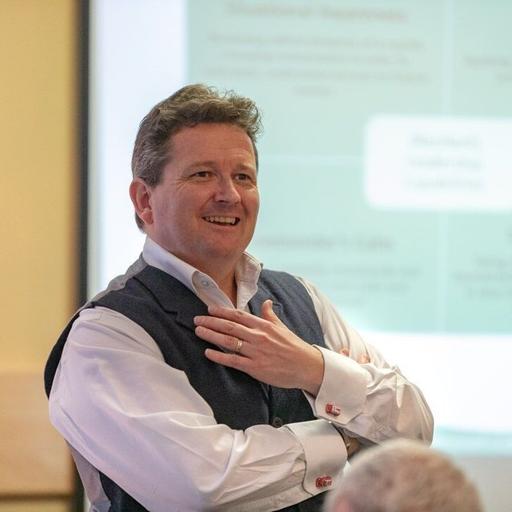
The Resilience Coach | Resilient Leadership Expert
100,000+ People positively affected6,000+ Executive coaching hours£12M+ ROI delivered by RWE npower leadership programme20+ years Learning, leadership and organisational development
Russell Harvey is The Resilience Coach - a resilient leadership expert, executive coach, facilitator and keynote speaker who helps leaders and organisations perform at their best when the world refuses to stand still.
With more than 20 years in Learning, Leadership and Organisational Development, 6,000+ hours of executive coaching and over 70 published podcast appearances, Russell is an experienced and engaging voice on resilience, leadership and navigating persistent change. He has worked with leaders across organisations including Novartis, the NHS, AB World Foods, Kerry Group and The Co-operative Group.
Russell’s work goes beyond helping people simply cope with pressure. He believes true resilience isn’t about “bouncing back”, being tougher or pretending everything is fine - it’s about springing forward with learning and becoming better equipped to lead because of the challenges you’ve faced.
His approach connects the human side of leadership directly to what matters to organisations: engaged people, stronger cultures, better decisions and improved performance. His work has delivered measurable results, including a leadership programme that returned £12 million to the business and a Resilient Leader Programme that achieved more than 1,100% ROI.
In August 2025, Russell achieved his long-held purpose of positively affecting 100,000 people.
More from Russell Harvey
All episodes → Living the Dream with CurveballSpringing Forward: Russell Harvey's Insights on Building Resilience and Embracing ChangeNov 2026Play episode →
 Transformation Station Leadership PodcastTSLP Season 5 Ep. 26- Thriving Is A VerbNov 2026Play episode →
 An Evolving Man PodcastReal Resilience: Why Pushing Through Isn’t Enough | Russell Harvey | AEM #172Oct 2026Play episode →
 Leadership From The Heart | Transformational Leadership InsightsResilience Without the Rebound | Leadership Mindset ShiftAug 2026Play episode →
 Burnout Proof Leadership: Identify Shift and Leadership Skills for Midlife Women EntrepreneursEssential Leadership Skills You Must Have If You Want to Build Resilience & Avoid Burnout When Your Business Gets Hard - with Russell HarveyJul 2026Play episode →
 Your Career JourneyHow to Build Resilience at Work: Leadership, Change & Thriving in Uncertain TimesJul 2026Play episode →
 The ThriveWell Journey | Entrepreneurship, Leadership & Life After DisruptionHow to Build Real Resilience Under Pressure | Russell HarveyJul 2026Play episode →
 Future Fit LeadershipThe 2030 Leader: Why Resilience is Your Most Vital Skill with Russell HarveyJun 2026Play episode →
 Different thinking for Different Time - Mindset Change and Thought LeadershipDifferent Thinking for Different Times - 7 Keys to Building Resilience with Russell Harvey How to Nurture a Resilient Mindset in Business and LifeMay 2026Play episode →