
June 12, 2025
Russell Harvey on resilience – springing forward with learning

Listen
Sound bites
I define resilience as springing forward with learning.
We become the behaviors of the five people we spend the most time with.
In this episode
Russell Harvey talks about resilience as springing forward with learning, including his Resilience Wheel, strength based growth, and how support networks shape resilience.
- Resilience as a proactive choice to reflect, re energise, and ask what is serving you well or not serving you well.
- A shift from surviving and coping toward thriving, using learning from life events rather than simply bouncing back.
- Seven aspects of the Resilience Wheel, including attitude, purpose, confidence, adaptability, and support networks.
- Strength based development by starting with what is already working and building more of it.
- Accepting unpleasant realities with good grace and paying attention to the five people you spend the most time with.
Transcript
ShowHide
Automatic captions of the conversation. They can contain errors and do not name who is speaking.
Welcome to Crafting Solutions to Conflict, a podcast exploring how to deal effectively with conflict, actual and potential, good and bad. Engaging guests discuss a range of insights, and I cover tips and topics based on my 35-year fascination with conflict, and my experience helping people with it. I'm your host, Jane Beddall, and my goal is to share a perspective on conflict that is both practical and positive. My guest today is Russel Harvey. We talk about a new way to view resilience. Not just bouncing back, but springing forward with learning.
And I learned about Russel's Resilience Wheel, a framework featuring seven different areas, each important individually, and as they interact with each other. Hello, Russell, and thank you for joining me on the show today. Hello, Jane. It's fabulous to be here. Thank you for asking me. I am so interested in your focus. It is important, it is valuable, not sure is fully understood. Before we get to a lot of detail on that, and we will, tell us how you came to be doing the work that you're doing today. Thank you, Jane, yes.
So I think ever since I was a kid, as far back as I can remember, I've just been fascinated by human behavior, about how come we do the things that we do and we don't do. And I have the opinion as of today, of like actually to be resilient is to be human. So human behavior is part of all of that. The short version about how I got into all of this is, always interested in human behavior. I was traveling around the world in 1996, 1997, and teaching in Hong Kong. And magic was happening in the room when I was teaching, which transpired later was people learning, having light bulb moments.
And I thought, do you know what? I want to do this for a living. So I had a career in learning and leadership and organizational development in corporate worlds, got made redundant six times over my career. And on the sixth time, I felt ready to go into business by myself. And so then the resilience coach was born, and it will be 10 years old in July. So just prior to me, the last permanent role I got made redundant from, I was engaging with leaders around this resiliency word. What does it mean to be a resilient leader?
So now I have specialized in how to lead yourself and others well, in a full on, crazy, always changing world. It's been my specialism now for about 15 years. And I love it. And that's how I got into it. Of course, the most important piece in my mind was the very last thing. I love it. Yes. That's the way to do good work. I'm utterly, totally convinced. So let's start with something super basic. How would you define what resilience is? So this is the moment to listen, please, everybody. So I define resilience as springing forward with learning.
Okay. It's bringing forward with learning. I'm not personally a fan of the term bounce back, but often we use this terminology. And that's that principle of like, okay, I'll face into a life event, which is quite challenging. And then when it's over, I'll go back, bounce back to how I was. And I am of the opinion of like, well, what have you learned? You can't really ever go backwards. And so to role model the behaviors of springing forward with learning, it's about making a choice and a decision in a way that you find interesting and enjoyable, to from all of life's events.
So to get into the habit from all of life's events, whether good or not so good, to pause. And pause is listening to a podcast. Pause is all sorts of different things. There's hundreds of ways in which you can pause. And in your pauses, you need to re-energise yourself and reflect. And in your reflections, I invite you to ask yourself three questions. What have I been doing behaviourally recently that's been serving me well? What have I been doing behaviourally recently that has not been serving me well? And how can I do more of the answer to the first question?
Okay. When an individual does that, they will be role modelling, building proactively, persistently building and growing and nurturing their resilience. So it is a lifetime choice in a way that each individual finds interesting and enjoyable. So I am of the opinion of proactive resilience growth. Okay. How did we get ourselves, and I think it is so common, into this mindset that resilience simply needs bouncing back? How are we stuck in that thought? Well, yeah, so it's the birthplace of probably psychology and psychiatry, which I am not about when people are struggling with their mental health and some element of a breakdown, essentially, in some way, shape or form.
We've sort of said, actually, do you know what? We need to fix these individuals in this moment. And from there, we sort of say, actually, we're being resilient when we are souling surviving and coping. Yeah. And there are many of us under the positive psychology universe, that are actually, do you know what? It's not just about being able to face into surviving and coping. The resilient individual actually is thriving, and thriving, even when there might be an awful lot going on around them, essentially. You know, there might be really challenging times, but they can genuinely state, I'm in a good place.
Yeah, there's an awful lot going on. I've got these things to do with, but my internal resilience is high and good, and I'm thriving. I love that you mentioned the positive psychology angle, because that was coming to my mind too, that there was a time way back when, as I understand it, that, well, yeah, it was all about people who were really in trouble, and can we get them to a place where they can get through the day? And now, we're thinking more about, wait a minute, we humans can do more than that. We can be in pretty good shape and then get in better shape.
Yes. So, I'm thinking about the way an individual person embraces this concept. Sounds to me as if it's not a pick and choose. It's not, I'll be resilient at work and not at home. I'll be resilient in my neighborhood and not with my children's sports team. Yeah, it's whole life, really. It really is. The way I approach this is it's literally everybody that's listening now, it's a case of thinking to yourselves, how will your life be better when you have more resilience? So, how will your life to be better when you are able to be thriving more often?
It's about painting this rainbow, about actually there can be a future self that's in a better place. And as a consequence of that, and it's about making the choice to go, do you know what, I am going to engage with building and growing my resilience on a regular basis in a way that I personally find interesting and enjoyable. And the way that I do that with all my clients is I'm built upon research, I have the resilience wheel. So, if anybody asks me the question of how do I build my resilience, Russell? I go, there's this wheel, it's got seven bits to it.
They're all interconnected, they all have knock-on impacts upon each other. And it's playing around with and nurturing your resilience wheel for the rest of your life. And you can apply it to you personally, you can apply it to leadership, you can apply it to teams, and you can apply it to organizations as well. So, I'm interested in the idea that a person somehow or other, maybe that's my first question, how does someone reach that point of, I would like to do better, I would like to experience what it's like to be better about these challenges, that they're just going to keep coming, they're coming from every direction, how do I handle this better?
How does someone go from, I'm just going to muddle through to, I'd like to do better? Well, yeah, that's such a good question, Jane. Is that too often? No, because that's, it's just a brilliant question. I'm in that space all of the time, because one of the challenge that I have, partially in the sense of gaining clients, but it's not just about that. But I also, you see people that, from my perspective, struggling or I know that actually, do you know what? If I could just get you to come spend some time with me. Yeah.
I'm not arrogantly, I think there's a strong likelihood that I could make some improvements to your thoughts and your feelings and how you're viewing life and how you face into life. So it's like, yeah, how do you get people off the hamster wheel? Yeah. Yes. Now, in terms of another way that I try and do that, in trouble, it's listening now, we get asked the question most days, how are you? Okay. And so it's starting to get better at noticing about how you're answering that question. Essentially, this list in now, you know, it's just like, how am I?
It's like, well, I'm all right. Yeah, sort of okay a bit or do you know what, it's not great. And then so that and it's like, how much do you want to stay that way? Okay. Is my next question. Are you comfortable where you are or if there was an opportunity for you to answer it differently and better and say, do you know what, I'm really good. How appealing is that to you? And that's appealing to you. Do you fancy having a chat? Yeah. It's just a little start. Because what comes to my mind is how challenging it can be to think, okay, I want to do this, I want to get better.
It's such a big commitment. I think you're saying, don't do that to yourself. Yeah. And I know it will feel like a commitment. It's one of those things of so many of my coaching clients over the years or sessions that are facilitated. People have sort of said, do you know, everybody needs to do this. If I knew now what I knew an hour ago or two hours ago or last week, it's just like, oh, God, everybody needs to do this. Because I didn't know what I didn't know. Oh, God, it's better. And in those moments, I'm sitting there and yeah, how do I bottle that?
How do I, I know I can take a video of it and put it online, but yeah, you know, there's hundreds of millions of those. It's like, how do I bottle that in that moment and go, look, there's something going on here. This person has made a difference to their circumstances. Yeah. So let me ask you this. If someone says, I would like to move in the right direction and they decide to make whatever the first step is, at what point do they get involved with the wheel? Straight away. Okay. Straight away, really. And so anybody that's listening now, this is not, I'm answering your question, Jane.
This is not like the self-promotion. You're allowed to answer the question. That's answering the question. So literally go on my website, www.theresilientcoach.co.uk, and the resilience wheel is on there. It's on the About Resilience page, and there's a little description of it. And so that was part of it, was created by Roberts and Cooper, two individuals that did loads of research around resilience and put it in the world to free. So I have taken it and added to it, the seven aspects. And so people can just look at the aspects of the wheel and do some in the moment self-assessment about actually which of my aspects of my wheel are in an okay place, and which of my aspects of the wheel could be better.
And you start developing it by those areas that are already in a good place, make them even better. Start with the good, start with the good essentially. Oh, I have to stop you there. That is so interesting. I feel as if that's not always the way we're advised to move forward. Yeah, it's absolutely a strength-based approach. It's like start with the good, start with the right, build upon the good. When you play to your strengths, the things that naturally energize you, it builds natural resilience and natural confidence.
And one of the dimensions of the wheel is confidence. So you've got a triple whammy there, essentially. Confidence, so important. And I think, especially as you're starting out, I'm going to take on this commitment, but I'm not going to be overwhelmed. And don't I need to feel, hey, wait a minute, I can do this, and I'm making a little bit of progress here. That overwhelmed word is so interesting, Jay, because, and I say this a lot of times in things that I do, I go, right then. So just to sort of open up the conversation, it's like my intention is not to add to your physical and mental to-do list.
Yeah. That's not my intention. When people are in overwhelmed, they're just like, I can't think to do it. Absolutely. Oh my God. Yes. However, there's this like a, so in our conversations, we will be exploring there's some things that you need to do. Okay. So then it's like, we need to do some replacement behavior here. Any behavior change happens with some form of replacement. So you come in to see me and you've got a mental and physical set of stuff. It's in your mind or on your desk. And I might come along and say, oh, so there is an individual needs to do this and do that.
And I'm not in there to pile it on. I'm going, right, we've agreed they're going to do these things. Then it's like, what are they going to be instead of or in replacement? So, yeah. So I wonder if there are instances where someone is essentially sent to you from a boss, said, go work on this. How does that click as opposed to someone who says to themselves, I would really like to work on this. It can make a real difference. So if I'm not sure of the route to something, you can talk to me. My opening line is, how much you know about who I am and how come you're here today.
Yeah. That's my opening line. And depending on their response is where we go next, essentially. And I have had over the years, it's like, my boss has told me that I'm rubbish and I've been sent to you. I go, oh boy. All right. And then, you know, after that, I can say, well, by the way, one of the principles of coaching is that I need to hold you in unconditional positive regard. So in my opinion, there's nothing rubbish about you. Yeah. And that sometimes makes them go, oh, that's different. That's new. That's new.
Okay. So it's like, you are who you are. Whether they've been sent or whether they want to come by themselves, you know, it can have an impact. And so, yes, it's just then literally how I explore the initial conversation, really. Okay. So tell us more about The Wheel. I find this very interesting. Okay. So, seven aspects of it. On face value, you know, they're buzzwords, but the heart of resilience is our attitude, settled way of thinking, feeling about life. Resilient individuals have a purpose. Resilient individuals understand what does and doesn't enable them to believe that they can do something, confidence.
Resilient people, there's some extra weighting to this around the adaptability word openness to change. Okay. There's some research that shows that those individuals that spend a third of their time engaging with their openness and curiosity to change, they enable themselves to get into thrive more often, essentially. Yeah. And an additional build upon that is just to understand there is a difference between adaptability and agility. Oh, okay. What is that difference? Yes, absolutely. Yes. So, adaptability is openness to change, but that may not necessarily mean you actually change your behavior.
Okay. All right. Agile is the next step. All right. When you engage with your adaptability, openness to change, you get better at making, at being agile, which is making quick decisions to actually change and do something different. It's a lot of the time when you have conversations around change, you can walk into a room and go, okay, so the organization is going to do this change. How do you feel about it? And most of the room will go, yeah, okay, all right. Yeah, we're open to that. And then you go, so what are you going to do?
Well, we're just going to sit here and stay as we are. That's right. That's right. Yeah. Status quo. Yeah. So a few more. So support network. So resilient individuals nurture and grow their most helpful and useful support network for them. And another bit of research that's been, I've known about it for a while, but it's just come to the fore in my head again. The last two World Happiness Reports have seen that your line manager has a huge impact on your ability to healthily answer the question of how are you? So your relationship with your line manager, about 80 percent of it is your ability to sort of say, when you're asked how are you, if you're in a job role, to go, yeah, actually I'm all right.
I'm quite good. 80 percent of that is down to your relationship with your line manager. Wow. That's nuts, essentially. So that's your support network. So it's really understanding from the world I'm in about leadership development is just how relevant your role is essentially. And then there's one that's called meaning, but this is about our internal storytelling. So this is the meaning we attach to life's events. So it's our response to the question of like, how are you? How's work? How's the job role going? How's the family?
How's this? You'll respond to it and it's noticing how to respond to it because each response, you're essentially telling your brain to put beliefs and thoughts and feelings inside yourself. So it's being mindful about what you're doing. And the final one is energy, which is about the strength-based approach, laying to your natural energizers. And in that space as well is obviously all of the stuff around diet and exercise and our circadian rhythms, our biorhythms. I want to go back to the meaning one. I find that so interesting.
It seems to me, obviously, it connects to all the other ones. Yeah. The idea of the story that we tell ourselves. Yes. Including, oh, I can't, I'm not resilient or I can and I can get better. Talk to us more about that part of the wheel. The first step is to just notice better how you're responding to these questions and just understanding that each opportunity about how you respond is to highlight who you are, your identity, impacts upon your confidence, impacts upon your attitude, impacts upon your self-esteem and your self-worth.
And so it's really important to notice how you respond to that. And what resilient people are good at doing, one of the many things resilient people are good at doing, is that in really challenging circumstances, they are good at taking perspective and finding the good. Okay. In that space, if you really are having a challenging time, it's not about lying to yourself, Jane. It's not about that, you know? You've got to be truthful with yourself. You know what? A significant amount of today was really horrible. However, I can take a step back and say, you know what, there was a moment.
There was an OK moment in there. Or actually, I can say, you know, well, there was a point in the day where it was potentially going to get even worse, but that didn't happen. And I said, you know what? That's the only good bit of the day. But I faced into it and I utilized my levels of resilience, my whole wheel, to face into the day and come through it and learn from it, essentially. That sounds perfect. That's your pat on the back. And of course, that final important word, which is learning, learning about this.
That strikes me as, well, at the very beginning, you mentioned that that is so, so critical. It's not simply that I survived and I could smile the next day. It's, well, when I have that pause, when I reflect, wow, what can I learn from this truly terrible, awful day? Yeah, yeah, it is, it is, it is, it is. Well, this one's a little bit of a curve ball, but not that, I don't think. Some of my listeners are, they are conflict specialists, that's what they do. They love the idea of resilience because that's so useful in interpersonal conflicts.
Now, others are people from a different connection with me, and they work sometimes in family businesses. So the line manager, in a sense, could actually be, oh, that's my brother. Yeah. Oh, that's my uncle. How do you think about resilience when this other person has a less, I want to say less clear, maybe that's not the right word, has multiple aspects to the relationship with me? Sort of, okay, not the line manager, but still a very important person. My answer is for myself, Jane. So my response to is all in the support network element of The Resilience Wheel.
Okay? We sometimes don't have choices about who we spend time with. And so family sometimes come in. They're there. Oh, it. And yeah, it is acknowledging that there's an extra layer of relationship that's in there, and thoughts and feelings and history to it. To start, when we talk about the support network, what we get people to identify sometimes is that of all these people that you see in your life, it's like some of them energizers and some of them drainers. Yes. So it's understanding and some of them will be both energizers and drainers.
So it is about the individual to really reflect upon, what is it behaviorally this other person is doing, which is either energizing me or draining me or what do I struggle with. Then potentially with an underlying level of resilience or potentially confidence, it's about how okay do you feel having a conversation with them about it. Okay. And it's also absolutely keeping it in the behavioral feedback place. So I don't want to teach anybody how to suck eggs or patronize them. It's absolutely making sure that, and when we say we've got heightened emotions, this is more difficult.
It's steering away from the sentence of, you made me feel. Okay. That can never go well, can it? I don't think. No, it can't. It can't. Sometimes I get that wrong, and most of the time I get it right. So it's for you as an individual, we're reflecting about, behaviorally, what is it this person is doing that I'm struggling with, and behavior was it then doing that I'm all right with or quite enjoy. It is giving all of that feedback in the round. Start with the good. This is what I appreciate about what you do, and I've noticed that when I see you doing these behaviors or when you speak to me in this particular way, I've noticed that I felt and I thought.
Then the person may still choose to take that and take umbrage to it. However, as long as you have articulated it correctly, then you've said it, and it's like we need to talk about that. For this to improve, we need to discuss this and see if it can be different. So, it's understanding, actually, and if there are family relationships that are never really going to be in the best place possible. It's hard. It's just hard. Yeah. One of the many things that resilient individuals do is that they are good at accepting with good grace those things that are unpleasant or aren't right or aren't how we would like them to be.
When you're being resilient, you're better at going, and so this relationship is always going to be a challenge or is always going to be difficult, but I need to accept that with good grace. Russell, I love that phrase to hold on to, seize, celebrate, accepting with good grace. Yeah. Doesn't mean you have to like it, and it's easier said than done, but when you can get yourself into that place, that helps. You then look at all of your relationships that you've got in the whole of your life, the people that you see in all of your arenas, and that's your overall support network.
And it's different for everybody. So you want all of those relationships. You need to understand actually which of these ones energize me, Jamie, which ones are a bit of both? Which ones do I just need to manage carefully? But in the round, you want to nurture the best support network for you that enables you to be at your best. Needs to include individuals that will tell you home truths as well, Jane. Sure. Those that will tell you to give your head a wobble, you know. But you appreciate it and you accept it. And this is an interesting thing, a piece of research shows that we become the behaviors of the five people we spend the most time with.
Well, I think we're going to stop there and contemplate that one. That is so interesting and important. Your support network or it's the network that brings you down. We don't need that one. No. Fabulous. This is a great taste of these concepts and the resilience wheel. And I'll ask you now, Russell, tell folks where they can learn more about your work. And I know you mentioned it a while back, the website. Mention it again and I will put that, of course, in the show notes for today. Thank you so much. Yes. So www.theresiliencecoach.co.uk.
You'll find me on there. You'll find the Resilience Coach on social media. So connect me through the website, connect with me on LinkedIn, essentially. And I'm happy to have a chat. Well, thank you so much. I enjoyed our chat very much. Great, great things to think through and think about as we go forward and not falling just back, not bouncing back, but swinging forward. Love that. With learning. Great. Thanks so much, Russell. It's been fun. Thank you. Thank you for listening. If you enjoy the Crafting Solutions to Conflict podcast, please tell a friend, share it, leave a rating or review.
When you spread the word, more people have a chance to enjoy the show. You can also sign up for new weekly episodes on your favorite app. Whatever setting works best for you and is free. You don't need to pay to listen. You can also find the show at craftingsolutionstoconflict.com Comments or ideas? Let me know. Until next time, I'm Jane Beddall.
About Russell Harvey
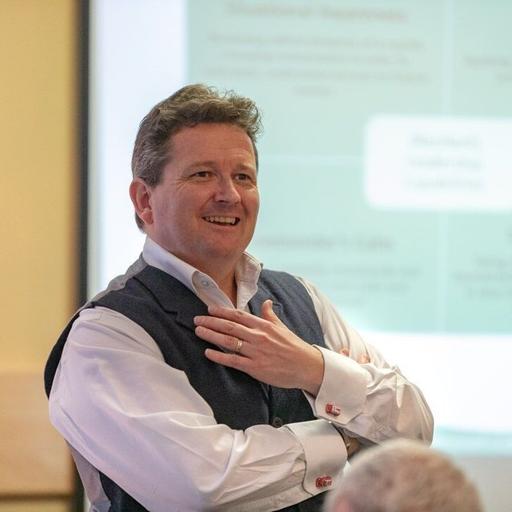
The Resilience Coach | Resilient Leadership Expert
100,000+ People positively affected6,000+ Executive coaching hours£12M+ ROI delivered by RWE npower leadership programme20+ years Learning, leadership and organisational development
Russell Harvey is The Resilience Coach - a resilient leadership expert, executive coach, facilitator and keynote speaker who helps leaders and organisations perform at their best when the world refuses to stand still.
With more than 20 years in Learning, Leadership and Organisational Development, 6,000+ hours of executive coaching and over 70 published podcast appearances, Russell is an experienced and engaging voice on resilience, leadership and navigating persistent change. He has worked with leaders across organisations including Novartis, the NHS, AB World Foods, Kerry Group and The Co-operative Group.
Russell’s work goes beyond helping people simply cope with pressure. He believes true resilience isn’t about “bouncing back”, being tougher or pretending everything is fine - it’s about springing forward with learning and becoming better equipped to lead because of the challenges you’ve faced.
His approach connects the human side of leadership directly to what matters to organisations: engaged people, stronger cultures, better decisions and improved performance. His work has delivered measurable results, including a leadership programme that returned £12 million to the business and a Resilient Leader Programme that achieved more than 1,100% ROI.
In August 2025, Russell achieved his long-held purpose of positively affecting 100,000 people.
More from Russell Harvey
All episodes → Living the Dream with CurveballSpringing Forward: Russell Harvey's Insights on Building Resilience and Embracing ChangeNov 2026Play episode →
 Transformation Station Leadership PodcastTSLP Season 5 Ep. 26- Thriving Is A VerbNov 2026Play episode →
 An Evolving Man PodcastReal Resilience: Why Pushing Through Isn’t Enough | Russell Harvey | AEM #172Oct 2026Play episode →
 Leadership From The Heart | Transformational Leadership InsightsResilience Without the Rebound | Leadership Mindset ShiftAug 2026Play episode →
 Burnout Proof Leadership: Identify Shift and Leadership Skills for Midlife Women EntrepreneursEssential Leadership Skills You Must Have If You Want to Build Resilience & Avoid Burnout When Your Business Gets Hard - with Russell HarveyJul 2026Play episode →
 Your Career JourneyHow to Build Resilience at Work: Leadership, Change & Thriving in Uncertain TimesJul 2026Play episode →
 The ThriveWell Journey | Entrepreneurship, Leadership & Life After DisruptionHow to Build Real Resilience Under Pressure | Russell HarveyJul 2026Play episode →
 Future Fit LeadershipThe 2030 Leader: Why Resilience is Your Most Vital Skill with Russell HarveyJun 2026Play episode →
 Different thinking for Different Time - Mindset Change and Thought LeadershipDifferent Thinking for Different Times - 7 Keys to Building Resilience with Russell Harvey How to Nurture a Resilient Mindset in Business and LifeMay 2026Play episode →