
January 24, 2022
Graham Brown, technologist, award-winning podcast host, and storyteller, shares what entrepreneurs need to know to create better pitch decks
Sound bites
Storytelling isn't a fabrication but really powerful tool in business in general life. It's a way of communicating, it's a way of influencing, it's a way of engaging people.
Anything that requires judgment or emotion is better left to humans.
In this episode
Graham Brown talks about storytelling, why it matters in business, and how entrepreneurs and leaders can use it to communicate, influence, and build better pitch decks.
- Storytelling as a business skill that helps leaders engage people and stand out from machines
- Cave paintings, epics, and modern franchises as evidence that core story patterns have lasted for thousands of years
- Vulnerability, authenticity, and empathy as human skills that machines cannot replicate
- Pitch decks as maps for the audience, not just information slides
- The future of work as a place where judgment, emotion, creativity, and passion matter more than fact recall
Chapters
Written from the transcript. Pick a chapter to play the video from that point.
Transcript
Automatic captions of the conversation. They can contain errors and do not name who is speaking.
Good morning good afternoon or good evening depending on where you're listening welcome back to AI in the future of work thanks again for making this one of the most downloaded podcasts about the future of work if you enjoy what we do please like comment and share in your favorite podcast app and we will keep sharing great conversations this is your host Dan Turin advisor at Insight finder the system of intelligence for it operations and CEO of people Reign the AI platform for it and HR Employee
Service you know we often discuss what it means to be human in a world of machines and we also discuss what innately human skills will never be automated as you know I'm a firm believer that being on the right side of innovation means embracing automation to make us better humans for example machines are great at recalling facts but humans are much better at knowing how and when to use them well today we get to explore that theme with an expert Storyteller who happens to tell stories
About technology among other things Graham Brown's an award-winning podcast host who helps others tell better stories he's the CEO of pickle a full service podcast Agency for B2B clients Graham traveled the world learning about cultures and teams so he's also got a few opinions about the future of work without further Ado it is my pleasure to welcome Graham to the podcast Graham Let's uh let's kick things off share a little bit more about your very colorful background and uh how you got into this space well
First thanks for inviting me Dan it's great to be here love the podcast as well especially this topic this is right in the sights of what I find really fascinating about where we going not just future but history as well I think you've got to understand the bigger picture here I'm a Storyteller as you say and uh you know I think it's one of those things when you're a kid your mom would scold you for being a Storyteller stop telling stories Dan that was always sort
Of synonymous with lying wasn't it but as you grow older you realize that actually storytelling isn't a fabrication but really powerful tool in business in general life it's a way of communicating it's a way of influencing it's a way of engaging people without stories or the ability to tell stories really there is little to differentiate us from machines so increasingly what's happening now down is in the B2B space especially companies leaders are asking how do we tell stories and for them it's well I know once
Upon a time but they have to kind of understand how to take all that what they've learned you know from kindergarten what's natural and what they've been exposed to and then packaged that and put it into a business context so that's what I helped them do and it's it sounds easy but the hard part is you know vulnerability is standing up there and telling something about yourself and that is hard if you spent your whole life doing the complete opposite which is you know being the
PO efficient leader so this is the challenge we're in and this really falls into that space of the future of work because this is a skill that people increasingly need to have and is missing in their resumés I'm fond of saying anything that can be predicted is better left to machines but anything that requires judgment or emotion is better left to humans what do what would you say is the art of great storytelling that will never be replaced by machines yeah well you know stories have
Been around for thousands of years haven't they and you go way back to the epics of Gilgamesh or even those original cave paintings you see in the south of France which they they date to 20 25,000 years ago you know you've got the stories of the the animal stampedes there's actually if you look at the ones in Lasco which are in the southwest of France the sort of I think they're sort of 26,000 BC so prehistory they've got the pictures of like the Buffalo stampedes but
At the bottom there's like a really fascinating um sort of I don't know if it's done deliberately but there's like a pair of child's hands it's like female hands they must be about 6 years old 5 years old and she's put like a hand print on the wall whilst they was doing these paintings and you think that was 203,000 years ago but a child today would do the same if you gave her a paint pot she put her hands in and put on the wall and
That's probably a very basic form of Storytelling it's a very human act if you think about what is it that we do when we tell stories effectively we are trying to connect with people we are trying to convey we're trying to engage and we're trying to influence people with outcomes favorable to us and really you know the Art of Storytelling it's not a mystery you know you could go and watch Avengers you know or Marvel any any of the Marvel stories and you see a plotline
That has been around for thousands of years you know it's not original you see Harry Potter you see Lord of the Rings you see Star Wars they're the same everyone has the same plot line and the irony is is we don't walk out of the movie theater and think hey godamn that was the same as Harry Potter and I feel you know I've been tricked we we actually want that we want familiar story lines we want you know if you read Joseph Campbell the hero's journey
He talks about the the hero with a thousand faces you know they we have these familiar archetypes that appear in culture and myth and business and story you know whether it's the the Wizard old you know the the the Wizard with the Gray beard the Gandalf or the Obi-Wan type figure or The Accidental Hero you know The Hobbit or Luke or whoever it is these are archetypes that perpetuate throughout history and to tell good stories is to understand that stories have these established plot lines which
Are accepted they've been validated to talk about you know in startup parant you know they've been validated through thousands of years and if you understand how stories work they have a science in them which is that there are familiar plot lines we've been using which engage audiences so Steve Jobs was a great um utilizer of these plot lines when he launched the iPhone for example he used The Familiar Accidental Hero narrative which is that you know we didn't choose events events chose us which is every
Single sort of hero monomyth for thousands of years and that works really well and whether he was doing it consciously or he just had a good feel for storytelling it goes to show the power of being able to communicate through existing narrative structures and that is really storytelling and the great thing is is once you see it you can use it the flip side of that down is when you're sitting there with your wife watching a movie you'll spoil every single movie that you're sitting there
Because you say oh this is what happens next you've seen it before obviously so I warn you that's what happens once you start looking at everything you start to see it everywhere there's cave paintings at l every bit as sophisticated and as beautiful as anything that was ever painted by Da Vinci or Michelangelo I love those images that that you evoked and the hands and the the you know the the maternal figures that's uh since chills down my spine I I couldn't agree more well it
Connects us doesn't it that doesn't it connect us with them they're Timeless 30 incredible 30,000 years ago we connected with their Humanity could imagine it see the scene don't you of how it happens and that that's incredible really it's it's like you're there absolutely now you're talking to an audience of uh of entrepreneurs and technologists and every day uh they're telling stories and maybe they're telling a story to a customer or maybe they're telling a story to an investor um what are the things that they
Should know about reading an audience and what are some of the things that you see aspiring storytelling ERS get wrong the first time yeah it's interesting that a lot of especially entrepreneurs live by storytelling but are unaware of it think about if you're a Founder let's say and you've been in this situation you know raising funds hiring selling it's all storytelling really isn't it like when you raise funds it's you're trying to get somebody to invest in an idea something that hasn't happened yet and if
You're hiring it's the same leave your comfortable job in the bank and join this highly risky startup which isn't making any money that's storytelling because what you're trying to do effectively and if we look at the science of Storytelling the human brain can't distinguish between past and future it doesn't know the difference it doesn't have a section of the brain specifically for past and one for the future imagination it's all the same it's all experience so what a story effectively does is connect an experience we've
Had in the past experience we've seen experience we've felt with a an outcome we haven't yet experienced so that's why it's a very powerful way of convincing people about future outcomes that are Unknown by linking them to what we already know that's the science put it into context let's think about go back a couple of years when when the pandemic was just happening and everybody was trying to make sense of everything and one of the things people um started floating around was this idea of flattening
The curve and you as soon as I say that you'll probably visualize that curve that everybody saw from that article and it's it's a really good example of what I call data storytelling which is that you know you can imagine if somebody tried to explain that kind Concept in data and explain the data it wouldn't have gone anywhere but flattening the curve spread to hundreds of millions if not billions of people the idea because of the story flattening the curve is a story because it shows
Movement it shows change it shows what we need to do there are heroes and villains inside that data and you may not think of it as a story but in fact it is it's a way of getting people to understand information that they don't yet have experience of by linking it to what we already know and a another great example of that is and more tangible is a map if you think about a map you know the world is the Earth is a 3D sphere but
If you think it when we see it on the wall it's a 2d rendition and people never look at that and thinking how do you take you know a 4x3 piece of paper and make it into a 3D sphere it's it's physically impossible no matter how you do it right and a map is a representation that's the point is that we don't challenge it we accept that that is the world and that's how I see the world and it just so happens you know you've got
Like New York and London and sort of the main sort of axis of the world if you like that sort of shows how we see the world right and if you flip that and this is what people don't realize when it comes to you know if you're on R preneur communicating is just how important these frames are for what you're doing if you flip a map on its head there's a there's a map I don't know if you've seen this D called the South up map
Have you seen this thing you can Google this thing there's a a South up map it basically it's the world but flipped on its head if you show it to somebody and they'll say well it's upside down it's that's not the Earth is upside down well the Earth isn't upside down because in space there is no up and no down right that's the reality of the physics of space and then they will say well but the compass Points North and well the reality is it doesn't
Point North it Points North and South again like you know that sort of basic physics and they say well you know the red part is pointing North well that's some guy years ago actually painted it red actually the original Chinese compasses used to Point South interestingly anyway but that's aside but that's your job as an entrepreneur your job is to create a map for your audience because without the map they don't know where to go you're giving them data you're giving them ideas you're giving them
Things they're unfamiliar with and you're saying we need to go here your job is to create that worldview for them to understand and I think there's a sort of a naivity that people will see the world as it is they will consume your data your you know your sort of startup pitch deck for what it is you know it's a great idea but people don't buy that they buy the journey you're taking them on they buy that sort of whole narrative that they're familiar with and
That is really important because without it everything is really naked and you can see the power of it everything from a map to Public Health initiatives how it works I'm going to get on a soap box and say a future of world work favors those who cultivate these innately human skills in a world that increasingly will rely on the fusion of humans and machines if you believe that hypothesis what do you tell your son or my daughters or you know kids out there who are thinking
About the skills that they should be cultivating today to be not just great storytellers but to really Embrace this future of work in 10 or 20 years yeah I have a 15-year-old son so this is the conversation that's happening now it's interesting when you talk about it in these terms and then you're having that conversation over a dinner and trying to keep it relevant you know maybe he doesn't understand storytelling I mean he understands what it is but he doesn't understand why he needs it but
He understands the skills that he needs I mean he's into games like most teenage boys are and interested in for example the the whole publishing process of games and so for him it's okay what is the purpose of him going to University for example that's the question that's coming up now for you and I Dan that was never an option I'm sure to have that conversation with our parents it was like the only option I'm sure you know if you go back 20 years or so
You wouldn't have the option not to go to university that was healing as a failure but now it's it's I think it's an option for the next generation and therefore they need to learn skills which necessarily they're not teaching at University because you know I I'm I believe that the education system models Society it's an industrial model it's the factory model of Education designed to create Factory workers and a factory worker doesn't necessarily mean you know making widgets it could be a lawyer it could be
A doctor they could be Factory workers in a factory model we haven't yet fully understood what the next model is I know we talk about the new normal but the skills they're going to need are the ones which you say you know aren't rational aren't predictable it's the very human skills and we if you think about the factory model was it it's an era of efficiency isn't it it's Henry Ford it's you know you can have any color as long as it's black well he chose
Black paint because it dried faster that's the the reality right and if you think about that model the the least efficient part of the model was the human being that's why I mean when you go to McDonald's the customer is always right because the employee is always wrong that's the Mantra isn't it the last part is implied and the peak efficiency that we've now experienced will expose our need for these new skills you know we don't want people we don't want more efficiency efficiency isn't yielding
Any kind of value to us Beyond a certain point now and Beyond Peak efficiency we want authenticity you know people are talking about being authentic and being vulnerable and humanizing Brands empathy these are skills 10 years ago which you never would have talked about never even knew what the meanings were so these are the skills that people will need the skills that you cannot scale the skills that machines cannot do yet and they can pretty much do most things but they can't you know they can't
Tell stories they can't be authentic they can't be vulnerable they can't write a love song because even though they have access to billions of data sets a machine's never been rejected by a girl or a boy you know a machine's never felt like it's weird as a teenager and therefore it can't do it from a position of pain or authenticity which really makes it believable that's why you know when a CEO stands up and says you know we're in trouble you believe it if you believe
In that person a machine could never do that because it could never come from that position of vulnerability and we're only really understanding it I'm curious to know what you think Dan is that you know from your conversations when people talk about vulnerability and authenticity in the future of work and these new skills what exactly are they because I don't think we've yet had the proper discussion though it hasn't made it yet to the world of business literature exactly what these things are skills to me
That are Timeless and that you know I would encourage my my kids I'm a little bit behind your your 15-year-old son my girls are 14 and 12 and things that I want them to do are learn what they're passionate about and I want them to invest themselves in a cause so important to them that they're willing to give everything to see it succeed and to me it's that passion that thirst for knowledge the creativity the desire to make other people around you better that makes us
Different from machines and we can talk about gpt3 and large language models that's not intelligence and so I always Advocate on this show that the a in AI it's not artificial it's about augmenting the intelligence of humans anything that's fact-based or can be recalled leave that to machine learning but anything that requires empathy or judgment or creativity that's what people are for always we always will be better at machines we're the the only species that have the ability to cultivate to hone that craft and you
Know that's what I always you know encourage my daughters it's not about you get a technical degree or a liberal arts degree those are those are artificial constructs made up by the educational institution it's really about finding something you're you're passionate about and loving it and living it and defining a you know a career a Persona a life around that thing so yeah I love that idea of augmented intelligence very true we need to understand intelligence in itself and you know what and again it's more
Of a sort of a quest to ourselves and understand what it means to be human we never really I suppose you know it's full circle going back to the Greek philosophers you know a lot of thoughts about what what we are and why we're here and like you talk about the passion and the the really the why for your daughters as well you know they've got to discover that yeah it's uh I I remember a quote by Carl Sean and he said if you want to
Make an apple pie from scratch you've got to first invent the Universe I think we're there I think you know if you want to understand intelligence you you've got to sorry if you want to understand AI if you want to understand the future of work you've got to understand humanity and intelligence as well you know work isn't work for work sake it it has a purpose and therefore you know asking questions like you know what are my daughters going to do what what are they passionate
About these are not existential first world questions these are the what if questions that we need to ask and everybody needs to ask and it's only sort of you know I think in the last couple of years there's been this slight Wrinkle in the fabric of you know the work universe that people have actually seen for a very short time May maybe an alternate reality they've started to ask questions like why am I doing this you know the great resignation is a theme now right and
Hopefully these con conversations like with your podcast down will continue rather than just sort of fade away like you know the memories of the virus like oh that was the 2020s hopefully we can keep these conversations going and people can ask these what if questions which you know they may be uncomfortable why do this job why go to university why do a liberal arts degree or a technical degree you know why are we doing this what is the purpose of work and even school and these
Are the sort of examined questions that may annoy people but the necessary the modern day uh equivalent of you know the the employer the lab the employee or the laborer who fears that AI will take their job it's the you know it's the leite for from you know the 18th century who feared machines there's always been some idea that technology or some externality some you know external thing will make people obsolete but to be on the right side of innovation means embracing these changes and continuing
To ask questions about like you said what it what does it mean to be human and I flip that argument about you know the bot apocalypse on its head and I say what would happen if in literally within a decade if technology gave you back an hour a day say you make the same salary but you have an hour back a day 12 and a half% of your life back who are you then how can you be a better spouse a better friend a better parent
What's that passion that you have that's latent that's fighting to get out well just imagine within a decade thanks to technology you're going to have an opportunity to pursue that thing that makes you the best version of yourself that's the future of work to me that's the role that AI is playing that's the vision that we hope to work towards I want to just briefly go back to your point about the Lites down because I think that was really important especially for your listeners because when
We think of Lites we think of sort of semi-intelligent slightly reactive people who smash machines but the reality with the Lites was is that they were actually highly skilled Artisans the Lites were Weavers and if you go back to the 17th and 18th century which pre-industrial Revolution and this is the important you know the last in real Industrial Revolution I know we've had four and this some people talk about AI as the fourth Industrial Revolution but if you go back to the first one the Lites
Smashing the machines well the if you were a weaver the a weaver was pretty much the most highly skilled and highly paid job you could have had unless you were born as a you know landed gentry or some kind of you know uh Priest Some you know privileged position that's as good as you got so it was a highly skilled professional job and if you're a weaver then you could work three days a week you could spend the rest of the week off you could own
A freeold Land you weren't in debt and you your own man you could look after your family and feed them and that was a highly privileged position for somebody who was born um you know not into privilege and if you think about it that that role that profession is very similar to U for example a doctor or a lawyer or an accountant today it's highly skilled Highly Educated you could pass it from generation to generation and interestingly when the you know the reasons why the Weaver
Smashed the Looms was because they were automating their work and you know they had a good reason to it in fact they they smashed so many looms that you could actually be hanged if you smashed a loom they invented you know they introduced the sort of capital punishments for Loom smashing and that's how the Lites you know got their sort of myth if you like but the interesting thing what happened to the louts and the Weavers they were pushing to factories and they went from highly
Skilled profession profs educated to cheap Factory workers within a generation because of the mechanical Loom because of automation because of the Industrial Revolution and people see that and think that's what happens that is AI that is the next Generation all these people been pushed into the equivalence of factories the gig economy whatever it is and turned into cheap workers well there's a second part of the story that doesn't get told and that is that all that cloth that textile that they were creating for the cities
For the the burgeoning middle classes had to be sold you know they're creating these patterns and tablecloths and you know a tablecloth back then was the equivalent of a Tesla you know it was a sign of leisure and materialism if you had a tablecloth it meant people came to your house if people came to your house you were important you had leisure time you had money to spend on China you know and like tea so these were important artifacts that needed selling and to sell them
We didn't have a system of selling this kind of stuff before so they needed to create a new industry and that industry was retail and at the same time all this automation was happening that the Lites were pushed into the factory this new industry was being created and we were seeing this shift from mechanical mechanized work to this human touch you know you needed to tell stories to sell patent textiles to middle class women and so you know you you look at the fourth Industrial Revolution
Where we are in the future of work again we're seeing the shift from effectively what is spreadsheet based work to storytellers you know if you're an accountant or a lawyer or a doctor and your work can be done like you say Dan predictably if it's about filling spreadsheets in a very glorious way then machines will do that and it won't be the low skilled workers that get decimated because they're all they're they're highly agile they can evolve they'll find some other kind of work it's the
Guys who spent 10 years getting educated that are going to get wiped out it's the doctors and the accountants and the lawyers they'll be wiped out by an algorithm which is the scary part because they're the least agile of all and it's the new industries that will form the story tellers the the next equivalent of retail whatever that is that human touch that will really be the skills that we need to educate people with yeah I had I had an opportunity to uh spend a semester
In college in in England and I was studying lism and the highlight of my semester was every Saturday morning at the crack of dawn 6:00 AM I'd be up and i' get on a train to go someplace that nobody else had ever heard of but to me these were meccas these old industrial centers where you'd get off the train and there'd be nothing but you know a vending machine and a platform and a and a dilapidated old factory and you can just you can just hear
These walls tell stories you know they're 250 year old stories about the Industrial Revolution and you you just start to you know imagine what it would have been like to be one of those laborers and to be displaced and to reinvent yourself and to you know be become you know a wage earner in in retail or something else and there's just no no more fulfilling experience as a technologist to be in a place that was you know really saw the the birth of you know the
The you know what you think is the antithesis of of of Technology where machines were broken but you see kind of the rebuilding or the creation of this culture around revering technology kind of you know Rising Up From the Ashes of these old factories wow yeah that the part about history isn't it well we can understand the future yeah it effectively it's a transfer of value isn't it from one group of people in society to another it's not destroyed so that's being on the right side
Of it is key here right I I've got to ask I'm fascinated by your your background I know you've traveled a lot and you you know you're a deep thinker about the future of work and about technology pick one of the places that you've been and tell us about the culture and any kind of you know thoughts about the future of work that you learn from being in that culture that maybe you know is one that our listeners aren't familiar with wow so many so little
Time but that's like life isn't it and travel generally um I spent a lot of time in Japan I lived in Japan in the the '90s post bubble which was a very exciting time if you're growing up and you were you know you uh I mean I graduated with an AI degree funny enough in ' 995 nobody knew what that was useful for so I was sent out to teach English in Japan which was sort of you know like the the new world in the '90s
It was still Sony and Toshiba and TDK all these sort of exciting Brands which really were the future and the the sort of transformation of Japan to today is is a number of things about we can learn about the future of work you know it was in some ways like the Chinese economy today it was you know turning out incredible growth in its GDP P it was producing amazing Innovations and yet fundamentally inside the heart of it was this inflexibility to change that you know um
It couldn't because of its success it couldn't learn how to you know adapt to a new model and part of it was demographics as well I mean I went to um down in the south of Japan on the island of kushu um the city of fukuoku is sort of the designated startup city of Japan and it's sort of you know if you think about the geography of the US you've got New York and the valley they're sort of as far apart as possible aren't they physically
On the mainland and it's the same with um Japan it's like you got Tokyo and Fukuoka they're almost like in a similar kind of geographical positioning and I was down there at this startup Hub and I walked into this building which was where they had all these startups housed and I thought this looks a bit familiar and you walk in and I don't know if you've ever been to a Japanese school and they they have the first thing you'll hit as you walk in is just
All these kind of cubby holes where you put all your slippers in and your shoes and you know there's like hundreds of them because there's hundreds of kids but there were no kids there anymore it was just all sort of the startup founder shoes and then you walk in and you walk around and the whole place is a school and then you realize that actually there used to be children here and now there are startups and nobody's sort of really thinking about it and I think
It's a little bit strange because there's a whole generation of kids that aren't there anymore because like you know the Japanese demographics the you know they're going to lose 40 million people in the next 30 years because there are no children anymore literally you know you can walk around and you see this complete change and what's that does for work is it creates this hardening of mindsets as you get older you're less flexible to change but you need that young Young Generation to challenge you need
You know when Japan was flying it was because there were young people you know the families were like three kids and they were you know challenging the way of doing things and they were driving Innovation and I think you see it there that the future of work really lies with the young that the problem with us older people is that we have experience and the young people are you know they're the ones that get on Tik Tok they're the ones that you know happy to build
Their personal brand because it's natural to them because they realize they have to do that to get ahead now whereas old people are like oh no I can't do that because what if I make a mistake or you know that's the challenge that we have and I think you know you see in Japan that Dynamic playing out that without young people there is no change because that's what they do they change things and they challenge things and that's why we need them and for us in
Work is to see what young people are doing and learn from them whether that's inside your workplace or actually just observing how young people are using media today I think that's really something that we need to get better at I love that metaphor startups really are Barefoot children right and they're you know it's it's messy and it's beautiful and and you know they're they're they're constantly striving you know to uh to become that perfect version of themselves and to grow up and they're learning and they're
They're getting bruised knees and that's part of the experience right of uh you know of of growing up as a child growing up as a startup so uh gosh I think we uh we came full circle and uh yeah wow this this one's been so much fun Graham I really uh we're just getting started I hope is that time then let's gone so fast you know I it uh it feels like we're just getting started I would you please take up take me up on the
Offer will you come back and can we continue what we left off let's do a part too we there so much we haven't talked about we you know we haven't talked about future of work and Health Care future of work and I just want to leave your audience with a thought if I may Dan is that something you mentioned and I wanted to say at the time but we didn't have time like for your audience when they think about this change never forget that a computer
Used to be a human being not many people know that a computer used to be like a clerk or clerk as you say on your side of the Atlantic I'm almost almost like an accountant you know in the 17th 18th century think about that well Graham this has really been so much fun and uh we have so much more to still learn from you so we're gonna have you back just great work and uh wish you all the best of luck and look look forward to
Having the next version of this conversation Dan thank you wonderful host love your podcast and can't wait to see how this turns out well this is your host Dan Turin of AI and the future of work uh signing off for this week but uh we're back next week with another fascinating guest
About Graham Brown
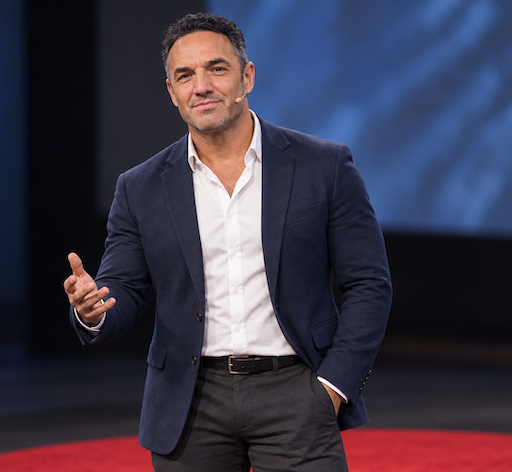
Author and Podcast Guesting Specialist for Corporate Leaders
2001 Founded mobileYouth16 books Published author250+ clients Served across 60 countriesUniversity of Sussex AI & Cognitive Psychology graduate
Graham Brown is an author and founder of Podcast Guesting Pro who helps corporate leaders, founders, and storytellers get booked on aligned podcasts and build thought leadership.
He began his career studying youth mobile behaviour and founded mobileYouth in 2001 to understand youth marketing and mobile culture; that early work serving clients such as Nokia, Vodafone, MTV, and Disney shaped his focus on audience insight.
Over time he moved from youth research into audio after seeing business leaders struggle to communicate authentically at scale, which led him to found a full-service corporate podcast agency and develop programs to train hosts and producers.
His route into podcasting combines formal study in Artificial Intelligence and Cognitive Psychology at the University of Sussex and Entrepreneurship training at Harvard Business School Online with decades of client-facing agency work.
He helps corporate leaders, startup founders, and storytellers find their voice. He leads Pikkal & Co, an award-winning corporate podcast agency, and runs Podcast Guesting Pro.
He previously hosted Asia Tech Podcast and previously grew mobileYouth to over 250 clients in 60 countries; his agencies operate from Singapore with partner studios across Australia, Austria, Canada, Croatia, Ireland, Sweden, the UAE, the UK, and the USA.
More from Graham Brown
All episodes → Office Hours with David MeltzerJosh Chodniewicz, Gary Coxe, Graham Brown | Office Hours #621Jun 2024Play episode →
 The High-Performance CEO ShowEpisode #76: The Future of Leadership: AI Innovation, Storytelling Mastery, and Human Connection with Graham BrownMar 2024Play episode →
 The Leadership Communication Show with Michael PipernoThought Leadership with Graham BrownJun 2023Play episode →The Leadership Communication Show with Michael PipernoThought Leadership with Graham BrownJun 2023Play episode →
 Rise | Evolve Leadershipevolve | eps 50 | Graham Brown, CEO | Pikkal & Co.Feb 2023Play episode →
 Limit Break StoriesGraham Brown | The Power of Storytelling for Building a Strong BrandJan 2023Play episode →
 Coffee With CoachesGraham Brown - How the Science of Stand-up Helps Jumpstart Your Story | Conversations with Coaches | Boxer MediaJan 2023Play episode →
 Speak With PowerTransform into a Magnetic Storyteller with Graham BrownDec 2022Play episode →
 Coaching CallGraham Brown - The Digital Transformation of Communication & building your brandDec 2022Play episode →