
November 4, 2025
Business Myths Busted: Why 85% of Small Businesses Fail to Sell

for most business owners they don't manage to sell their business right 85 percent of businesses don't sell in the small that most of that percentage is made up of small businesses right
Sound bites
I think the ability to leverage the artificial and put it in a genuine human rapper is going to be where the upside is going to be
In this episode
Saul Cohen talks about business sales, entrepreneurship, and how AI is changing mergers, acquisitions, and the value of human connection.
- Most small businesses do not sell, so owners should think earlier about how investors will judge the business.
- Accounting work with entrepreneurs led to a move away from large firms and toward working more directly with business owners.
- Successful entrepreneurs are often driven by purpose, growth, and impact, not only by money.
- AI creates both risk and opportunity, especially for firms that can combine automation with strong human interaction.
- Technology may push leaders to focus more on productivity tools and on managing highly efficient systems.
Chapters
Pick a chapter to play the episode from that point.
Transcript
Automatic captions of the conversation. They can contain errors and do not name who is speaking.
and for most business owners they don't manage to sell their business right 85 percent of businesses don't sell in the small that most of that percentage is made up of small businesses right it's bigger businesses that sell and smaller ones tend to not and so you'll look at your business in a different way and when you come to sell it's actually got you thinking like an investor earlier on you're going to be SPEAKER_02: thinking about what an investor would be thinking about Hello, everybody, and welcome to another episode of the Ideal Investor Show.
As you all know, at least once a week, sometimes more often, we bring you great guests. And today we have the great pleasure to have an international guest directly from SPEAKER_01: London, SPEAKER_01: United Kingdom. SPEAKER_01: Saul, welcome to the show. SPEAKER_01: Thank you so much for having me on. SPEAKER_01: Yeah, absolutely. SPEAKER_01: It's a great pleasure to have you. SPEAKER_01: And before we dive into our discussion, SPEAKER_01: maybe you can do the audience a favor and say a little bit. SPEAKER_01: Who is Saul?
SPEAKER_01: Where is he? SPEAKER_01: How did he get to where he is today? SPEAKER_01: What are you doing? SPEAKER_01: Kind of those little things. SPEAKER_02: Yeah, sure. SPEAKER_02: So I think... in terms of well I'm someone who's always sort of loved entrepreneurship I think I've always loved the passion that they bring and I think I'm someone who early on in my life appreciated the fact that most entrepreneurs that I come across are people who are they're really growth minded they really want to sort of improve SPEAKER_02: themselves and I've really sort of bought into that um and i think that it's not only that they want to improve themselves but they're normally really driven by something they're really driven by a cause um and for most of the really successful ones um they're actually not just driven by money right you know so money is definitely a it's an important thing they want to have good lives they want to have fulfillment but i think that SPEAKER_02: they the deeper they go in the rabbit hole of self-improvement the more they realize that fulfillment is going to come from having an impact on the world and you get these people who are you know they're really driven they they want to create change and they don't just want to help their small silo they want to leave a positive impact on the world um and i loved that um and i studied economics actually because SPEAKER_02: because of that and i was sort of I developed very early on this frustration with politics because I saw it as you've got entrepreneurs who drive the economy forward and it's the politicians who hold everyone back and they constrain the entrepreneurs and we should just allow freedom and liberty and you know that's the job of the politician should be to protect liberty for society but what it ends up doing is is constraining liberty in of itself so um that that was that was sort of my story in terms of who i am and know i took that i became an accountant actually because i wanted to work with entrepreneurs i wanted to work with people who are building businesses and work closely with them and i thought that eventually what i'd love to do is to be like an angel investor and work really closely with a small network of entrepreneurs um but you know to build up to that point i thought right let's go in and um be an SPEAKER_02: accountant and work with my clients and I did that really well at PwC I loved it it was it was the work that we did was fantastic um it was hard um and I didn't always love it at the time but SPEAKER_02: uh in hindsight I really loved it So PwC, I always thought they're mainly working with like mid size and larger companies.
SPEAKER_01: Is that true? Or did you ever get a chance to work with any kind of smaller organizations? SPEAKER_02: Yeah. SPEAKER_02: So it was, it was mainly mid. SPEAKER_02: So actually that's the reason I left is that I love the work that we did, SPEAKER_02: but it was mainly for, SPEAKER_02: you know, SPEAKER_02: large corporates. SPEAKER_02: There were, SPEAKER_02: it was occasionally, SPEAKER_02: you know, SPEAKER_02: you'd get like this, SPEAKER_02: this really well, SPEAKER_02: you know, SPEAKER_02: PE backed startup or you might get, you know we were we my my office was actually not the London office so we we worked in sort of the southeast region and because it's a smaller office and less London focused we did occasionally get these really successful family offices and they were really really great fun to work with and I think yeah the reason why I decided to leave PwC was I was like I got this point where I loved the work I was doing SPEAKER_02: I just wanted to work more directly with the entrepreneurs themselves, SPEAKER_02: rather than the stakeholders.
SPEAKER_01: Tell us a little bit about the organization that you have now. SPEAKER_01: So, SPEAKER_02: yeah, SPEAKER_02: as it is today, I run an accountancy practice that specializes in mergers and acquisitions in the SPEAKER_02: SME world. SPEAKER_02: So for basically successful, small, medium-sized entrepreneurs who SPEAKER_02: we are in the UK, but we have clients actually all over. SPEAKER_02: Obviously the compliance work that we do is exclusively in the UK, SPEAKER_02: but we really, SPEAKER_02: we have three tranches, SPEAKER_02: three pillars of the practice.
SPEAKER_02: So we've got the compliance, SPEAKER_02: which is sort of the central thing, SPEAKER_02: but then we also have acquisition support and prepping for exit. SPEAKER_02: So helping a business owner prepare their business for exit. um because there's lots of things that they can do that will make actually quite a big difference and so with that we work on clients all over the world okay cool and then do you have any kind of industry specialization so no not industry necessarily um we we've got clients in all different types of industries from you know consultants all the way through to manufacturing companies and and everything in SPEAKER_02: between um SPEAKER_02: But it very much is that size differential.
So in the UK, it's about 15 million pounds revenue that we sort of work up to. SPEAKER_02: We make acquisitions. Some of our clients have built groups and they're now sort of approaching sort of 50 million. But when they started, when they first started working with us, they were maybe, you know, a three million pound company and they've now made several acquisitions and they've got to that size and we're prepping it for the exit but when it actually comes to the transaction itself we've we've already told the client you know they're going to need a bigger firm involved in that because but for a number of reasons but the acquisition game changes a little bit after you know when when a business reaches a certain size right but i mean the audience is probably not that familiar can you provide a few reasons why it would be smart either to be bought or to be merging SPEAKER_01: with somebody else versus trying, SPEAKER_01: you know, SPEAKER_01: like I think when people start SPEAKER_01: With a business, SPEAKER_01: I always, SPEAKER_01: and the audience has heard me say this many times, SPEAKER_01: I make a pretty strong distinction between a practice and a business.
SPEAKER_01: And for me, it was always clear what I'm doing is basically a practice. SPEAKER_01: I have a certain specialty. People hire me for me at least as much as what we're actually doing together with the clients. But for me, the definition of the business is I want to grow something for a purpose. And it's okay if I don't have to be wearing 27 heads anymore as it keeps growing and so forth. But it's a unique opportunity for me and for the audience to learn this whole idea SPEAKER_01: of merger and acquisition.
SPEAKER_01: What would be triggers? What would be things that are better doing it that way than trying to just keep SPEAKER_01: growing organically? SPEAKER_02: Yeah. SPEAKER_02: OK, so first of all, I think that I love your distinction. We've got a similar distinction that we say to our clients as well in terms of are SPEAKER_02: you building a lifestyle business or a business for scale? um and yeah i i think that's it's really important to know what journey you're on and i definitely think that is absolutely the first thing that we work on um i think that the next step is sort of what why why acquisition um well look i think SPEAKER_02: this this two things to think about here um the first is is that acquisitions can be a fantastic way to add on something to your business right so whether it's maybe we're just purchasing a customer base and so that you know you can benefit from SPEAKER_02: economies of scale it might be that you're purchasing um a similar business so you know some a complimentary service um that works really well so for example we've got a landscape managing um management um client that are making acquisitions at the moment um and they're looking to buy sort of turf um growers you know so people who grow the grass and then they they roll it into turf SPEAKER_02: and sell it so that's it's quite a good sort of bolt-on service um SPEAKER_01: Hey, let's take a quick break for a message from our sponsors.
SPEAKER_00: Semi-passive franchising is probably, SPEAKER_00: in my opinion, the number one methodology for building wealth and equity because more and more of these service brands are introducing these semi-passive models now opening up this SPEAKER_00: opportunity to franchise investors and virtually everyone. And Franchise with Bob can actually help you to make that happen and go into an existing system and plug right in and start developing your passive income. SPEAKER_01: So go to Franchise with Bob, find the quiz on the homepage and see how franchising might be the right thing for SPEAKER_01: you.
I was trying to contain myself because my brain is sometimes a little weird, right? SPEAKER_01: Like when you said that about the landscapers and the turf growers, SPEAKER_01: I'm like, SPEAKER_01: okay, SPEAKER_01: if you're a landscaper, isn't it your job to keep the turf really well so you don't need new turf? SPEAKER_01: But I guess they're also developing new gardens or new things. SPEAKER_01: Exactly, yeah. SPEAKER_01: Hopefully they're not replacing the turf every other week. SPEAKER_01: Exactly. SPEAKER_02: The thing is that it can be a really good way to accelerate scale.
I think it's really important that you've got a sophisticated bias or someone who's SPEAKER_02: mature, they understand what it's like to run a business or to be in a senior level in business and to have to duck and dive and change things and adapt on a regular SPEAKER_02: basis. SPEAKER_02: I think that is really important. SPEAKER_02: But to me, SPEAKER_02: actually, the most successful acquisitions that we see are these sort of strategic purchases SPEAKER_02: where you've got a client who's already in the market, maybe buying a competitor or buying a complementary service as sort of a bolt onto SPEAKER_02: their existing business.
SPEAKER_02: And that works really well and it's really good for scale. The other reason why it's really good is that at some point you will exit your business, right? SPEAKER_02: either you're going to retire or, SPEAKER_02: you know, SPEAKER_02: people get ill or, SPEAKER_02: you know, SPEAKER_02: or you're going to sell it, SPEAKER_02: right? And for most business owners, they don't manage to sell their business, right? SPEAKER_02: 85% of businesses don't sell in the small, SPEAKER_02: most of that percentage is made up of small businesses, SPEAKER_02: right?
SPEAKER_02: It's bigger businesses that sell and smaller ones tend to not. SPEAKER_02: And making acquisitions does you a, positive service for two reasons when you come to exit the first is that it's going to bring you it makes your business a little bit bigger if it's bigger it's a little bit less risky it's a more attractive proposition for an investor and the SPEAKER_02: second one is that it's actually got you thinking like an investor earlier on and so you'll look at your business in a different way and when you come to sell you're going to be thinking about what an investor would be thinking about and i think that one of the main reasons is that businesses don't sell is that neither the accountant in many cases nor the business owner understands what it is SPEAKER_02: to make a small business acquisition um all the things that the the investors would be looking for and the thing and the types of buyer that might be interested in in your business um and what they would be interested in if at all um and i think the lack of that knowledge means that it SPEAKER_02: becomes really hard to sell a product that yeah yeah um One thing you mentioned earlier on that part of your interest maybe as a next stage in your business growth as for your own company is to do some form of angel investing or small scale investing in these merger or more acquisition situations.
are there actually opportunities where external investors can kind of join in or is it always only the original company basically merging or acquiring the other one and it's kind of like a straight deal because i've oftentimes wondered if you feel that there is a good target but you don't have enough money yes you could maybe borrow money but wouldn't there also be an opportunity to bring like an external SPEAKER_01: angel partner or something like that in Yeah, so I think actually at that size, the most common form of funding is vendor finance.
SPEAKER_02: So you defer the payment to the seller. SPEAKER_02: And that is extraordinarily common. SPEAKER_02: And by far and away, the most common form of funding. SPEAKER_02: protecting against risk and also funding a deal. SPEAKER_02: In terms of getting an investor on, SPEAKER_02: it does happen, but it's more common when the businesses start to get a little bit bigger. SPEAKER_02: Quite simply, SPEAKER_02: just because the deals, SPEAKER_02: as businesses increase in size, SPEAKER_02: they become slightly less risky.
SPEAKER_02: Right. SPEAKER_02: You know, my they've got more established processes. SPEAKER_02: They're less reliant on individual customers. SPEAKER_02: They've got, SPEAKER_02: you know, SPEAKER_02: a way of bringing client at customer acquisition, SPEAKER_02: a systemized method for customer acquisition and they become less risky. SPEAKER_02: And being less risky means that they are more open. SPEAKER_02: You know, investors are more open to put large chunks of money down. And, you know, you can have all sorts of methods to make that acquisition.
I think when you've got a business and you've maybe got £100,000 worth of adjusted EBITDA, SPEAKER_02: or indeed $100,000, depending where you're based. SPEAKER_02: Yeah, it's not really enough for an investor to come in and be interested enough at the SPEAKER_02: level of risk that they're going to be facing. So it's more common once you sort of pass the sort of half million adjusted EBITDA mark. okay that's cool now we are with the with the episodes that we are recording right now the interviews we're doing um since the 8th of august we are in what we call season five of this show and in season five one of the focus areas that i wanted to SPEAKER_01: introduce SPEAKER_01: partially to expand a little bit from a topic's perspective, SPEAKER_01: but also because I really feel it's right upon us, SPEAKER_01: we're living through it, SPEAKER_01: is the impact of technology, SPEAKER_01: especially artificial intelligence and robots and that kind of stuff.
SPEAKER_01: So do you see anything as far as technology that is driving, SPEAKER_01: you know, changes in your work or changes in this whole space of mergers and acquisitions? SPEAKER_02: Yeah, absolutely. SPEAKER_02: Absolutely. SPEAKER_02: I do. SPEAKER_02: I think that it's causing a lot of concern in the market, right? It's a seismic shift at a time when there are lots of natural economic seismic SPEAKER_02: shifts happening, SPEAKER_02: you know, SPEAKER_02: in terms of demographic aging, SPEAKER_02: and, SPEAKER_02: you know, SPEAKER_02: the world is unstable, SPEAKER_02: and we now have AI.
SPEAKER_02: And In the world of AI, I think that there is a lot of opportunities and a lot of risks. SPEAKER_02: And lots of our clients are now looking at sort of, SPEAKER_02: some people will look at the consulting industry and say, SPEAKER_02: this industry is going to be decimated, SPEAKER_02: right? SPEAKER_02: AI is going to completely take it over. And some of our clients are looking at that being like, everyone's scared of this industry. SPEAKER_02: if we can create a product that utilizes AI, SPEAKER_02: embraces AI, SPEAKER_02: and maintains all the best bits of consulting, SPEAKER_02: we could really dominate the industry.
SPEAKER_02: So with everything, there is a risk and an upside. SPEAKER_02: There's an upside and a downside. SPEAKER_02: My personal viewpoint is that AI is going to force us to ask the questions of what makes us special and what we SPEAKER_02: really need as human beings. SPEAKER_02: And as I said right at the beginning of the show, I think that the thing that really makes us special is interaction with other SPEAKER_02: humans making a difference in the world. SPEAKER_02: And I think that more and more the value for us is going to come from um you know a human to human interaction real genuine connection um and i think that people are going to trust um you know artificial sources less and less and they're going to really value sort of that face-to-face interaction more and more SPEAKER_02: um and i think the ability to leverage the artificial and put it in a genuine human rapper is going to be where the upside is going to be okay yeah that's an interesting perspective uh for me um what i'm seeing is a couple of SPEAKER_01: different avenues SPEAKER_01: that are influenced in different ways.
SPEAKER_01: One of which, SPEAKER_01: going back to your example of the landscaping company, SPEAKER_01: would be to say, SPEAKER_01: okay, SPEAKER_01: how can I increase productivity by utilizing tools that benefit from AI? SPEAKER_01: Like I've been using this little example, SPEAKER_01: I don't know how much they're common in the UK, SPEAKER_01: but I've seen more and more places where they have these kind of robot lawn mowers they look kind of like an oversized vacuum cleaner right and you basically and i vacuum cleaner i use that example when SPEAKER_01: somebody told about you know SPEAKER_01: basically sanitary and cleaning services, SPEAKER_01: you know, SPEAKER_01: for office buildings and stuff like that, where they like come with like three or four of those and they get put in each in a SPEAKER_01: room and then you let them do their thing half an hour later, SPEAKER_01: you come by and collect them all and, SPEAKER_01: you know, put them in the station and then they clean themselves and replenish the water and SPEAKER_01: so forth.
SPEAKER_01: And in the meantime, you know, you have other stuff. And I mean, if you think that forward, I think in that productivity driven area, SPEAKER_01: the humans will be more, in a sense, like in a leadership role. SPEAKER_01: And not so much in how do I lead humans, SPEAKER_01: but how do I lead, SPEAKER_01: basically, SPEAKER_01: a workforce of highly productive, SPEAKER_01: highly efficient, SPEAKER_01: highly affordable tools, SPEAKER_01: basically, SPEAKER_01: specialized tools, SPEAKER_01: until we get to humanoid robots.
SPEAKER_01: And the thing about what you mentioned about trust, SPEAKER_01: when it comes to that productivity side, SPEAKER_01: in my opinion, SPEAKER_01: has to do with can the technology prove its safety? I think the prime example, for example, would be autonomously self-driving cars. SPEAKER_01: And I don't know the statistics for the UK or for the EU, SPEAKER_01: but I know in the United States, SPEAKER_01: per year, SPEAKER_01: you have about, SPEAKER_01: I think it's 100,000 deaths per year. SPEAKER_01: just from driving cars and a million accidents or something.
SPEAKER_01: Don't quote me on the numbers. So if autonomous driving cars can show that they reduce the death from driving from SPEAKER_01: 100,000, SPEAKER_01: let's say, SPEAKER_01: to 10,000 or 20,000, SPEAKER_01: So when you have empirical proof that it's definitely safer, SPEAKER_01: I think it would be easier to trust it than just to say, SPEAKER_01: okay, SPEAKER_01: I get into a vehicle and the vehicle is basically, SPEAKER_01: there's no driver, SPEAKER_01: no nothing. SPEAKER_01: It's just like an Uber without a driver.
SPEAKER_01: But I think earlier on, SPEAKER_01: I remember we had our first Roomba vacuum thing like, SPEAKER_01: I don't know, SPEAKER_01: five, SPEAKER_01: six, SPEAKER_01: seven years ago or something like that. SPEAKER_01: That wasn't something where we didn't trust it. The only thing I was always curious about, is it going to fall down the stairs? SPEAKER_01: So there is, I think, an evolution. But when it comes to what you said about interpersonal interactions between humans, SPEAKER_01: I think that's a different avenue.
SPEAKER_01: And I want to ask you a little bit in that direction, what do you think will happen when what I call is creativity and innovation is unleashed because the dependency on I do this hour for this money is going away SPEAKER_01: more and more? SPEAKER_02: Honestly, I actually think humans are going to struggle. I think that we are going to be forced to come up with what is our purpose really here. And I think that it's going to be depressing for a period of time because I think SPEAKER_02: so many of us find purpose in the work that we do.
SPEAKER_02: Right. SPEAKER_02: Whether, SPEAKER_02: you know, SPEAKER_02: and, SPEAKER_02: you know, SPEAKER_02: if we manage to get to this world, SPEAKER_02: this utopian vision where resources can be allocated and, SPEAKER_02: you know, SPEAKER_02: created and wealth can be created without our input, SPEAKER_02: then I think lots of us will have a struggle. SPEAKER_02: to understand where do we bring in, where do we create purpose? SPEAKER_02: What do we do? SPEAKER_02: And I think that that is really important, SPEAKER_02: that we can come up with an answer to that, SPEAKER_02: that isn't we just sit around and do nothing all day, SPEAKER_02: because I think that that will lead to a lack of fulfilment um i think we're a long way from that by the way and i think that by the time we get there it will be fine um yeah we we will have we will it's an evolution as you say so um but i i do think i think that it's important that we remember what makes us special and appreciate the fact that sometimes what builds us up isn't the easy SPEAKER_02: routes it's not the you know our development requires things to be hard for whatever reason the world is built that way um and i think that the risk is that we always take the easy route that we choose to take the easy route every time and i think that there are going to be scenarios points in our life where we are going to have to manufacture difficulty to enable SPEAKER_01: development yeah well i'm SPEAKER_01: I appreciate your view on that.
SPEAKER_01: One of the things that I've lately thought about quite a bit is, SPEAKER_01: is it really purpose in the true meaning of the sense, SPEAKER_01: or is it occupation? SPEAKER_01: And how free are we really, SPEAKER_01: if you look at it through a lifetime, SPEAKER_01: to select what we want to occupy ourselves with? SPEAKER_01: Or is it oftentimes circumstance where we went to school, SPEAKER_01: we learned something, SPEAKER_01: we found a job, SPEAKER_01: we got relatively comfortable, the job is there to cover the costs that we have so we can focus at least some of SPEAKER_01: the time to build a family and stuff like that.
and then you look at the trajectory and i know this is not necessarily the entrepreneurial route that you spoke about but even there when somebody made the commitment okay i want to develop this company that is then at least for a significant amount of time the trajectory they're on right uh and that at the same time in that case would be also what they're occupying their brains with and their SPEAKER_01: activities and their time SPEAKER_01: What I'm sometimes wondering is, SPEAKER_01: if I were to ask you, SPEAKER_01: Saul, SPEAKER_01: just on the spot, is there something like some sort of a hobby or some activity that you really enjoy SPEAKER_01: doing?
SPEAKER_02: Look, yeah, there's a few, right? SPEAKER_02: So... SPEAKER_02: I enjoy playing sports, right? SPEAKER_02: So I'm Orthodox Jewish as well. So I spend time each day learning, you know, in terms of Jewish law, right? SPEAKER_02: And I take a lot of purpose from those things. SPEAKER_01: So, yeah, I suppose there are... SPEAKER_01: From that, that's why I said occupational. If you could imagine, I know people might say whether even that could get boring, right? But if you found other people that you can come together with to study things about SPEAKER_01: the Jewish law and the religion and stuff like that, SPEAKER_01: and then a significant rest of the day, SPEAKER_01: you can go and increase your mastery of whichever sport you like.
SPEAKER_01: And maybe there's the third thing. SPEAKER_01: I've started to ask myself, would we really call that a boring life just because we don't have to go to an SPEAKER_01: office or sit in front of a screen or stuff like that? SPEAKER_01: We don't know that. SPEAKER_01: I don't know of anybody other than super, SPEAKER_01: super rich people who may have that life, SPEAKER_01: but regular, normal people to do just the stuff that we like because we really enjoy it and not SPEAKER_01: have to think about, SPEAKER_01: does it make any money?
SPEAKER_01: I think that's something we have to learn. Yeah, I think it depends how far... This is what I mean when I was saying. SPEAKER_02: It depends. If we live in a utopia, I think that would be fine if it was a real utopia. SPEAKER_02: But I think as long as there are imperfections in the world, SPEAKER_02: there will be a need for people with purpose to be doing... SPEAKER_01: Yeah, I didn't mean it to say everybody does nothing anymore. Like with everything in the world and always have in all of history nuances to everything.
But I wanted to also build this as a bridge a little bit for the guy who is helping SPEAKER_01: with mergers and acquisitions with that kind of stuff in mind. um what would be the good kind of like types of businesses that we should look at that are actually most likely in your experience capable of being successful even in this rapidly changing technology and and and an ai world um honestly i think SPEAKER_02: that the important thing is really just to think about the next three to five years. I think that we don't, we don't live in a, in a world where you can plan beyond that.
SPEAKER_02: I think to be honest with you, um, we haven't for 10 years. SPEAKER_02: So we, we definitely don't now. SPEAKER_02: Um, and I think in the next five or three to five years, um, SPEAKER_02: lots of industries are going to be protected from AI. Anything that requires manual interaction is a little bit more protected for the SPEAKER_02: time being, SPEAKER_02: and we'll be able to utilize AI to support the the work that's being done if nothing else you know healthcare services and you know care homes etc they're doing they're going on an upward trajectory and I think actually anything that's providing leisure services right as you say people are going to have more time and there will be you know we're going to need to be able to spend that somewhere yeah I agree with you and I think there's an important SPEAKER_01: message kind of SPEAKER_01: hidden in plain sight, SPEAKER_01: so to speak, SPEAKER_01: in that is for anybody relatively young listening or watching us, maybe you're in college or you're planning to go to college or you're wondering SPEAKER_01: coming out of college what you should do.
I think Sal's point about don't plan for a lifetime of whatever the occupation might be, You know that that will be your lifetime career because those days are probably over. SPEAKER_01: And that brings us all the way back to the beginning. SPEAKER_01: you have probably inherently more flexibility if you start a business, SPEAKER_01: even if it's not for the 20, SPEAKER_01: 20, 40 years, SPEAKER_01: but you do something that gets you a different mindset, gets you exposed to all these different facets that go into finding and starting SPEAKER_01: and running a business rather than, SPEAKER_01: okay, I wanna do this one job and I hope it lasts for the rest of my life kind of thing, SPEAKER_01: right?
SPEAKER_01: I think those days are over. SPEAKER_01: So if somebody says, SPEAKER_01: OK, SPEAKER_01: I'm maybe already in business, SPEAKER_01: but I would like to have some help on considering what should I buy? SPEAKER_01: Who should I merge with? SPEAKER_01: What could be an acquisition target? SPEAKER_01: How do I figure this out and so forth? SPEAKER_01: How can people get in touch with you? SPEAKER_02: So probably the best way is on LinkedIn. So I'm posting on there fairly regularly and always lots of hints and tips and bits SPEAKER_02: and pieces that will be interesting.
SPEAKER_02: And so everything really goes through there. So definitely just follow me on LinkedIn and I'm sure you will get a ton of value out of that. SPEAKER_01: Yeah. SPEAKER_01: And we obviously going to put that in the show notes. SPEAKER_01: And I think I heard you say that anything, SPEAKER_01: at least the English speaking part of this world is good to go, SPEAKER_01: right? SPEAKER_02: Yeah, absolutely, English speaking. SPEAKER_02: I'm not so great with other languages. SPEAKER_02: I'm dyslexic, so languages is not my forte.
SPEAKER_01: Well, I had almost asked you how is your Hebrew. SPEAKER_01: I think you might need that. SPEAKER_01: Hebrew I can do. SPEAKER_01: That adds at least a few million people here. SPEAKER_01: All right, great. SPEAKER_01: So the last thing, SPEAKER_01: and I like to ask this, SPEAKER_01: has nothing to do with investing or with business or stuff like that, SPEAKER_01: is if you could meet anybody dead or alive, SPEAKER_01: who would it be and why? SPEAKER_02: Oh, fantastic question. Joe, I always struggle with this because there are so many really great people who...
really create an impact on the world I think that if I could meet if I could meet anyone I would love to meet someone like Churchill someone who I'll tell you why SPEAKER_02: because I would want to know from him SPEAKER_02: Because he was someone who was very outspoken, SPEAKER_02: even in the days before, SPEAKER_02: you know, SPEAKER_02: he was elected in, SPEAKER_02: he was very outspoken. SPEAKER_02: And in many ways, that was his downfall, you know, from politics, right? SPEAKER_02: And I'd want to know from him why he was so, what drove him?
SPEAKER_02: to be so passionate, to be so outspoken, to be so determined. SPEAKER_02: Because it wasn't just the war, SPEAKER_02: actually, SPEAKER_02: if you know about it, SPEAKER_02: it was before and after he was the same. SPEAKER_02: And I'd love to really understand that, SPEAKER_02: you know, SPEAKER_02: what drove his passion and his willingness to be, SPEAKER_02: you know, SPEAKER_02: unpopular for what he believed was right. Because I think that is an important thing to ask and definitely something that fascinates me.
SPEAKER_01: Yeah, absolutely. SPEAKER_01: I mean, unpopular is interesting because I find sometimes it depends very much who you're SPEAKER_01: asking. SPEAKER_01: Like right now I feel and it's a very, it just popped into my mind. SPEAKER_01: I don't want to make it sound like there's any equality or similarity other than maybe in nuances but what's going on with milan argentina right now it's one of those examples where depending on who you are is either super popular or super super not popular same thing with like bukele in san salvador and places like that right el salvador actually um you know so i find that quite interesting but it would be an interesting question and since we spoke a little bit about ai and and SPEAKER_01: purpose and occupation.
SPEAKER_01: I've actually been wondering, SPEAKER_01: and I don't know if you have been a fan in the past about Star Trek, SPEAKER_01: but if you have, SPEAKER_01: then you're probably familiar that they had these holodecks, SPEAKER_01: where you basically had fundamentally an artificial but very real feeling world's replication where you could sit down and you could basically live to a scene i'm wondering if one of the things in the future will be to say like okay so i want to meet churchill let's set up a holodeck where they can sit down and he has a cigar and you have whatever you have and you just have a conversation and the system is capable of having absorbed SPEAKER_01: so much that it's SPEAKER_01: as close as it can be to beat Churchill.
SPEAKER_01: Yeah, SPEAKER_02: I'm sure they will actually, but I think that it will be a little bit gimmicky for anyone who lived in an age SPEAKER_02: before there was the level of data collected on celebrities that we have now i think now we've got so much data available you know emails whatsapps or whatever there's so much data available you could get someone you could actually probably get quite close to their personality but uh i think you know in in previous times even even if you go back 40 or 50 years the data is much more limited and so i think it would be a little bit SPEAKER_02: gimmicky to go that far back yeah it could be SPEAKER_01: Although with Churchill and people in that age, my question sometimes is just because we didn't have access to it like it is common today to have access for anybody who has said a peep someone a minute ago, SPEAKER_01: we already all know about it.
SPEAKER_01: But I know, SPEAKER_01: for example, that it used to be common to write letters to each other and have notes scribbled SPEAKER_01: into a book and stuff. SPEAKER_01: So if there were access to the information that is not so easily publicly SPEAKER_01: available, SPEAKER_01: you probably couldn't get as close as today. SPEAKER_01: But I'm curious. I'm just saying, you know, we were talking about what would you do with your day? You could make a list of all the people that you would and then, you know, every day you spend a little bit of time meeting one in the holodeck and stuff you know then you go play a round of golf and then you read a little bit in the scripture you know and so forth yeah all right so it was great to have you on the show thank you for for your insights and and i really appreciate it because you brought a little bit of a different perspective than me typically when we talking about investing in the us we don't get so thank you for being here yeah fantastic SPEAKER_02: thank you so much
About Saul Cohen
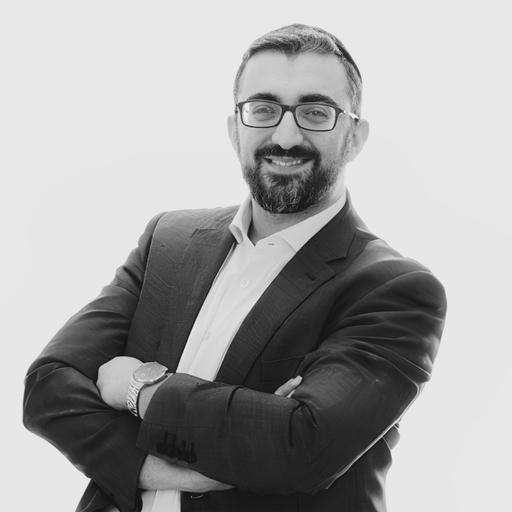
Empowering Entrepreneurs with Strategic Financial Advice
1 Business sold before starting his PwC careerPwC Assurance & Risk Management experience£1M+ Annual earnings of business owners he advisesPartner The Expert Eye
Saul Cohen is an experienced accountant, acquisitions advisor, and passionate advocate for entrepreneurship. With a distinguished career that spans top-tier firms such as PwC and leadership roles at The Expert Eye, Saul has honed his expertise in financial audits, risk analysis, and strategic acquisitions. He is committed to empowering entrepreneurs to transition from business operators to savvy investors, unlocking their full potential.
Drawing inspiration from personal experiences, including his father’s entrepreneurial journey, Saul has dedicated his career to helping small businesses and startups navigate the complexities of tax planning, acquisitions, and exit strategies. His holistic approach not only enhances business valuations but also enables entrepreneurs to reclaim their time and achieve financial freedom.
Saul’s work is characterized by a creative and practical approach to accounting, blending technical expertise with actionable strategies. His unique perspective resonates with successful business owners earning £1M+ annually, particularly those eager to optimize their wealth, prepare for business exits, or make impactful acquisitions.
As a podcast guest, Saul brings inspiring stories, actionable advice, and a passion for empowering entrepreneurs to achieve lasting success and drive positive change in their communities.
More from Saul Cohen
All episodes → The SmallBizChat with Melinda EmersonHow to Increase Your Business Valuation and Build Wealth with Saul CohenSep 2026Play episode →
 The Digital SliceYour Business Isn't Worth What You ThinkAug 2026Play episode →
 Build a Business Worth BuyingAcquisitions Later: Saul Cohen on Why Deals Really Fall ApartAug 2026Play episode →
 Leadership that sellsSaul Cohen - How to Build a Business Buyers TrustAug 2026Play episode →
 The Entrepreneurial JourneyBuild a Business Worth Buying | The Entrepreneurial JourneyJul 2026Play episode →
 The Grown UP Business PodcastBusiness Exit Advisor: Save £4,000, Retire A Millionaire! Most Owners Never Do - Saul CohenJul 2026Play episode →
 The Wealth Vibe Show!Ep 243: From Operator To InvestorJun 2026Play episode →
 Travis Makes MoneyINTERVIEW | Make Money Through Business Acquisitions with Saul CohenJun 2026Play episode →
 The Exit - Presented By FlippaFrom Operator to Investor: Mastering Business Valuation and the Exit Journey with Saul CohenMay 2026Play episode →