
June 23, 2026
Ep 243: From Operator To Investor
Sound bites
Business was actually a lot harder than it's presented. And I wanted to learn more about that process and understand it more deeply.
You can do the same year 20 times, or you can have 20 years of experience.
In this episode
Saul Cohen talks about how entrepreneurs move from running a business day to day to thinking like investors and building long term wealth.
- Early signs of an operator mindset include being busy, plateaued, and unclear on business value or valuation drivers.
- Business owners often know revenue and profit, but not the main assets or income drivers that create enterprise value.
- A first business, a tutoring company started at university, grew enough to be sold for a small, tidy return.
- Working for entrepreneurs at PwC helped deepen his understanding of business, while entrepreneurship itself felt increasingly suffocating.
- A coach and the habit of stop, measure, review, and improve helped him avoid repeating the same year over and over.
Transcript
ShowHide
Automatic captions of the conversation. They can contain errors and do not name who is speaking.
So, what was your mindset at the time? What made you do that? Or how did you decide, oh, this is a better path for me, instead of running my business on my own, let me go ahead and work for somebody else now? So, I think, as I said, we were really young, and we'd grown our business to a certain point. It was nowhere near the success that we thought, in our heads, we were gonna be the next Facebook, and we were gonna absolutely make millions. But what we realized was that the practicalities of business were hard. You know, lead generation for us at that time was hard.
No one tried us out to do that. And even though we did generate leads, it was fine. Managing execution was- Showing is the biggest. Yeah, was challenging, particularly when it wasn't us going. And I think we realized throughout that process that business was actually a lot harder than it's presented. And I wanted to learn more about that process and understand it more deeply. And therefore I thought, well, why don't I go work for entrepreneurs? Which is what led me to become an accountant. Hey there, and welcome to The Wealth Vibe Show, where wealth is more than money.
It's a mindset, a movement and a mission. If you've ever wondered how to build real wealth, how to grow it, protect it and let it work for you, even while you sleep, you're in the right place. Each episode brings inspiring stories, practical strategies and real conversations of people who are creating financial freedom on their own terms. Just a quick note, this show is for educational purposes only and isn't meant to be legal, accounting or investment advice. And don't go anywhere, we've got a free gift waiting for you at the end of the episode.
If you enjoy what you hear, make sure you subscribe, leave us a five-star rating and drop a comment. Let's grow together. This is The Wealth Vibe Show. Most entrepreneurs believe that building a successful business automatically leads to financial freedom. But the reality is very different. Many founders spend years running profitable companies only to discover that most of their wealth is trapped inside the business itself. The real shift happens when an entrepreneur stops thinking only as an operator and begins thinking like an investor.
I'm your host, Vinki Loomba, and today we're exploring the mindset, strategy and financial decisions that help entrepreneurs turn successful businesses into lasting wealth. Our guest for today is Saul Cohen, founder of The Expert Eye. After starting his career at PwC, Saul now works with entrepreneurs to help them move from running businesses to building scalable wealth to financial strategy, tax planning and acquisitions. Saul, welcome to The Wealth Vibe Show. Thank you for having me on. Of course. And our topic for today is very interesting, from operator to investor.
I already love the topic. As you're listening today, I want you to reflect on one question. Is your business building wealth for you, or you simply building a job inside your own company? By the end of the conversation, you should have a clearer understanding of how entrepreneurs can transition from daily operations to long-term wealth creation. So, you work with many successful founders. When you meet entrepreneurs who have built strong businesses, what are the early signs that they are still thinking like operators instead of investors?
Well, that's a great question. I think that they are, I think often they're very busy. Yeah, I think they're very busy and they've sort of hit this plateau. And they haven't yet taken the time to get their head above the parapet, so to speak, to really sit down and have a high-level overview of their business. I think it's the sort of thing where they're making really good money. They may be, they've got a fairly comfortable life, but they're not, if you ask them what their business is worth, they can really tell you.
If you ask them, what are the main assets in their business? What are the main drivers of income in your business? They're not really sure. They don't really understand how the valuation of business comes. They're very P&L focused. So really clear on what drives revenue and what drives profit, but less clear on terms of what drives value in their business. And I think that's probably the earliest signs that I could give you. So let's start with your journey. How did you get started in this space? And what was that transition look like for you from operator to investor?
So I started quite young, I think. I started my first business when I was at uni. I don't often talk about it because it was quite a small business. It was just something to start out as a tutoring company, just something for me to learn, I suppose. Just on my way through uni to earn some money when I was at university. And then over a period of time, it sort of grew and we had other people coming to teach. We sold it, it wasn't a massive exit, but it was a nice, small, tidy earner. And I started my career at PwC. When I was at PwC, I wanted to work with entrepreneurs.
So even when I started my first business, I've always loved entrepreneurship. I believe very passionately that entrepreneurs are the people who drive positive change and create real value in the world, not just in their businesses, but in the world, in their environments. I think that development and positive progress always comes from entrepreneurs. And I think I wanted to be in an environment where I could learn from those people, where I could give to those people. In my experience at that point and still today, entrepreneurs tend to be very humble people who are keen to share their knowledge and support others.
And they're very giving. And I just thought, what an incredible group of people to be working for. And so I went to PwC because I just thought it would be really cool if I was able to be a consultant, learn from them in a consultant, as a consultant, and sort of see, you know, just work with lots of different business owners and see what we learn from working from all of them, but also what we can, what value I can add. And I loved it. I thought it was incredible. It was an incredible place to work. And then around the time that I was sort of four years in, coming to my fifth year, my dad came to sell his business.
I remember thinking it was just very, it's a shame that he didn't know a lot of the things that he was learning at that time, 20 years ago. And I think one of the things that I realized is that there's not really any, there's no school for entrepreneurship. No one tells you what the strategy is. Everyone just learns it as they go. I often say, we jump off a cliff and we build a plane while we're falling, and hopefully it flies. And that's how we learn entrepreneurship. I'm myself absolutely included in that. And so I decided I wanted to set up my own firm.
I did that. I set up my own firm, took a project while we're all in between, set up my firm, and have been growing it steadily over a period of time. I'm working in the M&A space. One thing I did very early on was I took a business coach, largely because I knew that I was struggling. And I took a business coach to guide me through this process. And my business coach has guided me to make sure that I'm reflecting on my performance. And I think that that's one of the key things that you have to be able to do as an investor.
You need to be able to record data, stop, measure, and review to see how have I been doing and what needs to change going forward. And it sounds simple, but that really has made a big difference because, when you're stopping every month and thinking what worked well this month, what didn't work well this month, what do I need to change going forward, that gives you 12 cycles to continuously improve over the course of the year. And that really, I believe that compounds. The second thing that I started doing was I started taking time out of my business.
So once a month, I started really going down and that was the time that I used to reflect. I found a place to work that isn't my office, and I started just looking at some of those things. And then because of the fact that I work in acquisitions, I started being offered to sit on boards, initially to sit on a board for an acquisition group. And recently, we are in the process of setting up a small fund to go out and make acquisitions of SME businesses. So yeah, I suppose that's been my journey overall, but really the key thing for me was that stop, reflect, measure, and think about how you're going to improve.
And having a coach who can tell you and guide you along the way. Wow, I love that journey and also quite a journey. So let's break it down now. So the first thing you said was that I heard you saying that you had a bunch of experiences, you had a small company with your wife, that you guys exited and you took that from there to the next level, right? And then the next level, then the next level. And every time we move to the next level, the next level is always harder, right? It takes up a little bit of time to get ourselves familiarized and all of a sudden feel like, oh my God, this is my lane.
I'm going to run here fully. And then other thing that you said is, you learn a lot of strategies from your own experiences, going through different levels or changing different lanes. So share with us, what was those strategies and how did you build wealth, taking those strategies or making those strategies working for you? Yeah, okay. So I mean, first business was, it was actually before I met my wife. It was with a friend of mine at uni that we did this. We were business partners together. And I think in that one, we were both very young when we set up that company.
And so our expectations were low. Actually, the thing for me, the big learning there was that the power in an idea is all in the execution. There was some really interesting learnings and just along the way. And we came up with some really good ideas. And actually people, and I've heard of businesses who've implemented those ideas and done fantastically well. We didn't always implement on those ideas and we didn't know how to execute them and how to take it to market. And I think that was something that we just had to learn it.
We were young guys, now early 20s, just sort of messing around, as I say. I think going to PwC was an incredible place for me to be at that stage in my career. I'm really grateful that I did that. My dad pushed me into it a little bit, but I'm very grateful that I did that because the learning that came from that was incredible. But I think if I think about it now, the biggest learning, and there were lots of learnings that I've taken, but the biggest learning that I've taken from that as an entrepreneur, is just the power of building a culture.
I think PwC had the most impressive culture of any organization I've ever seen. It had this ability, probably still does, had this ability of just taking individuals, many different types of individuals, and crafting them in a way that all of them across the world, just we thought the similar way, we wrote a similar way, we conducted ourselves in a similar manner with our clients, with our peers, we coached a similar way. I think that is an incredible thing to do when you think about the size of organization that it is and the number of people that work there.
It was just incredible. I think I didn't quite appreciate just the value of having such a powerful culture until I started my second business, which is The Expert Eye, and I started hiring people and realized how difficult that journey is. I think, as I said, I'm going to say again, the third journey is that you need to have good advisors around you, because ultimately we don't know everything. And sometimes it's worse than don't know everything. We don't even know what we don't know. And I think that having people around us who can educate us, who can support us so that we can put up our hands and say, I need help here.
Do you know anyone who can help me with finance or whatever it is or HR? I think that's massively valuable because we all think we're good at things. Entrepreneurs by nature are very optimistic people. They're looking to do everything themselves, yeah. Exactly. Yeah. And I think we need help. And yeah, I think being able to call out for that help and knowing what we need in an area of expertise is incredibly important and massively valuable. And then I think really everything comes from there. If you've got those things down, then that's a fantastic starting point.
We can start going into all different nitty gritty. But really, my business coach always says it's about be, do, have. And I think, you know, who are you as a person? So what does that person do? What actions are you going to take? And that leaves you with what you're going to have. That gives you what you're left with is what you're going to have. And I really think that that's really true. And so before starting out on entrepreneurship, all of those things are about the person that you are. And I think that's, once you are the right, you've leveled yourself up to that level of a million pound CEO, let's say, or a 10 million pound CEO or dollars, whatever it is, then I think it comes naturally.
The actions that you take come naturally. And the consequence is having a 10 million pound or a 10 million dollar business. So let me ask you this question here now. So you mentioned certain very good things over here. First of all, you mentioned power of execution. That was related to your business number one. Then you said power of building a culture. And then you moved to PwC, right? So going from entrepreneurship, going into the corporate world, you step into the corporate world, totally different ballgame. So what was your mindset at the time?
What made you do that? Or how did you decide, oh, this is a better path for me, instead of running my business on my own, let me go ahead and work for somebody else now? So I think, as I said, we were really young and we'd grown our business to a certain point. It was nowhere near the success that we thought, in our heads we were going to be the next Facebook and we were going to absolutely make millions. But what we realized was that the practicalities of business were hard. Lead generation for us at that time was hard.
No one showed us how to do that. And even though we did generate leads, it was fine. Managing execution was challenging, particularly when it wasn't us going. And I think we realized throughout that process that business was actually a lot harder than it's presented. And I wanted to learn more about that process and understand it more deeply. And therefore, I thought, well, why don't I go work for entrepreneurs, which is what led me to become an accountant. And yeah, then I applied to the accountancy firms and got accepted at PwC.
And that's kind of how it works. Yeah. And don't get me wrong, I love PwC. It's such a good company. But the thing is, all the corporations, they have kind of a cookie-cutter model approach, like you mentioned as well. The corporate culture, they want everybody to think same, do everything exactly the same. So I wanted to hear from your experience because you've been an employee and an entrepreneur. I mean, even I went through that journey too. So what is the major difference that you saw between the two roles? Working for somebody or just being an entrepreneur yourself?
I think you have to know. I think it's a personal decision. I do think that sometimes working for someone else is much better for you. I enjoyed the glamour and the work that we did when I was at PwC. I enjoyed the people that I worked with. It was, we worked with fairly impressive people and it was always a great building. Clients were great and often we were working with household names, often not, but they were always really interesting. And I did really enjoy that. And for a period of time, I actually thought I might give up on entrepreneurship completely.
And then there was a couple of things that happened. I mean, as I said, my dad leaving. I also found out a little bit more about the corporate world and just how many rungs up the ladder it was. I did think I was just, I felt I started to feel a little bit suffocated. And I think that was a personal thing. I don't think everyone has that. And certainly, I've met people in my career since, that they'll turn around and say, I tried to start a business, it's really not for me. I just don't want that. It's too much stress.
I'm really happy to be an employee for someone. And they're dedicated, hardworking people. But they don't want to be the one who's ultimately in charge. And I think that entrepreneurship gets both glamorized, it becomes like people paint this beautiful picture of it. And at the same time, we get demonized because people work with all the money, and they're controlling the world, and all of this. And actually, the truth is that it is a fantastic opportunity, but it's incredibly hard, it's incredibly difficult, and it just isn't for everyone.
And I often say to people now, you have to be honest with yourself if you really want to start a business, or if you just want to work with someone who is going to, and maybe you're better off just being a partner for them, or an employee for them, and supporting them in that journey, that you don't have those same stressors, and you don't carry that same weight on your shoulders. And ultimately, I do think it's a very personal decision. And also, you mentioned that you had a business coach, and that helped you along the way to strategize your thinking or maybe help you pave the path that you wanted to walk on.
So can you share that with us? Because you shared with us earlier, that you learned or that's your motto, stop, measure and review. I think that's a really good strategy because sometimes we just get so caught up with life and we just like kind of running with the blinders on. But it's always a good idea to stop and then measure what we have done or where we are, and then take the next step. So share with us those learnings in a little bit more depth. Yes, I think my biggest fear was about this idea of you can do it, you can do the same year 20 times, or you can have 20 years of experience.
And I really wanted to avoid having the same year 20 times. And so I really wanted to understand what is about that, and what is the differentiator. And the answer that I came to was, as you said, stop, measure, review, and improve. And to me, I found it very hard to do any of those things when I first started out. And having a coach who was available, who could hold up a mirror to me and show me what my performance was like was invaluable and still is invaluable. I think that it's really funny because I think business is a high performance sport.
I think actually entrepreneurship operates in many ways and all of the same attributes as high performance sports. And I think that actually we need exactly the same things that high performance athletes have. You know, you need a coach who can support you, who can guide you. You need good sleep. You need rest and recovery. You need to be able to train hard. You need to be able to train when no one's looking. You need to put hard work in. You need to grind. I think a lot of the things, the attributes that I need are actually quite similar.
And for me, a coach is just one of those that's there and important. Yeah, because it's somebody outside of you can see you as a whole and can give you some feedback on you and that helps you kind of, you know, rinse and repeat or maybe improve where you are basically. And other thing I think that you mentioned earlier was, you know, you said you wanted to learn who I am. So it's very important. I think this is a universal question, actually, you know, everybody should ask that question to themselves. Who am I? Because once you learn that who you are, that helps you grow exponentially.
So I wanted to hear your thoughts from your experience on that as well. On who I am as a person, I think. But look, I am orthodox Jewish, and so a lot of that has been, it sort of goes hand in hand with that for me. I think it's very important, from a religious perspective, to know who am I, what's my purpose in this world. I'm here for a reason, and I do believe in that, that everyone's here for a reason. And I was driven through my place of becoming more religious. I was driven to do that work internally in myself.
And I think what I came to was this idea of I want to build things. That's what I want to do deep down. I want to be a builder, someone who creates value in the world. And I see entrepreneurship as an incredible vehicle to do that. Interesting. Let me ask you this mindset question. What is the biggest mentorship that happened for a founder to move from running a business to a building long-term wealth? To building long-term wealth, I think the most important thing is for them to understand the journey that they're on.
So Daniel Priestley, if you've heard of him, a fantastic author. He wrote a book called 24 Assets. And in that book, I think it's a great book if you haven't read it for sure. It's massively valuable to your readers. I advise all my clients to read it. But in that book, it really sort of draws out the difference between two types of business. One is a performance business and one is a lifestyle business. Now, a lifestyle business is built to maximize the founder's lifestyle. So I want to give you as much money as possible and as much flexibility as possible.
That's a lifestyle business. And the second is a performance business. Now, that's built to maximize the business' value. They are built very differently. And in a lifestyle business, and by the way, I think there's nothing wrong with the lifestyle business. I've seen really successful, you know, million lifestyle businesses generating multi-million pounds of profit and actually similar in dollars in the US. I've seen some great US based lifestyle businesses. I don't see the lifestyle business, the method to make wealth and build wealth is actually through what you're going to do with your profits that your business generates and understanding that.
Because at the end of your year, when you're deciding what are you going to generate, what are you going to do with your business profits, and you're making a conscious decision around that, in a lifestyle business, you probably won't be re-investing so heavily in the future. You're going to be investing in personal assets in a tax-efficient way. In a performance business, you're going to be investing much more heavily into the business itself. And most of your value in the business, most of the value in the business will come from the exit of that and the sale of that business.
Now, the biggest problem that I find from most business owners is that they act like they're building a performance business as they keep pumping money back into their business and thinking that they're going to get a large exit when they leave. And actually, what they've built is a lifestyle business. And it's not worked as much as they think it is when they do come to exit. And so I really do think it's very important to be honest with yourself and think about what one of those two businesses are building. The second thing is then the identity that you have for yourself.
But I think the primary thing is to understand what am I building and what am I trying to achieve. And I think it's a journey too, investing in a performance business versus the luxury investments, because that's not going to have day one. So what if some investor was just starting and do not have enough dough to just start a luxury business or a luxury investment? So they're going to start somewhere, right? So you've been through that journey yourself too, that you're here now, so you're in the merger and acquisitions, and you see the companies even merging, and you can get into very nitty-gritty detail on that too.
So can you share with us to that investor journey, maybe investing, starting maybe in the performing or performance businesses and then moving into the lifestyle businesses? So lots of our most successful clients will have, they've built maybe a successful lifestyle business. They've maybe got some free time. Their business is generating healthy cash flow for them, good profits, and they're now thinking about, well, what's the next step in my journey? And they're making a multitude of different investments, perhaps.
They might be investing in stocks and shares, might be investing in property, all different types of things. But one of the most potentially lucrative, interesting opportunities of our current generation, the current time period in which we find ourselves, is this buying up SME businesses, so small, medium-sized businesses, buying them the healthy cash flow generative. And lots of our clients are doing that as a model. They will go out and they'll buy those businesses, those sorts of businesses. There's lots of ways to do it.
Some people buy it to sit as part of their portfolio. Some people buy it. They're happy to get their hands dirty. They want a new project to work on. And that's going to be their new baby. And some people make acquisitions to sort of group them together and prep them for a larger exit. And on the basis of if I buy several lifestyle businesses and I manage to put them together, I can have one very healthy performance business that I can exit for a healthy figure. And because of the fact that I'm buying lifestyle businesses, their valuations are going to be much lower.
And when I sell that as a performance business, valuation will be higher. And so that's where they're making money on the change in multiple. So yeah, lots of potential ways to go about that. And yeah, it's a very interesting journey. It is. And let me ask you this. From your experience, what separates entrepreneurs who successfully transition from operator to investor, than those who remain stuck running the same business for decades? I think it's the ones who have the humility to realize where their limitations are, and to review their performance, and think about what have I done wrong, what have I done right, to ask for help.
And the ones who are willing to put in the work to change their identity to become an investor, to change their identity from I'm a business owner to I am an investor and I make acquisitions and I look at businesses as an investor and I'm willing to turn up as an investor. I think changing your identity is one of the hardest things that a person can do. It is. And it takes a lot of work and it's a different type of work. It's not just grinding out, it's a different type of work. And I think the ability to do that and put that work in, that's really what separates the ones who can and the ones who never do.
So if someone listening today wants to understand, you know, what it's like to be an investor tomorrow, or wanted to start thinking like an investor tomorrow, what is the first shift in how they should view their business, their money, maybe their story, you know, like you said, it's much more than business or the current identity that you think who you are. So I think the first thing actually is to take a day out of the office. It's funny, my business coach actually said, change your LinkedIn profile from whatever it is to investor.
I mean, if you want an identity, just start introducing yourself as that identity. I think in many ways that's actually true, because it sort of starts tricking the mind to thinking that you are that person. But practically, what I found much easier to do that, because I think that the risk was when you want to start saying, I'm an investor, you don't really feel like an investor, because you're not doing any of the things that investors do. And so, what I started thinking about, well, fine, okay, what do investors do?
And one of them was, how would they review my business? And my business coach was telling me, take a day out of the office, and I actually thought about it, and I was like, well, if I was an investor in my company, I would want to know the following questions. What did we do well last month? What have we done? What have we struggled with? What do we need to change? What do we need to do more of? What are our strengths? What are our weaknesses? What are the opportunities in the market right now? What are the biggest threats in the market right now?
How was the financial performance? And who in the business is doing well? Who in the business is not doing so well? I'd want to go through and try and analyze that. And so that's what I started doing. I started taking that time out and thinking about looking at and assessing my business, measuring it up against those questions. And when I did, I started feeling a lot more like an investor. And so when you say, I run a private equity company or we're starting a private equity fund, it feels a lot more natural than maybe you said two years ago before I was doing those things.
Yeah. Okay. I almost forgot. But I just remember when you were talking, you told me earlier before the recording that you were writing a book, Finding the Gold. So can you tell us a little bit about your book? What is it about? And how did you come up with the idea? And the title, I love the title, Finding Gold. Yes, I could take no credit for the title. I have to tell you, I was at lunch. I was actually speaking and networking lunch. And I was sat next to someone, an incredible guy, and he, I was sitting, I was like, I'm really struggling with the name for my book.
My book's about buying businesses and guiding successful business owners to make acquisitions and understand what that process is like. And he goes, why don't you call it Finding Gold? And I was like, okay, it's done. Yeah, I love it. That's how the name came about. But yeah, so that's really what the book is about. It's about finding the right opportunity. I have a framework in there that I present. So I always felt that a lot of the financial modeling and evaluation frameworks that are used in the SME world, and so to value a business, a larger business, I think it becomes much harder for you to tangibly measure that in the small, medium-sized business of the world.
So let's say sub-hundred million in revenue. And so I developed a framework called Score, which I go through in the book and I expand out in that book just to understand valuations. And so that's sort of the core of the book, but really it walks business owners through a lot of the mistakes that I've seen and tries to guide them through, you know, what the people who've done acquisitions well have done really well. It doesn't walk prompted me to do it. So I knew that I've done quite a lot of acquisitions, over 150 at this point.
So it's quite a number. And I'm lucky to be in a position where I've seen lots of different types, lots of different things happen and I've measured lots of patterns. And I didn't really see the value in those patterns until I saw two business owners who I respected sell a business to each other. So one business owner sold the business to another business owner, massively impressive guy, made a number of acquisitions previously. And he made a number of mistakes in that process and in subsequently. And I choreographed pretty much everything.
Every time he did a mis-made mistake, I was like, well, that's a bit off. I was like, I'm not sure that's going to work. And then my immediate response was, yeah, but you know what? He's made several acquisitions. I'm sure it's fine. And then I realized that actually I did know quite a lot about this. And there was a message there that could be shared, that will help people make healthier acquisitions and better businesses better. And I just thought, you know what? I'm going to put that in a book and get that out to the masses.
Nice. So take 30 seconds, only in 30 seconds, give us a high level peek into your framework. So it's basically, so it's score, so it's systems, the systems of the business, commercial, the CS commercial, so how your business makes sales, how it acquires customers, O is organization, so it's how the business is structured, the people in the business, R is the regulatory environment, and E is if there's any exposure or any risk in the business. Now, together, they all have different weightings, but that's what gives you your multiple in the business.
So yeah. Great. And congratulations. Super happy for you. So this brings us to our rapid fire round. I'm going to ask you five questions. You need to answer it in one word or one sentence only. So rather fast, spontaneous answers, whatever comes to your mind first, no overthinking. So are you ready? Yeah, that's good. Are you naturally an early riser or someone who does your best thinking at night? Definitely at night. What daily habit keeps your mind sharp and focused? The gym. What one book most influence your thinking about business or wealth?
24 assets probably. When you need clarity on an important decision, where do you go mentally? I try clear actually. I just want absolute serenity and peace. What is your wealth vibe? Vibe is absolutely about growth. I love that. Saul, this has been such a powerful conversation about transitioning from running a business to building a lasting business or lasting wealth. So before we wrap up, where can our listeners connect with you to learn more about your book or yourself? So I'll give you, absolutely, I've got the link to the waitlist for the book.
So I think we're looking to launch at the end of August and early September, the exact date to follow, but I'll give you the link to the waitlist. And I've also got my LinkedIn. I'm posting all the time lots of hints and tips about buying businesses and running businesses. So absolutely follow me on there. To everyone listening, building a business is an incredible achievement, but building a business and building wealth are not always the same thing. The entrepreneurs who achieve true financial freedom are the ones who learn to step beyond daily operations and start thinking like investors.
I think that's the key takeaway today. So your business can be the engine that creates opportunities for you. So until next time, stay inspired, stay intentional, and keep building your wealth wide. I'll see you next time. Thanks for tuning in to The Wealth Vibe Show. If you enjoyed the episode, be sure to subscribe and leave us a five-star review. And don't forget your free gift. Download the Busy Professionals Guide to Real Estate Investing at loombainvest.com. See you next time with another amazing guest and another powerful conversation.
About Saul Cohen
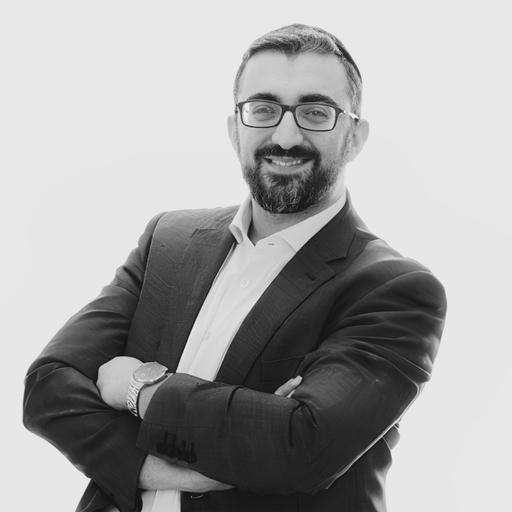
Empowering Entrepreneurs with Strategic Financial Advice
1 Business sold before starting his PwC careerPwC Assurance & Risk Management experience£1M+ Annual earnings of business owners he advisesPartner The Expert Eye
Saul Cohen is an experienced accountant, acquisitions advisor, and passionate advocate for entrepreneurship. With a distinguished career that spans top-tier firms such as PwC and leadership roles at The Expert Eye, Saul has honed his expertise in financial audits, risk analysis, and strategic acquisitions. He is committed to empowering entrepreneurs to transition from business operators to savvy investors, unlocking their full potential.
Drawing inspiration from personal experiences, including his father’s entrepreneurial journey, Saul has dedicated his career to helping small businesses and startups navigate the complexities of tax planning, acquisitions, and exit strategies. His holistic approach not only enhances business valuations but also enables entrepreneurs to reclaim their time and achieve financial freedom.
Saul’s work is characterized by a creative and practical approach to accounting, blending technical expertise with actionable strategies. His unique perspective resonates with successful business owners earning £1M+ annually, particularly those eager to optimize their wealth, prepare for business exits, or make impactful acquisitions.
As a podcast guest, Saul brings inspiring stories, actionable advice, and a passion for empowering entrepreneurs to achieve lasting success and drive positive change in their communities.
More from Saul Cohen
All episodes → The SmallBizChat with Melinda EmersonHow to Increase Your Business Valuation and Build Wealth with Saul CohenSep 2026Play episode →
 The Digital SliceYour Business Isn't Worth What You ThinkAug 2026Play episode →
 Build a Business Worth BuyingAcquisitions Later: Saul Cohen on Why Deals Really Fall ApartAug 2026Play episode →
 Leadership that sellsSaul Cohen - How to Build a Business Buyers TrustAug 2026Play episode →
 The Entrepreneurial JourneyBuild a Business Worth Buying | The Entrepreneurial JourneyJul 2026Play episode →
 The Grown UP Business PodcastBusiness Exit Advisor: Save £4,000, Retire A Millionaire! Most Owners Never Do - Saul CohenJul 2026Play episode →
 Travis Makes MoneyINTERVIEW | Make Money Through Business Acquisitions with Saul CohenJun 2026Play episode →
 The Exit - Presented By FlippaFrom Operator to Investor: Mastering Business Valuation and the Exit Journey with Saul CohenMay 2026Play episode →
 Burnout Proof Leadership: Identify Shift and Leadership Skills for Midlife Women EntrepreneursThe Most Important Leadership Identity Shift You Need to Overcome the Entrepreneurial Grind and Avoid Burnout-with Saul CohenApr 2026Play episode →