
June 29, 2026
The Surprising Link Between Success And Relationships
Sound bites
We do create our own suffering in our life, the expectations we put on ourselves, the way we're raised, the way we perceive ourselves.
I was only a valuable human being if I was of service to other people and working really hard.
In this episode
Alfina Lofaro joins The Online Prosperity Show to talk about how unconscious relationship patterns shape success, burnout, communication, and the way people lead and connect.
- Childhood on a rural Queensland farm shaped a belief that love and money had to be earned through hard work.
- Chronic fatigue and depression followed years of overworking, even after a secure government career and becoming a teacher.
- A personal development workshop exposed an addiction to achievement and a work pattern that kept repeating itself.
- People create suffering through expectations, social rules, and the pressure to be a good girl or good boy.
- Relationships with partners, family, clients, colleagues, and self all affect the quality of life and the success people build.
Transcript
ShowHide
Automatic captions of the conversation. They can contain errors and do not name who is speaking.
Alrighty then, welcome to yet another exciting episode of The Online Prosperity Show. And you know, this is the show where we uncover the stories, the strategies, and the breakthroughs behind people who are helping others create more profitable, meaningful, and enjoyable lives. I'm your host, Prosper Taruvinga. And if you've ever felt disconnected in your relationships or maybe struggled with boundaries, and maybe you're the people-pleasing type, or there's a lot of conflict around you, or maybe just wondered why some patterns keep showing up in your life.
And I think this episode is going to be for you. So as I said, this is the one place to find all those exclusive insights from experts who have actually walked the path, found the solutions, and are now helping others do the same. So before we jump in, just make sure you're subscribed on whatever platform that you're watching or listening to this on, because today's conversation is one that you're going to want to share with either a friend, a partner, a family member, or that colleague who could actually benefit from understanding relationships on a deeper level.
I'm really excited about today's guest. Alfina, welcome to the show. Thank you very much, Prosper. I'm very, very happy to be here and very excited to see where this goes. Absolutely. Well, the pleasure is all mine. You know, for those that are watching right now, Alfina has a fascinating story. She actually grew up on a farm in rural Queensland, and she was driving tractors before most people had even mastered riding a bicycle. And then she later became a teacher, earned an honors degree in drama. And obviously, like anybody else, we're going to hear her story.
She actually battled chronic fatigue and depression for years. And then she walked away from a secure government career. And somehow she ended up becoming an expert in relationship, which actually makes me wonder, you know, there's so many things that she could have done in her life. Maybe she could have become a tractor mechanic, or become some sort of Hollywood actor. But nah, she chose relationships. So today we're going to be exploring how that burnout became a breakthrough, and how relationships actually change every area of our lives.
And there's an interesting relationship that we are going to be talking about. And it's not a relationship with your wife, kids, partner. You better wait and find out what relationship that is. And we're also going to find out why so many people are unconsciously creating their own suffering, and just becoming hard to communicate with, or hard to relate to, all right? And why that can transform the way we love, live, and lead. So I can't wait to jump into this. But if you're watching this right now, I want you to answer this question as we go through.
If you would look back, maybe you look at, you know, the relationships that you have. Is there a relationship that taught you a little more about yourself than any book or podcast or video would have? And while Alfina is telling us her story, then I want you to be answering that question either in the comments below or just in your head. And then let's see if your story matches that of Alfina. Now Alfina, I could go on and on and talk about things I'm not even qualified to talk about. Let's start at the beginning, you know?
What was life like growing up on a Queensland farm? As you've mentioned, Italian migrants and things that are at nature. Who was Alfina then? That is such an interesting question and so rarely people actually ask you to go back to the beginning so profoundly. So back then, I got four, three sisters on a farm. So four girls, Italian family, no sons. That's a very important point. No one to hand the farm over to. And so I worked from the age of nine. We worked on the farm and interestingly enough, we're expected to work very hard.
And often I say work like men. We did driving tractors, picking zikinis, packing boxes, lifting 20 kg boxes, driving a forklift. We would, we still went to school and did everything that you would normally do even if you were raised in the city, but after school we would work. And I think that the person I was back then was a work bee. Somebody who worked very hard was raised, as I said, with three sisters. So three sisters that maybe were in competition with each other a fair bit. We have a very close bond now, but as children, yeah, we had to work hard to earn the love that we got.
And that was a belief that I, when you talked earlier about unconscious patterns that we grow up with, that was the biggest one from that childhood. That I had to work hard to earn love, to earn money. You had to work hard to get anything in your life. And that has shown up in every relationship since until most recently. So that's definitely a thread we can pick up on. And I think as a child, what's probably important to note also is, I was growing up in the countryside in the nineties, the eighties and nineties, before phones were invented, before the internet.
We had fixed phones in our homes. And so if you wanted to ring friends or connect with people, you had to make phone calls. And my dad always had this saying which was, there's a time for work and there's a time for play. And all of us girls, it would be a chorus of like, there's never a time for play. And so it was serious business. We grew up very seriously. However, my dad saw the future clearly for us. And he knew that none of us would take over that farm. And I think he hoped that none of us would go down the path of marrying a farmer.
So he educated all of us. In a time when... So being a Catholic Italian immigrant, there were very conservative families, very conservative town. There's 10,000 people in the town I grew up in, and more than half of them are Italian. Calabrese, from near Veneto and from Sicily. So they bought their 1950s Catholic Italian conservative ways of living and conservative ways of seeing women and women's roles. So we were allowed to become teachers and nurses. So out of the four, there's two nurses, one teacher, and one broke the mold.
She's a lawyer. So my dad saw very clearly the future and he wanted us educated, and he wanted to make sure that we could earn our own living and have a future that we determined, which was very forward thinking. And interestingly enough, we were seen as- how do I put this delicately? Because we left town and left our parents, and went into the big city alone, as young women, protected, let's say, then people was suspicious of like, what are they doing? It was very much such old school, like parochial thinking, I would say.
And so I'm just very grateful that I had a parents that valued education for women at the time, and valued our opportunities outside of that town. Because the truth is, if we had all stayed there, limited, what we would have become to, yes, either a farmer's wife, working in admin at the local Woolworths, but becoming professionals would have been very difficult if we hadn't have left town. Absolutely. And thank you so much for opening us up with that, because that really paints a picture as to how it all started. Now, I want to go back a little bit to where you did, obviously state the fact that it was three of you girls, and you had to sort of work like men.
Now, if you could just maybe give us a cross section of what a typical day would look like. It doesn't necessarily have to be a specific day, you know, just start from like the time you walk up until the time you actually had to go back to bed. What were the kind of things that you would have been doing at that particular time? Well, so if it was school time, we would wake up at times at four or five in the morning, and that's when we would be out driving the tractors for the people, because a lot of the time you have to get the harvest off early in the morning before the sun comes up because the things dry out and they don't, they shrivel that kind of thing.
So four or five in the morning, out driving tractors for a couple of hours prior to school. On the days where there wasn't school, you didn't get to sleep in, you're up early, you're out working anyway. Go off to school, come home, have something to eat, and then back into the packing sheds, or out into the fields picking or packing, till sometimes seven o'clock at night. If we had homework, we were given an hour each, we had to rotate, we were given a bit of time. I also was a little bit different to my sisters. So from a quite a young age, maybe early teens, maybe 11, 12, around then, I took an interest in cooking, and my mom taught me how to cook.
So I'd go out to the back of the shed, she'd give me instructions, I'd go in the cast, do that, come back out, get more instructions, go in, do that. And so I learned, I'm a quite, I would, you know, quite proudly say there's quite a good cook when it comes to Italian cuisine. So I've got an eye for that because of it. So yeah, then we would finish, eat dinner, and then you would be tired. However, you may be watch Home and Away or Neighbours, if you had energy left. A little bit of television, commercials involved as well, and then off to bed and start it all off and do it again the next day.
Absolutely. And thank you so much for opening us up to that. And obviously, with the environment that you would have grown up around, home and away, literally was the people that were around you were also of Italian descent. So that meant the people that you would mingle with would maybe be akin to your parents, or were there any different, like you did mention, there were big judgmental in the end, not knowing what it is that you guys were doing in the cities. So we grew up around cousins, extended family. I have 19 first cousins and half of them lived in a small town, and half of them went to, so five or six of them went to the same school I went to.
There's only 50 kids in the school, but I was related to half of them. So you couldn't go anywhere. In fact, in that town, even today, I just look like a Lofaro and people can spot me. So I was known at that stage by who I belonged to a lot, like, oh, you're Phil's daughter or you're such and such as cousin. So you never really felt like you felt like you belonged to this group, which is really, really lovely, a steep sense of belonging there. What is interesting and unusual is that the community isn't just Italians.
There are people from English backgrounds there for many, many years. However, we're very much socialized with the Italians, very much. So we, you know, at school would interact with whoever, but after school, we worked on the farm. We had a lot of other Italian employees, other people's children and families working for us and with us. We would holiday with other family members. We would, our nights out would be dinner parties or family gatherings. So we did spend a lot of time with our family and extended family in that.
So yeah, we were, it was surrounded, we were surrounded a lot by that idea of family and the way Italians are. So obviously, I mean, given that sort of background, I mean, besides, you know, driving the tractors at nine years old, but working on the farm would have obviously taught you a lot about resilience, responsibility and relationships with all these people that you would have been coming across every single time than anybody else would have learned from any textbook, even if they tried. I think that when you are throwing together with three sisters, you do need to learn some responsibility around your communication, or you're going to think that things are going to happen.
And I think also when you're raised around a lot of family like that, there's a lot you can say, a lot you can't say, a lot that you need to learn how to communicate. Very, very frankly at times, so you can get heard sometimes. I know I got lost in that, and I would say my sisters and my cousins would say that as well. Definitely people that prioritized, and I dread to say this, but it was, I find no fault in my family because that is what was believed at the time, but there was definitely a focus on the boys in the family, and they're carrying on at the family name, and the disappointment that I was not the son, I carry my grandfather's name.
So in my family, there's Alf Alfie Alfio. So I got the family name, but I wasn't a boy, and that carried weight and disappointment. And the other thing that I will say, so there's a lot there about resilience. You were talking about as a farmer, a farmer's daughter, if there was a hailstorm, my sisters and I remember hiding underneath the table together because you knew the property was gone to be wiped out. The income at that point in time was gone, and we would have to start again, and you would see in your parents' eyes, just the life work that would just be taken out in one hailstorm, and they would plant again and go again, and they would go into an overdraft if they had to and start again.
My dad taught me resilience because he kept going in, he believed in what he was doing. But he had, I think one of the greatest lessons that I could also share from him, is my understanding of business. My dad had a rule, if in doubt, throw it out. You never put rubbish in the box. You have top quality product because when people, you have top quality product, people trust you over and over again, and that means they will purchase from you. And even when you're not getting top dollar, you will get the top dollar of the lowest price.
That you can get because they trusted that you would give them good quality every single time in that box. He showed us that kindness goes a long way in life and in business as well, because if you came to visit our farm and you came to buy a box of tomatoes, you also got a box of capsicums, and you got to test out his homemade wine and the homemade salami as well. And you have a chat with you. And then next time you're going to bring back your friends because you go, this guy, his tomatoes are brilliant because he would use bulmingua to fertilize them and so they were super sweet.
And they would come back with their friends. So they'd buy tomatoes and they get a box of capsicums. And then they'd test out the wine. And this guy is amazing. And he just built, he had the business, but he also had the side hustle at the same time. Like the Italian community came to him to get the tomatoes for their tomato sauce, their passata that they made. They would come and ask for advice on how to grow things. He was the integral member of the community. And so he taught me a lot about business and building relationships in business and how you do that.
So you give people more than they thought they were gonna get, obviously, but it's always top quality. You never put rubbish in that box. You never give anything you wouldn't be willing to eat yourself. So yeah, he was, he's an incredible businessman. And in terms of like what they taught me about my relationship with myself, I know I'm a hard worker and that is sometimes to my detriment. I can outwork anyone that's standing beside me. In fact, it was probably actually more recently, my sisters and I all admitted to being recovering overworkers.
So all of us have that instinct of if think the going gets tough, just work harder. If you need more money, just work harder. If you want to make things happen, just work harder, which I think it's a really, really great aspect of who I am. Because in business, I'll keep going when others will give up. But it's also meant that I put on a backseat at times over my career, my relationship with myself. So I was able to just keep working to the detriment of my health. At times, listening to what's in alignment with me, what's not in alignment with me.
So there was so many amazing things that came out of that childhood, and then so many things to unlearn and unwind and reconnect in different ways. So that, Ian, thank you so much for taking us through that. Now, with what you're saying, obviously, the parents would have played a really key role in upbringing, bringing their culture, their way of life, and what it is that they knew at that particular time as to what a best-lived life would have been, and looking after their family and things of that nature. I will touch up on the boy child there a little bit.
But as you growing up, was there any aspiration of what it is that you wanted to be? Because I can imagine as a nine-year-old, you would have maybe seen a few things, watched that home and away or neighbors, and you'll be like, you know what? Maybe this is something that I want to do a little bit later on. What was the aspiration? That is really interesting. I, from a very young age, at primary school, wanted to be a primary school teacher, at high school, wanted to be a high school teacher. At university even, I started going down the path of lecturer.
That's why I went into honors. I was considering a PhD, but decided at 22, that what did I know about life, that I could potentially write about people. And so from a very young age, I always knew that education was what I wanted to be, and what I wanted to do. What's interesting here is you pick up, so that's what's a good job for a girl, right? That's a good job for a girl. And so there's been times in my life where my family in particular, have been very happy that I was a teacher, and then very concerned when they've gone, what's a kinesiologist?
What does a coach do? What is, that's still teaching, isn't it? Like you're in front of an audience and you're still teaching. Yeah, you do workshops, that's teaching, isn't it? You're still a teacher. Yeah. How's school? It's not school. So there was very traditional ideas of what you could be, and I think even watching those shows and being exposed to certain things on television, the dreams were not big. They were teaching and nursing. Good jobs for girls, you'll make money, then you'll get married, you'll have children.
That was the dream, that was the goal, that was what was celebrated. And what's really ironic about me is I didn't marry till I was 37. I was old. You know, my Big Fat Greek wedding? Yeah, that's me. I was 37. I've never had children of my own. I have stepchildren, but I've never had children of my own. And I didn't stick to the teaching job. So I don't know how I didn't have those role models in my life at the time, but I thought I would go down that traditional path. I did, and that's how I got sick. The moment I became a teacher in a school, and I did the right thing, the right thing, my first year as a teacher, a qualified registered teacher here in Australia, I got glandular fever twice in one year.
And then after that, that spiraled into chronic fatigue. And then after that, because I had, it was chronically fatigue for so long, depression setting as well. It was seven years. And it wasn't until the day that I decided I'm going to resign and I'm going to become a coach. That's when I started to recover from the chronic fatigue. When I became more in alignment with my purpose in life and the way I wanted to educate people then, and started following my own path truly, that's when I became well again. You see, and thank you so much for opening that up for us, because you, you did the thing.
You followed the path, everything that people considered the right path, education, safe type jobs. And I recently believe when people say it's a safe job, they're just protecting themselves so you don't come and borrow sugar from them because you can't afford it yourself. You know, they just want you to be safe and, you know, don't have to bother them. So you did the education and teaching has security in it. So which is good. At that stage, maybe, did you genuinely love it or was, were you just leaving somebody else's version of success then?
That's interesting. And can I pick up on what you said then to about people wanting to bury the sugar? I think my parents as parents of daughters, felt that we were their responsibility until they could hand us to a husband. And so, yes, having a good job and being able to take care of ourselves, is definitely something that I definitely felt they didn't relax on until I did get married quite late in life. And so did I become a teacher? Look, I even still to this day, to maintain my teacher registration, which I think is very important to me, I still do some work in schools.
And I do love teaching. I love teaching. I love seeing when kids get it. I love interacting with students. And I'm a high school teacher by trade, but I've taught every grade, so I love working with kids. Love that. But there's an inner conflict. I don't necessarily agree. I don't have the answers, by the way. I don't necessarily agree with the one-size-fits-all education system that we've got in this country to a large degree. There are innovations around the place. There are things that are starting to change, but it is a one-size-fits-all scenario.
And that, over time, that's what I couldn't sit with. I was like, there's so much more people need to know about. We need to know how to speak to one another, be kind to one another, relate to one another. We need to be educating people on how to communicate. Rather than leaving it up to the environments they're exposed to or the experiments they test out, we need to explicitly teach people how to connect. And you can do that in school, but it's not the focus. It's not the primary focus. So I loved it and I was good at it, but it was not my purpose.
What happened to me eventually after seven years of being sick and sad, is I also burnt out because I went in there and I treated that job like a business. I was teaching, I made it a seven day a week job. I was always working. I was teaching the gifted kids. I was working in a program where we were teaching history and geography and maths in Italian. So we teach four out of their six subjects in Italian. It was an immersion school. So I'd spend my nights and weekends translating historical documents and textbooks into Italian and teaching that.
And I was taking excursions overseas to Italy. I was working 24-7 almost, wanting to feel good and wanting to create a great reputation. And what I realized is it didn't matter how hard I worked, I was still going to earn the same amount of money. And there's something about a job, having a job that caps that income. And I was raised around a business where my dad determined his income and how well he did in his life. And there's something about that, that now I love. I still love educating, but I love being able to have a business where I get to decide how long I work, how hard I work.
And if I want to make more money than the salary says I deserve, then I can. Now, Alfina, I'm going to say this with utmost love and respect. You probably just didn't realize it then. But for somebody who's been on a tractor at nine years old, knows that the food we eat actually has to come from the ground, and you have to wait for it to grow, will never sit still in a classroom, or find that the system of education is actually set in the way that humans actually survive. I don't know. I just saw that in what you were saying, and because education is designed for those that don't know where milk comes from.
That's an interesting statement, and it baffles me. So you can tell in the thing that, it's an unusual story, but share it anyway. If, and I'll get your listeners to also do this, is to draw an apple tree. And I guarantee you if they were raised in the city, they will draw it one way. And if they were raised on an apple farm like I was, they'll draw it a different way. Most people will draw an apple tree that looks like a cloud with a trunk. But I would draw an apple tree that looks like a stump of a trunk, and then it goes up in a V shape.
Yeah. That's an apple tree. That's what an apple tree looks like. Stand underneath and pick the apples. That's correct. And bite into the ones that are so sour, they hit you here first, not the ones that you get at the shops. Yes. And they will be ripened on the tree. Or my favorite ones are Granny Smith apples. The first frost, so where I grew up, there's a frost. If you leave them till the first frost, they go so sweet. Those Granny Smith apples goes, they go a yellow and they're the sweetest thing you'll ever eat in your life.
Yeah. But most people will pick something else when they go to the supermarket. So seven years. Seven years. Couldn't figure it out that you wanted to touch dirt. That I was not in the right place doing the right thing with the right people, yeah. But it was, it touched at my heartstrings, Prosper, because I loved working with kids and I loved seeing the learning happening. But it just, and even to this day, the kids I love working with are the cheekiest ones, the ones that will make a joke, the ones that do not fit in a classroom.
They're quick-witted, they're smart, they're intelligent. And some days I will make, if I'm in a classroom, I'll make jokes. Because if a kid's thinking off into the fairies thinking or is doing their thing, I'll go, you're making your first million in your head, are you? How would you do it? And they go, Miss, that guy's not going to make a million. I said, don't you underestimate people in this class ever in my classroom. And then they've come up with ways, oh, you could make a million doing this, right? I reckon I could do that, Miss.
Do you know what? It's going to be some online or digital or technology thing, Miss. Okay. So I always had like a, yeah, seven years, I didn't figure it out. It took an extraordinary person to say to me, Alfina, because I went along to, what happened was I went along to a personal development workshop. And I went because the woman said that she helped people transform their health. And I was sitting in this workshop. It was a program about redesign your whole life. And I'm like, right, where's the health stuff? Where's the health stuff?
And the health stuff came. There was no answer to solve chronic fatigue. And so I went up to her and I said, look, I came because of the health stuff. I need to know, what am I supposed to do? Like, this is what I've done, this is what I've done. What do I need to do to get well? And she said to me, well, tell me about what's going on. I said, well, I've been sick and sad for seven years. And she goes, well, what happened seven years ago? And I said, I became a teacher. And she goes, well, you need to go away and think about that.
And I was like, well, but that's not the, that can't be the answer. Like, how's that the answer? It did turn out to be the answer, because what I learnt was that the relationship I had with work, the addiction to achievement, that that work was giving me. So the more, the harder I worked, the more work I got. And so, I kept going around and around in circles without working harder and then working harder and working harder. And definitely got to thinking about, so, so many times in my life, the split was between wanting to educate people or be a psychologist.
And I thought both were two types of education, but I never wanted to go into psychology because it would have meant that, because I was such a kind-hearted soul, I would just listen to all their problems and take them home and, you know, figure them out for them. So I kept going towards education, towards education, towards education. But it never felt quite right. And when she said that it unlocked the whole thing, I was like, yeah, I've been doing something that, it's not that I didn't want to do it, but it wasn't right for me long-term.
You've done personal development, right? And then they say some of these things, they don't happen to us, they happen for us. Yes. So obviously, you needed to grow through this particular episode, so you'll be able to be the person that's talking right now. So what did these challenges maybe teach you about yourself, that maybe success would never have in that particular time? Okay. Very good question. How to summarize all the things that I learned from that? First of all, we do create our own suffering in our life, the expectations we put on ourselves, the way we're raised, the way we perceive ourselves, what we think we're allowed to do, not allowed to do.
Some people call it the culture scape that we're raised in. I've heard it also called the rules, the bullshit rules we grow up with. I always talk about it in our perception and the way, and those social expectations around us, that helped us to believe certain things about ourselves or not believe about ourselves. If you had to ask me who I was then, I was a good girl who had good friends who did the right things, but the good girl part of it was the biggest driver. I have to be a good girl to earn love so people won't reject me, so my family will love me.
And that, those beliefs are what drove all of my behaviour. And I would give beyond the energy that I had, time that I had, money that I had to everyone else because I felt like I was, I felt like I was someone who is not deserved very little, but that my life needed to be of service to have any worth or value. So, I was only a valuable human being if I was of service to other people and working really hard. And that you only get things in life if you work really, really hard. And there's so much of that person I've had to unlearn.
And it's where the fascination, I guess, with relationships has come from because the most important relationships around you shape you. And my parents, their relationship and the way they treated me shaped me. Their relationship to work and the farm shaped me. Then my schooling shaped me. All of those relationships shaped who I thought I was. And I've had to unlearn all of that and create a whole other set of beliefs, a whole other set of understandings about myself and the world, and what I'm allowed to do and what's possible.
So there's a lot that came from that and since that, so that I am the person speaking today, yeah. Thank you for that. Now, I mean, obviously, from that, you decided to cut ties with that which was holding you back, all right? That would have been a bit scary. I mean, you're coming from a place where it's safe. That's what society had expected of you, and that was an expectation for you to go ahead in that career. And you being somebody that works as hard as you wanted to work, not having to do that which would have given you that sense of success, would have manifested as a possibility of failure in and of itself.
So I can actually think that would have maybe taken you back a little bit, or maybe you not knowing who you were going to be post that particular scenario. What was the scariest thing to let go of that, go into the unknown or to keep doing what felt familiar because? Initially, it was letting go of a government permanent, full-time, well-salaried, well-superannuation job, permanent full-time job and leaving the security of that. And the perception of that, which is you're a good girl and you have a good income and you're doing right things and to fight all of the prejudice and the negativity and the negative questions and the naysayers to actually go and even to, even now, to keep pushing through.
When it could be so easy to just go get a job, know where the money's coming from, never have to sell anything, never have to tell people about yourself, never have to be like you say earlier on social media, where people can love or hate you, and it could be so easy to get that job and live that life and be that. So I think that, so there's many scary parts. That was the initial scary part, right? In the last couple of years is to actually own that I can create a different life for myself, that I am more powerful than I ever thought I was, in that if I allowed myself, what is possible is unlimited.
If I allowed myself, that became scary, because it meant I would have to be seen, that I would have to do things and travel places I'd never been before. And that was scary, to truly meet the Alfina that's possible. I know that sounds weird. Absolutely. To actually not have those limitations of the good girl and do the right thing, means, doesn't mean you're going to be a bad girl or do wrong things, but you're going to just do so much more than what that perception or identity, holds you in. It's almost like a cage of your own making.
Alfina, I don't know about you, but I'm working right now. And I suppose this is you working as well. Now, I don't think we would have been able to see this had you not chosen to step out and be that which you are now becoming. Now, if somebody's watching this right now, they're probably unhappy with what it is that they're doing, and they have all those expectations, and everything that they're doing around them seems familiar. The people, the relationships, the town of 10,000 people, the same truck that they grew up driving, they don't want to change it to a new one, just in case it's a change.
Well, they fail, yeah. What would you say to somebody who's actually standing on their own crossroads right now? That is such a good question. I can only share what my process was that helped briefly, like what the catalyst is for me to find and understand, like share what that's been. So two and a half years ago, I understood I could have again gone down the path of get a job, do the right thing, live a lovely, nice, secure life. But I knew that there was going to be something greater. And what happened was I decided to manifest money.
I did, you might have heard of Regan Hilliard. She's one of the manifestation queens of the world. She's an Australian, but lives overseas. And I was like, right, Regan, this is it. I want the money. Show me the money. I'm going to go big in life. I'm going to expect more for myself because that's what it looks like, right? You just make more money. You get great success. It looks like money. And I went to do the course. And just beforehand, I checked in and went, is money the right thing? And I'm a kinesiologist, so I muscle tested.
I can explain later what that means or people could look it up. I muscle tested and it said, no, it's not the money. You need to focus on the relationships. And I went, not this again. I've done this for 10 years. I've studied this. I've studied all the relationships under the standard. I've even taught this stuff. Why relationships? And the answer was the relationship with myself. And the goal became in the course of, I think it was like 12 or 15 weeks that course went for, the goal became becoming someone I liked spending time with.
So I had to become my own good friend, someone I enjoyed hanging out with, enjoyed having conversations with. And so over the course of that time, I, like if people aren't liking who they are, I had to figure out who I really was in that relationship with myself. Do I trust people? Do I not trust people? Do I have boundaries? No, I don't. Oh, I have, I've got this fundamental belief that I have to earn love. I give everyone everything. Okay. Well, what else? What, how am I, how do I communicate? How, how do I love?
Do I believe in love? That was, that's been an interesting question to ask myself. And the more I got to know who I am and how I show up, oh, that's a yucky part of me. Oh, I don't like that person, part of me, who I am. Do I like it? No, I don't. What do I want to do about that? What, why is that like that? You know, I really investigated who I am, who I wanted to become, and I surrounded myself with really inspiring people, really inspiring information. So what I talked about, what I thought about, what I was surrounded with, was really interesting and inspiring to me.
And it had one, there was one benchmark that I measured everything against. Did it bring me joy? Did it make me laugh? Did it make me feel like I was growing and learning? They were my, they're my main values. Does it bring me joy? And am I growing and learning? And so I just surrounded myself with that, learnt about myself inside and out, and understood the edges of that gilded cage that I was in, that I was creating for myself. Because bless my parents, they gave me all of these ideas, but I'm an adult. I'm a woman of nearly 50.
That's, I'm in that cage, and if I decide to keep those social constructions and those beliefs going, that's on me, not them. So I really had to learn and take responsibility for what I wanted, and what I thought was possible. And be around people that believed in me. Be around people that had magnificent ideas. Yeah. So I would say if I was giving advice, which I don't tend to do, but if I was giving advice about who are you, figure out what you value, who you are. What's that relationship? Do you have yourself? Do you like spending time with you?
Would you like to be your own friend? That you meet up for a coffee for or go bowling with, or talk about a book with? Are you that person that you'd like to hang out with? I had a statement that says wherever you are, there you are. You could go on a trip to Bora Bora, you could go to the Maldives, you could go to Bali or whatever it is. But if you're not going to be comfortable with the person that's sunbathing, close to you there or you yourself there, you're not going to enjoy that trip. You're going to come back still wanting more of a holiday from the holiday because it was that exhausting.
But you'd also understand the people that we have to interact will then influence how we react to our environments and things like that. There's a statement that I saw somewhere on your site that says, we teach people how to treat us. Have you seen some of the people that are around us? Some just don't want to be bothered. How do I stop somebody with earphones in their head and say, hey, listen, I want you to bow down every time you say my name, and if I'm going to be drinking a drink, you make sure that it reaches my lips, and then you feed me grapes, and then you fan me with a large lift.
That's how I want to be treated, Alfina. So how do we deal with those people who... I mean, you say we teach people how to treat us. Yes. So can you maybe walk us through... Can I expand on that? Okay. I will speak to a thread that I've talked about a couple of times, that idea that I have to earn love. So what did I teach people about me? Is that you can rely on me. I will show up for you all the time, but I don't need very much from you. That's okay. No, I will ring you all the time. You don't need to ring me. So it showed up in friendships.
It showed up in my relationship with my husband as well. Doing all the stuff, thinking I had to do things to make sure he was happy and he would love me. It started from a young age in my relationships with my family. It did feel like we had to work hard to make our parents happy. Unfortunately, that generation, my sisters and I lovingly call them the that's good but people. So if you did a job, they go, that's good, but you should have done the floor, now you should do the table. You've done the floor and the table, but you didn't mow the grass.
So they'd always give you what else to do, what else to do, and it just felt like who you were and what you did was never enough. And so what I taught people is that I would always be there and give everything and require very little in return. So that's how I taught people how to treat me. That's one of the ways that I taught people how to treat me. It's not a nice thing to say, it's not a joyful thing, but fundamentally in the work that I do, if we believe, if you believe, I'm someone who did this, I believed I had to earn love, then everything I do and the people I attract into my life are going to make me earn it.
I'm going to work hard for it. Everywhere I go, every job I was in. Yeah. Absolutely. Right. Now, you did mention the work that you do. Could you maybe briefly go through what it is that people can expect when they do show up at your doorstep there? What are they walking away with or who are they becoming? So often people come to me when they do realize that their life is not where they'd like it to be. And there's certain beliefs about, they have about themselves or their relationships that aren't working. Often they're in relationship turmoil.
That's when people tend to come and seek relationship experts out or they're having trouble with their teams at work or their colleagues. They might be having trouble with certain family members or friends. And they're unhappy in those situations, but they know that they have an inkling that they've created it. They've created parts of it at least, or they have a part in it. And so they work with me to uncover what that looks like, like what is their part in it, and then to deliberately learn some new strategies. It never ceases to amaze me that we don't know how to resolve conflict.
We've never, many of us have never been taught that we don't know how to, some of us don't know how to take compliments, that there are strategies to learn to build trust. There is formulas for that. There's ways to learn how to forgive. There's strategies, but we just told, just forgive, get over it. What does that mean? We don't know. So if you end up on my doorstep, you will definitely uncover your relationship with yourself and your relationship with every aspect of your relationships, but you'll learn new simple, deliberate strategies.
And I guess it's my branding, but to love deliberately rather than, so to do things that deliberately make your relationships better and your experience of life better. Because my motto is this, when everything in life is about relationships, we have one with our health, our family, our money, whatever is up there. We have relationships in our business. And most importantly, we have a relationship with ourselves. So my theory is that when we get good at relationships, we get a great life. But if we understand how to communicate and relate, business gets easier, life gets easier, and we have money gets easier too.
And health gets better when we have great relationships. Because everything is connected. Yeah, and just the way we're taught in the framework to separate things and put things in silos and be individual, yet the more we connect and the more we actually bring together the health and wealth of relationships that you're talking about. Now, if somebody is watching this and they want to connect with you, where can they go to on the internet, Alfina, so they can maybe learn a little bit more about the work that you're doing?
So alfinalofaro.com is my website, and there is, and we can put, send, I can give you a link. There's a quiz they can do as well to determine whether their relation for free, to find out whether their relationships are energizing or draining. Absolutely. Now, I'll put all those links in the show notes so that people can find their way there and actually connect with you. Now, Alfina, as a child, we were introduced to the nine-year-old who was driving tractors. I've got an 11-year-old. I can't even get her to eat her own breakfast.
So kudos to you for having done that and been able to do that at that age. Obviously, there's parts that we didn't talk about. You were a drama student. You obviously would have learned human behavior in that particular scenario, and then you became a teacher. Obviously, that taught you communication, but you've already elaborated that the three girls in your house meant you needed to communicate a whole lot better, and I think that's why the other one became a lawyer. But the part, which is the seven years that you went through where you experienced burnout, depression, and relationship challenges, and then you learned self-awareness, would I be right to say that was your right of passage?
Because you had all these things that were building towards you learning the aspects that are external. And then you were told to come within based on what you've told us. So you could literally learn everything now to do with the interior and who you are. So that you're the person sitting or standing in front of us on the podium today. Now, do you think your life story and your experience have quietly been training you to become a relationship educator long before you even knew this was possible? I think you have had a phenomenal gift here, Prosper, because you see exactly, yes, I believe, I agree with you.
You've seen it. Every aspect of my life, everything that I've experienced, every job that I've done, even the drama training was all about me learning and understanding human relationships. My honest thesis is called Airing the Dirty Laundry, Mother-Daughter Relationships in Plays by Australian Women Playwrights. I was not interested in the drama. I was interested in the mother-daughter relationships. I was interested in the relationships between women from a very young age, and how they play out, and how those dynamics play out.
I became a drama teacher because I wanted to teach kids how to, because what drama did for me was that I could be somebody else for a period of time. I didn't have to be the farm kid. I could be a kid in the city. I could be something else, and I wanted to give, but I learned about myself through that, what else was possible, and I wanted to give kids that other opportunity. So you're absolutely right. Everything that I did, even every choice I made, becoming an Italian teacher. I lived in Italy for a couple of years, and I didn't speak Italian.
My parents never taught us Italian. They taught us Sicilian. When I went to live in Italy, I spoke not a word. Within three months, I could communicate. And what I tell people about learning another language as an adult, is you re-learn who you are again. Because there's, in Italian, felice, contenta, they're two words for happiness. They mean two different things. One's content, one's happy, or happiness. Which one are you? Are you content, or are you actually happy? Because they're two different things. And then if you start to talk about yourself again, normally when people talk about themselves, they go, I'm this, I'm that, and this is who I am, and this is who I am.
And we're so used to saying it, it's almost unconscious. I'm a teacher, I'm this, I'm that. But when you learn a new language, you have to reconstruct who you are from scratch. You have to deliberately choose the words that explain who you are. Because they're new to you. So even that has helped me along the way to understand relationships, understand how people communicate, understand how people see you. Every single thing I've done, right up until, as you said, that moment where that person said to me, what did you do seven years ago?
Whatever that was, follow that path because you'll understand why you're sick. And the moment I did, that's when I started to, it took me a year, but I completely recovered from that. And yeah, to this now. I mean, also, there's one more thing to add, is because I didn't marry till late in life, and I married a Greek boy. So there was, I literally had a big fat Greek wedding, literally, in a Greek Orthodox Church. And I thought, because everyone thought I was on the shelf, I was 37, so they had given up hope. They'd given up hope.
Like, you're so old, you know? And they'd given up hope. And so when I met my husband, I thought the hardest part would be finding him. And then what I found out is that getting married is far easier than staying married. And that's when even that meant that I studied it further. Then I studied with the Gotmans, with Alison Armstrong. I've read Jay Shetty's. Whoever I can get my hands on, Matthew Hussie, everyone. The Hendrix, whichever expert, whichever books I could get my hands on, I was like, I'm determined to understand marriage.
And so yes, every aspect of my life, every job has meant I've come here to understand this. So in a word or sentence, you're literally giving people back to themselves, because I mean, your real work is not helping people find better relationships. They can do that. These days, you can swipe right, swipe left. It will be a relationship, but the relationship that allows them to then be, do and have, that which you now enjoy is literally giving them back to that. Because I think if we had spoken to you in the seven years, we wouldn't have gone this long.
No. I knew very little about myself and the way the world works. Absolutely. Well, now, obviously, this question is thrown around by a lot of podcasters and things like that. But I think this actually works for you. That little girl who was driving a tractor, if we could go to her right now, she's not as tall as that round big wheel. Why is it even big in the back as well? That whole thing just doesn't make sense to me. Small tires in the front, big at the back. Because the engine's at the front. Can't balance the weight, yeah.
Okay. Fantastic. All right. But that tire was way taller than you would have been. You would have had to step on to something before the actual tractor ladders as well in order for you to be able to do that. Now, if we could go back to that little girl, knowing what you now know about life relationships and who you've become, you sit down with her, what would you tell her? I read, this is going to sound so weird because a nine-year-old would not conceive of how important this statement would be until much later in life.
But I do often wonder if I had heard this earlier, would I, would life be different? It's a quote from the Reverend Michael Beckworth, the universe does not give you what you want. The universe reflects back to you who you are. And so even at nine, I knew my life was supposed to, I was supposed to do great things in my life, didn't know what they were. I would encourage that nine-year-old to hold on to that understanding that the universe reflects back to you who you are. So keep being who you wanna be, keep vibrating at the frequency of I trust myself, I care about who I am, I take care of myself, I'm kind to others, I am loved, I'm supported, and that great things happen when you connect well with great people.
So that's what I would tell that nine-year-old. I don't know if she would have understood it until more recently, but that's what I would say. But right this moment, do you think she heard you? And every cell in her body, yes. Thank you. Now, I mean, obviously, we've come full circle. And thank you so much for sharing this with us, Denim. You're very welcome. But it looks like your life has been an endless journey. What's next? Now that you've brought us into your world, you know, you've shown us what's possible. And some of them are scrambling to connect with you right now, but we want to see what we can keep cheering you on.
What's next, Alfina? What's next is incomprehensible even to me. I have challenged myself to, for the last 20, 17 years, around 17 years, I've delivered other people's intellectual property. And more recently, I've created my own and I've, I am out telling people about that. And it is to actually, how many people can I, can I support to have that better relationship with themselves, to do it through kinesiology. So it is to, I guess, help people. But also, the bigger goal is like to stay so true to who I am and my roots in that, and not be, so my personal goals at the moment are, is to, my last name, Lofaro, means lighthouse.
The lighthouse doesn't run around the island looking for people to save the lighthouse, and still and shines. Is that that's one of my favorite things I ever heard about lighthouses. And so it is to stay firm in the storm of whatever goes on around it. Business can be up and down. Life can be up and down. Wars can happen. COVID can happen. But to stay true and centered in that relationship with myself and know that I'm a good person who does good things, no matter what. Yeah, that's what's next for me. Of course, building the business, that's the obvious thing.
But to stay true to what I've learned, what I understand without being caught up in the day-to-day dramas, yeah. Welcome from a drama teacher. But at the end of the day, Alfina, thank you so much for your time today. I mean, your life story and your experience, as I've said, have so much value for a lot of people that may not have realized that whatever they're going through is figure outable, you see, because fish don't see the water that they swim in. And it takes people like yourself to step aside. Yes, during the seven years, it might have looked like you are going through stuff, but as you would understand, you grew up on a farm.
If you put a seed in the ground, from the perspective of the seed, it is being buried. But from the perspective of a farmer, it is actually being planted when you put soil on top of it. So that's such a good analogy. I had to speak to a farm girl. So thank you so much. You're welcome. This was a great conversation. I really enjoyed it. You're welcome. It's an honor. Absolutely. And for those that are watching right now, I think today Alfina just reminded us that relationships aren't just something we have. They're something that we create and especially create from within, and then we give them as a gift to those that we want to experience and share them with.
Now, whether it's a relationship with your partner, your family, your clients, your colleagues, any other person, animal, environment, or anything, and most importantly, a relationship with yourself, I think the quality of your life is often determined by the quality of those relationships, so you want to hold on to them sacred. But the common denominator of all those things is you who is interacting with all those relationships. So if you fix the one thing, the domino, as what Alfina has said, just keeps going and it's a gift that keeps on giving.
So if this episode resonated with you, I encourage you to share it with somebody who might be struggling with relationships or communication or conflict, or just maybe people-pleasing tendencies, maybe their own self-wealth is diminishing, or just simply wanting healthier connections in their life. Don't say anything, just slide it in their DMs. They would appreciate this. And if somebody shared this with you, I want you to write in the comments below, what is it that you will start working on that you think the person who shared this with you had seen and noticed.
I can't wait to see what you do with this information. I'll put all the links to Alfina's books and information in the show notes. Be sure to connect with her and learn more about her coaching and also the quesini... What's that called? Kinesiology. Kinesiology work that she does. And just make sure you grab a copy of her book. All those links are in the show notes below. I can't wait to see what this will do to the relationships in your life. Until next time, bye for now.
About Alfina Lofaro
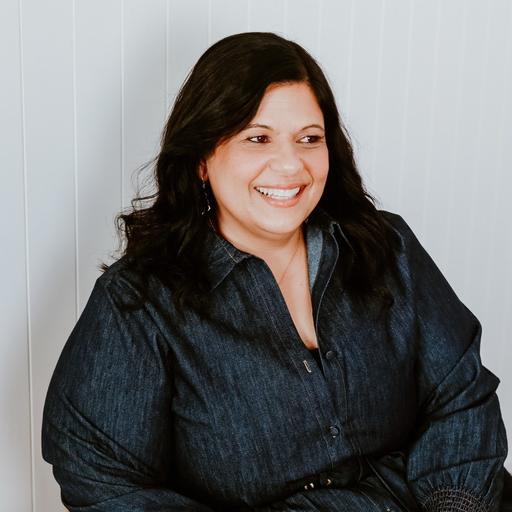
Kinesiologist, Coach & Author of Love Deliberately
20+ years Experience in education, coaching & kinesiology2 Amazon bestselling books2 Awards & grants won in 2026BA (Honours) Australian Catholic University, 2002
Alfina Lofaro is an author, speaker, kinesiologist, coach and leadership facilitator who helps people understand the unconscious patterns shaping the way they love, communicate and show up in their relationships.
Growing up on a 300-acre farm in rural Queensland as the daughter of Italian migrants, Alfina learned early that belonging could feel conditional - and that being good, helpful and dependable could be a way of earning love. For much of her life, she responded by doing more, giving more and becoming the person everyone could rely on.
It took years, and a painful chapter of her own life, for Alfina to recognise the cost of continually saying yes when she meant no, putting other people's needs first and giving away her time, energy and attention without realising what was driving the pattern.
That experience became a turning point.
Today, Alfina speaks to a powerful and often overlooked truth: knowing what you should do is not always enough to change what you actually do. Beneath conscious beliefs are unconscious programs that can influence how we communicate, avoid conflict, seek approval, tolerate unhealthy dynamics and repeatedly give ourselves away - sometimes one small yes at a time.
More from Alfina Lofaro
All episodes → The Broken BrainGatting & Being Better at Relationships, with Alfina LofaroNov 2026Play episode →
 Ask Faleskini - The Midlife Crisis Clarity CompassCan Unlocking Your Body's Hidden Energy and Relationships Finally Cure Your Burnout?Nov 2026Play episode →
 The Jōrni PodcastEpisode 424 - Unconscious Relationship Patterns with Alfina LofaroOct 2026Play episode →
 Love Inspired LeadershipYou Were Never Meant to Earn Love: Choose Yourself & Transform Your Relationships with Alfina LofaroOct 2026Play episode →
 Soultech with CynthiaHow To Break Relationship Patterns Through Self Love with Alfina LofaroOct 2026Play episode →
 Life Over 40You're Not Choosing the Wrong People… You're Repeating a PatternJul 2026Play episode →
 Last First Date RadioEP 720: Alfina Lofaro - How to Love Intentionally in Midlife and Beyond (Without Working So Hard)Jul 2026Play episode →