
July 8, 2026
EP 720: Alfina Lofaro - How to Love Intentionally in Midlife and Beyond (Without Working So Hard)

Listen
Sound bites
I need to earn love. I can't just be loved because I exist, I have to earn it.
The body doesn't lie. The body tells us the truth, and the body helps to reveal to us what the unconscious becomes revealed with it as well.
In this episode
Alfina Lofaro joins to talk about loving intentionally in midlife and beyond, including the unconscious patterns, body responses, and self-responsibility behind repeating relationship struggles.
- Doing more in relationships can damage your relationship with yourself and keep you in survival mode.
- Many people repeat the same relationship patterns while waiting for the other person to change.
- Kinesiology can help reveal unconscious beliefs, then neutralize the charge around them through new neural pathways.
- COVID made relationship quality more visible, and the body can react before the mind catches up.
- Clear needs, boundaries, and self-awareness matter more than shiny gestures or people-pleasing.
Transcript
ShowHide
Automatic captions of the conversation. They can contain errors and do not name who is speaking.
I mean, you get a good job, you be a good girl, and you do the right things, and everything will be fine. And it wasn't until late 30s, early 40s that I realized, wow, I'm a bit bitter about a lot of things. No, I'm very bitter around a lot of things, I'll tell the truth. And I've taught these people how to do this. About five years ago, where I was working in an organization, and where I was hardest working, doing all the right things, one of the lowest paid, interestingly enough, but also in one of those survival cycles, where I was working day and night, my health was struggling, I was struggling, my husband was like, you never get to spend time with me.
And I was like, oh, something's really wrong here. And that's when I uncovered a core belief, I'll call it, that I need to earn love. I can't just be loved because I exist, I have to earn it. This is episode number 720 with Alfina Lofaro. We're talking today about how to love deliberately in midlife and beyond without working so hard. In this episode, we cover how doing more in relationships impacts your relationship with yourself, why we repeat relationship patterns while waiting for the other person to change, how COVID revealed the quality of people's relationships, and why your body reacts when your mind wants to respond differently.
Welcome to Last First Date Radio, where we believe it is never too late to go on your last first date. I'm your host, dating and relationship coach, Sandy Weiner. Whether you're dating after a long break, stepping back into the scene after a divorce or loss, or you're simply ready to get better at love, you are in the right place. Are you ready to go on your last first date? Let's get started. Before I bring on my guest, I want to invite you to join my Facebook group. If you're not yet a member and you're a woman over 40, join us at your last first date on Facebook.
We are a positive place of support, which is hard to find. You will get support, you will grow on your journey to find the love of your life. So join us there at your last first date. And now for my guest, Alfina Lofaro is a kinesiologist. She's a coach, an author, and a speaker. She helps people build healthier relationships with themselves and others. Through Love Deliberately, she teaches self-awareness, communication, boundaries, compassion, and she has had more than two decades of experience and her own lived journey to help audiences connect with greater intention and responsibility.
Welcome to the show, Alfina. Thank you for having me. Happy to be here. Happy to have you all the way from Brisbane, Australia. Why did you get involved in this practice? Kinesiology, I believe in the States is more like our physiotherapy, understanding how bones and muscles and the body functions. Whereas the kinesiology I've been trained in is a combination of traditional Chinese medicine and chiropractics. And well, that's where it all started. But based on that, what it is, is we balance the triangle of health.
So we believe there's the structure and function of the body, the biochemicals, and then the mental-emotional. And that when you're in balance, when that triangle is balanced, you can heal your body, you can heal yourself. But anything in life can create that imbalance. So it could be a mental-emotional, like we're stressed about life, it could be that we have an injury or that we have some biochemical issues going on. So the idea is that if a client comes to us, we would create that homeostasis. We ask the body what it needs through something called muscle testing or muscle monitoring, depending on where you studied, it's called different things.
And from there, we can talk directly to your body. So we'll set a goal, figure out what it is that you want, and then align every cell in your body with that goal. And the body will reveal one thing at a time, in priority order, what it needs. I chose to go down this path with relationships, because what I found as a coach was people would tell me, they would tell me their truth, and I'll say their truth, but I could hear so many other things going on. And so often, them looking outside of themselves for the answer, wanting other people to change.
And I decided to use kinesiology in this particular area of life because the body doesn't lie. The body tells us the truth, and the body helps to reveal to us what the unconscious becomes revealed with it as well. It's been an interesting adventure putting the two together because often I could hear, there's more to this than you can see, but sometimes people don't want to hear that or aren't ready to hear, I think you're playing out a pattern here where you're attracting the exact type of person or I had a client that just keep taking the same action and sabotaging her dating life, her relationships in the exact same way.
But when the body reveals it, when they are part of that process rather than being told, I can see this, there's something about it that allows people to take it on better, or go on the journey of discovering, what is it that I'm contributing to my relationship? It's really interesting how you kind of morphed into this part of using kinesiology to help people discover the deeper parts of relationships. I actually was asked this question today by somebody, can you coach somebody who has a lack of self-awareness? My answer was, if they're open to hearing the truth, this guy had reached out to me a while ago and said, I don't know what's wrong, why women don't like me, don't want to go on a second date with me.
I think it's because I'm so close with my family and my children and I think that's why. I'm like, that can't be the only reason why. There's a lot that he's missing and he said he might reach out to me for coaching. Now, I knew somebody who knows him who had actually dated him and she said, no, he has so little self-awareness. He talks incessantly. He's not aware of his impact on other people. There's so much more. But if you can't hear it, if you can't be open to hearing how you might show up so that you can be empowered to change it and be more sensitive to other people.
Not everybody is capable of that. I'm curious what you have to say. There's so much in that question. I've also done a lot of leadership coaching as well. In my experience, there's been times where nobody's ever given them the feedback. So the lack of self-awareness at times is because nobody's been brave enough to go, actually, you're boring or actually you talk too much about yourself. The fact that the person has come to you and asked the question says they might be somewhere inside of them, they might be ready or there's a kernel or a nugget.
And I always like to think that we can work with that. And you'll, I think, you'll soon find out when people come in, whether they're willing to go there or not. And so with the work that I do, the kinesiology will only ever go and reveal what's going on to the degree the person is willing. So I can't just uncover the truth that they don't want to share. Their body will reveal it, and then their body will only reveal what they're willing. It's a process, I think, of layers at a time, or complete resistance. And you know straight away, when you make a suggestion, they'll argue with you.
I'm sure you know all of this. They'll argue with you or argue their point. And that is interesting, isn't it? Because then as a coach, speaker, all of those things, I've discovered too that you can drag people kicking and screaming into their future, but they won't go unless they are fully participate in it, then the coaching relationship or that dynamic, they don't rebook or they don't come back, or they'll come back years later and go, I'm ready now. It can be really hard to hear the truth. I see it with one of my daughters where she's become much more open.
But in the beginning, whenever I would bring anything up, she would shut down, get defensive, and it was a closed door. I could not get through. And she may do that at the start now, but then she'll come back and say, you know what, I heard everything you said. I took it to heart. I'm practicing this differently. I'm doing things differently. And I really care about what you say. So that was a big change in her. That happened a couple of years ago where she said, I pay attention to everything you say, even though I may have a lot of resistance in the beginning.
So some people are slow to adapt. And some people are so eager to shift because they can't stand being stuck anymore. And they hate this discomfort of just feeling like they're repeating patterns, like you said. I would love to hear a little bit about your story and how you noticed, because we're talking today about loving deliberately and how you noticed that you were doing too much. What was the impact of doing too much? I'll take a deep breath there while I see that. Cost me health, friendships, cost me a lot, actually.
There's a few significant times in my life where I can see this same pattern happening. What I've uncovered is that it originated from a very young age. I am second born of four children. I've got an older sister, me, then twins that are younger. So my mom wake up from a caesarean with twins. She didn't know she was pregnant with twins. She had a, I think I was four or would have just turned four at the time they were born. My sister was six, six, four, and then babies, two babies, not just one. I have the quintessential middle child syndrome is what, if you talk to my family, that would be it.
But I think what happened was that my mom's attention had to go towards keeping two babies alive, not just one. So I was shipped off to school. But before that, I was her sidekick. I was with her all the time, and then all of a sudden, I won't say no one because I have a family, they all raised us, but keeping two babies alive was more important than the ones that could take care of themselves. I think it came from there, that I was like, then I became, oh, why is she not paying attention to me? I've got to be the good girl.
I've got to be a really good girl, and I've got to do stuff, and I've got to be helpful because then she'll notice me again, and she'll love me again. I personally think that's where it started, and then it became, that's the way that you get people to like you, that's the way that you're, that's if you're a good girl, good things happen. I was raised in a fairly religious family as well, so being a good girl was pretty much drummed in to me from a very young age. You get a good job, you be a good girl, you do the right things and everything will be fine.
What I discovered as being a good girl doing the right things, meant that I taught people over my life how to treat me in ways that were where I would get taken advantage of or used, they become resentful at those people. It wasn't until I would say late 30s, early 40s that I realized, well, I'm a bit bitter about a lot of things. I'm very bitter around a lot of things, I'll tell the truth. And I've taught these people how to do this. And it was about five years ago where I was working in an organization, and where I was hardest working, doing all the right things.
One of the lowest paid interestingly enough, but also in one of those survival cycles where I was working day and night, my health was struggling, I was struggling. My husband was like, you never get to spend time with me. And here I am talking about relationships. And my husband was like, but what about us? What about us? And I was like, oh, something's really wrong here. And that's when I uncovered a core belief, I will call it, that I need to earn love. I'm not just, I can't just be loved because I exist, I have to earn it.
And I have to earn it by doing lots and being the best at, being a good girl. Yeah. And that's how it manifested in me. I worked a lot, I gave a lot to clients, I gave a lot in friendships, gave a lot in friendships. And then when I become overwhelmed and stressed and couldn't give as much, then they were like, oh, oh. And I actually had a few friends walk away. When my life got too hard, they're just like, no, you're not here for me anymore. So see ya. So yeah, it manifested in a lot of ways for me. And that was a massive wake up call.
And what I realized in what your question around loving deliberately, what I realized is I was allowing my past experiences and that culture that I was raised in and the ideas I was raised in to dictate how I was loving and living. But it was no longer serving me in good ways. So I needed to be very deliberate about how I then started connecting with people and doing the work that I do, because there's something that doesn't feel great when you're out of alignment with what you teach. And they say we teach what we most have to learn.
And yeah, that was my story. I had to learn what I started teaching. Yeah. Wow. Thank you for sharing your story. And I can relate to so much of what you shared. I had friendships that were all one-sided. I was always like the one who showed up with the food and the one who, you know, you're in a crisis, I'm here. And then I remember one relationship where I was in crisis and this woman just couldn't stop complaining about what was going on on her end. And I said, you know what? Number one, it's my birthday. Number two, I'm about to have surgery and I'm really freaking out.
And she just couldn't stop. I didn't know how to handle it at all. And I basically said to her, because she was complaining about her ex-husband and what a narcissist he was and blah, blah, blah. This was going on for like two years already. And I couldn't stand hearing it, but I didn't know how to stop it. And I just said, you know, you don't have to keep feeling the way you feel. And she was like, I don't want to be coached by you. I mean, she was, she was so mean and not supportive at all. I mean, I shouldn't have given her unsolicited advice, but still.
And she walked away from our friendship in the middle of a crisis. And that empowered me to go find people who were supportive, people who actually would listen to me. And I think this is such a relatable topic. I'm also a middle child, by the way, of four, and no twins, but my parents couldn't handle any of us. And, you know, I just, I was the fixer and I was the in-between and the go-between and it's definitely what got me to become a coach and to be a good friend, but you have to have reciprocity and you have to set boundaries with people and you have to speak up.
And so I've spent the last 20 years or more just doing that work for both myself and then for others. I think so many of us find ourselves in that position where we're the ones who stay late at work and we don't get recognized for our effort and we're the people pleasers who give up our own needs to make other people happy. And there's a huge cost, huge. There is, and if you've looked at like the work of Gabor Matei, he's talking about how that leads to illness, that leads to autoimmune conditions. And then our society actually teaches that.
And this is really fascinating. This is what fascinated me for the last year or so when I actually saw him speak, actually, and he was talking about how that's what we train young girls to do and to anticipate the needs of others. And I think, thought about my childhood, like I, so my background is my family are Italian immigrants to Australia. So they bought the 1950s Catholic Italian family beliefs, values, and traditions from Italy and implant them in Australia. So I was raised very, very traditionally with very strict ideals.
If the meal is finished, you get up and you tidy up, and if someone's in distress, you go and do that and you need to anticipate that they're going to need you to help them. I was grew up on a farm as well. You don't just stand around doing nothing, you help, you pack boxes, you pick things like we were out in the fields working very hard. And I think it's very easy to believe that being pleasing makes other people happy. I'm not surprised there's many of us that feel that way. I'm curious though about current generations because they are being taught to be pleasing to yourself as well.
So it'll be interesting to see if there's some other mechanism that trains that people pleasing in the future generations. I do believe that we have a tendency to go too far into the me first generation. And I think that we're getting to a place of balance, hopefully. That's really, really, really good to hear. Let's take a quick break to hear from our sponsors. This episode is brought to you by Amazon Music Unlimited. You can listen to over 70 million songs and thousands of playlists and stations. Plus, you can now stream your favorite podcasts like Last First Date Radio.
You can listen to any song, anytime, anywhere, on any of your devices. Get Amazon Music Unlimited for free for 30 days. Just head on over to getamazonmusic.com/lastfirstdate to learn more and claim this offer. You've mentioned a few times that people get stuck in these pattern repeats. What do you recommend if you see somebody who is repeating patterns? How do you normally address this and help people really shift into choosing people who are actually better for them? This is a really good question because my belief is that awareness is only the first step in the transformation.
So what is important, so what I use the kinesiology for and the muscle testing for, is to understand what is the pattern, how is it showing up, what does it look like? One of the things we will do as kinesiologists is we'll go back to the origin of that pattern also and neutralize the charge around it. So what does that mean? We create new neural pathways. We have processes and procedures, protocol around this. That actually means, because when we create these patterns, we call them sabotage programs, they become like if the metaphor I like to use with this is they become then like magnets.
So they've got a charge. And so if you take mine, for example, of I need to earn love, then I will attract people, places, situations, circumstances that reflect that back to me. And it's got that same charge in it. So unless I reach, release the charge in the magnet, where I can either earn love or just be loved, we don't actually say clear it, get rid of it. We actually neutralize it. So you can earn love if you want to or not. If you don't want to, you're at a choice point. Rather than having this belief that's attracting the same thing.
So the first step is the awareness of the thing, the magnet. Then we neutralize the charge around it. Kinesiology is also a self-responsibility model. So that means it's not done to you, it's done with you, and you have to be a part in that. So even though we neutralize the charge, you have to take new action, do something new to create that new neural pathway. Otherwise, it's like a train track, it'll jump back to the old one and go, oh yeah, there's that familiar pattern. I know how to react to this. I'll earn some love.
Do and don't want to experience. Uncover the pattern. Let's gain all the awareness, aware under. We can even go back with kinesiology. We can take your body energetically back to the moment that happens and we shift the energy using your meridians, your energy meridians. So we'll stimulate acupressure points in your body to change the energy even 20 or 30 years ago. So that charge is neutralized. It's a very interesting scenario. And that will help neutralize that charge. So we understand the, first of all, we understand the pattern, the sabotage.
We neutralize the charge, but we also have to figure out what we want in the future. Otherwise that old pathway gets reignited. Because the unconscious mind is like wants to keep us safe. It's designed to keep us alive and keep us safe. And that program that says, I'm not safe unless I'm earning love, we'll come back and show up over and over again, unless we choose deliberately something different. Really interesting with the pressure points, the acupressure points. I do something similar, but without the kinesiology aspect.
And I'm thinking of a client. She's in her early 70s, had really struggled in relationships, and her tendency was to over give and over do. And she had people in her life who were constantly asking her to do things. And we worked really hard on changing her patterns and her learning to say no and ask for what she wanted. And it was, it took a lot. We're talking from childhood and the childhood patterns that got developed. She really started to take care of herself. I mean, it was amazing to watch the transformation and it shifted her dating life.
So she used to attract takers because she was an over giver. She is now in the best relationship of her life, planning a future for the first time. She's never been married. She's planning. I think she's going to marry this guy in her early seventies for the first time. And it's so exciting. I remember when she first met him, she was freaking out because it was so good and she didn't want to screw it up. And she said he was traveling a distance and she said he could stay at a hotel and have a date with me at night.
And then another one in the morning. And it was just a lot. It was too much. I felt like it's nice. And it's lovely that he wants to come to you. She was already trying to make it easier for him, you know, so her old tendencies kicked in and I helped her to work through that and to empower him to make choices and to tell him what she liked and not do it for him. It started this relationship on a really good, in a good place where they just continued from there. And it's so beautiful to watch her in this relationship because it's what she always dreamed of.
She was afraid to dream too big because what if it doesn't happen? And I'm sharing this for all the people out there who think, you know, it's not happened to me, it's happened for everybody else. It's not just about what you look like or how old you are, how witty you are and how skinny you are and all the things that we think it is. It's really ourselves sabotaging because of old patterns. And when we make those shifts, everything shifts. And so it's incredible. And I'm sure you've seen cases like this as well. I want to pick up on two things that you've shared in this story.
Number one, it's never too late to learn to love deliberately. That's my thought. And secondly, how incredible is it that as human beings, even in our 70s and 80s, because I've met people in the 80s as well, 70s and 80s, we desire to connect. We are fundamentally driven or biologically driven to connect. If you ask me, the reason is because that's what keeps us safe. Biologically, or if you want to go back to the anthropology of it all, in tribes, we were safer. So being with people, that drive, that innate drive hasn't left us.
I love that, in her 70s, she's open and willing to go, I want this, this is what I really want this, let me figure out how. So I love that. I love it. It's never too late, and you can actually break these patterns. We can break these patterns. I had a woman, I'll give you an example of this. I had a woman in a workshop I was giving, and she would have been in her mid to late 60s, I think, or maybe early to mid 60s. Anyway, somewhere in the 60s. And she was like, I will never do that again. I will never ever allow myself to get into a relationship, or be told what to do by a man.
And she'd said her ex-husband's parting words to her, well, you'll never find someone like me again. And I remember saying to her, lucky. And she looks at me and she goes, I go, yeah, lucky, he said that. And she goes, what do you mean? What do you mean? And I go, you never want to find someone like that again. Someone who thinks that you can't live your life without him or that you aren't good enough to deserve anything better than someone that would treat you that badly. And she was like, what? Like her whole brain, his parting words, I think it was 20 plus years ago that he had said that.
Her whole brain just went, I don't get it. Like she had made it mean, I'm not good enough, no one will ever want me. And I was like, no one like that should ever want you again. And this com- it started a conversation where she was like, wall, she had built her, what are those, not just the moat, but the walls around the castle, you know those impenetrable walls. She was like, no one's ever coming back in. And I said, but is this what you want? Like, what do you want? And she goes, well, you know, what, what, you know, the Twitch, like, they want it but they don't want to say they want it because if they don't get it, then they don't- then they never wanted it.
I love that dance that people do. It's like, well, deep down I really do, but I can't tell you that because if I do want it out loud then, and I don't get it, then I'll be heard or it'll prove that whole theory again. Right. So I said, okay, well, what do you actually want though? If you just, well, I'd like to be in a relationship. I want to share my life. I'm retired. I'm traveling around Australia in a van. I like to share that with somebody. And I said, well, is there anybody around that you've kept at a distance because of this?
And she goes, well, look, yeah, I've been in this one place for a while now, and there's been this guy sniffing around. And showing up with food, like making time to see her. And that very afternoon, she allowed herself to spend time with this man. And it was a date, but she would never call it that. Something shifted in just one conversation, like one way of thinking. And we think we'd see the world that way, and it can change everything for us. If we're open to it. Yeah, that's beautiful. I totally believe that. I think most people walk around thinking they don't have the right to want what they want.
Even though most other people are like, I want what I want and I don't care what you want. But for those of us who have been the givers, we don't know what our human rights are. And one of our human rights are that we are able to wish for something, that we are allowed to hope that somebody respects us. We are allowed to receive from people. I mean, just the things that we are never taught, that these are all human rights. Like it's like too much to ask to be respected. Too much to ask that somebody reciprocates. And so when you plant a seed, that you actually aren't the whole problem.
And that you, what do you want? And most people don't know how to answer that because no one's really spent time with them helping them develop the ideas about what they want and what they need. And if somebody does that, then we have clarity in the world that we know without a doubt that this person wasn't the right person for us. And we would never want to be in a relationship with them. So it's a great story that you shared that somebody has the right to want what they want and to hope for and to wish for something bigger, even though they may not get it.
But if you don't ever hope for it and wish for it, you definitely won't get it. You're going to be closed off to it. One of the quotes or statements that completely transformed my thinking around that, it's Reverend Michael Beckwith. He was in The Secret. And he talks about, they talk about manifesting and the law of vibration and all of that. And he talks about the law of resonance and the thing that was missing in that conversation was that the universe doesn't give you what you want. It reflects back to you who you are.
So if who you were being, like my lovely lady, is a person walled up protecting themselves, it's not safe out there. People treat you badly even when you're a good person. Can't they see I'm a good person? No. So I've got to put these massive walls up. You can't get to me. And so then what we're projecting out, the energy that we have is, you can't have what you want because it's not safe, right? As well, like it's almost like the walls that keep us trapped in our thoughts and our beliefs and behaviors, and it keeps those people out.
That would be really showing us a different part of who we are if we let that lead. And so you're absolutely right. If we're, yeah, unless we get asked those questions, unless that we get shown a different way, then how we're showing up in the world will keep attracting the same thing. It's so true. Speak to us a little bit about COVID and how during COVID, we were in these close relationships with people. You say that it revealed a lot about the quality of people's relationships when all the distractions disappeared.
I actually developed a dating program during COVID because all the distractions disappeared, so we could actually date with more intention. I'm curious what you mean about the quality of people's relationships. During COVID, so prior to COVID, I had spent nearly 10 years doing all the study, the Gottman's, Alison Adams. I became absolutely, I had very early on my coaching career, started to believe that everything in life was about relationships, that you have a relationship with money, with your health, with your family, with your friends.
In business, it's all about relationships. Spirituality is all about a relationship. And so prior to that, I had gained all this information, I'd really started going down that path. And I'd wanted to, at the time I was working for an organization, I'd wanted to create a product. And when COVID hit, they'd said, oh, can we, we've just got to finish this project. Can you wait a little bit? Then COVID hit and they said, can you do that this week? And I was like, sure. Why not? Let's do that. And we created something called the Relationship Reset.
And it put it out there. And the way that we started talking about was some of the biggest mistakes people were making. And what happened was people tell a lot of stories to help people see what those mistakes look like when we're doing them. And people go, oh yeah, that's me. That's me. And in COVID, what happened, what I saw happen was that on a day to day basis, if you're in, let's go with the average husband, wife, kids or two partners, whether they're same sex or not, heterosexual or homosexual couples, either way, whatever combination you've got.
If you've got two parties that work, either in the home or out of the home, there's eight to 10 hours a day where you're not together. So there's those few moments in the morning, those couple of hours at night, and you might get a weekend. But what COVID did was no out of the house, no away from each other, no external input other than what was maybe coming through social media, television, that kind of thing, or what we're doing on FaceTime, that kind of thing. So when you're no longer going out into the world and bringing new energy in, you're marinated in the same energy of that relationship.
And what I saw happen was it exacerbated the issues that were in the relationships. Because more time, more focus, literally in a households where they hadn't had to spend all day together. It's like, you know, you know the ache of like, oh, God, do you talk that loud at work? Are you that loud on your phone? You know, oh, gosh, you don't get, you don't really get started. You just chat a lot. Oh, my God. How many meetings do you have? So people started to see more of each other. And when I say see more of each other, I mean, literally and in every other way, they'd see each other, but they'd see who that person is more clearly.
And it felt like COVID just made, like held up a bigger mirror to like, oh yeah, you need to look at this. You need to look at this now. And so what I found is that people really resonated with meeting support to resolve conflict, to communicate more effectively. And they also needed help to actually get creative so that the connection, the romance, the intimacy, all of that stayed alive. That was in couples. And then singles were looking for ways to connect with people. There was a loneliness that crept in for people because when you start to isolate people physically, then they're with their thoughts, they're with them, their self and who they are.
Everywhere we go, that's who we are. So they needed some help with the thinking that was starting to happen around what they were worth, what they deserved, what they could do and couldn't do in terms of their relationships. So that's what I saw. It was quite an interesting period of time. Yeah. And I think some relationships imploded and some people got closer. I think there were a lot of relationships also that in the dating world had started at the beginning of COVID and they ended up moving in together because of the isolation and the quarantine.
And it escalated the relationship sometimes in a good way, sometimes not. So yeah, it was a really fascinating time, I think for all of us, like the disagreements about wearing a mask and not wearing a mask and who you're hanging out with, and who's your COVID bubble and all that stuff. I mean, my daughter had moved back in, my youngest daughter, and she wanted to go to all the Black Lives Matter protests, and I didn't want her coming back in the house after going to these protests. And so it was like, who are you hanging out with and are they vaccinated?
And are you respecting my wishes? It's my house. Maybe you don't want to come back to my house. Maybe you go to someone else's house and you're not invited back in. So you learn a lot about respect and communication and all the things that we can avoid if we don't spend a lot of time together. Okay, quick question. And then my final question. You have lighthouses behind you, if anybody's watching on YouTube. And I'm just curious about what is the significance of your lighthouses? So my last name, Lofaro means lighthouse.
There's a saying, the lighthouse doesn't run around the island looking for people to save. The lighthouse stands still and shines. And for a long time as a coach, I was running around the island looking for people to save. I love that. That people pleaser in me, that's how it showed up professionally. It was like, who can I help? If I'm helping, I'm significant. I've got a purpose in this planet and I'm good. And that's why I overworked and overgave in my professional career. So it is a reminder and an anchor for me to stand still and shine rather than looking for people to save.
It's a great metaphor and it's your last name. It could be more fitting. So Alfina, lighthouse woman, what are your final words of advice for anyone who wants to go on their last first date? This is such a good question. I'll go back to my dating times because I married when I was 37. I started dating at 35. So I was quite overweight as a child and came up with the idea that no one would ever want me. And until one of my best friends at the time said, Alfina, you don't get to decide what people want to, whether they want to be with you or not, whether they want to date you or not, their decision, stop making it for them.
I was like, what do you mean? And I started dating really quite late in life. I was busy working, traveling the world, doing all those things. So I started dating and I remember going, what if they don't like me? And is my hair okay? What outfit should I wear? What do you talk about on a date? All this type of stuff. And I wonder what they'll think of me if I say this and if I do that. And I remember going to a couple of dates and then going, what if, hang on a second, what about what I think about them? Will I like them?
Will I be interested in them? And we make it all about, will I be pleasing to them? If you're in that scenario, not everyone feels that way. But I remember thinking, actually, what do I want and what is it that is going to make me happy? And I guess the thing that I came to understand in all of that was that it wasn't what I thought I wanted in a partner. It was what I needed that I ended up attracting. And what I have is a husband that absolutely adores me, thinks on the bee's knees, supports me in everything that I do.
And I needed that far more than I needed someone who would, you know, dress nicely and take me out to the fancy restaurant. So I needed someone who would come home to me and just think, I love you for who you are, the way you are. And so I guess my advice, I'm going to give any advice is, if you're going out on dates, be curious, who's this person going to be and will I like them rather than all the angst about that and get clear, get really clear on what you need versus like the wants or the nice to have. Because you're going to be with that person, hopefully, a very long time.
And the qualities that they have that you need will be the things that the glue that of the values that hold you together. So important and such wise words. And I love that your friend kind of smacked you into reality and was like, who told you this? Yeah. More people need to hear that, that it's really about, it's a mutual thing and it's not about the shiny stuff, because that's not what you have in the day to day. It's not the big romantic gestures. And those are nice once in a while, but the day to day, how somebody treats you and how they communicate with you and getting clear on your needs is not easy for most people.
I would say work with a coach like Alfina or myself, because it's one of the most important parts of dating and of your own life. Like, are you meeting your own needs? Because if you don't know how to do that, how do you teach anybody how to meet your needs or know how to meet theirs? It all starts with us. Alfina, tell our audience the best way that they can reach you. My website is the easiest, alfinalofaro.com. As social media, I've kept it on my name, so Alfina Lofaro and you will find me. For your people, there's a quiz they can take too, to figure out if their relationships are energizing or draining them.
That's on my website as well. I love that. It's one of the things that I help people with too, the energizer draining question. I say, ask that after every date. I would say, check in with yourself about that with every decision you make. Do I go to this grocery store or that one? Am I going to this party? That might drain the life out of me. It's such an important question to ask. So I think that, I think the quiz is a really important place to start. Thank you so much Alfina for a wonderful conversation at six o'clock in the morning in Australia.
Thank you and the sun's just starting to come out now. Thanks everybody for listening today and if you love our show, please give us a high rating and review on Apple Podcasts, on Spotify and as always, here's to your last first date. If you are ready to get unstuck, gain new tools, become more empowered and finally find your last first date, I'd love to talk to you. Fill out an application to be considered for a complimentary half hour love breakthrough session at lastfirstdate.com/application.
About Alfina Lofaro
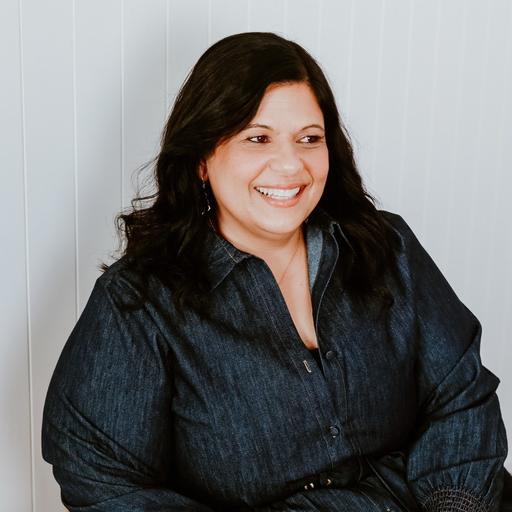
Kinesiologist, Coach & Author of Love Deliberately
20+ years Experience in education, coaching & kinesiology2 Amazon bestselling books2 Awards & grants won in 2026BA (Honours) Australian Catholic University, 2002
Alfina Lofaro is an author, speaker, kinesiologist, coach and leadership facilitator who helps people understand the unconscious patterns shaping the way they love, communicate and show up in their relationships.
Growing up on a 300-acre farm in rural Queensland as the daughter of Italian migrants, Alfina learned early that belonging could feel conditional - and that being good, helpful and dependable could be a way of earning love. For much of her life, she responded by doing more, giving more and becoming the person everyone could rely on.
It took years, and a painful chapter of her own life, for Alfina to recognise the cost of continually saying yes when she meant no, putting other people's needs first and giving away her time, energy and attention without realising what was driving the pattern.
That experience became a turning point.
Today, Alfina speaks to a powerful and often overlooked truth: knowing what you should do is not always enough to change what you actually do. Beneath conscious beliefs are unconscious programs that can influence how we communicate, avoid conflict, seek approval, tolerate unhealthy dynamics and repeatedly give ourselves away - sometimes one small yes at a time.
More from Alfina Lofaro
All episodes → The Broken BrainGatting & Being Better at Relationships, with Alfina LofaroNov 2026Play episode →
 Ask Faleskini - The Midlife Crisis Clarity CompassCan Unlocking Your Body's Hidden Energy and Relationships Finally Cure Your Burnout?Nov 2026Play episode →
 The Jōrni PodcastEpisode 424 - Unconscious Relationship Patterns with Alfina LofaroOct 2026Play episode →
 Love Inspired LeadershipYou Were Never Meant to Earn Love: Choose Yourself & Transform Your Relationships with Alfina LofaroOct 2026Play episode →
 Soultech with CynthiaHow To Break Relationship Patterns Through Self Love with Alfina LofaroOct 2026Play episode →
 Life Over 40You're Not Choosing the Wrong People… You're Repeating a PatternJul 2026Play episode →
 The Online Prosperity ShowThe Surprising Link Between Success And RelationshipsJun 2026Play episode →