
July 23, 2026
You're Not Choosing the Wrong People… You're Repeating a Pattern
Sound bites
Everything in their life was a reflection of their relationships. Most importantly, their relationship with themselves.
It's the rest of your life that you have to pretzel yourself.
In this episode
Alfina Lofaro talks about how women in midlife can spot repeating relationship patterns, stop people pleasing, and make more deliberate choices about love and connection.
- Relationship difficulties often reflect patterns in self relationship, family, friendships, money, and work.
- Becoming aware of repeated language like “this again” can reveal a pattern worth examining.
- People pleasing and conflict avoidance can leave women twisting themselves to fit a partner or family role.
- A deliberate change starts with self reflection, naming the draining relationship, and choosing one honest boundary.
- Joy and self regulation matter before entering relationships, especially after a hard day.
Transcript
ShowHide
Automatic captions of the conversation. They can contain errors and do not name who is speaking.
women in their 40s, depending on where they're at. There's a couple of things that many things that I see, but a couple of things I see is at this age, we're starting to get to a point where, how do I put this in polite and delicate language? You get to give no more stuffs or shits about certain things, right? Stop caring what other people think of you and go, "What do I think of me?" I want to start with something that needs to be said out loud and no one is saying. Some of us are the individual that everyone calls when things fall apart.
I realize that that's something that a lot of us are not choosing for ourselves. So, if you're the strong one, the fixer, or the one that holds everybody together, stay with me. Today is the conversation. Welcome to the Life Over 40 podcast. My name is Jesse and this is the place for women who are ready to stop surviving and start living intentionally. Each week we have honest conversations about simplifying life, managing money with purpose, building healthy habits, rediscovering joy, and creating a future that you're genuinely excited with.
So, if you're ready to make the second half of your life the best chapter yet, you're in the right place. My guest today is Alfina Leafaro. She's a kinesiologist, a coach, an educator, and an awardwinning author of a brand new book called Love Deliberately. She spent over 20 years helping women understand the invisible weight that they carry in their relationships in all aspects of life and the load that it leaves on capable women that quietly wears them out. I asked her here because she puts words to things that a lot of us are feeling and we've never been able to put a name on it.
By the end of this episode, you'll be able to name one relationship that is draining you the most and you'll have one deliberate move that you can make in this week. No guilt, no shame. So, let's get into today's conversation. >> So, thank you so very much for being a guest today, Alina. I'm super excited about our conversation. >> You're very welcome. I'm excited to be on a podcast called Life Over 40 because that's me. I'm enjoying my life over 40 at the moment. >> Yes. Yes. And so for yourself like what actually made you want to start having conversations about love and relationships?
Was there something pivotal that made you say you know what this is something that I need to explore? >> So that is something for me personally there's there's a personal aspect and then a professional aspect to it. So 15 years ago I became a coach and at that time I started working with people about all areas of their life. But what I quickly understood was that everything in their life was a reflection of their relationships. Most importantly, their relationship with themselves and uh you know their business was going well or not well based on how good they are at relationships.
Their personal interactions with their family and their friends and their partner was all about relationships. They have a relationship with their money that's either good or not so good or everything in between. And so I quickly professionally went, I better get onto this relationships thing really quick because I can see that it's pivotal and touches all areas of life. At the same time, >> I was in my 30s and a single still. And so part of me discovering why part of why I wanted to talk about relationships is because up until that point I had not been in a long-term relationship not longer than a couple of months.
And to be honest a really late start really late bloomer when it come to dating and relationships. In fact I only married at 37. So quite late in life compared to because I come from a Italian background. My parents are immigrants you know that. And I married a Greek boy. So, you [snorts] know that big fat Greek wedding? You're so old. >> That's kind of the vibe that I was around. And what happened was I was so excited to get out there and go like, "Right, I'm going to do this. I'm going to find a partner. I'm going to settle down.
I'm going to do this stuff." And I found the partner and I thought that would be the difficult bit. I thought dating was going to be the hard part. I found finding the right person. And then I got married and went, "Oh, happily ever after is rubbish." It's a bit of BS. This is actually takes work and not work that anyone really talks about. They winge about, but they don't talk constructively about, oh, this is what you can do when when you don't agree around money or this is what you can do when they're they want to plan.
You want to plan everything and they don't they want to be spontaneous. So I think very quickly I wanted to be successful at relationships and realized that maybe I did wasn't equipped and that I'd better get equipped quicksmart. So it was there's two reasons that that it happened. >> I appreciate you making the first point is that sometimes what people do is when they hear relationship they only associate it to partnership and not realize we have relationships with friend circles. We have relationships within our work environment and just our overall community.
And what I find is that because we don't understand the importance of nurturing each type as well as how to grow in each type, it ultimately stops us from having the kind of love and relationship we want. Like I like you mentioned, you see a lot of people either like either romanticizing partnership relationship or you see people just shaming or just tearing down friends or you know like if your friend's not doing this d you see all these negative conversation but ultimately we're built for community. We're built for connection.
were built to be and not this island. But if we're not learning how to actually be a part of society, that doesn't mean everything we all see the things the same way. It's learning how do I actually have community and be a part of community. And I don't think that we always look at relationships in that way. exactly why I do the work that I now do. Because when I went looking at this, there's a lot of information, books, experts, like we can list them off the top of our head and how many experts there are out there talking about partnership and that's the you go to couples therapy.
You there is family dynamics therapy and stuff like that, but it's where do you go to therapy with your friends? you know your relationship with money you go to different places and I think that there are some basics that are are across everything every type of relationship so even our relationship with our spirituality whatever it is that we believe there have a think about these ones like trust do you trust money do you trust in whatever is out there do you trust your friends do you trust your family do you trust your partner trust is one of those key ingredients that has to happen in every single relationship and the relationship we have with trust could be very different in every single one of those or very similar to I talk to people about this.
This is one of the topics I talk to people about but it's like do you trust then verify or are you someone who gives your trust and then when it's shot to pieces you're like that's done thank you and you can't rebuild that now because once broken it's gone. So h what are those? How do you operate? How are you showing up? And so often when partners when people go and get help around partnership, we often look at the other person as the problem. If they would just be more like us or if they would see the world we do like and in the beginning they did.
They saw the world exactly like I did. We had so many similarities and as we go and we've got these complete differences and we don't see eye to eye on them, we want the other people to be like us. And I think that When we look at relationships, all of our relationships, and we look at how we're showing up in them, and we get that those strategies to be a bit different, it's it's gamechanging. Like it has been for me and for the people that I work with because you you Yeah. romantic relationships are only one type and they are a different kettle of fish.
They do require different work because there's layers of intimacy and a whole heap of other stuff. But they're not the only people to you talk to in one day. We spend a lot of time with them, but they're not the only people we talk to in a day. >> Yeah. And I think because we're not really learning how to do it in a productive or healthy way, it can leave a lot of women over 40 just really feeling exhausted. I feel like at that point we're kind of like I want to do things that bring me joy or we're starting to feel the discomfort of like I'm not doing things that are bringing me joy.
So we feel this exhaustion of not feeling fulfilled or we don't even have words to really explain how we're feeling when it comes to the different types of relationships. So in your work, what are you finding that women are finding themselves challenged with right now when it comes to relationships and having fulfillment in that area of life? >> So many things, many things. And this also depends um what I'm finding is that it also depends on what we're willing to make time for. And an interesting point, how close we are to menopause as well.
I'm going to put put the M word out there as well because what I'm finding is women in their 40s, depending on where they're at, >> there's a couple of things that many things that I see, but a couple of things I see is at this age, we're starting to get to a point where, how do I put this in polite and delicate language? You get to give no more stuffs or shits about certain things, right? Stop caring what other people think of you and go, "What do I think of me? Do I think I'm okay?" It's almost it's well and look, I was reading some research the other day about how as we transition through menopause and the change of hormones means the focus is different.
We're no longer needing to nurture everyone else and we're getting to that age where kids are grown, families are grown, parents are getting older, but that we then turn our nurturing towards ourselves or we have only the energy left to look after to look after ourselves. So, I'm seeing women who are getting to the like, I've put up with too much for too long. I was the good friend and the good neighbor and I dropped everyone at sporting events. Did anyone appreciate that? Sure, they appreciate it, but they didn't say much though.
I'm like, I'm doing me now. Like, it's my time. I hear that quite a bit. Another one of the things that I see, and by the way, I really like moving myself into that era of my life where I go, "Yeah, everyone else's opinion of me is going to stop mattering now because it's what do I want to do with my life? I've lived my life by the rules of the good girl, the the do the right thing, get the right job, make sure you are a responsible citizen, you're a giving person." And now I'm like, yeah, I'm still going to be all of those things and do what I like and enjoy like live life with joy every day.
So I'm en enjoying getting to that part of my life as well. So I see that. I see women coming to me and saying a lot of the time that they're tired of repeating the same pattern. So by the time they come to see me, they will have had met the same man three times over in three different bodies. similar way of being. So, doesn't always look pretty. So, I'll give you an example. One woman when we looked at the patterns, she it was emotionally unavailable. At the end of each relationship, they just the the men moved on and she's left going, I gave everything.
I did everything, but I couldn't like I got nothing back. I just that I did all the keeping housekeeping and you know earned money and did all of those things but they just didn't care that I was there or not. Another client was kept the secret and she's a bit younger than 40. She's just about to turn 40 and she's like there's something going on here cuz I keep being the secret. So as a child with as a young person so such a lovely little like lovely story in some ways it was cute like this young boy um stole his mom's perfume to give her as a gift but it was a secret couldn't be he couldn't tell anyone he had a girlfriend and that's why he had to steal this perfume.
But from there she got this understanding that relationships like you're a secret, it's a secret. And even as an adult later on in life, she attracted this man who it was not an affair or anything like that. He could be with her >> but was choosing to keep her a secret from all his family and friends. And she's like, "Something's up." Like I've got this pattern >> showing up. >> So I that's what I see quite regularly. And the other thing I see in midlife at this time is friendships changing. Friendships are changing.
So there's I see a lot of people they've gone through major upheaval around friendship where they've they've grown or they've shifted and they've left behind the the old friends or major like clashes of like >> I'm tired of listen to your rubbish and you won't do anything about it. So bye-bye. I I can't do this anymore. See you later. So, yeah, they're the things that I see the most. >> Yeah. Yeah. No, I resonate to what you were mentioning about yourself. Like I've been telling people like I I am wanting to embrace more power in using free will and allowing for myself to experience joy more and not saying, "Oh, I have to work work." like you know with World Cup going on right now I've been intentionally going to watch parties on on weekdays you know where before I wouldn't take the time to do anything that I would really really enjoy or if I did I felt guilty for it.
I'm like, you know what? I work hard. It'd be different if I didn't work hard, you know, and I and I think that if I take time down, it's going to make, you know, make something else happen instead of actually putting time to refill my cup. And I think too what some people are finding if you embrace it is understanding to the second point that you mentioned was like people understanding how do your previous childhood experiences or young adult experiences shape who you are today. I was speaking to um a friend and a sibling the um in the last couple weeks and I had said to them I was like I don't realize that most of my best dating experiences happened before I was 25 and they were like are you serious?
I'm like the effort the care the consideration like it was so much better for me and then the person was like are you serious? I'm like I don't know. I'm like I was like I have to evaluate. I know that I don't try a lot anymore. And it's not cuz I don't want partnership. It's not that. But you have to go after just like how you go after your goals. I feel like you have to have an intention when it comes to dating. And I haven't necessarily been the person that really really find I don't I'm not the type of person that actually like how you mentioned about the person that I see like someone that's not sharing like I don't really do inconsiderate people.
I I guess that's the best way that I put it. Like if I am dating someone and I feel like they're an additional responsibility, I I don't need another responsibility. Like I want someone that I'm doing life with that and I'm getting to know like I don't need another chore, you know. So with dating I realized that because of my lived experience, I'm the oldest of my siblings. Different dynamics of how I was raised, like someone that resembles another responsibility, I don't want it. And so I feel like that's impacted my my efforts when it comes to relationships and dating.
So I think it some of it and you can let me know your standpoint on this is like understanding what those root causes are because I'm like I realize that the thought of like I I'll see on social media and some people are saying some of the things that they do for their part and I'm like there's absolutely no way I would do that. And it's not to shame the person. And it's just that there is so much responsibility on just us being functional human being and to have a a functioning human being becoming a dependent. I rather get a pet, you know, or borrow my friend's kids, you know.
So, I think that we're all having to like look at what our root causes to be able to understand our relationships. So, do you find that one of the steps that some of your uh your your clients and and people that you've had to work with before, one of the things they have to actually address is like, what is that root cause? Like, what are you making this sound like? What are you making this mean before you can actually attack what's the cause or the problem that needs to be addressed when it comes to the relationship?
>> Before we go any further, I want to give you something. If this has already hit a nerve for you, if you've been feeling like you're just surviving your relationships instead of thriving, I've made a free resource called the identity audit. It helps you figure out exactly where you're running on autopilot and what you actually want in the second chapter of your life. It's free and it will only take you 10 minutes to complete or read and is how you join the second half squad. It's a group of women just like you that are choosing the same thing with living intentionally.
The link is going to be in the show notes for you to grab your copy today. So, grab it, then come back and let's keep going back to this interview. You've got it spot on. That is exactly where we start the transformational process, which is building awareness around where we got our relationship education, what we made things mean about ourselves and how those things show up in our behavior and our communication and the way we're the way we're doing relationships. It is interesting that you're the oldest child. It I had this hilarious moment with my oldest sister recently.
I posted up I put I put up a post on social media about a client that I went to a book launch and and my sister and in it there was a call to action saying something like when has something in your life changed you know how you relate to other people and my oldest sister within 10 seconds of me posting it post I was the only child for 18 months I was the biggest priority and the happiest I ever was until you were born and I was like oh and she has then my life ch it was you could hear that then I got all of these responsibilities and you know this sort of thing I was like so I can hear like and when I heard you speak like yeah you would have been have to be the responsible one you're the elder one you've got to look out for everybody and >> you had a life would have had a lifetime growing up of that looking out for looking after people so now it's like yeah that's not what I want in a relationship the interesting there's some interesting things come back to what I experienced with some clients and the interesting thing about this.
I was just talking to a friend about this yesterday. I gabul mate speak and he talks about how women in particular trained from a very young age >> how to anticipate the needs of other people you know so when we think about when we play with the dog we're anticipating that it needs a bottle we're anticipating it needs to be burped and go for a walk and we're playing in a kitchen and anticipating that people want to eat food and we've got to clean up afterwards and stuff like this and so he says and the double-edged sword of that is that men in particular learn that their needs will be anticipated.
And so I'm I'm not surprised that you go out on dates or people go out on dates and there's that dynamic there. But it's it's the the thing that I the and the reason I want to share this is because it's not always conscious. And this is the challenge. It's not. We don't realize we're playing out these patterns consciously because you're so good at providing for other people what they need and anticipating. You would definitely attract. I take care of people. So, you'll attract people that you take care of, you know.
So, but we don't realize this stuff is going on unconsciously. I'll go >> Yeah. I'll say a little bit more on that. In terms of like as an example, I'll use myself. For me, it it was from very young because I'm middle child. I'm that one. And what happened with me was my mom, my mom had my older sister, me, and then she had twins. And she didn't know she was having twins. So when she woke up from the cesarian, there are two babies. Now she's doubled. She's got four, not three. And she's got to keep those babies alive.
So when they were born, I was dropped like a hot potato. Well, I was four. So I was old enough to I was four and a half, old enough to go off to school, look after myself. So again, good luck, kid, cuz I got these two others to keep alive. And but what happened to me, I believe, is that I then spent almost a lifetime wanting to get her attention back and wanting to be important as I was before the twins came along. And so I became the good girl, the quintessential good girl. Do everything right, be the good girl, help out, anticipate.
Oh, what are you gonna What do they need? What's it? Which has been amazing. Like I've been excellent at managing logistics and events. I've been excellent at, you know, understanding the temperature in a room. That person's upset. Oh, that person's having a good time. Like, I can read it all really good. Love all of that stuff. But it also meant then >> that I that I had a a vibe, let's call it, or a unconscious belief that I had to earn everybody's love. So I would do everything be everything they wanted me to be so that they would love me.
And that got me into some significant and interesting challenges. And it man manifested in some, you know, in my work and in my romantic relationship as well manifested in my friendships. So I think that when we when I work with people and we're looking at these how they're showing up in all their relationships, we do have to look at where did this come from? Like what did you make all of that childhood stuff mean >> and what did you what then? Unfortunately, the unconscious mind is so brilliant. It keeps all that stuff stored there for us to keep us safe.
>> So, it'll it'll just take over and keep doing that stuff. It help it remind it breathes for us. So, we don't have to remember breathe in now, breathe out now. But it also remembers that >> you've got in order to be worthwhile, you've got to help, you've got to do stuff, you've got to be pleasing, you got to be supportive. And we don't stop doing that even when we get older unless we look at it. So it's it's powerful to reflect on those things. And then I will also say it's not the whole story because knowing that stuff and then doing nothing different, we we we're really well informed people who take the same action.
So we we then have to this is I guess where I come in and the um the the deliberately doing something new like you are as an example then looking for a reciprocal partnership an actual partnership where someone matches your energy and what you give and receive. So you're not you're not got another responsibility. >> Yeah. Very very fair. And one of the things like I had to even do is like in my journal when I discovered that one of the constructs that I had told myself because of um not the best of dating experiences in my 20s and 30s was that I couldn't have success and have partnership.
That was a narrative that I had sold myself. I did have proof of that in those experiences, but that doesn't mean that that has to be every experience. So, it got to a point where when I would date people, I wouldn't tell them about my business. I wouldn't tell them about the goals I had. I would play I would make myself look small so that they would feel comfortable with me. And so, one of the things that I had to be present to is like, what kind of love do I want? I want one that I'm being there to support them and cheer them on to be the best version of themselves and I also deserve.
So, one that equally will do the exact same thing for me. And then also understanding that love needs to be unconditional, you know, without we're not talking about domestic violence kind of stuff, but like just having unconditional love because there's going to be moments where I don't agree with everything that they per se do or vice versa. But if I'm picking a partner, and that's the best part too, is like picking the right kind of partner. It's like not going tit for tat or having this person be me. It's understanding and cherishing who they are, what makes them amazing, but you also are growing together.
And so I had to embrace like what does unconditional love means? Like just because you didn't call me today, does that mean now I hate you and I'm blocking you? No, that's not, you know, like that's not healthy, but it's like how can I communicate my needs and also hear their needs without judgment or whatever. So like those are the things that I think get to the point at our 40s is that some of us find ourselves in this place where we pull back this curtain. We may realize that we've been having this avoidance to conflict or we have been in a place of people pleasing, especially those are that are mothers um or caregivers.
A lot of what their desires are are put to the side and the efforts of the partner, kids, or whomever they're taking care of. and they can find themselves in these old relationships or patterns of relationships. What do you think is the first step to specifically stop and make a change in the direction that someone's going with doing things that really don't align with them? So if it is the people pleasing, if it's not wanting to argue because they think argue arguing with their partner, it means that they're going to get divorced.
Like I think some people have these unrealistic viewpoints on what that looks like. But what would you recommend specifically for people to just one begin to like shift in the way they view that? Such a good question and I really as I'm answering it I really want to say I really liked what you said there s such an important thing for life over 40 people that we do not make ourselves small or do not make ourselves twist ourselves out into a different pretzel to fit the partner to make sure that they like us and we're pleasing to them because it's the rest of your life that you have to pretzel yourself.
And so it is so important going into relationships the way you said around making sure that that person loves you who you are even in your ugly moments. And I often say that about my husband. He isn't necessarily exactly what I wanted like the picture in my head that would I thought would be perfect but he's exactly what I need. than he is a man who he he thinks adores me no matter what and sometimes I get it really wrong like really like you know ugly moment and he he still loves me through the end of it and he's brilliant at that and he's been the best teacher at that so I highly recommend highly recommend what you were talking about around finding the people that you can be you and that is appreciated, accepted, and adored as well.
And again, we, as you said before, we're not talking about when we are abusive, violent, any of that sort of stuff. We're talking about the moments when we've had a rubbish day and we get snicky and snarky and a bit naggy. That's because we haven't regulated ourselves and or taken the time out to give to oursel or fill oursel with joy before we enter into the relationship. So yeah, having people that love you for who you are, the way you are, such an important value set to look at. And if you know people are doing their ideal partner is put that on the top.
Number one. Number one. So where do we start? How do we start when those patterns show up? The the first part is knowing there's a pattern, I guess, and becoming >> reflective. >> Is becoming self-reflective. The thing that I think happens is people just feel like gh why is this so hard? Why is it always like this? Or you the first thing you will notice is it's in your language this again. Why are all the men idiots or like why are why is every person I'm friends with just a user? I always get the users are like, "Oh, you just can't trust boys or you just can't trust girls." Oh, you can't you Yeah.
So, you'll hear in your language if you've seen it more than once, more than twice, more than three times. You maybe then have a look in the mirror and go, "What am I doing? What am I doing that might be contributing to this? What's my part in this? Do I have a part in this?" So that would be step one is to recognize, be aware and then ask the question. Interestingly enough, we'll always find we have a part in it because in every relationship there's two people or two parts to this, two parts to it. So we can't fix or change or do make anybody else change.
We can only ever look at ourselves. So then that's where I always recommend we start self-awareness. >> I love that. I mean, that's a great thing for and I think the scary part about self-awareness for some women or a lot of women is like dealing with feeling guilty for feeling the way that they feel and their or even noticing and wanting to voice how they feel, you know, because it depends on um cultural upbringing. It can also depend on just their own societal things and household things, childhood things. And it makes them feel selfish for even wanting to acknowledge or possibly make shifts in how they are existing in the daytoday, it gets in the way.
So for someone that may be struggling with feeling selfish, they feel the discomfort, but the discomfort still scares them due to feeling that by them bringing these things up or wanting to make a change, it makes them feel selfish. What do you say to her to actually take that first step of self-awareness and acknowledging that something may not be right? That is incredibly interesting because right there is one of those unconscious patterns right there. So that self-awareness that that I want to say things, I want to start asking for what I need, but am I allowed to?
Am I deserving to? There's a pattern already that our society and our structures have created for us. Like in my world, little girls are seen and not heard. That's that was classic. So my opinion didn't matter, everyone else's opinion did. And well into my 40s, actually, early 40s, I struggled with authority. So anyone who spoke with greater authority than me and was older than me, I felt like was more important than me and their opinion was more important than mine. So, I really struggled with this exact thing of like, so well, but I don't matter because they're older or they've got they're the boss or they own the company or own the organization or, you know, their their needs are more important than I mine.
And I think this is very we can be very conditioned into that one. So, it is very very tricky to break free from that pattern. The challenge is if that is creating if that is taking away from you more than it's giving to you then it is a decision about it we do come to a I would say a pivotal moment where we decide is my silence or is me just putting up with things or tolerating things actually helping anyone not just me is it helping anyone because whilst I st stood back in the background made myself small didn't say what I thought or what I felt or what I wanted.
What I didn't understand was that was not helping anybody. So on the the basics I was saying yes when I meant no. And that then that actually hurts people more. I was doing things with an energy of obligation rather than opportunity and vibration energy in the work that I do as a kinesiologist is everything. Whatever energy you're doing it with, you're going to attract. You're putting out into the world, people are going to feel it. So, you kind of like by being quiet, being silent, hiding in the background, we're not actually getting the result we want, we're not helping.
And then our part in the relationship is we're not being authentically who we want to be that people will feel that it might feel really great to like not have conflict. Yeah. >> But the truth is, you know, you see it all the time where the relationship ends and people go, I never saw that coming. They seemed happy. They never said anything. We never argued. Yeah. But inside the person was seething or resentful for years beforehand. And that's it's a shame like and if we like when I work with couples if we can get to people early enough that resentment can be reversed but gone too far it's it's like a bridge that can't be re connected.
And I and the other thing I would say to this is if I hadn't have gotten past that moment of like some people aren't going to like what I have to say. Some people aren't going to like it if I stand up for myself. But I would never be out there authentically helping people. Wouldn't have written a book or wouldn't have done any of the things that I've done in the last 10 years actually five if I stayed quiet. >> Yeah. >> Yeah. I like the word that you used decide. Like I don't think that people are aware that they have the power to choose.
Like I went to a self health seminar. It's been probably at this point 10 years ago. And they have you do something that's very trivial. Like they had two items and they like choose. And then people were like trying to give reasons and all these like justifications. They was like just choose like you're giving your choice a meaning when in reality a choice is a choice. So like what are you choosing? What are you choosing for your life? And it's like by not choosing to learn how to communicate with love instead of holding it in.
You are unconsciously choosing for your relationship to fail. You're choosing for you to be daily walking in discomfort, anger, like while the other person is literally frolicking, living in joy, completely unaware of your grievances. So like we're not aware that there's so much power and choice. And I think that that is a component of even just being at 40 is that sometimes we realize that our choices are what got us here and we're in a place of wanting to have it change. And so like with understanding it's not selfish for you to be able to express yourself.
And expressing yourself doesn't mean that you're one in conflict. It doesn't mean that you're nagging. It doesn't mean that you're not a good person or any of those, you know, definitions that we're making it mean where in reality people won't know how to be a part of our world and them being a part like us being a part of their world if we're not actively discussing it. And it comes down to deciding how do you choose what is going to be the most impactful and actually paying attention to what the person is saying is I think a really important part.
And I know that I wanted to get into some practical things because I know that you have a book called Love Deliberately. And I wanted to be able to go over like what does it look like to set boundary with someone you love without becoming a fight or an an accusation? So that people that do put this choice of this negative I think a lot of times it's just this negative meaning like depending again on how we view discussions viewpoints expressing yourself some people just immediately think negative instead of actually associating anything positive with it.
So, what does it look like to set a boundary with someone you love without it becoming a fight or are you accusatory in that discussion? >> Very good question. Very good question. So, boundaries is such a hot topic everywhere and I remember I actually didn't want to put a conversation around boundaries in the book because I was like everyone sees it as a panacea. It's going to cure all if you just got boundaries. I'm like, but what about the people like me who put them in and move them? Is this good? Do you like that boundary?
Is it good there? What about >> Yeah. >> And I realized like I would move them to be pleasing. So I have them, but I didn't keep them because if the other person didn't like me, didn't accept it, then I'd move it and go, "Okay, that's all right. I'll just Is that good?" So I think in setting really healthy boundaries is understanding yourself around boundaries as well. In in setting healthy boundaries in a relationship or in friendship or any place, the first thing we need to know is what what what we want, what's good for us and what's not good for us.
Also, when we're communicating those boundaries, if we communicate, I'm putting this boundary in because you're bad and wrong and the way you do it is bad and wrong, then we're going to get defensiveness every time. this is the way it needs to be because I you can't be trusted to be good. So I need to tell you what to do and if you do this bad and wrong thing again, you're going to get punished. So that's the wrong way to put in a boundary. A good way to put in a boundary is to understand what feels right for you and what doesn't feel right for you.
But to have a conversation with the person around what your values are and why that is important to you, what it will provide you with. So what because often think about the dynamic of us wanting to be in partnership friendship we truly honestly most of the time most people I won't say all the time all people want good things for that person and we want good things in our friendship or connection or relationship and so if I share with you this is my boundary and this is this is what it's going to provide for me then people have the choice to go yeah I do want to give that to or no that doesn't work for me but here's what is good for me here's and then it becomes a discussion what is interesting for me is I used to see boundaries as a hard line as a yes or no black and white do or don't do scenario now there are some when things are toxic nasty violent it those hard boundaries are key we don't know I'm not accepting When it's in relationship, when it has to do with, you know, punctuality or timing or how we save or spend money, those kind of things, then we need to understand that boundaries aren't about starting the start and stop of something.
They're actually ways to educate people on how to connect with us better. That is, this is what I value. This is why, this is what it provides me with. Often in those conversations when we have them, it's important for us to communicate what we value and what that value provides for us because then we you it's not about the other person being bad or wrong. It's about wow, okay, when I have $10,000 in the bank, I feel safe. And when I feel safe, I don't get angry at the drop of a hat. And then I don't yell at you, call you names.
I'm feeling good. So if if I this is why I want my to for us to have savings or when I share things with you, I'm a private person and that really works for me because I want to share with people. I want to share with people what's important to me. But when you go and tell everyone my private business, it doesn't make me feel good. It makes me feel like you don't respect me. Um another person might disagree. whatever it is. But if we have a conversation, that's what we value, what that means to us, it's different. But when we go, >> I'm never telling you a secret again because you can't keep your mouth shut.
You're bad and wrong. It's all bad and wrong. That's when we get that defensiveness and people will fire up and attack. So when we set those boundaries, first step I would say is be clear. What is it? Why do you value that thing? What does it provide you with? and be able to articulate that because more often than not, people will want to provide that uh for you if they can. I I love what you just shared because one of the things that stuck out to me and I don't think that people put their emotions or their reactions in this word but at the core of it I think it's rooted in it and that's safety and when I think of safety I associate it to trust and with myself I was raised in a domestic violence household.
So, a lot of for me is if I am with a partner, if I don't feel like I can trust or rely on you, I don't feel safe. And I'm not talking about for them being I've never had anyone else like anyone be physical with me. I'm talking about what is your character? How are you showing up with integrity? Because when you are keeping your word, when you're following through, that solidifies how safe you are and how trustworthy you are. And I don't think that people put words to it in the way that you said about I respond to us needing money or having this amount in savings because in my head I am associating that we if anything happens that we won't have anything and I need to make sure we have this because I want to make sure like I don't think that people associate that and I and like I react reaction to it.
Like someone may assume my reactions to them being short with their parents or certain things, they'll see it like, "Oh, that's not anything big." But someone that's been raised around domestic violence, I see character flaws in a different way than someone else that has never lived through that. So, I'm looking at not the grand things. I'm looking at the small things to show me if eventually you're going to be a sociopath. So, it's like if I can't feel safe with you because you're either going to weaponize your emotions or my emotions >> or you're not going to create a space that I can count on you.
I am very much so I don't choose this. I don't think this is working for me, you know, kind of personality. And I don't I wish more people were able to associate love to safety because I even think for some men they want to have a certain level of trust and safety and concern with their partner as well. You know, as well as we have with work environments, friend circles, family circles. Ultimately, we're we're con we're praising connection, community, safety, and protection. It just looks different for different people.
Is that valid? >> It's 100% valid. So, we talked earlier about unconscious programming. The unconscious mind is designed to keep us safe. That's its number one job. Keep us alive, keep us safe. And so often when we're behaving in those ways, it is pure safety that's driving that. Like it is absolutely that on both sides of the both parties. So in that scenario, that example that I gave around money, that's a real life example, but that person that I was talking that I used as that example, I didn't use any names, but they didn't grow up in a wealthy family.
So money equals safety, safety, security. And when I've got that, I can be like other things can take priority. But if I don't feel safe, I'm going to like my my I have less control over my emotions. I'm going to do everything to get back into that place of safety. And I so I think it's immensely valid. I'll give you an example of this. And you know, there's so many theories out there about attachment styles, all of that sort of stuff as well that I'll acknowledge at the outset of this story, but a couple of people I was helping in the last 12 months went into dating in their 40s again.
One after not having dated for a fair few years, one after exiting a marriage, and the lack of safety they felt like they I what do you think this means? What do you think this means? I don't know if that means and I and it is like one of them was just like I want to just get to the bit where we where I know they care about me and it's done and we're good and we live together and it's fine. And I'm like of course you do cuz that's safe. this like they didn't call, they didn't text, they showed up but they didn't introduce me to the family and they're not they're not talking about the future with me or they they didn't tell me where they're going on Saturday and it's like well the whole thing does not feel safe.
It just feels like a lot of uncertainty and a lot of Yeah. So I think for some people safety and certainty go hand in hand. their high human needs and so I absolutely valid if we and think about friendships or work you know business interactions if that person doesn't it feels a bit sketchy or that you you get a sense that ah they said this but they did that it's that doesn't feel safe that doesn't feel like that feels like hurts coming my way or that feels like so that feels like something not great could happen here.
So we do we we do want safety. It is a high need for women. It is also for men as well, but we maybe seek it in different ways. >> Yeah. Yeah. No, I appreciate that. Like I think that the I feel as if how we're able to give people practical understanding. Like I feel like sometimes when we talk about love, connection, all those things, um they can feel feel as if they're so high level, but people don't always know how to associate it to everyday reactions and emotions in a way that they can feel empowered to take that next step.
So for the women balancing work and family who feels like she's she has no room to change anything and this might be feeling like an overwhelming conversation due to the complexity of their life. What is the smallest first move that they can make based on what we've been discussing? >> To make a change the smallest first thing I always recommend curiosity. Amplify your curiosity in life. So when when I say something when something comes out of my mouth and I go I just I just I'm I'm tired or I'm overwhelmed like you don't get it.
Why am I feeling that way? When somebody says gosh you do you you're just unreliable aren't you? Or you're whatever they say to you go I wonder is that true? Is that true for me? How does that feel in me? So I that's my number one tip is curiosity. Get curious about your life and why you do what you do and what comes out of your mouth because so often we're so used to saying what we say and the way we say it and the language that we use and the different dialects and you know different lingo or slang that we use. We've grown up around it and you know we might not have thought about why do I use that word to describe myself?
I'm the black sheep of the family. Really? Am I? That was when I was 17. I was definitely. But is that true now? And just get curious about >> why am I showing up this way? That's that's number one. Just get curious. Get curious. >> I love I love that. I love that. Like and and it's okay to like not have it perfect in the beginning of even being curious. I think sometimes just giving ourelves the permission to just shift like I love that that I think that's so intentional and and it it makes me think about like loving deliberately.
It makes me think about this understanding that in that curiosity I can actually know that it's not about not loving myself less. It's not about accepting something less than what I really want as well or think that I deserve, you know, but if you don't give yourself that permission um to be curious, you can unintentionally look back 10 years from now and see like I was allowing certain behaviors because I did not allow for myself to explore what was broken or that needed some help so that I could have repaired share this relationship or so that I can have a household that's, you know, built on some type of love, love, trust, safety, and peace, you know.
So, I think all of those things are so important. >> Absolutely. I think that one of the it when you talked about loving deliberately, one of the things that I think I'm wanting to articulate this in many ways, so my brain is going slow down. We're going to articulate this. For many of us, the way we relationship has a lot to do with, I say, environment. So, what you've been around and seen around experiments, like what your friends tell you, like you should give this a go. Who's any of us experts? We're just all making it up.
That's the truth. We're all making it up. Or we get it. We we do tend to get education, but it's when we're already in crisis. So when when I talk about that loving delivery, it is like get having the curiosity to go why do I do that like that? Is it do I actually like that about the way I do it? Not really. What do I want to do differently? It is actually we're not fixed. We can shift it. We can do something different. We can make different choices if we allow ourselves. And there are strategies out there that get a different result which has got to be open to the possibility that something different can happen.
>> Yeah. >> Awesome. I have truly enjoyed this conversation and I think it's really given people the first step to just explore like how you said like allow the curiosity looking at what some some of the root causes that may be there and things like that. So before we wrap up, I do have a question that I am asking all of my guests because I really am curious. So for you, what does living on purpose look like for you now in the second half of your life? >> This is a really good question. So living on purpose in the second half of my life actually is related to everything that we've talked about today.
is that where's the joy? Where's the joy? So, if something doesn't feel joyful or bring me joy, then why am I doing it? So, that's that's one of the things that I've definitely figured out about in my relationship with myself because that's the number one when you talked earlier about who where do we start? Start with the relationship with oursel. What are what are the boundaries I have with me? What are the promises I keep to myself? So, and that's what it looks like for me. So I'm going, okay, I want what's what is really on purpose for me.
Joy and connection. They're the two things from here out I want I want to experience joy. A lot of peace comes from joy and connection. Good connection. So that I've got a peaceful, happy, lovely life. Who doesn't want that? But what brings me joy and how do I connect? They're the two things that okay. So then I'm very deliberate about relationships, how I communicate, how I behave in them. But I'm also got very clear that joy to me looks like laughing so hard at a TV show that you cry. Joy to me looks like hanging out with my niece.
And my niece has she has the most wicked laugh. But there's this one day I remember we went to a swimming pool and we had this ball and it had, you know, that emo, it looks like it's a poo emoji and we pushed this beach ball down into the swimming pool and it would pop up and you can imagine it was poo emoji flying. Oh my gosh, the greatest joy come from half an hour of pushing this beach ball in and and joy the joy you feel when the sun's shining on your face and you feel well and healthy and happy. So I deliberately seek moments and take the moment to recognize that's what joy looks like.
That what's that's what joy feels like. So that's what it is moving forward for me. Great great connections and a life of joy. >> Same here. I love that answer. I love it. So how can people learn more about your services, your book as well as how to connect with you further? >> So I have it's all under my name alenolafaro.com. Alfenar on Instagram, Facebook, and Tik Tok as well. And yeah, they can when they go to my website, there's a free quiz they can take if they want to figure out what they're doing or not doing or what's what whether their relationships are draining or energizing.
They can do a free quiz if they like. Yeah, pretty easy to find me out there. I am there's not too many people with my name, so Google search or on it Instagram, Facebook or website. >> Fantastic. Well, I truly have appreciated your conversation. Some things for me to think about as well as I am embracing love and being open to really having more fulfilled relationships. And I definitely hope that the listeners were able to get something from today. >> Me, too. Thank you so much. It's been a pleasure to be here and I wish everyone all that is listening all the best with all of the connections that they are creating.
>> Wow. This conversation was super impactful and I hope you were able to get some tangible actionable steps to take. So, here's one thing for you this week. Name the relationship that is draining you the most and make one deliberate move in it and decide what are you actually choosing when it comes to that relationship. It can be one honest boundary that needs to be said or communicated to that person and remove the blame. So, if you're the strong one that quietly wonders why people are not stepping up to the plate, I want you to know you're not the only one that feels that way from time to time.
So, there is a whole group of us learning how to put some of it down on purpose. And that is what the second half society is all about. So, I recommend for you to take advantage of the identity audit that's below in the show notes and come join the community. And don't forget, you can find out more information about Alfino's book and services in the show notes as well. So, it's important to remember that you're not done. We're just getting things started. So, until next time, remember your second half isn't about just starting over.
It's about living on purpose. I'll see you until next week's episode.
About Alfina Lofaro
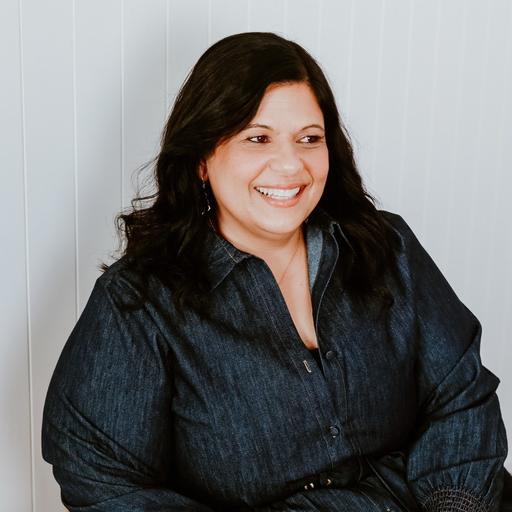
Kinesiologist, Coach & Author of Love Deliberately
20+ years Experience in education, coaching & kinesiology2 Amazon bestselling books2 Awards & grants won in 2026BA (Honours) Australian Catholic University, 2002
Alfina Lofaro is an author, speaker, kinesiologist, coach and leadership facilitator who helps people understand the unconscious patterns shaping the way they love, communicate and show up in their relationships.
Growing up on a 300-acre farm in rural Queensland as the daughter of Italian migrants, Alfina learned early that belonging could feel conditional - and that being good, helpful and dependable could be a way of earning love. For much of her life, she responded by doing more, giving more and becoming the person everyone could rely on.
It took years, and a painful chapter of her own life, for Alfina to recognise the cost of continually saying yes when she meant no, putting other people's needs first and giving away her time, energy and attention without realising what was driving the pattern.
That experience became a turning point.
Today, Alfina speaks to a powerful and often overlooked truth: knowing what you should do is not always enough to change what you actually do. Beneath conscious beliefs are unconscious programs that can influence how we communicate, avoid conflict, seek approval, tolerate unhealthy dynamics and repeatedly give ourselves away - sometimes one small yes at a time.
More from Alfina Lofaro
All episodes → The Broken BrainGatting & Being Better at Relationships, with Alfina LofaroNov 2026Play episode →
 Ask Faleskini - The Midlife Crisis Clarity CompassCan Unlocking Your Body's Hidden Energy and Relationships Finally Cure Your Burnout?Nov 2026Play episode →
 The Jōrni PodcastEpisode 424 - Unconscious Relationship Patterns with Alfina LofaroOct 2026Play episode →
 Love Inspired LeadershipYou Were Never Meant to Earn Love: Choose Yourself & Transform Your Relationships with Alfina LofaroOct 2026Play episode →
 Soultech with CynthiaHow To Break Relationship Patterns Through Self Love with Alfina LofaroOct 2026Play episode →
 Last First Date RadioEP 720: Alfina Lofaro - How to Love Intentionally in Midlife and Beyond (Without Working So Hard)Jul 2026Play episode →
 The Online Prosperity ShowThe Surprising Link Between Success And RelationshipsJun 2026Play episode →