
April 30, 2026
Make Money and Overcome Executive Loneliness with Nick Jonsson
Sound bites
For me, it was a blessing because the pain was so great and my body was breaking down that it needed to be released.
We were born to move. We need to do something physically.
In this episode
Nick Jonsson joins Travis to talk about money, entrepreneurship, and executive loneliness, including his own path through isolation and recovery.
- Early entrepreneurial work selling newspapers and second hand computers as a teenager in Sweden
- Student years in Australia spent organizing golf tournaments and renting apartments to incoming students
- A period of heavy drinking, lost fitness, and a downward spiral tied to isolation and mental strain
- Recovery through taking ownership, speaking up, and rebuilding health with regular movement and cycling
- Executive loneliness as the focus of his book and the need for leaders to talk openly about it
Transcript
ShowHide
Automatic captions of the conversation. They can contain errors and do not name who is speaking.
Kayak gets my flight, hotel, and rental car right, so I can tune out travel advice that's just plain wrong. Bro, Skycoin, way better than points. Never fly during a Scorpio full moon. Just tell the manager you'll sue. Instant room upgrade. Stop taking bad travel advice. Start comparing hundreds of sites with Kayak, and get your trip right. Bad advice? You talking to me? Kayak, got that right. You're listening to the Travis Makes Money Podcast, presented by gohighlevel.com. For a free 30-day trial of the best all-in-one digital marketing software tool on the planet, just go to gohighlevel.com/travis.
What's going on, everybody? Welcome back to the Travis Makes Money Podcast, where it's our mission to help you make more money. Today on the show, I have a new friend, Nick Johnson. Nick is the co-founder and managing director of Executives Global Network Singapore. He's the number one international best-selling author, keynote speaker, racing long-distance triathlons across the world, and he's a fitness and mental well-being enthusiast. He's also passionate about exposing executive loneliness and bringing the discussion to the forefront, which is what his new book is all about.
Executive loneliness, the five pathways to overcoming isolation, stress, anxiety, and depression in the modern business world. Nick, what's up, man? Welcome to the show. Yeah, thank you so much for welcoming me. It's great to be here in Vegas. Yeah, I mean, you're here at a good time, like we were talking about. A few weeks from now, it's one of those like, get me out of here. But right now, good time, yeah. Beautiful weather, and we're here for the conference as well. The Great Places to Work conference, so it's all about meaningful conversations this week.
Yeah, of course, of course. Well, let's go ahead and jump in to one of those ourselves then. Take me back in time, Nick. Tell me the first time you ever made a dollar that excited you. Well, it was as a 14-year-old. I was doing some extra work at the time. First, it was as a newspaper salesman, basically knocking doors and so on. But at that time, the Commodore 64 was out, and I was interested in computers, and I started to buy them second-hand and selling them in the local newspaper, setting up advertising around the block and so on.
So that was my entrepreneurial spirit. Really? How old were you? I was 14, 15 at that time. So you'd buy old computers, fix them up, and then sell them by buying ads in the newspaper? Yeah, basically. Did you get to, like, were you writing the ads and trying to learn about how to make them, you know, was that sort of like a first dip of the toe in the marketing? Yes, it was definitely. And it was trying to stay under the radar, making it look like innocent, like I'm a child doing it, so that it's not commercialized.
Because then you had to pay for the ads. But actually, as an individual, you could play some free ads in the newspaper, in the community papers. So that's what I did. And it worked for about a year before the newspapers realized this ad is coming back every week. Right. Yeah, maybe we should start charging this kid. Did that continue through high school, college? Like were you pursuing entrepreneurship at that point fully, or was this just sort of in the back of your mind and you pursued something more corporate? I was always entrepreneurial.
At university, for example, I became the president of the golf club, organizing golf tournaments and so on. Then it was more donating the money to charity for a good cause, organizing tournaments and raising funds and so on. But at the same time, also, I was quite the entrepreneur in getting apartments rented out to students. Many other students would come and study for a semester, and I was then being born in Sweden. I represented sort of Sweden, you could say. So when the Swedish students came to study for three semesters, they were looking at advice, where should I stay?
And I made deals with all kinds of landlords around that if someone rented, I would get a commission from that. So, and I was transparent with that. So I represented them and could really help earn a good living during my student years as well. Where did you go to university? In Australia. Australia, okay. Got it. What was the adjustment like culturally for you? Well, coming from dark and cold Sweden to warm and sunny Queensland, Australia, it was really a big shift. It was great, but I have to say, I doubled down on also my alcohol consumption at the time.
I think you have to in Australia. It's like a rule. They know how to drink over there, for sure. But they also don't have a good time, you know what I mean? I always enjoyed my time out there anyway. Just a fun culture to hang out with. Was your English good at that time? It wasn't. That was the key reason why I left for Australia. End of 1998, I went down to study, and it was because I wanted to learn English. And then, graduating college, what was your first step out of school? I was then in Australia, and I was looking at, where can I work after this?
Because Australia is so far away from Europe, so I looked at the map, and I had been then commuting back and forth for a few years between Europe and Australia. Well, the stopover tended to be in Hong Kong, Thailand, or Singapore. So, after graduating, I sent out my CV across to some other agencies. I studied advertising, PR, marketing, and I got a job with DDB, an advertising company from the US, in Bangkok. So, that was my first role. In Bangkok? Yeah. Okay. How did you enjoy your time there? Oh, it was really good.
Yeah. I worked on some of the big advertising campaigns, including San Miguel de Beer, who was launching in Thailand at the time. That was my job. So, starting in advertising and later pivoting over to PR. How did you find your time? Like, so, because we were talking about your entrepreneurial background, you always sort of had this entrepreneurial mind. How did you find your time working in more of like a big advertising agency, a big corporation outside of university? Did you enjoy that time? Did you look on it with fond memories, happy times?
Like, tell me about that experience. Yeah, so, I didn't enjoy so much the big accounts per se, apart from the account management and the client relationships. What I did enjoy and I ended up eventually in smaller companies, more of boutique agencies, sort of 18, 20 staff, and then the business development, the hunting and so on, was really what interested me. Oh, really? That's where I excelled as well. So, you all basically sort of became the salesperson. Yeah, as the marketer. Yeah. If you had to rate those two skills against each other, which one would you say is more important?
Study and play. Come together on a Windows 11 PC. For a limited time, college students get the best of both worlds. Get the Unreal College Steel, everything you need to study and play with select Windows 11 PCs. Eligible students get a year of Microsoft 365 Premium, and a year of Xbox Game Pass Ultimate the custom color Xbox Wireless Controller. Learn more at windows.com/studentoffer. While supplies last, ends June 30th, turns at aka.ms slash college PC. As a chef, I know flavor doesn't begin in the kitchen. It begins on the land.
And West Home's nature-led Australian Wagyu is a story written in the landscape of Northern Australia. Cooking is storytelling, and West Home Wagyu carries a story of Northern Australia itself. Raw, powerful, and deeply authentic. It's a testament to the passion and care raised in the rhythm of Northern Australia. I'm Chef May Lin from ADA Club in Los Angeles, and I invite you to visit westhome.com/maylin to learn more. And taste a story only West Home nature led Australian Wagyu can tell. That's westholme.com/m-e-i-l-i-n.
I would say that the business development is so important. Well, the hunting is also great, but keeping the client, maintaining that relationship, that was my strength and still is today. So you would go create the relationship, and then somebody else would run the account, or you would also run the account? I would keep an eye on the account. I would have a team to manage it on a day to day, but I would have the relationship with the managing director or the CEO, typically at the client. And what type of advertising was it?
So this time I did pivoted over to more public relations. So it was product launches and so on. We did work for O2, the mobile phone, I remember was a big one, but another client I had was coming from Sweden, and it was my hunting work was getting Electrolux, the Swedish vacuum cleaners and fridges and so on. Okay, interesting. What lessons do you feel like you've taken away from that time in marketing? Because there's one thing that I think is really valuable early on to gain that skill by working for another corporation, like a company that already has a bunch of clients or a company that has a reputation and things because they're going to pay you money while you get to learn more about the thing, right?
So like if you just went directly to business yourself, if you have any budget to spend on advertising, it's going to be a really small budget versus over here, you're sort of like spending money on behalf of these massive companies. But you can kind of get a better idea of how that money flows back and forth from the company to the advertiser and what type of media works best for this type of campaign or this type of product, right? So you gain a ton of knowledge during that time. Yeah, certainly. I remember having big budgets for product launches where you can make a massive impact.
I can remember launching a new mobile phone and we're talking here, 2005, 2006, first color screens and so on coming out, right? So it's a fun time. And I remember launching then and the media would just love it. We would make it big events, rent a whole nightclub and basically have the real theme and feel of it and full of energy and so on. So, yeah, making a big bang and so make sure that the journalists would come, you could send an invitation and they happily come. So I learned about, yeah, if you got to do something, make it big, make it proper, make an impact there.
Yeah. It's not enough just to send out a press release. You want to experience a middle relationships as well. So bridge the gap for me then between working and advertising right out of college to now traveling the world, executive speaker, coach, author, like tell me, exactly how this all came about. Yeah, so from that time in the advertising and PR agencies, I climbed the corporate ladder. Looking back at it, you could almost say, elbowing my way up to the top because it is competitive. And I love the money, I love the promotions, so I was going for it and I studied how to climb it.
And eventually I became basically getting a general manager, managing director, general director in big companies. So I climbed all the way, I had it all. Everything I dreamt of, I achieved it in the corporate world. But once I was there, that's when I started to question myself. How old are you? At the moment, I'm 50, so I reached the peak of my corporate career because I'm age 40, it's about a decade ago. But then there, I wasn't happy. I found myself lonely, isolated, questioning everything. Because I was working so much then, I didn't have much life outside of work.
So that led then a transition eventually. What did you do? Well, I fell down, you could say. While I had to climb all the way up, I fell all the way down. I did it in the wrong way. I resigned from my dream job without really having a proper plan. I was perhaps delusional. I was full of confidence and I had good savings. So I start to invest in companies. I invested, I remember in a suit factory, manufacturing suits in Vietnam, tailor-made suits, shipping to Europe and so on. I invested in some other businesses and it all went sideways and very quickly.
If you invest in a startup, for example, and they are bleeding and you're pumping in cash, then you can easily become bankrupt, which is what happened to me. And then finding myself without an income, falling down and then the stigma and shame of that, I didn't know what to say. I didn't want to admit it to other people. I hardly admitted it to myself. Yeah, which basically just made you more lonely and more isolated. Yeah, and then my Australian beer-drinking skills kicked in. I used alcohol to instead not myself, rather than facing it and dealing with it.
Right. That's typically not a great recipe for success. How long would you feel like you were in that spiral? Yeah, so I was in that spiral for about two years, burning through my cash and destroying my health. I traded my gym membership for basically a bar stool. Yeah. My healthy diet suddenly fell into fast food and pizza, and I didn't care what I was eating. I gained about 60 pounds. With that, suddenly, I fell into a depression. Yet, I was in denial about it. I showed to the world that everything is great, but it clearly wasn't.
So it was only when I started to hit rock bottom, then I finally managed to turn it around. How would you define rock bottom? For me, rock bottom was when I was in a shell, basically. I didn't want to get out of bed. I can remember I had a meeting across the road, literally for a pretty big amount, and I couldn't get myself out of bed, walk across the road. I asked someone else, can you please take this project? That's when I realized that something is really wrong here, because that energy and the drive, the motivation to earn money was always with me.
But at this stage, I had lost that hunger, and it was a scary place. And I wasn't suicidal, that's not how dark it was, but I was at the stage where I had written my will, written my testament, and I didn't really care if I would wake up tomorrow. I just didn't care anymore. It was just a feeling of nothingness, essentially. Yeah, absolutely, absolutely. So that was my rock bottom, and at that moment, I'd met someone who is now my wife, remarried, now happily remarried. And at that day, I decided to open up to her.
For me then, it was the first time when I spoke openly about those feelings that I had internally, the failure of the business, having left the corporate world, and my health and so on, I decided just to share it. Was that the thing that pulled you out of it? I think it's, in retrospect, sometimes it's easy to point at those times and be like, man, that was a close call, that was crazy. But there's a lot of people that stay in those cycles for a lot longer than two years and cannot find a reason to get out of bed and lose the hunger, lose the drive, and they don't know how to get it back.
How did you get some of that back? Yeah, so it was a complete surrender. It was taking the ownership for it. And as I started to open up to Donna, who is my wife now, I remember that feeling. I will never forget it, because I had spent two years bottling everything up, right? Protecting it to the world. And I was so tense by just speaking the words. It's that saying, you know, a problem shared is a problem halved. And if you think about it, that says something, and that's how I felt. So imagine all that tension just being released.
And also, I'm fortunate that she listened with empathy, and she also immediately dragged me to a doctor, and shared what I had told her to the doctor. I was getting to support the empathy again. And then after that, we went to a common friend who had gone through something before. So I was exposed three times in the first 24 hours. And with that, you could almost say I had a V-shaped recovery, sort of. Of course, I was not perfect health right away. But I started to get something back, which I lost, and that was hope.
It was hope there. And it was just knowing that I'm not alone in this, suddenly. And then the hunger came back, and the hope came back, and I was on the path to recovery. How long would you say that period was? So it's a rebuild. I'm now eight years from that moment. I also had to take ownership for many things in my life at that time. Alcohol had become a problem, as I mentioned. And I sought help. I went into one of those recovery meetings, and I said, I have a problem with alcohol. And once I admitted that, also the guilt and the shame around that was lifted, and I haven't had a drink since that day.
It's eight years now. Wow. And then was this also when you started pursuing more athletic accomplishments? Yeah, so I did marathons before this. I did the triathlons, the Ironman triathlons, but I was struggling. I was falling over, and I didn't make the mess of it, because I tried to do it myself. Now, then, being in the mindset of asking for help for myself, for everything, I signed up for a coach, I signed up for a triathlon club, and with that, actually, I also start to excel at it. I'm now 50 years of age, and I'm top 2% in the world in my age group, and I go and compete for my country in the world championship.
So you were already always doing something athletic. It was just during this period of time you basically abandoned that, and then you jumped back into it once you got a clear head. Yeah, so for two years, I reduced it heavily to the point where the last year I didn't do any sport, I didn't move at all. So I had lost it, but I could get it back. Which is, that's the whole difficult part of something, of going through something like that, is that you continue to take action that just proliferates the problem more. You know what I mean?
The worst thing that you could do when you're feeling like that is stay inside, not have sunlight, don't move your body, don't sweat, eat bad food, like all of those things are only just exacerbating the problem, right? You've felt like that in your core, it seems like. Yeah, and it is that downward spiral, right? It's very hard to break that. And I know some guys are in it now, and all we can do is to be there and listen to them and speak and having these conversations, because breaking that pattern is so essential.
And many times it starts by taking ownership and speaking up about it. Yeah, just being aware that this is now a problem. This is not just like a phase that I'm going through. This is a problem and it's eating at me, and I have to talk to somebody about it. Yeah, and the good thing is, no matter what we're going through, we're probably not that special. We're probably not the only first person to go through this. And once we can acknowledge that, they support this, aren't they? Did you feel like you had to hit that rock bottom moment in order to make yourself change something?
Like, had you just stayed cruising and you could have maybe gotten out of bed to go to that one meeting and make sure that you had a little bit of money coming in and you were like, you're barely surviving, but you're doing okay, do you think that that would have been enough to propel you out of that? LinkedIn is pretty amazing at helping you grow your small business. We cannot make your email response time faster. We can help you sell, market and hire in one place. We cannot help you find space for your three desk drinks.
Why do you have three? And while we can't help you find the perfect volume for your presentation video, LinkedIn can help you find the perfect audience for your business. Grow your small business on LinkedIn. Learn more at linkedin.com/smallbusiness. Growing a successful business has never been easy. But whether you're navigating a complex industry or trying to reinvent one, our breadth of banking experts are here to collaborate on market proven solutions. At KeyBank, we're built to grow with your changing needs. Because we're not just here for the business you are now, we're here for the business you'll become.
Re-imagine business as usual. KeyBank opens doors. Learn more at key.com/b2b. Moment or do you think that it required you to hit that rock bottom? Well, you know, it's not easy to define rock bottom also, right? It depends how low could I have fallen. I could probably have gone a lot lower and there were people who go a lot lower and then you start to play with the end of your life, right? That's what happens. For me, it was a blessing because the pain was so great and my body was breaking down that it needed to be released.
And it's probably the best thing that happened because if I would have made it across to that meeting, I might have had enough cash for another six months. And if that would have meant that I still would have gone lower, I'm not sure if I would have been here today. It's difficult sometimes because I talk to a lot of people and ask that question a lot because it makes me curious because a lot of the especially wildly successful people that I've had on the show, there tended to be something like that in their past. It was something that was just deeply traumatic or a chip on their shoulder from growing up really poor or they hit a rock bottom moment that made them change everything.
And it's just, it's almost like, you almost have to like allow, you almost have to allow those things to take place to push you in the direction that you need to be pushed in because it's sometimes difficult when you're just coasting and everything's kinda okay. You know what I mean? It's like, nothing's great, nothing's really good. It's just, I'm okay, you know, I'm fine. And then you tell yourself, oh, a lot of people have it a lot worse than I do. So, you know, whatever, I'll just keep pulling myself up on my bootstraps and hope that it gets better at some point.
Do you feel that you would have dealt with this differently had you not given up alcohol? I think giving up alcohol was a big part of it for me because that was my go-to during this period to basically numb myself. And then taking ownership for that and finding that community what's really helped me because I felt understood. There was other people who had gone through it before. They said, yes, I know. I also went through a divorce in the past, I would say, and I had an issue, but I'm sober now for three months. There were people who were sober for five years.
There were people who were sober for 20 years. And of course I was wondering, what are they doing here? He's like, sober for so long. But they were there that day to help me because when I came in there as a broken man, they could help me back. And since that moment, I've been supporting the community as well. I've been supporting over 1,000 recovery meetings, including now when I'm on a trip, I'm always checking the calendar, what are the meetings around? Can I go, can I be there to be of service? And that was the circle that goes around and that we can help each other.
And yes, we're talking about the alcohol here, but it can be shopping, gambling, it can be drugs, it can be sex, it can be any of those issues. Yeah, yeah. Okay, let's talk a little bit about the book here. Like I said, when your guys' pitch came across me I was like, this is an interesting conversation because it touches on both of the things that I talk about on both of my shows. And so you've written this book, Executive Loneliness. What was the catalyst for writing this book and why did you feel like you had to get it out?
Yeah, it is because it's basically how I felt in the workplace. I felt lonely and it is that saying, it's lonely at the top and it doesn't matter if you're an entrepreneur, then you might be the only one. Or if you're in the corporate world, the higher you go, the lonelier it gets. And if you become the general manager or the managing director, then you're the only one at your level. So it can be very lonely. And especially if you don't have the skills to also be vulnerable and open, having the coaches, the mentors, the masterminds and all the things that we need to surround us with to get that connection.
Many of us perhaps are not vulnerable enough. We are not ready to open up, to disclose what are the challenges we are facing. And we are sort of grinding ourselves through here. And that's what I did. I had mentors, but I tried to impress my mentors, especially if they were internal in the organization, because they would also sign my bonus, they would sign my next promotion. So why would I share with them that I have insecurities? Then I wouldn't be up for the next promotion. So I was playing that game, but I played it so good that it became my fall as well.
That it was the source of the fall. Yeah, absolutely. And what I realized though and why I wrote the book was that I wasn't the only one. When I started to talk to other people in the corporate world after, I did a survey in Asia, mainly in Singapore, and about 33% of the people I surveyed said that they either are feeling lonely in their job or they have gone through patches of loneliness in the workplace. So the problem is out there. I wasn't the only one. It's pervasive and it's particularly insidious because everybody knows that smoking cigarettes is bad for you.
Everybody has awareness of that. Even chain smokers are like, yeah, I know it's bad as they light one up. Everybody has awareness that this is something that is bad for your physical health, probably bad for mental health, probably bad for a lot of other things. But nobody realizes how detrimental loneliness is for physical health and mental health and all of the above. So even if they're experiencing it, they tend to downplay it because there's no awareness around the negative repercussions that actually come, the consequences that come from being lonely for extended periods of time.
Did you find anything, uncover anything in writing this book that made you surprised about loneliness and how bad it can be? Yeah, I think one study that is touching this topic is by Robert Walding at Howard, right? He studied the biggest study on happiness and so on. And he found that if we have broken connections or loneliness in silence, it can be as dangerous as smoking 14 cigarettes a day. So I think we can compare it. It is in that bucket. And what I found was that not only do we have 33% in the workplace who have these feelings, 75% of them also wouldn't seek professional help.
And when you ask a follow-up question, why? Well, I'm worried that someone will find out, someone will see me going and seeking help for mental health related issues, or maybe in my record, in my insurance or my HR will find out. So therefore, people are suffering in silence. So that is the issue. And I wrote this book in memory of a friend of mine who sadly died of suicide in 2019, who had gone through it and I didn't know. And that was what triggered me to really push through with the book, because I wanted to get this message out there.
So what are some of these ways that you found to overcome isolation? Yes, I developed the five steps then, and it is to holistic leadership. And the first step is surrender. It is that awareness to do an audit of ourselves. We can do this with a coach or with a mentor or a support group to really look at ourselves and note down. We all have something. We all have perhaps some bad habits. But on what scale are those bad habits? And try to be honest with them. And if it is that we are spending more money than we can afford on gambling or whatever it may be or online shopping, then note that down and start to seek help.
That would be the first step. Okay, what about number two? Looking at your purpose. Many times perhaps we defined ourselves in our work too much. We can do that as an entrepreneur, but in the corporate world, perhaps we define ourselves with the mission of the company. The KPI is the target, becomes our life purpose. And if you lose your job then, that happens often today with mergers, acquisitions and so on, then you lose your purpose. And that's where many people fall off. So finding you're working on your purpose with a coach is certainly the second step.
Have you found any tools or anything to be helpful if you are questioning what that even is at this point? Absolutely. I've done that deep search myself, and I worked with John Matone, who did that work with Steve Jobs in his last year of living. And there's a lot of questionnaires out there, and you can even use something as simple as Shed GPT to get questions. Give me 20 questions for me to identify my life purpose, and you can answer them, and out of there, you can get something. It typically starts with, what were your hobbies as a child?
What did you love to do as a child? What are your greatest talents and passions according to yourself? What about your talents and passions according to others? And then list out your values, there's tools for that, the value sorters and so on. Just to really get a bit of understanding, do an audit of yourself and find out that curiosity around that is something that helped me in helping others. All right, so awareness, reconnecting with your purpose, what's number three? Connection. So many of us, we are perhaps wearing a mask.
If I'm looking at myself in the corporate world, I was not my true self. I would play the game I needed to to get what I wanted, was to achieve higher salaries and promotions. I wasn't my authentic self. So I think we all need to work on ourselves and be more authentic and do that in safe spaces. I don't favor oversharing or over-vulnerability in the workplace, but find a peer group, find a tribe where you can be yourself and double down on that. So connection to yourself, not necessarily connection to others at this point.
First to yourself, then to others and also to the universe or a higher power if you are spiritual. That's exactly what my conclusion has ended up coming to over the years of studying this for my other show is that it starts with you. It starts with your relationship to yourself. Because that's what's, again, insidious about the loneliness in general is that when they break it down, there's loneliness, but there's social isolation. And those are two different sort of problems that people are experiencing almost to the same degree in terms of a percentage, but they're actually separate issues.
Social isolation is more of an objective measurement of how often you're hanging out with other people. That's more of a simple prescription to say, OK, we're not hanging out with other people enough. Go spend more time with your friends. Go spend more time with whatever, your spouse or whoever is a purposeful, meaningful relationship in your life. But loneliness is a subjective, internal feeling, which can, like what you're talking about, it's like you could be playing the game, you could be surrounded by people, you could seemingly be ambitious and charismatic and people like you and you like people and everybody thinks that you have it all under control.
But the loneliness feeling is still something that can be inside of you, even when you're surrounded by those people. And so to me, it's like at that point, the only real answer is you don't have a good enough relationship with you. So if you don't have a great relationship with you, you don't like yourself, you don't respect yourself, you don't trust yourself, then ultimately, it's going to bleed out into all your relationships with other people because why would anybody else give you those things if you can't even give yourself those things?
So connection to self, I love that one. What about number four? Yeah, the fourth one is goals then. So many of us then, perhaps we put in too much effort on the KPIs and targets at work. That gives us the meaning and we achieve them. And I did everything I could to achieve the company goals. I would travel all the way from Asia, actually to Las Vegas to St. Tony-Robbins to get the motivation. I would see Brian Tracy, I even sponsored to get Brian Tracy to Asia twice for my sales community. And I became a master in achieving goals.
But that was work related. But I didn't use those skills to set up goals for myself personally. I'm talking about relationship goals and also finance goals, and other goals about health and sleep and so on. But once I started to have also holistic goals for all the areas of my life, then things changed. So that's the fourth step then to really work. And we have the wheel of life and coaching, which is eight basically steps. And when you are then intentionally setting goals in all areas of your life, then you're getting that balance.
And that's what I do now. And that's what I do also with people I work with. And that's when you get the balance. So number five, discipline, the accountability to hold it all together. There's a lot of great books out there. We have Atomic Habits there. It's about starting small. And I'm a big believer of that as well. Getting that accountability, having the system in place so that you measure it. In the same way you would measure performance at the workplace, you need to measure that and have someone accountable for your life because we might not always be the ones to do it.
So have someone around you. When you're working with people, do you go through all five steps? Is it typically like, hey, you have this one good, or you have this one good, or have you seen, most of the time, that it's sort of across the board, that we're not doing any of these things? I typically, both individuals and teams, I do a lot of workshops when we go through these five steps together. And typically, the way I do it, then I share about what I did to go through that step, what about others, and then helping them to go through it.
And something happens when you see someone else next to you, also go through the steps and sharing, well, I actually have some issues as well. You know, when I'm getting my salary, I get on and I do online gambling for, and my salary's gone after two days, and you might be wondering why I'm coming in, why I'm grumpy and so on. Once someone suddenly is honest about that, then the next person sitting next door might feel more comfortable also to share what they're going through. So it's a lot about practicing that vulnerability in a safe space, and that's when magic happens.
How do you view the physical stuff that you do now in this world? Yeah, are you drawing a sense of purpose from this? Is this more about the purpose side? Is this connection to self? Is this goals? Is this sort of all of the above? Yeah, it is all of the above. And why triathlon then? Well, just running, I found it too hard on the body. So that's why I diversified. So you have a bit of swimming, a bit of cycling, a bit of running. Plus, suddenly, I have three communities. I have swim academies, I have running clubs, I have cycling clubs.
And I double down on these clubs all around the world. And therefore, you're getting the social health by coming to the community. You're getting physical health by moving. And of course, that's linked to mental health and emotional health and so on. So I exercise something every day. It doesn't have to be intense exercise, even a hike or a walk. I calculate that also as exercise. But I believe that we were born to move. We need to do something physically. And then I would say we shouldn't also force ourselves to do something that we don't like.
That goes back to the purpose to map out what was the things that we loved to do as a child, perhaps. And in my case, when I went through the photo albums of my parents, I was always cycling as a child. So it goes full circle, bang them now. Why do I double down on cycling? Well, I absolutely love it. So whatever you love to do, double down on that. And there's got to be something there that moves your body. Nick, I really appreciate you stepping into this void and talking about this a lot more. I think that there's going to be a lot more leaders that are required in this area to pull us out of this with the insane stats around the volume of loneliness that exists on the planet, but especially inside of these types of worlds where the high performer mentality, there's a lot of great things that come with it, but there's also a few not great things.
And this is absolutely one of those things. And it's backed by some pretty crazy studies that I've read through, and I'm sure that you've read through writing this book. So I appreciate you, the work that you do in the world. If you're watching, listening right now, Executive Loneliness, go pick up a copy of Nick's new book. I know you will enjoy that. Nick, work in everybody else, go to connect with you and get more from you. Yeah, they can find the book on Amazon. It's also on Audible if you prefer the audiobook.
Otherwise, I'm quite active on LinkedIn. I have a webpage as well, and my spelling is N-I-C-K-J-O-N-S-S-O-N. J-O-N-S-S-O-N is Jonsson, Nick Jonsson. Go check out some of the stuff that Nick's working on. Pick up a copy of the book and thank me later. Nick, I appreciate you taking the time. I know you're a really busy guy, so don't take that for granted. Everybody else tuning in, remember, money only solves your money problems, but it's easier to solve the rest of your problems when you got some money in the bank. So let's start there, here on the Travis Makes Money Podcast.
Thanks for tuning in. Catch you guys next time. Peace. Hey marketers, listen up. Before this, there was this. Our voice. It's how we shared knowledge, built communities. Well, guess what? Voice is back. That's why Spotify advertising has published a new report, The Sound On Era, because audio moves culture forward. If your brand wants to be heard, you need a sound on strategy. Go to ads.spotify.com to download The Sound On Era and turn up the volume on your business.
About Nick Jonsson
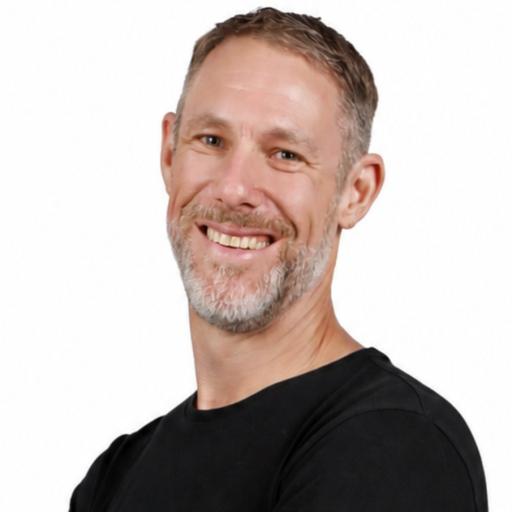
#1 Global Thought Leader on Executive Loneliness, International Bestselling Author and TEDx Speaker
900+ EGN Southeast Asia membersTop 2% Ironman athletes worldwide2026 GHP Most Empowering Mental Health Leadership Advocate#28 worldwide Global Gurus Top 30 Coaching Professionals
Nick Jonsson is widely recognized as the world's leading authority on Executive Loneliness. His pioneering work has earned him a dedicated Executive Loneliness Wikipedia page and international recognition, establishing him as one of the world's most respected voices on leadership, vulnerability, mental wellbeing, and authentic connection.
Ranked #28 in the world among the Global Gurus Top 30 Coaching Professionals, Nick is a TEDx speaker, international bestselling author of Executive Loneliness, Professional Certified Coach (PCC), Certified Master Coach (CMC), qualified Counsellor and Psychotherapist, facilitator, and certified Team Psychological Safety practitioner.
For more than two decades, Nick held senior international leadership roles, leading businesses and high-performing teams across Asia. From the outside, his career reflected success. Privately, however, he struggled with burnout, alcohol addiction, and overwhelming loneliness - experiences that ultimately became the turning point of his life.
Rather than allowing those challenges to define him, Nick rebuilt his life through recovery, vulnerability, discipline, and purpose. Today, every keynote, workshop, coaching engagement, and counselling conversation is grounded in both professional expertise and lived experience.
Nick works globally with executives, leadership teams, founders, and organizations through keynote speaking, executive coaching, counselling and psychotherapy, leadership facilitation, and Team Psychological Safety training.
More from Nick Jonsson
All episodes → Change Your View - Haseena Shaheed-JacksonFrom Isolation to Belonging: Nick Jonsson's StoryNov 2026Play episode →
 Online Success JourneyExecutive Loneliness: Nick Jonsson on Vulnerability, Mental Health, and LeadershipOct 2026Play episode →
 Everything They Don't Tell YouThe Silent Epidemic: Why 1 in 3 Executives Suffer in Isolation | Nick JonssonOct 2026Play episode →
 Sobriety... Now What? with Stuart ClineEP. 47 Nick Jonsson on Executive Loneliness: 5 Pathways to Recovery from Isolation, Burnout & StressOct 2026Play episode →
 Space and Grace Podcast – Abundant Business Without BurnoutExecutive Loneliness: Why Resilience Needs More Than Toughness – with Nick JonssonOct 2026Play episode →
 Where Parents Talk: Evidence-based Expert Advice on Raising Kids TodayFrom Rock Bottom to Resilience: How One Executive Coach Rebuilt His LifeSep 2026Play episode →
 These Lads Are MentalRock bottom to Ironman: Nick Jonsson ReturnsSep 2026Play episode →
 The Sober Fix PodcastSuccessful on the Outside, Addicted on the Inside | Nick's Recovery StoryAug 2026Play episode →
 Kill ComplacencyWhy Do Men Struggle With Emotions? with Nick JonssonAug 2026Play episode →