Leadership
How Leaders Rebuild Trust After Moral Failures
Lessons from Graham Brown on moral leadership, messy decisions, and practical steps to restore credibility for leaders and organizations.
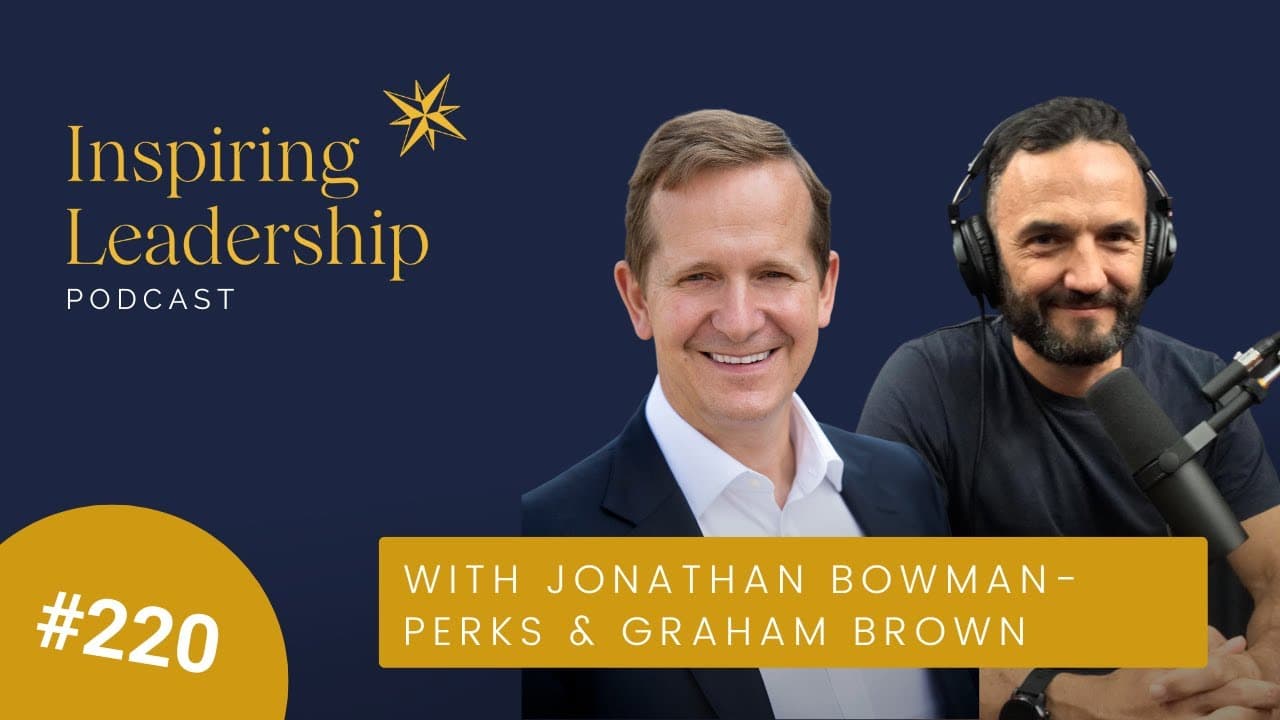
220. Inspiring Leadership Episode 2 Your Moral Integrity: Graham Brown & Jonathan Bowman-Perks
Video from Inspiring Leadership with Jonathan Bowman-Perks.
Generated from the canonical interview transcript and validated against source data by Guests on Air.
How can leaders restore trust after moral failures?
Leaders restore trust by admitting mistakes, committing to measurable remediation, and changing incentives. Implement independent oversight, publish progress, and protect dissenting voices. Combine visible governance reforms with repeated, modest public acts that demonstrate changed priorities. Over time consistent behavior and transparent accountability rebuild credibility faster than single apologies or performative gestures.
Public scandals and private compromises force leaders to answer the same question: commit or collude. In our interview Jonathan Bowman-Perks and Graham Brown trace how privilege, power, and small rationalizations combine to erode moral authority. This conversation moves beyond headlines to examine biography, accidental compromise, and the slow drift of character under pressure, offering practical prompts for leaders to regain a credible moral compass.
Graham and Jonathan share candid anecdotes: a presentation taken for a tobacco client, military rites of endurance, and the boardroom compromises that feel necessary at the time. Each story reveals how even well-meaning people slip into justification and avoid the hard choice. The episode asks leaders to name when they will act and when they will acquiesce before reputation collapses.
Practical frameworks matter: how to spot moral drift, calibrate true north, and create structures that encourage dissent. Graham references Brand Love and his work booking leaders onto podcasts to rebuild human connection beyond logos. Listeners receive three tactical moves to use immediately: decide nonnegotiables, widen accountability, and rehearse public humility so trust can be rebuilt incrementally over time.
Key takeaways
- Small compromises compound; one rationalized choice often leads quickly to larger ethical failures over time.
- Leaders' privilege can blind them; cultures tolerate bad behavior when elite status excuses transgressions habitually.
- Commitment beats collusion: naming nonnegotiables early prevents slow erosion of standards and preserves trust durably.
- Stories and public humility matter; human narratives on podcasts restore credibility beyond corporate spin and logos.
1. Why moral drift starts small
Most moral collapse begins with a pragmatic pivot: a stressed team, a missed quarter, or an urgent pitch. Graham describes a moment when he learned a client was a tobacco company only after agreeing to present. That surprise created instant compromise. People rationalize for money, reputation, or avoidance of conflict. The psychology is plain: short-term gain beats abstract integrity until habits harden and norms shift.
Organizational privilege amplifies tolerance for boundary-pushing. Leaders at elite schools or in powerful roles often inherit cultures that excuse misbehavior. Jonathan and Graham point to political examples where senior figures normalized poor choices, then surrounded themselves with sympathetic voices. Without dissenting structures, a single rationalization becomes contagious. The remedy begins with explicit nonnegotiables and governance that rewards skeptical questions rather than smothers them in the name of cohesion.
Accountability structures must be visible and practical. Make it easier to escalate concerns than to ignore them. Board charters, whistleblower channels, and peer-review rituals change calculus when short-term convenience competes with long-term reputation. Graham recommends rehearsed responses to likely ethical dilemmas and explicit signals when someone crosses a line. Those steps convert vague ideals into predictable behavior and reduce the moral fog that lets leaders claim ignorance when problems explode. For a related perspective, read Leaders learn storytelling where they can fail and get feedback.
2. Repairing trust through action
Repair begins with small, credible acts and public acknowledgement. Leaders should admit mistakes, outline concrete remediation, and accept oversight. As related reading, the book Brand Love: How to Build a Brand Worth Talking About studies how human narratives and consistent behavior create advocates rather than casual approvers. That research underscores a practical truth: people forgive leaders who act transparently and repeatedly show changed priorities, not those who offer a single scripted apology.
Concrete remediation can be staged and measurable: restitution of affected parties, independent audits, personnel changes, and governance reforms with public timelines. Graham and Jonathan stress that remedies must avoid theatrical gestures; they should be verifiable and durable. A credible process invites external validators and permits the organization to demonstrate change. Repeated small wins rebuild faith faster than one-off grand gestures that quickly fade from collective memory.
Measure progress publicly: publish ethics scorecards, report incidents, and show remediation timelines. Granting third-party oversight and publishing results reduces speculation and signals accountability. Leaders who survive scandal do so by changing incentives, aligning rewards with ethical outcomes, and removing gatekeepers who benefited from permissive cultures. Repair takes patience; cultures reset over repeated cycles when people see behavior consistently match new commitments. For a related perspective, read Mastering Podcast Guesting with Graham Brown.
3. Preventing future moral failure
Prevention requires structural incentives that make virtue the default. Create clear hiring filters that screen for integrity, rotate responsibilities to avoid unchecked power, and tie compensation to long-term outcomes. Graham's consulting emphasizes podcast guesting to humanize leaders and rebuild trust quickly by showing consistent behavior publicly. Those communication moves are tactical complements to governance: stories alone cannot substitute for enforceable rules that reshape behavior across organizations.
Train leaders in moral reasoning under pressure; scenario practice reduces the shock of real dilemmas. Jonathan draws on military examples where small leadership choices determined whole team outcomes, from mountain marathons to unit discipline. Habitual rehearsal of saying no in a safe environment builds muscle memory and raises moral barometers. Combine training with anonymous reporting and rapid independent reviews so early warnings translate into corrective action rather than reputation risk.
Finally, leaders should cultivate an environment where truth-tellers are protected and amplified. Graham and Jonathan invoked Malcolm Gladwell’s 'holy fool' concept, urging organizations to listen to marginal voices. Protect whistleblowers, reward inconvenient questions, and publicly correct course when warranted. Over time, these moves harden into culture; when people see dissent tolerated and acted upon, the fragile incentives that once favored collusion are replaced by steady patterns of responsible behavior. For a related perspective, read How leaders can make decisions on their own terms.