Leadership
How Leaders Build Trust Fast Through Podcast Guesting
Graham Brown explains authentic storytelling, repeat guesting, and human judgment that make leaders memorable.
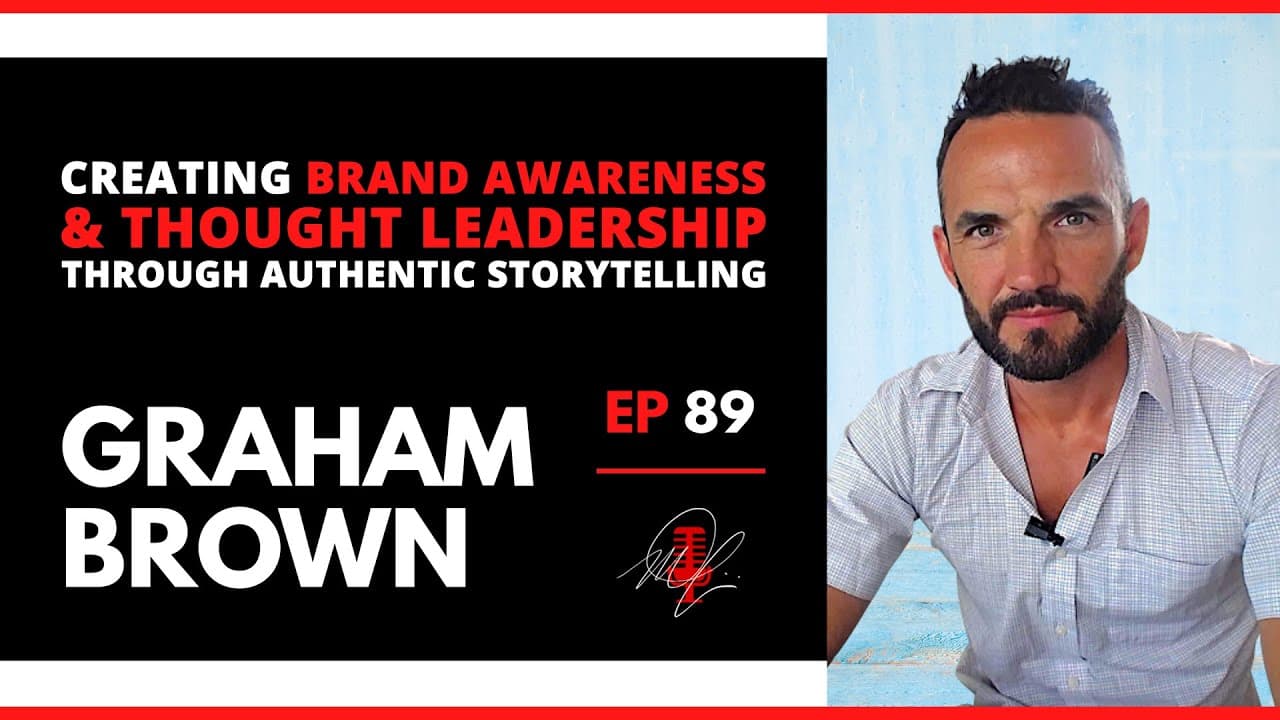
#MikedUp E89: Creating Brand Awareness & Thought Leadership Through Authentic Storytelling
Video from Mike'D Up! with Mike DiCioccio.
Generated from the canonical interview transcript and validated against source data by Guests on Air.
How can leaders use podcast guesting to build trust fast?
Leaders accelerate trust by telling one clear, personal story, appearing repeatedly on aligned shows to borrow audiences, and automating production so humans focus on judgment and empathy. Those choices create memorable, retellable moments that convert listeners into meetings, referrals, and long-term advocates without expensive ad campaigns.
Podcast guesting compresses time. Graham Brown argues that leaders win attention and trust not by launching costly campaigns but by showing up as humans with a repeatable story. On podcasts, executives can be imperfect and therefore authentic. That vulnerability, when paired with clarity and consistency, moves listeners from polite interest to genuine curiosity and follow-up conversations.
Brown frames podcasting as the medium that tolerates rough edges and rewards real voice over corporate polish. He urges leaders to pick one sharp anecdote, practise a two-sentence setup, and repeat that frame across appearances. Frequent guest slots borrow host audiences and build familiarity faster than one-off broadcasts, turning attention into memorable moments that invite meaningful next steps.
He ties narrative craft to practical systems: use tools to remove friction in production so humans can focus on judgement and empathy. Brown calls this 'automate to elevate' and shows how offloading routine tasks frees time to sharpen stories and build relationships. In short, clarity, cadence, and careful automation make podcast guesting a high-return trust channel.
Key takeaways
- Authentic, vulnerable stories outperform polished scripts and accelerate audience trust quickly.
- Repeat guest appearances borrow host audiences, building familiarity and scalable business development.
- Design stories with concrete moments, named scenes, and an arguable claim so listeners remember leaders.
- Automate routine production to free humans for judgement, empathy, and narrative choices.
1. Why stories make leaders memorable
Stories package context into a compact, repeatable form. Graham Brown begins by correcting a common misconception: 'we often feel that our story's not worth telling.' Every leader carries a small hero's journey of choice or adversity that listeners can grasp. Convert that arc into one vivid scene, a named moment and a single lesson so your anecdote creates cognitive hooks listeners can retell later to others and remember long after the interview ends.
Clarity is the practical work of storytelling. Narrow the anecdote to a single scene and a clear emotional turn. Brown dissects Steve Jobs' Cupertino presentation to show how a teenage garage memory became civic vision, proving that personal origin stories scale if you explain why they matter to the listener. Practise the connective sentence that links your moment to the listener's interest so the takeaway lands and spreads beyond the interview.
Before any guest appearance, pick three memory moves Brown recommends: a concrete number, a named moment, and an arguable claim the audience can accept or contest. Those anchors form a retellable spine. Start with a two-sentence setup, add a vivid detail, and close with one tight lesson. Prune jargon and unnecessary context so the story survives listeners' short attention spans and becomes the thing they repeat to colleagues later in the week.
2. How to use podcast guesting strategically
Treat guesting as a sequence rather than a single broadcast: five carefully chosen appearances build recognition faster than one-off outreach. Brown urges leaders to design repeatable framing sentences that work across different hosts and audiences. He also recommends mapping each guest slot to a measurable outcome—meetings, campaign awareness, or thought leadership—so appearances convert curiosity into follow-up actions rather than ephemeral attention.
Decide whether your podcast guesting is intrinsic or transactional. If the goal is deals, book shows that place you near prospects and close each episode with one human next step. Brown outlines four podcast objectives—thought leadership, campaign awareness, news and analysis, and business development—and matches cadence to outcomes. He also suggests learning from practical guides like Mastering Podcast Guesting with Graham Brown to refine how you pitch and perform on other people's shows.
Quality beats quantity once you have a clear story and a sustainable pace. Brown compares leadership communication to Ironman training: sustainable effort outlasts an early sprint. Pace guest slots so you can preserve energy, keep your message coherent, and show up authentic. Over months those consistent, well-crafted appearances turn into recognition, meetings, and a reputational runway that advertising alone rarely buys. . . . . . . .
3. Using AI and pace to elevate human work
Use technology to remove production friction, not to replace voice. Brown's phrase 'what i call automate to elevate' captures the approach: automate transcription, editing, and distribution so leaders can practise the memory moves that stick. When machines handle routine tasks, humans get time to choose narrative details, rehearse vulnerability, and apply judgement. That separation keeps the human material distinct and more convincing to listeners than machine-generated content.
Brand Love follows from repeat, meaningful exchanges rather than shouting budgets. Brown argues customers recommend brands that behave like people, not like billboards, and guesting is relationship work that builds those fans. He also notes that ideas like Why a business podcast should start with the meeting not the audience matter here because they shift focus from vanity metrics to measurable relationships and outcomes, helping leaders design guest campaigns that actually produce meetings and referrals.
Begin with one short, retellable story and practise it until phrasing becomes natural. Script only the setup; let the host guide the detail. Automate editing and distribution, repeat guest appearances to build familiarity, measure results tied to meetings or awareness, and keep a cadence you can sustain for months. Those choices compound into trusted relationships and tangible business results that scale far better than one-off broadcasts.