
19 February 2018
ETC1: How do you deal with Fear? (Escape the Cubicle)
About Graham Brown
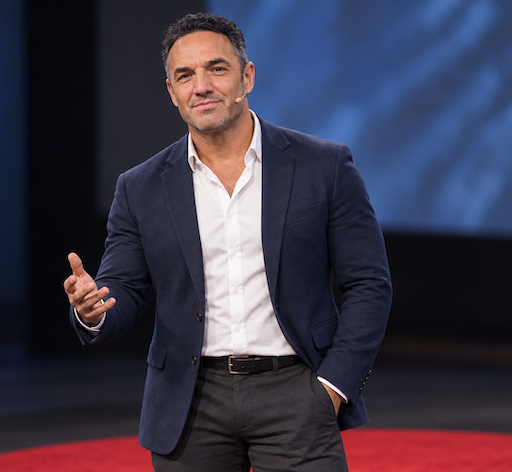
Author and Podcast Guesting Specialist for Corporate Leaders
2001 Founded mobileYouth16 books Published author250+ clients Served across 60 countriesUniversity of Sussex AI & Cognitive Psychology graduate
Graham Brown is an author and founder of Podcast Guesting Pro who helps corporate leaders, founders, and storytellers get booked on aligned podcasts and build thought leadership.
He began his career studying youth mobile behaviour and founded mobileYouth in 2001 to understand youth marketing and mobile culture; that early work serving clients such as Nokia, Vodafone, MTV, and Disney shaped his focus on audience insight.
Over time he moved from youth research into audio after seeing business leaders struggle to communicate authentically at scale, which led him to found a full-service corporate podcast agency and develop programs to train hosts and producers.
His route into podcasting combines formal study in Artificial Intelligence and Cognitive Psychology at the University of Sussex and Entrepreneurship training at Harvard Business School Online with decades of client-facing agency work.
He helps corporate leaders, startup founders, and storytellers find their voice. He leads Pikkal & Co, an award-winning corporate podcast agency, and runs Podcast Guesting Pro.
He previously hosted Asia Tech Podcast and previously grew mobileYouth to over 250 clients in 60 countries; his agencies operate from Singapore with partner studios across Australia, Austria, Canada, Croatia, Ireland, Sweden, the UAE, the UK, and the USA.
Transcript
Asia tech podcast podcast podcast podcast let's talk about fear because it's fear is something that every entrepreneur feels even the most successful entrepreneur feels fear the difference between a successful entrepreneur and everybody else is how they deal with fear they don't try to avoid fear they simply learn how to contain it and to dance with it so to speak I want to tell you a story when I was 17 years old this is a long time ago now 17 years old I remember falling asleep on the sofa of my parents home itwas the middle of winter November and I woke up and the TV was on and these are…
Read the full transcriptHide the transcript
Asia tech podcast podcast podcast podcast let's talk about fear because it's fear is something that every entrepreneur feels even the most successful entrepreneur feels fear the difference between a successful entrepreneur and everybody else is how they deal with fear they don't try to avoid fear they simply learn how to contain it and to dance with it so to speak I want to tell you a story when I was 17 years old this is a long time ago now 17 years old I remember falling asleep on the sofa of my parents home itwas the middle of winter November and I woke up and the TV was on and these are the days when a family's to gather around the TV and watch the TV in the evening and I remember these scenes very vividly on the TV I saw scenes of people ordinary people with hammers and pickaxes all kinds of instruments bashing down a stone brick wall and knocking holes in this wall and then pulling this wall down and then people cheering and jumping
on the wall and it was the most amazing sight because this was the Berlin wall falling in 1989 inNovember and thinking at the time this is just the most amazing thing this is like the end of 50 years of fear this is the end of all this kind of you know cold war that I've been brought up thinking about where you know if you think back to then we lived in a time when the threat of a nuclear strike was real you know there were programs and stuff on TV about what to do in the event of a nuclear strike we lived with that fear and you know that Berlin Wall was around for the best part of 30 40 years and you knowthousands of people died trying to cross the wall or trying to get over the wall or whatever and very few people actually got across compared to you know how many people attempt it but in one night the whole thing fell not because something had changed the wall had become easier
to cross or whatever but because they had changed you know the Berliners the East Germans the people who lived on the dark side of the wall suddenly stopped believing in the story of the wall because the wall was like the defining point of the storyof the separation between East and West and they believed and it kept the West out of the East and protected the East and so on but they stopped believing in one night for a whole in a series of historical events that happen leading up to that in one night the whole thing changed and tens of thousands of people just stormed the wall or crossed it and the guards who until that point had been shooting at them simply stopped and let them cross you know there's nothing they can do they were powerless and then youhad these amazing scenes of East Germans coming across to Germany you know walking across driving across in their trance whatever and coming across and hugs and people crying and people handing each other flowers and
it was just amazing most amazing outburst of you know love between human beings and you know real compassion something we very rarely see especially in this dairy day and age and that's why stories are so powerful you know they say if you've ever been to Asia one of the things youmay see is a working elephant so you rarely see a wild elephant in Asia I don't think there are any but you know there are a lot of working elephants the elephants are put to work and they will carry logs and they'll do kind of construction work and then you've got the elephants that work for tourism and so on and you know you look at this elephant which is like 8 to 12 tonnes and it can bulldoze a wall it can crush a man and it's probably the one of the most docile things and why why isthis elephant doing this work it's not a stupid animal it's not a sort of a grass grazer like a cow or something it has intelligence you
know on a par with the most intelligent mammals so why is this elephant subjected to this kind of work why does it do it and they say when they take an elephant as a baby what they do is they take this baby and they take it away from its mother and what they do is they chain this baby elephant up so it doesn't have a mom or anything and it's on its own theychained this elephant up and they tie it to a stick a stake in the ground and what they then do is they train this baby elephant so when the baby elephant tries to pull the the rope and escape strangled around its neck trying to release itself what the huts do is they take sticks and they beat the elephant so every time the elephant tries to escape they keep beating it and beating it and as a young elephant it takes a while to learn but eventually what happens is is the elephant gives up and what happens then is as the
elephantgrows up it grows from being you know a few hundred kilos to several thousand kilos and but still they have this chain around its neck and they tie it to a stake in the ground and this full-grown 12 ton elephant even though it can easily rip out this stake in the ground won't bother because it's learnt through fear not to pull not to try and escape and that's the power of the story you know people will tunnel under walls their climb over walls they'll they'll find ways through the cracks but a storyonce believed will imprison you forever and fear is a story that we to tell ourselves and you see this because you know one of the things that I do is I mentor entrepreneurs and one of the things entrepreneurs tell me on a regular basis is that they have this fear about making mistakes they don't often say fear outright but they will say a number of things like you know I'm worried about money I'm worried about what my family think I'm
worried about this I'm worried about that and this issome kind of fear and in almost all cases this fear has come from other people because if you're an entrepreneur by design you have this ability to deal with fear not to get rid of it but to kind of dance with the fear if you like but maybe when you're starting out you haven't learned how to do that it's kind of like the baby elephant you've kind of been chained down by all these stories about comfort and security and whatever it is but that's what we're kind of brought up to believe you know peoplearen't beating us with sticks but they sort of plying us with these stories about what we should be in our lives and it's especially hard if you're young and yeah I have to say it especially hard if you're female as well because you know it's a lot easier for men as entrepreneurs growing up you know we are encouraged to play with Lego bricks we're encouraged to play with you know
sticks in the yard but you know when girls play with sticks you know it's kind of I'll put that down you mighttake your eye out or that kind of thing so even at a young age women are groomed to be less entrepreneurial and to follow those instincts a lot less and not that's a generalization but I'm talking about women generally rather than individuals and that's why recently I interviewed five inspiring Asian female entrepreneurs and founder FM the Shilpa Sharma the founder of Jaipur a Chingo founder of Pictou cha Ali Halima - Cydia founder of nillas Baku Rina neo she's a VC partner at Mercatus Capital Anitawing Lee found herself am and what's really interesting about all of their stories is this is that you know in each of these stories there is a real sense of overcoming that you know they've been brought up with these stories about what they should be how they should you know follow their career paths and entrepreneurialism isn't necessarily part of that so for them to then decide that
this is what they're gonna do is a real story of overcoming that's really inspiring you know I'm neither Asian norfemale as you can guess but I find their struggle against the resistance they're overcoming of fear is something that all of us entrepreneurs can relate to no matter what our creed you know that is the story that we all face this struggle with fear every day as an entrepreneur is a struggle and that is a struggle between fear and love it's a fear you know fear can take over your and dominate your narrative in the sense that you know it holds you back and it can come in ways it's notnecessarily people beating us with sticks but it could be comfort you know it could be sort of you know this is a comfortable life and so on but it's still fear it's still fear of making a mistake because comfort is really the opposite of freedom because comfort gives you a sort of a sense of numbness around an exposure to the highs and lows
of what it means to go out and start your own business and become an entrepreneur and that's why it's important to listen to the right storiesbecause when you listen to these stories like the five female Asian entrepreneurs you can change the stories in your head now you no longer believe in the wall or the stick you start believing in what's possible I wanna tell you the story of Roger Bannister who was famously the first guy in history to run under four minutes for the mile so everybody before Roger Bannister all the experts all the sports scientists all the X pros would say that it's impossible for a human being to run under four minutes you know there weresome kind of like physical barrier there were some kind of you know issues with the physiology that if they try and run under four minutes they would have heart problems and so on so everybody was saying that it was more or less impossible for an athlete even at the peak of his game back then in
the 1950s to run under four minutes but he did exactly that Roger Bannister crossed the finish line with a time of 3 minutes fifty nine point four seconds it's only 0.6 seconds but that was enough to break through thepsychological barrier because you know what happened after that for 50 years people were saying you can't run under the four-minute mile and then in one year Rogers Bannister run under the four-minute mile by 0.6 seconds John Landy his biggest rival and considered one of the greatest of the era had never got close to that for minutes and within 46 days of Bannister breaking through the four-minute mile Landy also surpassed the record with three minutes fifty seven point nine so what had happened in his head is he had alsostopped believing in the stories of you know what was impossible and started believing in the stories of what was possible and then the two race together later on in the year and Bannister won three minutes fifty eight point eight and the interesting thing is in the
fifty years before the four-minute mile nobody had run under four minutes but when Roger bronzed across that mark by the end of that year nineteen fifty seven sixteen runners had locked a sub four-minute mile you know how amazing isthat it just goes to show the power of story so my point is about fear it's all about who or what you listen to if you listen to the TV or read the papers you will become overwhelmed by fear even though maybe you think you're pretty resistant to this stuff but ultimately you know human beings we absorb messages that's why advertising so powerful is even though we look at it and think are you know I'm not going to buy that it really does influence our opinion because that constant reinforcement ofimagery and messages works on our subconscious brain even though our conscious brain might not be aware of it and or may not be able to do anything about it so if you listen to the stories of people who have done what you are trying
to achieve if you make the effort to get close to them to connect to help to be a value to learn like the Berlin Wall what may have been holding you back for weeks months or a lifetime could fall in a day recently I held a webinar called how to start a business even when your friendsand family say no and what's interesting is most entrepreneurs faced resistance from people around them you can't change your friends and family in many cases but you can change your points of reference so my advice would be about fear is start changing your points of reference join a group of entrepreneurs like the UPS call mastermind for example go to meetups start your own Meetup go work for a start-up now go mentor for under an entrepreneur it's a great way to learn offer your skills for free inreturn for teaching you know that's real hands-on experience there's so many options are possible if you're interested in finding out that webinar about that webinar sorry got a up school dot
io / webinars that's up school dot io / webinars and if you're interested in finding out about the mastermind up school dot io / mastermind you know in summary the only real cure to fear is action you can't cure fear by reading about it you can't pure fear by you know studying it what you can do is takeaction and that action means to change the stories which you are exposed to and the best action you can take is to move forward so do something about it so if something's holding you back say yourself what can you do about it right now what can you change you can't get rid of that fear but you can change your reference points about what it is you should be or you know how you should behave and once you expose yourself to these people you know what happens is a little bit of that rubs off on you ifyou surround yourself whether it physically or by listening to their stories of people who go out and do and
get stuff done you don't have to treat your anything or change your way of thinking or whatever naturally as human beings we will become more like that because we are imitation and mimic machines we're very doing that right so that's my advice the only real cure to fear is action and the best action you can take is to move forward so hopefully that was useful that's the thing about fear and as Isaid it can change in an instant just like the Berlin Wall you've been listening to Asia tech podcast podcast [Music]
More from Graham
 S1 Ep. 90 Corporate Podcast with Graham Brown
 Graham Brown, The 3 Box Storytelling technique
 Season 4 Episode 4: One to Many Featuring Graham Brown Award Winning Corporate Podcasts and Podc...
 How Story-Listening Defeats Innovation Bias
 How to grow your podcast the right way through Data
 Health & Wellbeing Part 1: Eat & Move Podcast with Graham Brown & Jonathan Bowman-Perks MBE