
August 6, 2026
How To Heal From Trauma - Lisa Arrigo and Lily Patrascu
Sound bites
We never arrive at that place where we're 100% fully healed, the sky opens up, we're good.
In this episode
Lisa Arrigo talks with Lily Patrascu about how trauma shapes relationships, survival strategies, and healing through the body and connection.
- Trauma gets encoded in the nervous system and can show up in adult relationships as compliance, fight or flight, or repeated patterns.
- Children often turn blame inward, trying to become better, prettier, smarter, or quieter to stay safe.
- Addiction, bad relationships, and self-reinforcing stories can become survival strategies when earlier trauma is unresolved.
- Healing is not a finished state; it keeps unfolding through curiosity, body awareness, relationships, and honest storytelling.
- A personal history of chaos, eating disorder, and cocaine addiction shaped Lisa Arrigo’s trauma work and her focus on recovery.
Transcript
ShowHide
Automatic captions of the conversation. They can contain errors and do not name who is speaking.
How would you like to heal from trauma? In today's episode, we have Lisa Arrigo. And what's so special about Lisa is she has spent decades helping people make sense of the ways trauma shapes a life from the inside out. And she is a New York licensed clinical social worker and psychotherapist. And her work sits at the intersection of attachment, addiction, neurobiology, and the lived reality of survival. And what makes Lisa's perspective distinct is that it was not built in theory alone. It was shaped by a chaotic early life, a long personal search for safety and belonging, and the hard-earned understanding that healing is not abstract work.
It happens in the body and relationships and in the stories people finally learn to tell honestly. Now, Lisa, tell us about how did you heal from trauma or how did you help other people to heal from trauma? What made you interested in this topic? >> Heal Podcast with Lily Patrascu shares longevity and anti-aging techniques to stay young forever, increase energy, overcome addiction, and live your longest best life ever. Shared by world's most innovative alternative and traditional health thought leaders, healers, and doctors.
Discover quantum healing strategies to heal your mind, body, and soul. >> Well, thank you, Lily. I want to thank you for having me on your show. It's a pleasure to be here. And um what I want to say about your question is well, I'm still healing. I think that we're never fully done. We never arrive at that place where we're 100% fully healed, the sky opens up, we're good, right? Life is full of challenges and trauma is something that many of us experience. It's part of being human, right? And how we heal and how we work through trauma depends largely on our our to get curious about what drives us to behave in certain ways, to attach in certain ways, um how we feel about ourselves influences the partners that we choose and the choices that we make uh in life and I am a person who is still healing.
I'm a trauma therapist. I've been doing this work for well over 30 years and I have a story. >> >> And what what really impacted my decision to become a social worker was probably unconsciously my desire to heal myself because my early childhood and my young adult life was filled with chaos and drama. I grew up in a very close-knit Italian family. There was a lot of um unpredictability in my early environment and I felt like I needed to become this perfect person to please everybody. And then I hit a wall. And I developed an eating disorder.
I went to college. I then developed a cocaine addiction. Uh and then I came home and I decided that my passion was to help other people. But really, I think retrospectively, it was all about trying to heal myself and understand what was happening inside of me and why it was so hard for me to feel um okay inside and to feel worthy of love and success and care. So, honestly, I'm still learning how to love myself. Uh and I'm very passionate about have helping other people on their healing journeys because we all have a story.
We all have a journey that we're on and none of us can heal in isolation. So, my hope is to impart, you know, my wisdom, my lived experience to your listeners so that maybe they can relate to some of it and um become curious about their own lives and their own healing journeys. Wow, that was long-winded. Sorry. >> >> Thank you. I've gone through a lot of trauma and from a really young age, from 4 years old until 18 years old, my grandma used to beat me every day and she used to tell me I was ugly, stupid, and fat. And I lived all of my life trying to persuade myself and other people that that wasn't true.
What I noticed is that I kept repeating a lot of the same patterns in relationships with people. And I'm not talking only about the pattern of the relationship with her, but also the relationship with my mother, with my dad. Uh my my dad left when I was 3 and he would maybe call once a year or once every 3 years. And I never really developed a relationship with him. And I also noticed that abandonment wound was replaying in a lot of the relationships that I was experiencing either at work or in personal relationships as well.
And the other thing I noticed is that a lot of the repression of that trauma, of that mental and physical abuse created in my health. So, like I suffered from sore throat for the last at least 10 years and cough and migraine. So, tell us about the connection between >> Wow. >> trauma, physical abuse, and illnesses that can manifest in the body from repressing those kind of traumas. >> Yes. Yes. Uh well, thank you for sharing personally and um I'm sorry that that you experienced some of the things that you experienced, but I'm going to respond to your question cuz I think you're you're packing a lot into the the question.
So, what we know about the neurobiology of trauma is that, you know, trauma gets encoded in our nervous systems even before we're born. So, if you are in utero and your mom is stressed and is experiencing a lot of stress and overwhelm, you know, whatever she's feeling gets transmitted to the developing fetus, right? So, you're not talking about your the conditions of your life in utero, but I'm making the point that early patterns of survival, right, are wired into our nervous systems at a very young age, right? So, we could have thoughts, cognition about oh, I want to feel better about myself or I'm skinny or, you know, I'm not fat and ugly, right?
I I'm a beautiful person. Like, we could say all of those things, but that's in the prefrontal cortex. Those are thoughts. The things that drive us are embedded in our the wiring of our brain and how our nervous systems are the tracks are laid down early on for survival. Does that make sense? Yes. So, we could have all the intentions in the world of I want to be the best version of myself and shame shame go away, right? But shame and self-loathing, you know, that lack of self-worth or that feeling of unsafety is encoded in our bodies in ways that are unconscious, right?
So, what came to mind, Willie, when you talked about your throat, your sore throat, you know, and I you're not my client. I don't, you know, I I don't know anything about that, but one of the thoughts that I had was wow, your voice. You know, where are those places where it's hard to find your voice? Like that would be something that I'd be thinking about. And you can tell me, you know, it that doesn't make any sense given my story, but I'm using it to make a point, right? That sometimes constriction or disease in the in the gut, which or in the chest or in the throat, can be unconscious anger, fear, loss, right?
These things show up in our bodies, right? And our bodies have their own language. And what's been most helpful for me in my work and in my personal healing journey is becoming more aware of what I'm holding in my body and not just ignoring my body. Like, oh, I'm just a talking head, you know. I'm smart, people like me, and I can put sentences together, right? But what's happening from the neck down is often a different story. Right? For a lot of years of my early childhood, I was convinced that I had a brain tumor.
At 9, I thought I had a brain tumor. And my mom was like, oh, that's ridiculous. You don't have a brain tumor. Really, what was happening is that I didn't have language to describe what was happening inside of me, but I was so overwhelmed all of the time that I would dissociate. I would check out. And then I wouldn't feel real. Uh it's called derealization, or I wouldn't feel like the world was real, you know. So, at 9 or 10 or 11, I thought there was something wrong with my brain, and I don't know where I got the idea of a brain tumor, but really what was happening is I was trying to understand something that I couldn't possibly understand.
So, I tried to find a, you know, a a reason why I was feeling the way I was feeling. And the reason was that I didn't feel safe. I didn't feel loved in the ways that I needed to feel loved and it wasn't okay for me to talk about my emotional life or my feelings. So, for me it was like, "Oh, I have a brain tumor." Right? But, really it was it was about my inability to understand how I was trying to survive in ways that made me feel crazy. Cuz I didn't know how to talk about my feelings. I didn't know how to feel okay inside, even when things were okay.
Does that make sense? >> Yes. Tell us more about what causes that some people get these miraculous recoveries from chronic illnesses when they somehow manage to release the trauma that kind of caused it. What's that link between the the trauma and how chronic illness can manifest in the body? And how does someone release it? Like, uh is there any hack, [cough] any [clears throat] fast track, or is everything like a slow process of that talk therapy for 20 years? >> Hey, if I had the hack, I would write a book and a lot of people would be better and I would, you know, be, you know, living my best life.
>> >> Which I think I am living my best life. So, I I think I think it's such an interesting question, Lillian, and I think that we don't quite understand. You know, I've worked with people who have had immuno disorders, right? And and they they open themselves up to a process of doing deeper emotional work, which is not necessarily talk therapy, right? Because I think that what we know now in trauma research and healing is that talk therapy doesn't get to those places where trauma can be released. Right? Because trauma doesn't know time and trauma lives in our bodies.
So, someone who's experienced like yourself, who has experienced ongoing abuse, neglect, and shaming behavior, right? All of that is encoded in your body. And maybe hypothetically it might show up in like a throat situation or a compromised immune system, right? So, when when people are willing to get curious about the link between their adverse childhood experiences and what's happening in their bodies, I think it can open up pathways that have been closed and facilitate a certain kind of healing from the bottom up, not from the top down.
Meaning we can't will ourselves to feel better, but if we address the body and work with the body and release those blockages that can cause depression, anxiety, immunocompromised um disorders, then I believe it's possible and I've seen it happen, it's possible to open up new pathways in the body and in the brain that facilitate healing. Right? But there's no hack, there's no that I haven't found it, there's no, you know, sort of you do this and you know, your cancer will go away. But I do believe in energy and working with the body and moving energy and the body wants to heal.
You know, we have a natural inclination towards healing and survival. So, trusting the wisdom of the body and working with the body and integrating what has happened to you and releasing those things that aren't serving you could open up pathways for healing that can include healing from physical illness. >> Thank you. If someone has like um a belief that they are not good enough or not pretty enough or not smart enough or they feel ashamed about something that happened in the past. If they have some sort of negative feeling that is somehow manifesting in a chronic illness, how can they rewire that and change that belief into something empowering?
Is it possible to rewire it or is that always going to stay there and you will just kind of like add something new positive to it that will somehow >> [clears throat] >> contradict the old one and make it look a little bit smaller? How does it work exactly? >> Yeah, you know, it's a great question and I think that it depends on the individual. Depends on the person because there's so many factors, right? So many factors that determine how a person survives, how they adapt, how they're wired inside, right? So I don't want to do your question disservice by not pointing out the complexities of the human organism, right?
So I'm going to bro I'm going to widen the lens a little bit, Lilly. So if you are someone who is carrying generational trauma, you know, if your genes and there's a whole field of study called epigenetics, right? Where you're nodding, right? Where we have discovered that gene expression, that certain genes turn on and off, right? Depending on what that person needs to survive. So second or third generation Holocaust survivors and and people who had grandparents, great-grandparents who survived the Holocaust or died in the Holocaust, those people are more likely to suffer from chronic illness, depression, anxiety, PTSD, even though it wasn't their experience.
It gets passed on genetically. Certain genes turn on and off, and if you think about it, it makes sense. The survival of the species, we have to do that, right? So, if somebody has an epigenetical or intergenerational traumatic pull that's in the body, it might be different for them, because they're not only looking at their stuff, but they're carrying the trauma of the generations that came before, and that's also encoded in the body. Right. >> Does that mean that, for example, like I happen to know my mom was beaten, >> Yes.
>> her mom was beaten. I don't know about the other generations, but let's say I come from a generation of violence where the women have been beaten, >> Yes. >> beaten early by their husbands or their fathers or their whatever. Does that mean that I'm just more likely to be scared of people and more likely to carry this trauma of not only being afraid of people beating me, but also attracting that forever until I make some sort of change that will >> Yeah. >> the cycle. And if so, what can I do to break the cycle of violence and abuse so I can stop attracting bad people, bad situations in my life that will abuse me?
>> I think it's a great question, and and I think it it speaks to the challenges, because what you're describing in your personal story is that you are part of generations of women who have been abused. Violence is a big piece of your family history. So, if you think about it, when someone is violent, hurt people hurt people. So, it gets perpetuated. Trauma begats begats trauma. So, you were born into this world, right? And I'm sure not only carrying the legacy of your mom's trauma and her mom's trauma and and the trau- the trauma maybe that, you know, is on your dad's side of the family, too, because violent people typically have trauma histories themselves.
Right? So, you came into this world carrying all of that on a cellular level. Right? And those pattern responses get reinforced. They get built into the life of your nervous system. So, for instance, if your mom was stressed, and if she was being hurt while she was carrying you, you probably developed an amygdala, which is the fire center of the brain, that wires a little bit higher. Right? So, even when there's no danger, your brain might register danger, right? So, your nervous system, your cortisol levels, you know, that was transmitted to you from your mom, and whatever genetic piece came with you as well, and whatever you observed growing up, created patterns of survival for you.
Right? So, some kids will become submissive, and they will be good little girls, and I'll be skinny, and I'll be pretty, and I'll be smart, and I'll make mommy happy, I'll make that and then I'll be safe. Right? So, there's a compliance strategy that kids have to adopt if they're going to survive, which means that on the inside they they feel maybe that there's something wrong with them. Because for a child, it would be devastating to believe that you are living in an unsafe world. So, a child's natural impulse is to go to shame and blame of themselves.
I'll be better. I'll do better. I'll lose weight. You know, if I'm pretty, I won't get hit. Or if I'm smart, then I won't be, you know, criticized or ridiculed. Whatever it is, right? It's a strategy. Right? It's a survival strategy. And we all have them. Right? What happens when the child gets a little bit older, and we see a lot of this in adolescence. I don't know what your experience was, maybe you'll share with me, that when children become adolescents, they develop other strategies. Like fight or flight. Like, I'm going to get out of here.
Or, you know, I'm going to fight against my abuser, even if it means you get the [ __ ] beat out of you. Right? That's a fight-flight response. That's a trauma response. And some kids just stay in compliance. And then, at some point, you know, they can't sustain that because you can't be a good girl forever. And then, they turn to drugs or alcohol or bad relationships to reinforce an old story. So, in your case, and you wouldn't be alone, it would make sense that you might attract people who are not good for you because unconsciously you're looking to heal.
You're looking to have a redo. Right? But then, it just becomes a traumatic reenactment. Then, you're back in the house that you grew up in, being hurt and not knowing how to get out, and feeling like you made another mistake, or you did it wrong, or it's your fault. Does that make sense? >> Yes. Interestingly, I have never been beaten by my partners. >> Okay. >> So, I feel like I'm some sort of cycle breaker. And >> Uh-huh. >> How did you break that cycle? That's really cool. I've always been a good girl, a compliant good girl.
And my way of surviving and coping was um being extremely responsible, but also observing. Uh so, for example, I'm able to cope with a lot of trauma. Like, I can literally wait while an abuser might hit me. You know, like, for example, when my grandma used to beat me, she was threatening me that, you know, like, I'll I'll punch you until I see your blood on the wall. If you cry, I will punch you harder, you know? So, I developed way of observing to kind of like be quiet and not speak and not never talk back. I wouldn't say anything, and that was my way of coping with it.
>> Yeah. >> But how did I break that cycle? I don't know. I never attracted those kind of beaters. I don't know. I have just never had that opportunity to opportunity or I guess I don't know what the word is. It's not an opportunity, really. It's I've never had that misfortune, you can say, to yeah, deal with any girlfriend beater, I guess. But I also I also think I don't have it in me to be to stand while someone is beating me now. And I don't think I ever had it after grandma. Like, um I don't know. I don't think I have it in me.
Like, I am um I think I turned into a fighter after. >> Right. >> rebel. Because I feel and I think that I find that quite funny about me. I am a quiet rebel. So, it's like I don't know how to describe it. I feel like I'm a hidden threat. Like, like, I'm quiet, but you really shouldn't trust me. >> Well, you know, we're having a good laugh, and and I think that it's important to, you know, to find levity while we're talking about things that are really hard. But you just gave us, I think, a brilliant golden nugget.
Like, what you're describing, I think, is so powerful, um, so consistent with trauma, what we know about trauma and healing and survival, right? So, and again, I'm not turning this into a therapy session for you. Um, so, I, you know, I just want to be sensitive, but it seems to me, based on what you're sharing, that we're so exquisitely wired to survive. And what I'm hearing from you, Lilly, is that when your grandmother was beating you, right? You probably needed to check out a little bit because the impulse would be to run away or to cry, you know, or to try to do something.
Are you okay? >> Yes, I'm okay. No, no, I wasn't actually, um, doing that. I wasn't checking out. I was fully present, but it's a bit You know, there's, um, like a crocodile, I think a crocodile is kind of like watching his prey for a really long time, and then when the moment comes, they will attack. Mhm. I would describe me like that, like literally just keeping quiet, >> Uh-huh. >> cuz I know my time will come at some point. Not to take, uh, revenge, but I think I had a lot of respect for her, you know? I never sought to to get revenge against her because what I saw was that first she was beaten herself when she was young, and she was brought up in this kind of culture.
So, it was a normal thing, and I knew she only wanted the best for me. >> Yes. >> But I was >> know that? How did you know that? Cuz that that And I'm not challenging you cuz I think you're absolutely spot-on right. And what you're saying is really clarifying and important. That you understood that she was coming from a misguided place of love, that she wasn't a malevolent malevolent figure, but that she was doing to you what was done to her, in certain you, uh, in her mind making you stronger or helping you, like this was part of tough love or she had your best interest at heart, but she behaved in a way that was brutal at times.
>> Yes. Yes, but somehow, I mean, you can say I hated her because she was so cruel to me, but I never sought to get revenge, like to beat her up or to shout at her to because I think I had a lot of understanding for where she came from and what she was trying to achieve with me. >> Yes. >> And although I was hurt by the whole thing, she was not my enemy. I knew that. But I would think that, like, if it was another person, if it was I know, a man who would beat me or whatever, maybe I would also do the same thing, but I would seek to get revenge, but revenge not in the sense of hurting that person because not that's not how I get revenge.
>> Mhm. >> The way I get revenge is by disappearing. So, let's say if I get if I give someone all my love or my support, money, energy, everything I have to a person and then that person hurts me, then I abandon them and then they always come back or they always will miss what I was giving them and maybe they wouldn't appreciate in the moment, but I know that they would miss that and that is my worst revenge. >> Well, that's your superpower. And what you're describing is is such a beautiful example of, you know, how creatively, like, you found a way, right?
So, you became like a crocodile, right? So, there was a bit of a superpower thing, like, I know that at some point I can get out or I can retaliate not by fighting, but by fleeing. >> Mhm. >> Fight fight is it's the same trauma response. Some people fight and some people flight, right? And that is a trauma response, right? Which is different from making a conscious decision of, "Well, you know, this person doesn't meet my emotional needs. We're not on the same page. You know, I'm really not into this. It's not working for me, so I'm going to end this relationship." It sounds like your superpower was, I, you know, I can, you know, I can smile and be that person on the outside, but I know that I have a nuclear button.
>> Yeah. >> And I'm not afraid to use it, and that is my superpower. It is a trauma response, right? >> Mhm. >> Um, but it also, I think, served you, and maybe in some respects it still does, right? But I think it's important to recognize that it is part of your trauma system, right? And I think that for, and I'm thinking about your listeners right now, it's really, I think, in my experience, it's so important to get curious. Gee, you know, how do I, you know, how do I take care of myself? How do I protect myself? What are my superpowers, you know?
Do I submit? Do I become a needy person that attaches? Do I make myself super responsible so everybody needs me so no one ever leaves, right? Do I have a strong fight, flight, so if someone messes with me, I'm either going to punch them out or I'm going to run for the hills? Like, those, recognizing fight, flight, flee, submit, attach, recognizing those trauma responses helps the person understand, "Hey, what am I doing and why? Am I being triggered right now and my survival strategies are kicking in full force because I don't feel safe.
And I could feel it in my body. It's not a mental construct. It could be cognitive, but it's also we know when we don't feel safe. Our bodies tell us. Right? And when there's trauma and traumatic activation, the body will do what it needs to do to survive. And recognizing what's a survival strategy and what is an adaptive life strategy is part of the healing journey. Otherwise, we're just doomed to repeat the same thing and we may be okay, we may keep ourselves safe, but we're not going to transcend where, you know, what the trauma, we're not going to transcend the trauma.
And it may show up in physical elements, heart condition, you know, diabetes, you know, chronic problems with lungs and and, you know, um colitis. Sometimes trauma shows up in that way. So, you know, I've had clients come to me with physical, you know, um maladies and once they start talking and connecting with their bodies and their minds, they start realizing that they're storing, the gut is the second brain, that their gut is like this all the time because they walk around in fear. Not because there's anything bad happening today, but they get triggered over work stress, kid stress, life stress, and their bodies are going back to the original scene of the crime.
And that happens below consciousness. Right? So, the more we can get curious and the more you, you know, get curious about, "Wow, oh my god, crocodile. Like, I got this superpower, you know, that I know that I don't have to stay in a situation that doesn't work for me and I I don't need to even make a conscious decision or talk about it or understand it. I could just hit that button and I'm out." Right? And that's a good strategy to have, but when we live with survival strategies and we don't have other strategies, it's like when you try to build a house and all you have is a hammer, you're not going to build a great house >> >> with just a hammer, right?
So, when we embark on a journey of healing, curiosity, right? Intention. Psychoeducation. Hey, what's actually happening? The body keeps the score, beautiful classic book on trauma and the body. There's so much literature and I find that when people understand what's happening in their bodies, it doesn't feel so daunting and then they can do little things to work with the body and the nervous system so that those who have had traumatic childhood experiences that overwhelm their ability to cope can work with their own nervous systems.
Oh, you know, this guy just cut me off and I want to kill him. Like that if it's historical, it's historical. Like if you have a reaction to something that isn't life-threatening and you're reacting in a way that is disproportionate to the situation, you may get curious. Like, oh boy, wow, I went from zero to 100 and like this car didn't hit me, cut me off and that's really annoying and but I am like screaming in my car and I've done that. It's an invitation to get curious. All right, what's happening with your nervous system?
You're hype You're in hyperarousal right now. Right? So, let's work with the body and bring it back into a window where you can think and feel at the same time. Then you can begin to understand, hey, that was an old trigger or I'm not really taking care of myself right now because I'm so stressed that my nervous system is like this, right? It's not like this where I can process things reasonably. Right? Thank you. One trauma response that I have as well is that sometimes, because I'm aware, okay, when you meet someone and when you leave someone, like literally the moment the very first moment and then the very last moment that you have with that person are some of the most important moments because what that's what people remember.
>> Yes. >> A lot of the middle part tends to kind of fizzle out in your memory after a while, right? >> Yes, yes. >> So that's why if I know I'm going to leave someone that traumatized me, I'm going to leave on the highest possible note. So I and and generally I also make myself indispensable. And when I leave, like initially they might be happy. They'll be like, oh I got rid of Lily, you know? But after a while it's going to hit them like a brick, you know? >> >> My absence is going to hit them like a brick and I do this on purpose, okay?
Because that is my vindication. And now I am aware it's not good to be this vindictive [ __ ] which I am sometimes. >> Well, you're a survivor, Lily. You're not a vindictive [ __ ] >> >> You have learned to survive in a particular way and I love the way the conversation is unfolding and we couldn't have imagined this at the beginning of But the more you talk about your story, the more you share, the more we peel back the layers. It's like, oh so you make yourself indispensable. Like that's part of your strategy and maybe you did that with your grandmother or other people in your life, right?
You make yourself indispensable, right? That's a super This, you know, she needs me, he needs me, but there's a calculation. Right? And it gives you a locus of control. Right? It gives you a locus of control and a script that I think perhaps helped you survive. Right? I'm going to invite you, this is an experiment. Notice what happens in your body when I say what I'm about to say. It's an experiment. Lilly, you don't need that script anymore. That's an old script and it may keep you alive, it may keep you feeling in control, but it also might limit you.
Right? You don't need that script anymore. It's an old script. I'm looking at your face. What's happening right now? Can you drop into your body? >> Mhm. >> What's happening here? And down. Anything? >> No. >> Okay. Okay. This is a podcast interview, it's not therapy session, but I have a feeling that if we were doing the trauma work, that over time you might become aware of tension. Right? Because this was a bit of an experiment because somebody else and there's no right or wrong might have gone into a complete full panic.
Like, don't tell me I don't need this strategy. Like, I don't need this strategy anymore? Like this story This is my story. Don't [ __ ] with it. Right? So, somebody else might have a different kind of reaction. For you, it's sort of like, no, I'm good. Right? Which is I'm not judging that. There's nothing wrong. But we're talking about a script that has kept you going in a particular way, right? And when we challenge that script, it can feel terrifying because it's the only thing that we know. Right? >> Mhm. >> What I often tell clients is, you know, those survival strategies strategies are always going to be there for you if you need them.
The crocodile, [snorts] you know, will live on forever inside of you. But if you weren't a crocodile, what other animal would you embody? >> I would like panda cuz they're having a lot of fun all the time. >> >> And I am I mean, I would say that most of the time I am that panda because I'm having so much silly fun and most of the world doesn't even know about it. Like I really am having more fun than anyone that I know. >> I love that for you. So you've got a panda and a crocodile and maybe most people don't see the panda, you know, but you know that there is a part of you that's playful and soft and cuddly.
That's how I think about pandas and also right? >> And also what? >> Fierce. Like I fierce. I mess with a panda. I mean I wouldn't go poking at it, you know, if it has its cubs with it. So you know, pandas are you know, but there's there's a sweetness. There's a playfulness that you associate with the panda. >> Mhm. >> And I [clears throat] love that for you. So you got the crocodile side and you got the panda. >> There's also a cat because I think cats are very soft and they're very cute but I think not a lot of people know how smart they are and how supportive and loyal they are and how they will jump to your rescue when you need them.
Uh like they've rescued babies, you know, they've they've done, you know, important things. >> Yeah, big cat energy. Uh you know, I I feel like I have big cat energy. So my big cat energy is meeting yours. Um but I love, you know, how you see how we're just sort of getting uh creative and interested in your inner experience, right? So you got the crocodile. You've got the big cat energy. And, you know, you also have the panda. So, there's a nurturing, playful, you know, very beautiful, um, life-affirming part of you.
And you you're doing this podcast, and it's, you know, your intention, I believe, is to help people and to spread good information so that people can take what's useful in their own healing journeys, right? So, all of that is part of you. And there's the crocodile, right? I would not get too close to that crocodile, you know, if it you know, if I'm walking across the Everglades. If I saw a crocodile, I would not lean in and say, "Oh, sweetie, can I have a hug?" You know? If I ended up in an enclosure with a panda, and the panda came over and gave me a big hug, I probably still be a little scared and weirded out.
But I might lean into that differently. And big cat energy is big cat energy. Sky's the limit. There's nurturance, there's loyalty, there's don't mess with me, but there's also a natural beauty, right? My hunch, and I'm really overstepping my boundaries here, my hunch is that the crocodile represents the core trauma wounding inside of you, right? The part of you that had to survive in a particular way. But obviously there was some good stuff along the way because you have big cat energy. You also have a playful, joyful side.
But at the end of the day, you've got that crocodile who's right here, you know, like "Don't mess with Lilly. I will I'm going to make myself indispensable, and then if you mess with me, I'm gone, and then you're going to be left feeling the loss of me, and I win, and you lose. >> Yeah. >> So there. I'm in control. Piss off. >> >> Yes. That was where entrepreneurs can connect with you. >> They can connect with me. Just Google me, Lisa Arrigo, a r r i g o. I've got an Instagram page where I talk a lot about trauma and I do some demos and some a lot of good stuff on my Instagram account.
So, lisa.therapy, lisa.arrigo.therapy is my Instagram handle. My website, www.lisaarrigo.com. I'm all over the internet. I'm doing podcasts. I'm trying to spread the word and I'm also finishing up a book that I'd hope to publish by the end of the year. Which is a teachable memoir on trauma. I use my experience from birth to present day to talk about attachment wounds, the neurobiology of trauma, addiction, and recovery and how we heal. And it's personal and it's also a little nerdy with a lot of good science in it.
So, that's me. >> Thank you. Follow me for more interviews with world's most innovative health change makers to live your healthiest life ever. >>
About Lisa Arrigo
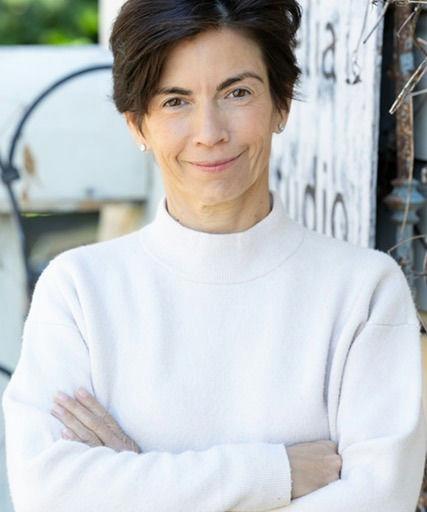
Psychotherapist and Clinical Social Worker Specializing in Trauma, Attachment, and Addiction
25+ years Experience serving LGBTQ clients2 University degrees: BS & MSW4 Specialist certifications & training milestonesLicensed Clinical Social Worker New York
Lisa Arrigo has spent more than three decades helping people understand what trauma leaves behind long after the original danger has passed. A New York Licensed Clinical Social Worker and psychotherapist, her work sits at the intersection of trauma, attachment, addiction, neurobiology, shame, and the deeply human ways people learn to survive.
Her perspective is powerful because it comes from both sides of the therapeutic relationship. Lisa has devoted her career to helping others heal, while also confronting the impact of trauma, addiction, relapse, and recovery in her own life. After more than 17 years of sobriety, she experienced a cocaine relapse that nearly cost her life and left her waking in a Manhattan hospital unable to remember how she had arrived there. That experience challenged everything she thought she understood about healing and forced her to confront a difficult truth: we can have insight, language, and years of recovery behind us and still carry survival patterns that remain active beneath the surface.
That lived experience now sits alongside decades of clinical training. Lisa earned her BS from Trinity University and her MSW from Fordham University School of Social Work, followed by post-graduate study at the Westchester Institute for Psychoanalysis and Psychotherapy.
More from Lisa Arrigo
All episodes → Situaseans PodcastHow Trauma Rewires Relationships (ft. @lisa.arrigo.therapy)Oct 2026Play episode →
 Hearts Entwined PodcastCuriosity Is The Key To Healing Trauma - Lyn Smith & Lisa ArrigoOct 2026Play episode →
 The Sober Fix PodcastI’m a Psychotherapist… and a Sober Addict | Lisa’s Recovery StoryOct 2026Play episode →
 The Accrescent: Bioenergetic HealingLisa Arrigo - Why Healing Is More Complex Than “Just Doing the Work”Sep 2026Play episode →
 Learning To Mom ® Motherhood Podcast for First Time Moms, New Moms and Expecting MothersIn Utero Safety and Maternal Wellbeing | Besties' Bonus EpisodeSep 2026Play episode →
 The One Day At A Time Recovery PodcastHow To Come Back After A RelapseSep 2026Play episode →
 Human AmplifiedWhen Survival Shapes Your Identity and Healing Changes the Story with Lisa ArrigoSep 2026Play episode →
 Trauma Interrupted with Jan BrobergLisa Arrigo's Story • Epigenetics, the Body, and Breaking Cycles of TraumaAug 2026Play episode →
 Leadership Circle PodcastVulnerability Is Not Weakness: The Hidden Strength High Achievers Fear to Show | Lisa ArrigoJun 2026Play episode →