
July 15, 2024
Nick Jonsson: Executive Mental Health Advocate, Author and Ironman Triathlete
Listen
Sound bites
I think we should live a life which is fully doing what we love to do. And therefore, I put my health first.
If I can just save one life here, I will go for it all in.
In this episode
Nick Jonsson and Anne Bonney talk about executive loneliness, burnout, and how to build a healthier, more intentional working life.
- The pressure of chasing achievement can leave high performers feeling isolated even after reaching senior roles.
- A drinking problem, job loss, and burnout pushed him to reassess success and leave the path he was on.
- A friend's suicide turned his personal struggle into a public mission for suicide prevention and support.
- Executive Global Network offers executives a confidential peer space for work related challenges they may not want to raise at work.
- Life coaching, purpose, and planning are presented as ways to stop making excuses and take charge of your life.
Transcript
ShowHide
Automatic captions of the conversation. They can contain errors and do not name who is speaking.
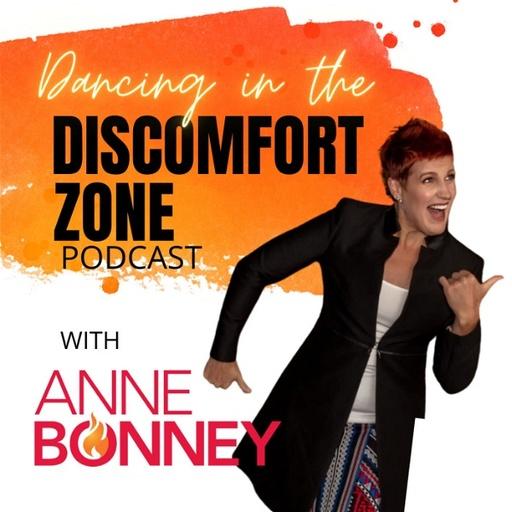
Hello, hello, hello, and thank you for Dancing in the Discomfort Zone with me today. My name is Anne Bonney, and I'm your host. And we're going to talk today about an important thing as we come out of the pandemic, and as we sort of recover from all the sort of what the hell's going on, and the shift in the workforce. And oftentimes, we're overworked now, and oftentimes, we are overwhelmed and burned out. And one of the big things that's emerging, of course, with all the anxiety, the isolation, the stress, is something called executive loneliness.
And this is something that is plaguing executives as they try to keep their businesses running, keep their companies moving, keep their teams happy, retain their employees. This feeling of isolation is significant. And right now, we're talking a lot in different industries about the entry-level workers and needing to make sure that we're covering for them. But this executive challenge is also very, very significant. So this week, I'm welcoming Nick Jonsson to talk to us. He wrote a book called Executive Loneliness, Five Pathways to Overcoming Isolation, Stress, Anxiety, and Depression in the Modern Business World.
And so I'm excited to talk to Nick a little bit about this concept and what we can do about it, because we all need to be satisfied in our workplace, not just the people at the entry level. Nick is a speaker. He's an author. He's an executive coach, but he's also an Iron Man triathlete. So I'm excited to hear a little bit about that and how that perseverance and athleticism has translated to this recovery from executive loneliness and the ability to coach others through it. So thank you for joining us today on Dancing in the Discomfort Zone podcast.
Enjoy. All right. We are Dancing in the Discomfort Zone today with Nick Jonsson. Nick, how are you today? I'm doing fantastic, Anne. Thank you so much for hosting me. No, it's my pleasure. And you're one of those global citizens of the world. So I look for where are you sitting today? Well, I'm actually in Thailand, Phuket today. Last week, I was in Indonesia and soon heading over to Malaysia. So I'm hovering around Southeast Asia. That's a pretty, pretty beautiful place to be the yeah, so I can see. And that's for business, but also for Ironman training, correct?
Yes, I'm trying to combine it. And I don't necessarily like the term work life balance. I think we should live a life which is fully doing what we love to do. And therefore, I put my health first. And that's why I'm living in an Ironman training camp. And actually, the pool you see here behind me is where I will be tomorrow morning swimming. Oh, wow. Beautiful, beautiful place. I love, love Thailand, and I can't wait. I've never been to Phuket, so I look forward to getting out there. But tell me a little bit about your journey and how you ended up getting into the topic of executive loneliness.
Yeah, so basically, you can say that I followed society that set us up for success. First, you have your parents perhaps driving you, and then you have teachers chasing you. They want you to get the scholarships and getting those diplomas and topping classes. And then in the workplace, you have bosses who want to drive you to hit the targets, the KPIs, and with that comes promotions, awards and recognition. And I think I became pretty addicted to that, the success of that. And that was more important to me, because that was what all my mentors and coaches at the time and the bosses were telling me.
But once I hit the top and I was managing director of some of the bigger firms, I realized that I was lonely. I was isolated. So I start to really question myself and question society and asking basically, is this really what it's all about? And I remember a similar feeling as I climbed the ladder and got to that New York City job with the, you know, all that and running around the country, running my directors and everything. And I hated it. I was miserable. And so what did you do at that point? Did you sort of quit and start again or?
Yeah, I basically started then to get some self-doubt as well because I became anxious, worried about that. As it happened also, I was let go from two jobs during this period. Both was a big set up, not only to me personally, financially, but also to my ego. I didn't really know what to say. One time actually, it was because I wasn't performing at my best and being a high achiever, that was very difficult for me to accept. The second time was a merger and acquisition. And then basically in my next job, I thought that rather than wait for being let go again, it's better that I take destiny in my own hands.
And I therefore started to really think and plan that I need to leave this. I need to run my own business and go and becoming an entrepreneur. But that was harder than I thought. And it actually took me one year before I finally handed in the resignation. And after that, things didn't go as planned, though. I had a lot of failures, a lot of projects here and there. And with that, I started then to question myself again. Maybe this was madness. Why did I leave this safe salary for this? So then I had another identity crisis, you can say.
Such a typical, for me, day to day thing as an entrepreneur where it's like, why did I do this? Why couldn't I just have a regular job and have somebody tell me what to do? But that doubt pan way heavy, which it sounds like is what happened. Yes, it did. And I didn't still talk too much. That was the issue. I still was quite isolated with my challenges. I had great friends. I went out playing golf, watching sport, and I was also a bit athletic at the time. I had a good time and so on. But the issues that I was facing first in the corporate world, those were for me to solve.
I didn't want to bother anyone with that. Likewise, when I was in my entrepreneurial journey, when it's even less people around you, I didn't want to share too much with other people, and I didn't certainly ask for help. And therefore, it was so difficult. And again, I was isolated therefore in the corporate world, and perhaps even more isolated as an entrepreneur and solopreneur because then I didn't have anyone to talk to. Right. And it does feel very isolating as a leader, whether it's in your company or in somebody else's company.
You feel like you need to have the answers, you need to support everybody else. And when you're not talking, it becomes very stressful. And I'm sure that got to you at that point. Yes, it did. And it's only by really, really going through these difficult times that I had to find another way. I basically hit what they say the rock bottom. And it was in 2018 when I was really lost. And again, I lost all my fitness then. I gained a lot of weight and I stopped exercising. I traded basically my gym membership for a bar stool, and I started to drink more beer, and with that, I lost my health.
Basically, I started to have panic attacks, anxiety when I woke up in the morning. I didn't feel good at all. And it was only when I really was fed up and I hit that rock bottom, when I found what they talk about the gift of desperation to change. And that was perhaps the first time ever I really started to be honest with other people about my inner feelings and doubts and so on. But from that, then started to grow a new path and a new life for me. I love that. And were you doing Iron Man before this, before 2018? I did, but from 2016 to 18, I took a break because I was not well, physically, mentally and emotionally.
I was not well. I basically just went for the odd little jog, but not much. And I just couldn't because I was so sick. But coming back then and living a life where I'm asking for help and I'm more open, that also meant that actually the training plans that the coach gave me, I didn't argue with them. I followed them rather than trying to find my own path and not asking for support. Right. So things are much easier in all ways of life, also as an athlete when you actually are more humble and open minded and willing to ask for help.
Well, and it's such an interesting parallel, because I remember training for a figure competition, and it was at the same time that I was starting my business. And there are so many decisions and so many challenges and so much stress that it was almost a relief to turn my fitness and my nutrition over to my trainer and just do whatever he said. Like, I don't even question it. I just do the thing. And it's such an interesting piece, though, is so often we, especially as high performing individuals, struggle to figure stuff out ourselves when it's like, there are experts out there who can tell us, you know, very simply what to do.
And yet we try to do it on our own. So I love this. And what was finally that catalyst that made you say, okay, enough, I need to go ask for help, because somebody that's listening might be saying, yeah, I'm there, but I don't know how. So what was that moment and what was your first sort of outreach? Yeah, so taking you back then to 2018, I remember it clearly. It was in April. And basically I was struggling so much and I didn't express it to anyone at that stage. And actually my left foot had become so swollen that I could almost not put on a shoe.
I went to see doctors who did x-ray and so on, and they couldn't find anything. They even checked it for gout, but no one could find anything wrong with my foot. It was actually only later on a psychologist diagnosis as psychosomatic illness. So that was the state I was in mentally. I was in such a deep depression that I could hardly get out of bed at this stage. And it was just something inside me that told me that I will not make it here. I start to actually write my will, my testament, and basically acting like I was suicidal.
But I think I didn't even have that in me. I was just completely hopeless. But people start to question when I start to send to my ex-wife, to my parents, I start to send sheets with documents and bank details and so on. And I signed up for life insurance plan and expensive one and other stuff. People started to question me around me what was going on. And at that time, I met a woman who is today my new wife. And I decided at that stage to tell her a little bit about my feelings, and she immediately dragged me to the doctor and shared what I have said to the doctor.
And after that, dragged me to a friend of ours who had gone through similar challenges a few years earlier, shared my story again. So I was basically exposed three times within 24 hours. And while it was so painful when it happened, I actually had almost like a V-shaped recovery because problem shared is a problem halved. So if you halve my problem three times so quickly, I was already on my path really coming back just those little incidents by just starting to speak up about the issues. Well, and I bet having her kind of take you and say, no, no, I believe in you.
I know you can do better. I, you know, to have that hope kind of thrust at you was probably one of the massive piece of this, this recovery. Yes, absolutely. And then I continued down that path. So the friend who was offering also to help me gave me other phone numbers of people as well who gone through. And I just had to be brutally honest at this stage, you know, and I had to go back and work with nutritionists, get a fitness coach. I had an alcohol addiction. I had to get the support in one of the wonderful, anonymous programs for that.
And as I started, you know, really unclutter my life and get back into wellness again, then I was just feeling the best ever because I never had physical well-being and so on in this state when I actually was open and honest about my issues. And that's the path I'm still on today. I keep looking at myself and I say to all my team members, I have nothing more to prove, only things to improve. And that's the mentality that I want to keep. Well, and it's such a clear illustration of the importance of emotional, physical, and mental, the connection there, and how unhealthiness in one area kind of takes it all down, takes it all with it, and how that impacts everything around you, your job and your relationships and sort of all of that.
Now, is that when you started the Executive Global Network? Because the whole point of that was to assist other executives who may have been in a similar situation, right? Yes, that's right. So what happened also at that stage was another life incident that changed everything again. And I had a good friend of mine who I worked with them, and he had just come back from Mount Everest to climb to the base camp there. He seemed to have it all going for him. I followed him. He created a special Facebook group where he raised money for his charity over his journey and so on.
He had a girlfriend he loved, and it was just so marvellous to follow him. But then suddenly he was gone and he died of suicide, and I just couldn't understand what was going on. I asked all his friends, his family. I remember calling up his brother in the UK to check in to see if he had any idea. And he said he just didn't know. And then I said, well, I went through some episodes a few years, or one year earlier, and this is what happened to me. May I take this opportunity to share my story in the name of your brother, Simon, and try to raise some money and funds for suicide prevention?
And he said, sure, go for it. Simon would have loved it, shouted out loud. And that's exactly the words he told me. And I said, I will make this my life mission. If I can just save one life here, I will go for it all in. And that was then in 2019. I picked up my mobile phone, and I made a short video about this, put up a simple website to take donations. I posted it on LinkedIn, and I went out for a run. When I came back, it had gone viral all around the world, and people were writing in. And within 24 hours, I was on live TV, radio, and they wrote four pages newspaper articles and feature stories on this.
So here from having gone so silent and secret my whole life, it was all over basically the news. And that again changed it. So with also with every single interview and also talking to you today, Anne, I'm also releasing the pain and the shame by being so secret and silent. So that was the whole change of it. And to answer your question, then, yes, the EGN network was ticking there, but I had not really done anything with it until this also changed everything again. Yeah, and reaching out and saying, and I love that you had so many opportunities that were just again thrust at you.
To share the story, because that, and I love that, what was it? Pain shared is pain halved. Is that what you said? Yes, absolutely. Yeah, and I love that. A problem shared, yeah. A problem shared is a, yeah. Yeah, and so the exec, now tell me a little bit about what is the executive's global network and sort of how it helps. Yeah, so I was sort of fortunate when I had my issues that I had a drinking problem because there was also a wonderful communities for problem drinkers where they could support each other and solve the problems with like-minded.
And that helped me tremendously. And then I started to give talks and so on, and everyone asked me the question after, it's great for you that you had a drinking problem. I don't have a drinking problem. So what should I do? Where can I get help? And that question came all the time. So that's when I actually decided to start writing a book about this also, documenting it and interviewing and serving executives around this. So that led me to into writing the book, Executive Loneliness then. But it was at that juncture then when I also thought, okay, I need a community for the non-drinkers then.
And we had an executive global network, which was basically for executives a place where they can go and get support with their work-related challenges. So it's sort of a support group with a work-related focus. Because if I'm thinking back to the days where the problem started, it was often something very small, something in the office, a small conflict, or perhaps it was something, an assignment that I was given or a project that I felt stressed about, and I was too shy to ask and admit that I didn't have the answer.
I didn't want to go to my boss and say I don't know how to do this. So I walked home instead with this pain. So that's what it's addressing. You should be a safe space where you work with like-minded everyone, sign a non-disclosure agreement, and you meet them six times a year for half a day, where you're constantly and fully supporting each other. So that's what I'm now working on in Singapore, Indonesia, and Malaysia. Yeah. Well, and I love that because you brought up a word that can be incredibly isolating and incredibly painful, which is shame.
So talk to me a little bit about how shame came into this, because you didn't do anything wrong. So where does shame come in? Because I think it's a very real player here. Yeah, I think as soon as, you know, if you're in an office environment, you have colleagues. I think if you are the senior leader, to admit that perhaps you're not good at Microsoft Excel, which was actually in my case, that was something that I would find a lot of shame in, and I would try to do everything to hide that, rather than exposing myself and say, hey, team, I don't feel so comfortable with this.
And this was one example, but there were many others because I worked in the medical industry, and I was in business development and sales and general management, but there was doctors around who, you know, who knows the field much better. So I could sit in an operations meeting for two, three hours, and it would be very, very technical. And I just didn't want to admit that I actually sometimes didn't even know what they were talking about. And it was that shame of being exposed, being less than demonstrating that I don't have the answers when I was actually the leader of them.
And I would do it very differently today, but that was me then back about 10 years ago. Well, and I think, and correct me if I'm wrong, but it sounds like having that network like EGN or having somebody to talk to about this makes you realize, oh, I'm not the only one who doesn't have all the answers, which kind of lessens that when you feel like, oh, I'm not the only one who's a complete disaster. Yeah, absolutely. You get that sympathy. And that's, again, going back to all the other support groups. I mean, the support groups for everything these days, everything from social media addiction to gambling to sex, alcohol, drugs, there's some anonymous or 12-step program addressing every issue there.
And the reason for that being is that once you come in there and realize that there's other people who have this problem, then, yeah, indeed, the shame is gone and you feel the sympathy, and then they can help you, because most likely they've gone through it before, they solved it, and that gives you that hope. And that is what helped me, and that is what helped many others. And indeed, coming to discuss work-related problems with like-minded in a safe space, not having your boss or colleagues in there, not being scared to be judged is something that really is helpful.
Yeah, again, and I love that separation. Like, I don't have to share this at work, but I can find that support that I need. Now, have you noticed any difference with all the executives that you work with between a woman's response to this and a man's? I'm just curious. I just haven't... Is this more of a male issue, or do you kind of have an equal split? Yeah, I did research that for my book, and as it's shown, at least in my research, was that women tend to have a few close friends, who they were a little bit more open with.
Men were more typical, like me, having good friends go watch sports or play golf or do something weird and have a laugh with, but perhaps not opening up about the real challenges. And that was exactly me. I remember leaving office, having a lot of pain on my chest, going to see my friends, having a laugh and a good time. But then, of course, once I said goodbye to the friends, the pain was still there. So that is the issue. And I'm not the only one. Men struggle with this. And therefore, I also run now a men's support group, where we practice what I call the vulnerability muscle, which is almost like going to the gym and using your muscles by opening up.
We pick a different topic every week. I start by lead sharing something about me, and then we all share on that topic. And it can be anything from shame or how to leave resentments behind you or guilt or anything at all. Any topic every week will be something. But just for the sake of learning to trust each other and that it's okay to share some of the issues we're going through. And do you think there's more of a cultural shift? Because I think this is, you know, globally, men are expected to kind of squash the feelings and just push on through.
Do you think there's a cultural shift happening for guys so that they're not having to squash it all down anymore? Or do you think those are just pockets starting to form? I think it's still early stages, at least in Asia. I can see that Westerners are starting to be a little bit more open. I think the pandemic helped this conversation a little bit, and it's becoming more common to have coaches, to have mentors, to have also to belong to kind of peer groups, mastermind groups. And therefore, it is changing, and it's a very positive shift.
Yeah. Yeah, I love that. And one of the things that I struggle with when I look on social media and on LinkedIn is this hustle culture is so pervasive and sort of the, you know, if you're not working harder than the other guy, he's going to beat you. And like this, and I find myself in this constant sort of heightened stress response to like, oh, I should be working. I should be doing this. I should be doing this. So my downtime is not as effective because there's this constant, I should, should, should, should, should.
Where do you think this is playing in? And do you think we have some movement towards that, a lessening of that hustle culture so people can find a little bit more balance? Yeah. So I did a shift myself about a year ago, a little bit more to move out from Singapore as my permanent place, simply because it's quite expensive. I moved to Thailand, Phuket, which is sort of my back office now, but it's a lot cheaper. So my financial insecurities went down a lot and I'm running a life, which is a little bit easier financially.
Then the pressures are less, and therefore I don't have to drive so hard. Plus, I'm quite strict and disciplined with my white spaces in my calendar, which is my trainings. And I do physical exercise every day with my training group here in Phuket, where I live, and I schedule this before anything. And it's very rare someone is able to negotiate with me to block that. And I block this actually for the rest of my life. I have my training slots blocked in my calendar and recurrence for the rest of my life. And I prepaid my triathlon coach for the next two years to make sure I have the plan ahead of me.
Well, and I think this is the key. And what you talked about, like, forget work-life balance. Let's just have a life. And figuring out what are my priorities, what do I need to do, and what can I sacrifice in order to be able to have a life that I want? And where are my boundaries? And I think that's such an important piece. And you've built very intentionally physical activity into your life, and that healthy piece, because you know what happens when that goes away. Exactly. And with the physical exercise also, it would be very easy for me.
I'm an introvert, so it would be very easy for me to just go out training by myself. But I base myself where the training camp is, so I can join the swim, the running, and the cycling in a group, because otherwise I could easily just isolate at home, work all the time, be very comfortable with that. But it doesn't mean that it's the best for me. I need to get out and meet other people and communicate with other people, especially working quite a lot from home in front of the computer. Therefore, having something which I'm passionate about, which is then cycling and running, especially.
You then join the clubs or the groups for something you're passionate about. Then, since we don't have perhaps the traditional offices anymore, we don't get the same social interaction. So I would say it's up to all of us to be very disciplined and realize again that we need to schedule and make plans for these before work, because I would say looking after ourselves should come first. Otherwise, we're not showing up at our best anyway. Yeah. Well, we look at the Ironman Triathlete and the discipline required to do 140.6-mile race as an extreme, but I don't think it needs to be that extreme.
You know, these people are like, well, I don't want to do an Ironman. Well, great, fine. Join a 5K group or join a walking group or go to the boxing gym. You know, like finding these little pockets of socialness with the fitness feeds multiple parts of not only your physical, but your mental and emotional well-being. Absolutely. And I think most sports are quite inclusive. We don't exclude anyone here. We have a swimmer American man. He's 70 years of age. He joined our swim groups and swim academies. And that's for him is, you know, it gives him a lot of fun, both swimming in the ocean and in the pools with some of the best athletes.
We have others who come for the run, everything from young teenagers to also, you know, approaching 70 years of age, who can come along and mixed with some of the best pros in the world, mixed with world champions and mixed with, I'm training now with the young, the best young triathletes in Southeast Asia who want to qualify for the Olympics and Asian Games. And they're not excluding anyone. And I think that's the beauty again of sport, that it is inclusive. And such an important piece of being able to buy into that.
And so what do you tell people, sort of last question here, what do you tell people when they start in with the excuses? Because excuses, I think, are one of the main things that keep us from getting healthy, sharing our story, sharing our challenges, doing the things. So what do you tell people when they come up with the excuses? Well, I would say to recommend anyone then to go through working with a life coach and really go deep inside themselves, identify the life purpose they have, and then craft the journey of their life with that in mind.
And take charge of your life, because if you don't plan for your life, someone else will plan for you. That's what I would say. Well, and it's miserable when you end up on the, you know, and I love intentionality is like one of my favorite words, because it's like, let's do this life on purpose. What we want. We don't have to just ride around getting knocked into things. We can, we can create a life that genuinely is what we want. It's hard. It's scary. And it is so rewarding. Absolutely. What's your next race, Nick?
It's in Malaysia, May 16 or 17, I believe. Yes. Looking forward to that. Half Ironman. Five, five or six weeks. So you're, you're hard in the top end of your mileage right now. Yeah. Yeah. I'm really, really looking forward to it. That's awesome. Well, best of luck to you. Thank you for your time and your insights. Executive loneliness, five pathways to overcoming isolation, stress, anxiety, and depression in a modern business world is the book. nickjonsson.com is the website. Anywhere else people can get in touch with you.
You're quite a voice on LinkedIn, too. Yes. LinkedIn. They can find me there. Otherwise, also on Amazon, the book is available as a Kindle book, hardcover, but also audible. Perfect. I will go ahead and put all those links in the show notes. Nick, thank you for your time. Thank you for your insights and best of luck with your training. Thank you, Anne. I love it when somebody's challenge becomes their life's work. Because as Nick said, I think that's what really creates that life balance, right? Not just work life balance, just life.
My life is balanced. I feel good about what I'm doing. I feel strong about the contribution I'm making to the world. And this concept of executive loneliness, such an important thing for people who may be struggling with it to realize. But I think loneliness in general, executive or not, is a significant challenge right now. And I love Nick's intentionality to say, okay, what do I need to do to start putting myself in the way of things that are going to help me get healthy, help me get happy, and help me have this life that I love?
So I am thrilled to have shared this episode with you. Grab the book, jump on Nick's website. He's a heck of an athlete, I tell you. And very exciting professional as well, doing great things in the world and helping executives to be able to be strong, be healthy, and truly make their companies go well. So check it out, and we will bring you more great dancing next week. Thanks for joining us, everybody. Take care.
About Nick Jonsson

#1 Global Thought Leader on Executive Loneliness, International Bestselling Author and TEDx Speaker
900+ EGN Southeast Asia membersTop 2% Ironman athletes worldwide2026 GHP Most Empowering Mental Health Leadership Advocate#28 worldwide Global Gurus Top 30 Coaching Professionals
Nick Jonsson is widely recognized as the world's leading authority on Executive Loneliness. His pioneering work has earned him a dedicated Executive Loneliness Wikipedia page and international recognition, establishing him as one of the world's most respected voices on leadership, vulnerability, mental wellbeing, and authentic connection.
Ranked #28 in the world among the Global Gurus Top 30 Coaching Professionals, Nick is a TEDx speaker, international bestselling author of Executive Loneliness, Professional Certified Coach (PCC), Certified Master Coach (CMC), qualified Counsellor and Psychotherapist, facilitator, and certified Team Psychological Safety practitioner.
For more than two decades, Nick held senior international leadership roles, leading businesses and high-performing teams across Asia. From the outside, his career reflected success. Privately, however, he struggled with burnout, alcohol addiction, and overwhelming loneliness - experiences that ultimately became the turning point of his life.
Rather than allowing those challenges to define him, Nick rebuilt his life through recovery, vulnerability, discipline, and purpose. Today, every keynote, workshop, coaching engagement, and counselling conversation is grounded in both professional expertise and lived experience.
Nick works globally with executives, leadership teams, founders, and organizations through keynote speaking, executive coaching, counselling and psychotherapy, leadership facilitation, and Team Psychological Safety training.
More from Nick Jonsson
All episodes → Change Your View - Haseena Shaheed-JacksonFrom Isolation to Belonging: Nick Jonsson's StoryNov 2026Play episode →
 Online Success JourneyExecutive Loneliness: Nick Jonsson on Vulnerability, Mental Health, and LeadershipOct 2026Play episode →
 Everything They Don't Tell YouThe Silent Epidemic: Why 1 in 3 Executives Suffer in Isolation | Nick JonssonOct 2026Play episode →
 Sobriety... Now What? with Stuart ClineEP. 47 Nick Jonsson on Executive Loneliness: 5 Pathways to Recovery from Isolation, Burnout & StressOct 2026Play episode →
 Space and Grace Podcast – Abundant Business Without BurnoutExecutive Loneliness: Why Resilience Needs More Than Toughness – with Nick JonssonOct 2026Play episode →
 Where Parents Talk: Evidence-based Expert Advice on Raising Kids TodayFrom Rock Bottom to Resilience: How One Executive Coach Rebuilt His LifeSep 2026Play episode →
 These Lads Are MentalRock bottom to Ironman: Nick Jonsson ReturnsSep 2026Play episode →
 The Sober Fix PodcastSuccessful on the Outside, Addicted on the Inside | Nick's Recovery StoryAug 2026Play episode →
 Kill ComplacencyWhy Do Men Struggle With Emotions? with Nick JonssonAug 2026Play episode →