
March 17, 2022
Graham Brown: How to Build Your Brand
Listen
In this episode
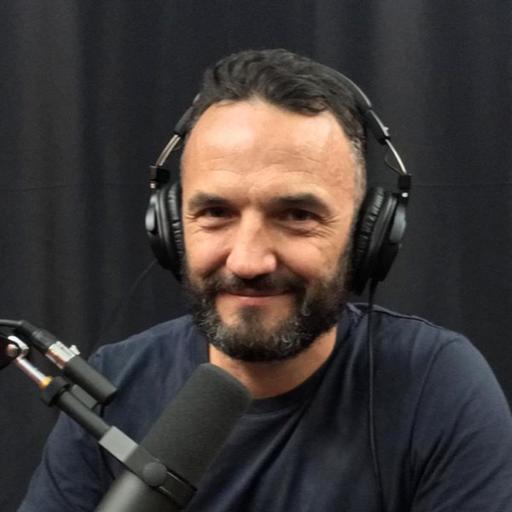
Graham Brown joins Learning from Smart People to talk about brand building, podcasting, and how storytelling helps people and companies connect.
- Growing a brand through storytelling instead of features and specs
- Everyone has a story worth telling, even when imposter syndrome says otherwise
- A short line or analogy can carry as much power as a long story
- Great storytellers reduce uncertainty by connecting the unknown to a familiar feeling
- Podcast guesting works best when the host’s audience matches your own
Transcript
ShowHide
Automatic captions of the conversation. They can contain errors and do not name who is speaking.
Hey, everybody, and welcome to Learning from Smart People. I am your host, Rob Oliver, and I will thank you for being with me today. I will apologize, I am a little bit raspy. I have a man cold, and which basically means I have a slight cold, and I'm pretty sure I'm going to die from it. That being said, you are going to learn today from a smart person. His name is Graham Brown. He is a podcast authority, author, and entrepreneur. He is the founder of an award-winning podcast agency. Listen, Graham, welcome to the podcast, man.
Rob, it's great to be here with a fellow podcaster. Absolutely. All right, so I need your help in proper pronunciation of your company name. Pikkal. Pikkal, all right, that's fine. Google or Apple. We're in good company. Wonderful. I was looking at it, and I thought, you know, I asked how to pronounce your name. I asked all of these wonderful things. And so it's P-I-K-K-A-L. And we'll go with Pikkal. So let's start here. Tell me a little bit about like your backstory. How did you get, how did a guy from England end up in Singapore doing podcasting?
Yeah, well, thanks, Rob. I mean, it's great to be here. You know, we were chatting off air about podcasting and, you know, how we sort of pushing the boundaries. And hopefully we're going to talk a bit about your marathon as well today. We've got to give props to that. But I think, you know, it's a very new space. Everybody's trying different things, learning different ways of, you know, what podcasting can be and can do for people. I think ultimately it's about storytelling, isn't it? It's about giving people a voice, whether that voice is people who don't have a voice, normally in traditional media, or for many of us who feel our story's not worth telling, which I feel is that imposter syndrome, isn't it?
We look around and we see people who have, you know, amazing stories, you know, the Steve Jobses of this world, and we think, oh, well, who am I to tell my story? But everybody's got a great story. I mean, myself, I come from England, but I haven't lived there for, well, over 10 years. 2012, we left, we sold all our stuff and packed our lives into three suitcases, like me, my wife and my son, who was six at the time, and then we weren't traveling. And what Rob was originally supposed to be a few months turned into six years.
We ended up traveling around the world and ended up in a few interesting places. But here we are in Singapore now. I mean, we moved to Singapore in 2018 to start a podcast business and, you know, through the wonders of technology, we can be speaking from Singapore to Pittsburgh. So how about that? Here we are today. Yeah, it's fantastic. And so tell me a little bit, because I completely agree with you. So many people feel like their story is insignificant or they are insignificant or, okay. So let me, I think I've told this story on the air before, but I'll share it with you real quick, okay?
So I thought I would like to be the most famous Rob Oliver in the world. And I started off to see how I could do. And then I found out that one of the producers from The Simpsons cartoon show, his name's Rob Oliver. And I'm like, okay. Oh yeah. All right, that kind of puts a damper on it. So I thought, okay, maybe I'll be the most famous Rob Oliver with a disability, but turns out there is a Paralympian from the UK who happens to also be named Rob Oliver. And then- So what do you need to do, Rob? So I figured I've got four bestselling books.
I'm the father of triplets. And then as you mentioned, and I had not announced this yet, but today is the grand unveiling of this. On May 6th and 7th of this year, I am going to be attempting to set a world record for the longest podcast interview marathon, which I'm really excited about. But I have found that, you know, you kind of have to niche down and down and down until you, like I become the most famous Rob Oliver who has a disability and is the father of triplets and has a Guinness World Record. And if I niche far enough down, then I'm really actually somebody special.
But that being said, when I share my story of acquiring a spinal cord injury, of learning what it means to be human, learning what it means to live with limitations, that's a story that everybody can relate to because we all have to deal with that. And I think that that really is the message that you're sharing that says, and it's really the focus of this podcast. We can learn from everyone. And it doesn't mean just on an academic level, it also means that when people tell their stories, we empathize with them, we understand them, and we can learn from their experiences because we've had something similar because we're all human.
Does that resonate with you at all? Yeah, we all are living our own version of the hero's journey. Going back to the Joseph Campbell work, the hero with a thousand faces. If you think about, you look at media, everything from Marvel to the heroic myths, the Greek myths of old, we look at this and we have been indoctrinated with this idea of these journeys that everybody is, these heroes are going through. And the problem is that we, you and I, Rob, have grown up in an era, in our younger years where media was very much about celebrity and about famous people.
And we weren't of that world. These people who are probably good looking and rich and endowed, we weren't of that world. And so now we're in this world where we have to pick ourselves to tell our story. And that culturally goes against the grain for a lot of people. I have to pick myself, I have to stand up. Who am I to tell my story? But I'd put it to you, Rob, and all your listeners as well, is that in our own ways, we've all lived a hero's journey of some sorts. I'm sure there's a guy who left a bank and started his own business.
That in itself left the world of comfort and took risk, went on the rocky road of adventure. That's a hero's journey in itself. He can imagine the conversations from his colleagues and coworkers that are all about, oh, you shouldn't do that, or think about your pension or your 401k or whatever it is, or your kid's education. And then there were people who maybe left a country and moved somebody else somewhere else in the world against the advice or the well wishes of other people. All of us have in some point in our lives faced our own versions of those journeys, some of them more extreme.
You know, yourself, Rob, as well, like adversity that you've overcome and turned around to such positivity as well. And so I feel that the key part of podcasting in particular is giving a stage so that people can share these journeys and these stories and that they may not think they're heroic in any way, but to other people listening, they may find something in it and thinking, wow, that person spoke for me. Their story, that's the niche part, isn't it? Is that that story is me. It may not be relevant to somebody else, but their story is me, but maybe two or three years down the line.
So it gives me hope. So I'd say to all the audiences that we all have stories worth sharing. It's just that maybe we don't have the practice of sharing them. Yeah, we don't have the practice and sometimes we don't have the platform. And so I think that that's really important. And that's really what podcasting is about in some ways. It's giving folks a platform to share what's going on with them. I want to transition a little bit. We were talking a little, what we were talking about sounds like sharing personal stories.
And from a business perspective, where does storytelling fit into building a brand, in all of the marketing and business building aspect, like where does storytelling fit in there? Yeah, we tend to think storytelling is once upon a time, don't we, or our personal narratives. But look at where we are today. People follow people, not brands. That's the reality, that we identify with an individual, and identify with Rob's story. I get into the backstory, hear about that sort of heroic arc that you've been through. And then from that, that is the doorway into business.
So it's very much the same with brands as well, is that the people within those brands and the stories they tell become the experience of that brand. You look, for example, at Microsoft. So there's Microsoft, the brand, and then there's Satya Nadella, the CEO, and even if you were to take it down to the level of social media, if you look at, for example, LinkedIn, which Microsoft part owns, the posts that they put on LinkedIn. So Microsoft's fan page has something like 18 million followers. So there's plenty, there's enough.
But the posts that it puts out there are measured in single digits of likes, which is surprising, really, given the resources, because they are very standard. It's stock photography, and it almost looks like a display ad. So people aren't interacting with that. But then you look at like Satya Nadella, for example, the CEO, the post that he makes, similar kind of issues, but he'll personalize it a lot more. And he'll talk about his story, and even his children as well. And he'll get thousands and thousands of likes.
And you think about that, that to me is the reason why we need to tell more stories. We need to, in business, unlock the human potential of our brands, because for so long, we've locked it in for fear that these human beings inside our brands are potentially a cause of a PR crisis. If they say something, what happens if we give these people tools to tell their stories? That's going to be hell let loose. That was the very traditional commander control view of branding, right? But we need to move away from that pipeline view of branding and move into building platforms where we can curate these conversations and empower people to tell stories and give them, importantly, the green lights to go and tell stories, because it's okay that you can speak in public.
Storytelling, executive profiling or public speaking, it used to be a privilege in these companies. You used to have this clearance that only you could speak, but that has to go away. Storytelling is everybody's business. And what is more authentic and empowering than hearing people from all different levels of any organization speak out and talk in a human way? That's the future of branding. Yeah, it's so interesting because it sounds to me like what you're doing is taking the Apple Mac concept and taking it to the next level.
Because it used to be when you were advertising computers, it was all about numbers. It was about storage and CPU speed and screen size and hard drives and all of those things. And Apple, if you look at an Apple ad for a Mac or a MacBook, there's no numbers, there's no nothing. It's a bunch of colors and people and all of that kind of thing. And you're saying, okay, it evokes a certain emotion and a certain experience. And then you're taking that to the next level to say, okay, when you're hearing the Steve Jobs story, when you're hearing the story of what people are doing with their Macs, now that's another level, even beyond just moving away from the numbers and moving towards emotions.
Am I correctly understanding you? Absolutely. Emotion is the key word here, Rob. I think it was Maya Angelou, the civil rights activist writer, who said that people will always forget what you told them, but they'll always remember how you made them feel. You think about every single presentation that we've sat through, and most of them probably are completely forgettable. And some podcasts as well. But it's the feeling, isn't it, that we give people. And Steve Jobs obviously was a master at this, and we can learn a lot from him in storytelling.
We don't have to be him to be as good as him, but it's definitely a skill that it can be practiced. He wasn't naturally a confident guy. So people say, oh, it's okay that Steve Jobs can talk about the Mac, like you just said, because he was this natural storyteller. Well, it doesn't exist. We've all had to work on this, right? There's a great scene from one of the Steve Jobs movies, but it's sort of apocryphal, where he stands up and talks about the launch of the iPod, which was really the device after the Mac, which really changed everything.
And you've got to bear in mind the iPod was competing against Microsoft Zoom at the time, and the Microsoft Zoom, who remembers that? It's gone. But it was the iPod killer. It was marketed as this sort of... Like you say, with all the features, look at the CPU speed and how many... All this kind of stuff. It looks interesting to trade people, right? But Steve Jobs knew that that didn't sell to most people, and he stood up when he launched the iPod, and he said, you know, this is a tool for the heart. And if you think about that, that one line is a story.
You know, stories don't have to be, you know, trilogies, you know, these epics. They can also be one line. But the stories we tell about ourselves, the stories we tell about our companies and what we do, they could just be one line or even one word. You know, an analogy, you know, a lot of religious texts are based on analogies, right? And you can use that as well. Because if you, for example, if you stand up in front of people and say, it's a tool for the heart, if they understand what a heart is, an emotion and songs, and, you know, it was our song when I met her, you know, that was our college song, you know, or that song when I'm sitting alone on a plane going somewhere, it's the song that brings me to tears, you know, all these kind of things.
We know that, we connect with it. Once you get people to buy into that, then they also buy into the next stage, which is your product or service. So, you know, a key part of storytelling is creating emotion in people. Effectively, what you're doing, Rob, is you're, and this is what great storytellers do, is you're taking away uncertainty. Now, we're all scared of the unknown. That's just human beings. We're scared of the future. We're scared, we're fearful of what we don't know. So what a great storyteller can do is they can connect that unknown future and anchor it in a known experience, such as an emotion, or an analogy, for example, that that is a tool for the heart.
Okay, so an unknown object, I'm connecting it to this feeling that you have about it. And that's really a good example of storytelling, and it can be very, very short, and it can be very, very subtle, but it's extremely effective at influencing people. You know, and I mean, that's not, it's not really even a story. It's just a, it's an explanation. But, okay, you brought up the Microsoft Zune, and I have to tell you this story, okay? Back in the days when those, they originally came out, I was, I'm a numbers guy, I'm a, you know, like I need to know.
So my wife said, I want one of those music things. And I said, okay. So I said, like, how much storage do you want on it? How, and I started to ask her all of those questions, and her answer to all of them was, it has to be pink, okay? And so I went through, and I did all of this research and trying to find out what was the best, and I literally finally came up with a Zune, and it had all of the things. But it wasn't until I found one that was pink before I knew, okay, I can actually buy this. Because it sits around our house now as kind of a memory of back in the day.
Right? But it's that understanding that to the common person, what is important to me as a technical person doesn't mean that much. It's not about the storage, it's about this thing that does what I need it to do, it plays music, and it looks like I want it to look, it's pink. That's what's important to me. Don't bore me with the details. It's a super interesting way to approach things. So let's talk about this a little bit, because you've come on my podcast, and we're talking here, and you're sharing insights, you're sharing stories in some way.
If someone out there is saying, okay, I think this might be a good idea for me. I think I've got a story, I've got a brand, or let's start maybe from the step behind it. I have a brand that I want to build, and I think I would like to utilize podcasts as a way to do that. Can you give insights, A, into developing your story, and B, into deciding what podcasts to go on, or what podcast route to pursue with telling that story? I think those are two doozies of a question. That is fine. I mean, this is what people ask, right?
So yeah, break it down. When I look at podcasting or any kind of brand building, you need three things. You need a stage, a story, and a system. And the stage of choice here is podcast. The story is the narrative that you're going to build over time, and the system is really keeping yourself in the game in the long term, because you can go at a podcast with a bit of motivation wind in your sails, and then you can give up after six episodes. You need to have a system in place. Otherwise, you're not going to see the results.
It's a long term game. So let's go back and look at podcasts as an option for you to do this. Four or five years ago, I would have said, yeah, great, go and start a podcast, because the world needs a stage for that conversation, the conversations that matter. Maybe there are not enough of them. Maybe there are not enough stories told about the people in the industry or whatever it is that the conversations that you cover. So therefore, start a podcast and create it. Today, I will take a slightly different approach because of what's happened in the last couple of years.
In the last couple of years, obviously, we're well aware of how our lives have changed. And there's been an explosion in podcasts. People have started podcasts as a great way of reaching out, a great way of connecting people. In a world where we aren't connected as much as we used to be, right? What a great way of having these conversations. Today, I would say go into it by guesting on other people's podcasts first. So it's a great way for you to build an audience and then roll that audience up into your own podcast.
Because what's changed now, Rob, is that compared to four or five years ago, it's getting a lot easier to produce a podcast and a lot harder to promote. Meaning that you can't just create a podcast and find audience anymore. It doesn't happen. It's not build it and they will come. In fact, it's getting very hard just to maintain audiences. And the real focus now is like, okay, we understand all the tech. We've got Zoom now. I mean, how easy is it? Everybody can use Zoom. We've got all that. Everybody knows how to publish a podcast if you can just point at Apple or Spotify.
The challenge now is growing an audience. So I would say to anybody thinking about this is that go into it in an agile way. And that there's two parts of that. The first part of being agile with podcasting is leverage other people's audiences, get onto their podcast, learn the craft from them, and build up some great connections with podcast hosts who, by the way, make great guests as well. You know that they're set up, they've got the mic set up, they know how to do it, they're well behaved, they have audiences. So go into it from that perspective.
And the second part is about your content, your story. You know, storytelling is never a case of having it perfect out of the gates, right? Off the bat, is that you need to go into it in an agile way. Meaning that you need to get on stage, you need to practice. You know, the first podcast you did, Rob, the first podcast I did, we probably cringe a little bit when we listen to it. It's like, oh no, did I really sound like that? Just like the first public speaking you ever did, right? You're always going to be nervous and a little bit shaky.
It's the same with podcasting, you want to get through that. And every time you do a podcast, you speak to people, and you get feedback. And you refine your narrative, just like a stand-up comic would, right? You get on stage, you go and do a tiny little dive bar with 10 people in it. And you practice your material, and some of it bombs, right? But some of it works. And then you roll that up and constantly refine and refine and refine. And what I call agile storytelling is you perfect your material. And that's how I would approach it, is that, you know, don't get too hung up on finding your why for a podcast.
Like, oh, what's the big idea that I'm going to talk about? Often people don't have it. You find your start, and the why will become apparent. The why will be these connected dots of all these different conversations that you have, and you'll make sense of it. You'll gain hindsight, you'll gain perspective, you'll gain context. So don't let a lack of having an amazing idea for a podcast stop the show. Just find your start. So go out at Adger, and be open to feedback, and commit to the long term. Yeah, and I really like what your thought is, Aaron.
The thought is, leverage other people's audiences, okay? So you're going to start off, and you get your friends and family to listen, and whoever else you're connected with on social media. But then to find... But I would suggest you need to be cautious about where you're going. Because if you are on the wrong podcast trying to promote something that doesn't fit, it's going to be counterproductive. Do you agree with that? Yeah, yeah. There's four million podcasts in the world today. So we have a lot of choice. The good thing is, is there's lots of tools, and there's lots of data on who to target.
And increasingly, a picture of a successful podcast is emerging. So, you know, we can see, for example, that Rob's done so many shows now, and he has a different podcast. We can develop a picture of you and your avatar and your audience avatar. And the question is really, does Rob's audience avatar match my audience avatar? You know, the people I'm trying to reach, is there a big overlap with the people Rob's trying to reach? You know, can I speak to their pain points as well? So that's really important, is, you know, a lot of people go out podcasting, especially guesting, is just spamming everybody and hoping for the best.
You know, you only have so many hours in a day, but it's much better to spend a bit more time working out who is talking to the same people as you. Because, you know, those audiences will become your audiences. You know, one plus one equals three in podcast audiences. That's the magic. It's mathematically not correct. No, but it makes sense. And as a podcast host, I can't tell you how many pitches I get from people. And I'm like, you have obviously never listened to my show. And what you did was you put together a formula email, and it just inserts the name of my show at the beginning.
You know, I love what you're doing with Learning from Smart People. And then the rest of it is just... And it's like you have no idea what's going on here. And so when you pursue your podcast guesting, if you're going to do it yourself, do your research, and there is nothing that will get you booked quicker than a good personalized pitch that says what it is that you bring to that podcast audience and how they can benefit from you. I don't care as much about your qualifications. I don't care as much about what I want to know is what is my podcast audience going to learn from you?
Do you agree with that? It's just such a turn off, isn't it? Getting those templated emails. They don't have any respect for you or your time. What are they going to bring to your audience if they do get on your podcast? And here's the thing is that, you know, you're going to sell so much more in the long term if you allow people to connect with you at the human level as opposed to come on to a podcast and just continue that pitch. People don't want that. They can get off the website. You know, why am I sitting here listening to a pitch?
We smell the BS like when people turn up and do that. We don't want it. But what we do want is the human stories, right? And that's what we connect with. Absolutely. So leave the pitch behind. Yeah, if you don't force it, you give it. And the more you give away, the more comes back to you. Listen, Graham Brown, thank you so much for being here. If people want to learn more about you, where can they find you? What's the best way to connect with you? Yeah, just go to the website, Pikkal, which is pikkal.com. Wonderful.
I will put that in the show notes and make sure that people head over there and connect with you. And hopefully, they will be able to learn a lot more about what you are doing and possibly working with you. Awesome. It is time for three questions to establish your humanity. Are you ready for these, my friend? You're in the driving seat. Do your worst, Rob. If you had a warning label, what would the Graham Brown warning label say? A warning label. Oh, wow. It's got to be something like, he asked too many what-if questions, so be prepared.
So, are you a what-if person, then? Well, like, you know, I'm the kind of person that says, like, why do we have to do it like that? And, you know, even from, like, you know, when I was knee-high to most adults, I was like that, why, why, why? And that, for some people, gets them into trouble. But I think in the same way, it can be, you know, without those people, we can't make any progress in the world, can we? Why does it have to be done like that? Why can't we do it differently? That's the warning label, because it's an acquired taste.
Some people hate that. Good enough. What celebrity would you most like to meet at Starbucks for a cup of coffee? Celebrity. I'm not a big fan of celebs so much, like the Hollywood celebs, Rob. I would say, I don't know, it would have to be somebody like an author or, you know, somebody who's doing something else in the world, actually making something. But who would I like to meet? Celebrity, as in a famous person in any field or, you know, someone that would be known. Yeah. I would like to sit and have a conversation with Malcolm Gladwell, the author, because he's just a bit eccentric, and I think it would be an interesting conversation over coffee.
I do like his books. I read his books and I just think, you know, especially the last one, Talking with Strangers, I thought was fascinating. So again, it asked too many what if questions in my own head. No problem at all. Okay, so you're living in Singapore, and if you're going out for dinner and you are not eating native Singapore cuisine, what is the foreign food of choice in Singapore, if that makes any sense? Oh, there's so much, because where we are geographically, we've got access to so many different foods.
Obviously, there's Chinese, Japanese, Indian foods. I'm a big fan of Indian food for me, especially South Indian food. So I spent a lot of time in India, I set up businesses in India, and the South Indian food, very mild, very balanced, a lot of vegetarian food, but it's amazing. There's so many, like if you really want a recommendation, try the idli dosa. It's like a steamed rice dumpling, which they serve with this small sort of sambar curry, and you have it for breakfast. It's amazing. Wonderful. I'll give you my recommendation.
Recommendation duly noted. Graham Brown, thank you so much for being with me today. You are indeed a smart person. We have all learned from you. To my audience, thank you for being here. I hope you enjoyed this as much as I did, and I will remind you that when you stop learning, you stop living. Have a great day, everybody.
About Graham Brown
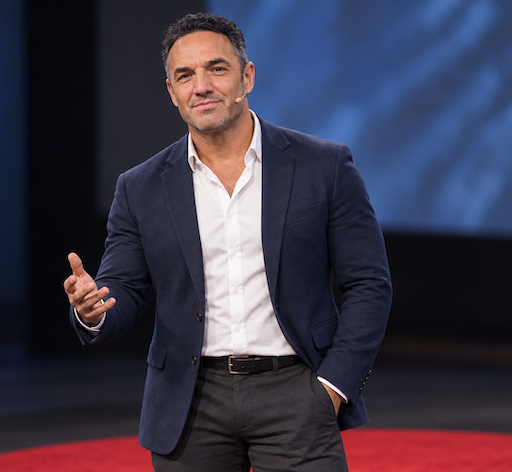
Author and Podcast Guesting Specialist for Corporate Leaders
2001 Founded mobileYouth16 books Published author250+ clients Served across 60 countriesUniversity of Sussex AI & Cognitive Psychology graduate
Graham Brown is an author and founder of Podcast Guesting Pro who helps corporate leaders, founders, and storytellers get booked on aligned podcasts and build thought leadership.
He began his career studying youth mobile behaviour and founded mobileYouth in 2001 to understand youth marketing and mobile culture; that early work serving clients such as Nokia, Vodafone, MTV, and Disney shaped his focus on audience insight.
Over time he moved from youth research into audio after seeing business leaders struggle to communicate authentically at scale, which led him to found a full-service corporate podcast agency and develop programs to train hosts and producers.
His route into podcasting combines formal study in Artificial Intelligence and Cognitive Psychology at the University of Sussex and Entrepreneurship training at Harvard Business School Online with decades of client-facing agency work.
He helps corporate leaders, startup founders, and storytellers find their voice. He leads Pikkal & Co, an award-winning corporate podcast agency, and runs Podcast Guesting Pro.
He previously hosted Asia Tech Podcast and previously grew mobileYouth to over 250 clients in 60 countries; his agencies operate from Singapore with partner studios across Australia, Austria, Canada, Croatia, Ireland, Sweden, the UAE, the UK, and the USA.
More from Graham Brown
All episodes → Office Hours with David MeltzerJosh Chodniewicz, Gary Coxe, Graham Brown | Office Hours #621Jun 2024Play episode →
 The High-Performance CEO ShowEpisode #76: The Future of Leadership: AI Innovation, Storytelling Mastery, and Human Connection with Graham BrownMar 2024Play episode →
 The Leadership Communication Show with Michael PipernoInterview with Graham BrownJun 2023Play episode →The Leadership Communication Show with Michael PipernoThought Leadership with Graham BrownJun 2023Play episode →
 Rise | Evolve Leadershipevolve | eps 50 | Graham Brown, CEO | Pikkal & Co.Feb 2023Play episode →
 Limit Break StoriesGraham Brown | The Power of Storytelling for Building a Strong BrandJan 2023Play episode →
 Coffee With CoachesGraham Brown - How the Science of Stand-up Helps Jumpstart Your Story | Conversations with Coaches | Boxer MediaJan 2023Play episode →
 Speak With PowerTransform into a Magnetic Storyteller with Graham BrownDec 2022Play episode →
 Coaching CallGraham Brown - The Digital Transformation of Communication & building your brandDec 2022Play episode →