
June 25, 2025
Saul Cohen :: Building Wealth for Entrepreneurs
Listen
Sound bites
The biggest constraint in business is always going to be the people.
You want the business to be able to sustain well past you being there. You get hit by the bear truck tomorrow, you want this business to be situated and set up where there's going to be a little bit of a disruption naturally.
In this episode
Saul Cohen talks about helping owner managed businesses build wealth, improve their value, and prepare for exit through tax planning, acquisitions, and investor thinking.
- Cash flow and strong teams are the foundation of healthy businesses and better financial results.
- Owner managed businesses need tax planning, exit preparation, and strategic acquisitions before a sale.
- Quarterly reporting and reliable financial records help avoid deal failures.
- Recurring contracts and recurring services can raise a business valuation.
- A business should be able to keep going after the owner steps away.
Transcript
ShowHide
Automatic captions of the conversation. They can contain errors and do not name who is speaking.
The Optimal Life. So I saw you were the captain of your high school basketball team. Yeah. What a way to start. Yeah, absolutely. I loved it. So I played center. I mean, it was a Jewish school team, and it's based in the UK. So I'm not that tall. I was going to say playing center, playing center on the Jewish team, you're about 5'7, I would assume. Yeah. I'm 6'1, but it was all right up until we got to about 15. Then when we hit that 15, 16, my job got an awful lot harder. What is that in our genetic bull, Saul, that our people like I'm 6'2, my brother's 6'2, 6'3, my father's about the same.
We're pretty much taller on the taller side of the spectrum, but man, I'll tell you what, our people did not get blessed with length, we'll call it. Yeah. We got lots of great things, but absolutely no height. No height at all. Yeah, I saw that that's interesting stuff. So you're located in the UK. Yeah, that's right. How's the, what's going on? How are you feeling? What's the sentiment like these days with the Iran-Israeli conflict? Yeah. I mean, you know what? I suppose it depends on, we were sort of just saying before, it really depends on the area that you're in.
Generally, in the areas that I'm in, there's quite a lot of Jewish people around. It's not too bad. People tend to be understanding and whatever. I mean, if you go into other areas, it's very different. Yeah, I think generally, I don't know if it's that we've just learned to take these sort of things in stride, or if it just actually is okay. We do get the odd slur here and there, but generally, it's fine. I mean, most of us just get our heads down and carry on with life, right? I think in general, we all just want to live our lives, right?
Yeah, we just want peace and harmony, don't we? I mean, isn't that what most people do? Don't you feel most people want that? I would assume a vast majority of people throughout the world want peace and harmony. Absolutely. I mean, yeah, I absolutely agree with that. I think most people who are living in a normal life and they're getting, all they want to do is just chill. I saw a great video, now we're talking about it. I was like, this Israeli guy, and he's doing this video out to people. He's just like, listen, I don't want to be running to my shelter all the time.
We feel like we need to do this to survive, but I'll tell you what I want to be doing. I want to watch the NBA finals. Exactly. I want to chill and go out and party. Let me be. Do you think, let us do our thing? Yeah, and I think that, I do think most people do have that sort of thing of live and let live. But I think, look, unfortunately in the world, you've got, so this is it, right? I think you've got two types of successful people, right? You've got entrepreneurs, and then you've got politicians. And the problem is, is that politicians are just a horrible, horrible breed of people.
And I think that generally what they do is they rile up the people for their own self-interest. And I think that's what happens all over the place. What was your reaction? Were you somewhat shocked to see Israel strike Iran? Do you know what? In the context of everything, no. Actually, you know, it did kind of, it was one of those things, wasn't it? Where it was just like, oh yeah, this is never, is this ever going to happen? Everyone's talking about it for year after year after year. For decades, for decades. Yeah, exactly.
And it just sort of felt like the sort of thing that was never going to happen. But I do think, I think it is all became a now or never type situation. You know, like the, in the past 20 years, this was the best opportunity for Israel to have gone off and done that. And I think that anyone who was looking at that was, was sort of really thinking that, you know, if they don't do it now, when are they going to do it? Yeah. Yeah. Yeah. And then, and then the, the evil, the evil, because again, I would assume, I believe most people in Iran are not evil, but the regime, which appears to be evil, in wanting death to anyone that's not them, essentially, not just the Jews, but Christians and others that are not following their way of life would have seen this as a big opening.
Like, hey, they didn't do anything now. Well, two, three, four years from now, they're really not doing anything. And potentially now they've got greater uranium. The uranium has been enriched to different levels by that point. Who the heck knows what they could have done if their nuclear capabilities got to the point that they wanted them to get to? If you believe the reports, it sounds like their nuclear capabilities have become extremely crippled in a matter of days. I mean, the thing is, is that I've got quite a lot of Iranian colleagues, Iranian clients, and actually over here, so my family come from sort of that part of the world, right?
So actually, I've got quite a lot of Iranian friends. And the interesting thing is, as you say, you know, most of them don't sort of align with the regime. They see the regime as sort of this big, sort of, I suppose, evil controller. If you know much about Iranian history, they are fantastic at manipulating the media to rile people up to get what they want. You know, that is how they started the Iranian Revolution and all of that sort of stuff. But yeah, I think, as you say, you know, it was just one of those things where no one ever wants to see war, no one ever wants to see bombs being dropped.
But you know, it's one of those things where occasionally you have to flex a muscle to make sure that the kindergartens, you know, the playground stays quiet type thing, you know, and you know, the hope was that the worry is that these things end up long drawn out and protracted. And I am absolutely hopeful that it seems to be, as we are talking right now, that it was, you know, it was a two week thing, objectives completed. That's it. And we are done. Everyone can go back to the hopefully more peaceful life. Yes, back to where we started.
We just want peace and harmony, everybody, right? We all, the majority of us do. You know, I've explained Israel to people here because they don't truly understand. And I said, we're here in Ohio, in the United States. And I said to people here, I said, could you imagine? Because Israel is essentially the same size as Ohio, give or take. I said, can you imagine us being surrounded by Pennsylvania, Michigan, Kentucky, Indiana? All these people want us to be gone. And we have our little, because these are the states that border around us.
And everyone's just on top of each other. And we're just this little Ohio trying to survive. It's really miraculous. It's nice to see actually the Middle East become a little bit more united. I know the Israelis and the Saudis and the UAE, they don't really talk about it. But behind closed doors, the relationships seem to have gotten much friendlier over the years. Yeah. And, you know, there's nothing like having an enemy. The enemy of the enemy is my friend, right? When you've got an Iran in the territory who wants them all gone, it brings those guys closer together.
If that's what it is, you know, if for my my my view is that anything that can be done in the area to sort of build bridges, I think that's that's that's healthy. And, you know, even if it does start with that sort of thing of like, oh, yeah, enemy's enemy is my friend. So let's just get chatting or whether I actually I think it's actually I think it's those countries, you know, your UAE, your Saudis, I think they're looking at this sort of globalised world and thinking like, you know, why do we need to promote an ideology?
Let's just promote like, you know, business and wealth and success. And, you know, let's just go back to that. And I think for years, that was what the Arab world was about, right? You know, if you think about it back to many years ago in the Saturday, you know, it was a centre of learning and cultural development and whatever. And I think they're sitting in the most potential beautiful place in the world. They're sitting on all the oil. The Middle East could be the most harmonious, incredible place that God has ever seen, created.
And to your point, that's really that could be partially what it is, too. It's like, hey, you know what? We might not love each other, but that's OK. Nobody's nobody's bothering each other. Let's just do what we do. Yeah, let's just get on with it. Let's get on with it. Let's live life. Enough with the fighting. Let's just go on. But yeah, the Israel story is a miraculous story when you think about what they've been surrounded by and how they've come up over the years and decades. I mean, they're still an infant in terms of how long they've been in a country.
And it's amazing what they've accomplished in a pretty short period of time. Yeah. So there you have it, folks. We brought Saul on to talk about business wealth, entrepreneurship and investment strategies. And now you got a little lesson on geopolitical affairs. Isn't it funny where you end up on these podcasts? That's what makes it fun, right? Yeah, absolutely. They're all the same. It'd be boring. That's correct. But let's talk a little bit about that sort of stuff. So you've got the accounting background. Accounting, that's where you started, but it sounds like it wasn't necessarily your passion.
Talk us through how you go from the accounting world to ultimately business advisory. Yes. I mean, I think I drew it started at the beginning. So in my view, I look at myself as an entrepreneur first, and then I became an accountant really to immerse myself in the world of entrepreneurship, right? And so actually, my thought process when I was sat at uni, getting really frustrated that I'd spent all of my life in education and never really done anything, and set up a business up, and it did all right, paid for uni, but it never did anything special.
And what I realized was actually, I need to be around these guys who are running business all day long. How can I get around them? And so I sort of thought I could go and work with a start-up, but I was studying economics, it just didn't really seem like a path for me at that point. Or I could go and, let's just go and immerse myself in that world with as many different start-ups as possible. Let's help as many different types of businesses. Let's see if I can get my finger on what makes businesses tick. I thought, what better way to do that than the accountant?
Being an accountant, obviously, like I am, massive background, I was doing economics, it made sense. That's my way that I can get in and work with different types of businesses. I worked with PwC and we did amazing work for our clients. But what really frustrated me is that I just wasn't working with end users, with business owners. You didn't have the relationships, you were working the paperwork essentially. Well, no, even when I had the relationships, I just had relationships with people in senior finance team and board level people.
There's so many layers, our client base was so big. What I didn't realize at the time is that owner-managed businesses only get to a certain point and stay owner-managed. At some point, the entrepreneur pulls himself or herself away, and leaves sort of the board around. Those are people that you're working with when you're at a PwC, for the most part. I see. I actually thought maybe I'll go into venture capital, maybe I'll move in that way. I just felt that venture capital was a little bit too much of a gamble for me at the time.
When I was looking at it, I was just like, they're making the numbers that they're making on the investments, you could beat those return on investments that they get, if you spent more time in the business. They don't do that because the return on time isn't worth it for them. But for me, it was about the passion of working with entrepreneurs and helping them do better. That's really what I wanted to get to. Also, around that time, my dad was selling his own business, and I just thought, that's what I want to do. That's my passion.
I want to work with owner-managed businesses and make sure that when they exit, they don't miss anything. They don't lose out for things that if they would have known it five years ago, they could have done something about it. Because that's what happens. So that's what I did. And so now we work with owner-managed businesses. We sort of got a three-step plan, which is basically we prep them with tax planning. We then help them sort of prepare for exit. And the first step in preparing for exit is getting into the mindset of being an investor.
And often for our clients, that means actually making investments themselves. So strategic acquisitions. And then pull everything together and get it prepped for sale. And the idea being building a group that they can sell and even if they choose not to later down the line. Yeah, and that works really well. And so the benefit of that for us is that that model in terms of think like an investor, start understanding, start thinking in terms of return on investment, what decisions, what should I say yes to, what should I say no to, which decisions that I'm going to make, that are going to move the needle the most to my business.
And then, prep a business for sale. And that's sort of been transferable across the world. So we actually do now have consulting clients. You're in a multitude of industries. It doesn't necessarily pertain to just one market or one industry. Yeah, no, for us, we're industry agnostic. We're size specific. So all of our clients are owner-managed businesses. And in my view, it's very rare to see an owner-managed business much bigger than sort of 15, 20 million pounds revenue. So I suppose in the US., that's probably about 20, 25 million dollars US.
I don't think you'd get much owner-managed to have an owner-managed business that's much bigger than that is really rare. I think now in the age of AI., it might become a bit more common. And it's definitely a little bit more possible. But historically, at least, it was really rare to have an owner-managed business that's much bigger than that. So I want to get into the details of, you know, at a high level, a little more detail of what you're doing with these owners and the three-step process. And we'll dig into that.
But one of the things you mentioned was you wanted to learn as an accountant what makes businesses tick. So what did you learn? What does make businesses tick? So I, well, I think that actually business comes down to, the biggest constraint in business is always going to be the people. And everything really comes down to how do we build a great team. And fantastic teams and healthy cultures is what generates income. Right. And I think that often, it's probably not what you're expecting to hear from an accountant. Because most accountants are talking, yeah, I was just saying before about ROI and thinking about financial metrics.
But actually, if you break it down to the fundamentals, healthy businesses, really strong businesses are always based on really strong cultures and a fantastic team. And that fantastic team come together and deliver amazing results together as a business. Now, to build a fantastic team, you need cash flow, right? And for that, a cash flow will enable that fantastic team to invest in assets and accelerating their growth. But really, at its core fundamental, business is a fantastic group of individuals who are sort of A-plus performers individually and, you know, A-star.
Let me interject here and give you a hypothetical. Would you rather have a fantastic team of people with a mediocre product or a mediocre team of people with a fantastic product? Fantastic team, mediocre product all day. Because? All day. Well, first of all, one of the most interesting things for me, when I came into becoming an accountant, is that I found how many boring businesses selling really boring products actually make an absolute fortune. Usually the non-sexy stuff is where the money is at. Exactly. I really got wrapped up into this world of entrepreneurship, and entrepreneurship is all about creating really funky ideas and solving problems.
And actually, sometimes, as we say, normally the non-sexy stuff is where all the money is at, right? So first and foremost, yeah, that. Secondly, I think even if you've got the best product in the world, if you don't have a good team of people around you, the business will tear itself apart. And I've seen that, I've experienced that, I've witnessed it in other companies, I've witnessed good teams make poor hires and suffer tremendously because of it. Everything, everything, everything comes down to having a great team of people around you.
And to be honest, I think in the age of AI, that hasn't really changed. I just think that a great team of people doesn't need to be as big as it used to be. Sure. So you're working with small business owners, entrepreneurs now, where do they struggle? Well, when you're sitting down with these guys, I assume there's a common theme, because that's really where your value add comes in. Where are they struggling in being able to make the transition from owner-operator to potential passive investor or active investor, whatever, you know, dig into that.
Yeah. So it's knowledge and it's action, right? You know, it really does come down to it. There's so much in acquisitions is a world that is really a specialism, right? And it particularly in the SME world, right? Because most accountants don't have, you know, when you go to a big PwC, the benefit of going somewhere like that is that they're so big that they've got teams of specialists in each area of accounting and consulting that you could ever dream to go into, right? So if you go to them and you're sort of using them as your auditor and you sort of say, oh, we're looking at making an acquisition, they'll put you in touch with the team and you'll be working with specialists in that area and that's great, right?
The problem is that most accounting companies aren't big enough in the SME world to get to that, to be able to offer that kind of service. And so that's really difficult. So the first thing is access to having people who know and understand this specialism and this niche area. And then the second thing I think is it's being able to be disciplined enough to understand where your ROI is coming from. And I think that most, not all, most entrepreneurs that we work with are people who are, you know, they're creatives. You know, they've got lots of sort of energy around coming up with fantastic ideas and talking to people and, you know, that's their flow.
But when you talk to them about systems and processes and whatever, like it, it's what gives them the ic a bit. And I think that that piece, the systems, processes, controls, risk management, that's the sort of stuff that needs to be in place so that an owner operator can step back. Well, there's no doubt about that. How many businesses could be so much more valuable if the owner gets out of his or her own way and creates the proper team beneath them and puts those systems and processes in place and delegates so everyone has clearly defined responsibilities, clearly defined roles, clearly defined targets, KPIs, et cetera.
So I think a lot of small businesses saw, I'm sure you've seen this, a lot of small businesses, the owner, he or she wants to do everything. Yeah. I mean, I think you're touching on a really important point actually, right? And I should have mentioned this earlier, right? And that is that lots of owner operators say what they want is a business that they can sell for millions, but they don't actually want to do that. They don't want to put in that work, they don't want to put in that effort to build that thing. What they really want is a business that's going to give them a good income and flexibility for many years, right?
And actually getting to the bottom of that as a business owner and really understanding what is it that I actually want to build. Do I want to invest in making my business saleable and prep it for exit and build a team and put in systems and processes and invest time, money into that? Or do I just want to take the money that I'm making up my business, put a very basic level of systems and processes in, a very basic management team that will need my input. I understand that this business isn't going to sell for all that much, but actually I'm going to take that income and I'm going to invest it in personal investments or whatever and my business is going to give me enough to live my life that I want to live.
It's going to be a fantastic lifestyle business. And I think that understanding which journey you're on, and that can change from time to time. Lots of people go through the first 10 years of their business journey in lifestyle and then say, actually I want to build a business that I can sell. But understanding what part of that you're on, I think that's step one to being able to say, okay, yeah, I don't need to focus on that right now. Where do you have your clients putting some of their investments? Are they investing, are you talking about inorganic growth to continue the add-on acquisitions?
Or are they investing, do you have them investing in things completely outside of their universe? So look, it really does depend on the client and their own appetite. We always say to them that if you're gonna take money out of the business and invest it somewhere, invest it in something safe and secure so that it's gonna be able to provide you an income for many years, right? Lots of our clients will do lots of different types of that, lots of different things with that. So property, pension, stocks, it really does depend on the preferences of the investor.
Those who don't want that and who really want to use money for more exciting means, then we're always saying, well, let's buy a business because an SME business is probably gonna be able to be, if you're willing to put the work in, an SME business is probably gonna be your best dollar ever. Well, especially if you're preparing for a sale and you can build that EBITDA across multiple business units underneath one corporate umbrella, essentially. Yeah. Your multiple is gonna end up being higher, obviously. Well, that's it, even if you do nothing else.
We actually, we've got a client who did this recently, right? They bought four companies at anywhere between three times and a 4.5 times multiple. Each company had between 400K and 700K in EBIT, right? So put four of them together, built a group, the group's now making 2.6 million. They haven't done anything. They've already had an approach from private equity for 18 million. Well, exactly. The business doubled in value just by buying those businesses without even improving the business. All of those business collectively essentially doubled in value, just like that.
Yeah. And it happens fast. And they've done that in two years. It happens quick. Right. A couple of years. They did that in two years. We're getting close to finishing off. For some small business owners, entrepreneurs that are listening, Saul, and they're kind of in that maybe this is something that's been on their mind, and they want to take their lifestyle business, they want to stop treating it like an ATM machine and start building some longer term value for later on down the road. What kind of low-hanging fruit, high-level suggestions might you have?
That's the first thing that I always say to clients is make sure the finances are shit hot. Actually, yeah. Say that again. I'm sorry. You make sure that your finances are shit hot, right? Make sure that you've got a fantastic and clear process for month-end reporting, at a bare minimum, quarterly reporting that gives you accurate, reliable financial data that you can review on a quarterly basis, right? Because that is a single biggest killer of deals outside of everything else is poor financial records. So the first thing is make sure you've got really good financial records.
And the second thing is work on the quality of your revenue. So see what in your revenue. Can you get things down into contracts? If you've got recurring clients, can you get them locked into three to five-year contracts because that will increase your valuation? And do you have some kind of recurring value service that you can add on? That will also increase the valuation. Recurring services are always really valuable. And just think about what is the key asset that an investor might be buying when they buy my business?
For most people, it's the client book. And so how do you make that more valuable to an investor? Right. And to make it also more valuable, you don't want to be so relied upon. You want the business to be able to sustain well past you being there. You get hit by the bear truck tomorrow, you want this business to be situated and set up where there's going to be a little bit of a disruption naturally. But you want it to be able to continue to go on whether you're there or not. Yeah. The one thing I think about that is that it's hard, I think, because entrepreneurs don't realize how special they are.
I think that there is a special magic dust that entrepreneurs have. When they leave the business, the business will lose that. So it is really hard for them to completely exit on one day, and expect everything to be completely normal. So what they should be doing is building up the asset around them, so that when they do step away, the business is more reliant on the assets rather than them. The assets quite often are those people, as you talked about circling back to where we were before. Having the right team, having the right talent, because those are the people that will continue the business well past your own legacy.
You want that team to be prepared for the day you do exit, or the day something, God forbid, happens to you. You know that at least the right team is there. Exactly. Yeah. That's fascinating stuff. Saul Cohen, where can people find you online? LinkedIn. LinkedIn is definitely the best place. I'm posting on there all the time. So yeah, absolutely come on. Yeah, we've got that linked here in the show notes. It's LinkedIn. It's at Cone Saul. But click the link here in the show notes, and it will take you to Saul's LinkedIn account.
He's got thousands of people following. Hey, man, fascinating stuff. I'm wishing you continued success. Stay safe out there. Stay harmonious and peaceful, like we talked about. And we'll stay in touch. Thank you so much. Keep well. What's up, everybody? Please be sure to follow and subscribe wherever you are listening and share this episode with a friend. We'll see you next time.
About Saul Cohen
Empowering Entrepreneurs with Strategic Financial Advice
1 Business sold before starting his PwC careerPwC Assurance & Risk Management experience£1M+ Annual earnings of business owners he advisesPartner The Expert Eye
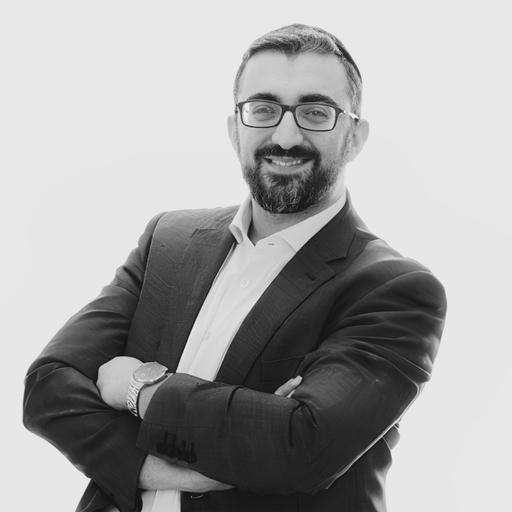
Saul Cohen is an experienced accountant, acquisitions advisor, and passionate advocate for entrepreneurship. With a distinguished career that spans top-tier firms such as PwC and leadership roles at The Expert Eye, Saul has honed his expertise in financial audits, risk analysis, and strategic acquisitions. He is committed to empowering entrepreneurs to transition from business operators to savvy investors, unlocking their full potential.
Drawing inspiration from personal experiences, including his father’s entrepreneurial journey, Saul has dedicated his career to helping small businesses and startups navigate the complexities of tax planning, acquisitions, and exit strategies. His holistic approach not only enhances business valuations but also enables entrepreneurs to reclaim their time and achieve financial freedom.
Saul’s work is characterized by a creative and practical approach to accounting, blending technical expertise with actionable strategies. His unique perspective resonates with successful business owners earning £1M+ annually, particularly those eager to optimize their wealth, prepare for business exits, or make impactful acquisitions.
As a podcast guest, Saul brings inspiring stories, actionable advice, and a passion for empowering entrepreneurs to achieve lasting success and drive positive change in their communities.
More from Saul Cohen
All episodes → The SmallBizChat with Melinda EmersonHow to Increase Your Business Valuation and Build Wealth with Saul CohenSep 2026Play episode →
 The Digital SliceYour Business Isn't Worth What You ThinkAug 2026Play episode →
 Build a Business Worth BuyingAcquisitions Later: Saul Cohen on Why Deals Really Fall ApartAug 2026Play episode →
 Leadership that sellsSaul Cohen - How to Build a Business Buyers TrustAug 2026Play episode →
 The Entrepreneurial JourneyBuild a Business Worth Buying | The Entrepreneurial JourneyJul 2026Play episode →
 The Grown UP Business PodcastBusiness Exit Advisor: Save £4,000, Retire A Millionaire! Most Owners Never Do - Saul CohenJul 2026Play episode →
 The Wealth Vibe Show!Ep 243: From Operator To InvestorJun 2026Play episode →
 Travis Makes MoneyINTERVIEW | Make Money Through Business Acquisitions with Saul CohenJun 2026Play episode →
 The Exit - Presented By FlippaFrom Operator to Investor: Mastering Business Valuation and the Exit Journey with Saul CohenMay 2026Play episode →