
April 7, 2022
What It's REALLY Like Living Out Of A Suitcase For 6 Years
There no ceiling and there no floor in your lifestyle.
In this episode
Graham Brown talks about the realities of living location independent, the tradeoffs of digital nomad life, and how remote work changes career choices.
- Living out of a suitcase can mean higher highs, lower lows, and a constant lack of routine or identity.
- Traveling with no fixed base can stress relationships, beliefs, and day to day survival, especially when arriving hungry and uncertain.
- Money still matters because paradise is not much fun when you are broke.
- 100 percent passive income is treated as a myth, and entrepreneurship is framed as active work rather than sitting on a beach.
- Remote work is making location independent careers more realistic, but the lifestyle still needs to fit personal values and work goals.
Chapters
Written from the transcript. Pick a chapter to play the episode from that point.
Transcript
Automatic captions of the conversation. They can contain errors and do not name who is speaking.
travel the world and that's what he has done so i also did so many of you guys watching have done the sell your car thing that's how you know yeah that's how you know you're ready to blast off you sell your car that's that commitment to go location independent so we talk all about that future of remote work what it's really like living out of a suitcase for six years you know you're probably more than six years now how many years have you been 10 well yeah i mean i'm not living out of a suitcase right here right now but i'm on the move so i could be a year's time awesome exactly that's what it's all about being where you want to be when you want to be okay cool we're published live so um yeah i'll go back to your uh your website here if you guys want to check them out he's got a very successful uh podcast agency as well which is another thing i'm very curious about because i gotta step up my podcast game i i just do um and so maybe we can throw some tips in about that but um yeah one uh for people that that don't know you like where are you located right now and kind of uh yeah what's your um what's your quick uh background and kind of what you do based here in singapore and i'm not from singapore i'm from colder climates as we were discussing off air here london i haven't lived in london for 10 years so 10 years ago i did that fired my boss sold my car traveled the world the boss at the time actually had my own business so i saw the boss as my business the fact you could build a business and it could actually be the boss of you yeah which is actually an interesting trap to fall into it because you start a business thinking that you're going to have all this kind of freedom and then you end up just having a reasonably well-paid job where you work Saturdays and Sundays.
So it was really trying to break out of that and then go travel. So we did a bit of traveling. I'm sure we're going to that today. And then I'm back here in Singapore. So it's sort of been a 10-year loop, which is still ongoing. So it's not the final chapter. Let's put it that way. No, no. Just like the world is a huge fucking place. and you can be where you want to be when you want to when you want to be there that's the whole fucking point he's in bangkok and i'm in singapore how about that yeah that's the beauty of same same but different it's short nobody knows yeah cool so uh let's start it off with just jumping into this question what is life really like living out of a suitcase for six years hmm it's the short answer so imagine uncut truth what's the reality unvarnished we see all these instagram you know stories and posts and vlogs in bali and you know digital nomad life it's paradise and rainbows all the time you know what's it really like what what do you tell people well there's two parts to the answer then there's one about instagram we can talk about that and the The first part really is about what's it really like, which is, you know, most people's lives, they have comfort.
So you know some people around you, you go to an office, you have your local communities, you're part of your neighbors, your family, your extended friends and so on You take all that away What happens is effectively you take the floor away from your existence and you also take the ceiling off So there no ceiling and there no floor in your lifestyle. So what it means is when you're traveling and living out of a suitcase, because you don't have that comfort and that routine and identity, things like that, you know, I am this person, I go to this job, I have this role and so on.
I live in this place where I grew up because you don't have that the highs are much much higher and the lows are much much lower and they will test you they will stress test your relationships your beliefs and everything that you're doing and in many ways you'll go through those dark moments where you know the the you have serious doubts about what you're doing so it ain't all rainbows it's tough and it's you're very vulnerable as well you know in the mechanics of it you know if you land in a place you don't know like you fly into bali or you fly into bangkok and you're with your family you're hungry you don't know where you're going to stay you know you're hangry all those kind of survival mindsets kicking in here that's tough you know you spend a lot of the time on the road looking for food right you take all that stuff for granted so it is it's hard yes but at the same time yeah you're in survival yeah so like uh so when you i call it blasted off to uh you know go location independent um you had your own business was it like already a successful business so you you weren't like uh like trying to figure out like how do i how do i make a living uh remotely or did you already have a remote thing set up because when i started it was like hadn't made money online yet just kind of jumped in sold my car uh and kind of just went for it i'll figure it out on my laptop yeah that's sort of what a lot of people are doing now right yeah well i you know it's part of my journey and i get that question a lot like should i have an online income stream before i blast off before i quit and i have many videos about this and it's it's really up to you and your life situation there's many different factors how much savings you have can you go back to your job is that a thing your responsibilities back home it's just so many factors that lead into that decision if but if that's what you want to do if you want to light that fire under your ass like uh you know you figure figure out a way to earn remotely or go back to the job if that's what motivates you if that's you know what you want to do then you can you can do it for somebody like you that may be a good way of doing things and you're obviously a survivor and a somebody who figures it out and you jump in at the deep end and you figure it out and that works for some people but not everybody that's the thing isn't it and that's i think key in terms of strategy is tailor making the strategy for you because you're probably more of a risk taker than the average person and a lot of people are getting into location independence who aren't necessarily like huge risk takers you know they're not sort of like the really extreme foragers in society that were probably you know years ago the first ones you know the chris guillabos and the people who went out Tim Ferriss who went out and did all this stuff but that is important because if you go and become location independence and are in survival mode you either going to survive and thrive or die right and die literally means coming back it's not going to be fatal yeah yeah that's right but you will maybe come back home with your tail between your legs at least you gave it a try right that's the main thing for me it was i had a telecoms business which grew and it was 12 years old by 2012 i didn't want to take it on anymore i sold my interest to my business partner and then you know we took a call from there i was lucky i was fortunate that somebody in 2001 said to me that graham you're not going to make a lot of money out of your business long term it's just going to be like a well-paid job you're probably going to earn the same if you stayed in finance or you kind of went up the career ladder.
So he said, generate a business that creates a lot of cash flow, stick the cash flow in real estate, stick it into assets that make money whilst you sleep. Right? And by the time 2012 came round, those assets had done reasonably well, enough to kind of give me the confidence to go and then travel the world on our terms. It wasn't like, okay, I've got to do this. I've got to make passive income stream. I've got to make an online income stream within six months or we're out. Yeah. So at that time I had a bit of space.
So I'd say to anybody, either you're going to jump in the deep end like Riley and just figure it out because you're a survivor. Or if you're not that kind of person, then, you know, go with some kind of comfort. At least go take the trip, but know how to make money on Upwork or wherever it is, you know, freelance before you do it or have something on the way. Don't leave it all to chance when you're out there. Yep. Yeah. comes down to your comfort level your level of risk and i say how burnt out are you at your job like you know normally i tell people like just if you have a good job you're making good money stick it out as long as you can but there comes that moment of burnout it's like i have no choice like i can't go i'm not getting in my car to drive to the work i'm done you know and that actually happened to me i was doing the door-to-door sales like hustling and there's one day i was like I just pulled up to the block.
I do not want to get out of my car. And I was already consuming the four-hour work week and everything and just so ready. And it's just like when you know you're ready, you're ready when there's that moment. What – so for a past version of yourself, young 20-something, thinking about going location independent, What are like the tips, the words of wisdom, things to watch out for if someone's, you know, just starting a remote career and, you know, just sold their car or either thinking about, you know, making the blast off and want to go, you know, location independent.
you know whether that be as you said like a week 52 countries in 52 weeks you know something as extreme as that or just you know come out to you know bali or singapore like you know what are your main kind of like lessons learned and wisdom you share with the the young hustlers and old hustlers too there a few out there you know totally it not right those guys off so yeah i I would say it all comes down to money at the end of the day as much as we like to think it not about money money is going to be the key factor in all of this that you do not want to be ruled by money but at the same time it's going to determine your success at this that the obviously the more financially secure you are starting out the better your decisions you're going to make you're not You're not going to be in survival mode and you're going to be able to make decisions more on what's important to you in the long term, which is really going to be the key to happiness.
What's going to make you happy as opposed to just kind of like making sure you can make bank at the end of the month. So I think having a good financial base before you go is important. Figuring out is hard work and it's chance. Building some kind of assets or knowledge of how to make, create money online before you go is important. know stick with the job do the friday do the saturday sunday side hustle until you can get that thing off the ground then you can make a better decision about it i think the other thing about you know i mean the importance of money is that it's no fun being broken paradise is it yeah it's great living the instagram lifestyle but if you don't have any cash i tell you that's going to be hard work being in that kind of mindset yeah and the other thing i think especially there's a lot i mean it'd be interesting to hear your thoughts on this riley there's a lot of literature in the location independent world about these sort of, you know, dream lifestyles.
It's a bit like the gym weight loss before and after photos. It's like, you know, can you get down to 7% body fat? It's like, why can't you get to 7% body fat? Like what's wrong with you? Look, it's this easy, or you just have to follow this formula, right? It's the same a little bit with location independence, like 100% passive income. It's a myth. Like there's no such thing as 100% passive income. Like even the people who get close to that don't actually want 100% passive income because they still want to be active.
And I would say to everybody, it's like just be cautious about all that kind of literature that promotes like, you know, you can just kind of sit on a beach with a laptop and just watch all the dollars roll in. Because actually, if you're an entrepreneur, that ain't gonna make you happy. You know, like just doing nothing ain't gonna make you happy. If you're an entrepreneur, what makes you happy is doing more of the stuff that makes you happy. It's as simple as that. If talking to people, if hustling, if challenge makes you happy, create a lifestyle where you can do more of that rather than, here's a Instagram sunset and let's see how many likes I get for that.
That ain't gonna make you happy if you're an entrepreneur. Surely not. You like challenge, you like the resistance, you like the struggle. That's what you're about, right? So I think that just training your mind to focus on the signal rather than the noise in the world of location independence. And what you do with your podcast is great, Riley, because you give people a platform to tell their stories and not all of them are gonna work for you or anybody listening, right? But there's ones that you can find that will work for you and just be conscious of that fact as well, that there isn't one strategy for location independence.
I think people can have a lot of self-doubt, can't they? When they look at these pictures and say, Why I like that? Why don't I have a drop shipping outfit that's generating six figures every month lying on a beach in Bali? Yeah. Not many people have that. Reality is most of sort of the 99% of doing are still hustling. Right? Yeah. Yeah, you only see the success stories on social media, right? You don't see the 99 other ones that, you know, tried and didn't work out. And so, but yeah, that's part of the entrepreneur journey is usually your first business or second business is not the one that takes off and makes you all the money.
um after talking to hundreds maybe even a thousand like digital nomad location independent or you know whatever you want to call it uh friends it's like oh yeah i started doing this but now i do this and now i'm successful it's always your first and so that's one of the huge things is always talk about oh great you're your first whatever business then take off you're part of the course that's actually normal it's very rare if your first project like takes off and makes uh good money obviously not impossible but um yeah and and and uh the the other exciting thing post-covid now you know even more and more remote work opportunities with the big companies and every company we're working there's more and more and more remote work positions it was already going like this per both of our podcasts and books and now COVID just accelerated it.
So on that topic of, you know, location independence and future of remote work, like what, what advice are you giving to, to people who may be, you know, be employees, but maybe, you know, they want to take that, um, that, uh, you know, leap to work because everyone's working from home now right but the next step that people got to figure out in their job is how do i work from another country from anywhere you know be it be it yeah from anywhere be it mexico or bali or different time zone and so yeah what are the tips trips hacks i'm sure you know you have a lot of you're talking about this you know you know helping the the corporate people yeah go remote what's what's the what's the news what are you seeing what is it funny think about Riley, you know, if you think all the way back to four hour work week, when that idea was first really floated in the mainstream, that you could live anywhere.
I mean, there was sort of variants of it before Tim Ferriss kind of wrote the book. But this idea that you could kind of go out there with a backpack and live anywhere. Now, if you think about it, that's now percolated into corporate thinking. So, you know, I spend most of my time talking to corporates, working with management consultancies professional services firms and it's obviously it's adapted you know they don't talk about digital nomads obviously in their world but you know they're sort of taking on these ideas that have for a decade or more been floating around in chiang mai or changu and that's in the corporate world now so that's the reality in the same way you've seen those kind of shifts haven't you like you know vegetarianism was sort of a fringe or veganism or you know even things like sustainability these are all fringe hippie subjects which have now become very much mainstream if you go for example if you talk to a company like mckinsey the largest management consultancy in the world they talking about sustainability and the future of work right 30 40 years ago that was hippies only talking about this stuff you know backpacking and yeah you know like green issues so i think to realize is that this is real this is happening now you know this is out there this isn't just digital nomading this is work this is the whole corporate world at play you know they're trying to figure it out and you know one of the problems is is that we we have this sort of functional fixedness which is this sort of psychological bias which is that we only see things as the way that they should have been always done right you know it's always been done like that so a good example of that is cars like we drive to work so you say well why do you need to why do you need to earn all this money well i need to buy a car most people buy a car and it's an expensive outlay isn't it after tax income you buy a car and why do you need to buy a car well i need to drive to work so why do you need to drive to car to buy a car so it's like that sort of strange kind of functional fixedness that we've got in the world of work once you take that away if you think about it that's 40 to 50 percent of after tax income for the average person spent on a car i'm not just talking about buying it but maintaining it running it parking it spends 95 of its time not moving and when it does just one person in it right once you take that out of this idea of career and work you could probably survive enjoy life on half the salary of what you were earning before but people say no i can't move to bali or i can't go here because i'm earning this much and i'm going to earn half of that working remotely for another company but you're not commuting you're not spending all that money worrying about this thing that's just sucking money out of your bank account every day so that's what that's the tip get over that you know the tail wags the dog so much in the world of work everything around that so much of what we earn actually is spent on our ability to earn that money so cars yeah clothes eating lunch at the office yeah why do you know having two weeks in the sun because you're so stressed out from work in the office right so you think take all that away what's left you don't need all those things right yeah cars yeah gotta have a car like ever since i sold my car i haven't you know had a car or need for a car but you know of course you know once you once you reach a certain level of income stupid money then you know you can just buy cars as like toys but yeah exactly it's like less need for cars and we're gonna have another podcast in five years when we got the autopilot teslas driverless driving around the cities yeah just wait folks we're not even starting you can live in one of them things yeah just keep driving around you're safe when you're wireless ubers are coming that's coming in like a year or two uh so yeah just getting started on this whole technological thing you know this is just still the very beginning we haven't even gotten into the full metaverse you know where we doing podcasts in a few years with the virtual reality goggles and like the youtube viewers can like walk around and we can like high five the youtube viewers and like meet them virtually but here's the thing don't you remember second life like years ago when that thing oh like like sims yeah yeah they i mean even i think nike bought an island in second life for like a million and a half dollars or something and it was like so second life second life and that was back then yeah and then it just kind of the sort of the whole thing degenerated into this sort of dating sort of like sexing up for people who kind of got left over the hangover of those when all the corporates left became like a dogging app right so all these kind of hookups in second life so the thing here's the better second life quit their regular you know nine to five corporate life second life is out here location independent yeah you know obviously we're we're in our bubble you know you know uh uh we're all doing it and you know most of the guys are you know into it and doing it that are they're watching this but it's it's a better life being location and better it's it's just a better life having you know it's a mindset freedom right options life is about options so be able to choose where you are you know in the world you know and so two weeks you know i like to say recently two months is the new two weeks you know like all the time it's like you know last year we did two months in croatia that's unheard of back in normal world un-fucking-heard of no one you you know most people you talk to never done two months in another you know vacation destination you know but we're out here you know doing multiple years and so um yeah where are we talking about second life metaverse these things are coming how how adaptive you know they will get but anyway the the point is is this is still just the very beginning of of the technological revolution and the possibilities with the tech the technology will allow us to continue to work remote it's the mindset though that's the key part here yeah i think that the technology has front run the mindset and simply there's a difference between you know being digital and doing digital doing digital is just doing your current way of working but in the world of digital and being digital is basically taking advantage of all of that and it means being able to live and work anywhere and with that meaning you know you don't need a car you don't need a job title you don't need all the trappings of the corporate world that really define your identity and your story once you kind of declutter that once you're able to free yourself of this then you really do take advantage of what it means to be digital and live that second life live location independence and it doesn't mean that you have to do 52 countries 52 weeks all of that it just means that you can take advantage of this as and when you want and live life on your terms that's really what it's about yeah yeah exactly exactly digital mad mindset uh you know and i have a video it called something like uh the location independent uh professional you know it like it just bud word buzzwords like digital nomad remote work like but obviously i'm a fan as well as um you know hashtag no label hashtag no title you know because titles just give perceptions to things and so whatever you want to call it but as we were talking about before we went live is like, I try to communicate these days, like you can have a hugely successful career.
And you happen to be location independent, you know, like, there's plenty and plenty and plenty of rich motherfuckers, very successful motherfuckers running multiple businesses. And they just happen to be location independent, you know, the meaning they can be anywhere in the world that they want they can still get their shit done a lot of them just from fucking this just from this just from their phone and so yeah and so that's what i try to communicate like it it's a mindset and you can you can um you know uh set that up set up integrate location independence into the businesses that you start in the career path that you go down.
And I try to communicate that to the young hustlers. It's like, okay, you are engaging me with me in some way because you found out about digital nomad location independent, you know, work remote destinations like Bali or Canggu or Mexico, whatever. Okay, it may need it may mean if that's what really fires you up and if that's your dream to have location depends be able to travel the world where whenever you want and i've asked a lot of people online and real life this kind of survey question what is your dream most people integrate travel the world at some in some shape form of their ultimate dream and so you got to back up okay the only way to be able to travel the world wherever you want is to be location independent in your career so some people that you know going down a road being a pharmacist or doctor or lawyer well it's just not gonna work doing that and so you kind of got to back up and you know think about what are your most important values if you value being able to uh you know live in france for many months at the time and live in different countries um while you know operating in your career then you gotta pick a career that's that's suitable for that and you know not be a you know a car mechanic or something like that and so um yeah these are some of the conversations that i have um you know some because sometimes you got to back up and think, you know, rethink, you know, what is my dream and what type of lifestyle that I want?
Because, you know, as 18 year olds, we're chose, okay, what do you want to study in college? AKA, like, what career do you want? We have no idea what we want as an 18 year old, even when we graduate, like as a 22 year old. And so, yeah, these are some of them. Yeah, you
About Graham Brown
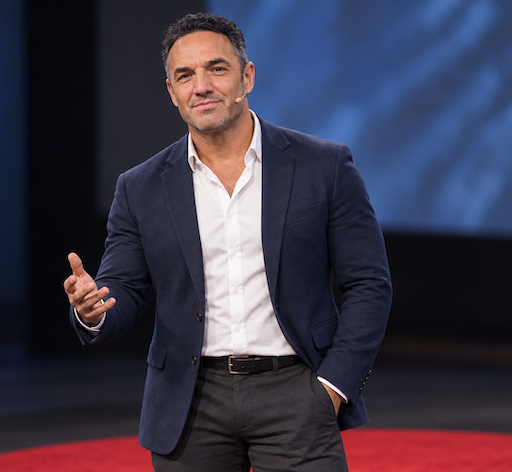
Author and Podcast Guesting Specialist for Corporate Leaders
2001 Founded mobileYouth16 books Published author250+ clients Served across 60 countriesUniversity of Sussex AI & Cognitive Psychology graduate
Graham Brown is an author and founder of Podcast Guesting Pro who helps corporate leaders, founders, and storytellers get booked on aligned podcasts and build thought leadership.
He began his career studying youth mobile behaviour and founded mobileYouth in 2001 to understand youth marketing and mobile culture; that early work serving clients such as Nokia, Vodafone, MTV, and Disney shaped his focus on audience insight.
Over time he moved from youth research into audio after seeing business leaders struggle to communicate authentically at scale, which led him to found a full-service corporate podcast agency and develop programs to train hosts and producers.
His route into podcasting combines formal study in Artificial Intelligence and Cognitive Psychology at the University of Sussex and Entrepreneurship training at Harvard Business School Online with decades of client-facing agency work.
He helps corporate leaders, startup founders, and storytellers find their voice. He leads Pikkal & Co, an award-winning corporate podcast agency, and runs Podcast Guesting Pro.
He previously hosted Asia Tech Podcast and previously grew mobileYouth to over 250 clients in 60 countries; his agencies operate from Singapore with partner studios across Australia, Austria, Canada, Croatia, Ireland, Sweden, the UAE, the UK, and the USA.
More from Graham Brown
All episodes → Office Hours with David MeltzerJosh Chodniewicz, Gary Coxe, Graham Brown | Office Hours #621Jun 2024Play episode →
 The High-Performance CEO ShowEpisode #76: The Future of Leadership: AI Innovation, Storytelling Mastery, and Human Connection with Graham BrownMar 2024Play episode →
 The Leadership Communication Show with Michael PipernoThought Leadership with Graham BrownJun 2023Play episode →The Leadership Communication Show with Michael PipernoThought Leadership with Graham BrownJun 2023Play episode →
 Rise | Evolve Leadershipevolve | eps 50 | Graham Brown, CEO | Pikkal & Co.Feb 2023Play episode →
 Limit Break StoriesGraham Brown | The Power of Storytelling for Building a Strong BrandJan 2023Play episode →
 Coffee With CoachesGraham Brown - How the Science of Stand-up Helps Jumpstart Your Story | Conversations with Coaches | Boxer MediaJan 2023Play episode →
 Speak With PowerTransform into a Magnetic Storyteller with Graham BrownDec 2022Play episode →
 Coaching CallGraham Brown - The Digital Transformation of Communication & building your brandDec 2022Play episode →