
November 15, 2026
LISA ARRIGO: THE ADULT CHILD VIA TRAUMA & THE BODY: EP. 336
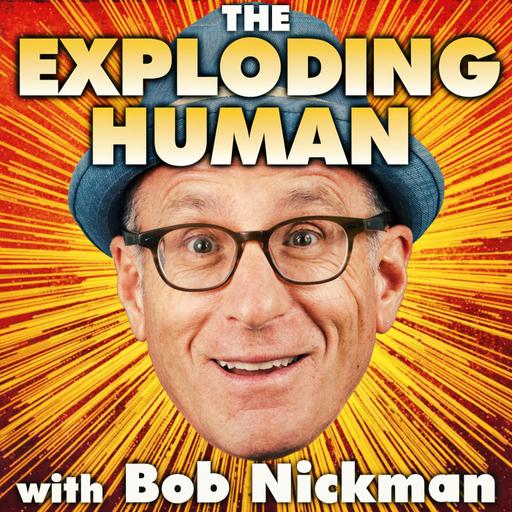
We're body-based beings and we're emotional beings before cognition is fully formed.
Sound bites
Every character defect really is simply a beautiful, exquisite survival strategy.
In this episode
Lisa Arrigo and Bob Nickman talk about trauma, the body, recovery, and how survival patterns shape adult life.
- Early trauma can shape adult protection patterns before a person has words for what happened.
- Body sensations and overwhelm can carry memory when cognition has not yet formed a clear narrative.
- Shame reactions can be understood as survival responses rather than personal failure.
- Addiction and other coping habits can be viewed as survival strategies developed in response to trauma.
- Change is safer when it is slow, incremental, and leaves room for uncertainty.
Chapters
Written from the transcript. Pick a chapter to play the episode from that point.
Transcript
Automatic captions of the conversation. They can contain errors and do not name who is speaking.
We're body-based beings and we're emotional beings before cognition is fully formed. So a lot of the memories, a lot of the things that exist in us from our past are not explicit. They don't come with a cognitive narrative. They come with big feelings. They come with overwhelm. They come with body sensations, you know, pounding chest, shakiness and anxiety, hyper arousal, right? A lot of that happens below cognition. And then we try to attach meaning to it. Are you curious about discovering ways of making your life better?
Then welcome to my podcast. I'm Bob Nickman, and this is The Exploding Human. Listen in while I talk with all kinds of people in the fields of personal growth, health and healing, alternative therapies, psychology, spirituality, environment, and the future. I'm looking for those answers that make life better for everyone. You'll meet cutting edge practitioners, doctors, artists, filmmakers, business people, and those who have overcome challenges. The brave, the curious, anyone who's out there helping us humans to explore, expand, and explode.
Hey, welcome to The Exploding Human. My name is Bob Nickman. My guest today is licensed clinical social worker and psychotherapist, Lisa Arrigo. Lisa has specialized in trauma, attachment, and addiction. Drawing on 30 years of working with clients and her own story of trauma and recovery, we talk about how your body remembers what your mind has learned to forget. We're also going to get into why early trauma can shape adult protection patterns long before someone has words for what happened. We're going to discuss how shame reactions can be understood as survival responses instead of personal failures.
And some of the things that help when wellness advice misses the body level roots of chronic overwhelm. Both Lisa and I talk about some of the things from our own childhoods that have affected us as adults and some of the ways that we have dealt with our own personal challenges. I hope you enjoy the discussion. This is Lisa Arrigo. Good morning, Lisa. I'm so glad you're here. And I'm looking forward to talking about all these human behavioral topics. And I know you're pretty specific to a few areas, but you're a psychotherapist and a licensed social worker, all those wonderful letters behind your name, but that's really not what life is about.
It's about what life is about. But nobody will pay if you don't have the letters. Well, it helps, you know, it does help to have, you know, a viable income and, and behind the letters is a lot of education, which also has value. But in my experience, real life application is, is what initiation initiates change and growth in all of us. Yeah. And you've been doing this for 25 years or more, I think. Yeah, probably over 30 at this point, you know, just turned 60. So I'm an old, you know, I'm an old cow, an old soul, whatever.
I've been, I've been around a while. Well, I love that because there's nothing like you can't duplicate experience with anything else other than the experience. So I'm sure you've seen all kinds of people that come to you with certain amounts of difficulties and challenges in life. And, you know, a good therapist sort of helps people navigate ways to feel good about themselves rather than distressed and troubled. I think we've all been all those things. Yeah. You know, I think that stress and traumatic stress and whatever we're carrying with us into our adult lives shape not only the things that happen to us, how we experience things, but also shape our identities and how we move through the world.
And I find that, you know, you can't get through this life without trauma, stress. Yeah. It's just part and parcel of suffering. It's loss. It part and parcel of being human But in my experience both personally and with the clients that I work with every challenge every loss every tough transition every revisitation of something old that's scary or hard is an opportunity to heal and grow. And we're constantly changing and shifting based on what's happening around us, our experience of it, and our ability to get curious about our own patterns, our own beliefs, our own bodies, that that's really how we change and grow and heal and build capacity for this thing called life, which invariably will continue to throw us shit.
You know, it doesn't happen. All day long, every day up to the end, and maybe even past that. I don't know. Well, we won't go there, but that's a whole other podcast. Yes. Here's I'll just this is a topic I find sort of interesting in the mind. They call it rumination. And periodically, and I'm sure everyone's had this, there's something that's happened in the past that you can't stop thinking about. And you bring it up, you rewrite the scenario. Maybe I should have done this. This is what would have happened. And why didn't I say that?
Why didn't I do that? And I don't know why that's sort of come up recently in my mind with a couple of things. And I'm like, what are you doing? Because it's not helping. But it's almost like this way of bargaining with the universe to change the past if you think about it a lot. A little bit of magical thinking, right? Yes. And even though you know that it's not helpful and it doesn't change anything, sometimes I'll catch myself and I'm like, I'm going down that road. And, you know, is there, usually for me, it's a sign there's something in the present that's not the way I want it to be.
Yes. That is so insightful, Bob. I love your curiosity about it. You know, at first when you said, you know, what are you doing? Like, what am I doing? That felt a little less curious and more critical. Oh, yeah. Oh, yeah. You're annoyed with yourself as well. You're annoyed with yourself. What am I doing? Like, what, how, you know, what's wrong with me? Why am I back there? Yes. Right. And then there's that awareness of, hey, I'm catching myself and this isn't going to help. But after the catching yourself, I think the next question is, what function does the rumination serve?
What problem is the rumination trying to fix? Is it about, to your point, not wanting to deal with what's coming up in present time? And the rumination about the past is a way to avoid or distance yourself from that tough spot that you're in today? Is that the function that it's serving? What do you get from the rumination? When you talk about rumination, sometimes I think about shame and guilt. and for myself and a lot of my clients that desire to redo. If I only knew what I, if I can go back and fix it, like I wouldn't have this pit in my stomach.
I wouldn't have this guilt. I wouldn't have this old shame. I could feel better about myself. If I had left that marriage seven years ago, if I had stopped doing cocaine five years ago or six years ago, my life would be so much better, right? Yes. And usually what I end up saying is, well, if you could have left sooner, you would have. But here we are. And how do we make sense of it today? And how does holding on to this serve you today? How does it keep you locked into an old pattern, an old belief system? You know, what's going on?
If we can get curious about the things that we ruminate or obsess about then that the key to freedom Yes it is And you said something interesting about you know if you could have you would have Except, you know, there's a part of me that goes, I knew better and I did it anyway. And that's where some guilt and some self-embarrassment, shame, I guess you would call it, comes in. It's like, well, I, and I remember reading something. every time I lower my vibration to meet someone or some situation, I wind up hurting myself.
And there was in those situations, there was some sort of a need or desire that was greater than what the, the instinct that you might've, that someone might've had to do something else. And to me, it's like a, it's a fear of, of, um, I think deep down under all of it, it's a fear of being alone, fear of loneliness or abandonment or, or something that where it's like, it would be worse. Is this, it's better to do this thing I know isn't really good for me than to stop doing it and have to face the fact that I may be not connected to anything, which is a very terrifying thought.
it actually isn't later when you sort of figure it out and then you get past it but at the time and you know you mean you know the times I've done that and it's mostly in my in my youth that that the the fear of what would would replace that yeah was it because it was unknown it was terrifying and not even and not even being consciously aware of it honestly I It's like, I never thought about that. I was just like, I'm going to do this because I want to. Right. I think you're talking about something that has a lot of complexity and nuance to it, Bob.
And it's very vulnerable what you're sharing, you know, that fear that many of us have of being alone, that fear of abandonment, that fear of rejection. those fears and those, I think, in my experience, early experiences. And I don't know if this is true in your case, you'll let me know if you're comfortable sharing that when children don't get consistent, predictable care, they grow into adults and they remain children who desperately seek that out or try to find ways to meet those needs. Yeah, sure. Right. So it becomes part of a pattern.
Those patterns live inside of us forever. So as adults, we carry those stories. We carry those younger parts of the self with us, right? And sometimes those parts are making the decisions to engage in something that other parts know may not be great, may not be healthy, or may even be destructive. but those parts may be taking a backseat to other parts that are like, Oh, but you know, she, you know, she loves me. She needs me or, you know, I'm getting a lot of attention for this. So I'm going to keep doing it. Right.
Even if it's against my own best interests. Yeah. Right. Cause that's what kids do too. It's like, they, they need so badly. If you think about children, children are wired for connection and they don't know how to regulate their nervous systems. They don't know how to make meaning of things. That's why caregivers, good enough caregivers, reflect back meaning and help those children co-regulate and give them value and make them feel worthy and special without having to do anything. Yeah, without having to do anything, yes.
When those pieces are missing, that child has to grow up anyway. Maybe for some of your listeners or viewers, this might tap into some tenderness or some places of, oh, yeah, oh, yeah, I know how that feels. That was me. What I was thinking about while you were saying that is when you think about parenting and being parented the job of the parent is to meet the needs of the child not the other way around Right And I had both I had I had a lot of care a lot of a lot of attention, a lot of feeling special. I had, I had that very well taken care of person as a, but there was also on the emotional side, the, um, the needs of both my parents for certain emotional connections that maybe they, I don't know if they weren't getting it from each other or they never got it from their parents or whatever it was.
There was always this idea in at least that I felt, it wasn't an idea. This thing that I felt was I, not that I had to perform in any way, but that there was something that was being extracted that I didn't have. something that they were looking for from you that you didn't know how to give them yes okay because I didn't even know what it yeah I didn't know because I didn't even know what it was and so there was that feeling it wasn't overwhelming and it wasn't all the time but it was there yes you know and I figured this out sort of later on in life of you know how how that sort of worked and what I was looking for in other people also.
And what, and the people that I vibrated with or was attracted to, some of that was filling that sort of, you know, if there was somebody that didn't want anything from me, I like them a lot. So that's interesting. So you found yourself attracted to people who weren't trying to extract something from you. Absolutely. Okay. Cause that's, that's interesting. And that is, that is sometimes the strategy that people employ. The other strategy is, you know, and this would be unconscious too, just gravitating towards familiar.
Well, that, that is, yes. That's another thing that I find interesting is that when human beings are confused or scared or unsure, they go backwards to what they know because they don't know how to go forward to what they don't know. So it makes sense that, and that's why you see repetitive patterns. Oh, absolutely. They keep doing, it's like, why do I keep doing this? You know? Well, because it's what you know. Yeah, we do what we know. Those patterns of survival are hardwired in our brains. They're actually hardwired into the neuroplasticity of our brains.
So those patterns are not just cognitive constructs. They're not just feelings. They're maps in the brain. When I think about free will, there kind of isn't any. There's very little. Between that stuff and genetics and societal pressures, you know, there's a little bit of room to make choices. There's always that. But even making those choices are built on a structure that is certainly not the mind can control beyond a certain point. Yeah. So I like the idea of just a loving home for children and a caring home. You know, I think the two things people want the most are love and safety.
Absolutely. Absolutely. And I think it's really important to underscore that no parents do this perfectly, right? Like, you got a lot of good stuff, but it doesn't take a lot, right? You know, and we're not going to get into the weeds of your childhood. But that feeling of I have value or my parents are looking for me and we see this in parentified children. And maybe they're getting love and care, but they're also thrust into roles that developmentally, they just don't have the capacity to their kids to be parents for their parents.
But some children are sort of thrust into that role. And these over-parentified children typically go on to have trouble in relationships where they're not a caregiver or they're not. feeling responsible for the other person's feelings or overly responsible. So that's one place where it can show up. Right. So children, children develop their own understandings based on what they get, what they learn, what they don't learn. Right. And, and all of us, it doesn't matter, you know, how wonderful our parents were, the lifestyle we grew up in, or, you know, everybody's got attachment styles that relate to how they were attached to in early life, right?
So it gets really, really complicated in terms of why do we do what we do? And are we prisoners to, you know, where we've come from and what's been passed down from generation? You mentioned epigenetics, like, are we really in control of anything? Yeah, well, it's not as much as we'd like to think, You know, where I land with this, Bob, is like, yeah, no, we don't have control over the things that have happened to us or the things that, you know, the burdens that we're carrying that maybe don't even belong to us that have been passed on from generation to generation.
But with awareness, with mindfulness, with education about the intersectionality of developmental psychology and neuroscience and what we know about trauma today, the body keeps the score and hosts of other scientists who've been studying this is that the more we learn, the more we know, the more choices we can make. and the more freedom we can achieve in our lives, not just for ourselves, but for the next generation and the next generation. And some might even argue that that freedom to make change can actually heal the ancestral line, can heal the generational trauma that came before.
That's a whole other podcast. Yeah, that really is. But I really, for anyone watching or listening, I really would like anybody engaged in their own self journey of understanding and healing to remember that, yeah, we can't control the things that happen to us. But these things shaped us. And if we can get curious and if we can be vulnerable and courageous and open minded, there's so many places where we can make those changes and rewire the brain in ways that are more adaptive to living a full, rich life today. okay so you know in two years or in five years you might bob be sitting someplace and be like oh this would be something that i would ruminate over yeah and i oh if oh actually i'm not ruminating anymore or when i ruminate it's it's kind of a thing that comes out of nowhere and it's something that i get curious about oh yeah that's what's going on it's okay i was reading about rumination And the root of it is when a cow chews their food over and over again.
That's where the word came from. Oh, really? Yeah. I'm like, oh, when I saw that, I was like, ooh. Well, that's interesting. Maybe cows like that, but I wouldn't do that. Well, I mean, also, you know, you have to eat. So are they over-chewing? I don't know. I don't know if that. What is it? They keep their cud in their throat and they just keep going over it. It's something like that. I don't know enough about the digestive system of a cow to understand that. But for us, ruminating can be the source of a lot of suffering.
It can also be an escape route. Oh, I don't want to look at this and deal with this. I'm just like an old pair of slippers. It may not be comfortable, but it's familiar. And sometimes we go back to patterns that are familiar. And even though it continues to leave us feeling perpetually uncomfortable, because change is hard. I noticed One of the things that I sort of came to is that some of the things that I looked at as a flaw you know a character defect let say were not that And I think it was in your bio I was reading something similar It was about that it was if you look at those things as survival tools rather than as some sort of a flaw, that you, they were of great value.
I mean, let's say I'll just pick an example that's not mine. Let's say you're somebody that is a chronic liar. And that's a big part of your life. You're, You just make stuff up all the time. And there's a lot of reasons people lie to protect themselves, to look better than they are, to, you know, have some kind of a power. So if you relate that back maybe to their childhood, they had a reason to do that, to survive in a situation where it was helpful. And then if you get to the point where you go, this isn't serving me anymore.
And I used to say there was a couple of things that I had. One of the biggest ones that I had was sarcasm, a lot of sarcasm. my life, protection. And actually it was kind of a bullying technique to manipulate people and to put them on the defensive before they could, you know, offend me, potentially do that, whether they were trying to do that or not, I would do that. And I realized I was doing that. I was putting certain people off that I didn't want to, to do that anymore. And, and I remember saying to myself, I'm going to, so the first step was to make a conscious effort to stop doing that as much as possible.
Despite the fact that it was uncomfortable because the vulnerability was kind of scary. Absolutely. To be earnest and to be sincere. You're, you're challenging a survival strategy that kept you, that saved your ass. Yeah. So, so now we're, this is one of mine Right. So so then I remember saying I don't know how I came to this, but it was instead of saying sarcasm is bad, I've got to get rid of it. That that didn't work, really. I mean, it was an effort to do that. It's not working for me. But then I remember saying, thank you for your services.
I no longer require your services to the actual sarcasm. that was super helpful to to not to make friends with the thing that helped me yes you know it's like somebody let's say somebody pulls you out of a river because you're drowning but then they're they're like they're mean to you and they're punching you and they're doing all these terrible things well you'd say well thanks for pulling me out of the river but I don't need your services anymore and so I think that's a valuable that was a super valuable thing for me is to realize that the quote bad things weren't really bad.
Bob, I love what you're saying. And, you know, this notion of character defects. Yeah, I don't like that term. No. And, you know, I am a person in recovery. Well, I am too. Yes. And I've spent a lot of time in 12-step and I have a lot of respect for the program. And I think for some people it works really well. And for others, it's, you know, there's not one pathway to recovery. And for others, it's more complicated. I always struggled with the term character defect, right? There's another term that I prefer, which is index of maladjustments.
Well, but it's still, it still has a negative kind of maladjustments, right? So better than, a little bit better than character defects. But I love what you're saying about survival strategies, because for people who have more complicated histories, complex trauma, and let's just focus on 12 step for a moment because we're both in recovery and we're bringing up the notion of character defects, right? That for people who struggle with addiction and where there's addiction, there's trauma. Using alcohol or using drugs or being deceptive or all those isms, right?
they are not character defects they are survival strategies right nobody starts drinking or using a substance because they want to become addicted every addiction starts a coping strategy somebody saying that to themselves i can wait to get addicted to this stuff Oh I can wait to just you know blow myself out on cocaine and almost lose everything multiple times Like, that sounds like a future I can invest in. Every character defect really is simply a beautiful, exquisite survival strategy. Thank God we were able to develop strategies that got us through parts of our lives where if we didn't have those strategies, maybe we wouldn't have made it.
Absolutely. Right. So thank you, survival strategy. Thank you, trauma parts that organize around fighting, fleeing, using people. Well, thank you. because without you, I wouldn't be me and I wouldn't be here now. Befriending those strategies and the parts that hold those strategies and not saying, well, I just have to get rid of this. It's not working for me anymore. In my experience, that engenders fear, confusion, internal upset, dysregulations. Like, what do you mean? You don't need me anymore. What if something happens, you know, and I'm here to protect you?
Who's going to? So what I what I like to do, honestly, is like, hey, let me dialogue with those parts. Hey, if I need you, thank you for your service. If I need you, I'll call on you. But today in 2026, we're going to try some different things. We have other parts that are waiting, you know, to to be seen. and other experiences to have. And we're not in trauma anymore. So we can try new things. You know, some people describe it as internal corporate restructuring. If you have a corporation that is undergoing shifts and changes, right?
Imagine yourself as an internal corporation where different patterns, different parts have different jobs to do. And then the structure of the organization changes. So you have to reassign, you know, certain duties. It's like, Hey, you used to be compliance management. Now we're going to give you a desk job here where you're just monitor things, but you don't, you know, you're just keeping an eye out. Right. And you're reporting to me. It's not about pushing away those strategies. It's about folding them in. And while you're trying to replace sarcasm with something else, You may even keep the sarcasm on board for a while to have it not feel so vulnerable.
We're just going to bite size this. We're going to try to do something a little bit different here where we would bring sarcasm. We're going to bring empathy. And then maybe sarcasm will show up. It's like, OK, yeah, this is, you know, but playing with it in a way that doesn't upset the internal structure, but challenges it in a way that promotes change and growth over time. sometimes people will say to me well i'm just not going to do this anymore because it's bad for me that doesn't work good luck and then they find themselves doing that thing that was bad for them and then they feel shame or they feel guilt or they're like why do i keep doing this so they feel like there's something wrong with them right because they're trying too hard to push something the more we try to push away it doubles down the anxiety the stress the overwhelm the agitation, right?
And you might have a personal reference point for this. Well, it's like somebody says, you know, don't think about a horse. What are you thinking about immediately? That's what you're going to think about. Exactly. Whatever you do, don't think about a horse. Yeah. Yeah. I'm going to think, thanks to you, Bob, I'll be thinking about that horse all day today. Thank you. Thank you. You'll ruminate on it. I'll ruminate. And then I'll be like, what am I trying to avoid by ruminating on this horse? And then I'd be like, oh my gosh, I spent half my life ruminating.
What's wrong with me? Why did I do this? And why did I do that? And once we get onto that, once we get onto that train, we lose our ability to stay curious. Then it's like, why am I doing that? Rather than huh I wondering why I do that over and over again Huh there must be a reason why it not so easy Let me get curious about what makes it hard Let me not judge it Let me not be critical Let me stay curious. You know, how is this working for me? What is it giving to me? And what is it taking away? Do I need to do it this way?
Maybe. But maybe there's a little room for something else to grow. Well, also it's, what would happen if I didn't do it? Be curious about that. Right. Let me see what happened. Yeah. What would happen? Because there's, there's, there's a feeling that I call it like cornered animal. Yeah. When you take away something that you've needed for survival, it feels like you're a cornered animal and what if what if taking this away actually destroys me that is a real fear yeah it may not even be conscious or it may be it's very visceral you just like you know and it's uh yes and it's it and sometimes when you take this is sort of an exercise somebody took me through it's like well i don't want to stop um i don't want to stop this thing let's let's just do go back to the lying thing or sarcasm.
We'll just stay on that. What if I'm not sarcastic? Well, then people will take advantage of me. What happens if people take advantage of me? Well, then I, you know, then I'll wind up alone. What happens if you wind up alone? Well, I won't be able to survive. Why won't you be able to survive? Because the loneliness will kill me. It'll be so painful that I'll want to die. And it always comes to the fact that you're underneath all of it. It's death. It's like somehow this thing that I think I need will absolutely destroy me.
I'll be annihilated. And then when you take it all the way, if you ask that question over and over, like, what happens if that happens? And it comes down to that. It's like, you mean if I'm not sarcastic, I'm going to die? Right. It doesn't make any sense. It doesn't make any sense. And I guess people can die of loneliness, but the annihilation that you're describing, people don't become annihilated when they're lonely. They suffer. Yeah, right. But that link up, because I think this is this is so important. Because there is a primal experience of if I'm alone, I'm going to die.
That is the fear of a baby, you know, an implicit fear. As it should be. Right. Because that makes sense. Those, and I don't, I'm certainly not making any, you know, I'm not concluding anything about your early, early experience, but I would get curious, hey, you know, wow, that is a very powerful association between being alone and dying. And it doesn't make sense, left brain. yeah viscerally it does though but viscerally on the right side of the brain which holds all my emotional life and in my body the visceral nature of it it's it's emotional it's not logical so it's linked up to a core emotional experience or fear that lives in the body you say it's visceral, it's like, oh, where is it in the body?
When else have you felt this feeling? It could be a memory, a pre-verbal memory of being left, this is hypothetical, of being left alone in your crib for too long and feeling that implicit visceral, you know, the overwhelm, how am I going to survive Now, babies don't have that capacity to think like that, but they have imprints and they have neurological tracts that have been laid down. So if that core experience of I'm not safe when I'm alone gets imprinted on the body. at some point the brain is going to want to attach meaning to it.
It's like, oh, if I'm alone, then I'm going to die. There are people that they can't be by themselves. It's very difficult for them. I don't happen to have that. I actually like being with myself. I like it. I don't like being lonely, but I like being alone. Loneliness is different from being alone. Yeah, it's pretty fascinating how we twist around up there in the brain, but it's also in the body and the heart. Everything's connected to everything else. We're feeling, you know, we're body-based beings and we're emotional beings before cognition is fully formed.
So a lot of the memories, a lot of the things that exist in us from our past are not explicit. They don't come with a cognitive narrative. They come with big feelings. They come with overwhelm. They come with body sensations, you know, pounding chest, shakiness and anxiety, hyper arousal, right? A lot of that happens below cognition. And then we try to attach meaning to it. Well, if I'm lonely, I'm going to die. Well, that's not really true, but it's a story that's living in your body that you've attached cognition to, to try to make sense out of it and to try to avoid that feeling by not being lonely.
I look at adults, if there is such a thing, that operate in ways that you're just like, what's going on? And I try to look at them as children, a lot of the time, emotionally as children. And you see it even at like the highest levels of success and power. You see it sometimes even more so because the drive to get there is not, a lot of time is based on an emptiness that has not been fulfilled. And so many of those people are reacting to their past, but they're not aware of that. That's the problem. That is really the key.
the lack of awareness keeps us on those hamster wheels, keeps us from attending to the children parts of ourselves and, and navigating adult life in a way that's more adaptive. I'm just thinking about like what's going on, you know, just politically, you know, of people that are absolutely insatiably greedy. There isn't enough money over eternity to satisfy. And there's also, you know, this whole sort of really twisted sexual stuff that they're into also. How did how did this happen? How did these people get elevated?
Yeah, well, obviously they wanted to be elevated so badly that they were willing to do whatever it took to get into those positions. Those are those survival strategies. Right. And a lot of the people in charge of the country right now, in my opinion they all have untreated complex trauma absolutely down and if you're not looking at yourself and if you have power and money and influence you're not going to stay curious you're going to be like let's feed the machine how much more money more money more money you know more sex more this more that um the i mean that is a tragic way to live but the bigger tragedy strategy for me today is that people in positions of power are making decisions that impact all of us and are making decisions that are destructive to the people around them.
That's the painful part of it. That is the painful part of it. So if there's any incentive for all of us to look at ourselves and to try to understand, hey, how do we make sense out of this? How do we understand this? My dad was very narcissistic guy. You know, he was a mobster type, very insecure guy, tried to control everything around him, became the biggest cocaine dealer in New York at one point in time. Right. But he spent his whole life running from his abusive father who told him he was worthless Right So he built this larger than life personality He was a sex addict You know he you know he was my drug dealer for a year because he thought it was a good thing to give me drugs.
So he made terrible choices that impacted his family and anyone who was close to him or cared about him. But he never, ever suffered a consequence that forced him to, to challenge the way he was living. So he died the way that he lived. Yeah. Right. And, you know, I think about my life and, and, you know, how I grew up. And I think that the other piece in getting curious about ourselves without judging and without throwing anything away, you know, we add on, we don't get rid of those survival strategies. Let's keep them, but maybe we can keep them over here while we're building this part of the garden.
You know, it's like a new patch of grass, like we're planting new seeds, right? It takes time, but we can't push those strategies away because they end up doubling down. We want to attend to them. We want to introduce new ways of learning and growing, bringing some somatic resourcing online, trauma-informed care and treatment that that focuses on mindfulness, meditation. We heal in community. We don't heal in isolation. So connecting with other people, whether it's in a recovery program or, you know, in a community type situation where you don't feel alone, where you can plant new seeds and challenge yourself to show up differently for yourself and for the people in your life today.
That's how we grow capacity for living and not simply surviving in the ways that we learned. The learning never stops. So as you were sharing earlier, I was thinking about loneliness. I'm like, well, I'm in a place in my life right now where I have so many wonderful people around me. I don't have a partner, but when I did have a partner, I was lonelier than hell in a relationship. So having a partner doesn't mean you're not going to be lonely, right? But I'm at a point in my life where I've cultivated such beautiful relationships, but I'm in the middle of writing a book, finishing my book, branding myself, trying to establish myself as someone who wants to be of service to a larger audience and wants to teach and share my lived experience with other people with the hopes that it might help them.
And a lot of times I wake up in the morning, I'm like, I'm all alone. Nobody cares. It's all on me. I'm paying money here. I'm doing this. I'm right. And this sucks. My life's never been better. Same circumstances, different perspective. But my survival strategies, you're writing the book. There's no one financing it. You have to do it all on your own. That old pattern of fear, self-sufficiency, which is a survival strategy for me. It's the story of my life. So now I'm at a place where I don't have to be alone because I'm not.
And because I'm doing things that are hard and challenging, I'm back in that place. Nobody cares. I got to make my own coffee in the morning. You know, I had someone making me coffee, but I was still lonely. But my point is, it's a state of mind. Today, I can say, wait, wait a minute. Are you really lonely or are you locked into an old pattern? Are you in an old reenactment where you had to go to school, get good grades, take care of your mom, walk the dog, make sure food was on the table at 13. You know, your father's, you know, having sex with the babysitter.
How are you going to keep that a secret? Like, it's so easy for me to go back there. Sure. Today, I'm like, well, wait, pause. What are the facts about my life today? Well, no, that's none of this is true. let me realign myself with the facts and let me do two or three things today that remind me of who I am and where I am today. Let me make a phone call to that friend who always has my back. Let me meditate on how I going to connect in this podcast with someone who I don know I meeting for the first time Let me just take a couple of deep breaths and let me just do a 30 second meditation on on dropping in and saying to myself, I'm not alone.
I'm meeting someone for the first time. People are going to hear this podcast, hopefully, and get something out of it. And we're all in this together. so let me set that intention if i came into this podcast like i'm all alone i gotta make my own coffee can you bob you know this sucks you know i i'd be showing up for this this conversation more rigid more closed off with less access to what i know right suspicious of me in some way Like, who is this guy? You know, oh, he's another guy. It would be a totally different vibe.
But I'm going to get off this call in five or 10 minutes. And I'm going to sit and I'm going to take in the fact that, hey, Bob and I are not all that different. And I just had a conversation with a man who gets me. And I get him. And whatever this conversation, whatever pearls of wisdom, even if it's a little thing, right? that some person hears and says, oh, I feel that way too. I'm going to think about that. I'm going to stay curious. Survival doesn't make room for curiosity. If we're surviving, it's actually biologically maladaptive to be curious.
That part of our brain shuts down. So if we can shift and move out of survival and be in a window that allows us to think and feel at the same time, our nervous systems are online, then there's more room for curiosity. And survival kind of takes a backseat naturally. It's not us saying, you go sit over there. Somebody said to me once, I was talking about something that was bothering me. Something that had happened. Something that happened in the past. I don't remember the specifics. Doesn't really matter. And they said, you're not your story.
And I went, what? yeah what do you mean that's my story that's who i know you're not there's something else there yes irregardless of the things that happen to you that's eternal that's uh that's right always present and and of course i think everyone has those moments where they know that usually you have it when you're a few times when you're a kid at least i had a number of those situations where I was like, there's something else going on in the world that no one's talking about, you know, and, but I never discussed it with anybody and it's, and I certainly didn't get it in any sort of religious setting that they, that never really, you know, there was religion, but there wasn't any spirituality really that was being disseminated as far as I could see.
But then you, you have those moments in life where you intersect with certain people that vibrate in a way that are, that is so interesting and enticing. And, and, you know, you get, at least I did, I got very curious, like, is this person really that content with themselves? Is that possible? This is real. They're just making it. Yeah. Yeah. And I was always sort of intrigued by those people. I never thought to really, until I got older, to ask, like, what do you do? What do you, how do you think? And I remember this was when I was a very young guy.
I was like 18, 19. And I was really twisted up with living, like, you know, most people that are going through, you know, teen and post-teen years. Those are very tumultuous emotionally. and I said to this this friend of mine that lived across the street um I said I feel like I'm going crazy and he goes oh well why don't you he and I went huh he goes yeah just do it what's the difference yeah he knew I wasn't like gonna wind up in an institution he but just like what are you holding on to how he knew to say that I don't know where it came from he wasn't a particularly evolved person He was a kid like me But he said it and he and he laughed and i went you know what he right yeah i don have to be this character that i was raised to be anymore i don have to be bob nickman anymore if i don't want to be yeah you know this notion of reinventing ourselves i think in my experience in working with people and even in my own personal therapy, we're not our story, right?
But for many of us, there's this fear, well, who am I? Because it creates this identity, right? And oftentimes when people are confronted with the invitation, hey, you don't have to be that anymore. That doesn't have to be your story, but that's my story. If I drop the story, what am I left with? Who am I? Do I even exist without my story? Or am I like a turtle that's had its shell extracted, and now I'm just this mushy thing that has no shape or form and no shell. What's scarier than that? So I just, I just want to honor before we end the hour like that.
Yes, we're, that's all that's true, but I want to give a shout out to how terrifying it can feel at least at the beginning. That's why change needs to be slow and incremental and not like, you know, we're just going to take off the shell. This is not your story. You know, this is, yeah, because our identity is, is baked into the cake of our stories. So the extracting and the shifting and the maneuvering, um, it takes time to adjust to and to safely lean into, uh, another piece of, of all this thing is, um, what I think most people would want and where a lot of turmoil comes is certainty.
And so a lot of, there's a lot of sort of dysregulation with the relationship between yourself and certainty. It's like, it's not a realistic thing to, to get. And it's like, well, if I get rid of this, can you, can you give me a guarantee that the next thing's going to be okay? Yeah. Yeah. It's about embracing uncertainty and not being scared of it because I think that in survival, we convince ourselves that we can control things, but we really can. Learning how to live with uncertainty is, I think, a big challenge for all of us.
I'm writing a book. I'm hoping to publish it in 2027. I've been working on it for four years. There's no certainty here for me. Like I'm having to live with the uncertainty that I could write a book, no guarantee that there's going to be value on the other side, you know, beyond my own personal, you know, healing, which is fantastic. You know, that's a reason enough to put it out there. But my point is, it's like sometimes we have to take risks. And in those risks that we're taking, we have to learn how to dance with uncertainty.
Thank you so much for talking to me today. I really, I really enjoyed our conversation immensely. Is there a way for people to contact you or is a website? What do you got? Yeah, yeah. Just, you know, Google my name, Lisa, A-R-R-I-G-O, Lisa Arrigo. You'll be connected to my Instagram page that has my website, all my contact information, all the podcasts I've done, everything about me is on that Instagram, including my way to get in touch with me. Okay, great. And when your book is published, I want you to come back on and we'll talk about it.
That would be fantastic. It's a spicy read. It won't be boring. I'd like a good spicy read. Shake it up, Lisa. Shake it up. All right. I can do that. Stay tuned. Thank you so much. Bob, thank you very much. Have a great day. Much appreciation for you folks listening to The Exploding Human. The website is TheExplodingHuman.com. You can also listen on YouTube. That's the Exploding Human with Bob Nickman. Once again, I want to thank Lisa Arrigo for being on the show. If you want to find out more, you can go to lisaarrigo.com.
Have a fantastic day. Thank you.
About Lisa Arrigo
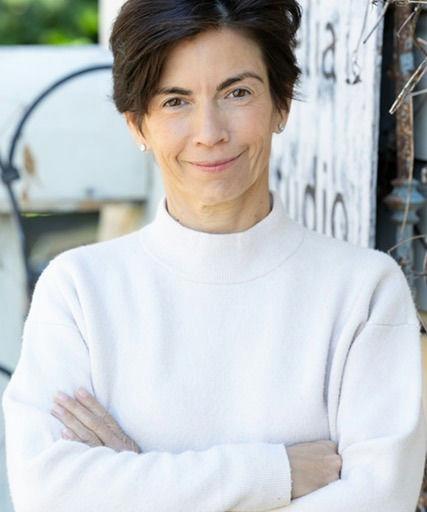
Psychotherapist and Clinical Social Worker Specializing in Trauma, Attachment, and Addiction
25+ years Experience serving LGBTQ clients2 University degrees: BS & MSW4 Specialist certifications & training milestonesLicensed Clinical Social Worker New York
Lisa Arrigo has spent more than three decades helping people understand what trauma leaves behind long after the original danger has passed. A New York Licensed Clinical Social Worker and psychotherapist, her work sits at the intersection of trauma, attachment, addiction, neurobiology, shame, and the deeply human ways people learn to survive.
Her perspective is powerful because it comes from both sides of the therapeutic relationship. Lisa has devoted her career to helping others heal, while also confronting the impact of trauma, addiction, relapse, and recovery in her own life. After more than 17 years of sobriety, she experienced a cocaine relapse that nearly cost her life and left her waking in a Manhattan hospital unable to remember how she had arrived there. That experience challenged everything she thought she understood about healing and forced her to confront a difficult truth: we can have insight, language, and years of recovery behind us and still carry survival patterns that remain active beneath the surface.
That lived experience now sits alongside decades of clinical training. Lisa earned her BS from Trinity University and her MSW from Fordham University School of Social Work, followed by post-graduate study at the Westchester Institute for Psychoanalysis and Psychotherapy.
More from Lisa Arrigo
All episodes → Situaseans PodcastHow Trauma Rewires Relationships (ft. @lisa.arrigo.therapy)Oct 2026Play episode →
 Hearts Entwined PodcastCuriosity Is The Key To Healing Trauma - Lyn Smith & Lisa ArrigoOct 2026Play episode →
 The Sober Fix PodcastI’m a Psychotherapist… and a Sober Addict | Lisa’s Recovery StoryOct 2026Play episode →
 The Accrescent: Bioenergetic HealingLisa Arrigo - Why Healing Is More Complex Than “Just Doing the Work”Sep 2026Play episode →
 Learning To Mom ® Motherhood Podcast for First Time Moms, New Moms and Expecting MothersIn Utero Safety and Maternal Wellbeing | Besties' Bonus EpisodeSep 2026Play episode →
 The One Day At A Time Recovery PodcastHow To Come Back After A RelapseSep 2026Play episode →
 Human AmplifiedWhen Survival Shapes Your Identity and Healing Changes the Story with Lisa ArrigoSep 2026Play episode →
 Trauma Interrupted with Jan BrobergLisa Arrigo's Story • Epigenetics, the Body, and Breaking Cycles of TraumaAug 2026Play episode →
 Heal Podcast - Lily PatrascuHow To Heal From Trauma - Lisa Arrigo and Lily PatrascuAug 2026Play episode →