
October 24, 2022
Brand Storytelling with B2B Podcasts w/Graham Brown
Sound bites
If you want to create change in somebody, you don't just say you need to go from A to B otherwise this is going to happen, you actually tell the story.
In this episode
Graham Brown talks about brand storytelling, internal podcasting, and how businesses can use stories to improve communication and buy-in.
- Storytelling can drive change by showing a problem through past, present, and future scenes.
- Corporate communication often relies too much on PowerPoint and data instead of stories that people remember.
- Internal podcasts can capture useful conversations and share them across departments that do not normally talk to each other.
- Belonging and sharing matter inside organizations, and communication should help people feel part of the company.
- The hero’s journey is presented as a long-tested framework behind many effective stories and movies.
Transcript
ShowHide
Automatic captions of the conversation. They can contain errors and do not name who is speaking.
How can brands use podcasting to engage their internal and external business audiences this is the leaders of transformation podcast and on this show we interviewed difference makers and World Changers who are disrupting for good I'm your host Nicole Jansen and our guest today is Graham Brown he is a published author on the subject of digital transformation of communication his work has been featured in the financial times Wall Street Journal and he has helped shape the communication strategies of some of the world's leading organizations including McKinsey
Air Asia Nakia UNICEF Disney Monster energy drinks and so many more uh what is it the uh Singapore Institute of Management where he is in Singapore and also the European commission so a lot of experience here and today we're going to be talking about the power of Storytelling and how to use podcasting to engage like I said your internal and external stakeholders we're going to explore how to start and successfully grow your corporate podcast the key to effective and authentic communication brand transformation and so much
More so I'm really excited to have him here before we do this and and jump into our conversation I want to do a shout out to the team at podfolio for introducing Graham to us I always like to give thanks to those that are supporting the show and they certainly have done a great job with introducing us to uh to Graham so Graham welcome to lose a transformation we're glad you're here Nicole thank you very much I'm very happy to be here looking forward to this
It is a it is a pleasure and I'm looking forward to it as well you know we've talked on this show already about podcasting from different angles and I really was interested in your perspective because you're working with big Brands you're talking about BB podcasting it's a it's a different animal you know than than just general podcasting and yet at the same time here you are talking about storytelling and transformation and so there's certain principles that are just that did that just work and so I
Would love for you to share a little bit about that here today now where do we start when we talk about transforming brand communication where is the best place to begin that conversation yeah great question so we have a challenge today with organizations large brands storytelling transformation you know the humanization of these Brands these are the kind of words that get thrown around banded about a lot but what is really going on here maybe Nicole we can step out a little bit and with the festive
Period Upon Us I'd like to share a little bit of a Christmas story we're all if you've read the book Christmas Carol and probably you've seen the animations as well with Jim Carrey um we know the story of Ebenezer Scrooge and who gets visited by the three ghosts of Christmas you know Christmas Past Christmas present and Christmas future and Scrooge was a miserly old man um and he wouldn't change and yet he was visited by these apparitions and it was only through seeing the outcome of
His behavior and his mindset his actions did he see Christmas future where he was actually shown this vision of his funeral and there was nobody there and that created a transformation inside Ebenezer Scrooge and the next day according to the Charles Dickens book he goes out and he gives Tiny Tim or the workers a day off he gives them a turkey etc etc and that's you know it goes from bar humbug to being a generous Giver it's interesting when Charles Dickens actually wrote that book that
Actually it created a wave of Charity giving in the Victorian era because that wasn't really a done thing but a lot of wealthy and these were kind of industrialists wealthy people in society started giving money to Charities and that really sort of started a movement and if you think about it that there are stories within stories there there is the story of change which is that you know through sharing a story you can create change that create change in society at a very macro level and
Then there's the story within the story itself which is the story of the three ghosts past present and future and if you look at that within that Dynamic is probably thousands of years of practice tried and tested storytelling that if you want to create change in somebody you don't just say you need to go from A to B otherwise this is going to happen you actually tell the story and you tell the story using what I call in podcasting the three box storytelling technique which is
It's seen in Hollywood it's seen in every best-selling novel which is you break down the problem into three scenes past present and future you don't tell it in that way but that's how you create change now that's the dynamic of how you get people to change now put that into the world of business when you ask the question of what's going on there is that the challenges is that people are presenting PowerPoint and data people are simply saying oh here is the numbers here is what
We need to do it doesn't create change so storytelling is what we've been using for thousands of years to create change in audiences and we can use those techniques to create transformation to lead teams so everything from hiring to selling a product to raising money to wider societal transformation so that's what it's about it's about storytelling it's about how you create change and it's about the using the vehicles of change such as podcasts for example to tell those stories you know it's funny that you talk
About storytelling and it sometimes it feels like it can take longer to get your point across when you're telling a story and so often you know leaders are saying just give me the executive summary and I just want the short you know the skinny I want I want somebody to come and extract all that I've actually had somebody say that that he listens to podcasts by having somebody else listen to the podcast for him and then give him the summary notes of it and it's like
Wow you know like the Tactical do this this and this and yet when we go and watch TV we wouldn't watch a movie or a TV show like that we don't that's that's not what sells at the you know at the box so it's interesting that we say we want this but what we really want is storytelling and we want it's more interesting because even as you started out I'm thinking wow what a great way to start a conversation you know by telling a story you
Were demonstrating it right here that yeah so really I really like that story of the guy who gets his assistant to summarize podcasts for him I think we've all kind of gone through that haven't we like oh I've got to read all these books I mean I can see the books behind you I love books and sometimes you realize actually I've got more books than I have time and could I actually get somebody to summarize those for me we go through those kind of processes that
We try and shortcut it but bear in mind that storytelling isn't always epics it isn't like three books in a series you could for example tell a story with one word now Steve Jobs was a master of that you know when he stood on the stage and sold the iPod he didn't give us the bullet points or didn't tell us that this was the best MP3 player in the world he stood on stage and said this is a tool for the heart now that phrase is
A story it's what we call an analogy an analogy or you know if you look in religious texts analogies parables are used extensively to help people understand Concepts through a term which they're familiar with which is really if you think about it is the basic mechanism of Storytelling which is basically giving people something they don't know which could be for example this is what's going to happen to the climate on the planet or this is what happens if you buy my product or this is what
Happens if you join my company these are all unknowns what a story does is basically say right I'm going to take that unknown and connect it to a known and that's what Steve Jobs did he said this is an unknown object I don't know what an MP3 player is but I have a music and I understand heart and I understand you know our love song or that song that reminded me of her at high school we understand all of that and therefore using a very simple
Story a short form story as I call it you can help connect people with known experiences and create that familiarity and that's powerful so I think we all think that storytelling is very long and those are the kind of like the Hollywood epics that we all love but there's also a very effective form of business communication which is short form storytelling which is like a label or a frame to understand something very complicated in a very quick amount of time which you're a friend who is
Summarizing podcasts he may understand you know for example that's a very easy way of getting information out to people quickly so how do you teach this though to people who are generally in a space of a lot of data analytics and a lot of information it's like well you don't understand I need to explain everything to them so they can make a quality decision and all all of that and here you are you know inviting them into a different way of doing it well it's like
Your podcast Nicole you know you've done over 400 episodes that's a lot of data you're inviting people on a journey and it I imagine for you as well that your skill in communicating has improved extensively through those 400 episodes I'm sure if you go back to episode hopefully yeah and then episode 450 a little slow so yeah but still there's a change isn't it and it when you ask about teaching it that's it it's the journey I feel that storytelling podcasting is very much like stand-up
Comedy that to get on stage and face an audience is actually quite nerve-wracking but the only way you can get funny is by doing it you can't read it from a book you know no comedian was born funny we know that that they had to practice rejection thousands of hours of rejection getting on stage now the interesting thing is that every single podcast is a stage because you get to stand in front of an audience who aren't your biggest fans aren't your family and though your
Cheerleaders on the side there's people like I don't get it or yeah I love that so every time that you get on stage and you commit content it's like a joke isn't it that has a punch line you commit content to the universe the universe is going to tell you know they went straight over my head that one the way you delivered that the way that you gave the punchline or the language you used maybe didn't work or they're going to come back to you and
Say you know that got me right there and you'll read that data and you'll take it on board and think wow that's uh really good feedback I'm going to use that to improve the next time and that's exactly what stand-up comics do you know they go out they practice that's why you see some of the most famous stand-up comics still go out to the clubs still go in front of 20 people when they can feel stadiums or do the Netflix specials they'll still do it because
For them it's feedback and that is the key here is that's how you teach it the only way to really get good at this to get good at storytelling to get good at podcasting is to get on stage face rejection and keep doing it keep reading the data in a very agile way this is agile storytelling in a very agile way read the data and take that in and refine your content so you mentioned about the three box method I think earlier can you share with
Us a little bit about that and how we where we go so if we're looking at feedback and how we construct this story with the past present and future how do we how do we do that because you said we don't do it sequentially no yeah this is one of the the key sort of tactical um uses of Storytelling that people get wrong is that when people ask you what do you do you tell them what's on your business card or you tell your story by
Starting at the beginning and nobody cares like you know I was born in 1972 that's my story so you know nobody cares unless for example we're born in the same year like likely you and I right so that matters to only a small amount of people but to most people it doesn't the key here is that for example like think about how a Hollywood director would tell a story and how they would you know take that content and make it engaging for an audience so imagine
The Hollywood movie you've got all this is a very B rate movie in my version of it you can imagine opening scene dead body on the floor you know a woman drops a gun and runs away right and immediately you're either going to turn it off you think oh what's going on here how did that happen you know who's that woman why did she just shoot that man or did she shoot that man we don't know that's the opening scene that's the hook that's the problem
Statement if you like which is oh we've got a problem here there's a dead body and something's happening it's not just a normal you know robbery or murder it seems like there's something else going on and then the director would once he's got your attention take you back to the past how did we get here so if you think about that in all great movies there's always like a big opening scene and then it's like a rewind how did we get here how did I end
Up here how on Earth did all these events come to this place and that's the past the back story so let me take you back to high school when these two met the boy and the girl met and they you know they fell in love events ran up and then it takes you all the way back to the scene they're starting and then the closure is the third scene which is the future which is where do we go from here which is the kind of like
That's when you get closure on the problem so if you think about that if you were telling a story in business a podcast you don't say oh the beginning the boring girl matter of high school they had a really good time dated for a while but something happened and it all went sour and then she shot him or did she shoot him we don't know that is the wrong way of doing it the best way of doing it is to start with the middle seam which
Is the present which is the problem and if you think about any pitch deck if you're a startup raising funds the first slide should always be the problem statement start with the problem then you go back to what are the thought processes what are the input factors that brought us here why did we end up here what was the mindset that brought us to this problem that we need to change and that's the reframe moving into the future which is the third scene if you think
About it in every movie there's a scene where the hero is kind of beaten down and you think oh no he's not only been beaten down but it's getting worse like the bad guy stomping on his head and he's not going to do it he's going to give up and then everybody in the movie theater is going come on you can do it you can do it and then you know like the Obi-Wan figure appears in Luke you know that very sort of deep meaningful voice
You know use the fall so whatever it may be that sort of epiphany moment and that's a very religious um significance as well if you think about the Epiphany actually comes from the Bible and you'll find it in all religious texts as well the Epiphany being the rebirth which is how do we get out of this we don't get out of it using the mindset that God is here we get out of this using the different mindset and that's how you go from the present to
The Future which is transformation if you think about it all transformation is change you know Oliver Twist sorry or Charles Dickens and Christmas Carol was all about change he had to change the way that he thought to get out of this otherwise he was going to end up lonely on and on his own and if you think about business it's all about how do we change how do we leave behind the world of conf comfort and head to the promised land that requires leadership that requires
A story and that is in its Essence transformation so in summary the way to tell that that story is present past future I love that and I'm thinking about the book I'm writing and all the different things I'm doing and how I can apply that that is that is um brilliant now I'm thinking about these podcasts that you you talk about the internal and external uh customers or stakeholders so let's say let's say I don't know take Disney right or one of the you know is
It the Monster energy drinks or something like that it's like okay they want to tell a story externally to um to their wider audience and then they also have that internal what's the difference in terms of what the story they're telling and how they is or is is there a difference in how they structure it yeah that's a great question so you're talking about the difference between internal and external podcasts and external podcast is what we all experience um two types of those obviously there's a
Consumer podcast the real you know the True Crime the history podcasts are really popular those kind of things but then there's the corporate podcast that I focus on which is more about helping the people of the organization and their Partners their ecosystem the community tell stories which really is about you know the work that they're doing the transformation those three boxes telling those stories the internal podcast is obviously aimed at a different audience so effectively an internal podcast is a better version of a newsletter and
That's not a great sales pitch but they're not a great analogy in itself but you know the idea is it's a much better alternative to what's going on already that how do organizations communicate with themselves internally now newsletters is one you've got these kind of Internet type things which tend to be really like built 20 years ago you know and the user experience is pretty terrible so people tend not to use them you also have off-sites you know let's get everybody to the island for the
Weekend and we'll do all the getting to know you exercises which are hugely expensive and time wasteful especially today when very few people you know go straight into these kind of like business travel commitments without thinking about Alternatives now can we do this on Zoom so that's how organizations communicate with themselves normally like the transformed organization so in the digital world what we really need to look at is how do you capture all the good conversations inside these organizations and you know democratize them give people
Access to them because you know there's a conversation between Graham and Nicole over in the accounts Department which may be relevant to the product development department and those kind of things go on and there's also you know I think it was um Blanchard the author who said that you know catch somebody doing something right is probably one of the most important skills of a leader you know we don't police our people we find great case studies so you know if Nicole and grammar you know working
On a project which may be inspiring to another department but they don't know about you know departments don't talk to each other within the same four walls what wouldn't it be great to capture that on a podcast and then share it internally because it's not just about this is what they're doing this is also why they're doing it which is probably the biggest motivate for change because people will look at that thing wow that thing that they're building over in that Skunk Works that department that's
Amazing I'm really inspired by that and I really you know I listen to Nicole's story and it really inspired me and I want to go and find out more about it that's a really powerful platform that you're now building I think all podcasts are platforms again it's this stage right but for the internal one it's all about unlocking that human potential inside these organizations and there is so much goodness inside organizations that tend to get you know hidden away because for in the old model of
Communication in the organization but also people feel that they shouldn't be standing up and talking about it they haven't had the tools to do that I think that's the future there is a lot of growth in internal podcasts and I think it's an exciting area and it's a much more engaging and authentic way to share communication internally yeah and I think about all of the leadership Consultants that I've had on this podcast and there's a lot of them and I've only had a like a little
Fraction of the number of Consultants that are out there that do these off-sites and do the trainings and all of this and which is great which is absolutely great and that they're doing that and I often will you know I think like well if there's so many leadership Consultants out there I mean I coach also leaders why do we have so many messed up organizations and one of the one of the things that you know you were talking about here is communication communication is a real
Issue and it's not even about behavior modification it's really about a buy-in and that's what you're what I'm hearing you talk about it's like people buying into like what the company is all about what's going on and if people don't buy into companies they buy into people and so they're buying into their their learning about taking an interest in what's happening in this department or that department and it's like they're they're part of the family I always laugh at these sports events and people said you
Know they're standing in the audience and or the The Spectators and they'll say like we did it and it's like you didn't do anything you were just sitting here like buying a ticket okay so that's good but people want to be part of someone yeah yeah yeah even that word communicate you know if you look at the etymology of it Nicole it what comes from the Latin to share communicat means to share you know that's the basic function of human nature is to share to belong
You know as soon as we're born that's the first thing we do is we reach and we grasp for people and that is the probably the most powerful human motivator is to belong so we need to fulfill that because you know our traditional you know groups and communities are changing and evolving and so companies that can do that and fulfill those needs both for their customers and for their people will create a bigger meaning for those audiences so it makes me think and to your point
About babies there's there was a study maybe you've heard about this as well there was a study of they had these two groups of babies and one were held like they normally would be by the nurses and so forth and the other one was not touched at all there was no human touch and they had to actually cancel the study because these babies started to die but we literally die without that sharing that touch that you know communication and I I just had this thought about
Organizations how many organizations are dying because of this area of communication and so perhaps we have been I'm just putting it out there that perhaps we have been focusing on the wrong things or maybe not all of what we need to be focused on you know so that these are areas that are you know skill development leadership development all those things but this area what you're talking about is something that I would imagine that a lot of organizations haven't considered the full impact of in terms
Of sustainability and even like loyalty people staying around longer because they actually feel part of something they're not going to leave a a family right they leave managers why statistically they they leave managers because they don't feel valued they leave people just in the same way that they stay for people and so you know to to look at this and like you said this being the future is looking at um prioritizing this as an organization rather than what do we need to do here and here
And here and leave this piece out how do we communicate with our customers and get more customers great question valid how do we you know how do we have that authentic communication externally but it's the internal people that are actually going to make that possible they're the ones that are going to be working with those clients and customers and so we ought to invest in them and invest in that communication you build this and they build that absolutely inside out yeah pitch for you because I
Think that's what you do right companies yeah I think it's really important that you it's where it starts right you can't fake it you know going about your point about the babies those psychological experiments you know that it really underestimate the power of that connectivity and you know if you think about you know in society if somebody transgresses or commits a crime we incarcerate them we put them in jail or prison and then if so you get all the bad people the bad quote unquote people
In prison now what do you do with the bad people in prison the baddest of the bad is that you actually take them out of their prison cells and you put them in solitary confinement which is you think about it when if you say to somebody or if they put you in solitary you think oh that's fine I can be I'll handle that I'll be on my own I get time to think maybe catch up on my reading all those kind of things but solitary confinement
Is like so destructive to the human psyche that even Amnesty International said that it was um you know it should be banned because the effect that it has on people is it actually has sort of actually makes their brain deteriorate if we are deprived of human contact then we deteriorate physically and emotionally very quickly and that is because again it's our driver and even in our brain there are parts of the brain mirror neurons as they're called which are actually there and fire and create a
Positive feedback loop if we see people doing the same thing as us so if you're eating an ice cream and I'm eating an ice cream or if you're sitting listening to music and I'm sitting links listening to music it creates a positive feedback loop for me so it reinforces that behavior and the reason that exists is to create that connectivity at the hardwired level of the human brain within our species because that helps survival and that is empathy as well people ask what empathy is it
Comes from that you know when the baby is born and when it grows up it doesn't have a rule book of what it should be doing but it understands you see kids mimicking adults right you know they say something like my son is like where did you get that word from oh actually I know where you got that word from it came from his dad right saying it that's where they picked this stuff up you know they say parenting the three laws of parenting example example
Example now bring that into the world of work you talk about well how do we now you know create that good experience for customers you know how to create that connectivity that that you know human level with people you and I have all experienced an organization start with a negative where somebody treated you as a customer badly or as a vendor supplier badly you know they barked at you or they you know they weren't very empathic of you you know or maybe they just told you
To do something in a very you know cold way and that could be you know service in an airline or it could be working for a large organization as a vendor right and when you experience that it's not that person that you're experiencing what you're experiencing is how that organization treats that person because that is how they think you should behave because that's the example set by the organization and now they're reflecting that on you so now to the point of how do you create a
Good experience you can't hire an ad agency or an experiential marketing agency or one of these agencies to create this fake layer on top of who you really are you create that experience internally that starts with how you treat your people you know brands are created in the conversations that your people have every day how their leaders Converse interact share with their people is how their people will interact and share with the customers and that is so important it starts internally and a big part of
The storytelling is that conversation about who we are what we care for and why we're here because if you can have those internal conversations and create that culture through those conversations that will then permeate through to how those people treat your customers you cannot fake it anymore there used to be a time when you could hire a Madison Avenue or a Chicago Ad Agency and they could fake that but today there's so much transparency in what customers can see inside organizations but also want to know
About those organizations that it really is happening at that human level of experience yeah and that's like you said about the um the surface I think that's been there's been a lot of emphasis on that and now of course organizations that have done that are realizing that that doesn't that doesn't work and they're looking for the alternative so give us an example a practical example of like what would an organization let's say somebody's out there and they're listing this and they're going okay Grandma I get
It I get it I gotta I gotta have this internal podcast to talk about who we are and why we're here and what's important where do I start that um yeah find the people who want to do it first they'll be crazy point somebody in the organization that would want to take this on yeah I would rather than say a point finds because the point tends to be okay you do that and I think that that's kind of a license for a corporate to see that
As an instruction in order right yeah you've got to find the people who want to do this because you know it's fine the 10 that influence the 90 inside you know marketing departments are now challenged with finding influences externally but there are influences internally as well in any dynamic in any social structure there are influences there are people who want to get on stage and there are people who want to follow now the mistake is putting the audience on stage because they don't want to do
It they want to be in the audience they want to listen they don't like being on stage so you need to understand who the 10 are and those people will put their hand up all you have to do is plant a flag and they'll rally around it and that flag is okay we're starting a podcast these are the conversations that we're going to have who would like to be involved and those 10 percenters will put their hands up they will volunteer because they love it they
Are the people that grab the karaoke mic or the ones to get on stage if you say who's going to present next at school right that's their natural disposition so they are out there I don't think we I think we have to let the natural forces the natural social dynamics speak up and work with them as opposed to against them it just brought up a memory of a friend of and she was actually on this show as well very interesting Guy Greg gagne and uh he's
The Barefoot businessman is the name of that episode and uh he's literally run marathons he lives and breathes and does everything he does in bare feet and a lot of fun he actually owns some UPS stores and uh interesting what happened is exactly what you're talking about they came to him and said hey we would love for you to share and because he got known as a personality of somebody who's got this this very you you'd actually you guys would head off really well um he's
Got this style you know of being very interesting and great Storyteller and and all that and they actually came to him and asked him if he would do these internal videos and and he has he showed me a few of them and just amazing amazing for all of the franchise owners and so that they can hear from one of their own and he he got to be on stage and you know speak to a couple thousand people at their conference and all that but it was
It was exactly what you're talking about that's exactly what they did very smart and um and very effective to my understanding you know in in building that Rapport and connection communication throughout the organization so I love that so if people go to your website like what are they gonna find at your website what would be so obviously big organizations that are looking to um you know to do this and want somebody to help guide them and that that's of course your audience but you're also on
On podcast you're talking to entrepreneurs talking to people at different levels like what where can they um learn more how can they learn more from you yeah that obviously is one option is if you're an organization and you want to start a podcast you've got the resources you have the manpower to do it I can help you do that that's one but there are a lot of people out there who love a podcast but don't want to start one because as you know it's hard work
And it's hard work you know any props to somebody can do 400 plus episodes that's a real dedication that's a real passion for it as well you don't go into that lightly and today if you're starting a podcast it's quite hard to build an audience because there's so much competition there for that audience and I think you know the average podcast listener has six maybe seven podcasts according to the data in their feed and that's it but you know there are five million podcasts so the
Competition is huge so for that group who love podcasts don't want to risk all the time and money building one themselves and but want to be part of them I help them get on podcasts so I think that's been a real growth there in the last couple of years especially during the pandemic you know a lot of people wanted to connect a lot of people wanted to get their story out there and that then is leveraging the power of other people's audiences without having to you
Know spend all that time growing your own which I think it's the future because a lot of people have created these communities right these audiences and they've nurtured them with love like you have you've spent time dedicating your life to building this podcast and that's a really powerful asset now there's an audience there that would be interesting for other people and vice versa so you know it's really connecting the dots with that you know people who have audiences who have these communities and people who have
Great content and bring those people together so that's the other part working with Business Leaders helping them get on podcasts so those are the two things and obviously the other stuff on my website is the stories which is a big part of what I do which is everything really what I do yeah yeah and and I would think that if we were to and I include myself in this is that we if I wanted to learn more about storytelling and what you're talking about you've been
On other podcasts is to actually listen in how you're actually doing it and so um I'm going to put that out to our audience as well is that you know to to go on your media page and and listen to the podcast that you've done the material that's out there the storytelling that you're doing so that we can learn that present past future process and see it done in different uh Arenas and different with different stories and different content how you've actually done that so um
Yeah I'm going to encourage our listeners to go to Graham D brown.com and we'll of course make sure that's in the in the show notes but make sure the D's in there because otherwise a totally different website but um uh grahamdbrown.com and uh Graham thank you I really enjoyed this I can listen to you all day I mean that's yeah that's that's a great Storyteller well you're a Storyteller as well Nicole that you know don't undersell yourself you tell some great stories I even think about
That Barefoot businessman what a wonderful story that is I think of that for your audience as well Barefoot businessman or the Barefoot whatever when you hear that you've already got an impression of this guy this sounds like okay this is an interesting guy it's obviously up to something like is he really walking around Barefoot and so you've got these images you say You must have something going on about him and you see something as simple as that and I'll share that with the audience because it's
Like storytelling doesn't have to be complicated that story that Nicole shared of the barefoot guy just goes to show how powerful that can be with just choice of words and that's a great way to start because already now when somebody asks do you know the barefoot guy oh yeah yeah I know the barefoot guy UPS you know right that's in your mind and that's a very valuable piece of real estate yeah yeah and that that does take time because I'm not naturally that's you know it's
Something that you learn you learn over time and you hear I always um I listen for what attracts me and says oh why did why was I attracted to that interested in that title and not that title and I don't always get it right but it's it's like I look at what I what attracts me and then using that as a and of course understanding our you know the audience because not everybody's like me everybody has that same personality um but my clients often are like
You know similar to me in terms of that driven personality the leaders and so forth so um but yeah this has been really really interesting Graham thank you thank you appreciate it is there any anything that we didn't talk about that we should talk about before we wrap up yeah it's so good like go and once you start like storytelling really is about see like you say Nicole it's like seeing it in other people start watching movies and start thinking about the techniques that they've used
If you really want to get a 101 on storytelling look at the hero's journey by Joseph Campbell which is basically that's the plot of every single movie book ever told for the last 2 000 years and once you start seeing that you'll now start watching movies it's like my mum I remember I used to watch movies with my mom and she's going this is what's going to happen next okay Mom how are you spoiling it for me but she still watched the movie she'll still enjoy
The movie even though she knew what would happen next and that's the point there is a technique and a framework that we've been using that's tried and tested for thousands of years and once you start seeing it you'll see it in everything that's good that's good Graham thank you so so much I appreciate you being here and and sharing your expertise with us and uh thank you to our listeners and our viewers and and we just appreciate you being here of course you're the reason why
We do this podcast and and what has made it actually a success that you can actually have 430 plus episodes because somebody actually is is there um consuming the content and enjoying it and sharing it and we appreciate you sharing it with others if you enjoyed this uh please share it with a friend and I always say that leader is a transformation take action and so take action on something today maybe it is when you watch TV tonight or you watch a movie then on the
Weekend or whenever you you know uh you read a book or whatever is start noticing the pattern and then asking yourself a very simple yet perfect on question is how can I apply that to to tell him our story as a brand how can I tell that internally there's so much focus on the external customers but don't forget about the internal customers because those are the ones like we talked about is those are the ones are actually going to be um representing your brand out there
In the marketplace and so uh yeah I would encourage you to do that and we'd love to hear your stories you can go on leaders of transformation.com reach out to us there of course you can follow us on social we'd love to hear how this has impacted you and the feedback and also if there's anything else that you're saying hey I want to learn more about this or that I mean tell us what you want we'd love to hear your feedback on that as well and
We'll make sure that we incorporate that into future episodes as well so and of course I go to graemdbrown.com learn about what Graham's doing and learn this Art of Storytelling and how you can apply it to your brand so we encourage you to do that thank you again and we look forward to seeing you in the next episode of leaders of transformational so
About Graham Brown
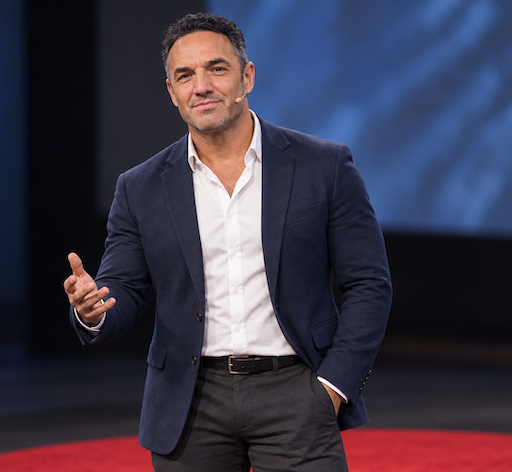
Author and Podcast Guesting Specialist for Corporate Leaders
2001 Founded mobileYouth16 books Published author250+ clients Served across 60 countriesUniversity of Sussex AI & Cognitive Psychology graduate
Graham Brown is an author and founder of Podcast Guesting Pro who helps corporate leaders, founders, and storytellers get booked on aligned podcasts and build thought leadership.
He began his career studying youth mobile behaviour and founded mobileYouth in 2001 to understand youth marketing and mobile culture; that early work serving clients such as Nokia, Vodafone, MTV, and Disney shaped his focus on audience insight.
Over time he moved from youth research into audio after seeing business leaders struggle to communicate authentically at scale, which led him to found a full-service corporate podcast agency and develop programs to train hosts and producers.
His route into podcasting combines formal study in Artificial Intelligence and Cognitive Psychology at the University of Sussex and Entrepreneurship training at Harvard Business School Online with decades of client-facing agency work.
He helps corporate leaders, startup founders, and storytellers find their voice. He leads Pikkal & Co, an award-winning corporate podcast agency, and runs Podcast Guesting Pro.
He previously hosted Asia Tech Podcast and previously grew mobileYouth to over 250 clients in 60 countries; his agencies operate from Singapore with partner studios across Australia, Austria, Canada, Croatia, Ireland, Sweden, the UAE, the UK, and the USA.
More from Graham Brown
All episodes → Office Hours with David MeltzerJosh Chodniewicz, Gary Coxe, Graham Brown | Office Hours #621Jun 2024Play episode →
 The High-Performance CEO ShowEpisode #76: The Future of Leadership: AI Innovation, Storytelling Mastery, and Human Connection with Graham BrownMar 2024Play episode →
 The Leadership Communication Show with Michael PipernoInterview with Graham BrownJun 2023Play episode →The Leadership Communication Show with Michael PipernoThought Leadership with Graham BrownJun 2023Play episode →
 Rise | Evolve Leadershipevolve | eps 50 | Graham Brown, CEO | Pikkal & Co.Feb 2023Play episode →
 Limit Break StoriesGraham Brown | The Power of Storytelling for Building a Strong BrandJan 2023Play episode →
 Coffee With CoachesGraham Brown - How the Science of Stand-up Helps Jumpstart Your Story | Conversations with Coaches | Boxer MediaJan 2023Play episode →
 Speak With PowerTransform into a Magnetic Storyteller with Graham BrownDec 2022Play episode →
 Coaching CallGraham Brown - The Digital Transformation of Communication & building your brandDec 2022Play episode →