
March 5, 2024
The Lonely Life of Leadership with Nick Jonsson
Listen
Sound bites
As soon as I did that with the closed circle, I started to feel the best ever. You know, I got full confidence. I started to be myself.
If I'm completely honest and I'm completely transparent, the rewards and the life I can live by being honest with everyone, including myself about my feelings and how I feel, that is the way I want to live.
In this episode
Nick Jonsson joins Leave Your Mark to talk about executive loneliness, vulnerability, and how peer support can help leaders live more honestly.
- Childhood in Sweden shaped early ambitions and a view of work grounded in practicality and family influence.
- A breakdown after quitting a job and divorce led to recovery and a hard look at his own delusional, overconfident mindset.
- Sharing his story first in a trusted circle, then publicly, built confidence and helped him live more authentically.
- A friend’s suicide pushed him to post a video on LinkedIn and speak openly about vulnerability and mental health.
- His company organizes confidential peer groups for senior executives who want support and connection.
Transcript
ShowHide
Automatic captions of the conversation. They can contain errors and do not name who is speaking.
Hello, and welcome to Leave Your Mark. I'm your host, Scott Livingston, and this is where I explore the influences that have shaped the lives of our incredible guests. These are the stories of lives we're talking about. Follow me on Twitter, built by Scott, and Instagram at Kingopane, or link up with me on my Facebook fan page, Scott G Livingston. My goal is to empower and inspire a community of people who take every opportunity to live a high performing life. Are you a clinical therapist or performance practitioner?
Are you like many in this area of human performance practice who are struggling to set yourself apart? Do you feel challenged to bring all of this disparate courses and skills you've accumulated over numerous years together so you feel more confident and capable of solving your clients' issues? Neuroreconitioning will help you unlock the ability to seamlessly blend rehabilitation and movement enhancement with confidence. The approach equips you to effortlessly integrate and elevate your skills. Elevate your practice, gain the confidence to tackle complex issues, help your clients move better and live their best lives.
Visit us at www.reconditioninghq.com today and download a learning session recorded in our powerful Mastermind program for free. I'm really excited to welcome Vald as one of the key sponsors supporting the success of the LYM podcast. I don't bring sponsors onto this podcast unless I believe in what they are doing and what they stand for as a company. Vald is fast becoming one of the key innovators in human performance. They provide clinicians with a range of technologies for measuring, monitoring and improving musculoskeletal health.
And they are trusted by over 3,000 clinics, hospitals, sporting teams and defense departments around the world. Vald's objective measurement solutions help you measure strength and range of motion and include the Dynamo Handheld Dynamometer and Inclinometer, Force Decks, Dual Force Plates, Force Frame Strength Testing System, Human Track Human Analysis System and the Nordbord Hamstring Testing System. Together they are capable of measuring and monitoring almost every major function of musculoskeletal and movement health.
If you are looking to take your performance game to another level, contact Vault and look into their products. They want to help you become objective and informed. Visit www.vault.com today for more information on their complete line of products. We've taken care of those that take care of us. On to the podcast. Hello and welcome to Leave Your Mark. Today I have the pleasure of speaking with Nick Jonsson. Nick is a business leader, author, speaker, podcast host, networking expert and entrepreneur. His primary mission is to empower individuals towards living a life beyond their wildest dreams through vulnerability and holistic happiness.
He is the co-founder and managing director of Executives' Global Network. Singapore, Malaysia and Indonesia and East Asia, largest confidential peer group, networking, providing more than 900 senior executives and business owners a safe haven to share their challenges, receive support and learn from each other. Nick is deeply passionate about physical health, mental health and emotional health awareness and believes that well-being is crucial for leaders to perform at their best. He has written a best-selling book, Executive Loneliness, The 5 Pathways to Overcoming Isolation, Stress, Anxiety and Depression in the modern business world.
I'm pleased to have him on the show today. Welcome, Nick. Thank you so much, Scott. It's great to be here. Yeah. Well, I'm actually kind of excited about unpacking this, because it sounds like you've lived a pretty interesting and at times challenging life that you've taken a lot away from that sort of informs who you are today. But you're from Sweden. You grew up in Sweden. When you were a little boy in Sweden, what were you dreaming about being when you grew up? What did you want to be when you were 5, 6, 8, 10? Yes, indeed, Scott.
I was born in Sweden in a small sort of country town and I didn't see much further. You know, you sort of as a child form your imagination around what you see. And I saw mainly farms. I saw animals, cattle and so on. So my first dream was to become a farmer. But that was basically the world I saw then. And so what was influencing you in your journey towards where you went from a professional perspective? Were your parents pushing you to be a student? Were you looking towards potential entrepreneurs or things? What was influencing what you would maybe study or become?
Yeah, so I remember my dad especially said that no matter what I wanted to do, if I wanted to go on and study later on in my life, it would be good if I can get the profession that I actually could do and fall back to should that not work out. And he was in construction himself, starting as a builder and then becoming an engineer. So he was quite influential in that and I actually became a construction painter. So rather than going on to university right away, I basically did a two year course in becoming a construction painter.
So I worked as a construction painter for four or five years and I specialized eventually in dangerous jobs, epoxy works. I worked in nuclear power stations and so on. So that was my first career. And so does that you kind of figure out that that's not what you want to do for the rest of your life? So you decide to go back to school? Is that how it works out for you? It could have been like that, but I actually drove a motorcycle and I was quite passionate about speed and getting out. Seeing more of the world, so I drive around Europe, explore the countries.
And one day I had a motorcycle crash and I ended up in the hospital and the doctor told me you shouldn't continue to work as a painter anymore. And that sent me right back to school then. And the first was to actually learn English properly. I moved to Australia in 1998 with the intention of studying English and I haven't moved back since. I'm now on the road since the last 20 years, you could say. If you didn't have that accident, do you think you'd still be doing more of a manual labor profession? Or do you look at that accident as kind of a big change agent in your life, looking back at it?
Yeah, if I'm looking back at it, my friends, actually all of them, still live in the same town, about 60,000 people in Sweden. And they do similar jobs. Many of them work their way up, perhaps run their own business and so on. But most likely I would still be there. And it's something I reflect on with my friends. So that accident, at the time, it looked like the biggest hurdle or incident. And it really also sent me into a depressed mode because I also missed my colleagues. I missed my work. But actually, it was the biggest gift of my life.
Well, it's interesting when you reflect back on things like that, about how it changes your life and in the moment that you're in, it seems terrible. And then you reflect and you see how it actually changed your life in a positive direction. Do you lean on that to a degree now in some ways in how you carry yourself as a person now, the fact that you were able to sort of reinvent yourself? I wish that I actually took that with me because I also went through some more big crashes in my life. It wasn't a motorcycle accident, Scott, coming later on in my life.
It was perhaps what we think or talk about as a 40-year-old crisis. But in that instant, it wasn't a motorcycle indeed that crashed. Instead, I was let go from my work. And so when I lived and worked in Vietnam in 2007, my career was going well. I moved on from Sweden and so on and was working in the sales industry, sorry, sales in the cosmetic industry. And I thought everything was great. Suddenly, boom, they just pulled the carpet under me and I fell on the floor and that was my job. And that was very similar like the motorcycle accident, but I didn't draw the conclusion back then.
So you decide, tell me again why you decided to move to Australia. You was to learn English, but why Australia? Why not England? You're like, that's a pretty big jump versus just going, you know, to a country that's pretty close to Sweden. Yeah, I was actually looking around US, England and Australia. I wanted to go away from Sweden, but it was the warm climate of Australia that attracted me. I played a little bit of golf then. And I looked at Australia, the Gold Coast, and I read online that it was like 47 golf courses there.
I could study and play golf. And that was the attraction there. And also the beer prices were cheap. And I thought, oh my god, this sounds like heaven. And the dream came true. I worked extremely hard when I did work in Sweden, and I saved up the money. So I had money to afford, make the move across to then, indeed, study English, which was the first goal. So what did, in Australia, what do you, obviously you got into sales, but how did you get into, what was your professional, your profession up until you had that crash at 40?
Yeah, so I studied at the private university there, small campus, marketing, advertising, and then a master of public relations. But my love for the sport golf at that time grew. And but even more so the leadership of it, I became the president of the golf club. We had 400 golfers at the campus. I organized golf tournaments and so on. I was then also given to be the captain of the Pennants team. So we played against all the other universities in Australia. And it was my role to take out the team and get the best coaches for us and so on.
So I was fortunate enough to travel all over Australia at the cost of university to play golf at very high level. I was never the best golfer, but I loved then managing the team and the squad. And that was the highlight of my university days there. So why don't you become a golf pro or why don't you keep working in that industry instead of getting into cosmetics or into sales? Yes, I was playing with the thought, but in all honesty, I wasn't good enough in golf. Perhaps I wasn't mature enough. Maybe I wasn't patient enough.
I probably worked harder than the most, but I didn't make the cut. And it was very, very competitive. Some of the best talent from all over the world came there. You could even study a bachelor of golf at the university. They had a master of sport and so on at the campus. So you can imagine the attraction of the talent then coming in. And there I was. But they were looking at someone for leadership. And that seemed to be the natural talent for me rather than anything. So that's why also later on I could draw the conclusions.
Yes, while I have sport or something, it's actually the passion for leading a team and running a business also that really, really sparkled me. And I want to add one more thing here because I also could see how it can benefit not only then me, but also, of course, people with the physical health and everything else that comes from it. Plus, I try to link everything back to the community service. We did a lot of charity fundraising golf days and so on. And I was very passionate about that. So you mentioned before we got on that you were married before you got divorced in this period of crash in your life, et cetera.
So when do you meet that woman in your life and start to have a family? Is that while you're working as a golfer or is that later in your life? So when I lived in Australia, I was home in Sweden one break. And I met my ex-wife and she came and she moved to Australia with me. She studied there as well. And then after Australia, we set out together on an ex-pat career. Our first job was to live and work in Bangkok. Then we moved to London one year actually for her work. They promoted her there in a role for a while. And then we moved after that to Vietnam together.
And how was that experience in terms of those different countries? What have you learned about humans and human nature through having traveled as much as you have, having lived in these different places? How has that shaped you? Yeah, it has really shaped me a lot. But I think in the early days, perhaps in a negative way, because I became a very close person. Many times, my leaders in the company say, don't talk about your salaries, your packages. Don't try to show anyone around your mobile phone. Hide it in the drawer.
If you come in a nice car to the office, park it around the block so no one of the staff sees it. Simply for the reason that if you're an expat in Asia, perhaps your salary is 10 or 20 times higher than the local staff. And it's very easy that the jealousy sets in and people will start gossiping. So I was really warned not to be vulnerable, not to be disclosed, focus on getting the job done and be very, very mindful in getting too close. And perhaps I took that as a warning and I might have even done it to the extreme, which also meant that I never integrated well in the office.
I just became friends with the bosses and the expats, but not with the locals. Well, that's interesting. So, you know, in reading sort of about you, obviously you're doing things now to instigate people feeling more community and more connected and trying to get people away from this kind of lonely, call it loneliness. So at that time in your life, did you feel alone? Did you feel lonely in the work you were doing because of the circumstances under which you were working? Well, it creeped on me. It was growing and I didn't realize it that it's like a downward spiral.
You know, the more you isolate and after a while when you when you really cannot get through to the team or when they don't feel safe coming in to knock your door, when something is wrong and then you're not finding out as a leader until it's too late. Perhaps we were working on some big tenders or some big deals and then, you know, it's not being exposed until it's handed in. Someone realized that something is not adding up and then the team knew about it. But because I didn't have an open relationship, they wouldn't flag it to me.
And many times those issues were coming up and also my weaknesses then were exposed. I was never good, for example, on Excel and formulas and sheets and so on. But in one of my jobs, it was a lot of sheets and it was very complicated. And I was trying then to work long hours to make it happen. And likewise, I also didn't go to tell my boss. I was not open and honest with my boss about my biggest weaknesses. Looking back in hindsight, I could have knocked her door and said, I'm not so comfortable with this. Can I get some external support?
I didn't. I wanted to show her that I could do everything. So my interpretation is you didn't realize that you were slowly sort of spiraling downwards, but all these different events were sort of driving that and eventually you lose your job. Is that at the same time as you lose your partner or do these things happen at sort of separate moments in your life? Yes, I lost my job twice the first time then in Vietnam and we managed to overcome that. I jumped from job to job for a while and my ex-wife had a stable job at the time, so that helped us to push through.
But I remember a feeling that part of my identity was lost. It was sort of my first big blow to my professional career. I didn't know what to say to my friends, family. I didn't know what to tell myself and I didn't want to be honest. I covered it all up. I made it sound immediately like taking another opportunity and I tried to make it sound like a good story, but it wasn't. It wasn't pretty behind the scene, but that was something that I lived with myself. And later on, a few years later on, I found a new job and I was doing great in this job.
And I was five years into it being promoted and suddenly I was let go again. And this time it was emerging acquisition and it just came like a big blow to me. And at that stage, though, I just couldn't handle it. I basically asked my ex-wife and my son, who was five, to please go back to Sweden and let me deal with this myself and try to find a new job. We then lived in Indonesia, Jakarta. And this meant taking out our son from international school and we were let go of the house we had and everything else. It was a big challenge and I felt like many men, I had to deal with this myself.
Well, looking back with the glasses that you have on now, at that moment in your life, it must have been very challenging, but how did it reshape who you are today, going through that? Yeah, it certainly reshaped me because what followed that the next three years, basically again, was another downward spiral where first I jumped from contract to contract and I didn't know who I was. I was questioning where is home and it ultimately led to my divorce because living apart in two different continents didn't work out. I also during this stage changed all my good habits.
I stopped running. I stopped competing in marathons and triathlons and Ironman events and I changed my healthy diet to pizza and fast food and with that ended up on a bar stool. So my new hobby was going to drink beer and I gained a lot of weight. I lost all my health and with that I found myself basically lonely, isolated on a bar stool sitting in Jakarta, Indonesia. So you did discover triathlon and marathon earlier in your life. I was going to sort of segue back into how did you first initially get into doing marathons and triathlon as a form of exercise.
Quick break here. We'll be back to the podcast in just a minute. I am proud to have Vald as a sponsor of the LYM podcast and to help them spread their message and mission to help performance professionals do their best work and serve clients more effectively. Vald is all about providing clinicians around the world with a range of technologies for measuring, monitoring and improving musculoskeletal health. They offer a wide variety of testing solutions for you and your practice to deliver valuable, objective measures.
And Vald also offers a range of completely free digital health solutions, granting you easy access to powerful, engaging digital tools for every step of your clinical treatment pathway. Visit www.vald.com for more information today. Are you a clinical therapist or performance practitioner? Are you like many in this area of human performance practice who are struggling to set yourself apart? Do you feel challenged to bring all of the disparate courses and skills you've accumulated over numerous years together so you feel more confident and capable of solving your clients' issues?
As a neuro-reconditioning practitioner, not only will you find yourself more confident and capable of solving your clients' problems, but you'll be more sought after and valued for your services, in turn contributing to the personal transformation of your growing clientele. Head over to www.reconditioninghq.com and get your free download, which is sure to immediately change the way you practice. Or take a look at the LYM show notes for the direct link. We want to see you thrive. Now let's get back to our podcast. Yeah, so I started to pick that up around 2009, 2010, as I was going through the coping with my first job loss.
And then I lost it during my second crash then. But after when I rebuilt my life after that, I turned to, you know, everything that was healthy, including the diet and exercise and the community that comes with sport. I got back my sort of, you know, ignition and flames and loving for sport, as I had at university in Australia when it was golf. But now then it was more about the triathlon and everything around that. So that's really how I came into it and became almost obsessed with it and making it a part and a base in my life.
So you're sitting in a bar stool in Jakarta, overweight and not doing exercise. What instigates a re-formation of who you are and how do you start that journey? What is the bottom, the rock bottom look like for you at that point? Yeah, it took a while. So it's about from 2015 to 2018. So it's about three years. At the start it was all fun. I had not been out much. I enjoyed going to see concerts and bands and hanging out with friends, catching up with friends. And most of my mates were sharing on me. They said it's good to see you out.
It's good to see you relaxing and letting go. You've been too stiff. You've been focusing on work and never here for us. So, you know, I got a positive spin out of that. But as I was putting on weight and as the day after, the hangovers were catching up with me and as I started to lack motivation, I'm going for a run, etc. then step by step, actually, I lost who I was. And I believe that, you know, as human beings, we were even born to run. We were born to be at least out in the nature and wildness and so on. And I stopped that.
And Jakarta is a big city of 25 million people and it's polluted. So when you are confined in there, then I started to develop almost asthma-like cough and so on. My health was just tumbling down. But it moves so slowly that you don't really think about it. And it wasn't until I hit in 2018 what I call my rock bottom that I managed to turn things around. How did you manage that? What did you do? When you look back, you go, well, I managed to turn it around. But what turns it around? What do you say to yourself that makes that happen?
Yes, I reached a point where I was in so much pain and I had so much fear and anxiety inside me that actually I didn't express it to anyone. I didn't talk about it. I was trying to hide it still. And what happened was I developed a psychosomatic illness. My left foot swallowed up like an elephant foot. I went to doctors and nurses asking about that. They were x-raying it, doing MRIs. They couldn't find anything wrong with it. They did tests and the bloodworks didn't show anything. They thought it was gout, but it didn't show up.
But then they did the tests on my kidney and liver, and they start to ask me, are you drinking too much and so on. And the bloodworks clearly showed that I had an alcohol problem, but I denied this to the doctor. But then coming home and lying on my bed, reflecting on this, again, I was so much full of fear that I thought my life was over. I wrote my will, my testament, and I sent this to my parents, I sent it to my relatives, my ex-wife, and people start to then understand something is not right. My ex-wife called and cried and asked, what's going on?
What's happening to you? You know, and that's when I really thought, you know, I really thought life was over. I couldn't see how I would be able to pull myself out of this. But that's when things changed. I'd met someone who became my new wife, and I decided to tell her, and this was the first time in my life I had an honest conversation about my feelings. And I told her exactly how I felt internally. Yeah, that's, it's interesting that you finished with that, because that's kind of, I know, kind of getting a sense of who you were and who you are now and what you're doing now.
What I'm hearing is somebody who really kept his emotions, what was going on in him to himself, and you were alone in that. And then it sounds like you discovered somebody that you felt you could, you could share with and sort of expose that. What did that feel like to finally be able to talk about yourself with somebody and relieve yourself of that? Or was it scary or was it relieving for you? Yeah, so at first it was extremely scary because until then I wanted to look as this perfect guy who has it all together and I didn't want to be vulnerable and show weaknesses and I just didn't know the concept.
I also had never expressed my feelings. But because of the state I was in, I was basically at that state where it's about live or die that I don't know why I started to suddenly open up, but I just couldn't cope anymore with it. And as soon as I told her, it was like something was lifted from me. And I really understand from that moment is saying a problem shared is a problem halved. Because as soon as I just spent that moment to express myself to her, a lot of the pain was gone. And that enough was good enough for in the coming days, the swelling of my foot disappeared.
And my second wife then whose name is Donna, she also brought me to a doctor. And she told the doctor exactly the same story. And I was there very shy and so on, but I was exposed the second time. And then she took me to a common friend who had some alcohol problems before. And she shared the story to her as well. So within basically 24 hours, three other human beings knew my story. And with that, I started a journey of a V-shaped recovery. This kind of leads into, you know, what you're doing now in some sense. But obviously you've discovered that there's great value in being able to share with others what you're going through.
And a lot of executives or people in leadership positions fear that sharing because they fear that they're going to be judged or that people are not necessarily going to think they're good at what they do. Their fear is that if they are vulnerable, then other people are going to somehow take advantage of that. So in the work you're doing now, and I want to sort of expose what you're trying to create and what you've created, how are you providing people with insight into exposing themselves in the way that is safe in some sense, that allows them to be better versions of themselves?
Yeah, so the way I do this, Scott, is that if I'm looking at my own journey, then what happened after I started my recovery, the following year was one of the most amazing experiences of my life as I sort of started to practice my vulnerability muscle and open up more and more. I did this in safe spaces. I did this in my recovery program with people, very close people who I felt trusted. But then what happened a year later was that I lost a friend of mine to suicide. And that was another just big change for me. And that's the day when I made a video about my story and talking, speaking up publicly for the first time.
It was a video that went viral on LinkedIn. And from that moment on, hundreds of people wrote from all over the world to me and shared on me, thank you for spreading this important message. And that was actually the day that I decided to go public completely and be completely transparent and vulnerable with the whole world. I wrote down my story and also I went on live TV radio and I was completely exposed. And that's the journey that I continue to be on today to speak up about this. When you look back at that, what did it serve in you to do to be vulnerable, to expose yourself?
Like, how did it rebuild you and who you are now? So that the listener, because what I want to try to convey is for somebody listening, is maybe struggling with the same sort of set of circumstances or some variation therein. Like, there's a fear that you're somehow going to be exposed or that you're going to be judged. And I want whatever you say to sort of maybe enlighten them to the safeness or how to make it safe or to how to get past that. Yeah, so that's, I think, is most of us natural default. It was my default.
I didn't share with anyone. But as soon as I did that with the closed circle, I started to feel the best ever. You know, I got full confidence. I started to be myself. I got access to my feelings and emotions, and I started to be able to express them honestly for the first time in my life. Until then, it was sort of I did whatever society set me up to be or do. I wasn't my authentic self. I was living the sort of this double life, hiding behind the mask. So that was the change in me in that closed circle. But then the moment that really changed, then when I started to share my story publicly on LinkedIn and radio and so on, that was the next switch, because I actually did that video and did that post in complete shock over my friend's sudden suicide.
But that was again the best thing I ever done, because after that, I realized that if I'm completely honest and I'm completely transparent, the rewards and the life I can live by being honest with everyone, including myself about my feelings and how I feel, that is the way I want to live. And the life I have from that moment is beyond my wildest dreams. So once you go through this, now I want to get into what you're doing now and how you earn a living and where you're going. So somewhere along these lines, you discovered that this is a pathway that you can do professionally and that you can help other people.
So how do you make that a reality for yourself? Yeah, so I'm now running a company which organizes confidential peer groups. We have peer groups for senior executives and also for business owners and CEOs. And it's a safe space we provide where they can discuss the work-related challenges they have. We don't have competitors in the same group, everyone signing on disclosure agreements. We provide a moderator and they are about 20 to 30 members in one group where they are basically taking turns and sharing what are the issues they have in the workplace now.
And then everyone is asking clarifying questions and then they will give some suggestions for them to work on it. So what is happening then is that you're sort of practicing what I talk about the vulnerability muscle in a safe format. It's a safe space where you learn to be more open, learn to be more honest and vulnerable. And instead of coming to a networking event to show off and showing your nice business card and trying to sell to each other, you are leading with what are the challenges right now and then helping each other.
And we created a whole format of that. And it's a completely different approach to networking and relationship building. And now with all the digital changes and transformations in the companies, the time for this is now. What have you discovered? Tell me about some of the things that you're recognizing in stewarding a group like this and being around it. What are some of the deep-seated challenges that many executives or people in leadership positions struggle with? What are some of the big rock problems that you're recognizing for everybody almost?
Yeah, so the biggest topics or the biggest challenges for everyone seems to be about recruiting the right people and then retaining them. So again, it comes back to communication and how do you connect with these to attract them and also to keep them so they don't move on. And then followed by managing upwards. How do you manage your boss, the owner, or how do you set parameters around yourself to protect yourself so you're not working around the clock, especially when you're working in senior roles, which has all the different time zones.
Those are the major issues that we see. Yeah, it was interesting. There was a really good social post a little while ago here in North America, where a coach of a major professional or college football team was talking about sort of the dark side of leadership and just discussing the fact that, you know, you don't recognize until you're in a leadership role, that you're going to have to do things to people who you care about, that maybe not what they're going to like or that is necessarily the best thing for them, but it's the best thing for the organization.
You're going to have to do things that people aren't going to like and not be able to actually explain or even have the time to explain your reasons for doing it or your decision making because there are so many moving parts. When you're counseling or working with leaders or people who are in those kinds of roles, how do you kind of support them in the dark side of leadership where they really don't have, and I'm assuming that part of the group space is to safely talk about these challenges that, you know, you may have to fire somebody who you actually care about or like, but they're just not able to do the job.
You know, I'm sure that's a big struggle for a lot of leaders. Yeah, and it's all these dilemmas which you need to speak about because dealing with these issues by yourself is very challenging and perhaps we don't also want to come home and burden the spouse with these kind of issues that they might feel helpless or they might not understand and then you end up with a conflict at home instead and perhaps taking this to a coach or a mentor could be useful, but then you're getting one version of it. If you share it in a setting like this, then it's most likely and we team them and group them in a group where people have similar responsibilities, similar scale of P&L and so on.
So there will be people in that group who have gone through similar issues before, but it can be very difficult dilemmas. Indeed, laying off staff is always tricky and getting that support by a group then to getting some tips on how to manage it and how to do it. And one way to deal with it then is, okay, well, if you have to let this person go, and even though you don't want it, what can you do for that person? Can you perhaps look at an outplacement service, getting a career coach? Can you help with various tools so that at least when you come to this person, this person is open minded?
And I had to go through this myself, Scott. We are also a restructured company and I learned from this. And I turned this around and really supporting the staff that we had to let go and making this a new beginning for her and being there for her and supporting her to the point where she actually made even a LinkedIn post about her positive experience, about letting go. And it's about being human here, isn't it? You're right. Well, that's the other interesting part of all this. And I want to unpack a little bit is throughout your journey, obviously you get divorced, you find a new person.
What I'm hearing in you is part of the loss of that first marriage, a great deal of it was your own ownership. You have ownership in that and the struggle you were going through. You were a dad. So how did you reformat being a quality partner and being a quality father after you went through all of this? What did you change about who you are with your partner and who you are with your son after having gone through this journey? Yeah, it was extremely difficult times. And because I was completely dilutional during that time and I was turning too much to alcohol, I didn't take much responsibility for my son.
I'm very glad and grateful that my ex-wife was in a better space and she took full responsibility and cared for him during those years when he was like five to eight to nine years. And once I started in my recovery and I started to get some clarity, I was able to reconnect with him and taking that ownership again. And I started even to get external support because I was then in a space of asking for help. I even contacted a child psychologist and had one-on-one sessions. I needed to be trained. How do you have conversations with your son?
And it went as basic as before I was going to go and see him. They coached me and I wrote tips asking him for the name of his friends, what hobbies he had. And then I tried to memorize the name of his friends. So next conversation, I could actually mention them. And I remember even being coached into asking him what his hobbies were. And he loved particularly that time. I remember he loved some online gaming and I even was encouraged to them by that game, which I did, and we started to play online gaming. So I was in Asia and during his weekend, we were logged on to Minecraft and I would spend hours, literally hours, and he started to then show me around in his world talking about what he's built.
And by that, we built very, very strong and deep connection for the first time in our life. But it was on his terms and it wouldn't have happened unless I saw that professional help. How did that change you just being able to connect with your son? How did it affect you? Yeah, it connected. It affected me deeply, I should say. I started to get some confidence in becoming a dad before I was. Perhaps I didn't know how to do it. So it's better to them just be completely disconnected. But because of how we connected, we now, today, and my son is now 14, and we have a very deep relationship despite living in two different parts of the world.
But I changed my life so I can work remotely for three months of the year in Sweden during the summer, when it's summer there, and he has just been over to visit me in Asia now for a few weeks. So despite my ex-wife have full custody, she's happy to sign a document that he can travel by himself to fly and visit me in Asia. So that's the gift of this. This is the gift we get when we are being honest, vulnerable, asking for help and working ourselves. And that just makes me feel so good. That's awesome. So what did competitive Ironman mean to you after you went through all of this, comparatively speaking, maybe, to what it meant to you before?
Yeah, so as I was really living golf in Australia during my studies, the executive and corporate years, I was lacking that, I was missing that, I was spending perhaps too much hours in the office and so on. And I wanted out again. Indeed, it was the love of running that started it. But if you run every day, you're going to run into trouble or injuries. So I was also recommended to add on some cycling and swimming. And that's what I did. And being a driven person and realizing the importance of community, I then joined a running club, cycling club, swim academies and so on.
And then I just got fueled and ignited by it and want to sign up for races. And just like I improved my relationship with my son, I keep working with coaches. I keep asking the best. And on that mark, I can just add that now my back office where I live and work is in Phuket where it's an Ironman Triathlon Camp run by one of the legends, Juergen Sack. He was eight times top ten in Kona, Hawaii. So I live and work and train in his camp in Thailand, which means that some of the world champions and the best pro athletes in the world are my friends.
Wow, very cool. So your mission now in the work that you're doing is what? Tell me, tell me, describe your mission, what you're trying to accomplish. Well, the tagline we go under is making each other better. And I think that's a good summary of what it's about. It's about being having this platform where members can be open and honest. So the 900 members we have in the business are connected. They are divided into individual peer groups where they meet six times a year for four hours, where they really discuss and go deep.
But in between that, they also connected for all these virtual tools. They have an app where they can ask a question now. They can ask a question right away and it's filtered to the right audience and so on, depending on what the question is. And therefore, they can get support in real time. We also set up different structures of support groups and so on where they can make a phone call if they need to talk. And our job is to link them to the challenge with someone who has the answers, who's been there before. So it's about connecting them.
And for myself then, seeing how this is helping, especially if executives are in transition also, to see how this can help them. So from someone who's just been let go and having all that fear and terror that what's going to happen to me, what about my children in school? Do I have to pull them out of school? And then having that platform now where they can get this help and support. And for me seeing that people who are going through this now actually get the help, that really gives a big meaning to me. Yeah, I was going to say, what is it you're in love with doing what you do now?
Yeah, it's really to give back the gift. I got the gift when I came into recovery and I got it through sort of the recovery community that exists all over the world. You have these days, these anonymous support groups, and it doesn't matter if it's for alcohol addiction, drugs, shopping, sex, gambling. There's something for everyone. It's full of volunteers who are there to help. I got help when I was there and I'm also now volunteering for that. But to be able to also do this in my professional work, where you don't have to be an addict or get serious trouble or even end up on the suicide watch, we can actually address these issues when they right happen.
And that is why I find a lot of meaning in what we do. I want to try to pull some insight from you for the listener, because a lot of the listeners that I have are in the human performance industry in different leadership places. You might have people who are high end coaches or people who are working and training people, etc. What I have found in that industry is that we're very good at telling people what to do, but not necessarily doing it ourselves. And it's kind of this recognition of, you know, more is not always better.
Like everybody thinks that if I just work more, I'll be more successful, or I'll be able to win, or my team will be able to win, or my organization will be successful. So how do you counsel people on, you know, not making life about the quantitative expression and more about the qualitative expression and how you're connected to what you're doing? How are you helping people see that now in a different way? Yeah, I think we need to constantly pause and reflect and ask ourselves questions. And I can give an example. I'm a terrible swimmer.
I always have been and I struggle with that. And I admit it to myself. And therefore, when we now have the best swimmers passing by in the world, including world champions, and we just had a US national team here in Phuket on a training camp and so on. When they are here and the pro athletes I know in the space of swimming, I'm checking in with them and asking them, can I have a one on one session? Do you have some space? Can I come and see you? And then I'm just being completely open and transparent. And if I can pick up one tip or two tips from that, then I get new ignition.
I got something new to work on. I think many times you say we're putting too much hard work and we're just doing it for the sake of doing it. But that's not then reflecting or improving ourselves. So sometimes we need to go slower to go first, as we say, right? And that is, I think, my recommendation here. And be honest and vulnerable. Speak up about your challenges and think, who can help me with this? A lot of times our greatest strength, and that's where that term Achilles heel comes from. It becomes sort of the thing that maybe catches us.
What's your greatest strength that has been your Achilles heel in your life at times? Yeah, so it has really been to be a master connector. That's why I'm now working in the space of networking and professional relationship building. And again, it's about leading by vulnerability, leading with honesty, leading by a service mindset. Many people are so inpatient when it comes to these matters. They instantly think what's in it for me. I'm working for this company. I will come in here and tell everyone what I do. And then I will try to push and sell my product and service.
And especially if you go to a networking event, everyone is running around like crazy trying to hand out the business cards. As soon as they hand out the business cards, they can leave. And then the next day, they give whatever business card they got. They put it on the desk of marketing, asking them to email them and cold call them. And I mean, in a nutshell, that's what's happening. So what I'm saying here is we need to forget about all of that. Be more patient and instead select the community or group with quality people which resonate with you.
It can be a mastermind group, can be a sports club or whatever it is. But coming with a mindset of building a relationship and being of service to your network. That's where I find the gold. Yeah, it sounds like community is a very central part of both your transformation and then what you believe in as a transformative process for people. How do you help people who are shy or introverted embrace community in some sense? What is it you help them see or do? Yeah, and I'm an introvert myself, Scott, and especially being born in Sweden, we are distant people, we are quite quiet.
And I changed all of that. And this has grown on me as I work more and more on myself. So I can also see that a lot of the athletes, the young athletes, they are very shy and quiet. We get some of the best athletes here from the countries like Indonesia, Vietnam, and so on. And Thailand, the young athletes who want to compete for the Olympics or to qualify for the Asia Games. And they don't speak much English. They're very shy. And it's about just starting to build relationships with them. And I'm also volunteering as a career coach for them and to help them build a career so that should they not make it to the Olympics, then they have another career to fall back on.
Or if they retire, get injured, then they learn some skills. And it's about having that conversation. And again, practicing with them there, then already the vulnerability and the honesty around is for them to understand that there's more to life perhaps than I will live a life beyond my sport. And now is the time to be open and honest about that. So it's about practicing early on this in a community. Love it. I'm going to read to you from a book. This book is called The Day You Were Born. I discovered it years ago.
It's kind of, it mixes astrology with numerology and it sort of gives you your purpose. So I don't know if it will resonate with you, but lots of people I read it to does. So you were born May 1st, I understand? Absolutely. So you are a Taurus One. And your purpose is to learn how to present your truth and protect it, using your ability to mask and hide without inhibiting your self-expression. The people who get on in this world are the people who get up and look for the circumstances they want. And if they cannot find them, they make them.
The words of George Bernard Shaw provide the wisdom needed for the Taurus One's dynamic. These are seductive human beings who know how to present themselves in the world in order to get ahead and achieve. They are masters at creating images and their social skills are exceptional. Attached to truth and freedom, they don't deal well with authority. However, when Venus energy is strong, their ambition is masked behind their charm. Financial success will never be enough if a Taurus One is the CEO with an expense account equal to the national debt.
And still unhappy, the answer is simple. The world told him this would make him happy. If he cannot connect with his inner voice, he can still turn things around. He might want to drive to work instead of taking the limo or bring needlepoint pillow. He has been stitching to a high-powered lunch. One person's courage, to be honest, brings out the same in others. Best of all, the Taurus One will be happy. It's 100% actually, and it's how I live my life today. When I was sitting there in Jakarta by myself on the bar stool, I had a villa, five-floor villa.
I had a driver, chauffeur, gardener, maid, cleaner. I had a whole squad at home, you know, and a huge salary and a big expense account. But I was not grateful. I was not happy. Today, I'm sitting in Phuket in a very basic apartment, which I own, by the way. I don't have to pay rent for it. It's mine. And I've never been more happy. So that was spot on. Wow, beautiful. So, yeah, for, you know, it's interesting, actually, because I'm in the middle of starting my first book that I want to write. And it's all around what I'm calling the fraud of fame and fortune.
And effectively, you know, I think we're all sold when we're younger, this idea that if we, we can arrive at or we can achieve something, and that's somehow going to make us whole. And it seems like most of us have to go through a lot of trauma to figure this out. So the message, in essence, is that it's not about the achievement, it's about the actual doing and the investment and the connection to other people and your connection to your personal growth and how you're contributing to others that really, at the end of the day, creates your inner fulfillment.
Is that how you see it or do you see it in a different way in some sense? No, I fully agree with you, Scott. Just reflecting on my student life in Sweden, I was an average student. When I came to Australia, I felt that I had a second chance. I remember the Dean of the Business School the first day gave me a speech, and he showed pictures from sport. He said, if there's a game of football or whatever it is, and you see the winners lifting the trophy, everyone cheering, and then you see the losers, the silver medalist, perhaps crying, walking off the pitch.
And he said, why don't we address our work like this? Number two is the first loser was his message. He said, at this university, I want you to be top of the class. I want you to get the scholarships, hear all the awards that you can get. And we want to make this university up in the top 10 in the world. You know, that's what we're striving for. So he built up this image and I was sold on that imagination. And I'd worked so hard at university. I got the scholarship and I topped a lot of the classes. But then I brought this with me in the workplace.
And that's what brought me to that bar stool in the end. So I fully agree with you. And I would love to be your first buyer of your first book, Scott. And I want to sign a copy of it. How do you bring that that attitude into your competitive expression as a triathlete? Like, you know, triathlon is about trying to win or to do to do best in the race. So how do you debrief when you're finished a race and recognize the growth that you've gone through in even maybe a race that didn't go the way you wanted it to? Yeah, so for a start, I'm competing only about myself and I remind myself that I'm there to have fun.
And this is about the community. And what I do love with a long distance triathlon is like I see a race as a summary of your life. You go through all the cycles of happiness, joy, pain and grief. And then you have to suffer through it and you learn something about yourself every time. And I don't, I'm on the payroll also for the job I do professionally. So I don't have to make money from the sport, thank God for that. So I should see it as a journey rather than anything else. Wow, very cool. If you were to meet the guy sitting on the bar stool today, how would you counter him?
It would be a very tricky conversation, I think, because that person was a delusional, overconfident, and while I had a fantastic job, I resigned from that job, but that person who's sitting on the bar stool resigned from the job because he thought that he could do better. He divorced the wife because he thought he could do better. In fact, he pushed away everything he held dear in his life because he thought he deserved better. So once you're in that delusional space, you're not really approachable. And it only leads to one thing.
And it's only at the rock bottom you change your life or you're going to continue being that egocentric, delusional person all over your life. I think if I had a chance to do anything, it would be to ask him to follow the Rich Roll podcast, which is similar like yours, Scott, in many aspects. And because there's a lot of honest conversations there around the addiction and they're also around the vulnerability and honesty. So hopefully he would have listened and looked at that and maybe understood something. Right. Last question.
We all will perish from this world one day and so will you, but hopefully not for a long time. But how would you like people to remember Nick Jonsson when you are gone? Yeah, I would like to be remembered as someone indeed who's living up to the motto of making each other better on an individual basis and also on a community level. Someone who's creating a warm community where people are helping each other rather than indeed trying to show off or put on a mask or selling to each other. Well, to finish, if there's somebody out there who would like to take advantage of the stuff you're doing, there's an executive or somebody who thinks that being in a community like that would be valuable, where can they find what you're doing?
Yeah, so I'm quite active on LinkedIn and my name is Nick Jonsson. It's the Swedish spelling, so it's N-I-C-K and then J-O-N-S-S-O-N. If someone would look up my book, it's called Executive Loneliness and it's available on Amazon and also has an audiobook on Audible for anyone who wants to listen during the morning exercise perhaps. Awesome. Well, thanks for taking an hour with me, Nick, and bringing me through your journey. It's been really cool to explore and I hope it's been positive for you as well to share. Thank you so much, Scott, and thanks to all the listeners.
Yeah, have a great day. Take care. Thanks for joining us today on Leave Your Mark. I hope we've left a mark on you today and we wish only that you pay it forward by sharing this story, taking the time to read and comment on this podcast. Please follow us at Twitter at Built by Scott and Instagram at King O'Pain and become a member of this community at Scott G Livingston on Facebook. Have a great day. Music by Cedric De Saint-Rome.
About Nick Jonsson
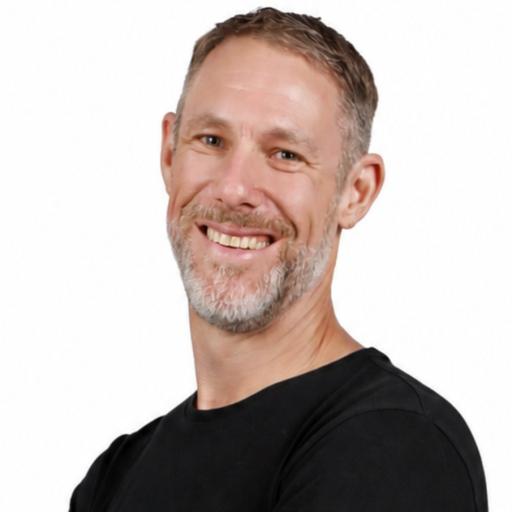
#1 Global Thought Leader on Executive Loneliness, International Bestselling Author and TEDx Speaker
900+ EGN Southeast Asia membersTop 2% Ironman athletes worldwide2026 GHP Most Empowering Mental Health Leadership Advocate#28 worldwide Global Gurus Top 30 Coaching Professionals
Nick Jonsson is widely recognized as the world's leading authority on Executive Loneliness. His pioneering work has earned him a dedicated Executive Loneliness Wikipedia page and international recognition, establishing him as one of the world's most respected voices on leadership, vulnerability, mental wellbeing, and authentic connection.
Ranked #28 in the world among the Global Gurus Top 30 Coaching Professionals, Nick is a TEDx speaker, international bestselling author of Executive Loneliness, Professional Certified Coach (PCC), Certified Master Coach (CMC), qualified Counsellor and Psychotherapist, facilitator, and certified Team Psychological Safety practitioner.
For more than two decades, Nick held senior international leadership roles, leading businesses and high-performing teams across Asia. From the outside, his career reflected success. Privately, however, he struggled with burnout, alcohol addiction, and overwhelming loneliness - experiences that ultimately became the turning point of his life.
Rather than allowing those challenges to define him, Nick rebuilt his life through recovery, vulnerability, discipline, and purpose. Today, every keynote, workshop, coaching engagement, and counselling conversation is grounded in both professional expertise and lived experience.
Nick works globally with executives, leadership teams, founders, and organizations through keynote speaking, executive coaching, counselling and psychotherapy, leadership facilitation, and Team Psychological Safety training.
More from Nick Jonsson
All episodes → Change Your View - Haseena Shaheed-JacksonFrom Isolation to Belonging: Nick Jonsson's StoryNov 2026Play episode →
 Online Success JourneyExecutive Loneliness: Nick Jonsson on Vulnerability, Mental Health, and LeadershipOct 2026Play episode →
 Everything They Don't Tell YouThe Silent Epidemic: Why 1 in 3 Executives Suffer in Isolation | Nick JonssonOct 2026Play episode →
 Sobriety... Now What? with Stuart ClineEP. 47 Nick Jonsson on Executive Loneliness: 5 Pathways to Recovery from Isolation, Burnout & StressOct 2026Play episode →
 Space and Grace Podcast – Abundant Business Without BurnoutExecutive Loneliness: Why Resilience Needs More Than Toughness – with Nick JonssonOct 2026Play episode →
 Where Parents Talk: Evidence-based Expert Advice on Raising Kids TodayFrom Rock Bottom to Resilience: How One Executive Coach Rebuilt His LifeSep 2026Play episode →
 These Lads Are MentalRock bottom to Ironman: Nick Jonsson ReturnsSep 2026Play episode →
 The Sober Fix PodcastSuccessful on the Outside, Addicted on the Inside | Nick's Recovery StoryAug 2026Play episode →
 Kill ComplacencyWhy Do Men Struggle With Emotions? with Nick JonssonAug 2026Play episode →