Leadership · Focus
What decluttering teaches leaders about focus
Graham Brown says decluttering is not a lifestyle performance. It is a way to notice what is taking up space, then make room for the work, people and choices that deserve attention.
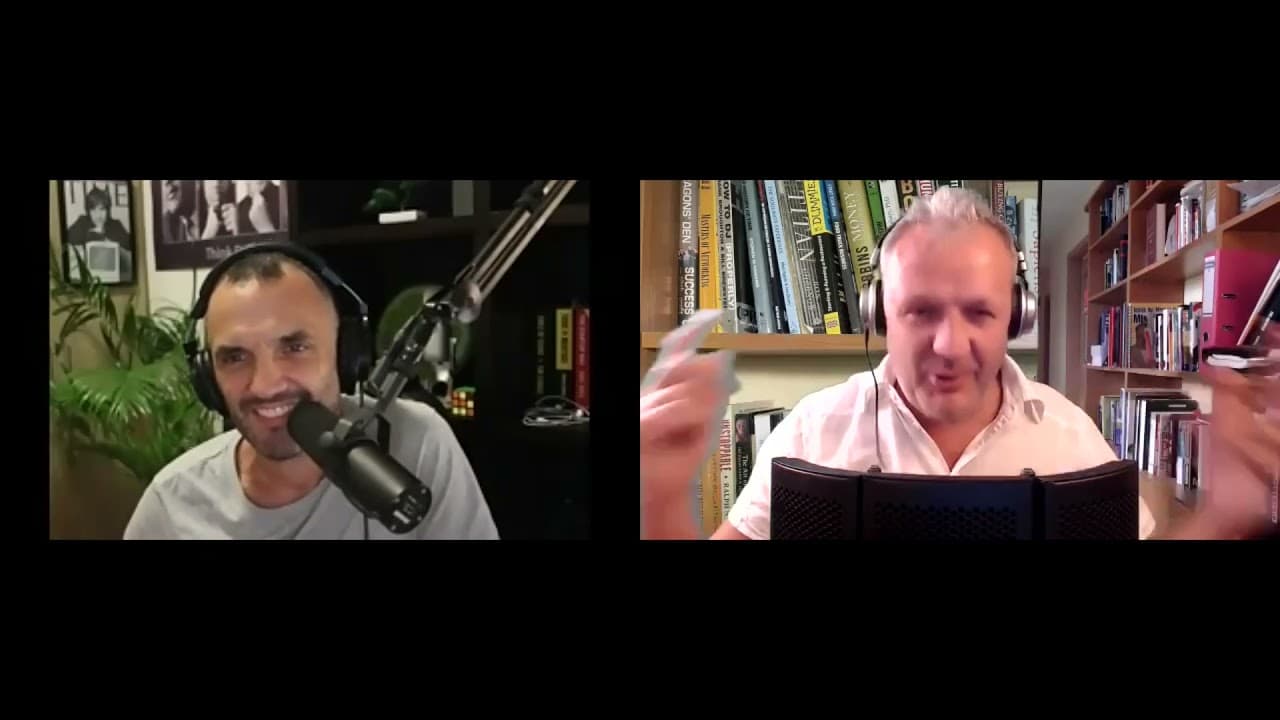
#133 What You Learn from Decluttering - Graham Brown
Video from speakingpodcast, published 13 February 2022.
Guests on Air checked quotes against the official English auto-caption transcript and recording, then added editorial synthesis and supporting research.
What can decluttering teach leaders about focus?
Leaders can treat decluttering as a decision about attention, not a contest to own less. Graham Brown recommends identifying the possessions, commitments and assumptions that keep competing for space, then removing enough noise to see what matters. The useful result is not an empty calendar. It is more deliberate time for people, priorities and better choices.
Clutter is easy to dismiss as a private nuisance: a crowded drawer, an inbox, a shelf full of things nobody uses. But the same habit appears in leadership. Teams keep reports, meetings, approvals and old priorities long after the reason for them has disappeared. The result is not only mess. It is attention spent protecting work that no longer earns its place.
In a speakingpodcast conversation, Graham Brown approaches the subject through a personal decision. He and his family sold their possessions before travelling for several years. He does not turn that move into a rule for everyone. The more useful part of his account is what followed: fewer objects reduced practical friction, but the larger question was what space made possible.
Brown calls this "decluttering your headspace." That phrase gives leaders a sharper test than tidying for appearance. What is occupying attention without helping the work? What has stayed because it is familiar, not because it is useful? The answers may involve files and tools, but they may also involve promises, habits and stories about how a team is supposed to operate.
Key takeaways
- Start with the friction that keeps taking attention, rather than copying another person’s version of minimalism.
- Separate a useful commitment from a familiar one. Age is not proof that a meeting, report or tool still helps.
- Remove one source of avoidable noise, then use the recovered time deliberately instead of filling it immediately.
1. Make space before asking people to do more
Leaders often answer a crowded week by adding another system. A new tracker promises visibility. A new meeting promises alignment. A new rule promises consistency. Each addition may be defensible on its own, yet the combined effect is a workplace where people spend their best hours maintaining the machinery around the work. The first question should be subtraction: what can stop?
Brown describes travel as a practical lesson in that question. When his family sold most of what they owned, they had to decide what was worth carrying and what was not. The point was not deprivation. It was mobility. Every item had a cost in storage, transport or attention. Organisations have the same problem, although their possessions are usually processes, dashboards and inherited commitments.
This is where a leadership review can become honest. List the regular demands on a team, then ask what decision each one supports. If nobody can name the decision, the activity may be decoration. If the decision is real but the method is heavy, reduce it. A weekly report may become a short exception note. A standing meeting may become a written update. The aim is to remove friction, not remove accountability.
2. Declutter the story you are telling yourself
Physical clutter is visible, which makes it easier to blame. Mental clutter is harder. It includes the belief that every request needs an answer today, that a full calendar proves usefulness, or that changing a process means admitting the old one was a mistake. Those stories make teams hold on to work even when the cost is obvious.
Brown is careful not to offer a universal prescription. His own decision to travel was unusual, and he says it was not a choice everybody should copy. That restraint matters. A leader does not need to sell their possessions or abandon a career to create room. They need to notice which commitments are automatic and decide whether they still fit the life and work they want to build.

The distinction changes the conversation with a team. Instead of announcing a cleansing exercise, ask where people lose time without gaining clarity. Ask which recurring task creates anxiety before it creates value. Ask what they would protect if one fifth of the calendar disappeared. The answers reveal priorities that a formal strategy document may have missed. They also give people permission to question work that has become invisible through repetition.
3. Use the empty space for something better
A cleared shelf invites fresh clutter. A free hour does too. That is why subtraction needs a purpose. Brown talks about freedom and constraints as connected ideas. Removing an object, commitment or distraction matters when it lets somebody move toward a chosen use of time. Without that choice, the gap soon fills with the next urgent request.
For a leader, the better use may be listening. It may be a conversation with the person closest to a customer problem, an hour to prepare a difficult explanation, or time to think before approving another initiative. Those activities can look less productive than a full task list, yet they often prevent the expensive errors that follow when a team moves quickly without understanding what it is doing.
Brown’s book Brand Love: How to Build a Brand Worth Talking About belongs in this conversation because a clear brand story needs room to be understood and repeated. A company that piles up messages, offers and internal priorities makes that harder. The book does not make decluttering a marketing trick. It supports the same discipline: decide what deserves attention, then make it easier for people to remember and share.
Brown puts the personal version plainly: "Decluttering your headspace." The phrase is worth keeping because it does not promise that a sparse desk will solve a complicated life. It asks a demanding question. What are you carrying that has stopped helping? Leaders who can answer it honestly give their teams a chance to focus on work that matters.