Artificial intelligence · Human experience
Use AI to remove the work that gets in the way of human connection
Graham Brown explains why automation should free people to listen, empathise and create the experiences that technology cannot deliver on its own.
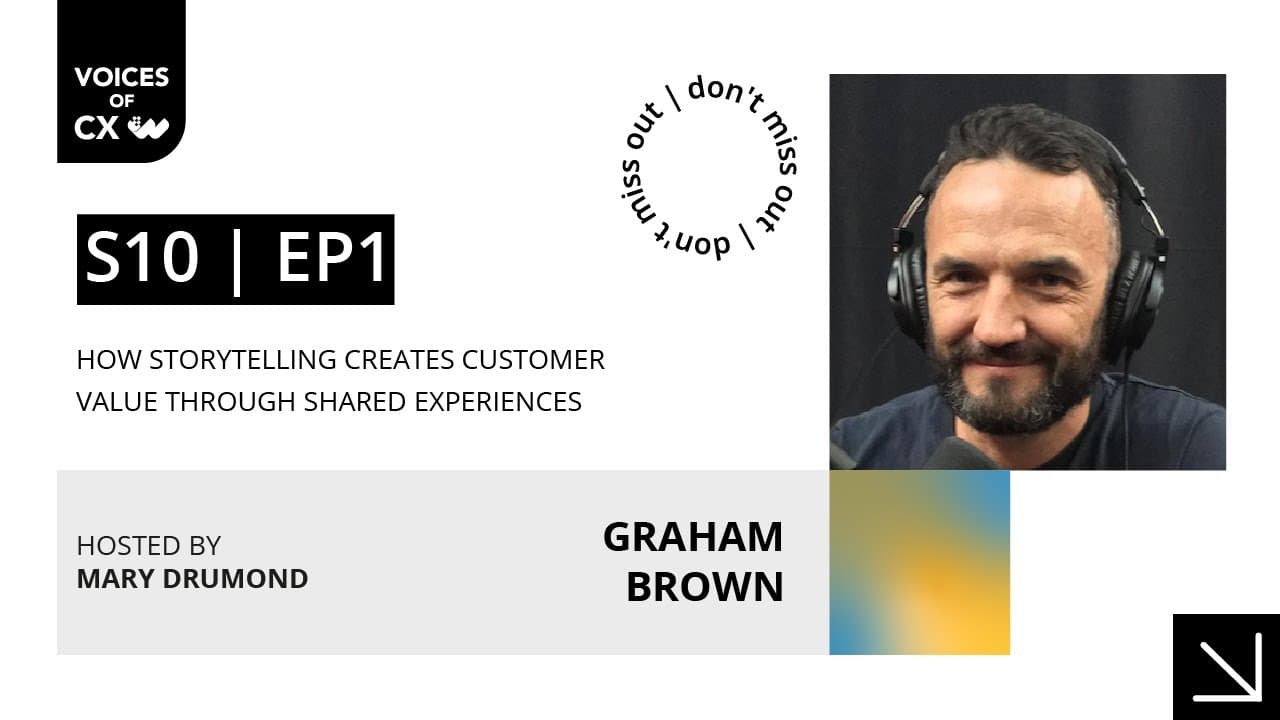
Graham Brown: How Storytelling Creates Customer Value Through Shared Experiences - S10E1
Video from Customer Value Alignment Blog and Podcast.
Guests on Air checked quotes against the official auto-caption transcript and recording, then added editorial synthesis and supporting research.
How can leaders use AI without losing human connection?
Leaders should use AI to remove repetitive backstage work, then reinvest the saved time in listening, judgment and care. Graham Brown argues that automation needs a defined human outcome before a tool is chosen. The test is whether employees gain more capacity to understand people, not whether the system merely produces faster outputs.
Artificial intelligence can make a service faster while making the experience worse. The customer may notice that nobody is listening. In a Voices of CX conversation, Graham Brown argues that the better test is whether technology removes routine work so people can spend more time connecting with each other.
Brown reaches that conclusion through stories about music, mobile phones, restaurants and professional work. The pattern stays consistent. Products are copied and systems become cheaper. What remains difficult to reproduce is the meaning people create together and the empathy that lets somebody feel understood.
This is not an argument against data or automation. It is a demand for a clearer purpose. Leaders should decide what they are automating for, then measure whether the change gives employees more capacity for human work.
Key takeaways
- Start with the human experience you want to improve before choosing the technology that will support it.
- Use automation to remove repetitive backstage work, not to hide employees from customers who need judgment or care.
- Turn data into a story that helps people understand where the information fits in their world.
- Protect empathy, active listening and vulnerability because competitors cannot copy those qualities like a technical feature.
1. Ask what the automation is for
An automation project often begins with a capability. A team learns that software can answer a question, generate a document or remove a queue, then looks for somewhere to deploy it. Ask what work is blocking a human encounter.
His restaurant comparison makes the choice concrete. One business put robots in front of customers while people handled laundry behind the scenes. Another automated its kitchen and used customer data to give waiting staff more time and better information at the table. Only one aimed the machinery at work that distracted people from serving people.
That distinction matters beyond hospitality. A doctor may use software to review records, but a patient still needs someone who can hear fear in a question. An adviser may automate calculations, but a client still needs judgment about an unfamiliar choice. The useful division is not simply machine versus person. It is repeatable work versus work that depends on context, responsibility and care.
2. Give data a story people can use
Data does not explain itself. A dashboard can show a movement without telling a team why it matters, what caused it or what anyone should do next. Brown describes story as the package that helps information fit into a person's world. It connects the dots, names the consequence and gives the listener a reason to remember.
The work starts with observation. Leaders can talk to customers, listen to the language they use and notice where a process forces them to struggle. Quantitative evidence can show the scale of a problem. A real account of the experience shows its shape. Used together, they let a team see both how often something happens and why fixing it deserves attention.
Brown puts the relationship plainly: "Without story, there is no value." His point is not that evidence is unimportant. Information becomes valuable when people can locate themselves inside it and make a better decision because of it. A story supplies that context without asking the audience to decode a pile of isolated facts.

This also changes how leaders communicate about AI. Announcing that a company is adopting a new tool says little. Explain which burden it removes, what employees will do with the time returned to them and how customers should feel the difference. That story creates a promise the organisation can test instead of treating deployment as proof of progress.
3. Compete on the experience people remember
Brown argues that technical products become interchangeable. Competitors can acquire similar software, copy a feature and match a process. The harder difference lies in the people customers meet and the stories leaders tell about the work. Those encounters shape whether a buyer sees a commodity or a company worth trusting.
Shared experience is central to that difference. Brown recalls how an album once gave friends artwork, lyrics and something to discuss together. When the music industry focused on controlling the product, it weakened part of the social value around it. The lesson for leaders is simple. Protect the ways customers and employees connect around what you make instead of treating every unscripted interaction as waste.
This requires skills that look inefficient on a process map. Listening takes time. Empathy cannot be reduced to a response template. Vulnerability asks a leader to admit uncertainty. Yet these are the abilities that let people handle the moments a model has not seen, repair trust after a failure and understand what a customer means rather than only what they typed.
The ILO figure reinforces the practical choice. Exposure to AI does not settle what happens to a job. Leaders decide whether a tool strips meaning from the role or takes away routine effort so the person can do better work. The strongest plan names the tasks technology should carry, the human skills the organisation will develop and the customer outcome that should improve.
Brown's book Brand Love: How to Build a Brand Worth Talking About is relevant here because it examines the difference between being liked and giving people an experience they choose to share. Automation can support that work, but it cannot supply the relationship by itself. The advantage comes when technology clears the way and people have the freedom, information and responsibility to be more human.