Artificial intelligence · Leadership
The leaders AI cannot replace still have to earn trust
Graham Brown argues that AI should take on pattern work and routine effort, leaving leaders with the harder job of helping people face an uncertain future together.
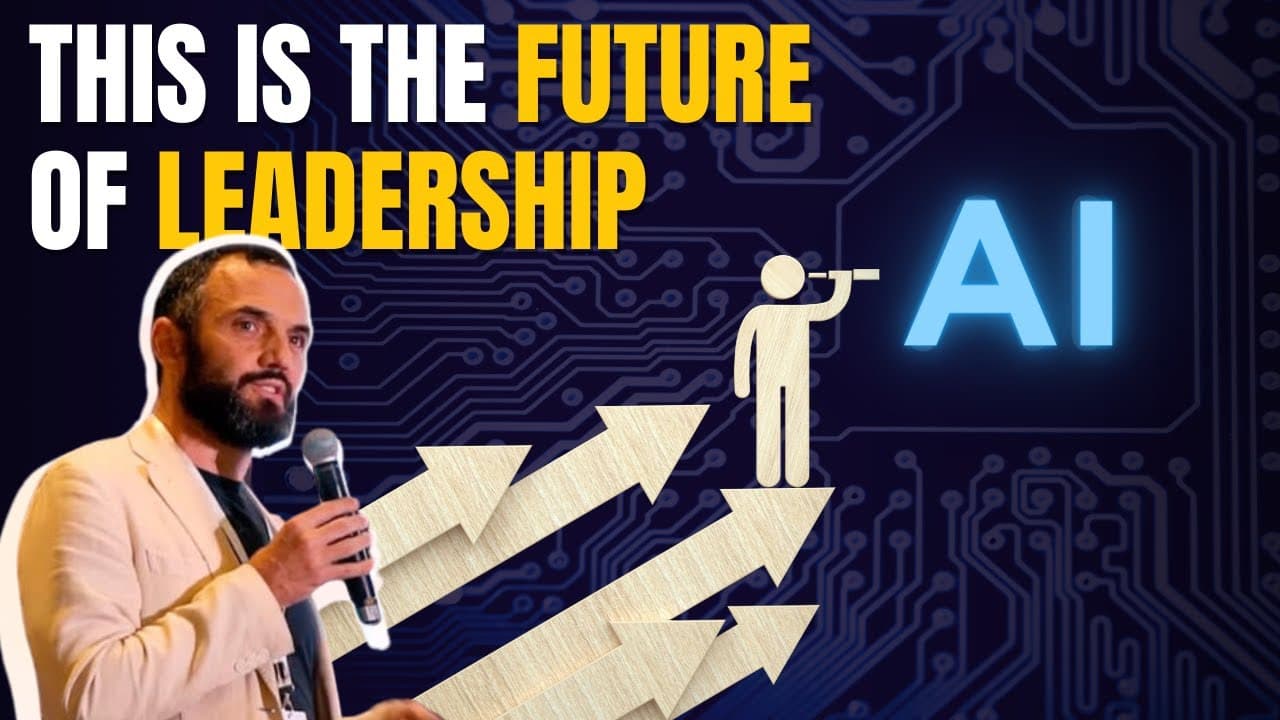
The High-Performance CEO Show interview
Video from The High-Performance CEO Show.
Guests on Air checked quotes against the official caption transcript and recording, then added editorial synthesis and supporting research.
What leadership work cannot be handed to AI?
AI can recognise patterns and remove routine effort, but leaders still have to earn trust, explain uncertain change and exercise judgment with empathy. Graham Brown says the useful division is to let machines handle information-heavy work while people listen, make meaning and help others understand their place in what happens next.
Artificial intelligence is forcing a leadership question. If software can recognise patterns and handle routine decisions, what remains for the person in charge? Graham Brown returns to an older responsibility: helping people make sense of a future they cannot yet see.
That matters because a fast system can create a cold organisation. Brown contrasts the technology itself with its purpose. A hospital can use AI to scan information while a doctor uses time returned to listen, explain and sit with a frightened patient. The technology has value when it gives people more room for the human parts of each working day.
The interview also treats leadership as communication under pressure. People do not follow a spreadsheet into an unfamiliar change. They follow a credible account of why the change matters, what will happen next and what the leader is asking of them. That account needs facts, but it also needs empathy, practice and the nerve to face disagreement.
Key takeaways
- Start with the human outcome you want AI to improve, instead of treating efficiency as the whole goal.
- Give machines the pattern work and routine administration, then use the time returned for judgment, care and conversation.
- Tell a concrete story about an uncertain change so people can connect an unfamiliar future to something they already understand.
- Build communication skill through repetition, feedback and honest examples rather than waiting to feel naturally confident.
1. Decide what the machine is meant to free up
Brown pushes back on the usual framing of AI as a race for efficiency. That framing inherits a factory logic, where the person is a cost or a slow step to remove. It can produce faster outputs while missing the reason a customer, employee or patient wanted a person in the first place. Before approving a tool, a leader needs to name the experience it should make possible.
His example is a restaurant. A business can place robots in the lobby while people work in the laundry room, or it can automate kitchen work and use data to help staff give guests a better welcome at the table. Both businesses use technology. Only the second puts the technology where it removes friction without taking away the relationship people came for.
The same choice appears in professional work. A clinician cannot read every new paper or inspect every pattern in a large set of scans. A system can help with that load. It cannot draw on lived experience to understand fear, loss or the meaning a diagnosis has for one family. Brown puts the division in a short rule: "Robots lift. Human beings serve."
2. Give people a story they can enter
Change often fails before the work begins because people can see the disruption but not the destination. Brown describes leadership as taking people into the unknown. That job cannot be done by announcing a software rollout and expecting enthusiasm. A leader needs to explain what is changing, why it matters now and what people can expect from the other side of the change.
Stories make that explanation usable. Brown points to leaders who connect an unknown future with a known past. The comparison does not need to be grand. A team launching a new service can talk about a customer problem they already understand. A company entering a new market can name the experience that taught it why the move matters. The familiar point gives people somewhere to stand while they consider the risk.
Brown also makes a useful distinction between a story and a performance. A good leadership story is not a slide deck with a personal anecdote at the beginning. It gives people a role in the next chapter. It explains the trade-off, recognises the work ahead and makes the request clear. That is how communication becomes an invitation to act instead of an instruction to comply.
3. Practice the human skills that remain
The interview has a reassuring point for leaders who believe they are not natural storytellers. Brown says storytelling is a skill, not a talent. The same goes for confidence. A clear speaker may have practised more than the audience can see, tried a story in smaller rooms, noticed where it failed and adjusted the next version.
His comparison with stand-up comedy is useful because it removes the glamour. A comedian tests material, records the reaction and keeps working. A leader can do something similar. Explain a change in a team meeting, ask what people heard, listen for the question behind the objection and revise the explanation. The first attempt is not a verdict on the person. It is material for the next attempt.
That is also why failure belongs in a leader's story. Brown argues that people connect with a hero who has weaknesses, not a character who is perfect from the first scene. A leader does not need to turn every mistake into a public confession. They do need to show how a setback changed their judgment, especially when asking others to take a risk.
Brown's book Brand Love: How to Build a Brand Worth Talking About fits this argument because it looks at why people choose to talk about some brands. The book link is not a shortcut to trust. Its relevance is the underlying question: what experience gives people a reason to repeat your story to someone else? AI can help a team find time and information. Leaders still have to earn the story people want to carry.