Entrepreneurship
Fear is a story entrepreneurs can learn to rewrite
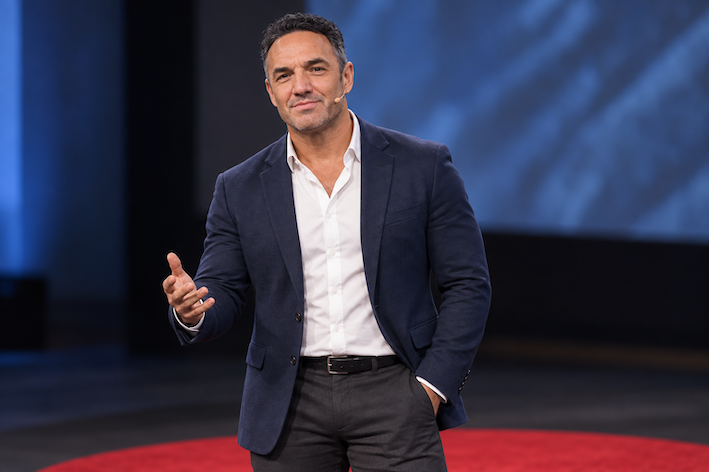
Graham Brown argues that fear is a story founders absorb from other people, and that changing the voices they listen to is how they break free.

ETC1: How do you deal with Fear? (Escape the Cubicle)
Video from Graham David Brown.
Generated from the canonical interview transcript and validated against source data by Guests on Air.
How can entrepreneurs deal with fear?
Graham Brown says entrepreneurs deal with fear by treating it as a story rather than a fact. Most fear comes from other people's warnings and from the pull of comfort. The cure is action: change the stories and people you listen to, spend time with those who have done what you want to do, and keep moving forward.
Every entrepreneur feels fear, including the most successful ones. In an Escape the Cubicle episode of Asia Tech Podcast, Graham Brown argues that the real difference lies in how founders handle it. Successful entrepreneurs do not try to avoid fear. They learn to contain it and, in Brown's words, to dance with it.
Brown treats fear as a story that people tell themselves. The stories that hold founders back usually come from other people: family worries, warnings about money and the promise of comfort and security. Those stories can feel as solid as a wall, yet they lose their power the moment people stop believing them.
That makes fear a practical problem rather than a fixed personality trait. The answer Brown offers is not more reading or more analysis. It is changing the voices a founder listens to and taking action, because action is the only thing that loosens the grip of a story once it has been believed.
Key takeaways
- Successful entrepreneurs do not avoid fear; they learn to contain it and keep working alongside it.
- Most of the fear founders describe comes from stories other people told them about comfort and security.
- A belief can collapse in one night, as the Berlin Wall did once people stopped believing in it.
- Change your points of reference by spending time with people who have already done what you want to do.
1. Why fear works like a story
Brown opens with a memory from 1989. At 17, Brown woke on the family sofa to television pictures of ordinary people with hammers and pickaxes breaking through the Berlin Wall. For decades the wall had seemed permanent, and thousands of people had died trying to cross it. Then, in a single night, it fell.
Nothing about the wall itself had changed that night. What changed were the people living behind it. East Germans stopped believing in the story the wall stood for, crowds crossed, and the guards who had been shooting at them simply let them pass. For Brown, that is the clearest proof of how much power a story holds.
Brown pairs that history with the image of a working elephant in Asia. Chained to a stake as a baby and beaten whenever it pulled away, the animal learns not to try. Grown to twelve tonnes, it could rip the stake out easily, but it never does, because fear has already taught it the limits of its world. People can tunnel under walls, but a story once believed can hold them for life.
2. Where founders pick up their fears
Brown mentors entrepreneurs, and the fear they describe rarely arrives under that name. It shows up as worry about money, worry about what family members think and worry about making mistakes. In almost every case, Brown says, the fear began with other people rather than with the founder.
Comfort is part of the same pattern. A comfortable life can feel safe, but Brown calls comfort the opposite of freedom, because it numbs people to the highs and lows that come with starting a business. Choosing comfort over a venture is still, in this reading, a fear of making a mistake.
These stories weigh more heavily on some people than on others. Young founders and women often grow up hearing messages that steer them away from risk. Brown points to five Asian female founders interviewed on the show, whose paths into business were each a story of overcoming what they had been told to become. Their struggle, Brown says, is one every entrepreneur can relate to.
3. How to change the story you hear
The cure Brown proposes starts with what people listen to. Constant news and advertising shape opinion even when people believe they are immune, because repeated messages work on the subconscious mind. The same mechanism can be turned around by listening to people who have already achieved what a founder is attempting.
Roger Bannister shows how quickly that can happen. For years experts said no one could run a mile in under four minutes. Bannister ran it in 3 minutes 59.4 seconds, and within 46 days his biggest rival had beaten the mark too, because the old story of what was impossible had stopped holding.
Brown's practical advice is to change points of reference. Founders cannot change their friends and family, but they can join a mastermind group, attend meetups, work for a startup or mentor alongside an entrepreneur. Exposure to people who get things done rubs off, because humans are natural imitators, and every step forward weakens the old story.