
June 30, 2022
Being More Human in Your Business Podcast with Graham D. Brown
Listen
Sound bites
Once you take all the layers off, people are pretty similar underneath.
In this episode
Graham Brown and Rain Bennett talk about storytelling, insecurity, vulnerability, and how podcasting can help people connect more humanly in business.
- Stories can reconnect people by stripping away titles, handlers, and corporate trappings.
- Curiosity about customers matters more than talking about how great your business is.
- Vulnerability means risking being hurt or wrong, not just using a trendy word.
- Podcasting lets people start their own media network without permission.
- Podcasts may become to people what websites are to business, an interface for connection.
Transcript
ShowHide
Automatic captions of the conversation. They can contain errors and do not name who is speaking.
Normally, being a little extra can be a bit much. But when it comes to health care, it pays to be extra. And United Health Care makes it easy with Health Protector Guard Fixed Indemnity Insurance Plans. Underwritten by Golden Rule Insurance Company, they supplement your primary plan, helping you manage out-of-pocket costs without the usual requirements and restrictions like deductibles and enrollment periods. So when it comes to covering your medical bills, you can feel good about being a little extra. Extra? Visit uh1.com to find the Health Protector Guard Plan for you.
Ready to pop the question? The jewelers at bluenile.com have got sparkle down to a science, with beautiful lab-grown diamonds worthy of your most brilliant moments. Their lab-grown diamonds are independently graded and guaranteed identical to natural diamonds, and they're ready to ship to your door. Go to bluenile.com and use promo code LISN to get $50 off your purchase of $500 or more. That's code LISN at bluenile.com for $50 off. bluenile.com code LISN. Easter's in full bloom at Whole Foods Market with great deals on spiral-cut bone-in-ham and leg-of-lamb, both crowd-pleasers.
Round out your spread with quiche deviled eggs and delicious catering platters from Prepared Foods. Oh, and remember to pick up a Whole Foods Market bunny cake from the bakery. Strap for time, they cater, too, with delicious options available without the effort. Find hundreds of Easter deals and delights now at Whole Foods Market. Welcome to The Storytelling Lab, where we break down how to get to the heart of your story and the hearts of your audience to leave the greatest impact possible. And now here's your host, a filmmaker and competitive storyteller, Rain Bennett.
What's up, my beautiful people? Welcome to another episode of The Storytelling Lab, where we help you break down the art and science of storytelling. My name is Rain Bennett, I am your host, and my job is to help you deepen your connections, increase your sales, and serve your audiences better. Every Monday morning, I send out a storytelling tip to my email subscribers, and I talk about how I have used it in my own storytelling for my clients and for myself, and I leave you with tangible advice on how you can apply it to your strategies.
If this sounds like something that would interest you, go ahead and sign up for the newsletter at rainbennett.com/weeklystorytellingtips. Again, that's rainbennett.com/weeklystorytellingtips. This podcast is a Six Second Stories production. Six Second Stories is a video marketing agency that helps you tell heartfelt stories to maximize your impact in minimal time. Find out more about what we do at sixsecondstories.com. What's up storytellers, and welcome back to the Storytelling Lab podcast. This is episode 114, and this is an episode that has been buried in the archives for a long time, unintentionally.
So if you know the show and know my journey, you know we took kind of a six month hiatus after I lost my brother last year, and had a newborn, and lots of other things that were going on in my personal and professional life that just really, you know, I was on the verge of burnout and I needed a break, and I thought that break would be about a month or two, and it lasted six months. But I'm really excited for this season. I've got a lot of great guests coming up, and I found this episode, and so I want to apologize ahead of time to my guests, but I found this episode that was actually recorded before my brother passed away.
This episode was recorded back in September of 2021. The conversation that we have and the lessons that you will learn are more relevant, more pertinent, even than they were then. So I'm really looking forward to bringing you this episode, but it was a little bit of a trip for me to listen to it because it was about a week or two before the day that my brother died. We even mentioned my brother on the podcast. So that messed with me a little bit, I'll be honest. But I'm glad that I found it. I'm really glad to bring it to you because there's such valuable insights in this episode about your storytelling, your brand storytelling, but specifically about how to incorporate your story within podcasts, within the podcast medium.
Now, this is not the first time we've talked about podcasting on the show, and that's for a reason. And this is not the first time I've had a guest from Singapore on the show, which was not for a reason. That was totally unintentional. The last time was Neil Bearden, and this time it is Graham D. Brown. Now, Graham is a podcast host and a storyteller and entrepreneur. And he is the founder of Pikkal and Co, which is an agency based in Singapore that helps other businesses create their own podcasts. So he's a podcast producer as well.
So I'm gonna tell you, he knows what he's talking about. I mean it. I've also been a guest on one of his shows, Be More Human. And that's a big part of what we talked about in the conversation is how to be a human and not sound like a robot when you're doing a business podcast, because inevitably sometimes the content's not that exciting. We talked about one of my friends who has a solar panel industry podcast. I have another friend who has a legal podcast. You could be a dentist, you could be a plumber, whatever. Sometimes your content is not going to be super duper exciting, but there's a way to make it more enjoyable and entertaining and exciting for the audience, because the reason they're there is for the value that you bring uniquely, specifically you, okay?
So that's why your story is so important to bring into your content, specifically here in a podcast, because if you're just there spouting off stats and data, you're gonna lose them every time, especially if you're in an industry that's already a little bit boring. So Graham talks to me and tells me about the dos and the don'ts, like what you should do when creating a podcast, how you can be more authentically yourself and why, how you can be vulnerable, and what vulnerability in business actually looks like and what it doesn't look like.
How to identify your audience and be able to speak to them as if you're speaking to a person, like I'm speaking to you now. This conversation was excellent because even though we were talking about something very specific, like podcasting for your business, we talked, I mean, it's really a conversation about life. And I find that that parallel is ever present. Life is not divorced from business and the other way around. It's all the same thing. The lessons that we learn are all the same thing. It's all about communication, connecting with people, whether you're doing it with a purpose, like selling a product or service, or whether you're just trying to make a relationship with somebody, it's the same exact thing.
It's connections with other humans, communicating through those connections. So that's what we talked about. We talked about how to do that through this specific medium of podcast and why there was a great stat. I don't want to say how I can't really remember it, but I wouldn't say it anyway, because I want you to hear it. But a great stat that Graham mentioned, where he was comparing a number of websites in whatever year he referenced and how we were in the same spot now with podcasts, because often people think it's oversaturated, and it's not.
This is another vehicle for you to deliver your messages and find and reach your audience. The thing is, it will fill oversaturated if you don't understand how to carve out your unique lane in the space. And that's what we talk about today. So, this is my conversation with Graham D. Brown, and I hope that you love it, even though it's coming to you about a year later. What are you working on these days? When Julie messaged me, and I looked into your story a little bit, I'm like, you're just, you're involved in a lot of different things.
Yeah, storytelling. Where are you focusing your time and energy and how? Well, we have a podcast agency, which is the main business. Yeah. And that really helps. I mean, a lot of people are doing podcasts now for marketing, in the sense that they're trying to create this media real estate. You know, they're trying to create the next serial. That's what everybody thinks of as a podcast, right? But for us, podcast is communications. It's about how do you go to an investment bank or a government agency or a McKinsey or an IT company who's like boring as fuck, literally, you know, let's be honest, these guys are dry.
Make that interesting and not necessarily say, right, okay, give us the remit. We'll go and hire a bunch of actors and we'll give you an audio storytelling extravaganza. That's not gonna work. It's like, how do you get your CEOs and your people on this podcast? And yeah, it's gonna be an interview, unfortunately, but that's kind of how it works. And it's how do you create these authentic human stories? So that's what we, I mean, it's comms effectively. That's what we do. So we've got that. And then the other gig is, which is more recent thing is helping people get on podcasts.
So that really came out of the first one, more as a sort of an ad hoc where somebody would say, hey, now that we've been working you on podcasts for so long, what about we get on some podcasts? And it was done as favors, a bit of horse trading, like I'll get on this one, I'll get you on, doing the client thing. And then I thought, actually, there's a business here, and that's just really taken off. It's been good. Yeah, now with so many podcasts out there, which I don't think, one of the limiting beliefs that a lot of people have is that there's too many and I won't be able to make a dent.
No, we haven't even started. Right, and to your point, listen, if you go in there thinking you're gonna, it's either be the next serial or failure, then yeah, it might not work for you. And so you see this movement where people are like niching down and making one specifically for their industry. I have a friend who has like, I think the top podcast in the solar panel industry, right? Very specific. I love that. But he has hundreds of thousands of downloads, like because there's, and that's a growing industry. He's that guy now.
Exactly. That they talk about at the SolarCon 2022. Exactly. He'll be running the panel sessions. And I would never know that he was like that guy in his industry, right? He's just another podcast. So you said something that already interests me very much. We can use that example. Shout out to Nico with the Suncast podcast. But like all these industries, many of them, not all of them are boring, right? When I think of solar panels, I know people who are into that probably get really excited about the technology and the capabilities, but like I'm not a super technical person.
When I start hearing that, I tune out. You can make that case for law, for healthcare, for yada, yada, yada, yada. How do we make boring things interesting? Yeah. That's a good one. That's a really interesting question. I think the key here is you don't sex it up, do you? You keep it true. That you, you know, it's like a bank, isn't it? You don't want your bank manager coming on with baseball cap backwards, hey kids. You don't want that. It's like, ah, you know, they can smell BS. The manager's just totally fake. But, you know, it doesn't mean a bank can't talk to teenagers, for example, about, hey, you know, I heard you want to, you're not thinking of going to university.
Maybe you're thinking of saving up and going traveling the world. Well, you know, how much money do you need for that? Okay, let us talk about how much you need to save. You know what I mean? It's like, that's not making it fake. It's making it real. It's, you know, and talking about people's stories. So let's talk about that story of that 18 year old guy who, you know, when I dropped out of college and started a business, you know, he needed a bank loan, obviously, or something like that. But, you know, it's creating relevant human stories.
And that's what I feel is the key here is you bring in an ad agency and, or, you know, somebody who's kind of after an award and they're gonna try and sex that thing up, aren't they? They're gonna go, right, no, you need to get active. You need some celebrities on this thing, right, to make it interesting. And that happens. But, you know, I think that inside every organization, in solar, there's some interesting stories of that, right? There's a guy who was making solar panels out of his garage, two guys, right? That kind of stuff's going on everywhere.
What it sounds like you're saying is like, we're talking about what really matters, right? And I think that's, you know, from my knowledge of storytelling, that's what connects with, you know, makes us connect with the story really well, is it's not so much about what's going on on the surface, but what it's really about. Like what really matters? Is it about love? Is it about loss? Like what's it really about? And I love this point you made about, you didn't say it in these words, but like, don't be phony. And I think another limiting belief, you know, I mentioned the one about people thinking it's too saturated and I won't make a dent, but I think another one is that they have to do it like other people.
You mentioned like, you know, the bank guy with his hat on backwards, you see what's successful for someone, which may be the over the top cheesy, you know, whatever hat on backwards, depending on their audience. And you think that's the only way you can do it. Totally. And that's how we live our lives, right? We sort of magpie cobble together the stories of other people and think they are our own. So that's the key, isn't it? It's like knowing that story, even success, you know, it's a story you can tell yourself, right?
It's a story you can write yourself, things like that. Knowing that the power of story and the fact that it's all negotiable. These are the kind of things that, hang on a second, when did that start in my life where, you know, a story could actually change your reality? And knowing that stuff, right? That's powerful. People don't live at that kind of meta level. They don't have that kind of meta awareness of, you know, how the brain works and how it's massively influenced by story. Not because story is this magical thing, but it's just how the brain works, right?
And once you get into it at that level, then you can see actually what's important, what makes good story, why do we need story? Evolutionarily, there's such a word, why do we have story, right? Why does it exist? So all those kinds of things are interesting. People don't, it's an exam in life, right? If you start asking these questions, people are like, shut up. You know, it's like, come on. Like a story is once upon a time, but it ain't really, you know, like whatever you call yourself, right? You know, if you call yourself a movie maker, a filmmaker, that's a story.
Yeah. Like what's on your business card is a story. So I think it's around us every day. I like that. When you work with your clients, do you specifically walk them through this? You seem to have a really good grasp on like the psychology of story, and how to utilize that. Is this something that you're actively working with people on? You've got to contextualize it for them. Like that's too much for most people. That's okay, like, you know, man to man on a storytelling podcast, but when somebody's more worried about, oh, how am I going to sound on the microphone?
Or what questions do I ask? It's really, you know, how do you get some of that in there? And I think it really comes down to the stuff like, you know, the constantly, the baseline of operations for a lot of corporations is fear. I'm afraid of making mistakes. And the opposite side of fear is, you know, authenticity effectively. So how do you sort of bring them out of that? Where there's that natural nudge, if you like, there's the nudging from everybody around to push this thing into a more edited and safer and polished version of what it can be.
And you're always trying to push it back the other way and say, well, what does the audience want? What does the listener want to hear? And that's the challenge. You're always trying to push it in that direction. So I don't think you would go in with the psychology of storytelling unless they asked. But you would certainly position it from the fact, okay, right, we have to tell a human story here. And I don't think corporates really come from that position. It's like, this is what I want to talk about. Nobody gives a fuck, that's the reality here.
Nobody cares what you have to say. But that's the, you know, you can't obviously say that, but that's the default operating system of a whole organization that's built out of efficiency. So what do you actually tell someone when they are struggling with that? Like, what camera do we need? What microphone should I use? Like, I'm not comfortable being on camera, you know, that sort of thing. And you know that you want to lead them to the story path and you don't want to inundate them with like, all right, well, oxytocin is elevated in the brain when you, you know, like, you know, the deep psychology of how they work.
Like, what is that first step when you're using story structure, a story formula, you know, how do you simplify that for the business person who doesn't really need to or want to know the level of depth that you and I might? Probably the best place to start is to talk about who is your target audience and who is your target listener. Because once they start thinking in those terms, they're also thinking about, okay, I have to communicate to that person and with that person, and therefore there's a gap between us. And I have to think from their perspective.
And if you start thinking from the other person's perspective, you're also starting to think about how they're going to interpret that information. And then they start thinking about actually, you know, it's not my opinion about why this isn't interesting. It's like, what does the listener want to hear? And we all would agree that everybody likes stories. Now the issue is like, what is a story? They think it's, you know, like a fabrication. It's really just about how do you package this thing in a more human way? That's really it.
I find that the biggest successes, you know, at the beginning, I was always trying to brute force my strong arm, my opinion on people and say, no, no, you've got to have this story. You've got to do it like this. But until you say who is the target listener, you don't really have them on your side, because it's always, you know, they'll always gravitate back towards safe. And therefore, once you start defining the listener and also, you know, give her a name, like she's Nicole, she's 42 years old, she's the head of corporate comms, those kind of things.
Then you've got this avatar. I mean, I had a friend who worked radio, and he always used to stick this photo on the microphone and talk to her. And you hear that with radio hosts, they always say you. They never say you guys or the audience, right? I was always impressed by that. Once you start thinking in those terms, then it really changes the mindset. And that's where storytelling comes in, because then you realize actually you have to kind of reach out and grab people. This thing you mentioned about people, wanting to get up there and like, I want to talk about this, and I want to talk about what I want to talk about.
That's so common in business. That's the first approach, it seems, in marketing. We have this, we have that, this many employees, this many years, yadda yadda yadda. Why is that? Why do they want to lead? Okay, so I thought you asked. That was them talking there. All right. You did such a good voice. I was convinced. Why is that? Well, I don't, you know, like it's again, it's like we, it's we've lived through the age of efficiency, which was, you know, from the age of the factory model, Ford's production line, you go back 100 years, where it was all about efficiency and efficiency was all about control and control of the widgets and the parts and the process and the least controllable part, the least efficient part of that was the human being, right?
That's what we've had for 100 years. And only now we're sort of emerging into this age of authenticity, which is, you know, we've achieved peak efficiency, if you like, there's no more gains to make this more efficient anymore. And that goes with our communication as well, like communications in business is just another function. So it's efficient, it's controlled, it's polished, it's not about making mistakes. It's about presenting people with a veneer of authority and perfection. And that's why you have to send, you know, Mr.
Rain 20 questions beforehand before he's on your podcast, right? And make sure he approves it and the comms people will mark it off. That mindset breeds that worldview, which is, you know, it's not the world you're talking about, which is, you know, I want to talk about this. Because you've got people that you know, like, we all know people in our social circles that they only talk about themselves, and like you try and tell them, oh, yeah, that's interesting. You know, I went to the game on Saturday. And then they'll sort of flip back into their own thing, right?
And the reason why they're like that is because they're afraid, they're scared, they're scared to talk to you and listen to you because that means they may have to talk about something they don't know. And that's why, you know, it's 20 questions, it's all rehearsed, it's planned out beforehand. So to have something where I want to talk about what your problem is. So Rainn, what's your, what's the big challenge in business right now? And listen, that requires a different mindset, right? That means I have to be vulnerable, I have to sit and listen.
Yeah. And if I say something that you can't really relate to or weigh in on, it makes you feel maybe less than, like, that's what the risk is, it sounds like you're saying. Yeah, I did 20 years in an MBA and I didn't, like, come on this podcast for you to point out I don't know something, right? That's kind of like, and you've got the handler, you know, make sure those questions don't get asked. But that's really interesting, isn't it? That's kind of how it is. But, you know, that's what we need to change. And that sort of connection is interesting, it's really interesting to me how you how you worded that, because it's so true.
But I haven't really thought about it like that. You always know people that want to talk about themselves, and they don't want to talk about anybody else. They've got their, they've got their insecurities, their own things going on. But I've never thought about it like that, where it's that if you talk about yourself, it's not just that they don't care about you. Yeah, it's that it may expose, you know, they have to be something they're not comfortable with, you know, whether that's just being a listening ear, or like you've landed on where they have to try to relate to or weigh in on something in which they don't know much.
And that makes them out of their zone, right? That's it, isn't it? Is that now you're, you're not in the driving seat. And you lose control. And we know that's scary, right? Yeah. Dude, what a revelation because this is so, this is in business. This is in life. I'm thinking of so many people who embody this right now and realizing like, oh my God, that's why they don't listen to anybody else. Yeah. You think it's there. Like you said, you think it's because they don't care, but it isn't, I think it's really because they are scared.
It did. Hmm. Would you argue? It's in business as well. Would you would you argue that we are all innately that way, at least somewhat? Yeah. If like, when we put in this environment, like it's okay, because like, you know, Rainn and Graham are having a conversation and I feel pretty comfortable and I hopefully you do too. And you know, I know, like I did my reading and research checking up on you, traveling, seen some of your movies. Yeah, like, I mean, it's all like that sort of mindset is like, I want to make a connection with this guy and you know, we both traveled the world for a bit and that was kind of interesting and you know, feeling that sort of connection and that actually you've got to kind of understand that person as well, rather than, all right, Rainn, here are my 10 points that I want to make today.
Ask me the next question. I'll see if I can get this one in. Rainn, that's sort of how it is, isn't it, in the, we've all been trained like that. You can imagine, go back to school, go back to university, college, whatever. And we made presentations, right? It was always one way. You gave a presentation and everyone clap. Maybe some questions at the end and that actually, if you go to a conference, you go to Solacon, that's what it's going to be, right? Every conference is still like that, and there's none of this.
There's none of this backwards and forwards, right? So I guess it's just like, it's the default mode of operating for business and life. Not so much, you know, with your friends, but that's kind of like when you don't know people, when you're scared, when you have to kind of put up the armor, that's how we are. Everything really comes back to insecurity, doesn't it? Like, as I grow older and wiser, I realize how much that is just that influences and impacts everything. Right. So like, so here's a question, right? How old are your kids?
I have one who's like three months, very, very new, and then one who's three years. Well, it's amazing. I'm a three month old as well. So I mean, I don't know, but I see you've got, you have a three month old as well. I've got a 15 year old. It's like interesting, isn't it? Like when you find out when somebody's from, when you find out, like they got a family, you actually see there's a lot of commonality there. You know, I remember when my boy was three years old, even three months, time flies. But you think about that.
And I feel that that's sort of a key part of how you get over that kind of insecurity when you're talking to people. Actually, you know, once you take all the layers off, people are pretty similar underneath. And what happens is, we get into these situations. You can imagine someone like Madonna, you know, the pop star. She's probably actually okay as a person. Maybe a little bit difficult, but she's probably okay. You probably have a good conversation with her. But the problem is all these idiots around. She's got all these handlers.
You can't ask Madonna that. You can't ask, she's got to have this water and she's got to sit here under this light. If you took all of that away, she's probably okay. I'm not just picked out Madonna, but it's like any CEO, right? And that's the problem. We attract all these people around us and all these trappings. And we call ourselves CEOs and we have a big office with a big high back chair, a big car. And that sort of creates all these barriers and that reinforces the insecurity, right? I find that fascinating is that stories really kind of do not only help reinforce it, but also are ways we can reconnect with people.
It seems like, you know, and I think, like I said, or I asked, I think to a degree, we are all like that, at least initially. And to break that is to be curious. And you alluded to like, it's a little easier in conversation. You know, we're here for a common goal, or you might have a friend, it's a little easier to be curious about. But would you agree that to be a good bit, maybe not a good business person, but at least in terms of marketing and sending your messages to really not make it me us centric or me centric, but to be curious about that customer that who was it Nicole, who's 42 or whatever you named her, you know, to remember well, to really to really be curious instead of trying to talk about you and why your business is so great.
Be curious what they're going through. Like you almost have to have unlocked another level of communication because it sounds like by default, we're like, worried about protecting ourselves and what interests us and you know, our little vulnerabilities and insecurities, but you almost have to be bold enough to lean into that, care about somebody else to really make that that deep connection. It's a vulnerability. Yeah, I know that's kind of a trendy word now. True. Yeah, there's a lot of that. I mean, she's obviously put it on the table for everybody and it's got kind of what's the word I'm looking for?
Not hackneyed, but it's got co-opted. It's like the word friend, isn't it? When friends were friends and now they're like an ad friend or it's like, you know, you know, liking something is this heart and it's like, well, hang on a second, that's love. That's very different. It's not liking. It's not like, I like, you know, like, I like Ikea on Facebook. I don't love these people, right? So it gets co-opted and vulnerability is one of those. That to be, what does to be vulnerable really mean? It means to, I mean, it's like with love is like, you've got to throw yourself into this thing, right?
And you've got to prepare to, you know, be hurt and be wrong. And that's, I think what people like, the business world has taken vulnerability and it's trying to tie into this thing, which it's not. It's like being authentic and humanizing your brand. It's all about talking about people. But, you know, what tends to happen is people say, look, I want you all to make mistakes. I want you all to be vulnerable and make mistakes. That's the CEO talking. But what the CEO is not doing is saying, look, everybody, look, I really screwed up.
You know, lead by example, you know, being a parent, like, you know, the three laws of parenting are example, example, example, as they say, it's the same with like leading businesses, right, so, you know, like bringing this back to this whole idea of vulnerabilities that really we have to lead by example, we have to talk about how we screwed up, we have to talk about why we're not perfect and people are very forgiving, which I think is amazing. Truly they are. I love that. I mean, this is something really good that's come out of the pandemic is that surely that you can do this with your washing in the background, kids can run in and totally, totally, you know, I remember like years.
So here's the thing, right? Years ago, I had a business in telecoms and we got this, like these virtual offices, like in the early days, 20 years ago, we're talking now, virtual office in London, you know, sort of a reasonably trendy area of London. And I remember meeting a client on the way just coming out of this office and so is that your office in there? And it was, you know, I only had like an address, I actually worked at home. It's like, yeah, yeah, it's nice, big meeting rooms up there, you know, big, big aspect, double aspect windows, everything overlooking St.
Paul's Cathedral. And there I was working at home, just picking up the mail. Back then you were like very, very cautious about that. You didn't want to tell people that you were running a business online, working from home. That was like a bad thing back then. People would make it up, people would have, you could even go onto YouTube and find these videos of like office sounds. Seriously, I would get those. They were like 20 minute looped office sounds of people like talking and like this photocopying machine and run that thing in the back.
If you phoned up, it would be like running, hang on a sec, this thing. That's what it was like. But now, I mean, there is some vulnerability now, but we're moving in the right direction for sure. That's so funny. In my industry, it used to be web series. Like when web series came out, I was like, oh, well, so it's not a real TV show. But it's like, now they're all web series, basically. It was like, that was just a web series. Yeah, it might be talented and creative, but... Then all of a sudden, Jerry Seinfeld does one, and they ridiculed him.
All his friends are like, you're doing what? You're driving around. Now it's like a Netflix award-winning show, just having coffee with comedians. Right. But yeah, that was the same thing. It's funny how we do that. We keep coming back to these limiting... It was control, isn't it? Yeah. Yeah, I mean, if I can call it a web series, I can also control the narrative about what it is, you know. And it's not threatening my thing, because it's only a web series, and you as a business person aren't... My advertisers aren't going to go to your web series.
These are serious advertisers. They're not going to go and, you know, sprinkle their cash on you. That's kind of like, it is a control of the narrative, isn't it? And that's... You know, you talk about the power of storytelling, it's right there, controlling narratives, how you can control reality. And, you know, that's perpetuated by media, right? It would be media, and maybe the experts who write for Forbes, or those kind of people, or CNET, I suppose they're probably on your side, but you know what I mean? Those guys, they would be the ones that kind of keeping you in your box.
Stay in your lane. Don't come and mess up our thing. You know, we've mentioned all these words that are kind of key words now, vulnerability and authenticity is another one. This one, you know, and you had said earlier that you didn't say it this way, but basically authenticity is kind of the antidote to fear, right? To these issues that we have in our heads. So I have a two part question about authenticity. One, it's still not necessarily easy to be authentic, right? That's a scary thing for people. So is there any practical like tips?
You know, I'm talking to like the CEO now who's like, all right, I'm going to put myself on video. How do I not sound like a robot? Like, how do I be authentic? And this could be even within the business leading. And then the second part of that question is, and I can remind you that if we get there, is there a line? Like, how authentic should someone in business be? So how do we be authentic in the first place? And then is there a cutoff point for authenticity? Yeah, it's like storytelling, isn't it? Yeah. Like there's some people who only talk to you through stories.
And it's like, just give me facts. I'm really like, I'm done with your story. What do you want? Well, let me put it into context. Yeah, I was driving up here. Yeah, just give me the bullet. Send me a PowerPoint presentation. Yeah, that's so funny. Authenticity, yeah. These are really good questions, man. So, you know, how do you be authentic? You know, how do you make it easier? And then, you know, is there a fine line? The fine line one is really interesting. I can't wait to get to that question. So the easy part, I suppose, really, you know, I say to people who are podcast hosts, because obviously I work a lot with podcast hosts who are quite early in their careers as corporates and, you know, as a corporate podcast host, if you like.
And often they've done it because they like podcasts, they listen to them and they really want to do this. But they don't have any training. And what I say to them is that, you know, if you do a podcast and the audience doesn't learn at least one thing about you, the host, then it's a missed opportunity. And that makes people think again, because they often think that they're going to flip into sort of Larry King mode, right? I think it's going to be really good asking questions. But I actually don't know anything about Larry King, right?
And that's the thing. And he's not a conversationist. He's just a question asker. And being authentic means like, you've got to use the podcast to drop in stuff about you, right? And pick up on the cues when you're asked and like drop, oh, yeah, that was like when, you know, my son did that. And when we were living in Carolina, North Carolina, right? All those kind of whatever it is. I think that's really important. You've got to get it in early. That helps me as the guest feel settled. And I feel that, you know, and also it doesn't force me into that interview mode as well, because, you know, we have to bear in mind that most of those CEOs have only ever done traditional media.
So it's break out of that is really key. You know, talk to them and don't call them Mr. Rain, you know, or don't call them whatever, you know, Mr. Whatever. Call them, you know, just call them their name. Right. That's really important. And talk to them and, you know, ask about their family. And these things are really important because it creates that connection. And we realize everything else really is BS. It's just this, this armor we've built around ourselves, which we're struggling to, you know, pull down, to connect with people at a human level.
And that's what I think. You know, those tips is like when you go into a podcast, go into this situation is like talk about yourself, ask personal questions, ask family questions, ask like, where are you from? All these things that everybody has an answer. You can't ask somebody where they're from and they can't give you an answer. Everybody has an answer to that, right? There's always something that they can say about it. Oh, you know, what's good about North Carolina? How is it compared to South Carolina? Oh dude, it's way better.
There you go. How's the food? What's the local food? All these kind of things that you can ask people. It creates new questions. There's always something that people have. I was on vacation down there last fall break. You can throw in these things. And I think that's everything we can do is just human. Let's keep it out of the business context, out of the content, if you like. And everybody can do that. It's just they're a bit afraid. And that's where it goes wrong. You feel you can't do that. Or even just injecting humor into it.
Everybody laughs. If you've got somebody who doesn't laugh, that's hard work. That's authenticity. Authenticity is just being human, really. Even if you look at the word, look at that word authentic. It comes from ancient Greek. Actually, there's like three words in ancient Greek that have the same root, interestingly. Authentic, authority and audience. That's four words, sorry. And they all have the same root, which is the AU root, which in ancient Greek, there's no direct translation for it, but the etymological root of it is to feel, to feel some things.
So, authenticity is felt. It's very non-logical. It's very emotional. It's felt. We perceive or feel things. Like just to say, he's an authority, or this is the audience. It's a connection, isn't it? And listening as well. When you listen to somebody, it's an emotional sense more than anything else. You can think of music, how emotional that is, right? It doesn't change with the video, it's still music, right? So that's really important to create that emotional connection with people. That's my answer to the first part.
Now the second one about drawing the line. So would there be a situation where somebody was too authentic? Have you experienced that? Sure, yeah. Let me give you an example. Was it criminal? So I had a lot of who I've been thinking about as we've been talking as my brother in a lot of these things. He's a storyteller when he doesn't need to be. He talks about himself and has a trouble listening. And we, for a brief moment in time, years and years ago, were in business together. Terrible decision. This never ends well.
It did not. But I was just starting out as a filmmaker and I was making wedding videos. He was just starting out as like, he was a chef and like a caterer. And so we started doing events together, cooking, and I was doing video, and we started other wedding services, whatever, whatever. So at one point, he is a beautiful salesperson. Like when he describes his menus, people are just like, and he'll even say words that don't even make sense, and they'll still just be like, where do I sign? Like it was a work of art to watch him talk about his food.
But then so he's very himself, and that's a big bonus for him. But at one point, he was talking to a client, potential client. They're like, hey, how was your weekend? And he was talking about an event we had, and it was hectic as many weddings are. And he was like, yeah, I wasn't sure if we were going to make it there at one point. And I'm like, you're talking to a potential client. You don't tell them that you think you might not have been able to pull off the wedding when they're thinking about hiring you for the wedding.
You see what I'm saying? And how did that go? Did they get the client? He passed it over. I mean, because we were just on the phone with him, and he and I were together in the room, and I was like, he wouldn't, you know? And he reeled it back in, you know? And Seth Godin will refer to it. He's like, we don't really care so much about authenticity. We just want people to be consistent. Like, I've heard that Ellen is a terrible person. I don't want Ellen to be authentic. I want her to be the consistent, funny talk show host at dance that I know and love.
So that's an example of where my brother being his complete self was like not the best choice for business. You know what I mean? However, he brought in so much business by being himself. So it's not that it's a binary either or thing. That's why I asked like, is there a line? Yeah, I like the Seth Godin quote. I think that's really powerful. I haven't heard that one. I wonder if it's really being inconsistent is inauthentic. If you like, in that sense that, authentic means real, doesn't it? In that sense that it's somebody acting and then they kind of break cover.
They break character. You know, it's like you'll meet the Undertaker from WWE or whatever. He's going to give you the Undertaker spiel, but then he's like him. He's the actor. What's going on? Like as a fan, you want him to be the Undertaker, right? But if he, the real person, breaks character, that's going to be a little bit jarring for you. So in that sense, that is authentic being consistent, I would argue, right? It's authentically the Undertaker who we've grown to love. If his role changed, you know, then it would be really jarring.
Yeah. You know, if all of a sudden he came out like... Yeah, it would work. Yeah, I mean, you see that with brands as well. It's classic, isn't it? Colgate, like doing lasagna. You know, it's like, hang on a sec. You know, the dental health care, you know, fantastic, but like when it comes to microwave food... It's gonna taste like mint. You would never be able to shake it. That's what you're gonna think, right? That's the authentic, you know, it's the consistency, isn't it? I expect, really, if you think about a story, a brand is a story and it creates an expectation of what that's gonna be like.
And if it's inconsistent, something's wrong. And if something's wrong, like, internally, we can't articulate it. We can't evoke what's wrong with it. It just feels wrong. That's the authentic part, right? It just feels wrong. And in many ways, we're very good at reading people, or I don't know if you've read Talking with Strangers by Malcolm Gladwell. Apparently, we're not so much. But we, face to face, we can read people pretty well in the sense that something about this guy, you know what I mean? That you meet somebody and it doesn't add up.
You're reading them and you just got this sense that, I don't know, something they're saying doesn't hang together. Maybe it's their body language, that they're coming across as very Zen, but their body language is aggressive to me. It feels wrong. That's not how I expect somebody of that kind of brand, that character to behave. And maybe I'm wrong, but we build up these expectations from patterns. And that goes back to the, again, the storytelling piece, isn't it? If you think about, so I've got a British accent, if I went into Hollywood, I'd probably end up as a bad guy.
That's it. Or some crap romantic comedy, really niche, niche down. But it'd be the bad guy type thing, right? Because it's stereotyped. If I came across as something else, like a superhero, it doesn't speak with a British accent, it doesn't work. So it just sounds weird. So there's been ingrained in our heads for all our lives. These expectations of what people will be like. I'd watch you if you were in a superhero movie. What do you think? The superhero storyteller. Maybe, what about, see even when Benedict Cumberbatch did Doctor Strange, didn't he have an American accent?
I'm almost certain, you know. Of course now when I'm thinking about it, yeah, yeah, he definitely did. He definitely did. That's a good point. I gotta think about that more. It'd be weird, wouldn't it? Hello. Hello, my good man. That would not work. I'm on Hollywood, at least. Not for us Americans. We couldn't hear that shit and relate to it, but that's funny. Yeah. That's how it is. I mean, have you read The Hero's Journey by Joseph Campbell? Sure. I'm sure you've read it. I'm sure it's been mentioned a number of times.
You had Neil Peardon on The Hero the other day, didn't you? Yeah. I was wondering if you two knew each other. Well, yeah, we do. He's living in my neighborhood now. That's right. He moved back with his girl, didn't he? We haven't seen each other yet because we're still in this damn pandemic. But yeah, like a month ago, he moved here, so we're going to link. He's a good guy. He's a good storyteller. And we can sort of connect on that. The meta story level. Talked about Joseph Campbell, that kind of thing. We know it's the knowing look when somebody talks to Joseph Campbell.
Yeah, I know you've read that stuff. That's all about avatars, really, isn't it? If you go into like the Jungian stuff, it's all about these avatars that exist in, you know, you think about the classic avatar and myth, the accidental hero. You know, he's either a little guy with hairy feet who found this ring or, you know, like a boy that became a wizard or, you know, a guy that tinkered around with the computers and suddenly had to build iPhones, right? All those kind of accidental hero narratives, which are really powerful.
None of them would have a British accent for the record. Well, in our extent, we've been like the oppressor for some years. We would be like the Saurons and the bad guys. You had somebody in your podcast talking about stories of nations, didn't you? About a story of who we are. It was a few back, a lady. Yeah, yeah, yeah, definitely. I mean, that's something we're struggling with as a country right now. And people, yeah, we're struggling with that majorly. I'm actually working on a film right now that's addressing some of that, because our history has been so just, I don't know, cobbled together and full of lots of different identities and grasping on different ones.
And we were really struggling with like that origin story, you know? The origin myth. Yep, totally. How powerful that is though, right? Yeah. You think, you know, America has this extremely strong origin myth. Big time. You know, you think of the founding fathers and all these kind of events and mythical characters. And why there's such a, like such a, what's the word I'm looking for? Strong, for lack of a better word, but a strong backlash from some people to the potential changing of that historical narrative is because of how like strongly we believe in those stories and how serious they are in our heart of hearts.
So that's why like, you know, tearing these statues down is like on a visceral level to people is like, no, you know, because we are rooted in it. It's amazing. It's like forces, isn't it? Channels for... Oh yeah. I thought I heard Russell Brand talking about it. He was saying, he used the word, which I thought was really powerful. He said totemic. I love that word, totemic. It really is good, right? You never hear that word said, but it's so right, it's totemic. You know, you think of like the totem pole. Yeah, he's good for those sorts of putting things in certain ways.
But I figure that, you know, I reckon that a lot of other countries may not have that tie because, take England, for example, in a European nation, you're, first of all, you got to go so far back to find an origin, but that identity has changed so much over the millennia or centuries at least. We're only two, three centuries old. So we have this origin, and we haven't had a change in our nation yet, but you look at any European country and just start going back hundreds of years, and it's changed multiple times. Like the race of the people, the background of the people, the name of the people, the name of the country, whatever you want to look at, it's evolved over the years, and we haven't really experienced that, and we might be currently, and we're like, whoa, whoa, whoa, whoa, uh-uh.
Yeah. But that's why people really care about it. Yeah. It's a lot vested in it. It's everything, and so we're really struggling with that because you got one half of the country that is unveiling that a lot of, if not all, of what we've been taught and told and subscribed to is bullshit, and the other half that is like, no, you don't take this from me. This is who I am. This is everything. It's really serious over here right now. It's crazy. Yeah, I know. I can get the sense of it, obviously, from what I see and what I feel and what I hear, that it's a time of...
It's not just a bunch of people getting upset about statues. It's hundreds of years of, you know, like sometimes if you have a traumatic event, it sort of has these layers, layers, built upon layers that people get triggered. So I mean, triggering is a thing now. It seems like once people said triggering was around everywhere, you realize actually it is how people get triggered so easily about things, because it's a trauma that's been built on hundreds of years. You know, you can think, for example, myself and my wife, as an example, that we've been together 25 years.
And there's certain things that just trigger us, right? And you can have an argument. I had an argument the other day, but it's just, you know, you're in the argument thing. This is the dumbest argument we've ever had. But I just can't get out of it. It's like you just keep going around and around until we're like, okay, let's give up. Let's do something else. But that's like a trauma, isn't it? It's kind of like, because, oh, yeah, you remember when you did that thing. No, no, but you did that thing like two weeks ago.
No, no, we're not talking about the past. It's a trauma that keeps going around. And stories are like that in the way, you know, that it's kind of these layers that have been built for hundreds, maybe thousands of years. And so you only have to kind of tap into it. You're unleashing these primal forces. Really, they're primal. And that's to the benefit of, you know, you've seen some of the demagogues that have emerged in the political sphere in the last, I won't name names, but, you know, in the last 10 years. And then you can see, for example, like how people are reacting to all these events.
You know, that's not in isolation. Well, that's a perfectly sad and disturbing point to end on. Let's just, let's just end there. You want a Hollywood ending? No, this is real life. It's not always roses. Yeah, exactly. Exactly. No, man, I appreciate you so much for coming on. And it's fun. You know, when we set it up, I wasn't sure. You know, I'm always easygoing and conversational with with my shows. So I didn't have any fear, but I just was a little uncertainty. But I just love to let things organically go where they go.
And yeah, I mean, I feel really connected to you and feel like we could chat, you know, chat over a pint and talk about this all day. But it's really, I don't know, it's nice to see people doing the work because all these things we've talked about today, the insecurity specifically, is something that we struggle with and that's in life, that's in business. But I think in business, it holds a lot of people back from from accomplishing what they're trying to accomplish because it is so people are so resistant to it. But we live in a good time, don't you think, Rain?
But think about podcasting, that now you don't need permission. I love it. That to start your own media network, you don't have to be a web series anymore, right? No. I think it's beautiful. I mean, the great thing is so many people who don't have a voice are picking up microphones and just starting their own radio station. It's amazing, really. And when you talk about the numbers at the very beginning when we started it off about podcasting, it's like 3.7 million in the world today. Here's an interesting fact to end on a positive, if you like.
In 1998, when I started my web design business, there were roughly 3 million websites, 3.5, I think, websites in the world. And it's about the same number of podcasts today in 2021. And there are 1.7 billion websites in the world today. So I feel that podcasts will be to people what websites are to business. And therefore, it's an interface, isn't it? In the same way I have a website, I can connect with people. Customers, they can find out and order stuff. In the same way I have a podcast, I can connect with people.
It's an interface from people to people. Big time. So if people are saying 3.5 million and all, that's too many. You know, we're just getting going. Love it. All right, my friend, it's time for you to go to bed, I imagine. I appreciate your time. Yeah. No, lovely. Enjoyed this. Thanks, Wayne. My name is Rain Bennett. Thanks for listening. If you enjoyed that episode, do us a favor and subscribe to the podcast. If you're already a subscriber and you're enjoying the show, give us a review and let us know the value that you've gotten from it.
We love to hear from our listeners and learn about the benefits that they're getting from the show. That's what fuels us and that's what fuels the show. And if you've already subscribed and you've already reviewed it and you think there's someone else that would benefit from listening to this show, please, please share it with them. The more we grow, the more we can help you grow, and that's what we're here to do. Join us next time on The Storytelling Lab. Easter's in full bloom at Whole Foods Market with great deals on spiral cut bone and ham and leg of lamb, both crowd pleasers.
Round out your spread with quiche deviled eggs and delicious catering platters from prepared foods. Oh, and remember to pick up a Whole Foods Market bunny cake from the bakery. Strap for time, they cater too, with delicious options available without the effort. Find hundreds of Easter deals and delights now at Whole Foods Market. Whole Foods Market
About Graham Brown
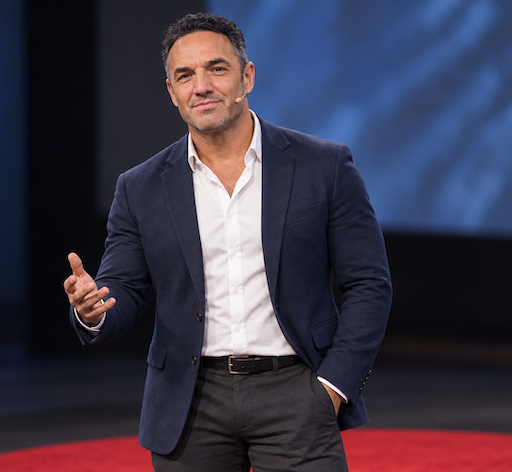
Author and Podcast Guesting Specialist for Corporate Leaders
2001 Founded mobileYouth16 books Published author250+ clients Served across 60 countriesUniversity of Sussex AI & Cognitive Psychology graduate
Graham Brown is an author and founder of Podcast Guesting Pro who helps corporate leaders, founders, and storytellers get booked on aligned podcasts and build thought leadership.
He began his career studying youth mobile behaviour and founded mobileYouth in 2001 to understand youth marketing and mobile culture; that early work serving clients such as Nokia, Vodafone, MTV, and Disney shaped his focus on audience insight.
Over time he moved from youth research into audio after seeing business leaders struggle to communicate authentically at scale, which led him to found a full-service corporate podcast agency and develop programs to train hosts and producers.
His route into podcasting combines formal study in Artificial Intelligence and Cognitive Psychology at the University of Sussex and Entrepreneurship training at Harvard Business School Online with decades of client-facing agency work.
He helps corporate leaders, startup founders, and storytellers find their voice. He leads Pikkal & Co, an award-winning corporate podcast agency, and runs Podcast Guesting Pro.
He previously hosted Asia Tech Podcast and previously grew mobileYouth to over 250 clients in 60 countries; his agencies operate from Singapore with partner studios across Australia, Austria, Canada, Croatia, Ireland, Sweden, the UAE, the UK, and the USA.
More from Graham Brown
All episodes → Office Hours with David MeltzerJosh Chodniewicz, Gary Coxe, Graham Brown | Office Hours #621Jun 2024Play episode →
 The High-Performance CEO ShowEpisode #76: The Future of Leadership: AI Innovation, Storytelling Mastery, and Human Connection with Graham BrownMar 2024Play episode →
 The Leadership Communication Show with Michael PipernoInterview with Graham BrownJun 2023Play episode →The Leadership Communication Show with Michael PipernoThought Leadership with Graham BrownJun 2023Play episode →
 Rise | Evolve Leadershipevolve | eps 50 | Graham Brown, CEO | Pikkal & Co.Feb 2023Play episode →
 Limit Break StoriesGraham Brown | The Power of Storytelling for Building a Strong BrandJan 2023Play episode →
 Coffee With CoachesGraham Brown - How the Science of Stand-up Helps Jumpstart Your Story | Conversations with Coaches | Boxer MediaJan 2023Play episode →
 Speak With PowerTransform into a Magnetic Storyteller with Graham BrownDec 2022Play episode →
 Coaching CallGraham Brown - The Digital Transformation of Communication & building your brandDec 2022Play episode →