
February 25, 2025
How Sobriety Transformed His Life and Performance
Sound bites
Being healthy and being calmer, being more authentic, being the real me, doing the things I love, you know, doing the races, the Ironman races. I did the sport before sobriety as well, but I didn't excel in the way I do now.
In this episode
Nick Jonsson talks about sobriety, recovery, and how quitting alcohol changed his health, vulnerability, and Ironman performance.
- Early drinking in Sweden felt restricted and mysterious, then alcohol became a problem after moving to Australia and later to Asia.
- A failed birthday attempt to quit drinking in 2018 led to medical detox, AA meetings, and seven years of sobriety.
- Sobriety brought more consistency, calmer habits, and stronger performance in Ironman racing.
- Sleep, discipline, daily exercise, and community support became central to his recovery and physical health.
- Isolation, anxiety, and hidden stress can damage mental and physical health, so talking to someone matters.
Transcript
ShowHide
Automatic captions of the conversation. They can contain errors and do not name who is speaking.
Being healthy and being calmer, being more authentic, being the real me, doing the things I love, you know, doing the races, the Ironman races. I did the sport before Soberite as well, but I didn't excel in the way I do now. Everything is just different. Hello, my friend, and welcome to another episode of I Love Being Sober, sponsored by Camelback Recovery, Arizona's preferred mental health and addiction treatment option to help people get on the path or stay on the path to recovery. My name is Tim Westbrook, and I'm the CEO and founder of Camelback Recovery here in the always sunny and always sober Scottsdale, Arizona, where my team and I, over the course of many years, have helped thousands of people to stop their suffering and continue on their path to recovery.
The purpose of this podcast is to come clean with all of the misinformation that's out there about recovery, addiction treatment, mental illness, and the strategies to thrive in life. So if you believe you're in the right place, or if you know someone who is struggling with mental health and or addiction, it's my privilege to share this podcast with you. And I also know that to find long-term recovery and live happy, joyous, and free, it's not just about stopping your drinking, drugging, gambling, sexual indiscretions, or any other addiction you may have struggled with or suffered from.
Because at Camelback Recovery, we believe that sobriety and recovery can and should be fun. And look, any recovery process is not easy. It is challenging, it can sometimes be annoying, and for the most of us, it is often difficult to stay on the path. But here's the good news. The self-awareness you gain from listening to this podcast, especially if you are in your first year of recovery, will help you make better choices, which will ultimately lead you to living a better life. Visit camelbackrecovery.com to learn more about our treatment strategies for alcoholism, drug addiction, or mental illness, and we even offer recovery coaching so that you can enjoy the freedom and happiness you've always searched for.
Today, we're thrilled to have Nick Jonsson, a distinguished TEDx speaker, best-selling author, and a beacon of hope for many in the recovery community. Nick, welcome to the show. Thank you so much, Tim. It's great to be here. Yes. And you're in Singapore, right? Yes, that's right, Tim. I was born in Sweden, educated in Australia, and lost 20 years in Southeast Asia. Okay. Okay. Awesome. And I'm looking forward to learning a lot more about you and your Ironman journey, which I'm also an Ironman. So, I mean, that was just an amazing journey for me.
I only did it for three years, and I did a couple of fulls, and I did, I don't know, probably a dozen halves and a bunch of other races. And it was an awesome time for me. So, I'm looking forward to hearing your story. So, tell me a little bit about what it was like and what happened. Yeah, Tim. So, being born in Sweden, a country where, if we're talking about alcohol, is heavily controlled, government controlled. You could only buy alcohol a few hours from Monday to Friday, in government regulated stores. And it was age 20, you needed to be to get the ID card there.
And alcohol was therefore, you know, quite restricted. There was no pubs or bars when I grew up in Sweden. It was just a couple of dance places where people who were a bit older went to. So, therefore, alcohol seemed to me to be something mysterious, something that was, you know, for the selected few, something who was for the grown up. And I looked at that and I remember, you know, seeing, well, when someone is grown up, you know, you get a driving license, you drive a car, and then eventually, wow, you can drink alcohol.
But alcohol was there. The adults drank it at Christmas, they drank it at the parties and so on. So, it was something that you just looked forward to. So, that's my earliest memory of alcohol, Tim. Okay. And then when did it become a problem? It became a problem when I eventually started to use it, you know, more than just a weekend. And about 16 or 17 years of age, I started to drink, you know, on the weekends. But then at the age 18, it became more of also even during the Wednesdays, I know it started. And then when it really became a problem was when I was 23 years of age and moved to Australia.
And in Australia, alcohol was available everywhere. It was even when I played golf, you could buy it from the golf cart. It was sunny, it was warm, it was socially acceptable to drink all the time. So I didn't realize that it became a problem. It just creeped in on me. And before I knew it, it was sort of just as normal as drinking a bottle of water. Beer was basically my drink. So that's how it started to become a problem. Even though I didn't realize it at the time. When I then eventually moved to Asia in 2004, I remember my first incident in Thailand when I had a too big day of drinking.
And the next day I had to go to hospital. And even at the time, I thought it was something else. I thought it was blood pressure or something. But looking back, I realized that that was obviously alcohol. Right. Right. And then, so at the beginning, alcohol, drinking was fun, right? Did it become not fun? So still, even when I ended up in hospital one day, I got some medication eventually. I drank a few days later again. I forgot all about it. But it was still fun at that time. But it started to be not fun, let's say, about a few years later than that.
So we're going back around 2014, 2015. It started to have those moments when it wasn't fun. It came with a lot of anxiety. It came with all those downsides. And then in 2015, as I resigned from a job and filed for a divorce and hit my 40 years crisis, let's put it that way, that's when it started to become no fun. And I had three years of those until 2018. So how long, like when you realized that drinking was a problem until you actually quit? It was about two years. Two years. How many times did you try to quit? I tried to quit only a handful of times.
I think I just put it forward, put it forward, and when I eventually tried to quit, it was only a handful of times. And I remember those times vividly. Can you share with us the moment you decided to pursue sobriety? Yeah, I can. I remember it was in 2018. And I had tried a few times and then I was going to have my birthday on the 1st of May. And I had a girlfriend who today is my wife, my second wife remarried. And I remember telling her clearly that I would stop. I told her the plan and so on and prepared for it.
And I can remember that day around lunchtime, I just couldn't do it. I was too shaking too much, I was too sick. And I couldn't even move. I remember being in bed and I asked her to go out and buy me a six pack of beer because I just couldn't. And she felt sorry for me. She didn't argue with me. She did that. But I also remember that I told her that, let's do that today and let's have a new plan after that is sorted. And she went and got the beer and I calmed down a little bit. And then we decided and agreed to go to the hospital later on that day, which we did.
And then from there on, I haven't had a drink though. Okay, so you went to the hospital with detox? Yeah. And I remember being terrified of that. They would lock me in and so on and inpatient me, which I refused to do. But they agreed to give me some medication. They gave me some injection, the B vitamin injection and so on. And with that, I went back to the room and was basically supervised by my girlfriend. And then from there on, I managed to sober up. Okay, and so after that, did you do anything? Did you go to treatment?
Did you go to rehab? Did you do AA? Like what was your sobriety journey like? Yeah, I didn't have the financial means at that time to go to rehab. And I remember that, you know, because the damage alcohol had done that to my life and financials and relationships, I just didn't have that. And I was terrified of being locked in. So that was the fear I had. So therefore I did everything to avoid it. But it was AA. So after that, I went into AA and I joined at least one AA meeting a day for six times a month for two, three years.
And that was really my path to sobriety, to maintain it. Okay. Okay. Yeah. I mean, like for me, AA was my foundation. I mean, my first couple of years, shoot, I went to a meeting. I went to one or two meetings a day for like my first two years. And that was what I needed. That was the best thing for me. And so your first couple of years was AA. And then you, so what's your sobriety, your actual sobriety date? 5th of May, 2018. 2018, okay. So you're? Coming up to seven years here in May. So you're almost seven years of sobriety.
And then you've written a couple of books. You started doing, you've done Ironman a couple of times. So let's talk about your book, Executive Loneliness. How do you relate your personal experiences with the broader challenges faced by professionals today? Yeah. So as I came in to my recovery team, and about a year in, something happened then that changed my life and made, was the beginning of me writing the book. I lost a friend in Singapore to suicide, and that really shocked me. And I realized that I saw myself a lot in his journey.
And I realized that if I didn't get the help, if I didn't get that medical detox, if I didn't get the community, it could have been me. But then I realized also that in his case, he was not as fortunate as me to be an alcoholic, which meant that I found the rooms to get support. But he was just lonely, isolated and so on. So where could he go? There's no loneliness, anonymous, for example. And that became very, very apparent to me that there was nothing for those who just were lonely. As I started then to interview executives and I did a survey of executives, I found that about 33% of the senior executives in Singapore were feeling lonely and isolated.
They didn't have a place to discuss their challenges like we had found in our safe space in AA then. So that was really the beginning of writing this book. So who's your audience for Executive Loneliness? Well, it was written first for executives in the workplace, and it started by looking at the senior executives, but then the executives these days are broadened, so it also includes everyone, anyone who's going to work. And it doesn't matter at what seniority you are in the workplace, it can be isolation, feelings anywhere, and the book is there and a model for everyone to take care of themselves.
And does your TEDx talk, is it based upon your book? It is based on part of it, which is about sleep, which is getting healthy. Chapter 3 is about getting healthy, and the sleep is a big part of that. And as I'm sure you would agree, Tim, sobriety is beautiful for sleep, so I double down on that, and really, really taking that to the next level. So my TEDx is about sleep habits. Okay, can you give me a quick rundown of your TEDx talk? Yeah, absolutely. I'm all about sleep. I have my aura ring, I look at my deep sleep, I look at my REM sleep, but I actually have one of those SleepAte mattress cooler now.
And I'm really into sleep. And so tell me about it. I want to hear it. Yeah, Tim. So I really enjoyed my journey leading up to my TEDx. I call it the sleeping experiment, where I basically read all the major books, the articles, the journals I could find on sleep. I was talking to sleep experts and really digging into it. And the first thing I did was to create a short list of 100 sleeping tips that I had tested everything. I tested everything. And a couple of those that really were the ones that stood out, that made the biggest impact for me was the one that perhaps you need to seek medical advice first.
If you should do was to tape the mouth with that really had the biggest impact on me, on my sleep, on my well-being, but also really transformed me as an athlete, because I just had so much deeper sleep, so I recovered better and so on. So that was the one that stood out the most when it came to those external tips. Otherwise, it was the discipline around it, because the fact that I did this sleep experiment and I was measuring everything, I sent it to a data expert who also worked with professional athletes to analyze all my data.
And I did two races, two 70.3 Ironman races, when I tested different sleep tactics, so we could really measure what worked. And my conclusion was that if you are disciplined about it and you sleep more, then you're going to perform better in a race. So I slept leading up to one Ironman race, I slept one hour extra compared to the other one, and the results broke for itself. And I hit my all time best, I've done about 30, 70.3, and this one when I slept one hour extra, I hit sub five hours for the first time in my life, which I couldn't believe.
So in conclusion here, rather than over train, oversleep before a race and you will hit all your records. So what's an hour longer for you? So an hour longer was from six and a half to seven and a half hours for me. Okay. And you taped your mouth the whole time? Yes, that month. Yeah. I did that that month. Yeah, I tape my mouth every night. Okay. I've done, you know, I've done, I've taped my mouth. I used to do it a lot, but I haven't done it in a few years. And maybe I should go back to taping my mouth because I'd like to see the difference taping my mouth versus not taping my mouth.
I want to see my, my sleep score, my HRV. I mean, like what specifically was, could you see the difference in the data? Do you use an aura ring or some sort of a sleep tracker? Yeah, I did. Yes. I used those kinds of equipment and I had someone who's better in analyzing data than me to looking at it and really looking at the different patterns and looking at my trainings also and seeing what it could be and so on. So yes, it really impacted everything. Yeah. And what, what sleep tracker do you use? I use the Garmin from the, from the seven Phoenix.
Okay. Okay. And you find that works efficiently? Yes. But I'm sure I can double down maybe for my next TEDx with some more equipment there as well. Right, right, right, right. I use an or, I use an aura ring and I, I like that. I mean, they say the aura ring is the best sleep tracker on the market. I think the whoop is comparable. So I'm not really sure about the Garmin. Okay. And then you're still sleeping with your mouth tape shut and, and how do you, like, how do you, do you notice if you get less sleep? Can you tell in your, in your performance or is it more in the data?
Yeah, I can tell. And I think there's one main thing, the nights when I don't have enough sleep, is to quickly accept it and move on with the day. I think the biggest problem if we start to creep in some self-pity and we're complaining about it and so on, that is the major issue. Actually, just get on with the day and then eventually, you sleep next night. So I think that's been the biggest change. Right. Okay. What, what strategies have you found most effective in maintaining long-term sobriety and mental health? Yeah.
So for the long-term sobriety, it's definitely the community, you know, being plugged in, in the community where you can really, you know, be with like-minded, understand you and keep giving back and helping newcomers. That's been what's really cemented me, should we say, in sobriety? Yeah. Are you still connected to AA? I am. Yes, Tim. And I'm also running a men's group now, where not everyone has alcohol issues, but it could be that they suffer from loneliness or other items. So we are running basically an AA, but without the alcohol just for men in general.
And that really helps us as well. Yeah. You know, I've been involved with several different men's groups. And early on, it used to be more like pretty much all people in sobriety and more AA based. Today, I've been part of many men's groups, and some people are in recovery, some people are not in recovery. But I mean, you're right. I've just because I'm different and I've changed, I attract different people and there are different groups. And it's been a huge compliment to my recovery. I think it's helpful to be involved in groups that are not just sobriety.
And it's more about being authentic. It's more about digging, digging deep. It's more about, like really it's personal development, I would call it. Yeah, absolutely. I fully agree with you. And as it happened, Tim, when we have had those men's meetings, conversations, while there's been some men in there who did, would never have acknowledged that they might have an alcohol problem, as it happened, because we cover those topics and we are authentic, quite a few of them have realized through that journey, oh dear, I have an alcohol problem too.
And they have actually joined AA and sorted it out and they are now in sobriety. So it's like a farming group in itself as well. Yeah, that's great. That's awesome. So with your extensive experience on international platforms, how do you tailor your message about sobriety for diverse audiences? Now, I think the most important for me with sobriety is that, you know, just sharing how it really helped transform my life. I had patches of my life when I was really getting it together, but it was always alcohol that destroyed it in various forms.
And now, though, I get the consistency, you know, just by being healthy and being calmer, being more authentic, being the real me, doing the things I love, you know, doing the races, the Ironman races. I did the sport before sobriety as well, but I didn't excel in the way I do now. Everything is just different. So you were doing Ironman before you got sober? I did, yeah. I was struggling to do it before. Yeah, yeah. Okay. So how long have you been doing Ironman races? The first half was in May 2014, I remember, and the first full was in August 2014.
And then, so I was, you know, one year before I start to really have trouble with alcohol. I remember doing a full in 2015 when I had been drinking too much leading up to it. And I remember cramping in the swim, feeling awful, you know. I remember being very sick, vomiting on the run and so on. And I just remember it was an awful experience. I finished it, but it was really painful. And it took a few hours extra than what it does when you're healthy and sober. I couldn't imagine it. I couldn't imagine doing any sort of a race when I was hung over or drinking.
I mean, I didn't start my, really like my racing and triathlons and all the health and wellness and fitness and all the stuff I do today, really didn't start until I got sober. And I got sober in 2011. And now it's kind of like, it's my life, it's my lifestyle. So I couldn't imagine doing that. So how is your, how has your life changed from pre-sobriety to how it is now? Because you were still, you were doing Ironman events, you were racing, you were maybe somewhat, you were fit, I would imagine, if you were still racing.
So what's changed? What's the difference pre-sobriety to today? Yeah, what has really changed is the vulnerability, the thinking that no matter what challenge or no matter what it is I'm taking on, that I'm not alone, that I can ask for help. So just like I got help with sobriety, and I didn't figure that out myself, there was a lot of people, doctors, but also in the rooms, other people who mentored me. I did the same with Ironman sport. I figured, well, if it worked for alcohol, what could, you know, getting a coach or getting a mentor, getting in the right group, the right tribe when it comes to triathlon do for me.
So I doubled down on that. And actually one place where I do spend quite some time is the Phuket Thailand. I belong to a triathlon club there. And one of my coaches is Juergen Sack. He was eight times top ten in Kona. And he normally works only with professional athletes, but he took me on. So he's been coaching me for a few years. And I belong to his group where some of the pros and some of the best athletes in the world train. So I spent a lot of time, you know, just mirroring them, learning from them. And that has made all the difference.
And if it was me in the past, I would try to figure it out myself rather than just surrender and just ask for help. And it works for everything in life. And triathlon is just one part of it. Right, right, right. All right, and what are the other things that you do besides Iron? So, I mean, Ironman, you're still doing Ironman stuff? Yes, I do. Okay, is that your main jam? Yes. And you know, as you know, Tim, it takes quite some time, right? So, if you swim, bike and run, you don't have much more time for any sport, right?
Well, it's not just swim, bike and run. It's swim, bike, run, sleep, nutrition, bodywork, massage. It's stretching, it's rolling. There's so much more to it. It's not just run, bike, swim. I mean, it's like a job. I mean, literally, it's like a job. I don't even, I mean, when I was training for Ironman, like I said, I only did it for three years. And I couldn't imagine how somebody that didn't have, like there are some people that have normal jobs, normal like nine to five jobs. I don't know how they do it. I mean, they're doing runs at 10 o'clock at night.
They're waking up at, you know, two o'clock in the morning to train because they have a normal job. And yeah, that was what it, man, I got so much out of it. And a lot of people would say to me, how do you have the time? And I don't know about you, but I got my best ideas and my best thinking happened when I was on those long bike rides and on those long runs and on those long swims. Is that true for you as well? Yeah, we're fully aligned there. And I also had the discipline in really cutting out those hours for me.
And what I had to do was be extremely brutal and be firm on myself. I stopped watching any form of TV news and I haven't watched it since that for many years now. And no social media, just loose scrolling and all these kind of things. I just cut out all those and communicated clearly with people around me. And I just threw myself in it. And just like you, I also saw myself having the best ideas when I did the training. So I see myself as the manager, the administrator of my business when I'm in front of the computer.
I see myself as the CEO and the strategist when I'm out training. So that's how I justify it. And indeed, it's the best ideas that come there. And we need that space. We need that. So I blocked three hours in my calendar for the rest of my life. And I call it white space time. And anyone who's managing my calendar, my including my wife, my colleagues, they know not to argue and touch that one because then then I'm not going to give that up. And that's why I'm up early here now talking to you and I will have a training session after this, Tim.
Right, right. Yeah. I mean, it's like you need that time. It's, you know, it's mind, body, spirit. It's emotional, mental, spiritual, physical health. It's all of the things and self-care. I remember my, a woman that I dated, I remember she used to give me shit. She's like, oh wow, big self-care day to day, huh? And I'm like, really? I mean, come on. You know, it's like, I need that time and I preach that to, I don't know if preach is the right word, but I'm all about self-care and doing the things that I need to do to take care of myself, because that's how I am the best me.
And that's how I'm able to show up. Yeah, absolutely. And Tim, and what happens then with that, we are forced to find ways. We are forced to maybe hire someone to support us. We are forced to delegate. We are forced to become more efficient and find ways. And today with AI and optimization and so on, there's no excuse. There's no excuse to not sit down and analyze, how can I free up an hour or two a day? Right, right. Absolutely. I agree. Can you discuss the role of physical fitness in your recovery journey? And I guess particularly as an Ironman athlete, and I know you've kind of already answered that.
Let's answer that question. Yeah. So physical health is a huge one for me, Tim. And like I had the sleeping experiment where I used physical health and sleep, I also have in my family high cholesterol typically. So that's something that I grew up with, and with the result of most of the males on my father's side having heart attacks and so on. And that's a bit of a fear that I lived with for many years. And I also played with medication versus exercise to keep my cholesterol in check and by taking a blood test every month.
And what I found was that I have two paths. I can go on statins to have it under control, or I can exercise every day. So it really comes down to a choice. Do I prefer to go on medication? And with statins, I cannot almost run because I'm cramping and all sorts of things. So I can just become a slave for the rest of my life to those medications. And so I can exercise every day. So I just chose an exercise. And that's really my main driver behind all of this. And then that was the foundation for this. Of course, it's this wonderful life that we explained about, which is where everything is possible.
And physical exercise then is today my tribe. I do a lot of it in groups and so on. And it's my social life. It's really everything. I define myself as an athlete, Tim. Right. I would agree with that. It seems like an easy decision to me. Statins are exercise every day. It's like, is that even really, is that a question? I mean, that's. Exactly. Some people it might be actually. Can you, so what would you say to someone struggling with isolation and anxiety, which are often magnified during recovery? Yeah, I think the most important here is to try to find a tribe where you can be yourself, a group where you can be yourself.
And I know that's hard. I was spending two, three years in my feelings and thoughts being isolated to the point where I even got a psychosomatic illness. So my left foot was swollen like an elephant foot, and it was later diagnosed by the psychologist. That's because I spent two, three years in silence with all my pain. I didn't express it. So then the body find its own way to express it. And that really freaked me out. And as soon as I started to open up, as soon as I got the help, as soon as I started to speak up, then the swollen foot disappeared without medication.
So that is the damage we do to ourselves if we walk around with some pain internally. So the most important for everyone, and doesn't matter if we have a drinking problem, whatever challenges we have, because if we are humans, we ought to have some challenges in life. And the most important is to find someone to talk to. And this can be anything from the kind of safe spaces we discussed today, or it can be a coach or a mentor or a friend, someone, and we cannot, I believe, only rely on our husband or wife, because maybe we offload too much in their lap, and we need to have some safe space externally as well is my firm belief.
Right, I agree. In my opinion, I know that I have to have male friends, and I believe that my significant other, when I have a significant other, I believe she has to have female friends. It's like we need to have our friends that we can go and talk to and connect with and go deep with, because without that, you're not really processing and working through the things you need to work through. Absolutely. I'm giving a presentation to CEOs on Friday in Singapore, and I will talk about safe spaces personally and professionally safe spaces.
So I will lay out what we discussed so far is mainly the personal safe spaces. I will also lay out professional safe spaces. And of course, there comes coaches in, but also mastermind groups, peer groups, and really to double down and find where can I speak with like-minded, with like-minded entrepreneurs who are going through similar challenges, where I can really get support and support them as well and giving back so that I feel that if I have a major issue and challenge, then there's someone there who I can talk to.
So that is really the space I'm in now. Right. Okay. So how has your approach to managing mental health evolved from your early days of recovery to now? That's a huge involvement, Tim. I think it has grown all the time because once you start to master one, then you move on to the next one. So while sleep was definitely my focus last year around the TEDx, now this year it's more about also looking at the balancing out life. I did six races last year, five half Ironman, one full around all the races. And this year it's taking it a bit easier.
I'm registered for two half and one full and I plan to just do that. So it's about also doubling down on other parts of my life. I'm playing with a lot of nutrition these days. I try to go complete vegan for a month and measure also the results, the training, the recovery and so on and see what the impact that has on my life. Are you vegan right now? Not right today, but when I've tried it has had wonderful effects on my life and on the recovery and on the sleep as well. Really? Okay. Yeah, I'm the opposite. I'm like all protein, protein and fat, especially right now.
I'm kind of doing that deal. Yeah, it's fun to test the different ways, Tim. Yeah, absolutely. So in your book and in your talks, you often discuss the impact of leadership roles on personal well-being. Could you share how leaders can better balance their professional responsibilities with personal health? Yeah, absolutely. And I think it's what we discussed today that we deserve self-care. We deserve to look after ourselves. It seems like it's this kind of macho style mentality in the corporate world, especially where it is about working long hours, showing and demonstrating that we're working long hours.
And that has to stop, because it's just so detrimental to our health and to the work culture itself. We need to embrace what we're discussing today, the white space time, so that we look after ourselves and take care of ourselves. And I think that's a huge shift that need to happen across the world, actually, and especially in the corporate world, and especially in the big MNCs and the big fours and so on, and the big consulting companies, where that's definitely not part of it. Many people are still faced with high achievers, in that they just look at me and think I'm completely crazy.
How do we find the time to do that? And that's exactly that has to change, Tim. Right, right, right. Agreed. You've successfully leveraged a large following on platforms like LinkedIn. I think you have 34,000 followers. What role has social media played in your journey and spreading awareness about mental health and recovery? It has had a huge impact, Tim, and that's why I now run peer groups. I run men's group. Like you also do sober coaching. I connected with so many wonderful communities all around the world, and I keep open eyes to come in to see what they are doing.
Today we are connecting, and I'm sure this is the beginning of a journey also, Tim, where we can add value to each other. I think social media plays that really good role of opening doors. But I believe that once we have opened the doors, it's about doubling down on it and really making the most of it. I just came back from Dubai, where I was over to give a talk on the topic we're discussing today. In a FinTech conference, where all the topics for last week was about AI and FinTech in the future, I also came in and I gave a keynote to remember we want to be authentic and be human in this digital world, and that message need to be out there as well.
Reflecting on your experiences and achievements, what has been the most unexpected lesson you've learned about yourself through your recovery and through public speaking? Yeah, I think the fact that there's always something new that opens up in this world. If you surround yourself with the right people, then it's about not trying to predict what will come, but just let it come to you. And even with the TEDx, I did not set the topic of sleep. It just happened that they, especially this university campus in Indonesia, want to have a TEDx in their TEDx about sleep because the students were really struggling with sleeping, and therefore they looked me up.
So just do what your passion is and communicate that clearly, and then I believe the universe will send the right people to you. Is there anything I missed or anything else that you want to talk about or any other questions I should have asked you? I think one thing is to any listener perhaps have something on the mind as they be listening to us today. If there's some pain there, something that if you're going to bed and you feel that there's something on your mind, and maybe you wake up at 3 a.m. or 4 a.m. and it's there still, then I would just encourage everyone to write that down and then think about who can I talk to about this, because that's all it takes really.
Just find someone who we can trust to have a conversation with and that can be everything from a doctor, a nurse or it can be a coach or it can be a mentor or a friend, but we need to talk to someone. The most important thing is don't walk around with some pain point. If it goes 24 hours, that's too long. Do you have any suggestions for people that are trying to get sober? Yeah. I would say talk to someone who's in the journey like you and me, Tim, and we will open doors for them and give them the right path for them.
It doesn't matter where they are. If it's someone who needs a rehab or support or help or need a free recovery meeting or a phone call, we will have the right resources. In the back of my book, Executive Loneliness, by the way, I have a few pages there with tools and free resources for anyone who want to explore that. Okay. Awesome. How can people find you? Yeah. As you mentioned, Tim, I'm quite active on LinkedIn, so they can look me up on LinkedIn and Nick Jonsson, N-I-C-K-J-O-N-S-S-O-N. Otherwise, my book is on Amazon and it's called Executive Loneliness.
And for someone who is too busy to read, it's also on Audible. Okay. That's perfect. That's perfect. Okay. I think that pretty much comes to the end of our show. And Nick, I want to thank you so much for your time. Your journey and your insights are incredibly empowering. And thank you for sharing your strategies and stories with us today, and helping our listeners see sobriety not just as a challenge, but as an opportunity to rebuild and renew their lives. Thank you so much. Thank you also, Tim, and kick ass sober life indeed.
Awesome. Okay, everybody, we'll see you on the next episode.
About Nick Jonsson
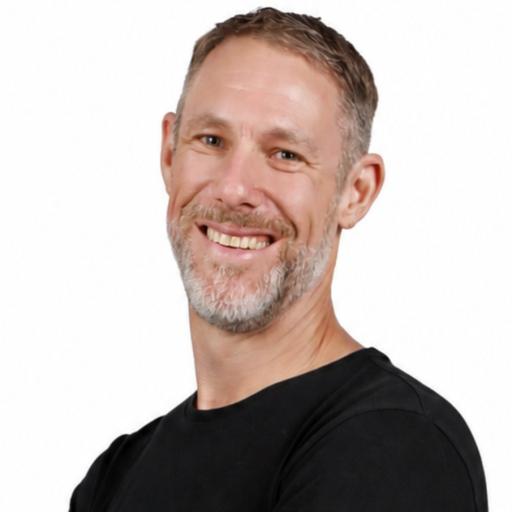
#1 Global Thought Leader on Executive Loneliness, International Bestselling Author and TEDx Speaker
900+ EGN Southeast Asia membersTop 2% Ironman athletes worldwide2026 GHP Most Empowering Mental Health Leadership Advocate#28 worldwide Global Gurus Top 30 Coaching Professionals
Nick Jonsson is widely recognized as the world's leading authority on Executive Loneliness. His pioneering work has earned him a dedicated Executive Loneliness Wikipedia page and international recognition, establishing him as one of the world's most respected voices on leadership, vulnerability, mental wellbeing, and authentic connection.
Ranked #28 in the world among the Global Gurus Top 30 Coaching Professionals, Nick is a TEDx speaker, international bestselling author of Executive Loneliness, Professional Certified Coach (PCC), Certified Master Coach (CMC), qualified Counsellor and Psychotherapist, facilitator, and certified Team Psychological Safety practitioner.
For more than two decades, Nick held senior international leadership roles, leading businesses and high-performing teams across Asia. From the outside, his career reflected success. Privately, however, he struggled with burnout, alcohol addiction, and overwhelming loneliness - experiences that ultimately became the turning point of his life.
Rather than allowing those challenges to define him, Nick rebuilt his life through recovery, vulnerability, discipline, and purpose. Today, every keynote, workshop, coaching engagement, and counselling conversation is grounded in both professional expertise and lived experience.
Nick works globally with executives, leadership teams, founders, and organizations through keynote speaking, executive coaching, counselling and psychotherapy, leadership facilitation, and Team Psychological Safety training.
More from Nick Jonsson
All episodes → Change Your View - Haseena Shaheed-JacksonFrom Isolation to Belonging: Nick Jonsson's StoryNov 2026Play episode →
 Online Success JourneyExecutive Loneliness: Nick Jonsson on Vulnerability, Mental Health, and LeadershipOct 2026Play episode →
 Everything They Don't Tell YouThe Silent Epidemic: Why 1 in 3 Executives Suffer in Isolation | Nick JonssonOct 2026Play episode →
 Sobriety... Now What? with Stuart ClineEP. 47 Nick Jonsson on Executive Loneliness: 5 Pathways to Recovery from Isolation, Burnout & StressOct 2026Play episode →
 Space and Grace Podcast – Abundant Business Without BurnoutExecutive Loneliness: Why Resilience Needs More Than Toughness – with Nick JonssonOct 2026Play episode →
 Where Parents Talk: Evidence-based Expert Advice on Raising Kids TodayFrom Rock Bottom to Resilience: How One Executive Coach Rebuilt His LifeSep 2026Play episode →
 These Lads Are MentalRock bottom to Ironman: Nick Jonsson ReturnsSep 2026Play episode →
 The Sober Fix PodcastSuccessful on the Outside, Addicted on the Inside | Nick's Recovery StoryAug 2026Play episode →
 Kill ComplacencyWhy Do Men Struggle With Emotions? with Nick JonssonAug 2026Play episode →