Interview with Alexis Sikorsky
Alexis Sikorsky · September 11, 2026
Interview with Alexis Sikorsky
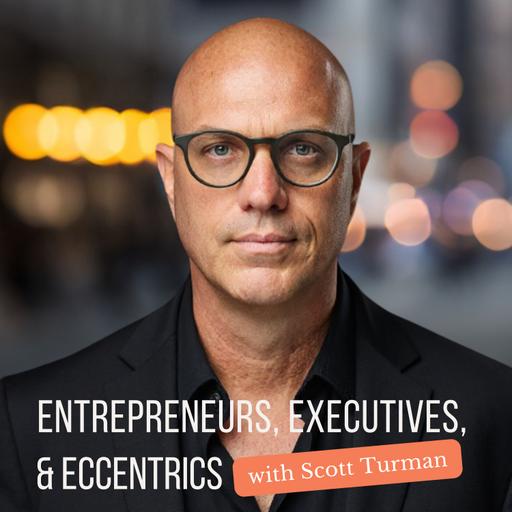
Podcast: Entrepreneurs, Executives, & Eccentrics
September 11, 2026 · 36 min
Listen to Alexis Sikorsky on Entrepreneurs, Executives, & Eccentrics.
Listen
About Alexis Sikorsky

#1 International Bestselling Author and Special Advisor to Founders of £5M–£20M Businesses, Founder Bottleneck and Private Equity Exit Strategist
$100M+ Private equity exit500+ Employees scaled at New Access#1 International bestselling author£5M–£20M Founder businesses advised by revenue
Alexis Sikorsky is a #1 international bestselling author and Special Advisor to founders of privately held £5M–£20M businesses. Through Knightscale Partners, he helps founder-led companies break through the Five Million Plateau, remove founder dependency, build the senior operating layer they are missing, and prepare for scale, recapitalisation or private equity exit.
He moved into this work after founding, scaling and selling New Access, a Switzerland-based private banking software company, through a staged nine-figure private equity exit. That experience showed him the gap between generic online advice and what actually happens in boardrooms when founders are preparing for liquidity, negotiating with investors, or realising the business cannot keep scaling while every major decision still runs through them.
Today, Alexis works with founders at the point where the habits that built the company start to limit the company. A founder can be the biggest asset in the early years, but around the £5M–£20M stage, they can become the bottleneck if the business still relies on their memory, energy, relationships and constant intervention. At Knightscale Partners, Alexis works alongside co-founder Topher Morrison and a roster of experienced senior operators to give founder-led businesses access to the C-suite thinking they need before they are ready to hire a full-time executive team.
About this episode
In this conversation, entrepreneur and advisorAlexis Sikorskyshares lessons from building, scaling, surviving, and ultimately selling a software company after nearly two decades. He explains why the skills required to start a company are different from those needed to scale one, why founders should focus on leadership rather than management, and why replacing a founder with an outside CEO is not always the right answer. Drawing from his experience growing a business from a small development firm into a company generating roughly $50 million in revenue and $10 million in EBITDA, Alexis discusses the impact of the 2008 financial crisis, the difficult decisions required to survive, and the mistakes that he believes cost him years and millions of dollars. He also outlines how founders should think about exit planning, valuation, financial independence, company metrics, private equity, M&A, cross-selling, and building a deliberate plan for growth rather than simply reacting to problems as they arise.
Takeaways
The skills required to start a company are different from the skills required to scale and eventually exit one.Founders can remain effective CEOs as their businesses grow, but they must develop into stronger leaders and delegate management responsibilities.Leadership and management are distinct skill sets, and founders should understand which role they are best equipped to perform.Entrepreneurs should expect major setbacks and build their companies with the assumption that difficult periods will eventually occur.Alexis believes better decisions could have allowed him to sell his company five years earlier and for significantly more money.Founders should begin preparing for an exit roughly two to three years before they intend to sell, rather than waiting until a buyer appears.A founder should understand the amount of money required to achieve personal financial independence before determining an appropriate exit target.Preparing for a sale includes understanding private equity, conducting due diligence on potential buyers, learning transaction terminology, and strengthening negotiating leverage.Founders need a small set of accurate, timely business metrics that can actually guide decisions, rather than delayed financial reports or overly complicated spreadsheets.Growth and exit planning should combine flexibility with a defined strategy, including decisions around organic growth, M&A, cross-selling, upselling, new products, and geographic expansion.
Today's guest, Alexis Sikorsky, can be found at:
Website: https://www.asikorsky.com/
LinkedIn: https://www.linkedin.com/in/alexis-sikorsky-consulting/
Your host, Scott Turman, can be found online at:
Website: https://scottturman.com/, https://brightray.com/
LinkedIn: https://www.linkedin.com/in/scottturman/
IMDb: https://www.imdb.com/name/nm14602682/
Keywords
entrepreneurship, founders, founder-led companies, business growth, scaling, leadership, management, CEO, exit planning, business exits, private equity, mergers and acquisitions, M&A, EBITDA, valuation, recurring revenue, financial independence, due diligence, business metrics, KPIs, unique selling proposition, customer satisfaction, software companies, financial crisis, business resilience, cross-selling, upselling, organic growth, acquisition strategy, strategic planning, business planning, founder transition, business advisory, wealth creation, company performance, Agile, growth strategy, entrepreneurship lessons
Guest: Alexis Sikorsky
More from Alexis Sikorsky
All episodes → The Next 100 Days PodcastInterview with Alexis SikorskySep 2026Play episode →
 Bold Business PodcastInterview with Alexis SikorskySep 2026Play episode →
 The Jason Marc Campbell Business PodcastInterview with Alexis SikorskySep 2026Play episode →
 Capital Gains Tax Solutions PodcastInterview with Alexis SikorskySep 2026Play episode →
 Travis Makes MoneyInterview with Alexis SikorskySep 2026Play episode →
 Living the Dream with CurveballScaling Success: Alexis Sikorsky's Journey from Operator to AdvisorJun 2026Play episode →
 The Business Growth Show with Athin CassiotisEP309 - Building a Business That’s Designed to Scale and Exit with Alexis SikorskyMay 2026Play episode →
 Start. Scale. Exit. Repeat.: Serial Entrepreneur: Secrets Revealed!EP212: What Private Equity Isn't Telling You Before You Sign with Alexis SikorskyApr 2026Play episode →
 The Start, Scale & Succeed PodcastHow to Engineer a Nine-Figure Exit with Alexis Sikorsky (stage 5) - Ep. 386Apr 2026Play episode →
Book Alexis Sikorsky for your show
32+ podcast & stage appearances. Remote or in studio, broadcast-grade audio.