Entrepreneurship
Why lifestyle entrepreneurs should chase usefulness, not innovation
Graham Brown argues that a business built on solving an everyday problem can start for under $100, while chasing innovation demands money, teams and lengthy plans.
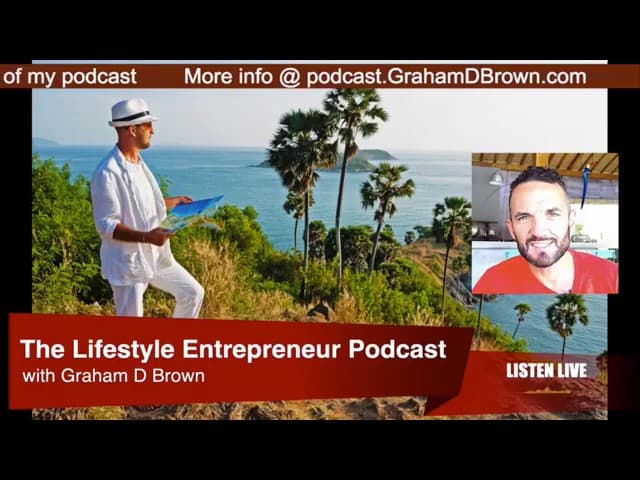
LEP6 | How To Build A 6 Figure Business For Less Than $100 | Lifestyle Entrepreneur Podcast
Video from Graham David Brown.
Generated from the canonical interview transcript and validated against source data by Guests on Air.
How can you start a business for less than $100?
Focus on usefulness rather than innovation. Graham Brown says a business that solves a problem people face in their everyday lives needs no lengthy plan, office, team or bank loan. A one-page plan, a product and the people who need it are enough, and customers forgive a small operation when the founder's story is honest.
Graham Brown started a first business in 1997 the way most people are taught to: with a business plan that forecast five years ahead and a meeting with a bank manager. The plan took weeks to write. The bank still turned the loan down, because a web design business had no machines or equipment to lend against and did not fit the mould.
On an episode of the Lifestyle Entrepreneur Podcast, Brown uses that story to introduce The $100 Startup by Chris Guillebeau. It is one of three books Brown recommends to lifestyle entrepreneurs, alongside The 7 Day Startup by Dan Norris and The 4-Hour Workweek by Tim Ferriss. All three, Brown says, show that a plan of one page is enough.
The central message is simple. Anyone who wants to succeed as a lifestyle entrepreneur should focus on usefulness and not innovation. Innovation is exciting but expensive. Usefulness means solving a problem people already have, and it is how a business can start for less than $100, stay lean and still earn the trust of customers.
Key takeaways
- A business plan for a lifestyle business should fit on one page, and some founders keep it in their heads.
- Innovation needs developers, testers and millions of users, so its starting cost quickly runs into the millions of dollars.
- Usefulness means solving an everyday problem for people, which lets a founder start cheaply, quickly and with low risk.
- Customers forgive a one-person operation with a Gmail address when the product fixes their problem and the founder's story is honest.
1. Why the traditional business plan fails new founders
The business centre adviser Brown met in 1997 had one answer for every question: write a business plan. The software asked for a five-year forecast of revenue, profit and loss from someone who had never written a balance sheet. Brown assumed the older, more experienced adviser was right, and many new founders still make the same assumption today.
The bank meeting went no better. Brown brought a friend, a chartered accountant and investment banker with more than 15 years of practice, to present the numbers. The manager still tried to judge a web design business by the machines, furniture and office space it needed, and sent them away because it did not fit a traditional box.
Brown's conclusion is that the plan-then-borrow model has been taught for 50 to 100 years, and it does not suit the way small businesses start now. In The $100 Startup, Guillebeau offers a single page as the whole plan. Brown did not write a business plan at all for the most recent businesses, keeping the plan in mind instead.
2. Usefulness beats innovation
Guillebeau built The $100 Startup from years of travel documented on his blog, The Art of Non-Conformity. Along the way he met people he calls accidental entrepreneurs, and Brown calls lifestyle entrepreneurs. They started businesses to fix a problem they, or people like them, faced every day, rather than to become famous founders.
That leads to the core lesson. Innovation is attractive and feels like the route to the next billion-dollar app, but it is expensive. A virtual reality product needs a team of developers, a team of testers and millions of users before it works. Usefulness is different, because it solves a problem people already have in their everyday lives.
Brown gives two examples. A person who reacts badly to traditional cosmetics may want an aloe-based skin cream, which is useful without redefining skincare. A cyclist who struggles on hills, as Brown does, may want a book on how to climb them. Neither idea is innovative, yet both can support a profitable business that does not burn money.
3. Why customers trust the founder's story
A useful business does not need an expensive brand or a 24-hour customer helpline. Brown says the customer with the skin condition does not care that the seller is not The Body Shop, Estee Lauder or Johnson & Johnson. If the product fixes an everyday frustration, a single founder with an email address is enough to win the sale.
What wins the customer is the story. A website that shows the founder, explains why the brand began and admits that boxes are packed in a back room after a day job earns trust. Brown says people love that authenticity and are searching for it, and many now prefer small sellers who give extra service to big businesses.
Brown, who has mentored, coached and invested in startups, sees founders feel pressure to become the next Mark Zuckerberg and pitch world-changing apps at networking events. Few of them succeed. The founders who focus on usefulness are less glamorous, but they listen to what customers want and avoid the heavy overheads of a traditional business.