
21 November 2026
Gatting & Being Better at Relationships, with Alfina Lofaro
About Alfina Lofaro
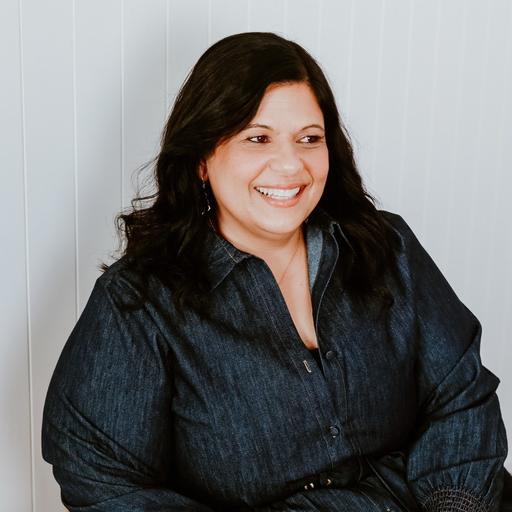
Kinesiologist, Coach & Author of Love Deliberately
20+ years Experience in education, coaching & kinesiology2 Amazon bestselling books2 Awards & grants won in 2026BA (Honours) Australian Catholic University, 2002
Alfina Lofaro is an author, speaker, kinesiologist, coach and leadership facilitator who helps people understand the unconscious patterns shaping the way they love, communicate and show up in their relationships.
Growing up on a 300-acre farm in rural Queensland as the daughter of Italian migrants, Alfina learned early that belonging could feel conditional - and that being good, helpful and dependable could be a way of earning love. For much of her life, she responded by doing more, giving more and becoming the person everyone could rely on.
It took years, and a painful chapter of her own life, for Alfina to recognise the cost of continually saying yes when she meant no, putting other people's needs first and giving away her time, energy and attention without realising what was driving the pattern.
That experience became a turning point.
Today, Alfina speaks to a powerful and often overlooked truth: knowing what you should do is not always enough to change what you actually do. Beneath conscious beliefs are unconscious programs that can influence how we communicate, avoid conflict, seek approval, tolerate unhealthy dynamics and repeatedly give ourselves away - sometimes one small yes at a time.
Transcript
It's that time of me recording again. Today, as I'm prepping some episodes, I wanted to let you know about Preble Street, a food security hub. It's a nonprofit located in Maine. They're able to bring thousands of meals and have been doing so since 2021 to food insecure areas and individuals. This is a growing problem, of course, in the US and all over the place. And one of the top charitable efforts that actually does the most good is bringing food directly to individuals. So Preble Street does that. That's p r e b l e. Put the word street there. Put them together. Make one word. Put a dot…
Read the full transcriptHide the transcript
It's that time of me recording again. Today, as I'm prepping some episodes, I wanted to let you know about Preble Street, a food security hub. It's a nonprofit located in Maine. They're able to bring thousands of meals and have been doing so since 2021 to food insecure areas and individuals. This is a growing problem, of course, in the US and all over the place. And one of the top charitable efforts that actually does the most good is bringing food directly to individuals. So Preble Street does that. That's p r e b l e. Put the word street there. Put them together. Make one word. Put a dot org after that. Preblestreet.org is where you can go to learn more about them.
Anyone who joins the Patreon by going to patreon.com/brokenbrain will be donating 50% of your donations to that help the podcast. The 50% of them every single month will go to Preble Street. And as this is always the case for any charity that we highlight in a given month, anyone who joins in that month, 50% of their donation will go to that charity forever and ever and ever and ever and ever, which I assume is how long you will want to be a donor for the program. Also, you should be very aware August 31st is coming up in approximately however many days from the day that I put this and whatever episode that comes out that day, but it is a set date, August 31st, which is a Monday, is International Overdose Awareness Day.
And so we are doing our annual Broken Brain live feed. Izzy Tran is going to join me to co-host over that period. It is in the in the the web you can find the links and the information if you go to dwighthurst.com/live. That's l i v e. You will see information about when. We got different time zone listings and things there. There will also be links to the YouTube channel and to other social media platforms that you can watch once I pick which ones we're going to do. Stream Yard only lets me do a few, so we're going to pick them, but YouTube definitely will be there. There will also be a link in you can log on or click on and join the program yourself.
Uh it is open to the public, anybody who has anything that they want to share about anything at all. I mean it's great if it's connected to uh human beings, recovery, healing, trauma, uh drug and alcohol prevention, substance abuse, uh any of those kinds of things that you care about or that you know someone who cares about or that you would like to care about caring about, you can join us and be part of that live stream. So and for now, enjoy today's episode.
THE BROKEN BRAIN. [music] RECORDING IN PROGRESS.
HELLO EVERYONE. Welcome back to The Broken Brain. [music] It's me, Dwight, your host here again to talk about the intersection of psychology and culture. And we've got some great uh some great information for everybody today. I have seen it. I have read it and and the information that's coming is super good. Um I'm here today with uh Alfina Lafaro, who is the author of the new book Love Deliberately, How to Be Less at Relationships. Uh she is an educator, she's a coach, a leadership facilitator, and she uh helps people with relational dynamics and with her also her background in kinesiology. Also, probably most important of all of of the resume that you have is that we are both snakes according to the Chinese uh the the the Chinese horoscope.
And horoscope, right? Is that a right way to say it? I don't want to say it wrong. Everybody out there is going to come at me on the internet. But uh Alfina, thank you for coming on today.
No worries, a pleasure to be here.
[laughter]
I don't ask everyone, by the way, just for those that are listening, if you're listening to the audio, there is a statue of a snake that we were talking about behind Alfina in her uh in her study there and that's how. I don't ask everybody where they fall in the in any horoscope necessarily before we start recording, or maybe I do. No one listening will ever know. But anyway, um I'm real excited to hear about your approach and the information you have about relationships. Uh can you tell everybody a little bit about what drew you to uh do this kind of work and what led to the book?
Wow, okay. Many things is the answer to that question. Many things drew me here. I think if I
pitch here. No, I'm just kidding. Go on.
[laughter]
So many things drew me here. I think that being a teacher and seeing how people don't know how to connect and and struggle with that, being um one of three four daughters, household full of girls who maybe didn't communicate very well from very young. Um then also, I guess watching clients as a coach. I have this philosophy that I nailed down as a coach which is that everything in life is about relationships. And when you get good at relationships, you get a good life because we have a relationship with everything and everyone in our life, with our money, our health, our looks, our body, our god, family, friends, significant other, most importantly the relationship with ourselves.
And my philosophy [snorts] I would see every day, all day coaching people, whether it be in leadership or across life, um that if their relationships aren't great, or they don't understand how to have good relationships, then their life is looks messy. A little bit is [laughter] is what we would say here in Australia. And the I think the cherry on top for me is my own personal experiences. So I married quite late in life compared to So I married a Greek boy. I'm I got an Italian background um here in Australia. So everything in my big fat Greek wedding is my life. And so you know you so old. So I married at 37. Yes.
Oh, no. I married a Greek boy that does not look like John Corbett, [laughter] but
Oh, that's right. He was the one character that was not Greek in that movie. My bad.
that's right.
He was reversed.
Well, he's the big fat Greek in my Italian wedding, which was that he stuck stuck out like a sore thumb anyway. Um but he came along when I was 37. And so my whole life was like, well, I it's going to be hard to find somebody. Um yeah, dating is hard. Like the whole thing was hard. And then I found a guy, got married, and then went, oh, that wasn't the hard bit. Oh, it's staying married that's the hard bit. It's not getting married. It's staying married that's the hard bit. And I just remember being thoroughly frustrated that Disney was not real, that happily ever after wasn't just dancing off into the sunset. You actually have to do work.
It actually requires work.
I I've heard people say that it's interesting how every story we have about romance, the credits roll after the the the ending is when, oh, not just we met, but we're we're we're a couple now. We're we're starting, right? It makes it seem like getting together is the absolute hardest thing in the world, and then roll credits, right?
And that's the challenge, too, because then think about where have we learned about relationships? My theory is environment, so where we grew up. And mine was interesting. I'm sure many people's are more interesting. Mine was very interesting, working family on a farm, um Italian immigrants here in Australia. So their perception of love and relationships was from the 1950s, um Sicily. And um in a in a very modern Australia, I'm watching shows like Neighbors and Home and Away and going, oh, is that what love looks like? Then you watch TV is that cuz all your outside experience when you live on a farm does come through television um and outside influences back in the 80s and 90s before you know Netflix TikTok.
Yes.
So my environment said a lot of interesting things about what relationships look like and what communication should look like and then experiments what people tell you go you you know you hang out with your friends and they go have you tried this maybe you should do that or maybe you should date these types of people it was like it no one as I said to you before most adults are just making it all up and they don't really really know and then my experience has been that people get the third thing where people get their information from is education but it's usually when they're already in crisis.
Mhm.
So [sighs and gasps] it could it's a little bit
interesting point yeah yeah no just that that's very interesting what you said of we get education once we're already in crisis we're already at a point of having a problem before we seek that out or it's offered sometimes.
So that's that that's been the case as a coach um when people have come to me for relationships specific relationship challenges regardless of what relationship that is whether their money with themselves with their partner and it's also the case in leadership people often have the challenges already with clients and with their teams with um situations with communication and they don't know how to handle them even though they may have been a leader for 10 15 20 years already.
Yeah.
they often they often come at that moment of crisis.
I like how you take a wide view of relationships as you said and I like this comes across in the book is looking at how do our relationship patterns affect all of our relationships where when we you know sometimes at the book like it's just very very you know it can be very well put it this way it's not a criticism but many books are laser focused on just romantic relationships but I like how you're able to bridge that into all and it particularly that you include the relationship we have with things and concepts and how much that connects with and informs and comes from the same places um that that it does with our important relationships.
Yeah, you've picked out about a really important part of what I guess the answer to your question too is. One of my frustrations is that yeah, there is a lot of information out there. If you want books on dating, you can find that. Books on romantic relationships, definitely there's advice out there and that's the one thing that it seems like it's okay to go and seek support on because there's a everyone's got that challenge. But what I believe, this is my personal belief, is that the key ingredients that you've that help make a healthy romantic relationship are the same key ingredients that would help make a healthy friendship, a healthy business relationship, a healthy leader, a healthy relationship with money.
And it's I deliberately focused on this because there are people out there that relationships are baffling to them and the same patterns show up. They give of themselves too much or they don't trust or they're having a hard time forgiving, but it's not a partner, it's a friend or a family member or the person down the road that did them wrong. So I wanted to write something that was you know that saying the 101 of something like the 101 of relationships.
Yeah.
Yeah, that's and that's why I put the book together. I was really wanting to give people the where to start even.
Yeah, it's you mentioned where we pick up lessons from and I liked the the phrase that you use in the book of our unconscious inheritance and kind of where do we pick up all of the things that maybe we're obviously unconscious of. We're not even aware that we're learning them, right?
Absolutely.
That is I can only ever describe this very well when I tell stories or give examples unconscious programs or patterns run across kinesiology, psychology, hypnotherapy, like so many therapies. But there is an understanding that our unconscious mind is here to keep us safe, making sure that we stay alive, we breathe, we do all of those things. In kinesiology, what we talk about in particular is that when we pick up one of these unconscious patterns or sabotage programs, if you want to call them that, it's our unconscious mind wanting to keep us safe. So someone maybe [snorts] tells us when we're younger Okay, I'll give you this example of me. As a young child, I had there's three of us four of us, sorry.
I was second born and then twins came along. And I I was by my mom's side all day every day. Where she the ground she worked on then she had twins. And all the attention went away from me towards the twins. So imagine as a child I'm like, right, well, I've got to be good. I've got to be helpful. I've got to be a good girl to make sure that the attention's still on me. Now my mom absolutely loves me. I know that. My dad does too. But when they had twins, they had two kids. They had four kids under six, but two kids at once. And my mom didn't know she was pregnant with twins.
She woke up from the caesarean and had two babies.
Oh.
Yeah.
So there is complications with her energy level of division of attention too, but as a kid, you just internalize that I'm not getting it and I need to try to figure out how to get it back.
And we're on a farm and we're quite poor. Um by modern standards, they were were very very hardworking people. And off to school I went, but then I became this person who felt they had to earn love is what I discovered later on and so I would give and do and be the good girl and do everything right so that I would be noticed or included or not rejected, whatever it is that you want to the way you want to express it and so then what happens is that transpires across my friendships where I give more than I ever get um get disappointed when people don't appreciate. But I've called them 10 times. This is when I was younger.
Um happened um showed up again in my marriage and was like wow do all of these things and I'm this great person and it's just why don't I get it equal back or like what am I doing here? I'm giving everything everything everything. And it's it wasn't until a few years ago that that one fat belief or that understanding of the world came back that I had to earn it that I couldn't just be given it that people couldn't just love me or like me for who I was as I was I had to earn it I had to do something for them give something to them and so that's yeah and that's that's what I like like to look at with my clients what are those unconscious beliefs we made up about ourselves or perceived when our unconscious brain like my unconscious mind want to keep me safe it's like you're a little child you've got no attention now there's two other babies do something because we've got to live here but and then
as a 40-year-old woman it no longer serves in a good ways. And I always think that it's important to understand what's running in the background otherwise we just live blindly through life from this doing the same thing attracting the same people having the same results and then going what I'm such a good person I'm doing all the right things why is it not working out for me? And that's that's why I really like to work in that space of looking at what happened when we were younger, but not also also not just when we were younger. I had a client this week who um something happened in their late late early 20s and that forever changed the way that they reacted and responded to people asking them even questions.
They just froze and went [gasps] I don't know. And if I stay quiet, no one will expect anything from me. So I'm always fascinated by what are those things that happen and happen to us and what do we make them mean that is no longer serving us.
If we don't cuz we really have, I find there's there's basically three reactions we can have when when we start recognizing something's happening as a pattern, like what you said, I'm really trying and no one seems to be giving me back what I'm putting in, right? When we notice that, I feel like we can either lash inward and we feel shame, I'm not doing it well or I'm doing something wrong, something's wrong with me, or we lash outward and say, well, I guess everybody else either either just the people I've happened to meet all suck or the world sucks and I guess that's how people are and nobody loves you know, you can bust your ass and nothing good comes of it cuz people are bastards.
But then there's the other, the third one which is getting curious and saying, why is this happening? And I think that's I hear you advocating this of like let's let's look and see what's going on. Maybe it's not my fault, maybe it's not everybody else's fault, but something's happening. There's something going on that that I maybe have some control over, but I got to figure out what it is first.
And that's at the point in which I meet most of my most of the people that I work with now because they are willing to look at that. When you oh, it's so tricky to move the needle on the whole but you don't understand. I've got proof and evidence. You use red bastards before. They're all bastards. This one did the same thing and this one can't you believe it? They all cheated on me or they all treated me the same. I'm just convinced that all men are like that or all women are like that all people from that particular place are like that. And it is tricky needle to move when people aren't in that place of curiosity, but it is the one thing that I advocate in all aspects of relationship is get curious.
Yeah.
Get curious.
I I wanted to
why do we behave like this? Yeah.
I wanted to ask you about how your experience as a kinesiologist, what that perspective brings. And it might be good maybe define that cuz I know that means a different thing in Australia than it does over in like the the northern America area here. That's a different discipline, I believe. So maybe if you could define kind of what kinesiologist means
So from my understanding So from my understanding in America, you're it's more what we would call a physiotherapist that looks at the interaction of the muscles and the bones and how movement happens in the body. Whereas kinesiology came from traditional Chinese medicine. It's a marriage between traditional Chinese medicine and chiropractics. So so there it is what people would call an energy modality, but it is scientifically based and it is we have to study anatomy and and physiology extensively while we do this. But it's the so what we do is we balance what we call the triangle of health. So this is the idea that it looks at the whole person. So we have structural, so body, your skin, muscles, bones, biochemistry is the other side of the triangle, and then spiritual and emotional is the third side.
And the idea is that whenever one of there's a stress in our life, it could be injury, accident, it could be heartbreak, it could be financial loss or business challenge, and there's a stress and it could be on one side of that triangle. And so it goes out of balance. So what a kinesiologist will aim to do is put the body back in balance so that it can be in a state of homeostasis, so it can heal itself. So, when you come to see a kinesiologist, we will identify what is the goal. What is it that you do want? And then we align every cell in your body, every aspect of your life to vibrate at the frequency of what it is you want to attract into your life.
But the body reveals to us in in priority order, one thing at a time, what it needs to be in homeostasis. So, it could be anything from needing to go for a walk in nature, reading a particular book. It can tell us whether you need to see a medical practitioner. Uh the body will reveal to us what meridian access points or acupressure points we need to stimulate to put energy back into certain organs in the body so that the system functions better. We It might tell us what podcasts to listen to, [laughter] uh which is quite interesting. So, the the key that's missing here is how do we talk to the body? And there are so many ways to talk to body.
The methodology used in kinesiology is muscle testing or muscle assessing. So, what To give the best, I will give my arm up to science here. So, a kinesiologist You probably can't see my whole arm. Will apply pressure to the arm, one of the muscles in the arm, and [clears throat] it will stay locked or it will unlocked unlock based on what's going on in the body. It is Unless you've seen it happen and tested it on yourself, it is one of those phenomena that you actually have to experience. There's an episode of um Diary of a CEO where there was a a woman on there who actually did it on Steven Bartlett, and he was like, Whoa, that actually works.
So, it's something that you do have to experience, otherwise you go, Is that real? But the body will tell us we can ask yes or no questions. We will get it to show us where the stress is. And so the reason I chose kinesiology, I was a coach for a very long time, 15 years before I became a kinesiologist. But people would it's not that they would outright lie, they would tell me what they thought was the truth. And I would go I know there's something else going on here and you're not telling me. [snorts] The muscle testing does not lie. The body doesn't lie. The body reveals everything that it needs to reveal in order for the person to get the lesson that they need to get.
And that's why I've combined the two um particularly with relationships because I think it reveals first and foremost it gives us something that we can do. Like it it tell like we can ask the body well what do you need? What do I need to make this better? Um but it also gives us the opportunity to understand those unconscious blocks that we didn't know that we didn't know.
Mm. So a way to communicate with ourselves then in addition to communicating with with the the the kinesiologist too. Okay.
Yeah.
Interesting. Um yeah that's a it's a interesting approach to tie in kind of that body awareness um with those things too cuz uh typically we think of relationships as external um and then the dynamics the internal dynamics can interact with it but you're you're kind of bridging those together it sounds like.
Yes.
Yeah.
Yes. The I guess the other thing that it's important is here is I've seen incredible things happen in my life in the life of my clients and people around me through kinesiology. And it is something that there are some very simple techniques and strategies that people can do to balance their energy to to actually balance their um themselves emotionally. There's some basic acupressure points even just on your forehead right here that if you're emotionally disregulated you can put your hand right there, the blood will come to the front of the brain, the intelligence will lock back in, the emotion will settle down. Really just beautiful strategies like that that I think the world should know about, but uh it's not it's like it's not one of the go-to methodologies.
People go, oh, I'm feeling not great, let me go to see a kinesiologist. It's I'm feeling not great, maybe go to see a doctor or talk to a therapist. So I wanted to get it out there um as much as I could, and I thought that relationships was a great vehicle to to to take it out there with.
And like how under the way Yeah.
Yeah.
Under the way that you define relationships, that's also a thing that touches on everything and everybody has that connection. Um one of the things I found intriguing that I I wanted to ask you about was the concept of trust. Um you mention in the the book the there's a difference between um perfect trust and appropriate trust. And then you have some some information about how, you know, what are the components or ingredients that we have to actually build You have some actual steps, recommendations to build trust, the appropriate type of trust. And I would just wonder if you tell everybody a little bit about about the the type of trust and how you get there.
Oh, this is this is a really really good question. So the the strategy that I've used in the book, you this those steps that I've highlighted in the book, I actually spent This is really an interesting topic because it we teach what we best have to learn. And we most have to learn. And trust is definitely one of those things that over time in in friendships, relationships that I've had to figure out and learn. And there was a while ago, about seven or eight years ago now, where I was asked to deliver a workshop on trust. And I went away and did 25 hours of research, and then I came across Brené Brown's acronym braving.
And I went, oh my gosh, she's just distilled 25 hours of research in one acronym. That woman's brilliant. And so what I talk about in the book is that our recipe for trust the difference between perfect for me and appropriate is what is the what is relevant for that person. So every one of us will have a different recipe for trust. Everyone will focus on one of those acronyms. So in her acronym, it's boundaries, being responsible or um reliable, accountability, um vault, the vault. So if people tell us stuff, do we keep it to ourselves or we blab it around the place? She talks about integrity. Do we do the right thing even when no one's looking?
Um do we make generous assumptions about other people and do we have non-judgment? So that's the N and the G, non-judgment. [snorts] And I added to her acronym because I think an integral recipe or ingredient in this recipe or this acronym is has to be honesty in all aspects of that. So I felt like honesty needed its own platform. Um it needed a moment in the sunlight as well. I know that it's woven in throughout all of her acronym, but I thought it needed a moment for itself. So if we're talking about the way I trust people or the what I look at as uh um as a deposit, if you will, if you uh one of the um ways that I teach trust is like, you know, a piggy bank that is deposits the things that will deposit into that trust bank and then there's withdrawals, things that will take the trust out.
So if you think of those things, if when someone is reliable, they show up and they do what they say they're going to do, that's a deposit. When someone you share yourself with them and they don't blab your story everywhere, that's a deposit. For some people, showing up on time is a deposit. For other people, that's they don't mind. Um you know, and for some people, if you constantly like withdrawals all of the all of the money that thinking that we're going to be perfect at trust or everyone has this there's this perfect way to trust is it's impossible because we all have a different recipe.
Yeah.
But if we don't ever get curious and find out what the recipe of the person we're in the relationship with is, we will break their trust, we will step over boundaries we didn't even know existed because we don't know what makes trust for them happen. What are their marbles in the marble jar as Brené calls them or coins in the coin box?
I think that and I I love the and it was great by the way, that's good just immediate recall. I have the note right here and so I was actually reading them along as you were saying the acronym. Um it was like is she going to get it? No, obviously you wrote the you know, but I wouldn't be able I mean I have a memory thing if it was like put me on the spot, I'd be like uh which ones in which order? Wait, I'm at A. Anyway, you did great. Um but as as you're reading that I the reason I have a uh the page pulled up because I really love how you have a rating system for everyone to go through and rate like it's I think it's 1 through 10.
Yeah, like basically um which ones are the the most valuable to them. And then of course that's something you turn around and can do with a partner too. And to me, what it was was you took the concept and the way you're applying it and adding the honesty piece, it goes a little deeper than often we have awareness of the concept of seeing what people like in a relationship. And this is where you get into the love people talk about love languages all the time. And know they originally came from the book uh the but now it's become kind of common. People mention like oh my love language is giving receiving gifts. Oh my love language is you know uh being nicer having an act of service or kind words or touch.
And that's great as long as you the the problem is is that people use it as a weapon against they weaponize it against each other. Why don't you give me more gifts? You know that's my love language. Um it's misused and then I also though think sometimes it it we do get distracted from the idea that there are deeper ways that we appreciate people. So this to me it fills a need that's like let's look at a way to operationalize a deeper way to connect and I love that it's all about building uh trust. I love that concept that this is a way we can build trust in a way that we both can feel it and know how to communicate it and build it too.
I agree and if you don't know what the building blocks are or the ingredients are if I use that recipe metaphor that the other person needs in there in their recipe then we're building it blindly. We're not doing it deliberately which is why the title is that. I think as you don't even start me about the five love languages. I love that book. I think there's people also need to read the other book which is the five love languages of apology because it is when when you have arguments about and weaponize that.
yeah I know exactly the weaponizing thing is because I think that it's such a simple concept that people just learn the concept. They don't necessarily look at anything deeper on it a lot of times. That's where it gets misused. I'm not necessarily attacking the book because it obviously is a salient concept that people have latched onto. But I think it's like so many things you know when people have a shallower understanding of what that can mean that it's like oh I like this great why don't you do it more often? What's wrong with you? You know the kind of a it and instead of going like oh wait the purpose was yeah yeah exactly. It's like the uh there's an old episode of the Simpsons where uh Marge opens a present on her birthday from Homer and it's a bowling ball with the name Homer inscribed in it and he says, hey, if you're not using that this weekend, do you mind if I use it?
So, you know, uh actually thinking about the other person is what we're talking about.
Like you might have uncovered here the real reason I wrote the book, if you asked me, is that you cannot fix or change anyone else in relationships. You can only ever look at yourself. And so what my hope is that when people look at that is they look at trust and their relationship with trust. So what what is it for me? What builds that for me? And do I articulate that? Do I give people an opportunity to show me that? Um in the book I share a story about a friend of mine who I love dearly who I felt um there was she was trust trust testing me for years. So she had a history of not great relationships with female friends.
They did her dirty in her past and I completely get that. And I could see for years her tell me something and then look at me and see if I would judge her or see what I would do with that or if I would upset or hurt her and um I was always like, oh, I got to get this right or I've like I know I'm being tested, but what what am I being tested against? And And I remember thinking, oh, what is this recipe here? Like what is it? And the more I researched and studied and understood, I'm like, okay, I keep showing up for her. I show up consistently as the same person.
I don't When she tells me things I don't judge. I don't share her story around. There's some with some consistent things I could see that made our um allowed our friendship to continue working. Um the same in my marriage could see can see for my husband what's a big deposit and what's what's a withdrawal or or going to break it or build it or however you want to talk about it. Um I think it's a little bit more complex than one in, one out. It's not that.
Yeah. I do love that you include this. I I when I talk to people about trust, I think it's important I love the metaphor because to use that terminology, a withdrawal, if we put it in terms of literalness, a withdrawal from our savings account, that's going to happen. In fact, that's why we have one. It's like, oh, my car broke down. Oh, lucky I have some savings, but fixing my car is going to hurt a lot less if I've got a couple thousand in there than if I only have 50 bucks or something. So the more trust we have built up, when something does happen that is normal, that requires a little extra trust, then that's a withdrawal.
That's why I look at that is it's not unhealthy to ever withdraw, but we want to have a balance so that it's not decimating. [laughter] That's how I look at that.
That's right.
It might be a thing of like we have a fight or something and we need to invest a little more trust into each other. We withdrew from each other's trust account here, and now we have to say, we'll build it back up. You know, we'll get over it. We'll work on it. But we need it. We need the cushion there.
That's right. And I think there's also a really, really good friend of mine once said, if I ever had challenges in front of me, this is a fair few years ago now, he go, okay, so tell me all of the things that like give me the list of good things and give me the list of what's happened that was bad. Okay. When we measure all of these up, when we very analytical mind, definitely someone who who did profit and loss statements and and had to measure things because they had to get a reasonable, logical understanding of things came from that perspective. And I think then when you actually line up all the things that built the trust and you do the with look at the withdrawal, you can look at it in in quantities that are maybe more respectful or rather than going that one thing that was it.
Well, hang on. There was 99 things that this person did consistently over 10 years, and that one thing or that one behavior, I'm not excusing really bad, unsafe behavior. We do not do that. But if they said something in joke or flipped up or they did something that was not great, are we going to write off an entire lifetime of friendship or 10 years or whatever it is on one moment and forget about all of the others. So
Yeah.
It's it is an interesting concept, trust.
I know that there's been a lot of work around. There's even been research on the idea that learning how to repair a rift or a regrettable argument or anything, you know, the ability to repair something and to forgive that plays a bigger role in the success of a relationship than whether or not anything happens. If it's like, oh, wouldn't it be great if we just never had conflict? It's like, well, I guess, but actually they show that the the the frequency of conflict does not predict happiness or unhappiness in a relationship, but the ability to repair and to communicate when things do happen does actually have a strong correlation with with whether we're happy or unhappy.
I absolutely agree, Dwight. There's I always say to people, you know, you may think the goal is to never fight again or never have conflict, but the truth is conflict shows us what's important to us. It'll show up when it'll show us what we value because we will fight for what we value. And so if conflict does show up, we need two things, learn how to fight well, I always say.
Right.
If you're going to fight, fight well, do it well, like and what does that mean? Do it respectfully. Like you can disagree with someone, you can argue, but the minute you start calling them names, the minute you start throwing grenades or what I call them weapons of mass destruction in my communications chapter, you start launching bombs from the 1970s that you've been holding on to, just ready to detonate, you're going to you're going to blow up that argument. If you stonewall someone, if you, you know, the minute you shut down and you don't let don't let them speak, they're just going to feel like the words have been shoved back down their throats. And if we fight, we got to learn how to fight well.
What are the communication strategies that are going to open up the conversation, not shut it down or make people defensive? And then the second thing is learn how to fix it afterwards. Learn how to come back and um reconnect, repair, because if we don't, resentment stacks and it pulls us further apart.
And then that becomes the ammunition we use 10 years later, the next time we blow up and have uh unhealthy patterns. We just stack up more ammo. There were two things you said in the communication now that you mentioned the that chapter, um that we should learn to listen and speak with curiosity and also with responsibility. And that's what I was You know, as you're talking about that, to be responsible with the other person, but then to be curious. Um and I think, you know, a lot of it does come down to what do we assume? Do we assume this person did or said a thing I didn't like cuz they hate me? Um or is it because something happened and I need to get curious about why?
If they didn't hate me, then why would they do that? And then and then try to ask them about it [laughter] and actually listen to it as well. Um while at the same time as you're saying like responsibly saying, hey, when that happened, you said that thing, I don't think we have to pretend. We can say that really hurt me. I'd like you to understand why it really hurt me, but I do want to know why you said it. So we need to exchange information here. Probably no one's going to say it the way I just did. That's a little robotic, but still um you know, trying to get that curious and responsible communication. I thought that was a really good uh framework for that as you put that there.
So this chapter I would have said would have been one of the apart from boundaries. But this chapter was one of the harder ones to write because there are so so strategies out there for communication. And honestly, a lot of the relationships books that you find that's what they do focus on is that element of um communicating. And I would say that every other aspect of relationships, whether it be compassion, boundaries, trust, requires communicating. So it is the most important thing out of everything. And so how do you distill that in a couple of thousand words and and impart knowledge that's going to be massively helpful? And I I made the decision that I couldn't teach everything that I knew, and so I needed to teach the two things that we're going to, you know, up the ante or move the needle the most.
And what I'd observed had moved the needle the most for me. And that, as you say, with that was that concept is twofold. So listen and speak with curiosity. So when somebody's telling you something, be curious and go, wonder what that means. Does that mean I'm rubbish or is that something about that person? [snorts] Are they saying what they mean and mean what they say or are they Are they just having a bad day? Is that look on their face because they're judging me or is that they've got a pass wind, you know?
[laughter]
I No, exactly. And say what do I factually know? I think we have to be careful diagnosing someone else's thoughts and feelings from things that aren't them saying what they are. I have thought for a long time that if we can catch the angry question before we say it, we can often times turn it into an actual real question. What I mean by that is it's like let's say if I'm about to say something like, what are you crazy? Actually, if I can stop and rephrase that, there probably is something there I want to know. What if I said instead of that, you know, that sounds crazy to me. I don't understand that. I know you're not crazy though.
Can you tell me how did you get there? I am lost. Or some version of that question. It's like maybe I do want to know that. If it's like, oh, you must hate me. Uh it's like, well, maybe I do want to why would you do that to me? Um, if, you know, if if I believe like you love me, that didn't feel loving. Why did you do that? Can you, you know, talk to me about it? You know, there there are questions. I think the questions that come out as the really, really angry questions we hurl at each other, often times there's a little nugget in there that is what we really want to know.
That is is valuable, you know. But when we say you're crazy, the person's not likely to go, well, let me explain how I got there.
[laughter]
Yeah, let me tell you why you're crazier than me.
exactly. I'm not crazy, you're crazy.
This whole thing is crazy. I'm done. Yes. You can see how all of this stuff escalates. So yeah, I absolutely agree. And if we get that bit curious when we speak as well as when we listen, we can have that same outcome. And if we listen and speak responsibly, so you might go, are you crazy? And then I go, well, no, I'm not, but I can understand you're frustrated and you don't understand what I'm saying here. And it might not be the right time for me to say what I'm saying. You might have just come in from where you might have. You might have 10 things might have been on your mind. I've dropped this one thing on you, and I didn't speak responsibly because I didn't take into account you couldn't be listening at that time.
Your brain was elsewhere.
makes sense. And I guess that's where the repair piece comes in because sometimes I might have already said, what are you crazy? But then when we calm down or tomorrow when we come back and say, hey, by the way, I'm sorry I called you crazy. What I was really, I just didn't understand what's going on and I'd like to have that conversation now if we can. You know, it's better than just saying, well, sorry. [laughter] We're done now, right? Okay, good. Um, I'll go buy flowers or something and just never talk about it again. Um, and so that that's where that that comes in. Well, I'm it's a it's got a not only is it a good book full of good principles, but you've got a lot of really good actionable things people can do.
You've got those little tests and things people can can can look at to try to evaluate. So I think it's a really useful um, the really useful ideas in the but also useful tools that that people really can use. And so um yeah, really really grateful to be able to talk to people about it. Um the book once again is Love Deliberately. And uh want to tell people where they can get the book and where they can follow you. Uh before we share that, I always like to ask guests if they would share uh something with the audience about uh ways to give back to the community, ways to get involved in a good cause.
Um do you have any kind of a charity or nonprofit organization that means something to you that you'd like to illuminate for people?
Yeah yeah sure. So I the one that I give to here in Australia is Surf Life Saving Australia. They're a charity that well they're they are charity they they are given funding as well, but they are a charity that provides Surf Life Savers at our beaches and our beaches are some of the most treacherous in the world in terms of we've we do have lots of animals and things that can kill you here. We have great waves and great beaches as well. But they're out there uh they're all volunteers that that are the Surf Life Savers are volunteers. So they're out there providing safety for our community and our children all day every day. And so I give to them each month because I think they're a great Australian in particular organization and what they stand for is really really important in our community.
So if people would like to give back I highly recommend that on.
That's yeah that that's that was so interesting uh to hear that they do that and that that exists. I love I always love hearing about it and and so thank you for sharing that um with people. Well where can people follow you and your work and and uh is there a uh any place in particular that's better for them to get the book than others or or what would you tell them about how to see what's going on with you?
What's going on with me? Amazon is your best best place right now uh to get that because it be guaranteed to be shipped to you within a couple of days in your area and anywhere in the world. And you can find me on alfinalafari.com. That's my website. You can follow me. I have used my name as my brand as if you want to call it that. So people can just easily find me on Instagram, Facebook, TikTok. I'm under Relationships Talk with Alfina. I just started doing some talks if you want on relationships there, but
Yeah.
Yeah. Yeah, [snorts] some dicks when I watch things back. Yes. And definitely Instagram, Facebook, I'm definitely a what what did what do we call Gen Xer? So Instagram and Facebook I'm more familiar with, but I'm understanding the land of TikTok. Although I'm not likely to do a get ready with me or an outfit of the day yet, [laughter] I'm more likely to be asking you questions like what's your relationship with your with your money like this week? Yeah.
[laughter]
No, I'm I'm I'm with you on that. You know, I discovered a little while ago that you're not on Facebook anymore unless you're old. So I'm with you on that. It's like, really? Oh, no. That's not cool anymore. It's just yet another way that I'm not cool. Well, once again, thank you so much. Quick reference for everybody out there. If you are a listener to the Broken Brain, consider going to our Patreon, patreon.com/brokenbrain. And not only will if you become a free subscriber, you get to see all the videos of the interviews that we put up there. And also if you become a paid subscriber, you will get the bonus materials, but also 50% of your donation every month will go towards the charity that was highlighted and everybody heard that mentioned very up top of the episode before we started.
That's this month's charity and 50% of your donation will always go to the charity that was highlighted in the month in which you joined. And that will be true for ever. Well, at least as long as you stay a subscriber,
which, you know, hopefully it'll be until the end of time. So, uh, Alphena, thank you for sharing the book and for for sharing your wisdom with us.
Thank you.
More from Alfina
 Episode 424 - Unconscious Relationship Patterns with Alfina Lofaro
 Can Unlocking Your Body's Hidden Energy and Relationships Finally Cure Your Burnout?
 You Were Never Meant to Earn Love: Choose Yourself & Transform Your Relationships with Alfina Lofaro
 How To Break Relationship Patterns Through Self Love with Alfina Lofaro
 Stop Earning Love: How to Break Unconscious Relationship Patterns | Alfina Lofaro
 Author Spotlight: Alfina Lofaro