
7 December 2022
Creators Burnout, featuring Dr Srini Pillay | Fiberchats
About Dr. Srini Pillay
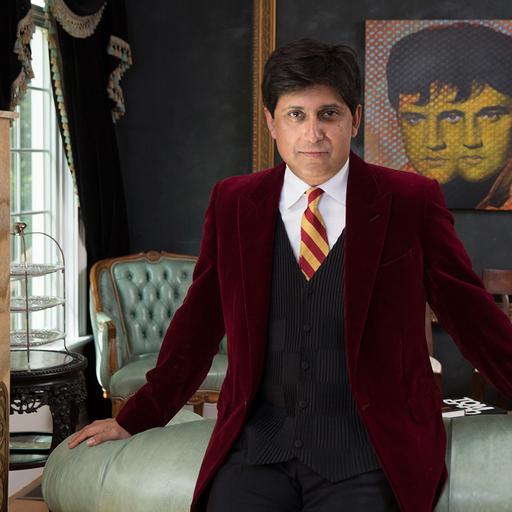
Harvard-Trained Psychiatrist, Author, Brain Researcher & Co-Founder of Reulay Digital Therapeutics.
17 years Federally funded brain researchTop 20 Leadership development mover & shaker6 Books authoredHarvard Medical School Assistant Professor of Psychiatry
Dr. Srini Pillay is a Harvard-trained psychiatrist, neuroscientist, entrepreneur, and author exploring one of the defining questions of our time: What makes us uniquely human—and how can we develop those capacities in an age increasingly shaped by AI?
Trained as a physician in South Africa, where he graduated at the top of his medical school class, Srini earned a Medical Research Council fellowship in neurochemistry before completing his psychiatry residency at McLean Hospital through Harvard Medical School. He became the institution's most awarded resident and went on to direct its Outpatient Anxiety Disorders Program and Panic Disorders Research Program in Brain Imaging. For 17 years, he conducted federally funded brain research while serving as an Assistant Professor of Psychiatry at Harvard Medical School.
Today, Srini brings that scientific foundation to questions extending far beyond traditional medicine. His work explores how belief, attention, emotion, creativity, and human connection influence the way we think, perform, adapt, and potentially age. Through his work on psychogenic longevity, he examines the relationship between psychological experience and physical health, expanding the conversation about longevity beyond biology alone.
As AI transforms the workplace, Srini is developing a powerful new perspective on human potential. He argues that our greatest advantage may not be faster thinking or tighter control, but our capacity for insight, imagination, unexpected connections, and reinvention.
Transcript
hi welcome to fiber chats my name is Irina I'm the host here and my guest has been a guest for CNN Fox and PR the New York Times Washington Post Huffington Post Harvard Business School Cosmopolitan L Forbes and now fiber chats Dr srini pillay a dear friend of mine hi srini hi Irina um so welcome to Fiverr chats and what I wanted to talk to you about we had this discussion numerous times about what actually is Success right how does one defy success because we're surrounded by analytics we like I'm on the YouTube right so I'm getting like the number of views the number of likes the number of…
Read the full transcriptHide the transcript
hi welcome to fiber chats my name is Irina I'm the host here and my guest has been a guest for CNN Fox and PR the New York Times Washington Post Huffington Post Harvard Business School Cosmopolitan L Forbes and now fiber chats Dr srini pillay a dear friend of mine hi srini hi Irina um so welcome to Fiverr chats and what I wanted to talk to you about we had this discussion numerous times about what actually is Success right how does one defy success because we're surrounded by analytics we like I'm on the YouTube right so I'm getting like the number of views the number of likes the number of comments all of these things like the number of subscribers all of these things are like hard to ignore hard not to compare yourself to your competitions or your friends right who like get more views or more subscribers how do we not let the analytics Define us but I think part of it is just trying to really think about firstly if analytics make you
happy and then go ahead and let it Define you if you wanted to Define you but for most people the analytics um really pulls you down because it puts you in a state of comparison with other people um I think we have to go back to thinking about why we are alive like what what are we actually doing every day when we get up and I think most people would say that that one of the things that they most look forward to is feeling happy with whatever they're doing and as a human being like even from a brain perspective uh we are more than just some you know a logical machine we are a logical machine where also this whole unfocused machine we are creative machines and when all of this comes together and you begin to feel like you can be in the flow I think that's a good signal that you're moving in the right direction uh McKinsey actually did a study showing that people CEOs who are in the flow are five
times more productive than CEOs who are not in the flow and to be in the flow means that you can really be so focused on your work but it's not effortful and energy sapping if you're looking at analytics and that's just sapping your energy and it's making you feel like a statistic like a number then you have to go back to understand that there's more to life than just analytics I think if analytics is part of your profession of course you have to care about it and you have to care about how to optimize that but at the same time the Paradox of that is your analytics are often very much dependent on your being your full self and so if you are not your full self it's actually very difficult for your analytics to go higher like you know a lot of people for example who have large numbers of Instagram followers for example they are they may be strange they may be peculiar they may have strange things to do but they are
being more and more who they are and so I think that one thing to recognize is that you're not just a statistic you're human and as a human being there are there's more to life than just analytics I think how you feel matters and using how you feel as a navigator uh is actually a helpful first step in thinking about dealing with life on a day-to-day basis yeah right because we've always been taught that like if you work harder if you put more energy into something if you persevere then you're gonna achieve your goals but there is also the whole idea of creators burnout right when we concentrate so much on working hard and making more and being creative and it actually kills the creativity and you talk about it in your book Tinker double doodle tried that there is power off and focusing your mind and there is actually that makes you more creative right so talk a little bit about that yeah so so most people live their lives like this they go
focus focus focus fatigue and then they're out uh and that's very very unreasonable way to live your life because you wouldn't drive cross-country without refueling why do we think we would go through the whole day without having any period of refueling and so in the book what I recommend is that you do focus on focus focus on focus and that way you're refueling and optimizing your brain as you go throughout your day now you have two circuits that are responsible for Focus what one for focus and one for unfocused and a lot of what I'm saying sort of over generalized but these are these are pretty decent Concepts the prefrontal cortex is where is your logical brain I mean we all need logic to get through the day if you need it if you have a list to get through you've got a musicological break if you have to go from beginning to end you have to use your logical brain but there's another there's another circuit that is called the default mode Network the
dmn we used to think of that as the do mostly nothing Network because it only came on when you're unfocused but the truth is this network uses 20 percent of the body's energy it's a pretty greedy Network and the the prefrontal cortex just uses five percent but this unfocused network is responsible for putting puzzle pieces together it's responsible for giving you a different kind of intelligence than the focused Network would give you so focus is amazing I love Focus you know it really helps me get through the day but there are some disadvantages of focus so the first thing is when you are focused you actually deplete your prefrontal cortex of energy so it makes the logical brain worse and worse and worse throughout the day you know that's why you'll hear people like Jeff Bezos saying he has his high IQ meetings in the morning because by the time it gets to five his brain is sort of like you can't really operate well so so Focus does deplete your brain of energy and
there was a study that was done that that gave people a task of looking at a video and if and one group had to look at it in a very focused way and the other group had to just look at it as usual and what they found by the end of the days when they gave them problems to solve where they had to save someone the people who used up all their energy focusing couldn't care less and they only started to care when when they were fed glucose so what this tells us is that Focus can be very disruptive to your brain and can sap your energy but there are other disadvantages as well if you are focused like just very focused you're not going to see what's going on around you and if you're not going to know what's going on around you you're not going to take in things that might be relevant new trends you know things like that or if you're focused with your nose to the grindstone you're not going
to see what what the upcoming Trends are so you really want to not be too narrow-minded you want to be able to unfocus so you can see what's around you in addition to be creative it often requires making connections between two things I mean just think about sort of knitting like knitting with one needle is probably difficult you know that you generally need possible yeah I said probably difficult because I was like maybe there's some magic thing you can do with it with your hand but but you need these two things you need to be looking at two things you can't just be focused with one thing uh and so creativity usually requires connecting across two or more things and then the self Network what you just talked about like how do you know who you are the self Network in the brain self-awareness like who you are really starts to light up when you're unfocused you know this is and and people often get their best ideas when they're unfocused that's why people say
they get their best ideas in the shower um Einstein for example said his Discovery was a musical perception he didn't just logically pursue something he allowed something to emerge and so there's two kinds of intelligence there's the intelligence that comes from focusing and calculating and knowing how to move forward but there's also the emergent um intelligence you know like if I think about you and I think about how you think and you have a very sort of engineering focused mind but you also have a strong aesthetic appreciation right and when I think about how knitting happened in your life I my experience of it was that it emerged like you know not like okay let me plan let me make a list of 10 things is the knitting is it gardening is it so you know I don't know I chose knitting it sort of emerged and then it became experimental and your curiosity is growing and in in a in a world like today where you pretty much cannot determine what's going to happen
the next minute you can't just have this focused intelligence because the focus intelligence relies heavily on being able to predict and in this world it's almost impossible to predict anything let me ask you this when we talk about success right is that luck based right like you're in the right place in the right time you meet the right person the right idea occurs and you just follow it and that's what makes you successful or can it be orchestrated I think it's both uh but I don't believe in luck um I think luck is just a word for um why I don't know how it happened uh because I think there are many dimensions of things that are unseen right for example in the unconscious there's a lot of a lot of our planning is unconscious that you may not be thinking overtly I want to meet someone you may not be thinking overtly uh I want to meet them tonight somewhere uh if I go to a bar or club but your brain may still
be knowing what this information is and you may come across someone you might say wow I got so lucky I met someone but this luck is really about unconsciously your brain made you attend to people who who you are highly likely to connect with so I think that that that that emergent intelligence is is a is a deliberate form of intelligence and the reason I wrote that book is I wanted people to understand that there are deliberate strategies you can Implement to unfocus in a way that will augment your brain and so it's not just about well you know let me just unfocus and maybe something will happen it's about the fact that you have other faculties that are much like the the conscious brain is pretty slow like the unconscious brain is putting together information pretty rapidly a lot of the time and so you want to give that part of your intelligence a chance in the world otherwise you're robbing yourself of your intelligence right well when I'm looking at like I see
designers that complain about that there's like a couple Gatekeepers out there right and the rest cannot break through there are YouTubers that I see that like I interviewed them last year and now they disappeared on the face of the Earth there is like all the time we see people who like they see as very successful as that they achieved something right and they want to be like them and then we see them being depressed or disappearing or like you know quitting what they're doing and giving up on things how difficult it is in today's day and age to stay positive and what can we do to stay positive but what are usually at this point um so many videos come to mind that I wish I could show one of them has to do with Virgil hablo um the lead designer The Men's Designer at Louis Vuitton where he talks about the fact that he had the most unlikely background right he had he was an architect um and an engineer and and then he
became the lead Men's Designer at the biggest fashion house in the world and he said that he just applied his knowledge to fashion and as a result he was able to appreciate the technical dimensions of the clothing he made and also the aesthetic Dimensions now one of the things he said is he felt like when Naomi Campbell was was interviewing him she said you know like how did you get this job and and and and he said I've been dreaming about it my whole life you know I I went to stores on Michigan Avenue I went into the stores I was wishing hoping but I was always oriented toward the fact that it may happen and and then went to Paris for fashion week so he put himself in these places where he could notice and he could also be noticed and partly because of what an amazing human he was I think lvmh noticed him and then hired him now to get back to this notion of how do you stay positive I like
to tell people that you know in life false positivity is not helpful you know there's a studies actually show that mixed emotions can protect you from anxiety from depression and also can also protect your body because we have 100 billion neurons and 100 trillion circuits and you know sometimes on any day I'll get up and I'll be like am I feeling unhappy or annoyed like I can't quite because there's something that makes me really happy and there's something that makes me annoyed but then I'm like wait a minute I'm probably running both circuits at the same time so the question is how do you take your attention and direct it toward where that happiness is and that's where I talk about the science of possibility and and what I call existential confidence now there's a big words just to describe the fact that I believe in this day and age to stay positive we must be committed to a possibility that is not yet a reality with the full belief that we can deliver on
it even if we haven't delivered on it in the past now when I say this to people people say oh you know that sounds like hope or wish or you know what what what is this actually I say no actually think about Placebo studies right I'll give you a classic example of a study they did a study where they gave people uh the same neutral cream so it did nothing they labeled one lidocaine for pain relief they labeled one capsaicin the act the active ingredient in chili and then they labeled one uh neutral and so when people took the lidocaine they were like wow this feels really relieving and when they when they took the capsaicin they were like oh this stings a little and the neutral they said well nothing happened and when you looked in their brains what you saw is that when you expected something to relieve you the brain's Reward Center is lit up when you expected something to hurt you the brain's pain Center's lit up now the reward centers
are largely about a dopaminergic activation when you have heightened levels of dopamine it motivates you so what studies show is that even in Placebo studies where you're using sugar poles you know some a lot of times the sugar pulse actually work up until a point and if you look if you look if you look at the person's biology they have raised dopamine so they're more motivated in that state because they believe that it's going to work they have raised opioids and the and the opioids are uh are something that actually make you less stressed so believing can give you more motivation and believing can also give you it can also make you less stressed now how a lot of people being that stress having the sense of possibility is difficult and that's because there are certain factors that block the sense of possibility now when you are in The Logical brain that's the prefrontal cortex to have possibility you are switching to this other unfocused network the default mode Network when you're asking questions like
what if what if I could be a great Knitter what if even if I can't make it through I will a certain way will emerge and for a lot of people this is difficult because things block this access to this possibility circuit in the brain the first is burnout so when people are burnt out they get annoyed they're like I don't even have the energy to believe so you have to address some of those factors burnout is one of them the other is feeling lost like you know where do I start what am I going to do and you I think a great example of that I think when you started this it didn't it didn't sound like you went to knitting school and then you decided you know I might as well you started it and and you found your way because you let yourself direct yourself so feeling lost is one of the things that gets in the way sometimes people have already given up they try just for the sake of trying
but they've actually given up because the task seems too difficult so that's the third factor that blocks possibility then some people are stuck in habits you know it's like like certain people can't stop being in uh traumatic relationships even if they think I'm not going to be in a traumatic relationship somehow they get stuck in the habit of being in those relationships right it's the same thing with with uh not succeeding in what they're doing where they get stuck in this habit of well it's never going to work hard it's not my it's all I mean it's always my luck the fifth thing is is worrying too much if your attention is spent on worrying it's very difficult to then move it to a sense of possibility and then there's the fact that it's difficult to imagine uh and and then there's also Downer days like when you're just feeling depressed or anxious but those factors are all factors that that can block your sense of possibility and if anyone's listening to this I would
recommend that they write down these things and then rank themselves from one to ten and say okay you know how relevant is this Factor how relevant is burnout how relevant is feeling lost how relevant is Task difficulty how relevant is worrying how relevant is Downer days and how relevant is difficulty imagining uh and and how relevant is worrying too much if they can if they can write that down that's a great start to then say I need to work on this in order to relieve whatever the factor is and and then when it comes to a sense of possibility there are ways to to actually go about doing that the first thing is to is to tell yourself that you're going to let the future use you so in most people reality determines their commitments I don't have any Instagram followers I don't know how to get there they're like that's the reality I guess I'm not going to do it but when you have existential confidence your commitments determine your reality you are the
architect and and nobody tells you what what you're going to build because you are the architect so when you have to ask you about that though like half of the times right I feel like I'm I'm leaving like chakrazad I have to come up with the new belly dance and the new story to entertain to survive another day basically because of what expected right like and I don't know if it's expected by the white world or is it self-expectation of it right but you as a Creator as a YouTuber as a person who is on Instagram as a knitwear designer as any of those things we constantly sort of under pressure to recreate ourselves to keep recent right to keep invoke to get the next best thing and in my view like that's half of the time what causes that down feeling and doubtful feeling because you come up with the new brilliant idea right and you think it's gonna perform so great and you put hours and hours and putting it together and then
you get crickets right there is nothing there is no reaction the world didn't know it is that you put all this effort and you did all of that and you start doubting yourself and and you start saying well what do I know like I should just give up [Music] um how important is this ability to like Shake It Off and continue and and maybe like we are self-delusional and maybe we should stop like how do you know that you're actually on the right track yeah I mean I I don't think there's a clear answer to that I think there's uh what you're talking about is sort of avoiding the sunk cost trap like throwing good money after bad or you're like I'm looking at more and more effort more and more effort and then and then it goes nowhere so that is one possibility I think that that most people I would say ask yourself have I given it have I truly given it my best shot and when you use possibility thinking or growth
mindset thinking it actually gives you more cognitive control so your brain actually has more stability and you can recover from errors faster but what a lot of people do is they don't they don't actually live in possibility land they don't say listen my my vision is this I would like to be able to knit for lvmh that that's my vision I don't know how I'm going to get there I don't know how they're going to notice me I have no idea all I know is that is my North Star possibility thinking means that you are committed to your North Star like whatever that is you are committed to it now when people say well you know how do I know I should I should stop doing that well if it really is your North Star then part of what you need to be thinking about is how do I cross correct not how do I leave you know what what can I do differently who can help me how can I get to the next
phase so I don't think there's a clear answer of when to leave and when not to leave but I think in general I find most people leave prematurely because they're they're down about what they've experienced and they're self-critical right their feeling is well you know that didn't work out so I might as well just sleep as opposed to well I really want to admit for lvmh or I really want to be a YouTuber with a million views um and so I just need to think what am I doing that I could be doing differently you know like there's so many aspects I think of my own life where I feel like um you know like I I have some I have certain pressures in like you know having my messages be spread why but I'm not the hugest fan of marketing and so when I've talked to people about it they said well you can't be the best kept secret in the world like what what do you want to do you have to so
I was like but I don't want to do things that I don't like and I think this actually reminds me of a cool example of Lady Gaga when she came to a point in her career where she said she just didn't want to sing anymore and and it's sort of like what you're asking me about when people say well should I do this or not and she said you know I I didn't know why and yeah I had a reputation and I was successful but I just didn't feel like singing and then I started to think about why and I realized it's because I don't like selling fragrances I don't like taking selfies I have more to offer the world and slowly but surely I realized that I had to start saying no and once I started saying no I would go home and look at myself in the mirror and I would say you I can sleep with any day because you have integrity you you are able to say no to things you
should be saying no to now everyone in the world can say no at the level at which Lady Gaga says no but but I guarantee If You Give a Little Bit of thought to that in your life you will you will find that that that there are at least two to three things you can say no to to prevent this overwhelm that makes you leave things that are your greatest passion and it's funny because like I'm I was thinking about it a lot like last year I did a whole ton of test meeting right and I love test meeting I enjoy meeting new designers I enjoy supporting them I enjoy needing something I don't know what it's going to be I enjoy to be the first in the know the In Crowd you feel like you're part of the dream team so to say right you're the Inner Circle but then I was finding myself feeling under pressure because you have to finish by the deadline you have to take good pictures and then sometimes
the designer would tell you no like I need better pictures the lighting is not good or the whole show is not showing in the picture right and you and you feel like suddenly you're on someone's payroll whereas you're not even being paid right and you owe something you're on the deadline and there is this all this pressure and it's almost funny because you're like well it's only knitting like it's all self-imposed but that doesn't help you to remove the pressure like even if you understand that the pressure of like let's say putting my YouTube videos right and I'm gonna I can put it twice a year and nobody's gonna tell me like what are you doing well I can put it three times a week and nobody's gonna notice it either right but like I'm on the pressure of doing what I had planned to do how do we become kind to ourselves how do we treat our cells with the same kindness we show to strangers and the same understanding the show to strangers
so I think there are a number of ways and there are two aspects to what you're saying I think this idea of when you feel pressured that you have to deliver on something that's a complex phenomenon because worry is a is an is an interesting idea and it's interesting for the following reasons there are two types of worry type one worry and type two worry type one worry is when you worry and that has been shown to be okay it's not that bad for your physiology type 2 worry is when you worry about worry where you're thinking about I'm feeling so pressured now I'm feeling pressured that I'm feeling pressured that's actually associated with hypertension It's associated with heart problems associated with anxiety disorders so the first thing is is to allow yourself to if you if you're if you're worried about something think about the function of the worry the Billy Jean King the tennis player says pressure is a privilege wrote a book about that and her idea about pressure being a privilege
is that yeah if you want to be a top performer you're probably going to feel some kind of pressure but don't then start critiquing what that pressure is so that's that's the first concept I would highlight the second is why do we worry like do we actually know why we worry well if you look at the studies there's there's one factor that's been determined for why people worry and this is I think one of the most difficult things to manage so in life you have Peak experiences right you meet someone you fall in love you have a great career move you have a child and then you have these trough experiences someone you love dies or you lose money and and then you have the in-between now what people who worry they found like to keep themselves in the mediocre middle and that's because they have what we call contrast avoidance they don't like to be elated and then suddenly get bad news then they have to drop they'd rather be slightly miserable and then
the drop is not that bad right so you have to ask yourself are you prepared to live life fully and do you really want to feed this worry just because you're afraid of the contrast like perhaps you can accept that life is full of contrast and because life's full of contrast you can when it happens you'll know it's a contrast so it's a different mindset and so that would be my second response the third response is I think related to what you're saying which is how do you overcome this overwhelm that when you're feeling overwhelmed and you have too many things to do how do you treat yourself better and there I use a mnemonic to help people based on how the brain changes in order to become less overwhelmed when the mnemonic is defined by the letters Circle so you know I would write these down the first C and I'll explain each one is for chunking the I is ignoremental Chatter the r is reality check the second C is control check and
the a is a tension shift and there's actually a free download app for this as well so if you look at the chunking what does this mean what chunking means is when you get up on a Monday morning like oh my god I've gotta I've got to feed my kids I gotta take them to school I have to finish my job I've got a deadline it's it's overwhelming now we tend to think a lot of the times on in autopilot like oh I'll get this done I have to cook in the morning so I'll do this but what ends up happening is that our brains end up freaking up the amygdala which is an important part of the fear Network starts to over activate and so just by breaking it down deliberately it's taking five minutes and saying this is what my week looks like this is what how I'm gonna do just by breaking it down deliberately the amygdala actually starts to calm so that's that's one piece of chunking the other piece is
ruthlessly prioritizing if you have 700 things to do you're probably not going to get to all 700. what do I have to do what do I what do I wish it would be nice to get to and what am I probably not going to get to and then also delegating wait a minute maybe I can ask someone in my family to do that instead of me so chunking is basically breaking things down prioritizing or delegating the I is ignoremental Chatter and that's simply mindfulness and mindfulness is a very powerful technique it's sort of sitting you know if you sit back in your chair you close your eyes and you place your attention like a flashlight on your breath it actually decreases amygdala activation and potentially even protects your genes and and and actually delays aging that's because at the ends of your chromosomes there are caps called telomeres and what mindfulness does is it prevents the shortening because when telomeres shortened these caps get smaller disease starts to set in so this these um these
meditational techniques so mindfulness can be super helpful uh I just started a virtual reality company uh where we deliver experiences through nature and so just five to ten minutes if you don't if you're someone who doesn't meditate then you're part of the 90 of the world then you might want to use something like nature-based virtual reality just to allow your mind to settle down then reality check is is simply this too shall pass you know sometimes you can't rationalize something you're like this is the horrible thing and I'm not going to say well there's a bright side you just say it'll be over tomorrow so this too shall pass remind your brain that's your amygdala can calm down then control shift is what can I control what can I not control and what's the difference like the Serenity Prayer like we get up in the morning you're like oh my God there's a war there and there's this virus and this is happening economically well if you have 10 attentional units and you occupy eight
of them with things you're going to do nothing about you've only got two units left for creativity so you really want to make a list of what you cannot control maybe even write it down and throw it away so that you don't worry about this thing you can control and then the last step which is attention and shift is how do I shift my attention from the problem to the solutions like what's the solution what's the potential solution because we get so lost in the problem especially if you're anxious the brain is biased to only look for threat so if you if you get so lost in the problem you're not spending enough of your of your intelligence on the solution so if you use Circa chunking ignore mental chatter reality check control check and attention shift this can truly help you but again also ask yourself more deeply why you're avoiding this contrasting worry and also ask yourself am I a type type 1 or a type 2 Warrior and I think those three
things are ways in which you can begin to protect yourself right well when it comes to creativity right there is no sort of right or wrong because like everybody has different styles like you know everybody things that were unconventional right like they became classic eventually like think Picasso but also as long as the world of art exists the world of uncertainty and doubt and depression exists within the artistic Community because like you know there's a book uh the agony and they ecstasy about Michelangelo and you'll ask yourself like he is one of the best known painters and sculptors of the world right like for hundreds of years why was his life an Agony for any point right but like you see it all the time you see rock stars talking about depression and you know there are people committing suicide like there is a lot of things going on this the people that we perceive as very successful we thank them on top of the world and they are totally miserable how do you deal
with that how do you tell yourself like you know it's not the end and like how do you keep creating how you know it's like because even if you did something and it was received brilliant right like you wrote the screen plan that sold it for a million dollars it's not guaranteed that your next screenplay is even going to be purchased so it's like in it's in every industry it's in every sphere of life yeah so I think essentially people often over identify with their emotions that's because we misunderstand what an emotion truly is the most modern theory of emotion uh has been espoused by Lisa Feldman Barrett and Lisa Feldman Barrett has said that emotions are not about reactions to life circumstances in fact it sort of works the opposite way emotions are simply signals of of changes in metabolism that need to happen to to meet what you are anticipating is going to happen and the brain is constantly making predictions about what's going to happen right and often that happens because the
brain's very dedicated to its predictions once it makes that it's like something's going to be miserable it's like guess what it was miserable you know so one of the things that we want to do is sort of re-examine how we relate to our emotions and I would say a contemporary there are many contemporary theories around that one is mindfulness which is how do I observe my emotions rather than become my emotions so so when misery starts you're like oh that brain's generating misery kind of interesting what's it anticipating like it's expecting something so you you are in dialogue with what these emotions are as a result you don't become sort of Swept Away by them I think the second thing is when you're thinking about uh you know these these emotions is also to start looking at looking at the big picture and not just looking at what's in front of you but looking at the horizon you know like what's what's the thing I'm actually shooting for you know what's my moonshot and you
can take your attention off of being just being in this worried Zone that said I I want to agree with you that I think that being a human fully requires becoming familiar with with the agony and and familiar with the Ecstasy and it's almost impossible to have you know one capability without the other many people get stuck in the agony piece but they don't realize that the other side of that is the potential for ecstasy so what I would say is when you're thinking about how do I relate to my emotions rather than than saying my emotions are me you could say my emotions are actually distracting me from what I am because what what I am is is being Consciousness Bliss that that is my my fundamental nature is being Consciousness Bliss anything that detracts from that is something that I think you should you should recognize is distracting you from your fundamental nature and you know this comes down to sort of one's personal philosophy I do believe that that all people that
I meet have a certain kind of light in them a certain kind of potential and a lot of times they don't see it because their folk their attention is focused only on the dark and so if you can say to yourself how do I how do I just observe my emotions rather than become them how do I commit to possibilities rather than to misery it's much easier to commit to misery right when you commit to a possibility because it's there and you're like oh it's a miserable thing I'm committed to it but if you commit to a possibility then you're you're living in a very different world you know so and there are many other aspects to this kind of emotional control there's also some very simple things so for example um if you look at ways of building ordinary confidence uh there are three principles I will often teach when I'm working with Executives and companies the one of the things we do is uh you know if it really helps to label the
emotion so if you're sitting in a state of panic or fear or you're just about to you know show your work for the first time or be on for the first time acknowledge what it is because it decreases them into the activation they say I'm both afraid and excited and and by calling out your emotions it helps your brain the second thing is uh is is related to a concept called ironic process Theory which is a theory that was uh really investigated by Daniel Wagner Harvard who found that under stress when people say do not do this uh they actually the brain does the exact opposite So when you say you know do not lose my temper at this meeting you go and you're like oh my God I lost the temper and you know they discovered this because they would say why is it that when you're holding a glass of red wine you say Do not drop the wine when you're next to the white couch you drop the wine like you know
and they actually investigated this in soccer players and they found that if soccer players are scoring penalties if they say Do not kick the ball to the right if they use eye tracking devices the eye goes to the right you know it's the same thing with um you know romances at work if you say I'm not going to fall in love with that person you fall head over heels in love with them because under stress the brain can't manage the stress and then prevent something so frame things in the positive so that your brain can do what you want it to do and then the third thing is if you're trying to pep yourself up it's a it's a kind of a cool trick Ethan cross and his colleagues studied this and they found that that if you rather than saying I'm gonna crush this when you say that you're anxious your your brain is like yeah right you're gonna Crush you call yourself by name so if we're you you'd say Irina you're gonna
crush this and when you speak in the second or third person and call yourself by name you're acknowledging that there is a part of you that's anxious and agonizing and miserable but there's another part of you that's not that way and that part of you knows how to crush it no those are just some some simple things sort of you know observe your emotions look at the Horizon and use these three principles of self-talk by naming your emotions and allowing yourself not to say no and uh and speaking to yourself in the second or third person those are some techniques you can use to get yourself to the other side most importantly though I think what's implied in what you're saying is that it's pretty human to live life that way and it's very difficult to have an exceptional life and not feel like you know like often to learn a lot you've got to spend a lot of time you're missing out on other things and then you feel disconnected and lonely you know
pay attention to all of that because loneliness itself is actually something that's super important people don't recognize you know one of the reasons more and more people are feeling fatigued these days his Studies have shown that whether you have covet or not even if you didn't have covet after the lockdown there were higher rates of brain inflammation compared to before the lockdown let's talk about the loneliness because like being a creator of any kind is a lonely like a way of living right like whether I'm knitting on my couch whether I'm putting down a YouTube channel like some video for my YouTube like you know like whether you're writing a book it's something we do by ourselves like we can maybe talk about it with friends or family or somebody but you know but this it's not guaranteed that they're not gonna roll their eyes at us every time we bring up again the knitting or the YouTube channel or your book idea right how do you deal with that loneliness of a creator but
you know again I think that's it's very difficult to deal with it um it's difficult to deal with it because you have to always be straddling that line on the side of solitude uh rather than loneliness so you can be alone and happy and thrilled when you're in the flow and that kind of solitude which is calmer and then Flow State makes you really you know extremely happy but then you can be alone and feel like you're completely disconnected to other people and part of what you have to offer yourself is the ability to live in a relational space your understanding of life has to be that like you and I may think like we're separate people right and to a certain extent we are but the truth is you live in you live as an image in my occipital cortex like my visual cortex has a had my actual brain my tissue has an image of you in it has has your voice in it in my temporal lobe so we are living in
each other's bodies all the time we're not as separate as we think we are your brain has mirror neurons and so does mine and that means that when you have an intention or an emotion it actually mirrors in my brain so so you may seem like you're separate but everything that you are when we encounter each other is actually already Part of Me Maybe oxygen and and we breathe in that oxygen so we have to change our frame of understanding of the fact that even if we whether we like it or not we are not alone just completely physiologically like like we're not alone then we have to try to understand how do we deal with the sadness when we feel because you know when you are creative it you often go to a place of despair and you often go to a place where you're you're like God this is so amazing and all of a sudden I feel so deeply sad and and again I would advise when you when it you know
again I think there's nothing wrong with sadness it's it's a metabolic signal but if you if you cannot judge the emotion but observe it if you can say to yourself you know I I actually should be socializing maybe I should make a deliberate attempt to socialize because you know loneliness can actually impair your immunity and it can also cause coronary calcification so I mean causes a strong word but it's associated with coronary calcification so it can affect the body and that's because feeling states are not just like brain States or in your head they're actually like whole body changes like a study was done an emotional suppression over 11 years and they found that people who suppress their emotions are more likely to die and more likely to get cancer and there was a trend toward heart disease and there was another study done in women that showed that women who self-silence you know who are not speaking we're not saying what they think I actually put their hearts uh at greater risk so these
things we think are emotions are really brain activations that go throughout your body like you couldn't be able to move your right foot if if you didn't have a brain to your right foot and your brain are connected so when you're when you're lonely I think it's super important at a very literal level to make sure that you have something on your social agenda but I also think it's important to ask yourself about the diff but how you can get to Solitude and how you can learn to observe your emotions rather than critique them or get lost in them well another thing I've been working on lately is this mini series of how you one becomes a better Nipper and I've been interviewing teachers instructors book writers uh who like you know gurus in the field about how one becomes a better Knitter and there is a lot of like techniques that you can practice things you can pay attention being mindful to like reading your knitting understanding the fabric understanding the materials understanding the
right tools even up to the like choosing the right chair to sit and neaten right but then there is the whole aspect of what scares people what makes them to be afraid of like learning new technique or learning some something trying some difficult project right why some people learn to need like a you know a few months ago and jump in head first into something difficult and others need all their life and stick with like simple techniques right what do you think makes a better Knitter or better Learner in any field well I was I was just looking at this quote because I think the quote that I'm about to read to you is one that I think every human being should really think about taking seriously and it's a quote by Marion Williamson and she said our deepest fear is not that we are inadequate our deepest fear is that we are powerful beyond measure it is our light not our darkness that most frightens us we ask ourselves who am I to be
brilliant gorgeous talented fabulous actually who are you not to be you are a child of God you're playing small does not serve the world there is nothing enlightened about shrinking so that other people won't feel insecure around you we are all meant to shine as children do we were born to make manifest the glory of God that is within us it's not just in some of us it's in everyone and as we let our own light shine we unconsciously give other people permission to do the same as we are liberated from our own fear our presence automatically liberates others and I it's a really remarkable quote because it touches the fact that that and you know Renee Brown talks about this as well people are really afraid of their greatness because greatness the the one of the fundamental traits of all for all creatives and one of the fundamental traits of greatness is vulnerability it's not knowing how to get somewhere and doing it it's just being vulnerable enough and vulnerability is the doorway to
creativity and so to be vulnerable means you have to dare to be great and a lot of people are afraid that they're going to fail so they keep themselves back and they feel like oh you know you know I don't want to take over that space and I don't want to shine but when people shine they really do allow other people to shine as well and I think if we can remember that it's such a protective thing and so coming back to your original question which is what makes a good Knitter I think psychologically speaking a good Knitter who is someone who is committed to the possibility of their dream and give their possibility waivers then then they need to go back and re-examine what the wavering of this possibility is and examine you know are they afraid of Peaks are they afraid of being great are they what what is this the fear of failure is not just it's never about not knowing you know it's always about being willing to be vulnerable you
know Bernardo no um the the chairman of lvmh um had hired um uh I think this Mark Jacobs to make this uh just to design clothes and and so Michael Jacobs decided he wanted to make a newspaper dress and and people are like that's ridiculous like no woman's gonna like whatever Reigns like the ink is going to be all over and they just want to describe that idea and he said no no I hire creatives I believe in because I believe they're going to go somewhere so let's have a show let's see what it looks like on the runway and maybe it'll give us ideas so they went to work they made all these paper dresses and everyone was like this is a waste of time but when they went on the runway people suddenly realized something that seemed to be quite obvious which was wait a minute we can use newspaper print over material that's not gonna leak but it became a bestseller so sometimes whatever seems like a silly idea you might want
to just stick with it for a bit so you can try to see how you can make this idea come alive not just scrap at the moment it's there because I often think that there are amazing creative clues that come up that we just squander because we don't see the solution in the first minute right well you mentioned that 90 of the population don't meditate tell me about the importance of meditation and how can one start so I I think meditation is is has been shown to have lots of very very positive effects so if you look at all the effects of meditation they not only decrease anxiety and depression and can be very helpful for post-traumatic stress disorder but they also change you at a physiological level so for example Transcendental Meditation was recently studied and it down regulated meaning it turned off for all 49 genes associated with inflammation and upregulated genes associated with immunity and also associated with red blood cell oxygen carrying capacity which meant you felt less fatigued and this
was long-term meditators but other studies of Zen Buddhist Meditation of mindfulness meditation of of certain Yoga practices like breathing practices have found that they have the same effects on the genes and on the tissues that are positive and they also help anxiety and depression so overarchingly I think meditation is very important in terms of how to get started I think you have to ask yourself you know firstly if you're not doing it why you're not doing it the majority of people I talk to who don't do it are like I just can't sit still for 20 minutes like it's too difficult because the goal you know Brown University is studying this right now and their recommendation for mindfulness meditation is one 45 minute session in the morning and I say that to most people and they're like not if you're a mother not if you're working like well you have to make it a priority so step number one is you have to decide do you care about yourselves do you care about your brain
do you care about inflammation do you care about your genes and if you do then make it a priority you know it's a little bit like I feel like everyone's dream like even with the downshift thing that we want to help people with the virtual reality in the video we want to make it like you know like why do we all brush our teeth twice a day yeah you want to make the important things in life become routinized so let's make a commitment secondly allow it to become rutinized so that you have you know there's one place you go to that's quiet every day and then you can start with five minutes at a time and then gradually build up to 20 minutes twice a day and if it's easier for you to just do 45 minutes because you know you're not going to get back to it then try doing that but I think think of your meditation as body care time and mind care type and ask yourself why would you not want
to maintain this if you care about it in order to know how to meditate I think the simplest form of meditation is what I sort of briefly uh demoed earlier which is sit back in a chair close your eyes and allow you just allow yourself to notice your breathing you breathe in and you breathe out and you breathe in and you breathe out and as you continue to notice your breathing you'll find your mind will wander gently bring it back to the breath and if you just engage in this practice you will discover what people talk about a feeling of unity of non-duality of living beyond time a feeling of deep inner awareness which allows you to relax into this and there are a lot of you know popular figures who meditate in Oprah Ellen um or Hugh Jackman and and they find time to do that then probably the rest of us can as well I think so okay I mean I mean it's funny how like people use it as an excuse right
like I don't have time to exercise I don't have time to drink water I don't have time to take a break from knitting there's always like it's always an excuse we have time for what we want to do we have time for things that like became routine you know like we find time for sleep we find time for a shower every day but we choose what not to find time for well you know but Kierkegaard the philosopher said anxiety is the dizziness of freedom that on the one hand we say we want freedom on the other hand we do everything to create as many balls and chains in our lives so that we never have that freedom because when we are free it's scary it's like going into an empty parking lot and knowing where to park immediately you're like I don't know should I go into the second spot the third one it's too many options but I think we have to really ask deeper questions about our own ambivalence about freedom because if
we are ambivalent about Freedom then we're not going to want to actually give ourselves the chance to be free by meditating or by creating these times where we can take care of ourselves and I think for a lot of people there's also a kind of masochism a kind of self injury that that we just become numb to over time right and you know this is also not an easy issue like it's not easy to know like when am I just enjoying myself and overdoing it when am I injuring myself it's a but it's a dynamic consideration throughout life if you're not thinking about it then you're probably not in a Zone where you can take care of yourself you don't have to be harsh with yourself about it but you can really help yourself understand that these things about self-care uh are are especially difficult when when we don't examine deeper questions like like why does freedom freak me out you know because talking about like things that you know make us feel bad basically
like I can have a video and there is going to be 200 positive very supportive comments out there right and then there's going to be one very negative and somehow like it's very difficult not to dwell on that very negative and think about the 200 very positive things that people said right how do we turn off that negativity how do we learn how do we get thicker skin there's lots of ways to answer that I think part of the way I handle that usually is I in my more naive days when I was first online I would actually engage someone um I had reported a study on that was a scientific study of of how distant healing had occurred and people were like I can't believe you know you're a scientist and you're at Harvard and you know you're a disgrace to the field and this person went off and I was thinking yeah at that time I didn't know that I don't have to engage this I thought I had to talk so I
said you know I'd love to have a talk with you about this like what are you concerned about but why are you spreading this information it's like I was simply reporting a scientific study and even said more Studies have to be before we do this and we got into this back and forth he goes yeah but that's you know that's not cool like this is this is the quackery I said Well yeah if you think all that scientific style is a quackery that's one thing but it sounds like you think anything that you don't believe is quackery which you know and so I kept and by the by the time we were finished he said well later I don't believe what you believe but I feel like you're an okay God and that's because I engaged it right but there are certain times when someone's trolling you and they're just or they give you some kind of negative feedback and it hurts sometimes it hurts because it's true and sometimes it hurts so I actually
like I can't remember who the celebrity was but I liked their response she said when people are like oh my God and they insult me and it and it hits the spot my usual response is you think you hate me you should sit with me and see how much I hate me because it your your hatred won't even touch what I ate about myself and it was funny because I think a lot of times when those things are true we probably hate the true qualities more about ourselves than other people hate them you know we just try to overcome them so sometimes I also feel like if someone says something that's true okay I guess it's true and I don't like that about myself either so so I think I think there's a it's also important not to you know abuse yourself by exposing yourself to comments all the time you know and and I think if somebody crosses the line you can say goodbye you know you don't you don't have to let everybody
follow you you don't have to let anyone throw anything at you one of my favorite things to say to people is your brain is not a trash can and if you just remember that in any conversation that you're in ask yourself does this person think my brain is a trash can because if they think that they're wrong go find another trash can it's not my brain and if you think if you respect your brain in that way you you'll be able to keep the trash out right well I want to thank you for being my guest today it was very enlightening to talk to you and pleasure as always thanks so much but thanks for inviting me and the questions are so thought provoking and I'm I hope that your viewers will appreciate your own depth through the questioning as well thanks a lot thank you I hope you enjoyed this conversation it's something that's been on my mind for a while and I was glad to have a chance to talk to Dr pillai
about Stress Management and creators burnout and all our doubts and how to deal with it let me know in the comments what you thought about this program and if you enjoyed it please consider subscribing thank you so very much and happy meeting foreign
More from Srini
 Your Mindset Is Medicine: The Psychology of Longevity with Dr. Srini Pillay
 Reclaiming Cognitive Capacity: Neuroscience, Uncertainty, and Intentional Unfocus
 Why Thinking Less Might Be The Answer To Everything With Dr. Srini Pillay
 Living a Creative Life with Dr. Srini Pillay
 What If You Don't Need Advice - featuring Michael Lovitch
 The Question That Could Change How You See Yourself - featuring Michael Lovitch