
Dr. Srini Pillay
Harvard-Trained Psychiatrist, Author, Brain Researcher & Co-Founder of Reulay Digital Therapeutics.
Dr. Srini Pillay Key Topics
The brain network that activates when you daydream may be protecting your life
Modern culture treats wandering attention as pathology, yet the same unfocused circuit that lights up during storytelling and doodling is implicated across major diseases when dysregulated. Srini argues that attentional flexibility - not relentless focus - may be a central lever in long-term health. If that hypothesis proves fully correct over the next 15–20 years, we may discover that our productivity obsession has been biologically backwards. This episode explores why the ability to shift attention might matter more than IQ.
Your brain doesn't care if the medicine is "real"
When people take a cough syrup without an active suppressant and still improve, it’s not imagination - receptor activity in the brain shifts. That means the nervous system responds to expectation itself. The uncomfortable implication is that meaning and biology are entangled. This discussion digs into what that means for medicine, performance, and why dismissing placebo as “fake” may be intellectually lazy.
The overlooked modulator of treatment outcomes
We measure milligrams, biomarkers, and mechanisms with precision, yet often treat expectation as background noise rather than a variable. In certain cases, like cough treatments without active suppressants, belief can account for a substantial portion of improvement and corresponds with measurable changes in brain receptor activity. Srini doesn’t argue for replacing medicine with optimism; he questions why we rigorously subtract placebo in trials but rarely ask how expectation interacts with treatment in real life. This conversation examines whether belief functions as a neuromodulatory factor shaping outcomes - and what responsible integration would look like inside modern care.
Most longevity advice is biologically reductionist and that blind spot is costing people years of life
The longevity conversation is dominated by supplements, biomarkers, and single-cause narratives, yet human health doesn’t operate in straight lines. Genes influence cells, cells influence organs, organs influence the organism, and the organism constantly interacts with its environment-so isolating one villain or one hero nutrient misses the point. Research on inverted U patterns, hormesis, belief effects, and purpose shows that too much or too little of many “good” or “bad” factors can increase mortality, and that mindset measurably shifts biology. This conversation reframes longevity as a psychobiological system where attention, meaning, and context are as measurable and actionable as cholesterol levels.
The obsession with eliminating stress is quietly making people weaker
We’ve been sold the fantasy of a stress-free life, but biology doesn’t reward fragility. Small, contained stressors can strengthen systems, that’s hormesis, while chronic overload erodes them. The real question isn’t “How do I avoid stress?” but “Where is my threshold, and how do I train it?” This conversation reframes resilience as dosage management, not positive thinking.
If you are not lost right now you might not be paying attention
In a world reshaped by AI, economic instability, and institutional distrust, feeling unmoored may be the most psychologically sane response available. The danger isn’t feeling lost - it’s letting fear narrow your attention until you start huddling instead of reinventing. Srini breaks down how threat circuits shrink possibility and how defining your “ideal self” can widen it again. This conversation turns existential confusion into a navigational tool.
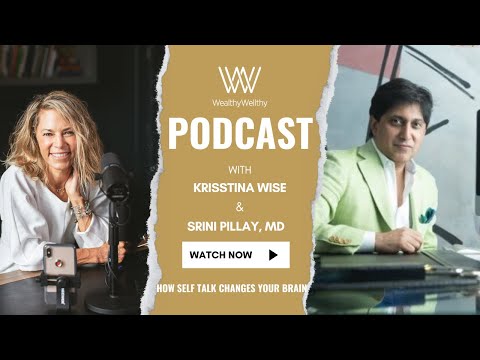
Latest episodes

Key topics
If you are not lost right now you might not be paying attention
In a world reshaped by AI, economic instability, and institutional distrust, feeling unmoored may be the most psychologically sane response available. The danger isn’t feeling lost - it’s letting fear narrow your attention until you start huddling instead of reinventing. Srini breaks down how threat circuits shrink possibility and how defining your “ideal self” can widen it again. This conversation turns existential confusion into a navigational tool.
The obsession with eliminating stress is quietly making people weaker
We’ve been sold the fantasy of a stress-free life, but biology doesn’t reward fragility. Small, contained stressors can strengthen systems, that’s hormesis, while chronic overload erodes them. The real question isn’t “How do I avoid stress?” but “Where is my threshold, and how do I train it?” This conversation reframes resilience as dosage management, not positive thinking.
The overlooked modulator of treatment outcomes
We measure milligrams, biomarkers, and mechanisms with precision, yet often treat expectation as background noise rather than a variable. In certain cases, like cough treatments without active suppressants, belief can account for a substantial portion of improvement and corresponds with measurable changes in brain receptor activity. Srini doesn’t argue for replacing medicine with optimism; he questions why we rigorously subtract placebo in trials but rarely ask how expectation interacts with treatment in real life. This conversation examines whether belief functions as a neuromodulatory factor shaping outcomes - and what responsible integration would look like inside modern care.
View all topics →
Latest episodes
Key topics
If you are not lost right now you might not be paying attention
In a world reshaped by AI, economic instability, and institutional distrust, feeling unmoored may be the most psychologically sane response available. The danger isn’t feeling lost - it’s letting fear narrow your attention until you start huddling instead of reinventing. Srini breaks down how threat circuits shrink possibility and how defining your “ideal self” can widen it again. This conversation turns existential confusion into a navigational tool.
The obsession with eliminating stress is quietly making people weaker
We’ve been sold the fantasy of a stress-free life, but biology doesn’t reward fragility. Small, contained stressors can strengthen systems, that’s hormesis, while chronic overload erodes them. The real question isn’t “How do I avoid stress?” but “Where is my threshold, and how do I train it?” This conversation reframes resilience as dosage management, not positive thinking.
The overlooked modulator of treatment outcomes
We measure milligrams, biomarkers, and mechanisms with precision, yet often treat expectation as background noise rather than a variable. In certain cases, like cough treatments without active suppressants, belief can account for a substantial portion of improvement and corresponds with measurable changes in brain receptor activity. Srini doesn’t argue for replacing medicine with optimism; he questions why we rigorously subtract placebo in trials but rarely ask how expectation interacts with treatment in real life. This conversation examines whether belief functions as a neuromodulatory factor shaping outcomes - and what responsible integration would look like inside modern care.
View all topics →