
September 29, 2026
Your Skin Is Telling a Story: The Connection Between Skin Health and Aging Well | Lisa Harris | Ep. 457
Sound bites
So my background before we went into the discussion earlier, is that I have a holistic background, which is aromatherapy, reflexology, and touched on kinesiology and also sports therapy.
It's not about what I'm stimulating, the fibroblasts to stimulate the collagen, the elastase. It's also, we're going to look at the bone structure as well, because that's really important, and the fascia.
In this episode
Lisa Harris joins The Aging Well Podcast to discuss skin as a reflection of overall health and the practical ways skincare connects with aging well.
- Skin seen as part of the whole body, not just a cosmetic surface
- Aging shows up through inflammation, stress, hormones, nutrition, and cellular energy
- Wrinkles, thinning, and flaccid skin linked to mitochondria, ATP, bone structure, and fascia
- Daily body brushing used to support lymphatic flow, fascia, and skin tone
- Overuse of chemicals and retinols can leave skin red and damaged over time
Transcript
ShowHide
Automatic captions of the conversation. They can contain errors and do not name who is speaking.
What if the condition of your skin is more than a cosmetic issue? What if it is actually a reflection of what's happening throughout your body? Welcome to The Aging Well Podcast, where we explore the science and philosophy of human flourishing and discover practical strategies for living with greater purpose, vitality and joy. I am your host, Dr. Jeff Armstrong, an exercise physiologist with a passion for making science simple and helping people become their best today and better tomorrow. My guest is Lisa Harris, a bioenergetic skin expert and the founder of Lisa Harris Skin Science.
With more than 30 years of experience, Lisa has developed a whole body approach to skincare that goes beyond simply treating the surface. She helps people age confidently through non-toxic skincare, non-invasive treatments and a philosophy that sees the skin as a reflection of overall health and well-being. The Aging Well Podcast encourages informed decision-making and always consult your physician in scientific literature when making decisions about your health. Well, Lisa, welcome to The Aging Well Podcast. I'm really excited for this conversation today because I think it brings a different approach and a different perspective to Aging Well.
Yes, yes, it does. It do. Thank you for having me on the show. You're welcome. Let's just start with a big picture. What does it mean to think about skin as a reflection of overall health rather than simply something we just treat cosmetically? That's a good question. So my background before we went into the discussion earlier, is that I have a holistic background, which is aromatherapy, reflexology, and touched on kinesiology and also sports therapy. But at the same time, I was trained as a skin specialist using electrical magnetic frequencies.
And this interconnected into my therapies, realising you can't separate the skin from the person. So we need to treat emotionally, spiritually, deep, deep, deep at cellular level. And this can be your mindset, exercising, movement, skin, bone, fascia. It's the whole layers of the human body. That's what I work with from inside out approach. I like that. You know, other people tend to not know that the skin is the largest organ in the body. And our organ systems are all connected. And so why would we not consider the skin as a broader organ in our aging well?
And you've spent more than 30 years working with skin. What have you learned about how the aging process actually shows up in the skin? That's a good question. So I found out earlier on from my own perspective, by the way, I suffered terribly with acne. And I realized that wasn't something you could fix from the outside. And that led me down the rabbit hole actually to do even more research into why emotion pays apart, stress, your environment. So that led me to figure out basically that we have to treat from inside.
And that your skin is the biggest organ that tells you what's going on in the inside. I mean, I don't have a crystal ball. I can't, when I look at somebody, I can't see actually what's physically going on in the inside, i.e. disease. Usually it shows me the stress or hormonal. So, your skin can flare up from inflammation. So, inflammation seems to be the main cause for most skin diseases, which is the last point where your skin is actually telling you there's something going on in the inside. So I tend to decode the skin and then apply my sort of like, I call them my facilitating weapons, good weapons, by the way.
So I use different technology to facilitate down different pathways to deal with whatever is going on in the skin. Remember, I'm only the facilitator. It's the person that's the healer. I'm just facilitating different energies down the skin. What's that, the question? I'm scared. So when we talk about aging skin, what is actually happening biologically beneath the surface that shows up on the surface of the skin? So when you look at a wrinkle, for instance, I just don't, I see that as the end point. So why is the wrinkle there?
Or why is the skin thinning? Why is the skin looks a bit flaccid? There's something obviously going on underneath, and that is energy. That's the mitochondria, that's the ATP. So something's not working correctly, if you like, underneath the skin. So it's important that we start at the cellular level. So I will facilitate different energies. Also, I will include, like I said, movement, exercising. These are really important energy outputs, because it's not about what I'm stimulating, the fibroblasts to stimulate the collagen, the elastase.
It's also, we're going to look at the bone structure as well, because that's really important, and the fascia. So it's the whole mechanism. So once again, it could be stress related as well, and probably food. I mean, nutrition is so important, so important for our body. So there's a number of things. It's not just one thing. It's a mixed bag. It's your food, it's your supplement intake, it's your exercise, it's your environment, it's stress. This is what is the main cause of we say aging. It's interesting. I think you are the first skincare person that I've ever heard use the term ATP.
And you describe yourself as a bio-energetic skin expert. What does bio-energetic mean in practical terms for our listeners? I think I have an idea, as we just talked about ATP a little bit there, but how does that philosophy change the way you approach skincare? So, ATP, as we know, we can use photobiomodulation and that actually sends a signal. So, they're all this, you know, the spectrum, if you like. I would use that as the end point of my treatments because that's more of recovery. So, I would actually step back a little bit.
I would actually start with different frequencies, down different pathways to stimulate all energy, all energy mechanisms in the skin, respond to different devices, biological devices. So, that would be your radio frequency. And we're not all the same, by the way. So, radio frequency helps me to emit controlled thermal remodeling of collagen at tissue level. That helps them to produce a heat protein. That then has a cascade effect with the ECM, which is your middle layers of the skin. So, that energy output is really important because that sends a signal then to produce collagen, elastase.
It's not all about collagen as well, other things that's going on underneath the skin as well. Then, I will then go and facilitate muscle. Muscle is important because we have to deliver energy. I usually use electrical muscle stimulation, which then stimulates the myokins, which is obviously your proteins and so forth, would actually build up the muscle. I call the muscle the scaffolding. That's holding up your face as well as the fascia. This is really interesting because fascia, we're talking about fascia as quantum.
But fascia is really interesting because that actually does, if we stimulate in a certain way mechanically, that can actually stimulate even more collagen and hydration mainly, hyaluronic acid. So it's really important that we focus on the certain layers of the skin. I hope that makes sense. It's not just focusing on collagen. It's way more than what we think it is. Then we've got the bone structure. That would be your exercising, because that's the... I forgot the word now. The stimulating bone structure that stimulates the living cells, if you like, to remodel the bone structure.
So we have to... When I'm treating someone, we have to focus on all those points. That's how I, if you like, turn back the clock slightly. Or it creates a healthier, younger environment. All I'm doing is waking up everybody there. I call it the zombie cells. I just go and say, oh, out the way, please. Let's bring in all the new cells, new energy. Let's sort of like regenerate all the tissues. And that's when I can create more healthier looking skin. So I'm not, I don't like to say biohacking. I actually don't like that word, sorry.
I don't like that word either. Because you can't biohack a human body. It's so intelligent. We can help facilitate energy, but we have to do it ourselves. And hopefully I can guide clients into whatever skin journey, that may be acne, rosacea, just feeling better. But I think it's mainly managing expectations of aging well, which I love the name of your podcast. I think we need to really change things and say, it's aging well. It's not about burnout, burnout, aggressive, aggressive, aggressive. No, no. Because you can actually cause more damage doing that way.
So I'm not a great believer in aggressive treatments. I believe in more progressive. If you're enjoying The Aging Well Podcast, be sure to like, subscribe, or follow on your favorite platform so you'll never miss an episode. If you find our conversations helpful, please share the podcast with a friend because aging is something we're all doing, and we're better at doing it together. You can also support our guests in this podcast financially by visiting the affiliate links in the episode description below, and using the links or codes provided for discounts on products we've vetted, and feel comfortable recommending to our valued viewers and listeners.
If you prefer to support our show directly, we've included a tip jar in the show notes as well. Thank you, and now back to the podcast. I love this approach because we see people who are very active, eat well, and they're aging well. And we have that tendency to say, oh, you look great for your age, which I hate that phrase, but I don't know how else to say it. Because generally, what we're saying to that person is, as we compare you to other people of your age that are not taking care of themselves, you are doing so much better.
And I think that's the kind of approach that we should be taking. But oftentimes, when we are treating our skin, we're treating it from the outside in, and we're putting chemicals and things on our bodies. And that's where I've never thought of skin care as biohacking. And that's exactly why I don't like the term biohacking, because that's what we're doing. We're taking a shortcut, they maybe put a bandaid on a problem, and we're not getting down to the deeper source of the problem. And what I'm hearing from your approach is that we're really getting deep into the physiology that really translates to healthy skin.
And so there is a growing concern, at least fortunately now in our society, about the chemicals and the ingredients that we do put on our skin. And what should people understand about non-toxic skin care? And are there particular ingredients, if we are going to work from the outside in, any ingredients or products that consumers should really pay closer attention to? It's a great question. And it's really, it's not fear mongering as well, about products, I think. So we do have natural products. I don't do bad chemicals here, bad toxins in the skin.
That's just my philosophy. It doesn't make sense to me, by the way, because as you know, toxins cause inflammation. Inflammation causes the cascade of aging, if you like, or slow down the redox signals and so forth in the body. So you eat well. We need to put good products onto the skin. Now, I do work with biotechnology, which is clean technology. So that would be encapsulation, to help me deliver the right amount of ingredients past the skin barrier, so it can carry out its job. So there is good technology, and also we have natural products.
It's the ones that are so main, mainstream products, are loaded with chemicals, really bad chemicals. And I've known this for decades, especially in sun creams. So it's really important. I think we know what we are applying onto the skin and for the right skin type. So lots of people just apply lots of like trends. I don't do trends. We have to apply the right ingredient for our skin concerns, our age, hormones, and you know, our congested skin. So please do not follow the trends of retinol. I think retinol has its place, but it's not for healthy skin.
And again, I'd rather use an alternative to retinol. So this is quite a, I could talk about this topic forever. We don't have enough time to talk about it, but there's a way of educating yourself. Look at the back. If you recognize it, it says shea butter or it says zinc. These things you can't put onto the skin. By your technology, you should be referred to a practitioner or a professional who can actually sort of like describe you the right skin care for your skin concerns. It's not about layering and layering and layering, lots of different products because you can actually disrupt the microbiome on the skin, then down the line will cause you photosensitivity, congestion, and actually making your skin worse.
Yeah. It's interesting that it is far more of a, and I'm going to sound sexist here, but a problem for women than it is for men. We men tend to, I have one soap. I use ivory soap and that's not my preferred soap, but it's the easiest to find. It has no ingredients in it. I don't really apply anything other than Oral Wellness has a glutathione. It's a transdermal glutathione that I apply to my skin. That's it. I don't really put anything else on my skin. Of course, people might be looking at this on the video side and saying, well, maybe you should, but a lot of it is just cultural.
Women are just fed through marketing and increasingly men, I think, as well. But we're getting fed with all this marketing. These are the things you need to be using and just layer, like you said, chemical upon chemical, and nothing really does anything. In many cases, you're probably treating something that you have messed up by putting some other chemical on. Yeah. And so I love your approach. This is an exciting conversation. I'll make sure my wife and daughter listen to this as well. Yeah. It's fascinating because remember, one cream cannot fix aging, cannot fix acne, cannot fix rosacea.
This is where earlier on, I mean, I will actually refer clients to a homeopathist or to have further scale away of technology because I can't do everything because the person as the whole I need to treat. And when you understand biology, then you understand everything is from the inside. So the outside where you put the serums and creams, most of it doesn't penetrate into the epidermis because there's, I'll just do a little science here, because there's a Dalton law which is you measure molecules, the minimum is 500, it has to be under 500 to penetrate into the actual epidermis.
So that would be your vitamin C or vitamin E. Anything above that, especially hyaluronic acid, depending on the delivery system, cannot penetrate in. So you put the stuff on, you're just wiping it back off. So it's really important that you do look at the ingredients and the delivery system. I like that. And when we look at the ingredients, sometimes we'll see that, well, the science says that this works well for the skin, but if it's not getting to where it needs to, and we talk a lot about bioavailability when we talk about mineral supplementation and such, if it's not getting to where it has to go, then it's useless, like you said, it's just being wiped on and wiped off.
And so there's so many other things that we can do to benefit our skin. How important are lifestyle factors such as sleep, exercise, you mentioned hydration and nutrition, stress management and such, to maintaining skin as we age? It's number one. It's number one, you know, and I recite that a lot because your skin is an organ and it needs to be respected. And to do that, you need to, I'm all about organic eating or just good nutritional food. And exercising has to be number one because you don't realize just walking in nature, I'm a hiker, trekker.
I mean, just walking in nature itself can turn back, you know, you just feel better, you look younger for it. So exercising to me is really, really important. And also sleep, circadian rhythm, we know to grow up first thing in the morning, then you got the mid-rays and then you got the evening rays. And I think that's really important because that helps towards the efficacy of my treatments because there's no point you just come in here and just having a wham-bam, thank you. And I just for suddenly do a little thing on the skin.
It's much more than that though. I trust that. Yeah. There's a process. It's a process and you've got to do your part as well. So I think we're actually going in that direction right now. I actually think people are more aware and understanding that actually we need to love ourselves and respect ourselves and treat ourselves. Go on a spa break, go on a walk. These are just wonderful things. Being around other people, laugh. If you don't woke up the next day when you've had a good giggle, you just look fantastic. I mean, that releases so many good factor hormones.
I keep saying to people, if you ever met someone who's maybe in the 80s, they just look way younger than years. It's because they have a good lifestyle. They enjoy life. Your face is like your signature, I suppose. It just tells a story. And it's really important we start young as well. Eating well and exercising, especially teenagers. I mean, I've got four daughters. I keep doing exercise. Exercise is the most important. I don't care if it's a walk. Just go out and enjoy yourselves. That's funny. I was just thinking we often talk about the people in the blue zones and how they're not going to tell you they're biohacking or supplementation there because they really don't have one.
They don't even necessarily talk about an exercise regime because they don't necessarily exercise. They're out just very active. They're getting outdoors. But it just occurred to me they're not going to tell you about their skincare routine either because they probably don't have a significant skincare routine. They're living, laughing and enjoying life and that's given them good health. And they're probably also avoiding a lot of the other environmental toxins and things that can damage us. And our skin is our first interface.
It's our primary defense against pathogens getting into the body. And we also have so many other things that can damage the skin, sunlight, pollution, toxins that are in our environment, all these other things that our skin gets exposed to. How do those factors affect skin aging and what do we do to protect ourselves? So the epidermis, I should say, is responsive to the external aggressions. So that would be your toxins in the air, it would be your sunlight and so forth. So there is a way of protecting yourself and that is being sensible in the sun.
I've just come to have a little bit of a tan and I've just come back from Mallorca and it was, I do apply sun cream but it's a natural sun cream, so I do apply a physical block and that would be just zinc and shea butter. Again, that does not give me the green flag just to lay in the sun like this, but it's enough to give myself protection and I'm wise and I sit in the shade. However, sun is really important for you because it's the only way you can make vitamin D. So in the morning, I will be without my sun cream, by the way, I will be out and I'm making sure I'm getting those rays but 20 minutes is enough.
Then after that, I may apply something onto the skin. Two, not drinking lots of alcohol as well in the sun. I mean, that's just, that's another thing that people, you know, that's why they're burning. So, and also all those toxins are going through the body. So it's being sensible, drinking water and so forth. Toxins in the air, they're around us. So that's why I say just go out into either the seaside, get all those positive and negative ions. That's great for your skin. And also go into the countryside. Like I said, I love trekking.
So I don't wear any makeup, I just go out there free and I absorb that beautiful clean air. And there's another one, it's eating. Eating can protect as well, you know, all from the free radicals. So like just fresh fruits, fresh vegetables, organic, can actually help to protect your skin as well. Vitamin C, vitamin C is always acidic and it depends what form you're actually using. Vitamin C, the ascorbic acid, when applied as a serum, first to the skin and then you apply the physical block, can actually protect your skin around, we'd say, about 48%.
So there are, I'm wearing a hat and so forth. So it's just knowing, it's just educating yourself what you can do for yourself, first thing in the morning before you walk out the door. Ponygranates are really, really good, really, really good, by the way, nipoliphenols, very good in protecting the cell. Before we continue, I want to take a brief moment to highlight an affiliate brand that supports the work we do here. As always, this podcast isn't sponsored. Affiliate partnerships simply help us keep producing meaningful conversations about aging well.
One product line I've personally vetted and believe in is Primeadine from Oxford Healthspan. Their commitment to purity, scientific rigor, and thoughtful formulation stands out, and I use their products as part of my own wellness practice. If you want to support the podcast while exploring Primeadine for yourself, you can find the link in the show notes. One thing I've learned over the course of really doing this podcast is the importance of the gut microbiome as well, even for the skin. I mentioned that I don't really put anything on my skin.
To an extent, I wouldn't say I lied there, but I stretched it a little bit that I do use products when my eczema flares up. But to be honest, I have not had to use that in, I think, a couple of years now because I've been approaching it from the inside out. You know, once I learned that that all happens from the gut, then I focused on, you know, what am I eating? What might be aggravating and managing stress? And that kind of stuff goes away. And we think sometimes we got to treat it from the surface, but treating it from the inside, getting rid of some of those environmental toxins can have a huge effect on the overall skin.
So I don't use it anymore, but it is, I got to tell the truth and says it is sitting on my bathroom counter in case I need it, and I haven't used it, so. Yeah, your gut is your skin inside out, by the way. Before this trend came along with gut health, I think that's the first thing I target with clients. I go to the gut. We need to sort that out first. As everyone is familiar with the leaky gut, leaky gut is where all the inflammation is. So that is obviously the skin. So if it's rosacea and acne, I always go to the gut first and then follow through with the hormones.
So cleaning the gut up first, always detoxing the body. This is not aggressive, by the way. It's just drinking hot water and lemon. That just flushes out the liver. It's not just the gut, it's the liver. There's a kidney. It's the whole thing. It's the lymphatic system. The lymphatic system is the river of life. I call that, that's really important. So body brushing in the morning. There's another thing we can do in the morning, just so quick, there's a way of body brushing that wakes up and detoxes. Well, it helps the lymphatic drainage then to drain any calcified or toxins in the air, help you to eliminate it.
And that oxygenates the blood and also then has an effect on the skin. So definitely body brushing or manual massages is amazing, is amazing for you. And also that's, people forget that's actually stimulating sort of like proteins in the skin as well to create the density of skin, to make your skin a little bit thicker. Massage is amazing for you. So those things can help. So describe body brushing a little bit more. Yeah. How do you do that? So we always, I mean, I'm not going to stand up here, but I mean, I could give you a little photo of how to do it.
But body brushing is amazing. Body brushing, it wakes up the nervous system in the morning. She would always start from the feet, up and up, up on the arms. I tend to stop underneath the poverty, sorry, the ear and the glands here, and you need to pump because you're draining. Remember, lymphatic drainage is very gentle. Like when you do effulage, that's really, you're just warming up the muscle. So you just gentle, gentle movements, and then we come in towards here to the gland, and then we do clockwise on the abdomen area, because that's the muscle, so we need to do clockwise on that.
My clients love it. They do not go without doing it every morning, because it wakes them up. It's stimulating. It sounds stimulating. I got to try it. So what kind of brush are you using or is it just a cloth? No, you can use a dry brush, especially for body contouring. But I have been trying out something new. It's a copper brush. It is a bit rough at first, but you do get used to it. I'm being used and my clients are loving it, the copper brush, because don't forget, you get more energy from a copper as well. So that's grounded, but the energy we're getting from a copper brush, it's absolutely amazing.
So if we're stimulating the lymphatic system, we're also stimulating the fascia as well. So we're actually improving the transduction from the copper brush into the fascia. We're actually stimulating and hydrating it more as well. And that makes your skin, especially with cellulite, number one, I would say do at home is body brushing. It actually really, really works. You have to be consistent. It's not like one day do a brush and the other one is not working. You have to be consistent. You have to do it every day.
It takes about 60 seconds. And you can use small ones for the face, your hair, your scalp as well. You'll be quite surprised by the age of the week. You just, the tone of the skin is different. It looks firmer and more fresher. So have a go. Yeah, I can skip the hair piece, but doing it on the scalp will definitely work for me. For everybody, yeah, body brushing is, especially when I do body treatments, body brushing is a must. I like that. I'm going to have to try that. Yeah. And so there's this huge market out there that is probably, I would assume, very overwhelming for viewers and listeners.
But this market that is trying to reverse or hide the sides of aging, how do you distinguish between supporting healthy skin and simply fighting the natural aging process? It's a good question. I think there's a lot of fear mongering out there, and this is where I come in and try to educate that aging is a grace. It's like aging well, aging healthy. So this is where I use all the different technology, and I explain in layman terms how I can help with that process. So it's me, I'm trying to unwind their way of thinking, because when they understand, like I said, their biology, but that's when they think, oh, actually, this is actually working.
This is what I like to hear, because truth always resonates. So this is where, when you try the treatments here, people think about things very differently, and that has a domino effect with their friends, their colleagues, and it's just changing the way people think about aging in the first place. I do do lasers, and like I said, I do technology, but there's a way of doing things. So I usually prep, treat, which is the hermosis, where I actually get into that stimulus, and then I go into the recovery mode, and it's exactly the same way I describe exercising.
Don't overexert yourself. There's a way of prepping, exercising, recovery, and then you see the results. It's the same way with the skin. So are there common skincare practices that people believe are helping their skin, but may actually be counterproductive over time? It would be the over usage of chemicals, and the retinols. I think it's too aggressive for the skin. The amount of clines I have in here, that the skin is so red, the epithelial layer is just completely gone, because it's burnt away. I mean, retinol was used in the 1980s by plastic surgeons for peels, and I think it just sort of like leaked into the mainstream, and it was used as this miracle.
So we need to be cautious with the retinol. There are five derivatives, and I think people will just keep applying this, or we think it's good. I think there's a place, but it's, like I said, it's not for healthy skin, so that's number one. And also applying loads of serums and creams and light masks. We just need to educate people on doing it safely. So how should someone in their 40s, 50s, or 60s, or beyond rethink their skincare routine compared to what they may have done when they were younger? Not too aggressive.
Not using anything aggressive and also looking into as well, applying supplements or peptides into the skin because they're signals. So it's completely different. And I mean, we get away with just laying in this, the amount of people I hear laying in the sum of just their body oil. We can't do that anymore because your skin thins out as we age. So isn't it funny when we get to a certain place, oh no, we really need to look after our skin. So it's applying the right great serums into the skin, which would be your stem cells and peptides to build up the ECM, which is your fibroblast stimulating the collagen and the last Ds, because building up collagen is a process.
So we can do it by a good serum and good moisturizers, by the way, but with a little help from a professional, and also eating well. So what is eating well for the person who's trying to care for their aging skin? It's a good no-process foods. It's really simple. It's so simple. Just follow a good organic diet. It's, I don't like the word diet, excuse me, but just eating good organic nutritional food. And collagen supplements. Collagen supplements, I know there's people that split with, does it work, does it not? But I actually have seen results from taking bovine or marine, or we can have plant-based collagen, which is the pure amino acid.
So I do encourage people to find their sweet spots, because that definitely helps. And that's dependent on your gut as well. It will help us a lot to do with it as well. So we can do this through diet, supplement, movement, exercise. So what supplementation would be kind of on the top of your list for people who are looking to just kind of optimize their skincare through their diet? Copper. Copper, okay. I just say, yeah, copper. I found a product, a good product. That's the actual, the copper peptide. And I've seen remarkable results of people taking copper, especially as an anti-inflammatory.
Also, especially for women who are suffering with hair loss. And I've seen hair literally just come back in three months. It's been quite remarkable. Because copper is the main component in the ATP. When you are applying all this energy, I realize it's the copper, which is the amino acid, which is building up the collagen elastase. It's not just that. It's ligaments, it's completely everything. And I've seen great results from copper. So copper is number one from the inside. And then you can apply copper serums and copper peptides as well.
If it has encapsulation, then you can apply that to the skin. I think it's great. I've seen really great results from it. By the way, that's just one mechanism that we need to use other things to work in synergy. I was going to bring up copper, and I'm not shocked, but I think it's kind of cool that that's what you brought up because we had Morley Robbins on twice on the podcast. I don't know if you're familiar with Morley Robbins at all. He's kind of like the big guy pushing copper out there. I know he gets a lot of pushback because a lot of people think copper is toxic.
You don't want too much copper in your diet, which is true. It needs to be that proper balance between the zinc, the copper, magnesium, and iron. I've been kind of fascinated with the copper piece because I have a family history of high iron absorption. My dad had hemochromatosis. My iron runs high even though the hematologist pushed back at me saying I don't have high iron. But having that proper balance, I found is I've started to kind of approach looking at trying to get more copper into my diet, getting more bioavailable copper in my diet, and managing my iron, getting more magnesium, my skin has improved.
I think that may be part of why I'm not using my eczema cream anymore in part. But also, some of the spots and things on my scalp have diminished quite a bit. I've taught exercise physiology for coming up on 30 years. I think I'm about 28 years into it now. Nobody ever taught me that copper and magnesium are both so closely tied to the function of ATP, and getting the energy in that mitochondria that you mentioned earlier, and how important ATP is. Copper is very, very important. Again, hopefully, people aren't saying, I'm just going to go out and start taking a copper supplement.
Be very careful in what you are doing. Yes. But I also wanted to bring up the, you mentioned peptides, and I was going to ask you about the GHK copper peptide. Yes. That's another skin treatment. I don't use it all the time. We get, one of our affiliates is Aura Wellness, and so I'll probably put that connection into the links today. But I tried their product, and it is transdermal, so it's getting right into the skin. And I actually, in addition to seeing some of these, what we typically have called age spots or liver spots, which I know is not an appropriate terminology for them, I saw those diminish dramatically.
But on my right temple, I had a darker spot that just kind of looked at it. It definitely didn't look like a melanoma or any of that kind of stuff. But it actually scabbed up and fell off. Oh, wow. And I was like, whoa, there's something going on here, because it didn't just shrink it down. I just kind of scratched the side of my head driving to work one day, and it's like scab fell off, and then it got there, and I realized it was that little dark spot. Oh, wow. Was that a serum that you put onto the skin or? Yeah, it's just like a...
It comes in a dropper bottle. You just put like about four drops on the skin and rub it in. And it's really cool looking. I love the copper substances because they got that deep blue kind of glow to them. And yeah, you just kind of rub it into the skin, and it does the trick. And I know there's some people that will inject copper, peptide, and there's different ways that we can apply it. And I'm sure you have a line of products that you tend to use or recommend, but it's amazing that copper is such an important mineral that we very often overlook in our diet.
Yeah, I might continue. I already had a couple of clients actually, we're supping with, you know, this is, if you're going to take copper, first of all, there are contraindications for taking copper. So, we'll consume disease, obviously, you can't absorb copper and other things as well. But I know copper through some other studies, not my own studies, that regulate iron. And that's quite interesting because some of my clients here, especially going from menopause, we have an oral supplement, by the way, two milligrams, I think it is.
And we take that and that has proven, the couple of clients of mine, the anemia is being at normal level. So, they're not suffering with anemia. So, I don't know, I think we still got a lot of research to do as well. So, I'm not a medical, you know, I can't advise. But just from my own experience here in clinic, don't forget copper peptides have been used in skincare for decades, for decades. So, peptides have been used in skincare since I've been training. So, there's so many different peptides, but all really taken or injected.
It's really fascinating because peptides at the end of the day are just messengers. They just talk, don't they? Just talk to the cells. So, this is quite interesting. Yeah. Let's pause for a moment to thank the affiliate partners who helped support The Aging Well Podcast. We're not sponsored and no company pays for airtime here. But when you use our affiliate links, it helps us keep producing thoughtful, evidence-informed content. One brand I genuinely trust is Oral Wellness, especially their Gluteral, Gluteral Plus, and Copper Peptide Formulations.
I've spent time vetting their science, their ingredient quality, and their transparency. I personally use their products in my own wellness routine. If you're interested in supporting the podcast and exploring tools that may help you feel and function better, check out Oral Wellness in the Show Notes. That iron is important. I think that's one thing that I've really tried to press on this podcast a little bit more because of my own dealings with my iron levels and how I wholeheartedly believe they are connected to, that my high iron is connected to other hormonal issues and cholesterol and those types of things, that regulating that can be very important.
And I'm far removed from my family being in the UK, of course, I guess it wouldn't have been the UK when they were there, but the Armstrongs were one of the notorious border clans in Scotland. But the Scottish, Irish, and that whole region has a very high caseload of people with hemochromatosis and iron overload. And so, you know, your family heritage could have, your genetics can have some role in how your body is absorbing some of these minerals. And we've been fed, I don't know if it's the same in the UK, but in the United States, we've been fed for probably almost pushing a whole century now that we need iron supplementation.
And we keep pushing more and more iron into our bodies, and that disrupts that copper balance. And so getting ourselves back to that natural mineral balance, I think is hugely important, not only for our skin, but all the other organs in the body. Yeah, minerals, and it's so important. And again, that has a reflection on the skin as well. So obviously, you're suffering from anemia, you look, well, pasty, you look pale. So it's really important that we fix everything. So it's like an ecosystem. If one has not signals gone out, then obviously it has a cascade effect on the rest of the signals in the body.
So it's hard work being a human today, I think. Yes, it is. So supplementation is, good supplementation or clean supplementation is really important. So there's no point just taking a load of supplements. Really look at those ingredients and get them from a good source. That's another good point as well. It's just the same as processed foods. You get processed vitamins and minerals. Please look at what you are actually taking. I think it's good as well to have your bloods, your regularly tested as well, just to find out what's going on inside the body.
Yeah, I was going to bring that up because some of our viewers and listeners are talking about copper, and so I need to start taking a copper supplement. Well, you may not need a copper supplement. Same with an iron supplement. Some people need an iron supplement. So listen to me saying, I'm trying to reduce my iron, that's me. And so it's important that we know what's going on in our bodies. And so when we go to our physicians, let's not just have our cholesterol tested. Look at your iron levels, look at other mineral balances and things like that, and know what you need to truly supplement.
Because it is a supplement to our natural diet, right? We're trying to eat healthy first, get it into those good, healthy organic foods, and then what maybe is a little bit less sufficient in our diets, then we can supplement those as well. And so for someone listening or watching this podcast who feels overwhelmed by the enormous number of skincare products, and I think I'm probably an understatement was saying enormous number, plethora might be an appropriate term to use there, of treatments that are available, but what would you consider the essential foundation for healthy skin and graceful aging?
As in cosmetics, just basic cleansing is really important, nothing too harsh. So we got the enzymes, I think they're amazing for the skin turnover, and that just gently dissolves the dead skin cells away. So I don't tend to do the glycolic or acid, it disrupts the skin barrier. Hyaluronic acid, but in a right delivery format, probably with a vitamin and just stem cell moisturiser over a certain age. Obviously, if it's acne, it's something completely different, we're treating something different there, but that generally is the rule.
Just three products, that's all you need. And obviously then having treatments is more like a thousand fold, so we can help energise at cellular level. And that's hopefully going to go and see a skin clinic. Yes, obviously. Treat yourself, but also it's a bit more than that. You do see results, but you need to be consistent. You have to be consistent. And I like that idea of pushing people towards a skincare professional, because they're going to address what are the underlying problems. Don't self-treat your skin care, or think of, my friend uses this for, and her skin looks great, so it must look good for me.
Exactly that, because what works for one person doesn't work for another. So when people come here for skin treatments, it's your fingerprint that I'm treating. Does that make sense? I have to look at you. You're all completely different. And my eye can just see one from a conversation, a deep, deep conversation. Then I will make up a treatment there and there, you know, in the treatment area. And I will have different biotechnologies, biostimulants, oxygen, whatever it is. I know what to use and what not to use. I think that's really important in treatment.
So that's really important that you go to someone who knows what they're doing. So, finally, what does it mean to you to age confidently? I would say age well. And how would you encourage people to think differently about the visible changes that come with getting older? That's a good question. How do you go? It's going to happen. I think it's finding that sweet spot of you feeling good and finding things that make you feel confident because I think that has a knock-on effect inside and out. So, just finding, go and treat yourself, find the right thing, eat well, exercise, movement, sleep.
Please, sleep is so important as well. And exercising, find that sweet spot because when you feel good, you feel confident, that usually shines through. I like that. Well, is there anything else that we failed to talk about today that you want to bring up to our viewing and listening audience? No, I think it is covered and I think we can talk about technology. There's such a huge topic. And again, a lot of people are just going for lasers and all these like micro-needling. I mean, I've been down that avenue. I don't, as you probably read, I don't do Botox.
That's my philosophy because I like to have the face moving. The mechanics of the muscle is really important. I tend not to do that. Too many people are too quick to go for Botox. When all the simple symptoms tell them they're looking a bit tired and Botox does not regenerate cells. What about like injecting fat under the skin and some of those things that I've heard certain longevity experts doing? I haven't tried it myself. It's a natural substance so if you're going to go for it, then go for it but I stay well clear of fillers because that's just filling the skin.
It's not regenerating and Botox, I am for, believe it or not, once you get your skin in good condition, if you want to go for plastic surgery, you've got to find the best plastic surgery for your face, obviously, I am for that because you're not injecting anything into the skin, but you have to prep the skin before. So I'll work with a plastic surgeon. I will create a healthier environment for a speedy recovery after plastic surgery, if you want to go down that route. So plastic surgery is really just kind of a, you know, treating the symptom rather than the cause.
And if you get the, it's the same as going with a supplement, that if you get everything in line underneath and you want to just kind of optimize the look a little bit more, then tightening up that skin through plastic surgery is going to be fine. You're not just simply stretching out damaged skin, trying to look better. Yeah, even after surgery, I mean, I still treat clients afterwards, you know, because skin is always changing. It's the only organ, by the way, the largest organ on the body, that can actually tell you signs of what's going on in the body.
No other organ can do that because it's on the outside. So it's important that we look after our skin. So after surgery, that's not the be an end all because your skin is still aging. So it's still important to look after your skin after surgery. You mentioned technologies. Are there technologies that we should be leery of, that people are being marketed? From my own clinical perspective, I, from my experience, probably the radio frequency with the micro needles, I think it's too aggressive. I think they travel, the energy is, it's too aggressive.
And I've seen a lot of scarring. So you get homoresis, which is the sweet spot of, if you like, wound healing with enough stimulus, but this overdoes it. Again, it's up to the practitioner. It really is. It depends on the energy output. So that's one thing I do stay away from. Too many aggressive treatments, HIFU and laser technology. That's my background is laser technology, just very gentle, fraxel lasers. There has been a good study this year, 2026, that it helped with the methylene, I think that's how you pronounce it, DNA, epigenetics, so it can remodel and change the message for these cells to look younger, if you like, the collagen.
So we are seeing that. But I've always known that, but I didn't have the science to prove it. Yeah, you know, so technology, when done correctly, at the right, for the right skin type and the right person, don't forget, we need to be well before receiving these treatments, depends what's going on. If your body is stressed, I won't carry out a treatment because your body is doing something else. And if you're unwell, I would say come back when you're feeling a little bit better. I think that's really important as well.
What about some of these home treatments? You see these, you know, like the red light face masks and all those things that people can buy on Amazon or Tmoo or wherever they might buy cheap products that are purported to be beneficial. So very interesting. I worked with light therapy in the 90s. I worked with a Swedish doctor. And at that time, I thought they were Christmas lights, because I thought, well, what's this? And when I got to know the biology and the messages, because lights carry messages, it's really fascinating to me because they work on the emotional level too, by the way, light therapy.
Now, what I see to date is a trend. And everybody just wants to make a quick buck, not everybody, but you do have to be careful what you're applying to the face, especially if it's straight on to the skin. Too much energy will exhaust skin cells. So the question is, have I researched every LED light out there? No, I haven't. So you have to be careful of the EMF it emits. That's the energy output. If it's too much radiation, then it's probably causing more damage. So it's finding again the right product for you. So I use professional products here because I know in a square meter has so many lights.
I know that's enough energy dose and time to deliver the right message to interact with the ATP to release the nitric oxide and so forth. And that has a cascade effect of building the skin tissues inside out. So we do need to be careful. It does worry me that people are just buying these cheap devices. They're probably not working or they're too high and they're doing too much damage. So red light therapy is beneficial when done properly. Absolutely. I think the most studied is the red light and near-infrared. I think they're amazing technology.
But don't forget, we've been using light therapy since 1920. Sports therapists have been using, or acupuncturists have been using near-infrared to oxygenate tissues. So it's probably the most research. And once you find the right one, I absolutely think it's amazing for you. Near-infrared and red light therapy. Red light would be 630 nanometers. That's enough energy and dose to stimulate the fiber blast, to stimulate the collagen. And then you've got near-infrared, which is slightly deeper. So we go much, much deeper, which is tissue and muscular.
So it aids recovery. It's important to remember too that we get the red light outside as well if we get outdoors a little bit. It's very, very important. And also the light, don't forget we're light beings. We just respond so well to different colors of light. Light is our energy source. So going out, like I said, in the daytime, I think there's different rays, a.m. to the midday to the evening. I know evening will help us produce more melatonin ready for us to relax and go to sleep. The morning rays is called morning glory for a reason.
So go out and enjoy it because it does stimulate the body. It's just amazing. It helps us with the melatonin. It helps us with vitamin D and so forth. It makes us really healthy. Yeah, it seems like our healthiest sunlight is that break of the day sunlight and then the dusk sunlight as opposed to the high noon being out in the sun, lotions on our skin trying to tan ourselves. Yeah, I think we still got a lot of research. I'm following some amazing professors or the authorities in the industry talking about sun lights and it's really interesting.
We still got a lot of research to do, I think, but the morning is amazing. Midday, you still need to be careful because that's UVA and UVB, so it's a bit of a blue raise. And then in the evening, it's definitely time to relax. So your environment at home is really important. When I talk to my class about, you know, say, aging well, also have a look at your environment at home because I need to change these lights above me because they got blue light. So blue light, we do need to be careful of because that has interacts or disrupts our circadian rhythm.
Before we continue, a quick note, this show isn't sponsored, but we do use carefully chosen affiliate partnerships. These are products we trust and personally use. And when you use our links, it directly supports the podcast. You'll find everything in the show notes, including a tip jar if you'd like to support the show directly. Now, back to the conversation. So where can our guests learn more about you, connect with you, learn more about Lisa Harris Skin Science, and anything else that you want to share with us? At the moment, I'm just, there's my website you can go on to.
If you want to ask me any questions, free consultation. I am bringing out a few courses, The Alchemist, and I am writing a book at the moment. So I'm not sure when that will be out, but I'm nearly finished. So that will be something interesting for people to read who just want to know about aging well. Yes. Well, we'll put links to all that in the description notes, and you'll have to inform us when the book is ready to go out. Maybe we'll have you back on to talk a little bit more about the book. I assume it's about skin, right?
Yes, and I think people might be surprised. It's just educating people what I've learned through the industry, the do's and the don'ts, what energy is, and eating well and so forth. I've even gone into crystals and magnets, what light therapy really is. So a deep dive into the surface of the skin, huh? Yeah. We're an essence, the bioessence. I love it. And I think you've given us a very different perspective on skincare today, and I really appreciate you coming on to the podcast. Just keep doing what you're doing and keep Aging Well and keep helping us all look like we're Aging Well as well as helping us age well.
Thank you for having me. It's so interesting. Thank you so much. It's been my pleasure. Thank you for listening to The Aging Well Podcast. If this episode was helpful, share it with someone who could benefit. And if you'd like to support the show, you'll find our affiliate links and tip jar in the show notes.
About Lisa Harris
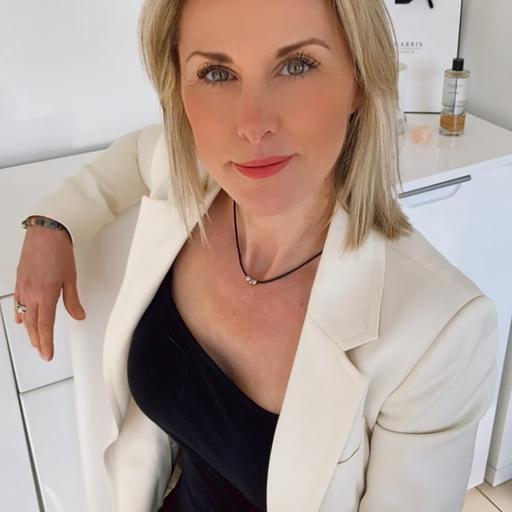
Skin Health Expert | Bio-Energetic Skin Specialist | Pioneer in Non-Toxic Beauty
30+ years Pioneering skin-longevity expertise6 disciplines Trained in aesthetics, sports therapy, reflexology, kinesiology, laser and moreJohnson & Johnson + RoC Worked with global skincare teams16+ years Founder and CEO of Lisa Harris Skin Science
Lisa Harris is a skin health expert, bio-energetic skin specialist and pioneer in non-toxic beauty, with more than 30 years of experience exploring what it really takes to achieve healthy, resilient skin. As Founder and CEO of Lisa Harris Skin Science, she brings together advanced skincare technology, biotechnology and holistic therapies to challenge conventional beauty thinking and help people understand their skin beyond the surface.
With a background spanning beauty and holistic therapies, medical aesthetics, sports therapy, aromatherapy, reflexology, kinesiology and laser technology, Lisa has developed an integrative approach to skin health that considers the relationship between skin, lifestyle, wellbeing and the ageing process. Her experience also includes working with global teams at Johnson & Johnson and RoC Skincare, giving her valuable insight into the skincare industry, product development and the evolving science of skin rejuvenation.
Lisa specialises in non-invasive skin treatments and advanced technologies, including radiofrequency, electroporation, LED light therapy and oxygen facials. Her work combines innovative treatment approaches with a strong belief that effective skincare should be personalised, evidence-informed and focused on long-term skin health rather than short-lived beauty trends.
A passionate educator and outspoken voice on the pressures of modern beauty culture, Lisa challenges unrealistic ideals such as “glass skin” and questions the growing normalisation of cosmetic procedures at increasingly younger ages.
More from Lisa Harris
All episodes → Owning Your Sexual SelfWhat Your Skin is Telling You with Lisa HarrisNov 2026Play episode →
 Where Science Meets Self-Care with Ida FanelliLisa Harris: The Science of Needle-Free & Bio-Energetic SkincareSep 2026Play episode →
 Suburban WarriorBeyond Botox: Non-Invasive Alternatives for Ageless Skin | Lisa HarrisSep 2026Play episode →
 Inside-Out Connections. A Wellness Podcast.Why Your Skin Changes When Life Does — with Lisa HarrisSep 2026Play episode →
 The Reverse Aging Club with Meredith OkeThe Frequency of Skin: Light, Energy & Regenerative BeautyAug 2026Play episode →