
September 23, 2026
Lisa Harris: The Science of Needle-Free & Bio-Energetic Skincare
Sound bites
We don't treat the skin per se, just looking on the surface, because skin is an ecosystem.
I prefer to put it onto dry skin. I see greater benefits from that, definitely.
In this episode
Lisa Harris joins Ida Fanelli to explain the science behind needle-free, bio-energetic skincare and how skin health connects to internal balance.
- Skin as an ecosystem that reflects internal health, emotion, nervous system activity, and energy
- Canada shaped her focus on plant based ingredients, clean formulations, and delivery systems alongside biotechnology
- Corporate lab experience taught the importance of the right ingredients and delivery system, not piling on more products
- Electroporation, microcurrent, 3D radiofrequency, LED phototherapy, and other needle free methods as alternatives to syringes and scalpels
- Dry skin is preferred for LED work because moisture can scatter light, and different LED colors are used for different purposes
Transcript
ShowHide
Automatic captions of the conversation. They can contain errors and do not name who is speaking.
Welcome to Where Science Meets Self -Care with Ida Fanelli. With over 30 years in beauty and wellness and a background in medical science, Ida blends clinical knowledge with holistic care. Each week, she and her guests share insights to help you achieve healthier skin, balanced energy, and empowered self -care. Now, here's your host, Ida Fanelli. Today, we're challenging the idea that achieving firm, radiant, and youthful skin requires a syringe or a scalpel. Joining us is Lisa Harris, founder of Lisa Harris Skin Science, a bioenergetic skin expert and non -toxic beauty pioneer with over three decades of clinical experience.
Lisa's career bridges both worlds from deep clinical research with global skincare giants like Johnson & Johnson and Rock Skincare to pioneering advanced needle -free treatments using technologies like electroporation, microcurrent 3D radiofrequency, and LED phototherapy. Her roots began as a beauty and holistic therapist in the UK, mastering disciplines like aromatherapy, kinesiology, reflexology, sports therapy, and laser technology. Relocating to Canada reinforced her focus on functional plant -based ingredients and energetic compounds.
anchoring an integrative philosophy that views skin not as an isolated surface but as a reflection of internal health emotion and energetic balance above all lisa shares our core belief: your skin is not the problem it's the messenger today lisa unpacks the physics and biologies of non -invasive aesthetics how cellular vibration electroporation and lymphatic flow actually drive skin regeneration from the inside out If you want the real science behind needle -free skin technology, stick around. You're going to love this conversation.
Welcome, Lisa. Welcome. Thank you for having me. What a wonderful introduction. Well, you deserve it. Thank you. Lisa, you began your career in the UK trained across sports therapy, kinesiology, reflexology, aromatherapy, medical aesthetics, and laser technology. How did this holistic foundation anchor your view that skin must be treated as a reflection of internal health, emotion, and energy rather than a quick cosmetic fix? Yes, I mean, a brilliant question. Basically, using biotechnology and using the holistic aspect made me realize, actually, what you just said.
We don't treat the skin per se, just looking on the surface, because skin is an ecosystem. So this is really important. Skin is emotional, it's spiritual. It also tells me lots of different messages. When I look at the top of the skin or just talking to someone, I can see something else is going, you know, beyond the surface and that's inside. So a lot of skin conditions I realized were connected to sort of like mindset as well and also the nervous system. And this is where aromatherapy, kinesiology, reflexology. connected me to realize actually we just don't look at the surface skin, we actually look inside.
You spent time living and working in Canada before returning to the UK to open your flagship clinic in Weybridge, Surrey. How did your time in Canada shape your perspective on functional plant -based ingredients, clean formulations and energetic compounds? I left, so I moved to Vancouver and that opened The other side, more of the holistic side, working in top spas. And I realized that all the wonderful botanicals, all the ingredients, how they actually work and benefit, working with natural treatments. So where I was using a lot of biotechnology, I think Canada actually taught me more of the ingredients and the delivery system that were actually in the products.
I mean, I worked with... at least 200 different brands because the marketing in Canada is all about the sales but I was more interested in what is your philosophy inside this product and I worked with so many wonderful products and that enabled me then to use different types of plant -based botanicals green energy if you like peptides and build it into my philosophy of facilitating skin therapies using biotechnology and using botanicals what one one doesn't work without the other they're not in isolation so we have to use what i believe they pair together Before founding your brand, you work with global giants like Johnson & Johnson and Rock Skin Care.
Having seen inside corporate formulation labs, what did that experience teach you about ingredient science and where do mainstream commercial products fall short for consumers? This is a great question. With Johnson & Johnson, all I did was basically help them to... in front of the audience or when i was doing presentations was to teach and educate the importance of the delivery system and the research and the development behind that so they've got massive as you can imagine labs there and the importance of the ingredients and the molecules that are actually used inside those products but it's not about It's not about putting lots and lots of different products onto the skin.
It's about using the right ingredients. This is where I came in. It was just a brief time with Johnson & Johnson and Rock to use the appropriate products for your skin concerns. Also, they're quite big on marketing. So I learned quite a bit about marketing with Johnson & Johnson and Rock. And I think that helped me as well within my business. Definitely. After over a decade across clinical practice and corporate research, what was the pivot catalyst that led you to step away from the corporate world to launch Lisa Harris Skin Science over 16 years ago?
Yeah, so I would phrase that because when I was working with Johnson & Johnson, by the way, in Brock, I was still doing my professional side of beauty therapy and biotechnology. But that was just another sort of like... another pathway for me to go down and just learn how to present alongside Rock and Johnson & Johnson but my heart will always be in delivering me as a professional helping other people to understand how i can facilitate and improve skin by the inside out i mean i keep saying that all the time but it's it's with the facilitators and when you understand technology the way how to apply and when not to apply it i think that's really important so my hand i just love using my hands i still do facials today i still do body treatments I'm still learning and I prefer to be in my own setting because I realize that treatments of the future are more personalized.
I've always done personalized treatments, but I actually believe this is the way forward, more in regenerative treatments. You advocate stepping away from injectables. Why is even controlled microtrauma counterproductive for cell signaling in the long run? What was the turning point in your clinical practice when you realized that injuring or inflaming the skin barrier wasn't necessary for long -term transformation? Yeah, so there are a number of things I do here. So there is a point where I will use lasers. So I use sort of like a non -ablative laser.
So it's not too aggressive. Lasers are amazing in, if applied correctly by the way, remodeling the whole tissue. This can actually help with pigmentation or skin rejuvenation. I don't know if you heard of a technology called electroporation. And electroporation is the non -needle device. And this is amazing for practitioners to deliver sort of like ingredients or encapsulations into the actual cell itself without using the needle. As you know, needles can cause too much inflammation, can also push the ingredients back out of the skin, also cause nerve damage.
And it can cause infections. So we have amazing technology now that we actually know the scientists, Silicio, and we have the most amazing electroporation. And the results are unbelievable because when you don't get any side effects. Two, it's safe, it's non -toxic, and we can actually target either the upper layers of the skin or deeper in the ECM, which is then we can sort of like remodel and structure collagen from within and out without any signs of redness, bleeding, any bruising, much safer and more pleasant for the clients.
That's wonderful. Yeah. Well, the body is electrical. Yes, absolutely. You're right, because the electrical, we've got a bioelectrical field. So everything I do is biological. So I like to work with biology. So all the technology I actually use are biological pathways. So I will use radio frequency, which is a heating mechanism. Or I will use, as you're a light therapist yourself, we can use LED or low light therapy. or maybe different laser treatments, not too aggressive. And we can use EMS. All these have different signals when applied correctly to the skin.
And then they basically yourselves just pick up these different signals to carry out its job. You often talk about how injectables interfere with natural biocircuitry. How do neurotoxins like Botox and synthetic fillers and microcirculation, lymphatic drainage and energetic flow through the face? So a long time ago when it was in the 90s, Botox was introduced. I did try it because you do. And later on, I realized that I only used it once or twice. I like to have movement in my face. And I've been taught to improve movement, muscle tone, skin, improve the lymphatic system.
And the lymphatic system is the most important thing in the body. I call it the river of life because that's obviously providing oxygen and it's improving circulation. And it carries all nutrients around the body. It's so important. So it didn't make my opinion. To put Botox into the body, it is a toxin. Yes, it's pure. Obviously, there's different types of Botox. There's four different types of Botox. And I don't want to paralyze the muscle because I believe that you're blocking certain vital pathways that we need to express.
We need to use our muscle. And I just offer the alternative. So I think sometimes when ladies come in, the first thing they say, do you offer Botox? Well, no, I think there should be another, there's something else behind that. I think clients, when they're looking to have some kind of change or brighten or revitalize their skin, it's because maybe they're looking tired and Botox necessary doesn't make you, it doesn't brighten the skin. Well, Well, it impairs muscle movement and they say even long term, it causes the muscles to deteriorate after a while, right?
Yeah. And now we'll take time for a commercial break. Welcome back. I use different technologies for the reason being is that I think it's important that everybody should understand that we have to work with muscle and fascia. We need to work with the whole system. It's not just about what we're doing here superficially. I like to work with muscle EMS, so basically electrical muscle stimulation, or you've got the microcurrents. I think they're amazing at energizing the muscle. Don't forget muscles are scaffolding. It keeps the face up.
So when you come in for a treatment here, I will always start with maybe radiofrequency and incorporate electrical muscle stimulation. or mesotherapy the last thing so we need to do it in fragments a cascade that's how the skin works we need to work at cellular level out in an industry where invasive procedures are heavily normalized how do you counsel clients who feel pressured towards injectables but are searching for a calmer non -toxic alternative that preserves their natural features so yeah i don't like to change i mean i'm quite transparent so when the client sits down i think it's educating i think it's up to us to you know to to educate and not dictate to them so when they actually come in i actually sit down and talk i talk about their lifestyle i talk everything first before i go ahead and say this is what i recommend because Everybody is different.
And if one is so stressed, I like to deal with that first because that can slow down healing when I'm trying to heal the skin. Does that make sense to you? So it's really important. And from there, we can talk about whether coming in for Botox. Well, they wouldn't book in because I don't do Botox. So I try to offer them the alternative. And when you say, how about let's freshen up the skin this way. In layman terms, if I say radiofrequency can remodel your skin tissue and then prolificate more collagen, and then we can add in stuff like brightening peptides and all these different kinds of technologies, brighten the skin to give you more of a youthful look.
That's the avenue I tend to go down. And they kind of understand that. I don't think a lot of people, by the way, when they come in, because I actually coach people as well to come off Botox because they do not want the substance going into their body. So this is brilliant for me so I can actually prove there are other alternatives just to feel fresh and look a bit more youthful in a natural way. Acupuncturists map meridians, reflexologists map pressure points, and modern clinicians track lymphatic channels. When a client experiencing deep emotional stress or burnout enters your Weybridge clinic, how do you practically integrate those diagnostic maps to read what their skin is communicating?
A lot of people when they come in, then you can just tell by someone's face, their posture. And their stress levels, because you usually look a bit gray. You can look at the eyes as well. You can look at the skin. So that is something from within. Now, I can only do so much here. So facilitating my technology and holistic therapies will actually calm the nervous system down. I also will send my client to, like I say, an acupuncturist because I'm not qualified in that. and i also will send my clients to someone who will do scalar wave or homeopathy because that has that is a wonderful substance and a wonderful sort of like holistic remedy to calm the vagus system down because it's important that system is calm before actually going and doing treatments Does that make sense to you?
Because I'm the facilitator of different energies. But when it comes to the emotional aspect, I usually will refer to somewhere else because you can't separate the skin from the person. It's really important that we actually treat the emotion. So that's me saying supplements, walking, movement, mindset, clean food. and then offer referrals to go somewhere else to treat that aspect because they go hand in hand you can't separate them and when you start the treatment process for instance when we've done the facial or body work when they see what's happening on the outside usually has a domino effect from the inside makes them feel it's the sweet spot you want you want them to feel good that is what i'm always aiming for is the confidence i'm always going for that confidence many clients attribute dullness or dark under eye circles strictly to surface pigment when it's often vascular how does emotional stress restrict microcirculation and starve cells of oxygen and how do you evaluate lymphatic flow during a consultation Yeah, dark circles are a big thing, but it's also hormones.
It can be genetic, but stress absolutely is number one factor in discolouring of the skin, especially under eyes. It can be the liver as well. So obviously something is, when I address that, I will actually start once again on the inside and that's detoxification. So detoxification is a very simple thing. I will actually ask my clients to drink warm water with lemon in the morning or a little bit of bicarbonate soda. I think because you can't really treat dark circles from the outside, it has to come from within. Radiofrequency is very good because we're working with the lymphatic system.
Radiofrequency helps to eliminate any toxins from that area and also is oxygenating. and also don't forget underneath the eyes is the thinnest part of the skin on the body so radiofrequency and mesotherapy or lasers I will actually go down that avenue just to thicken and remodel the collagen to regenerate the collagen production from underneath the eye areas and we you know there are polynucleotides there's exosomes genomes all kinds of different peptides can actually enable that brightness underneath the eye area as a pioneer in bioenergetic treatments could you share a case study from your practice where resolving an underlying emotional or energetic blockage was the breakthrough that cleared a chronic skin condition oh that's an excellent question um most clients actually have come across especially Congested skin.
Congested skin is definitely emotional. This could be redness on the skin. This could be breakouts. And just receiving treatments for this would be your LED lights. It could be my electrophoration. Interesting. Emotional aspect. can trigger the stress in the body which produces more antigens then it puts things out of zinc if you like in the body and i will ask my clients to do some very basic things like i said movement homeopathy and and taking supplements and maybe they're just stressed in work so i will ask them to record what they do on a daily basis just in case they flare up in redness or more breakouts, it's important that they take a diary and record things themselves.
So I'm only the facilitator. They are the healer themselves. So if I can give them just brief notes, some wisdom at home, so they can, you know, figure out what they're actually eating, if something's like triggering. Or it may be their work placement or it might be something from their childhood as well, something from the past. And I would say after about six months to one year, I've seen amazing results. The journey they've been on and recognising what's triggering and also what they've held inside. So I seem to be helping them recognise these emotional blockages because people just think it's all topical, but it's not.
It's inside. But I'm not the only facilitator. They will go and have acupuncture or they're going to say homeopathies or some kind of healer. We can all work together because it's not just one fragment. We have to work with different modalities. And from there... They're a happier person, definitely. When you see your skin more clearer, they generally are feeling better within themselves. And the amount of times I've had people say, thank you very much, Lisa, for the tools. I give them tools, how to look after their skin, ingredients.
I think that is when they see the change, great change. Your needle-free mesotherapy uses electroporation to temporary open cell membranes so that high-performance actives can enter the dermis. How do you explain the physics and comfort of this process to clients accustomed to needle treatments? Right, electroporation is a virtual needle. This enables me to deliver ingredients or peptides into the actual cell to carry out his work within the cell. How does it do this? It creates like electrical magnetic pulse. So this opens, travels down into the cell, opens temporary pores for the ingredients to be penetrated into the cell in isolation.
Once they come off with the electrode, they actually closes. So in other words, we're probably delivering about 80 % or peptides or ingredients or vitamins and minerals into the atrial cell, where it's slowly released to carry out its job. Now, when you use a needle, traditional mesotherapy, we do tiny sort of like, you know, superficial imprints into the skin. Once you put the ingredients into the skin, it actually pushes some of the ingredients out. So it's better to use electroporation. because you're getting full ingredients, if you like, ingredients into the actual skin itself.
And like I say, no needling. There are no side effects. Clients love it because no one likes really needles going into the skin because you can cause nerve damage and scarring. You can actually cause pigmentation from there as well. So this is just a better, safer, and the efficacy of the treatment is much better. I am working with new technology at the moment with genosomes. Genosomes enables me to deliver around 82 % of ingredients, non -biological, by the way, ingredients into the outer skin to carry out skin rejuvenation, brightening, pigmentation, and then enables me to make a serum for my client here live.
in the salon where I can mix in a pre -made serum for them to take home and improve the efficacy of the treatment. So it's like getting up from the salon, from the chair, and continue the facial at home. And this is quite new. So this is, you've got your polynucleotides that rely on biological DNA fragments and exosomes. And genosomes is much safer and it is far more effective, in my opinion, because I've seen results. And this is all done by epileptics operation as well, the virtual needle. So I think this is the future of skin rejuvenation, a regenerative medicine.
And now we'll take time for a commercial break. Welcome back. There is an ongoing debate about photobiomodulation. From an optical physics perspective, does surface moisture or facial steam scatter light photons and impair mitochondrial penetration, or is there an actual benefit to pairing heat with moisture with LED? This is a great question. I actually prefer... not have the skin wet at all, because I think it can penetrate better, as you said, because we've got the water on the skin if it's damp, it shatters it even more.
So I don't think you're getting the full benefit of the photo modulation or the frequency, because they all have different frequencies. I prefer to put it onto dry skin. I see greater benefits from that, definitely. Yeah, well, I've read it refracts the light. So it doesn't go at the same angle. Yeah, that's right. It shatters it. Because light then is kind of reflective, isn't it, as well. So it's better to do it without anything on the skin. And I used photo modulation 30 years ago. And I was fascinated of what LED lights could do then.
Because when I was introduced to it, um it was a swedish doctor who introduced me to the led lights i just thought they were christmas lights because when i was training but um i saw the science i saw what it's done um i think led lights are amazing because they carry different messengers in each spectrum there's a different message for ourselves that recognizes it down the pathway and carries out its job it's amazing because orange for instance orange is amazing in purging the body so your cells i believe i've been told by the science that turn orange before you purge so orange is amazing in purging and then you've got yellow that can actually work a little bit on pigmentation blue we know is anti -inflammatory but you still need to be careful with the blue but especially around the eye area you've got near infrared which is the deepest one of all and The most one that's used is the red light therapy.
But again, you still need to be careful with the lights. It's not all lights are all not all equal. So it's wise to do your research, by the way, before actually buying any light mask at home. Are popular LED face masks at home worth the investment? And why do you combine red light therapy with pure cellular oxygen and topical vitamin C to recharge cellular voltage? Yeah, so amazing question. Lights are amazing at home, but again, we need to, it depends what the frequency you're sending out, because we have to be careful.
We do too much of the red light or yellow light or blue light, green light. can cause too much damage. You're getting too much radiation. So we have to be very careful which light we actually go for. So I tend to use professional light therapies here and I use... photo modulation for all kinds of skin conditions so you can amplify the light therapy by the way you said about vitamin c vitamin c is more of a brightening and also don't forget if you're using vitamin c with light therapy it can actually remodel the collagen synthesis quicker vitamin c is notorious for rapid oxidation when exposed to air light or water From a formulation and clinical standpoint, how do you keep vitamin C stable so skin absorbs active, potent nutrients rather than an oxidized byproduct?
Okay, let's start here. So vitamin C, there are different forms of vitamin C. We have freeze -dried vitamin C. We also have vitamin C that's already stable in a serum, usually around 7 .5. And also we have vitamin C in oil. So the question is really, what form of vitamin C are you actually using for your skin? You're very correct in saying it's very unstable. So usually in aesthetics or the professional market, we tend to use freeze -dried serum, vitamin C, which would be an ascorbic acid, which we can activate there and then.
Because as you say, When activated, it can oxidize very quickly in the light and oxygen and water. So professionally, I prefer to use a freeze -dried vitamin C. But also it comes down to the pH balance as well. To use more of a stable vitamin C, it has to be 3 .3, the pH. 3 .3 enough underneath your where healthy skin is 4 .5 to 5 .5 we need to use something like that so it can actually penetrate into the actual skin so a lot of people do put vitamin c on a scale but a lot of people are very sensitive don't forget it is acidic you don't want to do too much and you do need to balance the vitamin c with a botanical or a hyaluronic acid just to give that balance in the skin because i notice a lot of people do but vitamin c it's like a peel so be wise have a look what vitamin c you're actually using on your skin thank you for that traditional lasers use heat to shatter pigment which can risk rebound darkening and flare -ups how does cold laser clear surface pigment and redness at a cellular level without thermal stress This is a good question.
So low level laser is still a non -coherent light. So that will only treat your skin superficially. So I don't tend to use that therapy for pigmentation. I prefer to use the laser, which is a non -ablative Fraxel. which can create controlled microscopic zones. So you can control it at the right level to treat pigmentation or to remodel the collagen. So lasers as a broad spectrum can treat pigmentation, but you have to do it mildly, not too aggressively. LED lights can treat, I believe the yellow and the green, very superficially can treat pigmentation.
But once again, you're right in what you're saying. If you do it too aggressively, you can cause the reverse. You can actually make the skin worse, more photosensitive. Is that right? Were you looking for that answer? Because the low level laser is... I have not known it to treat pigmentation. Where did you get that from? I haven't done low level, but I've done the LED. I used the LED light for three months on myself. No, four months, actually. And you know what it does? I did it every day in the summertime, and it even helped eliminate some of my age spots.
If you did it consistently, and you don't get that with IPL. it worked it works with the led light for me i don't know about low level laser but i you know like the raised spots it actually burned them off over time uh led lights did that yeah the green one yeah oh how interesting i did that for four months and i and i did it over the like uh this year i tried um green and red mixed together like i do a little bit of green and a little bit of red and i didn't see as good results but doing the green straight every day you know just for the 10 -15 minutes and it really did make a difference wow that's really interesting because the not low level laser because that's slightly different isn't it yeah it's stronger i just used the led Ah, okay.
Sorry, I thought you were referring to, okay, low level. Because the LED lights are amazing. Yellow and green are amazing in just lightening the skin. But if it's pigmentation, I tend to go towards more of the Fraxel laser, but very gently. very very gently i don't do ipl my thesis was on ipls and i noticed over time when you like you said you shattered the pigmentation it made that area a bit more sensitive photosensitive and could come back worse i i don't know about that but to be fair we must consider that you used a specific device that caused higher photosensitivity in the skin many factors affect photosensitivity I haven't noticed any permanent photosensitivity from the IPL technology that I use.
In the short term, though, IPL temporarily disrupts the skin barrier and breaks down protective pigment, leaving the untreated area vulnerable for a couple of weeks. Because of that, I always advise clients to enforce strict sun protection while it heals. oh okay yeah lasers is a like a big topic but we can talk about that because um i know we haven't got much time but we can talk about epigenetics with lasers because it's just been proven it can turn the um the dna epigenetics can turn the clock back a little bit In signature treatments like your alchemist facial, your 3D layer radiofrequency with fascia vibration therapy and electrical muscle stimulation, EMS, how do these energy frequencies work together to rebuild collagen density and realign facial contours without heat damage?
In my signature treatments I'll use radiofrequency which will remodel the tissue So it sends off a heat protein response that will help to trigger and remodel collagen production. That's in your ECMO. And also then we will use EMS, which is your electrical muscle stimulation, because that's also connected to the fascia as well. So I'd like to use that to reconstruct and rebuild the muscle. And that sends off myokins, by the way, which is your muscle proteins to rebuild your muscle density. And then I will always follow by electroporation.
So we can treat pigmentation, rejuvenate, and we can also use peptides to skin thermin, collagen production, and also... fascia works really important because we're using mechanical so if we use mechanical vibration or if we can use our hands because i believe as well that fascia is when supported it can actually you see amazing results because i actually believe fascia can also stimulate collagen it has to because it's It's just underneath the subcutaneous level. So fascia work is really important. We can continue that at home as well.
And now we'll take time for a commercial break. Welcome back. You also apply electrical muscle stimulation and bioenergetics to targeted cellulite reduction, tissue firmness, and scalp rejuvenation. How do these frequencies restore circulation and tissue resilience from the inside out? When we're treating cellulite, there are four different types. There's four grades. So when I'm looking at a client, the first thing I'll do is we have to offer technology that we'll use. We use LED lights or I use heat because we need to detox the body first.
That's the first thing we do. And then we can go into muscle stimulation, but it's not that straightforward. When it's cellulite, it's about repairing the main skin matrix from the inside out. So we use different technology, exactly what I do for the face, but I use it on the body, but a higher voltage, if you like, on the body. The most important thing for cellulite is probably radio frequency. Radio frequency is working with the lymphatic system. And also we want to strengthen the whole collagen network because when your collagen is tighter, we're actually improving everything else, the appearance of the skin.
So radio frequency is probably just as important as EMS, by the way, electrical muscle stimulation. So cellulite is... it's it's a different level altogether it's your diet it well it's exactly the same for the face but um i prefer to use radio frequency because we're actually getting dispelling any fat cells within the body and really importantly we're tightening the skin as well the ecm which is helping to produce the collagen the collagen production because when your collagen is broken down that's when you see lumps and bumps and nodules coming through the skin which is giving you that steady light sort of like the orange peel effect on the skin and so we start there first and then muscle toning but also what i used to do years ago was body wraps Body wraps are amazing in dispelling any toxins in the cell to act like a giant poultice.
I've seen amazing results that like toxins have been stuck in the tissues. You'd be surprised as a couple of body wraps what they actually do to the appearance of the skin. It's actually flushing everything out. I've seen amazing things. For instance, ladies will maybe be on medication. or previously been on medication, when I take the wrap off, I can smell all that medication. So it's been stagnant in their cells. So there's many ways to improve in cellulite, even saunas. Saunas are absolutely brilliant for detoxing.
Yes, they are. Absolutely amazing. I tell my clients, the most important thing you can do for yourself is detox your tissues, and that's going into the sauna. Yeah, definitely. Lisa, we can't talk about supporting the skin from the inside out without addressing internal stress and nutrition. How do key internal triggers like cortisol from chronic stress, glycation from sugar, or gut dysbiosis disrupt the skin's bioenergetic voltage and microcirculation? What are the biggest internal drivers of premature skin aging that topicals alone can't fix?
it's what you've just said so it's the gut health it's the sugar i think the first thing we need to target is looking at someone's what they're eating are you the bad sugars but i believe sugars are probably the worst in um in the breakdown of collagen but sugars play havoc within the body especially your redox signals so i think it's wise If you're on the journey with an esthetician or a practitioner, the first thing you want to do is cut out the sugars because they definitely have a knock -on effect with just making your skin look dull, slowing down your energy, and slowing down the mitochondria, by the way.
So everything is energy. So definitely cutting down the sugars because they're not nutritional. They're not feeding your body and they're not creating the right environment for your body to thrive. Hydrolyzed collagen powders and topicals are massive global trends, yet many people see minimal change. Why does natural collagen production depend so heavily on gut health, vascular delivery and cellular voltage rather than just consuming powders or applying creams? So Collins, this is a great question because... Collagen.
So taking a collagen supplement, it depends where it comes from. It depends the source. So if it's bovine, where is it coming from? Marine, where you're actually getting that from, the source, is it clean? And also plant -based, by the way. So you can... have drinks or plant -based collagen which is an amino acid first of all you have to when you digest in any collagen supplement you have to digest that first if it's fish or bovine they actually have to turn into amino acid first and again it depends on your health at the end of the day but There are some studies to say it actually is improving gut health.
And there are some studies to say it's improving collagen synthesis. And there are studies that say no. I think it depends on you. I have taken it myself and it's in great results. However, there is a great product I know at the moment called a plant collagen, which as soon as you digest it, it is an amino acid. So your amino acid is your building blocks for collagen. And this will stimulate collagen type 3, which will stimulate collagen type 1. And then you have many other collagen. I mean, there's up to about 20 different types of collagens, by the way.
We are one blob of collagen, if you like. I think you've got to try it yourself and figure out which one is best for you. And also, please look into where it comes from and whether it has sugars. If it has sugar in there, then don't take it because I don't think you can see a great benefit. from taking certain supplements. And it's not just collagen, it's vitamin C, there's copper, there are many other things to consider if you'd like to improve gut health and your skin because we have to start from the inside first.
Clean beauty marketing often relies on ingredient scare tactics and arbitrary banned lists. How can consumers identify generally high -performing, non -toxic formulations like your clean skincare line without falling for fear -based marketing? Yeah, that's a very good question. And I believe not all natural products are good for you and not all technology is toxic. We're looking into, you can go into the organic products. I think they're very good for you. But also I like biotechnology. And I think it's educating the woman into the right ingredients and the right technology and using the right ingredients for her skin.
concerns i think education is key it's not about fearing it's not about stripping the skin it's not about adding 20 different products onto the skin it's simple ingredients that work well for you so i think it's wise to be going to see a practitioner or a professional just to give you a little bit of help into using the right product for you the collagen supplements is um remember collagen supplements is not It's not pouring collagen into you, by the way. It's a process. So when you understand what the process is in helping your body to produce collagen, it's not just only in collagen supplements.
Copper, you've got vitamin C, and you've got many other things, peptides as well, because peptides are amazing in sending the signal. depending which one you're using, to signal the collagenesis, which is producing more of the collagen, and then elasticity. So I think people, when you understand biology... in layman terms you understand what you're actually helping yourself to do and that's taking the right supplements having the right treatments having the right skin care also your circadian rhythm comes into it as well plenty of sleep it's the whole network it's not in isolation and i think if we can see skin is not just stretched on a stretched on your face there's actually multiple facets to improving skin health it's not about keep looking younger It's about improving you, your skin health, and that's just being healthy from the inside out.
You are currently writing a book on decoding the skin. What are the three central myths in mainstream aesthetics that you are most determined to bust for your readers? That would have to be aggressive treatments, number one. You don't need to do aggressive treatments to hit that sweet spot, which is homeosis. which is enough energy to produce or like a wound healing. So that's one message I'd like to get across. And to the delivery system in the actual skincare itself, I think it's really important that I talk and educate people on the skincare, what you should use and what you should really avoid in skincare.
And the other bit is skin is inside. It's what we do, what we eat, move, emotional. Skin is emotional. And I think that's why I'd like to educate people on that skin. It's not about forcing on the outside. It's what's on the inside. If a listener wants to start treating their skin as an interconnected system today, what are three simple foundational daily changes they can make to support cellular energy, microcirculation and lymphatic flow at home? Right, so cellular energy is probably, it's the copper peptides. You can take these wonderful copper peptides that works on your mitochondria.
so that is amazing in energy and also movements and exercise that's really important and number two is circadian and going out in early hour in the morning and i think that's really important that helps to help to produce the more collagen by the way i mean a little bit of sun is really good for you and also plenty of sleep sleep is probably the most important thing There's a great healer at night time. And also just eating well, just eating clean food. You'd be quite surprised. Eating well, so lots of polyphenols, green vegetables, meat, organic.
It has to be organic. Where can our audience learn more about Lisa Harris Skin Science? Explore your clinical treatments in Weybridge, Surrey, and find your clean skincare product line. So my skincare product line is in, I finished the production. It's not out yet. It will be. But if you'd like to know a little bit more about me, just visit my website. We'll put a link below. And also, if you'd like to know a little bit more about your skin, I do offer consultations. So feel free just to email me and hopefully I can answer any queries you have.
Thank you so much for joining us, Lisa. You've completely shifted how we look at aging, cellular health, and the power of working with the skin rather than against it. It's refreshing to learn how science, physics, and non -toxic approaches can yield transformative results without resorting to invasive trauma. And I appreciated talking to someone that was on the same page with me. For everyone tuning in, you can connect with Lisa, discover her flagship treatments in Weybridge, Surrey, and explore her non -toxic skincare formulations by visiting her official channels, lisaharrisskinscience .co .uk.
This discussion and accompanying materials are intended strictly for educational and informational purposes only. and do not replace professional medical advice. Please review the specific regulatory and health considerations below before pursuing any treatments discussed in this episode. Medical and clinical advice. Information shared is not intended to diagnose, treat, cure, or prevent any medical or dermatological condition. Always consult a licensed medical professional, board certified dermatologist, naturopath, or a professionally trained esthetician before beginning new aesthetic treatments, altering your skin care regimen, or making significant lifestyle and dietary changes.
Aesthetic treatments and subjective experiences. The views, protocols, and clinical philosophies shared by Lisa Harris. including her stances on long -term effects of injectables, bioenergetic therapies, and the rejection of controlled microtrauma are rooted in her proprietary clinical experience and may not reflect the consensus of the broader dermatological community. Observations regarding specific aesthetics devices such as IDA's personal experience with green LED or IPL technology are highly subjective. Device outcomes, healing times, and barrier reactions vary significantly depending on the specific machinery used, the operator's technique, and the individual's unique skin biology.
Listeners should not expect to duplicate these specific results automatically. Please note that electroporation, often referred to as needle -free mesotherapy, is a non -invasive transdermal delivery method. Unlike injections, it does not use needles or physically puncture the skin. Instead, it uses controlled electrical pulses to temporarily allow product absorption across the skin barrier. Individual results for non -invasive therapies such as electroporation, 3D layer radiofrequency LED phototherapy, and cold laser will naturally vary upon the individual's physiology, cellular health, and adherence to sun protection protocols.
Regulatory Compliance and Jurisdiction Please note that Lisa Harris' clinic is based in England. Therefore, her clinical practice, cosmetic claims, and product classifications are governed by UK regulations. These laws differ from regulations in Canada, Health Canada and United States FDA and other international jurisdictions. For example, under UK regulations, topical plant -derived exosomes can be legally classified and sold as cosmetics, while human -derived or injectable exosomes are strictly regulated and generally lack MHRA authorization for cosmetic use.
Conversely, Health Canada explicitly regulates topical products containing exosomes, extracellular vesicles, or cell conditioning media. Products making therapeutic tissue repair or regenerative structure function claims or those administered via invasive channels like microneedling or injections are classified as regulated biological drugs rather than cosmetics. To remain cosmetic, topical exosomes products must stay strictly surface level and non -invasive. Listeners are encouraged to verify the legal and regulatory status of specific ingredient devices and aesthetic procedures within their own country.
And you can view this episode on many platforms. Thank you, Lisa. Thank you for having me. It's been a great conversation. Thank you for tuning in to Where Science Meets Self -Care with Ida Fanelli. Ida bridges clinical science with holistic wisdom, guiding you toward radiant skin, balanced energy, and lasting well-being -being. Don't forget to subscribe, share the show, and join us next time for more inspiration and practical tools to help you live beautifully inside and out. To connect with Ida, visit linktr.ee /idafanelli.
Until then. Take good care of yourself. And remember, self -care is where science and soul meet.
About Lisa Harris
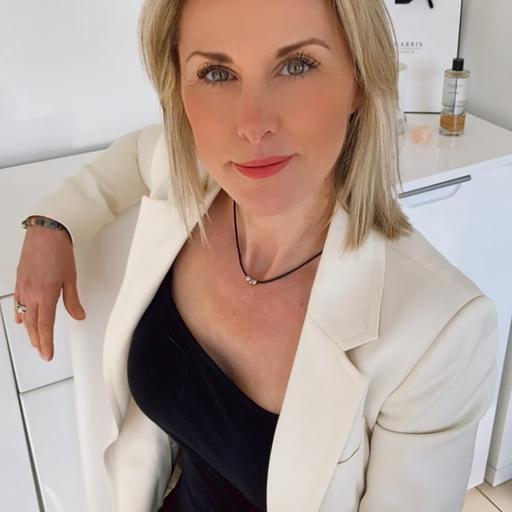
Skin Health Expert | Bio-Energetic Skin Specialist | Pioneer in Non-Toxic Beauty
30+ years Pioneering skin-longevity expertise6 disciplines Trained in aesthetics, sports therapy, reflexology, kinesiology, laser and moreJohnson & Johnson + RoC Worked with global skincare teams16+ years Founder and CEO of Lisa Harris Skin Science
Lisa Harris is a skin health expert, bio-energetic skin specialist and pioneer in non-toxic beauty, with more than 30 years of experience exploring what it really takes to achieve healthy, resilient skin. As Founder and CEO of Lisa Harris Skin Science, she brings together advanced skincare technology, biotechnology and holistic therapies to challenge conventional beauty thinking and help people understand their skin beyond the surface.
With a background spanning beauty and holistic therapies, medical aesthetics, sports therapy, aromatherapy, reflexology, kinesiology and laser technology, Lisa has developed an integrative approach to skin health that considers the relationship between skin, lifestyle, wellbeing and the ageing process. Her experience also includes working with global teams at Johnson & Johnson and RoC Skincare, giving her valuable insight into the skincare industry, product development and the evolving science of skin rejuvenation.
Lisa specialises in non-invasive skin treatments and advanced technologies, including radiofrequency, electroporation, LED light therapy and oxygen facials. Her work combines innovative treatment approaches with a strong belief that effective skincare should be personalised, evidence-informed and focused on long-term skin health rather than short-lived beauty trends.
A passionate educator and outspoken voice on the pressures of modern beauty culture, Lisa challenges unrealistic ideals such as “glass skin” and questions the growing normalisation of cosmetic procedures at increasingly younger ages.
More from Lisa Harris
All episodes → Owning Your Sexual SelfWhat Your Skin is Telling You with Lisa HarrisNov 2026Play episode →
 The Aging Well PodcastYour Skin Is Telling a Story: The Connection Between Skin Health and Aging Well | Lisa Harris | Ep. 457Sep 2026Play episode →
 Suburban WarriorBeyond Botox: Non-Invasive Alternatives for Ageless Skin | Lisa HarrisSep 2026Play episode →
 Inside-Out Connections. A Wellness Podcast.Why Your Skin Changes When Life Does — with Lisa HarrisSep 2026Play episode →
 The Quantum Biology Collective PodcastThe Frequency of Skin: Light, Energy & Regenerative BeautyAug 2026Play episode →