
September 8, 2026
Why Your Skin Changes When Life Does — with Lisa Harris
Sound bites
Our skin changes due to our choices in our food, our lifestyle, and an environment.
In this episode
Lisa Harris talks about how skin changes with age, stress, and lifestyle, and what kinds of treatments and home routines may support healthier skin.
- Skin reflects food choices, lifestyle, environment, and stress, making it both an emotional and physical indicator.
- Aging slows cellular energy, collagen, hydration, and healing, which can leave skin dull, sensitive, or prone to eczema, psoriasis, and acne.
- Useful treatment has to stimulate skin without overstimulating it, with recovery time as important as the treatment itself.
- Radio frequency, photobiomodulation, peptides, stem cells, and collagen supplements were presented as part of a longer treatment cascade for mature skin.
- Body work and nature based habits, including exercise, daily brushing, walking, and salt clay baths, were part of the broader approach.
Transcript
ShowHide
Automatic captions of the conversation. They can contain errors and do not name who is speaking.
SPEAKER_01: Welcome to Inside Out Connections, where we explore the link between your skin, your gut, emotional health, and your deeper sense of self. I'm your host, Tracy Ann, a wellness coach exploring what it really means to reconnect from the inside out. Today we're talking about skin. But I want to go much further than skincare. Because as we move through different stages of life, particularly our 40s, 50s, and beyond, our skin changes. Hormones shift, collagen changes, recovery changes, and suddenly the products or treatments we relied on for years are no longer working.
At the same time, we're being presented with an overwhelming number of options from LED, radio frequency, lasers, microcurrent, facial massage, peptides, and expensive home devices, all promising results. So what really works? My guest today is Lisa Harris, who has spent more than 30 years working with the skin and has developed an approach that brings together skin science, modern technology, and traditional holistic therapies. Today I want to separate what's useful from clever marketing and understand what our skin needs as we age, plus explore how ancient practices and modern technology can work together.
Lisa, welcome to Inside Out Connections. I'm so excited to have you here today. I'm so looking forward to this conversation with you. Me too. Everything skin, everything about hydration, youth, less wrinkles, lifting, everything. I can't wait to dive in. I'll find an answer most of them. Yes. So Lisa, you've been looking at skin for more than 30 years. What have these years taught you about the way our skin changes as our life changes? Very good question. SPEAKER_00: Um, our skin changes due to our choices in our food, our lifestyle, and an environment.
Um, so skin is emotional, it's physical, it tells a story, basically. Your skin is an invitation to see what's actually going on the inside. So when I have a conversation with someone, I can dive really deep, whether they're stressed, happy, or just not doing the right things in life, because it will reflect on the skin. So it's emotional as well as physical. SPEAKER_01: Oh, that just makes me so excited because I mean that's my whole philosophy with inside out connections. And I love that we just haven't gone straight to the surface, and you've underlined and highlighted the importance of stress and our emotional health, that inside out approach.
So, what's happening to our collagen, the elastin, and the hydration and cellular turnover as we age? SPEAKER_00: Well, we have to go right back, by the way. So it's it's all to do with your day-to-day lifestyle choices. So, if we want to talk about the aging process, which is mainly um starting at senior level, this would be your ATP, it's not energized, so it's slowing down the redox signals to make those cells thrive in the environment. From there, that has a knock-on effect with the ECM, which is your midlayers, the dermis, to slow down the fibroblasts.
Of course, the fibroblasts are responsible for um communicating to improve the collagen and the last disease. It slows down the collagen, that slows down and impair healing, so it doesn't turn over so quickly. That has effects on top layers of the skin, so that in effect has an effect of external aggression. So then we're mostly photosensitive. Um, we lose the lipid, also the hydration. So that's when we get that dull look. So everything is at cellular level. So when things start to slow down, with the end point of that is the result on the skin.
So you're looking tired, um, you're looking a bit gray, maybe. Um, you could be more prone to sensitivity, uh, eczema, psoriasis, acne. It's like a dysfunction in the cells. So this is where I come in, and I'll use biological technology to facilitate and energize the cells at all tissue levels from bone to skin. And then talk about the holistic side, and that is nutrition, mindset, movement. It's the whole thing, you cannot disconnect skin from the actual person. We're a mechanism and also spirituality comes into that as well.
SPEAKER_01: 100%. And when you talk about bone, what do you mean? SPEAKER_00: Okay, this is really interesting because if we look back, the whole system is you've got your top layers of the skin, then we're connected to muscle fascia. There's two, I think there's about three, two to three different types of fascia. And then we've got the um the bone. Don't forget the bone is really important because that degrades the older we get and on our lives. So, for instance, mechanical transduction enables us to improve bone mass.
People forget that. Wow. SPEAKER_01: Is that a machine? SPEAKER_00: Is that a machine? So basically, what I mean from that, yes, we can use um, for instance, exercise. Exercise is amazing. Uh power plate, there are certain types of power plate actually that is proven, especially with osteoporosis, um, improves bone density via the osteocytes, hence osteoporosis. So it's all a message of bone to the muscle, the myakins, the and then we've got the tissues and and then the fascia, which is hydrating, hyaluronic acid. That actually releases fibroblasts too, and then we've got the main part, which is where I focus, is the dermis.
So it has to be from the bone to the skin, because that is our structure. SPEAKER_01: Yeah, yeah. And it's all got to be, as I understand about fascia, if it's a little bit tight and twisted in one area, then that's going to pull and stretch in other areas under the skin. SPEAKER_00: Yes, and yeah. And I I studied um laser technologies, by the way, 30 years ago. I was one of the first to be doing this in the UK, also with biomodulations. And I was using that 30 years ago, and I realized actually, wow, these are interconnecting with ourselves.
They send messages to ourselves to make a healthier environment. Remember, technology, I'm able to facilitate certain technologies by certain signals down different pathways for it to grab and take and do its work. So we help the cells to energize themselves properly. You're the healer, I'm only the facilitator. Our body is so intelligent. I don't like to say biohacking per se, that's an umbrella. I like to use the word we are a bioessence. We're so intelligent. We just come along and help your body to thrive a little bit better, but the rest comes from you.
SPEAKER_01: I love that. And I love that you have that holistic approach that's really important to me, just to look at the whole body and understand exactly what's going on from everything from lack of sleep to stress, like you said, diet, but also let's talk about menopause when menopause arrives. What does that loss of estrogen do to our skin? SPEAKER_00: So the estrogen, I'm actually in that phase at the moment. Um I did notice it's the skin, is the lack of energy. So the estrogen is uh as we start perimenopause or through menopause, um usually we were depleting collagen about 30% for the first five years while we're going through that transition.
So that's one of the first signs, unfortunately, is our collagen elastes. So it does help if we nurture the skin. We don't need to do anything too aggressive, we have to work with you biologically. So it's a completely different ballgame when it's menopause. We need to first of all respect what we're going through and understand what we're going through, and we can supplement by clean sort of like supplements. You can put all sort of like plant-based, if you like collagen into our body because that's in an amino acid, so that's going to help kickstart that process.
And also the barrier, it's really important because the barrier, I don't know if you've noticed, when my clients come in, especially good for the menopause, is their skin becomes dry, yes, becomes dehydrated, and it lacks that glow. Yes, and it's sensitive, and then we're going for the acne stage again. So it's like reverse, and not to mention the random hairs. Yeah, that's that's very true. I mean, a body change it. So we're depleted in through, I think, bitamines and minerals, but it's going to happen. SPEAKER_01: And also things that we that we were using before that's always been our go-to, doesn't necessarily work anymore.
It's like everything we've been doing all of a sudden stops working. So it's like we need to try a new approach. Absolutely. SPEAKER_00: And I think what I'm figuring out here is that I need to respect the skin and work with the tissues more. So that's rebuilding. And I will say fascia is really important during menopause because that's like the sponge. You can do with manual massage and hydration, hyaluronic acid, using more plant-based foods, clean, exercising. Remember I said about the bone density as well. I think that's really important.
You will see change, you will see the improvement. I tend to manage people's expectations going through this menopause. Some people are okay, some people are not. And I'm just here to be very truthful and transparent. We can get through that, we can improve the bone density, the fascia, the tissue, and the skin by supplementing. And I'm the facilitator. So I tend to do more gentle regenerative treatments, and then I can go and remodel the tissue and the epidermis with very gentle lasers and making sure we use recovery treatments afterwards, the homostasis, which is really important.
We want to speed up healing. SPEAKER_01: I love that. And all the steps, like you said, to prepare for what's coming next and meeting yourself where you're at at that stage of your life is really important because I think as women we go into this, oh, what's wrong with me? And I need to fix it. And, you know, we start pulling ourselves apart rather than nurturing ourselves through those big significant changes that we're having. SPEAKER_00: Yeah, and it's it's so chaotic out there with all this different information.
I hope my clinical experience of holistic anesthetics and biotechnology, I'm able, you can't separate them in isolation. We have to work together. So we're a system, we're like an ecosystem, so it's a process. So we need to work, like I said, on many aspects. Um, once you get right, we're all different, you should see results that it can take months. Look, you need to be consistent with doing your massage at home, good skincare peptides. Peptides are really good and antioxidants are really good to help that skin flourish and create an environment for you to bring that back that glow.
SPEAKER_01: Because there there are different peptides as well. Is it G G L K U copper peptide? SPEAKER_00: Is that yes, yes, so this is amazing. Now, remember, therapists have been using peptides for decades. It's not new, it's not a trend. So, yeah, and that's another thing, menopause don't do peels. I tend not to do aggressive peels here. In fact, I don't do peels at all, just for I learned that it can actually disrupt the barrier. SPEAKER_01: Yes, because it's so sensitive already and and dry already. SPEAKER_00: And then when you're putting in something so harsh, yeah, and that's why it's really important that our face tells a story.
So we need to be gentle from your 30s to your 40s because it leads up to the 50s. Yes, we're trying to reverse the damage we've done. SPEAKER_01: We're going back to think I grew up in Queensland. I don't know if you know Australia, but I grew up on the sunny Queensland uh coast, and oh gosh, if I think back to what I did to my skin as a teenage girl. Oh, so but I'm trying to reverse everything now, which is really interesting. So when I look at my daughter and her friends that are worshipping the sun, I'm like, stop now.
It's uh you certainly pay the price later on. SPEAKER_00: You do, but you know, don't fear the sun because um you can grow up in the morning circadian rhythm, which is really important for you for being. So being in the sun for about 20 minutes is absolutely fine without any factors on. But obviously, you're in Australia, it's completely different. I'm not going to tell people to do that, but be sensible, do put a blocker on. I tend to use natural products, that's my philosophy. So I do use a physical block on myself, but it's all about being sensible, but don't fear the sun either.
SPEAKER_01: Mind you, you you've had an extraordinary summer over there right now, which has not been too dissimilar to Australian weather. SPEAKER_00: It's very unusual. Uh we always complain about the rain. My other people heat the sun. Well, we have been blessed. It just started raining, so we're back to normal, I think. Dark and gloomy again. Very unusual. We complain we want the sun, but actually, I don't think we can cope, but just not too much. SPEAKER_01: Lisa, I wanted to touch on the technologies available because there are so many, and I think most women have no idea what they should be choosing.
So if we could do like a little quick fire where I give you the concern and you tell me the technology that you would reach for and why. Is that okay? Absolutely. Let's go. Okay. So fine lines and collagen loss, what works? SPEAKER_00: And it would definitely be this a combination of technology. So we'd use uh radio frequency, controlled heat, thermal radio frequency, and that releases heat proteins, which stimulates tissue, which then stimulates the collagen. And then we can use other things, peptides. Peptides are amazing, they're like signals, they carry signals to the skin and help the body to produce its more again a collagen and elastic.
It's not not everything's about collagen, by the way, it's about creating a healthy environment for it to thrive. Um skincare, clean skincare with a good delivery system encapsulation and certain peptides like the stem cells and copper peptides. I love my copper peptides because they are responsible, by the way, of working at ATP level, which is responsible to create those all those amino acids and can remodel the collagen inside out so we can take it internally and apply it topically. SPEAKER_01: Wonderful. Love that.
I'm taking notes. Um sagging or loss of firmness? What can we do besides a facelift? SPEAKER_00: Yeah, I mean, I'll explain how I do my technology. So most things I'll always start with radio frequency because that sends signal, a safe signal, a controlled heat thermal, remodeling the tissue, and that helps then to firm the skin on the top layers. Um, if we're looking really to firm up the skin, I tend to go with fraxal lasers, very gentle fraxal lasers, but the skin needs to be in a good condition before I even start that process.
Um, also, we can use uh letroporation. Now you're gonna love this. Electroporation enables me to deliver encapsulations, um, for instance, like genosomes deep at cellular level without any needles. Absolutely for not all. SPEAKER_01: So is that a new device? Is that a relatively new treatment? I've never heard of it. SPEAKER_00: Yeah, so electroporation was developed in 2003. So let operation is like a magnetic pulse, and this enables for me to apply uh mesotherapy ampules or peptides enzymes onto the surface of the skin.
The electrical magnetic pulse temporarily opens off the cell in isolation, pushes the ingredients in. When I come off, it closes the cell. It's amazing because then I'm not using any needles, no side effects, no bruising, and also there is no pain most of it. Metaplas. Yes. So electroparation is quite remarkable because electroparation enables for the the actual product to go in in encapsulation and slowly be released, and it's 20 times more effective than probably a needle, because when you're actually doing nasal therapy or injection, sometimes they'll push it out.
With electroparation, you don't get that. So you get the full benefits of the treatment and the efficacy, which obviously is the result of the endpoint of the treatment. So we can treat pigmentation, fine lines, dehydration. It's my treatment that I always go to for adding that glow into the actual scene. SPEAKER_01: And is that something that you would incorporate into, say, a facial, or is that a more of a treatment that you would do once or twice a year? SPEAKER_00: So I think it's important that you understand that when you understand biology, they would understand technology.
So there's not one technology for one skin concern. You can't do that because when you understand the layers of tissues and the skin, you'll understand technology can only go so far down different pathways. For instance, skin firming would be everything. So I usually start with radio frequency, then I start with muscle. So we need to contract the muscle. You usually do that by EMS. So that's an electrical device that actually stimulates the mycanes, which is like proteins and molecules to build the muscle up. So that's perfect, because that's scaffolding, don't forget.
And then we can go in and work electroporation or genosome, which is my newest technology, to treat skin concerns. So that would be sensitivity, rosacea, acne, pigments, and it's non-invasive. And then we have to go into recovery mode, which is really important for the skin to recover, to be balanced. I will always use photobiomodulation and oxygen. So there's a process to use the same treatment, and it's all depending on the person's age, hormone, sensitivity. So when I look at someone, I read, we have an in-depth consultation, I die deep, whether they're stressed, their lifestyle, their diet, and then I can use technology, or I may step away from certain technologies.
So everything is done progressively, not aggressively. That's my motto. We want that sweet spot. Once I've got that, that's when you see the fruits. It's usually a couple of months down the line, and then we just maintain it. SPEAKER_01: I love that. You're really meeting people where they're at. And I often think that we think that more is more, and we want to invest in the most expensive latest laser machine or something that may not be suitable for our skin. But a lot of the treatments that you're talking about, I've heard of, and they've been around for a long time.
So they obviously still have a place in skincare. SPEAKER_00: Yes, I mean, um, they've stood the test of time. But my bioelectrical facials, I mean, I could go into iontofriesis, galvanic, all these wonderful technologies. All have different jobs, if you like, in the skin, and that and we all have different pathways. Lasers are big, they're so many different types of lasers, but I tend to use fraxol laser, very gentle lasers. Again, I have to prep the skin before I even consider using lasers on different types of skin, for instance.
And then we have recovery. It's like exercising. If you exercise too much, you exert the muscles and you can have an adverse effect. And it's exactly the same with technology. And that's what 30 years has taught me. You don't need to do anything too progressive, uh, aggressive, because you actually cause more damage, cause you're um bruising, focus test sensitivity, you've broken down the microbiome too much, and then you start that you've speeding up the aging process. SPEAKER_01: Because we do start to lose that elastin in our skin as we get older, and then we're going in with, like you said, those harsh chemicals or the hardcore lasers.
And often the skin is not prepped for it, and we can do more damage than good. SPEAKER_00: Absolutely. And um I've had clients coming here thinking they can just have the laser treatment, and I that's up to me, that's up to the practitioner, by the way, to educate them to say, actually, your skin is not in such a great place right now, but it can be. So you want to be a healthier environment before you actually even go down the laser. And I'll tell you why, because when you use the right technology and also skincare supplements, the results of the laser is much better because you've created more collagen, elastic.
Perfect environment. Perfect environment. So we don't need to do things too aggressively at all. Um I'm taking fillers, I don't do Botox because I believe in movement of the face. Um, that's philosophy. I like to exercise the face because that's just scuffles. It's exactly the same as the body. SPEAKER_01: And I wanted to talk to you about Botox. And I admit I use Botox minimally, but I use it. Because often we think that it's preventative and we're not going to get those lines in our face. So, what are your thoughts on a I saw a post where you said it can actually be more aging?
Yes. Can you explain? SPEAKER_00: Yes. Um, you know, I respect people's opinions, by the way, and if they want to have Botox entirely up to them. And it does stop lines, you know, it softens lines without a shadow of a doubt. But it just it's just your muscle, you're not using your muscle. So if you're not using your muscle, your muscle becomes more atrophy. That's what I've noticed during my clinical using my clients. And when they've come in with Botox and stop Botox, and there's hardly any muscle there. SPEAKER_01: Yeah, wow, because you're not using it.
SPEAKER_00: You're not using it. So, and now science, I mean, we do have white papers by the way, and we have enough study to say, yes, this is one of the side effects. And I mean, there are different types of Botox as well, but I can actually use peptides here, by the way, that can act a little bit like Botox, but it's not toxin, but it doesn't stop the complete movement. And remember, it is a toxin. SPEAKER_02: Yeah. SPEAKER_01: Is the pep is the peptide a skin booster? Is that the same thing? SPEAKER_00: Uh there's so many different skin boosters.
Yeah, I mean, all uh biostimulants are boosters, but again, we've got to be careful with these as well. There's not, you know, the polynucleotides, we've got the exosomes. I'm working with genosomes, which is far superior. Um, and we have so many different peptides, they're wonderful, by the way. When delivered by the right equipment. So remember, I don't do needling. I used to, I used to do it, and I can inject, I just won't. Why would I when I've got left operation? It does, it's far superior and it's safer. SPEAKER_01: So it's interesting because I think the Botox isn't actually as effective as we think it is.
And I think it's perhaps habit, fear. But I notice that I'm still have lines where where I'm not meant to from the Botox, right? So I don't like having the frozen look. So for me, I prefer having movement. So then you think, well, what's the point, really? If it's not delivering exactly what you want it to deliver, is it just a habit that we're injecting into our face? SPEAKER_00: Yeah. So I have a lot of clients coming in, and the first question said, you know, um, they they've read obviously my, you know, I look at my website and they still ask, Can you do Botox?
And I explained, which is a great invitation for me to educate. So education is I offer alternatives, if you like, because when people say first thing to me is Botox, I'm looking at them and thinking, they're actually tired. They're looking tired. Botox can't regenerate cells, remember that. So I'm the other way. I won't, you know, if they want to continue Botox, they will have their skin treatments with me, regenerate the skin, and then if they want to go down, then they can go down that avenue, but they tend not to.
So I tend to wean people off Botox. That's because they're here for a reason, by the way, because they need to do more regenerative or more conscious of their health. SPEAKER_01: Yeah, absolutely. I'm leaning more towards that way. It's interesting as you get older, your your perspective changes. SPEAKER_00: And you're right, Botox seems to wear off as well, but there are different types of Botox. Um, so why are you injecting that when you can use alternatives? Or try. SPEAKER_01: Just try and the thing is we don't know that there's an alternative.
So this is perfect to know that there are alternatives out there that can give us similar effects. SPEAKER_00: Yeah, I did try it. You know, I can't talk without trying things. So I did try it in the 90s, by the way, when if when it is about in the 90s and I didn't like it, I thought, hang about, I can't move my face, I can't express, I don't feel right. Because when you can't express, it does block a protein, an actecholine protein, which goes into the gut. And I'm very sensitive with treatments. So I knew for me, that's not something I wanted to offer to my clients and nor myself.
And I think that led me down the rabbit hole to pioneer multiple facets of energy with holistic wisdom. That was my philosophy for skin regeneration. Now I can see this, I can actually see a lot of people are waking up to or preferred method of biotechnology and working with um holistic therapies. You can't separate them. I love that. Yeah, and hopefully I can get a message across where if you're confused about technology, um, it's please don't follow trends. They don't last. Don't follow your skin, it's not a trend.
We need to work with it biologically, and we can achieve that. So it is worthwhile if you're looking into or want to see alternative, do book in with a professional, a practitioner, skin therapist, um, clinic, do pay for a consultation. It's so worth it, and it is worth sitting down with them, understanding what they've got to offer, and do a course because that's how things work. It's like planting a seed, the more you feed it, the more you water it, the 100%. Later on. So it's definitely worth it. Stop, swapping, changing thousands of different serums and moisture.
SPEAKER_01: No, it is insane how much money we throw at it for women, how much time we waste, how much money we waste on devices, creams, serums, things that aren't don't even suit our skin. Yeah, and some of the treatments you spoke about before, Lisa, would cover other things like you spoke about the pigmentation and sun damage, and some of those treatment treatments that you recommended in salon also treat redness or rosacea as well. SPEAKER_00: Yes, with redness and rosacea, I have to be very careful what technology I'm using.
First of all, is underlining the gut. Everything's from gut, especially with rosacea. So I tend to refer them to homopathy. Homopathy is amazing, and then Can you explain what that is? So basically, it's homopathic medicine. So homopathic remedy is your true medicine from nature. And it's still, I mean, it's the there's thousands, by the way, of remedies out there, and I'm not qualified in here, so I will refer because there's something else going on in the body when it's rhosacea. That's usually cortisol levels are quite high through stress.
It could be allergies, they could be you're not sleeping because you're stressed, it could be a lot of different things. So we need to focus on the vagus system first and the gut, and then when the skin is soothing everything down, yeah. When the skin is slightly more calmer, I will go in and nourish the barrier. So we don't tend to do aggressive treatments. So what would I use? I do use electroporation, which enables me to use calming and soothing peptides into the skin. Copper's very good, by the way, as an anti-inflammatory.
And also then I will go into photobiomodulation, which is your LED spectrum. So we've got the green amber, and we've got the blue. That's very calming. And then I would add oxygen. Oxygen is absolutely wonderful for calming the skin down and creating a healthier environment. It's all building the skin barrier back up with rosacea. It does take time to rebuild that skin up, but it's inside first, and then I can do magic later on. SPEAKER_01: Like it that you said, it's not instant, it's not a quick fix. Things do take time.
And when we rush through things and we we approach it with this sort of aggression. From an emotional perspective, but also from a physical perspective, I think it yeah, it does more harm than good. SPEAKER_00: So you want to all treatments, what they need to do is first of all, we need to stimulate. So stimulus is really important, but not overstimulate, because that's when the skin is defensive, so it doesn't heal properly. It's called homesis. Homesis is the sweet spot to stimulate the ECM, which is your H matrix.
That's with all the abundance of collagen, hyaluronic acid. So it's enough stimulation to create more of a healthier looking skin, if you like, and then recovery. Recovery is homostasis, and that's really important because if you don't have that balance, your skin can revert, it slows down a lot, it could be red, be inflamed, you cause more damage than good. unknown: Yeah. SPEAKER_00: So all treatments do this, it's this sweet spot you want. SPEAKER_01: Hmm. So for a woman in her 40s, 50s, or 60s that could invest in only one professional technology, and I know this is hard to choose because there's so many different layers, but it's hard to go out and find a practitioner that's not trying to sell you something as well, right?
On what machine they have. You know, they might only have one machine or that. So for somebody that's a bit confused and doesn't know who to seek, obviously, we live here in Australia. For the Australian listeners, there's people overseas as well. If somebody in there with that mature skin is seeking a professional technology or treatment, where would you tell her to put her money? SPEAKER_00: I probably should have to see the practitioner, and it's that's a really hard question, and I can't pick, but it would be a combination of um radio frequency with photobiomodulation.
That is a must, I think, and peptides and stem cells in skincare because of the third stage and also supplementing at home with collagen supplements. Now I know people are very mixed reviews, um, but from my perspective, I've seen amazing results by using the clean the collagen. Now the collagen is a peptide, yes, yeah. So using that's important, so it's the cascade, it's a process. So it gets mature skin, and depending whether they've had treatments before, so like I said, probably the radio frequency, once they've got to that stage, it would have to be the laser, which would bring me into um there's a good study at the moment this year, really interesting.
In 2026, on 22 um split faces, they used a 1940 nanometer fraxal laser, and it improved the epigenetics. Now, this is really exciting. Now, I think there's still needs to be more research. I think practitioners always know when you use laser, it remodels completely remodels the skin inside out. So that's where you get your more youthful appearance, but your skin needs to be in a good state before even receiving that. So lasers, very gentle lasers, do work. SPEAKER_01: Yes, that's good advice. Not coming out like you're as red as a beetroot.
SPEAKER_00: Yeah, I mean, you will be red straight after treatment. SPEAKER_01: But not for weeks after. SPEAKER_00: Yeah, if you are, there's something they've done too much. And that's why it's important that you're well before the treatment, hydrated, and receive some sort of like um collagen enhancement, which would be your radio frequency or expiration or biostimulants, then go for the laser. There are a way of doing things, and once you get it right, you'll love the outcome. SPEAKER_01: Love that. So let's talk about all the things we're being encouraged to buy for home use.
And there is an overwhelming amount of things that you can buy now from LED masks. What are your views on that for home use compared to sell-on? SPEAKER_00: And first of all, you need to look at the wavelength, you need to look if it's safe for a start, whether they've done studies with it. Um, please just don't buy any cheap masks, but they actually do not work. SPEAKER_01: CA approved, yes. SPEAKER_00: Yes, yeah. Um, I mean, I do know some good masks by the way, and I do um sell them in my salon, and that's because I've done my research, but obviously I use something professional here.
And also, there's a lot of people saying NASA. Now, NASA did come up with the LED lights, they used it for the astronauts, I believe, to improve skip health. Um, I would say the more expensive it is, I'm afraid it does work. Yeah, okay. Cheap is not good. No, I mean, I've never come across one. There may be some out there. I haven't done my research on every device out there, but they can help, by the way. If you find the good one, I tend to not use the ones too close to my skin because that's too much radiation, and it depends on the dose, that's really important, and the time.
You don't want to do things too much, like every day, because then you exhaust the cell. SPEAKER_01: It's no really you've got light, like LED lights that go on your face, but now I've seen that there's more targeted laser light masks that are more like a strobe going in than uh all over coverage. Is that a thing in the UK as well? SPEAKER_00: Yeah, I mean, it's exactly what we do in treatment, by the way. So that's going into isolation and depending which one you're actually using. So that is great as well. It again, it depends on the brands and look at their evidence, by the way, whether they've done any studies, clinical studies with their devices, that's really important.
Um I don't like the ones too close to the skin, it needs to be a little bit away because, like I said, there's too much radiation going into the skin's uh EMF, which is not good, by the way. So you need to do research on the dose and the wavelength, especially. SPEAKER_01: And what about microcurrent devices for home use? Are they as effective as the ones in salon? SPEAKER_00: Um, I've heard very positive things about um, they're not as strong as in the salon. But why not use these wonderful things at home to prolong your results from the salon?
Salon obviously has a very powerful professional product, more medical grade, whereas you wouldn't be able to do that at home. SPEAKER_01: Yes. So what device do you see women spending money on that you wouldn't bother buying? Oh, you're not gonna like this. SPEAKER_00: Um probably the gua sha, I think you can use your hand for that. I mean, it's okay. Um, but I think if you don't place it again, it's educational, not against it. If it's done correctly, yes, so that is mechanical transduction because you're actually stimulating the fascia once done correctly.
I know a lot of people have different types and they just don't know what to do with it. SPEAKER_01: So I suppose sometimes you see them on Instagram and they're like really getting into their jawline and it's like a bit rough and ready. Yeah, and I imagine those type of tools are meant to be a bit more of a gentler approach. Absolutely. Is that true? SPEAKER_00: Yeah, that's absolutely right. I I prefer the Camza wands. Um, Camza Wand is copper again. Um, you know what? I think it's about applying it correctly, the right pressure.
So, you know, if you want to experiment, do it, but make sure you you get the right tools with the right instructions. SPEAKER_01: Yes, absolutely. So, Lisa, if I gave you $500 to spend on your skin, where would you put it toward? What would you put it towards? Would it be skincare or a device for home or a professional treatment? Our professional treatments, 100%. Yeah. Yeah. Yes, yes, that's good advice. So I wanted to touch on your holistic approach. And I know we've touched on it briefly. Um that's what I find really interesting about your work and and why I was drawn to your work as well, is that you've embraced that modern skin technology without abandoning the more traditional holistic approaches.
So, why is that combination important to you? It's so important. SPEAKER_00: Um, I trained as a beauty therapist, but also I trained as a holistic therapist with aromatherapy, reflexology, kinesiology, sports therapy. That made me realize the connection. Hmm. Our motion and how well connected we are spiritually. So I the when I look at someone, it's quite funny when I come in. I can read their skin and I'll give them a lot of holistic advice. So I still use my hands today, but and I will do massage techniques as well, alongside technology.
I'll advise people to stretch fascia, body brush, use aromatherapy at home, because that's connecting you back to nature as well. So the nature inspires science. Remember that. So this ancient wisdom's been around well since the beginning of time. So it's a really important I combine the both together. I mean, that's another podcast altogether, because reflex still amazes me today. I don't practice it as much today, but what I used to feel on the feet was calcified. At the end of it, I'd give my verdict, if you like, what was going on inside the body, and they would just say, Yes, how did you know?
So it's it's so amazing. The the body is the technology. SPEAKER_01: Yes, it's so true. I get reflexology as well. And whenever I'm at one of those Thai reflexology places, I'm always like pulling up the chart on my phone and thinking, Oh, that was a tender spot. Oh, okay, that's the kidney meridian. Or that's a so it's really interesting, and I too love kinesiology, so I really understand the emotion. And I know myself and a lot of my listeners on the podcast understand for me that connection with IBS and gut issues.
For years I fought myself and food became the enemy, but now as I'm getting older, I 100% understand the connection between my emotions and how I'm wired to what happens in my body. SPEAKER_00: That's so beautiful because I've just come up, I'm always developing treatments and I'm always putting my uh holistic um technique and necklift, I mean, is really important that the body is so tight, it's a stress for us. So this is where I work fascia. So I mean what this is working with fascia in any way by using vibrational G5 or G6 or massage, is working with fascia.
Yes, and when you unlock that, the emotions that are released from there, you see in the face. So I start uh let's say somebody's posture is over and they're tired. I think, oh, I think I need to do something more here. I actually start my facial at the back. So I actually work on the spine, I release because I know all the nerves are connected to the organs inside. So I'll actually use. Radio frequency release and stimulate or relax the spine up onto the back of the neck here and I start draining because lymphatic drainage is really important.
Women sometimes cry, some people just like, oh wow, that's amazing. When I turn them on to continue doing the facial, um, because your neck's on top of your body, you know, that sounds really strange, but but if you want the neck and you want your posture to change, just doing that movement at the back first into place, your face sits better. It's amazing what you hold on. SPEAKER_01: I agree. I had Olga from FaceUp on my podcast recently, and I only a couple of weeks ago I tried her with one of her practitioners that she'd taught the method to.
And and I like you do things like I stretch my fascia and I release and I do things to help. I do lots of lymphatic, but I cannot tell you the difference in my skin after having this treatment, which was all around loosening the fascia behind the neck, on the chest, the jaw, like I get a little bit of fluid under my chin. I just thought I was getting like an old lady double chin, but like that had shifted completely. And I just it just I felt different. It was so hard to describe. It was like I I felt so much lighter than I did before.
It wasn't an ordinary facial, it was completely different. So I think there's a lot to say for that fascia release, what you were talking about. SPEAKER_00: Yes, I mean my clients after the third treatment, they look different, they're more relaxed, it improves their relationships, improves their environment at home. I mean, it has a domino effect with every aspect of their lifestyle, and also their um posture completely, they're walking like this. They feel more in control of their posture and they're more aware, by the way.
Um shoulders back and they feel more relaxed. It's like I popped it back into place. SPEAKER_01: Yes, and also we carry so much tension in our neck and shoulders and jaw, right? And so that is going to show up in our face, that's gonna pull everything down, correct. SPEAKER_00: And this is when you go for a facial treatment, so it's important we start here, but also at the back, because the neck up this way, by the way, we need to push it back. That's why I do my radio frequency and I concentrate on the back here and the shoulders.
See, we're all connected. This is what I started out as a beauty therapist or specialist in skin, is I realize it's not all the stuff we're putting here, it's way more decent than what you think it is, way more deep. SPEAKER_01: I think you I think you need to start a teaching academy on this. SPEAKER_00: Maybe the alchemy facial that there's one of my facial I come up with, and it is to is for therapists to see skin in a completely different light, and also clients, I think is educational. When you understand, please stop forcing the skin.
It just work with it biologically, respect it, and I promise you it will show its fruits to you. SPEAKER_01: I love that analogy. So, are there traditional practices you keep coming back to because you continue to see results from them? You've mentioned the the fascia release. Is there anything else? SPEAKER_00: Um, I always come back to massage. I mean, I always come back to that and using my little tools as well, like the cancer ones. There isn't one thing. I mean, I'm very lucky. I use everything here, by the way.
I'm always researching, I'm always developing my skin therapies. One thing I always come back to is my photobiomodulation. I mean, I was so surprised when I was very lucky early on in the 1990s to be working with the most wonderful scientists, realizing what these lights were. At first I thought they were Christmas lights because obviously I didn't know what they were. And um, and I was so amazed when I was using all these different colours of the spectrum, like the chakra for the body. I really, really went down that rabbit hole.
And I'm still today fascinated what photobiomodulation can do for the human body. SPEAKER_01: It sounds fascinating. You've got facialists, and then you've got dermatologists. How do we describe what you do? SPEAKER_00: It's just my philosophy. I combine everything together, so I'm the best of both worlds, and I'm not a dermatologist because I'm not a doctor, but what I can do is create a healthy environment for your skin to thrive. So I can definitely help with pigmentation, I can add with skin fairness, most of all, your confidence.
That's why I want that sweet spot. I want that confidence, it just shines through the will joyster, and that has a dog effect again in inside the body and out. SPEAKER_01: So um and just cutting, cutting through the noise, like you said, you've got you've been in the industry for a really long time, so I can't wait to hear when you're coming to Australia because I want to I want to see. So, can we talk about beauty products and and serums and creams and what we put on our skin? Are we overcomplicating it? Do we need so many steps?
SPEAKER_00: No, no, and it it it you know, I think it scares me today, especially the young girls. I've got four daughters, by the way. The eldest 31, the youngest twelve. Four daughters. Oh my gosh, you look amazing. Um, it doesn't need to be complicated. Remember, your skin does it in any way. We're just helping it along its journey. So the most important thing is stay away from from what I've learned, because I have done it myself, is too aggressive. Chemicals on the skin, it will compensate later on. I mean, it does um destroy the barrier on the skin.
So overusage of retinals and these, they're too aggressive. Now, there are alternatives. I mean, this is another subject because I don't like fear-mongering. I don't like that. So you just need to respect your barriers there for a reason, and not all skin is the same. There are different products or different ingredients, don't go chasing brands or trends. That's why it's very important. See a professional. If you're confused, please go and see a professional. She will help you and guide you, and you save money on the long run.
Because you agree. You just go to your skin therapist. That's what they're there for. Yes. SPEAKER_01: And if I if I think about retinol and how many people have recommended retinol for me, it doesn't agree with me. It makes my skin, I it feels like it's thinning out when I use it, and I get red sort of redness across my cheeks as well. And that's a sign that perhaps it's not the right product for me. SPEAKER_00: Yes, remember I said about the stimulus, which is the homesis. Now, if you can do that topically, and there are different types.
There's five different types of retinol, by the way. There's derivatives, and the truest one you can only get from a GP, and that's used sparingly, very thinly for acne. Now, there is a place for retinol, and it's for, like I said, probably acne-prone skin. It's not for healthy skin or aging skin. We can use it not for aging skin. No, because it thins out the barrier. Now I know I'm gonna get pushed back that, but I've seen it myself. I don't use it. Oh, I've seen it. And the amount of people that come in, I have to go in and repair the skin barrier.
You can use vacuum, which is another alternative to retinol, which is vitamin A, but most of it's inside, yeah. Yeah, most of it's from the inside, so yeah. So good skin care, look at the ingredients, and it doesn't need to be complicated. So you could have an enzyme cleanser if you're a little bit congested. I love enzymes, they're very gentle, so they don't disrupt the skin barrier. That's enough to slow away the dead skin cells for you then to incorporate a serum which is peptide-based, that then gives enough an advantage for the peptide to swim into the actual designated area in the lower part of the epidermis.
It's all about encapsulation, and then just follow through with um a moisturizer, stem cell-based, maybe, ceramides, because that keeps seals the deal first. And then a sunblock, some kind of zinc-based sunblock over top. Absolutely. So, what I tend to use is um a product which is high in zinc, not nano, zinc, shea butter, coconut, and beeswax. I tend to mix that in with a little bit of uh oil of your choice just to lubricate it, and then I'll put that on the top layers of the skin. So sometimes it's good not to put makeup on as well.
SPEAKER_01: Yes, yes, absolutely. Well, I think if you've got beautiful radiant skin, you don't really need the makeup on top. You can just do a little bit on your cheeks and some scarf. You don't need a lot if your skin is glowing and hydrated enough. SPEAKER_00: This is this is right, and um also with makeup as well. Remember that's an extension of your skincare routine. So you've done all that wonderful work. Be careful what you're putting on. Try to do organic. There are some wonderful makeup brands out there. So use organic, follow it right through.
SPEAKER_01: Yeah. So what do you think is overhyped in the beauty industry at the moment, Lisa? SPEAKER_00: Overhyped. Oh well, yeah, I have to go back to the retinal. Like I think it's overhyped, and um, I think again, I'm not trying to fear manga here, but there is a place, but it's not for everybody. So trends, like so many serums and moisturizers, they don't you're actually suffocating the skin. Your skin needs to be the largest organ, it's the only one that tells you visibly what's going on on the inside. SPEAKER_01: Yeah.
So on the flip side of that, what do you think women should be spending their money on that perhaps isn't as glamorous or heavily marketed? SPEAKER_00: I would have to go with um I love oils. I just love the pastoral calendar oil, play with them with your tools. I think they're absolutely amazing. SPEAKER_01: I like a rose hip oil as well, sometimes. SPEAKER_00: Yes. You've got to find something that works with you. Don't be scared. Um, use the oils, a shear butter. Shear butter is the nearest thing to our ceramides and our own skin.
So shear butter is really good. If you can get organic shear butter mixed with oil, I think it's great. It's not your biotechnology, it's not gonna change things, but feel good. SPEAKER_01: Hydration is what we need for women of my age and and beyond. It's just we need to keep up that that skin barrier as well. So, in terms of skin through the decades, I want to just do another quick rapid fire as well. In our 30s, what's worth starting? SPEAKER_00: Hydration, just just focus on hydration and good skin care. Absolutely.
So just start with basic treatments, maybe if you want professional treatments, non-ablative. So that would be just even oxygen therapy and hydration, definitely that, just to keep your skin nice and subtle and healthy and glow with antioxidants. Love that. In our 40s, where should we invest? Well, this is going up now. So we're going to be maybe impairing. Yes, that's right. We're going more upper level. So this would be your radio frequencies, electroporation. So focusing on more collagen. So getting that collagen in place before you're going into menopause.
I think that's really important. So this is when we start to look at more your radio frequency and fascia work. SPEAKER_02: Hmm. SPEAKER_01: And in our 50s and post-menopause, the whole thing becomes more important. SPEAKER_00: Yeah, everything, all of it together. Well, I think it's I think it's definitely working more with the top layers of the skin because remember it's thinned out slightly. So it's definitely more electroporation, I think, and radio frequency. And then go into your laser. This is where you get your collagen, is where you're remodeling the collagen.
SPEAKER_01: Yes, and you're trying to re-stimulate whatever collagen you've got left. SPEAKER_00: Absolutely. Um, it does work, it does work, but it depends on you. So, and this is where you supplement your reason why you supplement is because you're not getting any nutrition, I suppose, from your foods. So I say organic foods, walk in. Um, remember I said about the bone density as well. So, exercise, exercise is the most important thing. Yes, exercise. Yeah, being in nature, sleep, circadian rhythm is paramount, and also being around people.
Have a look. SPEAKER_01: Yeah, be happy, you know. Yeah, look at the good things in life. I think that plays a big part. I met this really lovely lady at the nail bar last week, and we had the most extraordinary conversations. She was just so full of life, and vitality is the best way to describe her. She was just radiant, and when she told me how old she was, uh she said, I'm 82. And I was like, bullshit, you are not 82. And she was like, Well, I've had a bit of work, honey. I'm like, well, it's not just that, it was just her sunny disposition and her friendliness and her openness and her joy to be for life.
Like it was just infectious, and I think that helps. SPEAKER_00: You know what? I say that quite a lot to my clients. Um, have you ever looked at someone? And like is what you just described there in their 80s? It's their vitality, it's their spirit, it's the life they had. So, you know, beauty is not the absence of age, it's your vitality, it's your skin, it's visible to your vitality, your health, connection to the world, and also every stage of your life, your face is your signature. SPEAKER_02: Yeah. SPEAKER_00: So important.
So through those years, it's really important what you feed yourself because you do see the end result, the telltale signs on the face. SPEAKER_01: Yes, and she was a smoker and survived lung cancer as well. So was a smoker, but but you know, she hasn't lived a perfect blessed life, but it it's a combination of things later on that keep you going for sure. Yes, yeah. And and so what about in our 60s and beyond? Should we be trying to stimulate and correct, or should we just approach skin completely differently? SPEAKER_00: Although we approach it slightly different in the 60s, we can still regenerate and we can still stimulate migrations.
That's what I do. So it doesn't matter what age you are, you can still improve the skin environment. I think that's what I'd like to aim at in the environment. When the skin is flourished and using the right technology, diet, movement, exercise, you will see change if you're committed. Yes, I love that thing. You have to be committed and you will see the signs. Obviously, the younger you are, the quicker you see, the older you are. It does take a little bit longer. So that's where I manage people's expectations. SPEAKER_01: Yeah, and I think, you know, perhaps for the 55-year-old woman out there who's done very little to her skin and perhaps is thinking, Have I left it too late?
You're saying that you can make changes. SPEAKER_00: You can, I mean, plenty, plenty of case studies. And sometimes when they they look at themselves, they don't feel themselves, they just don't feel themselves because they are seeing the changes. So if I can help with that journey, again, is all about the confidence. And once they see what I can do and they understand what I'm doing, they lead to they're just so much happier for it. So you can change, you can change the way your skin looks. SPEAKER_01: I love that.
And I know we've touched on this, but I always love to bring that inside out connection piece back into the conversation because it is about the whole person and because the skin doesn't exist in isolation. So, what have you noticed that happens to skin during prolonged periods of stress? SPEAKER_00: There's a complete dysfunction and the recap signals in the body are not firing. So complete stress actual cortisol levels causes uh inflammation, which is inflammation by the way, slows down, impairs to repair the skin and stops it from regenerating.
And I see eczema, psoriasis, um different stages of rosacea, um, but they just look weathered. Yeah, like lacking energy, it's like someone sucked the life out of them, and that's all due to the energy output of the ATP, it's slow down completely. So if that happens, that has a knock-on effect with everything else within the body. It's like the skin's just giving up. And thin enough hair, don't forget. Um you either put weight on or you lose weight, um depression, anxiety. SPEAKER_01: Yeah. It all plays a part. SPEAKER_00: It all plays a part, yeah.
SPEAKER_01: Yeah. So you describe your work as bioenergetic. Can you explain what that means again before we finish? SPEAKER_00: So bioenergetic means, which is my philosophy using biotechnology, and the energetics is the hell is size. So I've just come up with that. That's just my philosophy. So bioenics is working with your bioelectrical fields, which is you. That's so cool. It's just very simple. Yes, it is, but it's that's what makes it so cool. It's so simple. SPEAKER_01: Yeah, it's so simple, and we so overcomplicate things.
SPEAKER_00: We do. I was thinking that this morning. Why to be overcomplicated? We're just in the the the skin is the most intelligent, visible expression of your life. I can't, you know, I can read the skin, I can't tell what everything else is going on underneath, but it gives me a good indication where to start. SPEAKER_01: Yes. So Lisa, if we stripped away all the trends for a minute, the marketing and the fear of aging, what do you believe gives the a woman the best skin she can have for the age she's in? SPEAKER_00: Exercise, I think.
It has blood flow. Absolutely, and like I said, massage, um, body brushing. Oh, I love that. SPEAKER_01: Yes, I love it too. And face brushing. I like a soft face brush, personally. SPEAKER_00: Is that good? It's okay. Be careful with the face, but for the body, amazing. Okay. Your lymphatic system's the river of life and is called that for a reason because it feeds every organ, oxygenate, um, helps with drainage, helps to drain toxins, it brings the energy back in. Your vagus system is so it just vitality in itself.
So that's one tool I say to every body brush every day. SPEAKER_01: Good advice, Lisa. This brings us to the end of our episode. Thank you so much for coming on and being a guest. But before we finish, I always love to end with what I call a moment of reconnection. What has your body taught you about yourself? SPEAKER_00: That the messengers respect the skin, definitely. You know, sometimes when I see a uh side effect on my skin, it's the messenger I need to look at and looking within myself and reconnect. That's it, really.
Um, don't be scared of if you've got any dryness in your skin. It's just telling you something, and we just need to figure out why that's happening. So always connect back to nature. SPEAKER_01: Yeah, and tune in and just slow down a little to listen at the signs. Yeah. SPEAKER_00: It's filling you, yes. SPEAKER_01: What season of life are you in right now? SPEAKER_00: Do you know what? Uh I'm probably reconnecting um everything I've done over the 30 years. Um, I'm just collaborating everything together and putting it out there at the moment.
And I'm enjoying life and learning to slow down and just connecting to the world, what I've learned over the 30 years. SPEAKER_01: What are your go-to rituals that help to bring you back to yourself? Oh, it has to be walking in nature. SPEAKER_00: I love being in nature. I love trekking. Me too. I love trekking, I love my aromatherapy. Uh, one ritual I do every evening and I have done for the last 30 years, and that's bathing in salt, clay, and my aromatherapy. That is my bliss. SPEAKER_02: Oh, nice. SPEAKER_00: In nature.
Bringing it in. So yeah. Connecting to nature in my walks every day. I love being in woods, by the way. I'm not my thing. SPEAKER_01: Yeah. The trees. I'm like a tree hugger. Yes. Lisa, thank you. I love this conversation because I think there is something empowering about understanding our skin rather than constantly feeling as though we need to fight it or fix it. There is so much noise around aging and beauty, but perhaps the best place to start is understanding what our skin needs at each stage of our life. Thank you for joining me.
Where can people find you? SPEAKER_00: So we'll leave a link. Just have a look on my website or for consultations. Thank you. Thank you for having me. It's been a it's been fabulous. Thank you so much. SPEAKER_01: Thank you for listening to Inside Out Connections. I hope today's conversation resonated. If you enjoyed this episode, please follow the podcast, leave a review, or share it. It really does help these conversations reach more people. Follow me on Instagram at Inside Out Connections for more from the podcast and conversations around well being, connection, and everyday life.
Until the next time, take care of yourself.
About Lisa Harris
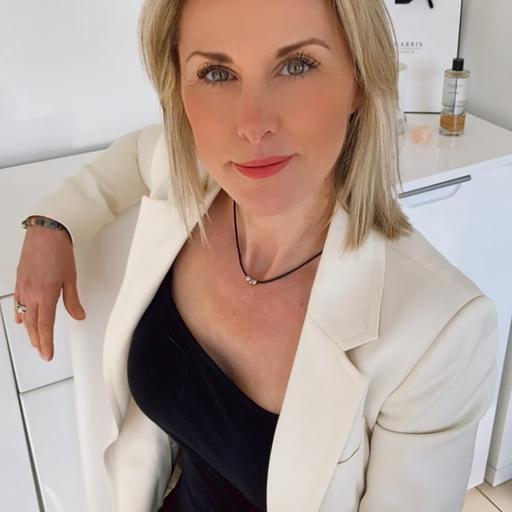
Skin Health Expert | Bio-Energetic Skin Specialist | Pioneer in Non-Toxic Beauty
30+ years Pioneering skin-longevity expertise6 disciplines Trained in aesthetics, sports therapy, reflexology, kinesiology, laser and moreJohnson & Johnson + RoC Worked with global skincare teams16+ years Founder and CEO of Lisa Harris Skin Science
Lisa Harris is a skin health expert, bio-energetic skin specialist and pioneer in non-toxic beauty, with more than 30 years of experience exploring what it really takes to achieve healthy, resilient skin. As Founder and CEO of Lisa Harris Skin Science, she brings together advanced skincare technology, biotechnology and holistic therapies to challenge conventional beauty thinking and help people understand their skin beyond the surface.
With a background spanning beauty and holistic therapies, medical aesthetics, sports therapy, aromatherapy, reflexology, kinesiology and laser technology, Lisa has developed an integrative approach to skin health that considers the relationship between skin, lifestyle, wellbeing and the ageing process. Her experience also includes working with global teams at Johnson & Johnson and RoC Skincare, giving her valuable insight into the skincare industry, product development and the evolving science of skin rejuvenation.
Lisa specialises in non-invasive skin treatments and advanced technologies, including radiofrequency, electroporation, LED light therapy and oxygen facials. Her work combines innovative treatment approaches with a strong belief that effective skincare should be personalised, evidence-informed and focused on long-term skin health rather than short-lived beauty trends.
A passionate educator and outspoken voice on the pressures of modern beauty culture, Lisa challenges unrealistic ideals such as “glass skin” and questions the growing normalisation of cosmetic procedures at increasingly younger ages.
More from Lisa Harris
All episodes → Owning Your Sexual SelfWhat Your Skin is Telling You with Lisa HarrisNov 2026Play episode →
 The Aging Well PodcastYour Skin Is Telling a Story: The Connection Between Skin Health and Aging Well | Lisa Harris | Ep. 457Sep 2026Play episode →
 Where Science Meets Self-Care with Ida FanelliLisa Harris: The Science of Needle-Free & Bio-Energetic SkincareSep 2026Play episode →
 Suburban WarriorBeyond Botox: Non-Invasive Alternatives for Ageless Skin | Lisa HarrisSep 2026Play episode →
 The Quantum Biology Collective PodcastThe Frequency of Skin: Light, Energy & Regenerative BeautyAug 2026Play episode →