
September 9, 2026
Do You Really Want to Do This Again? | The Entrepreneurial Journey
Sound bites
There is nothing worse. Well, there may be some things worse, but it's a really bad place to be if you have ambition, but you have nowhere to go with it.
In this episode
Hugo Brooks talks with Dave Wescott about ambition, finding a personal north star, and how leaders can rethink success beyond money.
- A career in brand, design, and innovation work for global clients led to repeated business roller coasters.
- A wife’s question prompted a new chapter and a move from running companies to helping others rethink ambition.
- Ambition often gets inherited from society instead of chosen, leaving people chasing goals without asking where they want to go.
- Future success may need to include more than financial outcomes as AI and business change the value of work.
- The goal is helping people ask better questions and find answers that feel meaningful and valuable.
Transcript
Automatic captions of the conversation. They can contain errors and do not name who is speaking.
Every CEO's journey has its Everest. The moments when the path forward feels steep, uncertain, and alone. With Sherpa CEO coaching, you don't climb alone. Our experienced coaches are your guides, helping you break through barriers, sharpen your strategy, strengthen your leadership, and build a team that can carry you higher. With tailored one-on-one coaching, strategic planning, and real accountability, your summit is within reach. Sherpa CEO Coaching, your guide to confidence, clarity, and extraordinary business growth.
Get coached and learn more at sherpaeo.com. Welcome to The Entrepreneurial Journey with your host Dave Wescott. The Entrepreneurial Journey is a weekly podcast that streams live every Tuesday at 9:15 a.m. Pacific on Dave's YouTube channel and LinkedIn profile. Now, here's Dave with this week's episode. Good morning and welcome to the entrepreneurial journey. I'm your host Dave Wescott and I have with me this morning special guest Hugo Brooks, author and speaker, guide magnetic north. Hugo, good morning. >> Good morning to you and uh thank you so much for having me on.
>> It's my pleasure. Where where are you hailing from this morning? >> Well, it's it's this morning to you. It's this afternoon for me. Uh I am in uh I'm in London. Uh, and I and I live about 6 minutes away from Buckingham Palace. >> Wow, that's pretty cool. That's a pretty That's a pretty cool thing. >> So, I'm not expecting the king to pop over during the during during this podcast, but you just never know. >> Well, you know, if he pops in, I'm sure we can make some time for him if he's got something to say. >> I'm not sure.
I'm not sure about his entrepreneurial journey, but maybe we could find out, >> you know. I'm sure that his has been a lot different than others. >> That that we can be sure of. >> That we can be. That is That is very true. It's not It's kind of nice to get born into it, isn't it? >> Well, I have no idea, but I guess so. >> That's good. So, are you a big soccer fan? >> I am I'm not. I mean, I could pretend I could pretend for a few minutes. I could get away with it, but uh but if anybody asks this probing question, I'm done.
>> Okay. Okay. So, you didn't have the World Cup fever? >> No. >> No. I'm I'm I'm just I'm just not a not a big sports fan overall, which I know is quite shocking for a lot of people, but uh but um no, it doesn't it just doesn't really do it for me. I mean, obviously as as um uh as our little team did better and better throughout the process and wasn't kicked out in the first 5 minutes, I got a little bit more interested, but um but it's it takes a lot for me to really get excited. The only thing I got excited about was the fact that one of my best friends is a is a Frenchman.
>> Uh and and in the end, we ended up having a a game against them in which we gave them a jolly good thrashing. So that was that was the only time I got excited. >> Well, that's a good thing to be excited about. Nothing better than getting the French every so often. >> Exactly. >> So, you've got this business. Uh you're a guide. Magnetic North. What how did you start that? Where does that come from? How did you come up with that name? >> Let me uh let me tell you a little bit about a little bit about me. So, my my background is that I I've I guess I've been a what you might call a serial entrepreneur uh all my life as you can see from my gray hair.
I've been around uh I've been around the block a few times and uh uh and I've always spent I've always been in the kind of marketing, brand development, creative communication space is where is where I where I kind of grew up and cut my entrepreneurial teeth and I and I ran businesses in that space from design consultancies to brand consultancies, innovation, all of those kind of thing always with big major global brand owners as my clients. So, people like Coca-Cola and uh Nestle and people like that have always been my clients.
Um and uh and that is a that is a roller coaster of an industry to be in. Uh so when you know when things are going well, nobody questions the budgets. Soon as the economy looks a little bit a little bit unhealthy, the taps get turned off. Uh so you have to get used to riding that bronco of uh it's going fantastic, it'll go on forever and then oh no it's not it's all going horribly wrong. We got to put it right before you know before we all die. So I got really used to that roller coaster of uh of being an entrepreneur in in that kind of space.
And about 3 years ago, um, I was kind of coming off one of those peaks that I've just described, looking at the next, you know, the next down part of the roller coaster. Uh, and I was making my usual plans for, okay, so we'll reinvent this. We'll come up with a new proposition. We'll, you know, we'll get rid of these people. We'll bring these new people in. We'll, you know, we'll find a way to make this work. And my uh my darling wife asked me when I was explaining my plans to her. She said, "Um, do you really want to do this again?" And I realized I had never really asked myself that question in all those 30 plus years of doing this.
I had never really stopped and asked myself, did I want to do it? Was I, you know, was was this what I really wanted to spend my time doing? And um not that I hadn't enjoyed a lot of it, you know, it had been great sometimes and not so great other times, but I'd never asked that question. So I so I made a bold decision and I decided to stop and uh and I offloaded the business that I had. It's so much easier to get rid of a business when it's in decline than it is when it's growing um psychologically. And uh so I did that and uh and I sat down and I went, "Okay, so who am I now?
What what what do I do? Who am I? What am I for? What's what's my purpose on this planet?" >> And I found it pretty hard to answer those questions. And I realized that I had been really driven all my life by this thing that I'll call ambition. And so I've since have become slightly obsessed with what is ambition and how does it work and why does it work and why does it drive us so much and why are we not necessarily fully in control of where it's taking us and lots of questions. So I started writing. I've written a book um uh which I published the first part of about to publish the second part of and I set up this uh this consultancy called Magnetic North to answer your that that question which would which is really there to help people understand and find a meaningful but flexible direction for their ambition.
M >> so if we kind of think of ambition as an independent force, we tend to talk about it as if it's already tied to the goals that we've got, but actually it isn't. You can point your ambition in any direction you might choose. Um and if you really unhook it from those goals and go, okay, well, what do I if I've got this energy and this drive and this thing, what what do I want to do with it to, you know, to give me the life I really want? uh you know, if I had some choices, what would I do? And so that's what Magnetic North is for.
It's it's to help people um you know, it's to help people learn how to make better choices about what they're going to do with this amazing power that we've been given. >> Sorry, that was a long ramble. You know what? You you tied that together very eloquently. I understand exactly what you've said. You know, you you were looking at you were looking at business and and you were and you were ready to make a second go of it and you were thinking about what is the proposition and how are we going to spin this and how are we going to put this together and what does it look like?
And your lovely wife comes to you and she says, "Are you sure you really want to do this again?" And you kind of sit back and you think about it. Maybe there you have a cup of tea. Here we have a cup of coffee. I don't know. But but we go through >> I'm just I'm just drinking my coffee just to keep >> There you go. There you go. All right. There you go. So, we're on the coffee. So, you look at that and you say, "What's my purpose on this planet?" You know, what am I what am I doing? And I'm guessing that was pretty sobering and and you look at it and you really discover what is this ambition that's driven me all of this time.
And so, you look at that and you break that down and you really find this purpose through coaching and this magnetic north. You help people create businesses and lives that are driven by intention instead of maybe being on autopilot. And you and you look at that and you and you put that program together and you're helping them direct that ambition and getting them to the next chapter of their business life, whatever that might look like. That's that's what I got. >> That's you you you you articulated it better and clearer than I did.
So that's that's fantastic. And and I think it's a this part of my life, it's like I've been given a second life. >> So I spent as I say 30 plus years doing this thing and everything that that gave me and I'm and I'm certainly not complaining about what it gave me. But um when I stopped and sort of just really cleared the decks and said, "Okay, so what what you know what what why have I been doing this? I'm now doing something that is about that's really meaningful for me." And I don't just mean that in a sort of, you know, we're all looking for purpose type of type of thing.
I mean at a at a more interesting level than that, which is actually I'm now trying I'm what I'm doing is I'm learning and I'm trying to understand what ambition is. And as I learn, I'm helping people and therefore I'm learning more. So this whole theme of what I'm what I'm focusing on is kind of creating itself. You know, I did I didn't when I when I wrote the book, I didn't have a readymade book in my head. I had a okay, well, I'm interested in ambition. Let's start writing and see what I can learn. I went out and spoke to 40, 50 business owners and founders and had got all their different perspectives.
I I I got to understand that people have very different types of ambitions. Um, and I got to really understand what ambition is. And when and as part of that I think what I discovered was it is this immensely powerful but neutral thing. You know I often say ambition can cure world hunger and ambition can cause World War II. It's in in itself it is not good or bad but it is a powerful energy. It becomes useful once you decide how you want to apply it and which direction you want to apply it in. And if that's the case, then I can make my life more interesting and meaningful if you like by really thinking about where I want to how I want to use this gift, this power that I've been given.
And I now help other people go through that same process. So I get double reward, you know, I'm I'm getting the reward of learning it myself and discovering this myself and I'm getting the reward of seeing other people end up with more meaningful lives and not do what I did which is to spend, you know, 30 plus years on autopilot to use your phrase, you know, just heading in a direction where every goal that I achieved then I'm immediately on to what's the next goal and what's the next goal and what's the next goal?
And just joining all of those together and not ever stopping and going, well, is this goal really going to give me something that's meaningful and important as a life? Because you know what happens is our goals join up over time and they make a life, >> you know, and if and if our goals are rather simplistic or, you know, too single-minded, they're just, you know, I got to sell this company for $20 million or I've got to do this or I've got to do that. That's what you're gonna add together multiple times by the time you're as ancient as I am and go, "Okay, that that was that was the life I lived." And uh and and I my worry for me and for other people is that sometimes those aren't really the things that are valuable and important to us.
>> Very interesting. And I think that's on point. What would you say when you look at things that are value that are valuable and important looking back at a lifetime of work and career successes ups downs just like anybody as you look back and as you coach people today what are the things that you would say are of most value in life? So I think the first thing is that there's no right or wrong answer to that. So one of the things I try to avoid is any kind of moral judgment from my perspective. It's I think it's very much about what is meaningful for you personally.
Um and uh and so I think it's really important not to start with not to go and just take off the shelf a set of values that you know that is what society says they should be. I think you've really got to spend a bit of time looking at what is really important to you. I do this technique. It's not unique to me but it's a it's a very powerful technique which is that I get people to imagine my clients to imagine that they've died. Stay with me. to imagine that they've died and that their best friend is doing their eulogy and what is it that you would want that person to be saying about you at that point?
And it's probably not last quarter's sales figures, you know, or or he was really success or he had a lot of cars or or or whatever, whatever. It's probably not those things. It's probably the things that you would want that person to be saying are probably the things that are really meaningful and important to you as a person. And you know, and we all have our own version of that. We've all come from different backgrounds. We, you know, we have different circumstances. Different things are important to us. But actually, what you need to do is really uncover what those things are for you.
And then you've got if you like you then got a set of values. And one of the things that I find really useful is once you've kind of understood understood that your ambition is this independent neutral power and then you've got a set of real values that are important to you. What you what I then help people do is join those two ideas together. So if you think you've got this power and if these things are what's really meaningful for you, how can you use this power you've been given to to do and create and live by those things that turned out to be really meaningful for you?
The the alternative is what I spent 30 years doing which which is really sp which is really constantly setting goals often as I say quite simplistic brittle kind of goals that are just the social norms you know to succeed in this to succeed in that um and that what I've learned is that the thing about goals is that goals are like they're like a pair of doors that you know it takes you 2 minutes to walk through those doors at the actual achievement of a goal is a really fleeting momentary thing that you will enjoy. It will be fantastic.
It may be ecstatic but it's not going to last very long. So you you might spend two or three minutes passing through those doors, but you've been in the corridor heading towards in the passage heading towards those doors for 3 years or 5 years or 10 years or whatever it is to try and reach that point. And therefore, if where you're heading to is not really deeply meaningful and you've spent all of that time trying to get there, you know, when when when when we look back on it, it's all of those times we've spent striving to get to the goal that will that will be our life, not the multiples of the few minutes that we spent passing through the doors of that particular achievement.
So, you really want to make sure that where you're spending your life and your energy and this amazing gift of ambition and drive that we've been given, spend it, use it in ways that are going to mean that when you stop at any point. You know, my my objective is I I haven't been able to do this up until more recently, but my objective for me and my clients is to be able to stop at any point and go, okay, the last x years have been really worthwhile. Not when I get to that point in X mo moment then it will have been worthwhile.
And that that shift I think is what has given me a completely different experience of the last 3 years from the previous 30. >> Well, that is very powerful. I think that is a very very powerful thing. I I really I really I'm really touched by what you said there. I mean I think it's so true. Goals are like doors. you know, you walk through them and it's done in two minutes. Whether it took you three years or 10 years to achieve the goal, the life was working to achieve the goal. So really, if you've set some goals or you have goals in your life that don't bring a lot of value or don't you I mean, you're almost wasting a life in a sense, right?
if if you're >> if you're not if you're not really aligning your ambition to your values, right? Because you're going to look back and >> you might say, "Well, gosh, I you know, I I just worked for Pete and Pete built a concrete company and he lives a great life and alls I did was dig holes and push buttons 20 hours a day and and I didn't do anything that I wanted to do." Right? And so what you're doing is you're you're you're extrapolating the values that that people have. And they might not even know what these values are when they come to you.
They might have a an idea of it, but you're helping them uncover these goals. And and you're pulling them out. And and I think maybe a lot of that comes from, you know, what happens if you were dead? And you know, what happens if your best friend is describing you? What if that person says, "I don't have a best friend to describe me." They might think to themselves, "Wow, maybe I am just the quarterly sales report or you know, maybe I am just, oh man, that guy was tough. That guy was so hard to work with or whatever that might be." And so now they're going to look at their life in a different view.
It's look like looking at it through a different lens. And they come back and they see that and they say, "Okay, this is what I believe in. This is what's important to me." And now they take that ambition that gave them success or gave them family or whatever it might be and you and you help redirect and harness it so that it's moving them in the direction that they see valuable. >> Yeah. That that that that's exactly it. And and you know my experience has been having had these two lives 130 and 13 years is I am so so moved and amazed by the new life that I've got compared to the old life that I had.
And I did it by, you know, I I did it by asking the right questions and and and you know, or my wife asking me the right question to start with and then setting me off on a path of asking the right questions. And and really all I do is I is I help people ask those questions and and find the answers in ways that are meaningful. You know, so many of us inherit or are just given some sort of idea of what our goals and ambitions should be. You know, it's society tells us that we should do we should be doing this. This is what success looks like.
You know, I often say it's like it's like we all we're all given a car and we drive onto this highway and we're driving around in our vehicle um on this highway and we're going, "Well, you know, mine's faster than yours or yours is slower than mine. I might, you know, I might pass you. I might drop back. I might, you know, I might do this. I might do that." all sorts of us all doing do driving around this highway and the we're all just never asking where we're going. >> We're totally in the context of the highway all of the time and we're not actually stopping and going, "Okay, where do I want to do this?
Do I want to be going around this with everybody else?" We just assume that that's what we do with our lives. And um that feels like uh a potential waste of this amazing desire that we have as human beings to make tomorrow better than yesterday. And if you really open it up and say, "Okay, so what do I've got this power, what do I want to do with it?" the choices that arrive can take you to some very different places rather than just driving onto that highway and assuming that's you're going to be going there with everybody else.
And I also think kind of that that this point has never been more important. I think we're at a at a point in the development of all sorts of things, but particularly around business, which is going to change it's going to change everything. And you know, the the the the old-fashioned ideas of I work and I get paid for my work are are are already beginning to be challenged. the sort of the you know the the the basic constructs of of that as an idea are you know there's AI is really challenging some of that really making some changes to what that means um the the world is the world is going to change and we need to start valuing more than just financial success because if we don't people are not going to feel as if they are valuable and what that really translates to is there is there is nothing worse.
Well, there may be some things worse, but it it it's a it's a really bad place to be if you have ambition, but you have nowhere to go with it. And you know, you we we all know people who have lost their ambition because they don't believe they can succeed. They're not good enough. they can't, you know, they can't they live in an environment where they, you know, where they can't see a pathway to realize their ambitions. And it's very damaging to the human condition to not be able to feel as if you're making tomorrow better than yesterday.
And society is going to shift and shift and move around and how, you know, how we value things is going to be different in the future. So, we've got to really be be mindful of what of opening up the possibility that success can be other things than than just, you know, I work hard and I and I get this money. And I'm not saying there's anything wrong with working hard and getting money. I spent all my life doing it and I'm still a huge fan. But, um, but I just think it's time to open up the thinking to more possibilities than that.
Um because at the end of the day, you don't want to have spent your life creating and doing something that didn't feel valuable to you. >> That's good. That's really, really good. So, what are some of the things that people discover when they're working with you? What are some of the big changes that they make along the way? I'm I'm going to I'm the the the first one to cover is that that I would say 25 to 30% of the people I work with find that they are on the right path. >> Okay. So that might sound counterintuitive, but what they find is that with this understanding of their ambition and their values as separate things and bringing them together that they have a renewed enthusiasm and focus and uh joy from what they're doing by having learned why it's the right path for them.
So, so there is a certainly a substantial percentage who walk away from working with me going, okay, I'm not I'm not actually making radical changes, but I now know why I'm doing it. I now it now feels really important to me. I now get up every morning and I go, okay, this is this is meaningful for me and I can appreciate that meaning. So, that that's one of the things that happens. In terms of other things, I think one of the things uh maybe I'll tell a little story about myself. So when I was in my early 30s, I was I was very successful in in my entrepreneurial journey.
Uh I was far too successful too young. It really wasn't good for me, but it didn't feel like that at the time. >> >> Uh and uh and I and I and I you know I I I was it was a particularly good time for what I do and I was making the money. I was living the life the whole thing. I you know I literally was like a dream come true. The houses, the cars, office in New York, office in London, flying backwards and forwards living the life. Uh it was you know it was everything you would have dreamed of especially as a you know as a kid that age and uh and of course predictably it all stopped one day and it all stopped really suddenly and everything got taken away.
So the economy changed the wind of the direction for the economy changed rapidly overnight and I was uh you know I was I was left very exposed because I'd built a very immature business. I didn't know what I was doing. I was just riding the success. Um you know as as as as Warren Buffett says you you don't know who's not wearing shorts until the tide goes out. And and that was me standing there with no shorts definitely. And uh uh and and and that was a you know that was a really interesting life experience. Um but the point about the story was that actually whilst I was doing this having all of this success I was actually starting a young family.
Um, so what I probably should have been doing if I'd stopped and asked myself the right question is building security, really getting some stability in my life, doing the things that were important to my life stage and what was important to me, you know, my family, my wife and my kids and all that was was hugely important. But but unfortunately because of my unquestioned ambition, I just thought I was Top Gun, >> you know, I just thought, you know, I'm some kind of crazy fighter pilot and I'm just going to go out there, rule the skies, and it's all going to come my way.
And I never really stopped to think about, you know, whether I was using my ambition appropriately, you know, because I was so in it. And uh and actually that was a hard lesson, you know, that was a hard lesson for me. It was a hard lesson for my family, you know, suddenly discovering that that that you know, it wasn't just me that was standing there with no shorts. We were, you know, we we lost our home, we lost everything, you know, we had to start all over again. And um uh uh and so you know I I really think that's important to be able to stop and go what what should I be doing now for where I am?
And one of the reasons that I I called my organization magnetic north is that there are actually two types of north. So there's something called true north and there's something called magnetic north. And true north is a bit of a lie. So despite being called true north. So true north is a point that we have selected on the planet and said that's going to be north. And the problem is that it is never north because the planet moves constantly and is in a magnetic field where it is constantly moving. And true north is never really is never really north.
Magnetic north moves around as the planet moves around. So if you had a compass with and you pointed it at north, it will point to magnetic north. It won't point to the north pole. And uh and and that's what I think it's important to think about the direction that we're headed in is that it needs to change. It can't be the same when you're 33 as when you're 43, 53, 63. You need to stop and go, okay, what where do I want to be headed now? What have I learned up to now? What what do my needs now? Um whereas so many and I include myself totally in this go okay what I need to do is I need to sell my company for xxx and that hasn't changed other than allowing for inflation since you know o over all those years but actually my life has completely changed you know I've had kids have grown up they've left home I've got I've acquired some things.
I've lost some things. I've acquired some knowledge and wisdom I didn't have before. Actually, where you're going and direction, you know, needs to be stopped and evaluated and and and reconsidered on a regular basis. >> Well, first, that's a great story and I can I can see it happening, right? London to New York, living the life, you know, the whole thing. >> Flying back. I was I'm so old that I was flying backwards and forwards on Concord. Well, there you go. There you go. So, so you've been around the block a couple of times is what you're saying.
>> But you you go you go through that traumatic experience and then you have to rebuild and when you have to rebuild with the weight of kids and a wife, that's a whole another problem because now it's just not you. Like when you when you fail and have to rebuild and it's just you and a suitcase, like you know, you can pretty much survive anything. But when you've got a couple little kids ping around and a wife that you got to take care of and food and clothes and all these things that go with it, the the stress just really adds up to be, you know, monumental.
And then you've got to build those foundation blocks and then you learn, you know, those pieces. And I think, >> you know, that's that's a really meaningful story. And I love how you tie that into, you know, north is never north, right? You think that you've put north on the map and that north might be sell your company for $20 million or it might be hire a h 100red employees or it might be you know live in the Buckingham Palace. I don't know what it's going to be but whatever it's going to be is you think that is but it doesn't really go there.
And the truth is that magnetic north while it's always moving is a clearer direction. And as you're evaluating that path, you're making those critical life changes that are going to give you the most fulfilled version of your life versus this slog of a life that you're kind of complaining and >> don't really like working through. Is that is that on track? You You're good at this. You don't really need me for this. You're you're doing this perfectly perfectly well on your own, Ralph. I mean, you know, who need needs me?
You you you nail it every time. That's great. That's exactly right. So that's so that's so that's amazing stuff you know and uh and I think even if I if I look back at my own entrepreneurial journey you know I think so many times I wish I would have stepped back and said hm what am I doing this for you know what's the what's the purpose here what is my purpose because you have ambition but the older you get the less that ambition lives right that that ambition begins to change every 5 years, every 10 years and and it becomes less of I want to conquer the world and more of I just want some peace, right?
And so as we're going through this journey, when you're at your when you're at your greatest height, when you you know when you're at your most magnificent strength, I almost think of it like Mike Tyson, you know, Mike Tyson, 21, 22 years old boxer. God, the guy was just absolutely unstoppable. As he got older, he's not so unstoppable. You know, he's now probably pretty easy to knock out or for, you know, if you're in boxing world, maybe not for me, but for the rest of the world, you know who boxes. But as you go through that, you know, that ambition, that greatest strength, if you mirror when your strength is the greatest and your ambition is the greatest with your values, then your life is gonna really take off, right?
>> Yeah. The the the the problem is that that all you know there's a there's a great quote that I can't remember but but it goes along the lines of um you know the the problem is that ambition and drive are given to young people. >> Yeah. >> That that's the problem. So so you you've got this you've got this inherent inbuilt fault which is that all of that drive is given to people without experience. And as you develop more experience, the drive begins to fall away because there is this there are two line there are two lines that converge.
So in order to be really striving and ambitious and and and and all of those sorts of things, you have to be able to kind of suspend reality. You have to be able to dream and fantasize about what could be and set those big fat, you know, big fat Superman type goals of, you know, I'm going to get out there and I'm going to change the world. And that that that kind of energy of having that begins to decay a little bit as you get older. But at the same time, the other things that happens is that experience begins to rise.
So reality begins to interfere with the fantasy. And so those two lines kind of converge at some point where you kind of go, okay, this is this is what what I now know and that fantasy is maybe not quite as wild as once it was. And why am I do I really want to apply the energy that I've got left to something that may not really happen? So there is this sort of there is this sort of point at which these two lines converge which which is really which is can be really interesting. Um but one of the things that I've learned by in investigating ambition more is that your drive to make tomorrow better than yesterday is probably not that diminished by age.
It's just that your drive to fulfill the fantasy becomes more tainted by reality, more affected by reality. And I think this whole idea that we get to, you know, an age or a milestone or whatever it is and we go, okay, that's the point at which I'm going to stop is is slightly mad because of all all the people that I know that are very driven and who have got to, you know, whatever it is, they've sold that company or they've they've got to an age where they decide they're going to retire. They almost immediately feel very dissatisfied and lost.
I mean, a few weeks on the beach, great. But after a few weeks on the beach, you know, we begin to drum our fingers on the on the glass and begin to think, okay, so what am I going to do now? because the milestone or the age or whatever it was was not a point at which your ambition just went up in a puff of smoke. It's still there. And that's what tells me that actually the best thing you can do with your ambition is direct it in a meaningful way rather than just at some goal. Um you know and what a what a you know as we know a lot of people a lot of a lot of people suffer health problems after they retire um because the because this part of them is suddenly been denied you know that they've been powering through with all this energy and then suddenly they've stopped.
So I think we need to think of ambition as a much having much greater length of time. Um you know and we may lose physical ability. We may lose all sorts of things along the way. But probably your desire to make tomorrow better than yesterday is one of the last things that's going to go. And you ought to be honoring that whether you're 75 or you're 17. >> I love it. So if someone goes on Amazon, I'm guessing they can get the book on Amazon, right? Ambition redefining success for >> redefining success for a restless age.
>> Do you do you break this down in the book? >> So the book, as I said, I'm I'm I'm publishing it in four parts. So part one you can get now on Amazon. And part one really establishes what ambition is. So, a lot of the things I've talked about to today about this idea of what it is, and I've put it in some historical context, um, and I've put it in a bit of neuroscience context, and I've put it in quite a there's quite a lot of stories of my stories and other people's stories in there as well to really land this idea that it's a separate and neutral force.
Part two, which will be published later on this year, is really about, okay, how do I get hold of that >> power and harness it to create the life that I want? Part three, which will be [snorts] summer next year, is about the social responsibility and impact around ambition. Because I believe, you know, if if if if I was running the country, my my number two in command would be senator in charge of ambition. You know, it would be, you know, I think we need to take social responsibility for ambition and I think there's a whole there's a whole there's probably a whole other podcast that's to do with that.
Um uh so so that that's the way that's the way that the book goes. What I do at the moment is those things that I'm writing in in part two of the book about how to take control of your ambition are the things that I'm actually doing with people in the in the processes that I've done. >> And is there a fourth part after uh social responsibility? There is the fourth part is going to be a kind of more more of a practical workbook part of the thing which really gives the tools and the processes and the steps for people to go through in order to do the things that I've talked about.
>> Wow. So, it sounds amazing. So, if you're out there listening, get the first part of the book on Amazon. That way, you're prepared for part two. And what we're really talking about is what is ambition? And then from there, how to harness ambition. And then from there, the social responsibilities of ambition. And then from there, we've got the practical workbook that helps us work through these things, learn them, gain them, so on and so forth. It sounds like an amazing series. I can't wait to get all four of them.
>> Years. >> I'm waiting for the film rights. There you go. that just we're just waiting for that. But in the in in the meantime, just a a shameless plug, if you want to find out more about how to harness it, then um then go on to my website and you know, we could always have a conversation about working together and on on doing that. And I'm I'm simple to get hold of. I'm hugs.com. >> That is super easy. Um, and uh, are you on social media? You on LinkedIn, Instagram? >> You'll find me. You'll find me on LinkedIn is is where I live at the moment.
Um, but uh, but as I say, if you if you go to hugabrooks.com, you get all the links for everything, the book, the the the the you practice that I have in helping people and all of those sorts of things. And monthly updates as well. >> Okay. So, you've got like a monthly newsletter that's going out. >> Yeah. Yeah, I do. >> All right. and all all accessible through that website. >> So look at if you're out there today and you and you're looking for this ambition and you're looking for the line that crosses ambition and values, look no further than Hugo Brooks.
Get in touch, connect, do yourself a favor and uh and put this together. I mean, this is this is really really powerful stuff. So, if you're out there in the audience and you really want to and you really want that true north, if you really want that magnetic north, then Hugo is the man to take you there. So, I think that's that's fantastic. You can find him on LinkedIn. You can find him on the website hugs.com. Super easy to uh to get through. Um very very very powerful stuff that you're doing. I've got uh I've got one final question for you before we bring this in for a close.
We've got a big whiteboard, a a billboard on the side of the road, one word, one phrase, one sentence. What would you leave with the audience today? >> Uh I I would say ambition drives you. What if you drove it? >> What if you drove it? I love that. I got to figure out how to drive it. So, I got to get on the website and I gotta I gotta read the book and I gotta get in here, man. I got I gotta become a client, right? I mean, what you're doing is super powerful stuff, man. Super >> We're waiting for you. >> You know what?
And that's a good thing. At least there's a spot. At least there's a spot. I'm surprised the line isn't around the corner, but um I mean, you [clears throat] are really doing great stuff, man. It was it was really really impressive and it w it was an honor to chat with you this morning. I've learned a ton from you >> just in the >> Thank you. Thank you for summarizing and playing back what I was saying so so clearly and well, >> you know, I'm just trying to learn. >> It's probably good that you know that your audience are getting it in proper English and then whatever it is you guys speak, >> we like to call that gibberish.
It's a it's it's a little bit of gibberish, right? I I appreciate the uh I appreciate the proper English lesson that we got this morning. It's uh it's always a lot of fun. Uh this has been the entrepreneurial journey. I'm your host, Dave Wescott. We are back 9:15 a.m. Pacific Standard Time every single Tuesday. If you like this show, give us a like, give us a share, drop your comments into the comment box, and go check out hugobrooks.com. Get in there, get wild, get crazy, and find that ambition instead of that ambition driving you.
What if you drove your ambition? Hugo, thank you so much for being on the show. It's been an absolute pleasure. >> Pleasure. Thank you for having me. >> Every CEO's journey has its Everest. The moments when the path forward feels steep, uncertain, and alone. With Sherpa CEO coaching, you don't climb alone. Our experienced coaches are your guides, helping you break through barriers, sharpen your strategy, strengthen your leadership, and build a team that can carry you higher with tailored one-on-one coaching, strategic planning, and real accountability.
Your summit is within reach. Sherpa CEO Coaching, your guide to confidence, clarity, and extraordinary business growth. Get coached and learn more at sherpaeo.com.
About Hugo Brooks
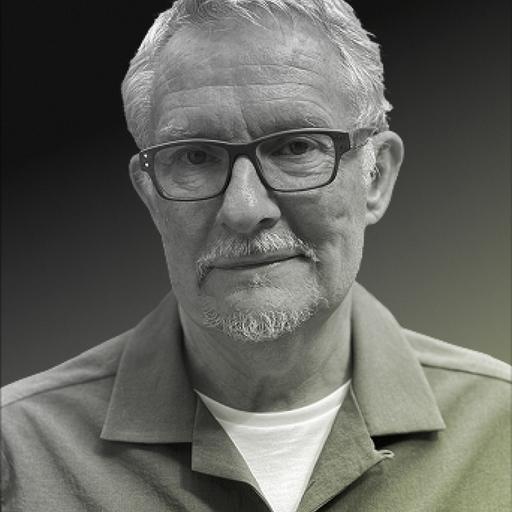
Ambition Strategist & Author
35+ years Building, growing and selling businesses4 global brands Advised Coca-Cola, Unilever, Nestlé and VirginPublished author Ambition: Redefining Success for a Restless AgeMagnetic North Coaching practice
Hugo Brooks is an Ambition Strategist, speaker and author who helps founders, business leaders and ambitious creatives rethink one of the most powerful forces shaping their lives: ambition.
After more than 35 years building, growing and selling brand, innovation and communications businesses, Hugo reached a turning point. Having advised global organisations including Coca-Cola, Unilever, Nestlé and Virgin while navigating the highs and lows of entrepreneurship himself, a single question from his wife changed everything: "Are you sure you want to do this again?" That moment led him to step off the entrepreneurial treadmill and dedicate his second career to helping others build success that is consciously chosen rather than unconsciously inherited.
Today, through coaching, speaking and his book, Ambition: Redefining Success for a Restless Age, Hugo challenges the conventional belief that ambition is simply about achieving bigger goals. Instead, he argues that ambition is a powerful human force that drives almost every decision we make -and that the real question is not how ambitious we are, but whether our ambition is taking us where we truly want to go. Drawing on evolutionary biology, neuroscience, social history and his own entrepreneurial journey, he helps leaders understand the hidden patterns that shape their choices and shows how to align ambition with the life they genuinely want to build.
More from Hugo Brooks
All episodes → Growth Hacking CultureYour Ambition Has No Stop Button. Now What? with Hugo BrooksNov 2026Play episode →
 TNM UnpluggedHow to Make Your Ambition Work for You with Hugo BrooksOct 2026Play episode →
 Mens AnonymousWhat Are You Trying to Prove? With Hugo BrooksOct 2026Play episode →
 Paper Napkin Wisdom · Leadership & Entrepreneurship Insights for Founders and ExecutivesHugo Brooks on Ambition Autopilot: Are You Driving Your Success or Is It Driving You?Oct 2026Play episode →
 The Business Growth Show with Athin CassiotisEP330 - Align Ambition with the Life you Want to Create with Hugo BrooksOct 2026Play episode →
 The ups and downs of a small business ownerThe Hidden Cost of Chasing Success Without Asking WhySep 2026Play episode →
 Invest in YouThe Real Definition of Ambition with Hugo BrooksAug 2026Play episode →
 Ask Faleskini - The Midlife Crisis Clarity CompassCan Rethinking Your Ambition Save You From a Midlife Crisis and Severe Burnout? Hugo BrooksAug 2026Play episode →