
September 15, 2026
Reignite Your Spark: Starting Your Next Chapter with Anne Paphitis
Listen
Sound bites
Take some time to assign value to yourself so that you make space in your day to take care of you because when you take care of you, you're able to do everything so much better.
In this episode
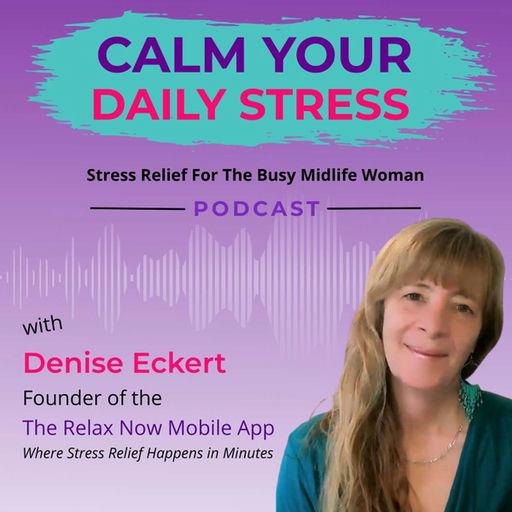
Anne Paphitis joins Denise Eckert to talk about reinvention, resilience, and practical ways women can move through major life transitions with more confidence and less stress.
- Rebuilding confidence after major life changes and starting over in midlife
- Lessons from helping students who struggled with anxiety, bullying, and not fitting into mainstream education
- Why patience, self kindness, and clear goals matter when reinventing your life
- Asking for support from other people, including groups and official channels, instead of trying to do everything alone
- Taking time to care for yourself so you can handle stress and support others better
Transcript
ShowHide
Automatic captions of the conversation. They can contain errors and do not name who is speaking.
Hi there, it's Denise Eckert, and I love coming on here and sharing different ideas and techniques to help you lower the stress in your life. And today, I'm honored to have Anne Paphitis. She is a resilient coach, speaker and personal reinvention expert who helps women navigate major life transitions, rebuild confidence and reconnect with purpose, drawing from both her coaching work and her own experiences of starting over. Anne brings a practical and compassionate approach to resilience, burnout and creating a meaningful next chapter.
Welcome, Anne. Thank you. Thank you so much for having me here and that great introduction. So Anne, what inspired you to do this type of work? So I had a lot of things I went through in my own life, which I didn't really think about how I was getting through that or what I was doing. I wanted to continue to enjoy my life in the best way that I could under the circumstances. Then later on, when I was still in South Africa, I had started a school for students who didn't fit into the mainstream, and I started working with students who were leaving school because they found they had social anxiety, exam anxiety.
There were issues where they just didn't fit into it. So I started to really work with a lot of young students, really building their confidence, and I found myself tapping into the skill set that I myself had used without knowing what I was doing over a long time. And I was so excited about this work, seeing the change I could make in young people's lives, that I started, I went away and I actually decided to pursue becoming a life coach. So I studied up a little bit about it, and I was quite amazed that a lot of the things I had been doing were actually really life coaching techniques that I'd been applying to myself.
So I just broadened my tool set, learned a little bit more about how to work with different people. And obviously within that framework, I was dealing with the kids, but I was also working with their parents and families, and obviously talking to people about my work. And I discovered that there's a lot of women, especially as we get older, who end up in a space in their lives where they weren't too dissimilar to the students I've worked with, in that they didn't really know where they were going, or how to deal with the things that were overwhelming them, or how to feel confident to try different things or expand their horizons.
Which was something that I had taken for granted. Everybody thought that way in the same way that I did, which was to be quite bold in trying different things and changing your life up, or implementing things to make your life better. So I discovered that I had these kinds of ways of doing things, that when I shared them with other people, it made a very big difference in their lives. So I found this work incredibly, it was very rewarding to see that you could share something with somebody, or show them a different way of thinking, or a different way of being, and it could make such a massive impact.
For me, one of the greatest gifts I've ever received is all the times I've had messages from students or people I've helped message me to thank me for helping them believe in themselves, or to chase their dreams, or to view life in a different way, and explore life from a different perspective. So that's what really drove me to do that, and various things that went on in my life over the years, I've had to restart and rebuild my life from really being on my knees and not really knowing where to turn or where my life was going to go.
The last time I did that was four years ago when I decided to really actually actively choose to completely reinvent my life, and I moved over to Ireland and learned a whole lot of new things there. Part of that decision to close the door on my previous chapter of my life with the wonderful work I'd been doing there, was really to, first of all, it was a personal decision. I came to Ireland and fell in love with it and decided to chase that dream. But it also opened the door for me to actively focus on primarily working with helping people to overcome the daily stress in their lives, the anxiety that holds them back from really living a fulfilled and rewarding life, and being able to look at the future in an optimistic way, as opposed to feeling as if you're stuck and there's nothing you can do to move forward and make your life better.
So that's what I've been pursuing and building that. So I've done various things in that field and getting out there and spreading the message about it is part of that journey. And I love what you've done. And I love what you've done with the children because what my goal in the future is to help young women with businesses, because of all the struggles I've been through with starting up a business and the financial struggle of keeping a business going to the point where it does become profitable. It is something that's a passion of mine.
So I just love that you've done that. And because it is more giving than it is taking. And here you are now, you're helping women, which is amazing. And we really do have a lot of different seasons and chapters in our lives. The kids go leave the home, and we don't have that caretaking role anymore. And our bodies start slowing down, our energy levels, we need to respect that of ourselves as well. And we all had COVID, and that really pivoted a lot of people as well. So someone that's listening to this right now, and they are contemplating a change in their lives, and they do feel a little overwhelmed, and they're basically scared and fear and all those things that come up.
What are some of the steps that they can do to start moving ahead? That's a really great question, because it really is about what's the first step. And I think for me, the most important step is to really give yourself a little bit of space to think about where you're at currently, to really do a bit of a stock take to assess what is outlived. It's what's past its expiry date within your life that you're hanging on to because you don't know what to fill that space with. So you have things that are part of who you are, what you do that no longer need to be there.
That I think is the first thing, because the temptation is to just add things into your life. And that's great, but like you say, as we get older, our capacity, our energy levels change. So all you're going to do is you're going to add things on top of what you're already managing. And then what happens is the new things that you brought into your life that you hoped would bring the positive benefits are likely to be the first things you drop when things become unmanageable, because it's much easier to slip back into doing the things you've been doing for 100 years.
So my advice to people is to take time to really sit with your life and think about what is no longer delivering the joy or the enrichment or even really is necessary in your life anymore, because before you start to add, so people rush out, they buy a journal or they join a yoga class or whatever. But the reality is, what are you replacing? What are you putting that in place of? Because if you're not taking something out, adding something on top can be too much. Unless you're fortunate enough to look at your life and go, I have all these hours where I'm doing nothing, then you can add things in.
But if your day is already full, you need to be realistic and say, what can I take, what don't I need to be doing anymore? What can I remove and replace with something that is going to benefit me in the long run more? And that is very hard, especially if you're used to being super efficient and on top of things and you've got people you're caring for. So this is not something I say likely because it's not really easy to put aside responsibilities and that sort of thing. But it can be the five minutes that you spend doing something that's not benefiting you or the 10 minutes of something and adding something into a space where you've got real capacity to do that.
So that would be the first thing I would say. Before you do anything else is really take stock of what can go. And then you can start to explore the ideas of what you can bring in to add benefits to you. I hope that answers the question. Yes, it does. And you know what? That's really important because you can't be adding things on top of it. And if something's important to you, you do need to make room unless you've got the space. When we have the space, that's a whole different story. Then we're looking for something extra.
But most of us don't. And a lot of us do hang on to things that are outdated, that aren't relevant anymore. And I know for myself, I have this one document that I share with people, and it's a stress and energy inventory. And one of the first things I do is, once people keep track of their inventory, go through it and see what you can delete. Correct. A hundred percent agree. So one of the things I was doing, I'm not sure if this is the right time to talk about it, but I took over a business last year that creates beautiful journals.
And the reason I loved the products that she'd created, but my first sort of endeavor within that space was to create a self-care journal. And I called this journal Steady My Ideas, to have a couple of journals that go together. And this is really encompasses the first step that we're speaking about now. And it's taking stock of the various aspects of what makes up you and your life. And it's also about, like you say, taking stock of those things, but also very mindfully observing what those things deliver to you. How do you feel in those particular, when you're engaging in those particular activities or things, how is that, how does your body respond?
How do you feel? Does this feel comfortable? If it's uncomfortable, why? What can you change about that to make it fit more suitably to you? Obviously, there's gonna be things that you hate doing. However, then you need to look at what's the long-term reward for that. So it might be something you hate doing, you know, paying bills. Nobody feels comfortable paying bills. However, knowing that you've got whatever, electricity, because you paid your electricity bill, that's a great outcome. So really thinking about all the different things in your life and also thinking about how they make you feel.
So it's part and parcel of the audit that you're speaking. So I fully agree. That's the number one thing is audit your life, see what's going on there. And then you can take the next step. And you've obviously transitioned into different things in your life. You were helping the children, becoming a coach, the journal business. Now, what are the top three tips that you can offer the audience today for someone that is reinventing themselves or transitioning themselves? I think it's the first thing I would say is to be patient with yourself because it's not a simple act at all.
If you're going to transition, there's no fairy godmother that waves the wand and suddenly, you're a new being or your life is new. It takes a lot of patience, it takes a lot of determination, and it requires a lot of being kind to yourself because there's going to be a lot of times where you're going to feel that you've made the wrong choices or that you've been insane to leave behind what was comfortable and familiar. It can feel scary. Really, to just be patient and kind would be the first thing I would say, to be very clear about where you're trying to go.
I say this with a caveat because you might imagine that you're getting off in one direction, but that might evolve. Being clear, but also taking time to constantly reassess and see if you have to adjust those sites a little bit because you might think that this is what you're aiming for, but as that starts to unroll, you might find that some of the things don't quite fit and you need to adapt to something else. And the other thing that I would say is, don't be scared to talk to somebody, whether it's to give you support, to encourage you to hold your hand while you cry because that can be a thing, and to also lean on other people for wisdom.
When you step into reinvention, you're really becoming a newborn and you don't really know anything about this new existence that you're choosing to create. If you did, it would already be your existence. So it's okay to admit that you don't know how to do things, that there might be things you need to get somebody else to do or help you with or to show you how to do because you might not know how to do certain things. Simple things, even when I did something as simple as living in another country, it was far from simple.
They were very basic things that were very vastly different to what me, a woman in my 50s had already understood about life and the practicalities thereof. Suddenly, I came to a country where things were done quite differently, and you fumble around, but then it actually makes sense to just say to somebody, hey, I don't know how to do this. Where do I go for that? What does this mean? This letter I've received, I don't understand what it's asking me to do, so it's okay to ask for help. And it could even be official channels.
I found that we sometimes have a fear of approaching authority because I suppose school, you don't want to ask the teacher a question. But actually going to, I don't know, the licensing department and saying to somebody, I'm sorry, I don't understand what's expected of me here. And then getting the information you need to do things properly instead of just feeling overwhelmed is just a much better plan. So it's about, and again, that comes back to being kind to yourself. Don't be hard on yourself expecting. It is hard, especially I think when we're older, because we've reached a stage where we know a lot of things.
So it's quite difficult to step into a space where you know nothing, where you're a freshman, a newbie in the space. So being kind and acknowledging that you can't know everything is really important. I would say those are the top three things, let's say. And I'm so glad that you mentioned support because that is one of the top things. Even if you join a women's group or a business group, you have that support and that is so important. And I think it was Mel Robbins said on one of her podcasts that you're new. You're not going to know everything.
Like as you said, if you knew exactly what you were doing, that's exactly what you'd be doing, but you're new. And there's nothing wrong with asking for support. And I find sometimes, I think since COVID for myself, a lot of the groups didn't bounce back. There's a lot of the women's groups around here. They didn't bounce back into a physical location or a dinner like we used to do. But I have found a lot of places where I can receive support online. And I just find it really important that we do that. And number one, not be afraid to do it.
And don't feel embarrassed that we need help. Correct. And you're 100% right. COVID did shut down a lot of the personal, in-person groups that we used to have, whether they were in formal or formal kinds of groups. But it did make us a little more comfortable with being in this kind of online space. So like you say, it does. And it does open up a world where you can find a very niche group of people or somebody to support you, coach you through something, help you to work your way through things. I myself have leaned into that as well, because coming to a different country, I'd lost my local friend group.
Obviously I would talk to them on calls or whatever, but it wasn't exactly the same. And they didn't really necessarily have the expertise because they were still in the place where I had been. So they couldn't really support me here. And trying to find local people, that's a time consuming business. So it was helpful to have people who could step into those spaces in different areas, starting a business in a completely different area, leaning into people who've been through that experience. So I can't recommend it enough having somebody as a cheerleader or a wing woman or a cheerleading squad behind you to give you that support, because it really is important.
And getting past the idea that I think we all know social media creates this fake impression that everybody's got everything organized and they know what they're doing. So it's nice to be in groups with people who are going, I tried to do this and it didn't work, or I'm really struggling with this. And other people are saying, yes, I really struggle with that and I did this or I did that. Or let's put our brains together and let's suggest ideas. It's really helpful for people in whatever sphere that they're trying to forge new pathways.
Yeah. Now I need to ask, what country did you come from to go to move to Ireland? Because I was going to ask you at the beginning and I'm sure the listeners are going, where did she come from? Yes, I came from South Africa. It's been a country in the news a lot lately, I know. So I was born in South Africa, grew up there. My youngest, my eldest daughter had moved to England in 2019. And then in 2021, my youngest daughter who works with horses looked, she was looking for an opportunities to work with horses. She was just turning 18.
And she landed a job in Ireland, which we had never been to. We traveled elsewhere in the world, but I'd never been to Ireland. Always thought it looked really beautiful in movies, but didn't imagine it could really look like that in real life. So we came over here. When she came to take up this job, I was like, you're 18, there's no ways I'm letting you go on your own. I need to come and make sure it's all above board. Are these people legit or is this a scam of some sort or something dodgy? I didn't know. You can send your 18-year-old over.
So and it was actually at the time of the second COVID lockdown in December of 2021 that she came. As a result, our travel plans got changed because some of the flights got canceled. What happened is I was supposed to spend one week in Ireland and I ended up spending over three weeks here. My daughter started working in the job straight away. It was great. She's still there. I just went, okay, I'm not going to work on the farm. That's not my thing. It's very nice to look at, but not what I want to be. I didn't want to be out there shoveling.
I decided to just drive around and explore and have a look at Ireland. And it was the strangest experience because I just felt this incredible connection to the land, this pull, and I just couldn't get it out of my mind. And when I left and I went back and I came for a visit in the June, you know, you get back and you're carrying on with your life and you think, yeah, it's very nice. Maybe one day I'll go there. In the June, I came for a visit and that was the end for me because when I saw it in summertime, I was just so enamored.
I went back and I made the decision to pack up and come. So I did that and it was difficult. I left family members behind, my dad, my son is still in South Africa. So it has been challenging, got lots of family there. But again, it was one of those things that I just had to really think long and hard about the pros and cons of the decision I was making. So that's what happened. I left South Africa behind, which I still love and think is a wonderful place. And I had a wonderful life living there. But I always believe in looking forward, because the past is the past and you can't relive the past for me.
So I look back on my life with fond memories, some difficult memories, but lots of very happy, beautiful memories. The way you look back on a child that has grown up, you can look back with fondness, but you can't really wish your adult child to be a baby again. So that's how I feel about where I left. I look forward at the new life that I have with great joy and excitement every day. And you seem so happy. So that's so nice to hear and that's so encouraging for others as well. Because sometimes, yeah, you need to listen to your heart.
So Anne, what are some of your best self-care practices that you recommend to women? So I would say my number one self-care practice is, I used to be really bad at this, is that I used to just believe in pushing through when I was juggling way too much. And it doesn't have to be anything big or exotic. It can really be just going, hang on a second, I need to get my stress level down to a space where I can think and hear myself clearly. And that can be just going for a stroll around the garden for half an hour, getting in your car and taking a drive to look at something scenery.
Not something productive. So not going to the store to shop. Something like gardening, that could be okay. So if you go outside and pull some weeds, that's okay because that doesn't require that kind of cognitive decision making that you're necessarily doing in your everyday life. But I never really used to think that was necessary. I thought something like watching TV or meeting a friend for coffee was relaxation. But it's not really that. It's got to be something where you're able to disengage your mind. So I find things like going for an actual walk in nature, or working in my garden, or just sitting and looking out at the view without doing anything active.
So even like I'm a big reader and I love listening to music and audiobooks and even those things are not necessarily the best. You can do those things additionally, but when you're at that breaking point, acknowledging the fact that, hang on a second, I'm actually losing my mind a little bit here. I don't even know which is the next thing to do. And I find just taking, it can be as little as 10 minutes to just regroup. You come back and you feel so much more in control. Everything kind of settles down and becomes clear.
It's like, in my mind, I always picture it like a pond where all the silt at the bottom has gotten muddied up. And if you just stay still, let your mind be still for a short while, the silt settles down and things become clear. So that has been my number one self-care tool. I think that we add things into our lives because we think we're giving ourselves self-care, but actually what you're doing is you're just stretching yourself more. So you might need to do that kind of reset multiple times a day in the beginning.
But after a while, it will start to become quicker and easier to get into that reset. So for me, that's a really important factor that I've added in latter years and realized how it makes me actually much more productive than just pushing through when I'm at breaking point. And I agree totally with you. And since I've been doing it as well, it's amazing. Because even when you have a problem and you step back, the amount of solutions you come up with, and it wasn't even really that big of a problem, but it's your mindset at that point when you are at that breaking point and you have one more decision to make or one more problem to solve, it really doesn't have to be a problem.
You just need to give yourself a break. Just switch off for a second. It's just about, it's like blinking and refocusing because it really can become where your vision is just so impaired in terms of seeing things the way they should be. And it's normal. We're just human. We operate in parameters that we're not really designed for, I don't think. And as we get older, it does get harder because I think the demands on us in so many ways is just, it's exponential as we get older. There's just always things that are added, even if some of the responsibilities drop away, it's just our capacity is different and the weight we carry in our minds about our lives is different as well.
We need to give ourselves time to just breathe sometimes, for sure. Unplugged. So I understand you have something for the audience today. Yes. So I will share with you a link to put in your show notes or in the bio where they can click and go to my site where they'll be able to download something special. The details will all be there for them. So I'd love to give something to your listeners. And if something I've said interests them, for them to pop along, have a look at what I do and what we have, and pick up a little something special for themselves.
That's so nice. That's what I'd love to do. Thank you, Anne. And wherever you're watching or listening to this, I will be putting Anne's information. So if you have any questions or any feedback, please reach out and ask Anne. So Anne, what is your final words of wisdom to the audience today? Final words of wisdom I would say is, don't consider yourself as being at the bottom of the list of priorities. Take some time to assign value to yourself so that you make space in your day to take care of you because when you take care of you, you're able to do everything so much better, including taking care of everyone else.
That would be my words of wisdom. Wonderful. I always have this thing where if we're happy, our friends are happier, our partners are happier, everybody around us is happier, but when we're miserable, everybody pays. But it's true. It's absolutely true. The thing is, I think it's become quite, it's something people spread around, take care of yourself. But it needs to be real. It can't be performative. It can't be pretending you're taking care of yourself when you're not really. So it's not about doing the decorative ways of taking care of yourself.
It's really taking care of yourself and seeing what it is that really is going to be building your resilience in the long run. Yeah. Thank you so much Anne for your time today. And now I'm leaving you a gentle reminder to slow down and enjoy life and I'll see you in the next episode.
About Anne Paphitis
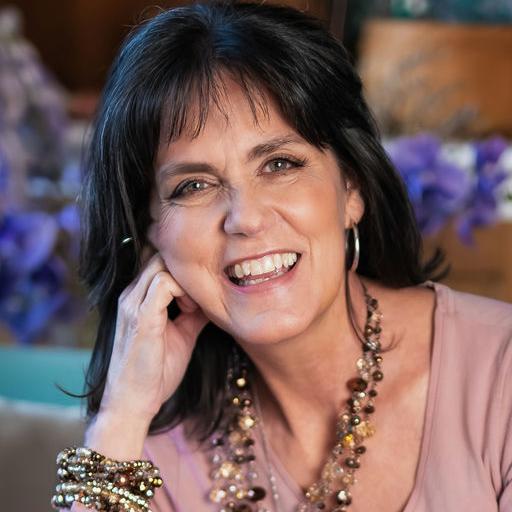
Resilience Coach, Speaker & Personal Reinvention Expert
2019 Began formal coaching trainingFounder Cambridge school for students outside mainstream educationAcquired business Rebuilding a new company
Anne Paphitis builds work from the conviction that life can be rebuilt, even after everything familiar has been stripped away. Born and raised in South Africa, she spent years running a Cambridge school she founded for young people who did not fit into mainstream education - students wrestling with anxiety, bullying, depression or simply falling through the cracks. Watching teenagers who once doubted themselves sit exams, head to university and later return with messages of thanks shaped her belief that change often starts the moment someone finally believes they can do more. A formal coaching course in 2019 gave Anne new tools to work with that same dynamic in adults.
She has reinvented her own life several times: falling unexpectedly in love with Ireland, emigrating, and more recently selling her school and buying another business she is rebuilding. Those lived pivots - the uncertainties, the practical choices and the tiny steps that rekindled hope - are the material of her work.
She is drawn to conversations that lift people out of survival mode and help them reconnect with purpose, confidence and simple joy. Anne prefers dialog and human connection to one-way advice. She loves being onstage or in conversation because she feeds off other people’s energy and watches them leave with a small but real shift.
More from Anne Paphitis
All episodes → These Lads Are MentalRebuilding Your Life After a Toxic Relationship | Anne Paphitis | TLAMNov 2026Play episode →
 She Talks Confidence PodcastFinding the Courage to Begin AgainNov 2026Play episode →
 Last First Date RadioEP 735: Anne Paphitis - Regaining Confidence After a Toxic Relationship or DivorceOct 2026Play episode →
 The Rising Beyond PodcastEp 225: You Are More Than What Happened to You with Anne PaphitisOct 2026Play episode →
 Where Parents Talk: Evidence-based Expert Advice on Raising Kids TodayWe Don't Have to Fix Everything: How I Teach Teens Resilience Without Becoming a Helicopter ParentOct 2026Play episode →
 Ask Faleskini - The Midlife Crisis Clarity CompassHow to reignite your spark during midlife? Interview Anne PaphitisSep 2026Play episode →