Why Good Leadership Can Go Bad
Amar Dhall · September 24, 2026
Interview with Amar Dhall

Podcast: The Sticky From The Inside Podcast
September 24, 2026 · 48 min
Why can good leadership go bad when we already know so much about what works? In this episode, Andy Goram is joined by psychotherapist and leadership researcher Dr Amar Dhall to explore what happens when leadership, power, pressure and human psychology collide. Amar introduces…
Listen
About Amar Dhall
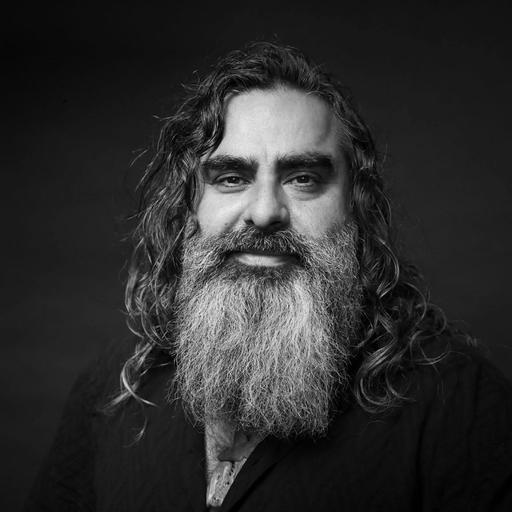
Psychotherapist and Leadership Researcher Focused on Nervous System Regulation Under Pressure
23 Senior leaders interviewed for leadership research5 Industries represented in leadership researchPhD Doctorate in law, University of CanberraFounder Neuro-Somatic Leadership
Amar Dhall works at the intersection of leadership, psychology, and what actually happens inside people when pressure is on. His work focuses on why capable, well-intentioned leaders often lose clarity, judgment, and relational capacity in high-stakes moments — and what helps them stay coherent instead.
Drawing on trauma-informed practice, nervous system science, and real-world organisational work, Amar approaches leadership as a physiological and relational process, not just a cognitive one. He is the founder of Neuro-Somatic Leadership, a framework that treats leadership development as training state under load, rather than adding more concepts to already stretched nervous systems.
Amar works with executives, founders, and leadership teams who are competent on paper but carrying disproportionate responsibility in practice. His work addresses patterns such as over-functioning leaders, fire-fighting cultures that sacrifice the important on the altar of the critical, and the quiet erosion of truth-telling that occurs when stress concentrates responsibility in a few individuals rather than becoming shared capacity. His approach is pragmatic rather than performative, grounded in real organisational constraints rather than ideals of constant openness or emotional intensity.
About this episode
Why can good leadership go bad when we already know so much about what works?
In this episode, Andy Goram is joined by psychotherapist and leadership researcher DrAmar Dhallto explore what happens when leadership, power, pressure and human psychology collide.
Amar introduces a powerful distinction between capability, what a leader is able to do, and capacity, their ability to access those capabilities when it really matters. From there, Andy and Amar explore why behaviours that once made us successful can become overplayed, why leaders can become increasingly certain under stress, and how genuine care can tip into the Superhero or Rescuer role.
They also discuss the hidden effects of power, why technical expertise doesn't automatically translate into relational leadership, and Amar's memorable proposition that leadership is like dancing: you can know everything about the steps and still struggle on the dance floor.
The conversation finishes with practical reflections on curiosity, self-awareness and the possibility that the next stage of your leadership might require less effort rather than more.
Key Takeaways
Good leadership can fail when capacity drops. Knowing how to coach, delegate or create safety is not the same as being able to access those behaviours when pressure is high.
Your strengths can become liabilities through overuse. Responsibility can become over-carrying, confidence can harden into certainty, and helping can become Rescuing.
Power changes the room, even when your intentions are good. Leaders need to recognise that challenge feels different when one person holds more authority, status and consequence than the other.
The next step may require less, not more. More effort, more control and more knowledge are not always the answer; reflection, curiosity and the ability to let go can be part of mature leadership.
Key Moments
The key moments in this episode are:
01:11 – Why Do We Still See So Much S****y Leadership?
04:53 – Capability vs Capacity: Knowing Isn't the Same as Accessing
06:23 – When Responsibility Becomes Over-Responsibility
08:31 – How Our Strengths Can Turn Into Their Opposites
11:57 – Why Stress Can Make Certainty Feel So Convincing
13:34 – What Does Power Actually Do to Us?
18:46 – When Accumulating More Becomes the Leadership Trap
21:13 – When Leaders Learn to Use Pressure as Fuel
27:02 – The Superhero Reflex: When Helping Becomes Rescuing
31:55 – Leadership Is Like Dancing: Why Knowledge Isn't Enough
36:44 – Power, Challenge and the Illusion of an Open Culture
40:39 – From Knowing Better to Doing Better: Curiosity, Reflection and Sticky Notes
Join The Conversation
Find Andy Goram on LinkedIn here
Listen to the Podcast on YouTube here
Follow the Podcast on Instagram here
Follow the Podcast on Twitter here
Follow the Podcast on Facebook here
Check out the Bizjuicer website here
Get a free consultation with Andy here
Check out the Bizjuicer blog here
Download the podcast here
Useful Links
Follow Amar Dhall on LinkedIn here
Find Amar's website here
Follow Amar on Facebook here
Follow Amar on Instagram here
Take Amar's Pressure Assessment here
Full Episode Transcript
Get the full transcript of the episode here
Guest: Amar Dhall
More from Amar Dhall
All episodes → workshops work PodcastTaking Responsibility with Amar Dhall on Leadership, Safety & Embodied Intelligence (Episode 34)Sep 2026Play episode →
 The Personal Success Podcast with Ryan WattsLeaders: Your Nervous System Teaches the Room || Amar DahllJun 2026Play episode →
 Sustainable Success ShowWhen Pressure Rises, Coherence is Leadership | Dr. Amar Dhall | Christopher Salem | Sustainable Success Show EP18May 2026Play episode →
 The Rethink Leadership PodcastS11E16: Leading Under Pressure: How the Best Leaders Navigate Pressure for Themselves and Show Up for OthersApr 2026Play episode →
 Unstress with Dr Ron EhrlichLeading Under Pressure: How to Master Stress & Thrive in Leadership with Dr Amar DhallMar 2026Play episode →
 CEO on the GoLeading Under Pressure - Breaking the Hidden Patterns That Hold You Back with Dr. Amar DhallFeb 2026Play episode →
Book Amar Dhall for your show
7+ podcast & stage appearances. Remote or in studio, broadcast-grade audio.