
January 15, 2026
The “Unretirement” Movement

Listen
Sound bites
You do not have all the time in the world. Do it now, because in doing what you wanted to do your bucket list, you may find a new tribe of people that you want to work with.
In this episode
George Jerjian talks with Boomers Today about why retirement can feel empty and how to build a purposeful next chapter instead.
- Longevity is changing retirement because many people may live twenty five years after leaving work.
- A job ending can bring depression after the initial honeymoon period of golf, sailing, or other pastimes.
- Waiting for permission to begin again leaves boomers stuck instead of creating a new chapter.
- A meaningful next stage means doing work you love, not just filling time until the end.
- Bucket list goals can reveal new people, new skills, and a better direction for the future.
Transcript
ShowHide
Automatic captions of the conversation. They can contain errors and do not name who is speaking.
Speaker 1: You're listening to Boomers Today with your host Frank Sampson. Well, Speaker 1: welcome to Boomers Today. I'm your host, Frank Samson. Of course, Speaker 1: each week we. Speaker 2: Bring you on forward in a very useful information I'm Speaker 2: issues facing baby boomers, their parents and other loved ones. Speaker 2: And as I do each and every show, I thank Speaker 2: all of you, and I thank all of you because Speaker 2: so many of you are sharing our podcasts individual shows Speaker 2: with friends and family.
Many of you listening on Apple Podcasts, Spotify, iHeartRadio, Audible, Speaker 2: We're pretty much on them all. Or you could just Speaker 2: ask Alex or Siri and I actually went on to Speaker 2: chat GPT and they even know chat Gbatinos about us Speaker 2: as well, so where you could go right to our Speaker 2: web site at boomerstdayradio dot com. But I do know Speaker 2: why so many of you are our listeners are growing Speaker 2: and you're sharing information with family and friends. Is because Speaker 2: we have the best guests.
We really do, very knowledgeable. Speaker 2: I'm not going to disappoint you. Today we have with Speaker 2: us George Georgian, who's a mindset mentor, author and speaker Speaker 2: who semi retired after be given six months to live Speaker 2: by his oncologists. Thankfully the diagnosis was wrong, and as Speaker 2: soon as he could, he unretired and set to work Speaker 2: helping his tribe of many baby boomers do the same. Speaker 2: And an Emmy Award winning producer, a distinguished toastmaster, and Speaker 2: author of twelve books, which we'll learn more about.
George's Speaker 2: most recent work, Spirit of Gratitude, Dared to Discover Your Purpose, Speaker 2: and Odyssey of an Elder form a trilogy focused on Speaker 2: creating a new beginning after retirement. George, it's such a Speaker 2: pleasure to have you on our show today. Really appreciate it. Speaker 3: Delighted to be on your show, Frank. Speaker 2: Yeah, So, you know you've gone through quite a bit. Speaker 2: We had an opportunity to chat a little bit before Speaker 2: the before we started here, and you've been through quite Speaker 2: a bit with both your parents as I have as well.
Speaker 2: And you know, I guess maybe share with us just Speaker 2: some of what you've learned. Unfortunately, I think you lost Speaker 2: your mom just recently, so share with us just kind Speaker 2: of what you've learned during that unfortunate experience or experience. Speaker 4: Sure, well, I lost I mean my father died in Speaker 4: two thousand and three, and he had Alzheim's for ten Speaker 4: years before passing away, and it was It was really Speaker 4: hard because he was a high achiever, larger than life character, Speaker 4: and seeing a man slowly breakdown is really hard, especially Speaker 4: when that person's your father.
And I just have one Speaker 4: anecdote that I'd like to share is that there was Speaker 4: one time we had a family party and lots of Speaker 4: people around, many of whom my father knew, and they Speaker 4: knew him. But when you have Alzheimer's, people slowly switch Speaker 4: off from you, yes, because there's no conversation. Now, I Speaker 4: don't blame people for doing that, but my father was Speaker 4: recognizing what was happening. And one day we were both Speaker 4: at the table where the food was laid, and I Speaker 4: was filling my plate with food, and he turned around Speaker 4: and whispered in my ear, am I a ghost?
Speaker 3: That killed me? Am I a ghost? And now, if Speaker 3: that was. Speaker 4: Any other old person, it wouldn't have touched me anywhere Speaker 4: nearly as deeply. But because this is one's father, you Speaker 4: suddenly feel the pain of being a ghost. And you Speaker 4: also recognize that the other family members are not bad people, Speaker 4: but they just everybody's got their own issues and they Speaker 4: don't want to be talking to somebody who's not going Speaker 4: to be continuing a conversation.
In any event, he passed away. Speaker 4: But I studied him first thing in the morning, for example, Speaker 4: because he'd had a full night's sleep. He was alert, Speaker 4: he was aware of what was going on. By eleven o'clock, Speaker 4: the windows starts to shut, and so it's very challenging. Speaker 4: And then with my mother, who nursed him through those Speaker 4: ten years, she ultimately succumbs to dementia in a slow Speaker 4: paced way. But again there was I watched her. I Speaker 4: obviously it helped around.
But one thing I noticed is Speaker 4: when I'd played gin rummy with her, for example, or backgammon. Speaker 4: She used to be really sharp, but as dementia started Speaker 4: robbing her of her faculties and memory, we'd played gin Speaker 4: rummy and she'd lose, and she'd throw the cards all Speaker 4: over the kitchen floor. She was reverting back to her Speaker 4: childhood persona and character. And it was beautiful to watch Speaker 4: that in some ways as much as it was painful. Speaker 3: And then she. Speaker 4: Here's an interesting anecdote before I say the next bit.
Speaker 4: She fell and broke her hip about thirty months ago. Speaker 4: In hospital for four weeks, she read all my books, Speaker 4: particularly the personal one Spirit of Gratitude, which was my Speaker 4: own personal journey, twelve stories. Speaker 1: And. Speaker 4: She would read them every afternoon for an hour. My Speaker 4: favorite book, my favorite book. Right in hospital, the care Speaker 4: is said to me, watch what she's doing. And she Speaker 4: had my book open on the right side of her bed. Speaker 4: She her eyes and head were looking to the left, Speaker 4: and she was reciting my book with that looking at Speaker 4: the book she had on the screen of her mind, Speaker 4: my page with her eyes closed, she was reading it.
Speaker 4: She had created a new memory. Whereas dementia had stolen Speaker 4: all her memories, she was now living on my memories. Speaker 2: That's fantastic. Speaker 3: So that's what I. Speaker 4: Found out about dementia is that it doesn't stop you Speaker 4: from creating new memories if you have the will to Speaker 4: do it. And one final thing, dementia can take everything away, Speaker 4: it cannot take away love received or given. I'll give Speaker 4: you an example. One day I go to my mother Speaker 4: and I go, Mum, can I give you a hug?
Speaker 4: And she goes, yes, she nods. I go, I put Speaker 4: my hands behind her back, I lift her up to Speaker 4: give her a hug, and she plants kisses all over Speaker 4: my face. Speaker 2: Mm hmm, it's beautiful. Yeah. Speaker 4: She passed away on January the fourth this year. So yeah, Speaker 4: it's uh, we still haven't had a funeral yet, so Speaker 4: it's a it's quite a raw. Speaker 2: Yeah, I'm so sorry. I'm so sorry to hear that. Speaker 2: So sorry I had to go through that. But I'm Speaker 2: sure there's a lot of great, wonderful memories you have.
Speaker 3: Absolutely, thank you all good. Speaker 2: So you know we're going to talk about which you know, Speaker 2: i'd be curious about your mom and dad also, you know, Speaker 2: did they retire at an earlier age or did they Speaker 2: were they working? I'm curious. Speaker 3: Interesting. Speaker 4: My father was working, uh until he could no longer work. Yeah, Speaker 4: he became ill, and that he was in his seventies already, Speaker 4: and actually, if he didn't fall ill, he would not Speaker 4: have retired.
Speaker 3: So that's the first thing. Speaker 4: The second thing is is that the forced retirement he Speaker 4: was completely unprepared for. His business was his life. He Speaker 4: loved his business, and so he had no other hobbies Speaker 4: or no other interests that he had developed. So he Speaker 4: was he was constrained by that, and everything was a Speaker 4: huge mountain. Because when you come if you're a high Speaker 4: achiever and you come from a position where you love Speaker 4: what to do, a lot of stuff out there doesn't Speaker 4: mean an awful lot for you, doesn't inspire you, doesn't Speaker 4: challenge you.
And so in a sense, his identity was, Speaker 4: if you like, lost, because he could no longer be Speaker 4: who he was and he had no new identity to assume. Speaker 4: And this is what I've found the challenge in retirees. Speaker 4: It's about who you were goes away. It's a role Speaker 4: you are, not who you are in terms of your work. Speaker 4: If the work goes, part of who you are disappears, Speaker 4: and there's nobody out there who teaches us. How do Speaker 4: you find a new identity? How do you find a Speaker 4: new purpose in life?
And I think identity and purpose Speaker 4: go hand in hand, and we have to work at Speaker 4: finding what it is that makes us jump out of Speaker 4: bed in the morning. Speaker 3: Yeah. Speaker 2: So you know, from what you've seen with high achievers Speaker 2: who've retired, is there a particular identity they lose? First? Speaker 4: Well, okay, let me take let me give you an example. Uh, doctors. Speaker 4: I think doctors have the worst possible time when it Speaker 4: comes to the retirement because the position in society that Speaker 4: they have, without exaggerating, they're kind of demigods.
They're up Speaker 4: there and they have this power over life and death, Speaker 4: or so it seems to the patient, and the doctor Speaker 4: obviously recognizes and receives that. So when you've been doing Speaker 4: that kind of work all your life, what other work Speaker 4: can give you that kind of thrill or that kind Speaker 4: of sense of fulfillment? Pretty hard, And it's the same Speaker 4: I think with with people in the sea level CEOs, Speaker 4: you know, the leaders in companies and businesses and any Speaker 4: other institution.
Leadership can be very challenging because there's power Speaker 4: involved in your identity, right, and you're not so much Speaker 4: losing identity, you're also losing a lot of power. So Speaker 4: now you have a double whammy, and that's what makes Speaker 4: it challenging. Speaker 2: So you know, what should people what should families look Speaker 2: for in that first twelve to twenty four months if Speaker 2: someone does retire, especially high achievers, what should they look Speaker 2: for in that period of time So there's not that Speaker 2: psychological shock or whatever.
I mean, any suggestions there. Speaker 4: Sure, What I recommend to people is that to prepare Speaker 4: for retirement, you've got to do about a year or Speaker 4: two before because there is a process, it's a right Speaker 4: of passage. Effectively, this is not a linear destination. So Speaker 4: the first thing is, of course it's preparation of what Speaker 4: you're up against. Your identity will be compromised. That's going Speaker 4: to have emotional and psychological repercussions. That's going to impact Speaker 4: your relationships at home.
And you've got to be prepared that. Speaker 4: You cannot now just lounge around in the home thinking Speaker 4: you're being helpful. This is for the males right. That Speaker 4: is not going to happen. You know your partner's position Speaker 4: cannot be threatened because you're now home twenty four to seven. Speaker 4: The first thing I suggest to people is that to Speaker 4: take a gap year. By taking a gap year, you Speaker 4: don't have to do what I did. You don't have Speaker 4: to go around the. Speaker 3: World that was my dream.
Speaker 4: Everybody has their own particular desire to do something that they've. Speaker 3: Not yet done. Speaker 4: Start becoming aware that you need to explore that. It Speaker 4: could mean traveling a little bit. You may have a Speaker 4: bucket list. Don't wait till you're on your deathbed to Speaker 4: do your bucket list. Speaker 3: Do it now. Speaker 4: You do not have all the time in the world. Speaker 4: Do it now, because in doing what you wanted to Speaker 4: do your bucket list, you may find a new tribe Speaker 4: of people that you want to work with.
You may Speaker 4: find that your skill sets are not complete. You may Speaker 4: have to learn something new to add to that skill Speaker 4: set up to upgrade yourself. Speaker 3: It's almost like a software. Speaker 4: Update if you like, right, but you've got to do Speaker 4: something you love to do. If you don't, you're back Speaker 4: to square one again. It won't be long. So you've Speaker 4: got to find out what you love to do, and Speaker 4: what you love to do is not what your friends Speaker 4: think you should be doing.
Speaker 2: So I'm curious, why do you think things have changed Speaker 2: today that it was. I mean, it used to be Speaker 2: a time that we talked about it beforehand. Somebody turned Speaker 2: sixty five, they get the gold watch, they have a party, Speaker 2: and they've gone, you know, put up the gone fishing Speaker 2: sign or whatever. But things have changed. Why do you Speaker 2: think that things have changed in our society than it Speaker 2: was some years back. Speaker 4: I think there's a lot of reasons, but the ones Speaker 4: that come straight to mind are longevity, long life that Speaker 4: I think has broken a lot of the equation of retirement.
Speaker 4: Primarily long life is wonderful, but who's paying for it? Speaker 4: So you know, you have to earn your way through Speaker 4: this time that you have, and the vast majority of us, Speaker 4: of course, the paradox is that anyone of us can Speaker 4: die before the evening's out, But the vast majority of Speaker 4: us are likely to live another twenty five years after retirement. Speaker 4: And if you've got twenty five years, I'd say ninety Speaker 4: eight percent of the population will outlive their savings, because Speaker 4: there's no way you'd have enough savings to cover you Speaker 4: for the next twenty five years without working.
And I Speaker 4: don't mean just finding a job to pass the time. Speaker 4: I'm talking about being genuinely in love with what you Speaker 4: do so your life is fulfilled, not that you're filling time. Speaker 4: Big difference, and that has a big difference on your. Speaker 3: The quality of your life. You know, it's not about. Speaker 4: Good eating, good nutritious food and doing exercises. That's a Speaker 4: very basic level. There's the emotional and psychological that also Speaker 4: have to be satiated. Then you have a full, rich life.
Speaker 4: But to answer your question, longevity is the primary driving Speaker 4: force for the change. With longevity is the compulsion that Speaker 4: people who are retiring have to create a new beginning Speaker 4: because they've got another twenty twenty five years to go. Speaker 4: The mindset that we have cannot service for the next Speaker 4: twenty five years. We need to change the mindset that Speaker 4: we have and that's the biggest challenge. Speaker 2: Yeah, so I I read an interesting some statistics, but Speaker 2: you know, you don't know what to believe, so maybe Speaker 2: you could confirm it or I don't have the exact statistics, Speaker 2: but with something crazy like the percentage wise, one of Speaker 2: the highest rates age growth rates at companies are people Speaker 2: that are much older, and in other words, they're they're Speaker 2: staying longer at companies, which makes make sense.
But so Speaker 2: number one, I like to just confirm is that truly happening? Speaker 2: And the second part of the question is do you Speaker 2: know our companies trying to prepare people better for retirement? Speaker 2: Are they are they providing support to help them with Speaker 2: life after after they do retire? Speaker 3: Two big questions that I would say. Speaker 4: Twenty eight to thirty three percent is the number given Speaker 4: for Europe and the US where retirees are going to Speaker 4: be that percentage of the population almost one third, and Speaker 4: yet companies are still selling products and services to young people, Speaker 4: completely ignoring this market segment.
So they're ignoring the consumers Speaker 4: in this market segment, and they're ignoring their employees who Speaker 4: are in that age group who could be servicing those people. Speaker 4: So in a sense they're looking for money in the Speaker 4: wrong place. And the reason is it's a mindset issue, Speaker 4: the corporate mindset. It turning the titanic of a corporation Speaker 4: is very difficult. The messages only, the messages that go Speaker 4: up are the messages that the people at the top Speaker 4: want to hear, not the ones that they should be Speaker 4: listening to.
Speaker 2: Right right, Yeah, makes sense. So George, we're going to Speaker 2: take a real quick break, I promise, just to recognize Speaker 2: our sponsor. We come back, give you the opportunity to Speaker 2: share with our listeners all the wonderful things you're doing Speaker 2: and maybe come up with some solutions to some of Speaker 2: the challenges we've been talking about. So my question to Speaker 2: all of you, are you looking for a program at Speaker 2: your company to assist employees with eldercare needs for their Speaker 2: loved ones.
Well ease is the employee assistant solutions for Speaker 2: eldercare offered by senior care authority. In today's multi generational workforce, Speaker 2: the need for a comprehensive package of senior related services Speaker 2: is greater than ever. With these types of services, you Speaker 2: bring an important opportunity to recruit and retain talent and Speaker 2: provide the support for your employees and families' needs. With EASE, Speaker 2: you'll have a dedicated a team of eldercare consultants nationwide Speaker 2: to support your employees, which will help you tackle the Speaker 2: growing need for eldercare services.
So to learn more, you Speaker 2: can go to www dot Senior Care Authority dot com, Speaker 2: slash ease e A s E, or you can call Speaker 2: eight eight eight eight zero nine one two three one Speaker 2: and just press extension one. Okay, we are back with Speaker 2: George Georgian, who is an author, speaker and uh just Speaker 2: knows quite a bit about uh what he's termed on retirement. Speaker 2: So George, tell us a little bit more about the Speaker 2: wonderful things you're doing and how people can learn more, Speaker 2: and let's talk about some solutions to help people who Speaker 2: are approaching retirement age or retirement maybe not retirement aid.
Speaker 4: Right, Well, I have if mine is not just having Speaker 4: done a study of over over twenty one thousand retirees Speaker 4: aged between fifty five and seventy five in the Anglo sphere, Speaker 4: but also my own journey through semi retirement and realizing Speaker 4: the emotional and psychological challenges that I've faced and not Speaker 4: trying to cover up for them. But facing them. And Speaker 4: so my first book was Spirit of Gratitude, which was Speaker 4: put together when I went on a thirty day silent Speaker 4: retreat because I wanted to cut myself off from all media, Speaker 4: all the white noise.
Wanted to go on an in Speaker 4: venture to learn about myself. What is it I want Speaker 4: to do? I wanted to ask the questions and get Speaker 4: the answers to things that I might have asked on Speaker 4: my deathbed. Having had a rendezvous with death, suddenly realized, Speaker 4: actually death is a friend of ours because death wakes Speaker 4: you up to realize you should be living a rich Speaker 4: life that you are. What's the word I'm looking for. Speaker 4: You deserve to have a rich life. This isn't something Speaker 4: that you have to earn.
You deserve it, and therefore Speaker 4: you've got. Speaker 3: To think that way. And that's not the way we've Speaker 3: been brought up. Speaker 4: So Spirit of Gratitude was twelve stories about events in Speaker 4: my life that were challengers and recognizing that actually the Speaker 4: good things that happen in my life only came about Speaker 4: because of challenges that came before it. That's why it's Speaker 4: called Spirits of Gratitude. Crises are opportunities in a sense, Speaker 4: I'm saying retirement is a place that we don't like generally, Speaker 4: but it's a crisis.
It's a turning point. That's the Speaker 4: real definition of crisis. It's a turning point. We need Speaker 4: to use that in order to uplift ourselves. I think Speaker 4: Father Richard Raw, a Franciscan monk who's a writer, wrote Speaker 4: a book called Falling Upwards to Paradox. So that's the Speaker 4: first one. The second one was called Dare, Dare to Speaker 4: Discover your Purpose, and that's my program. That's the steps Speaker 4: you need to take in order to make your right Speaker 4: of passage from your working life to the next chapter.
Speaker 3: And there is about courage. Speaker 4: It's another word for courage, and courage is not an Speaker 4: intellectual thing. It's comes from the word core from Latin Speaker 4: meaning heart. And in our societies and civilization, emotions are Speaker 4: take second place to thinking. But the emotional mind is Speaker 4: a mind as well, and we ignore it are are Speaker 4: peril because it will come to bite us in the Speaker 4: ass if we don't put it front and center. I Speaker 4: think it was Einstein who said that the intuitive mind, Speaker 4: the emotional mind, is the master and the rational mind Speaker 4: is its servant.
But we live in a society that Speaker 4: worships the rational mind and ignores the intuitive. Speaker 3: Interesting. Speaker 4: Yeah, so I created a course, an eight module course Speaker 4: based on there. And there is also an acronym for discover, Assimilate, rewire, expand. Speaker 4: If you've got another twenty five years to go, this Speaker 4: is not a time to shrink. This is a time Speaker 4: to expand. The best is yet to come. Nobody's selling Speaker 4: that that doesn't rhyme with the way we've been told Speaker 4: you're old, now you're disposable, right, sayonara, good luck, pau.
Speaker 3: Where is actually this is the. Speaker 4: Time we're supposed to excel, We're supposed to really blossom. Speaker 4: It's like a movie, respectfully, at the moment with retirement, Speaker 4: it's a shit ending. Speaker 3: Yeah, we need to you know. Speaker 4: So I'm saying that each one of us has something Speaker 4: to give, whether you're a CEO or a janitor. Your attitude, Speaker 4: what you bring to what you do is what's going Speaker 4: to make your life great and the lives of the Speaker 4: people around you.
So discover is discover what retirement is Speaker 4: and what it is not, because people have illusions and Speaker 4: delusions about retirement. A is for assimilate new understanding of Speaker 4: how our mind works. That in a dialogue at the Speaker 4: back of mine. I'm too old and useless. Nobody wants me. Well, Speaker 4: guess what if you're thinking that you're absolutely right and Speaker 4: nobody's going to disagree with you, are is for rewire. Speaker 4: It's connecting those neural networks and releasing the old ones Speaker 4: which are no longer fit for purpose and ease for expand.
Speaker 4: And that goes also with your investment portfolio. You should Speaker 4: not be going into bonds and cash and slowing down Speaker 4: and getting your sandbox. Speaker 3: To get smaller and smaller and smaller. It's over. Speaker 4: You're in God's waiting room. You want to be taken Speaker 4: out horizontal. He died happy working with what he loves Speaker 4: to do. And the last one is Odyssey of an Elder, Speaker 4: which is about one of the things I discovered in Speaker 4: teaching was that I needed people to get out of where.
Speaker 3: They live. Speaker 4: Physically, to go out on a little adventure to the Speaker 4: next state or the next town. Just get out of Speaker 4: the environment you're in to allow you to expand and explore. Speaker 4: And so I went on a trip and epic trip Speaker 4: for myself, but all sit to inspire inspire others back Speaker 4: to you, Frank. Speaker 2: Now that's uh, that's great. So you know what I Speaker 2: was thinking as you were talking that, And maybe things Speaker 2: have changed, But I would think that people who are Speaker 2: about to retire, they're thinking short term.
They're thinking, I'm Speaker 2: gonna now play golf a few times a week, I'm Speaker 2: gonna sleep in and I'm not gonna set my alarm anymore. Speaker 2: They're just kind of short term thinking. Would you agree Speaker 2: that they're not? Most people just are not thinking long Speaker 2: term in retirement and what their plan should be. Speaker 3: Yeah, it's not their faults. Speaker 4: That's the way we've been programmed, right, And I think Speaker 4: Henry Ford said thinking is the hardest thing to do. Speaker 4: That's why so few people engage in it.
Everybody is Speaker 4: waiting for permission. So they retire, They do golf, they Speaker 4: do sailing, they do whatever they do, and after the Speaker 4: honeymoon period ends, there's a depression. Speaker 3: Yes, is this is this? Speaker 2: I know people going through it. Speaker 3: I've been there. Speaker 2: I know. Speaker 3: Is what life is all about? Is this what I Speaker 3: work to retire to. Speaker 4: No, it's the wrong way to look at it. And Speaker 4: the thing is is that because nobody is told us otherwise, Speaker 4: particularly boomers.
I think it's a generational thing. Boomers are Speaker 4: waiting for somebody to give them permission. Well, nobody is Speaker 4: coming to save you, right, nobody is coming to save you. Speaker 4: As the hoppy Indians used to say, we are the Speaker 4: ones we've been waiting for. Nobody's stopping us. We just Speaker 4: got to grab it. And after all, the Boomers, with Speaker 4: everything that we've done in our lives, we've changed the world. Speaker 4: And we come to this last chapter and most of Speaker 4: us are chickening out.
Yeah, we're throwing in the towel. Speaker 4: It's a bit like moth to flame. Speaker 3: I can't help it. Speaker 2: So boy, I could talk to y'all, you know, for Speaker 2: another couple hours, but unfortunately we're out of time. But Speaker 2: I I just before we sign off, I want you Speaker 2: to share with people, maybe your website or where they Speaker 2: could learn more about all the great things you're doing. Speaker 3: Thank you, Frank. Speaker 4: Go to Georgejergyan dot com my website. There's a quiz Speaker 4: you can take.
Please take that. There's also a one Speaker 4: hour free course. Take that and then jump on the Speaker 4: eight week course which I have available. And it's a Speaker 4: really reasonable price. Speaker 3: It's I think it's. Speaker 4: Two hundred and sixty dollars or something. It's an eight Speaker 4: week course and you go exercises to help you and Speaker 4: videos to follow up, and it allows you to create Speaker 4: your own plan for the next chapter. Speaker 2: Great, great, George, thank you so much for joining us.
Speaker 2: I really appreciate it, and thank you to everybody for Speaker 2: joining us. Well, we'll see you next week, and please, Speaker 2: please please say thank you. Speaker 1: So you've been listening to Boomers Today with Frank Sampson. Speaker 1: To learn more about today's show, visit Boomerstoday radio dot Speaker 1: com and join us next time for another edition of Speaker 1: Boomers Today.
About George Jerjian
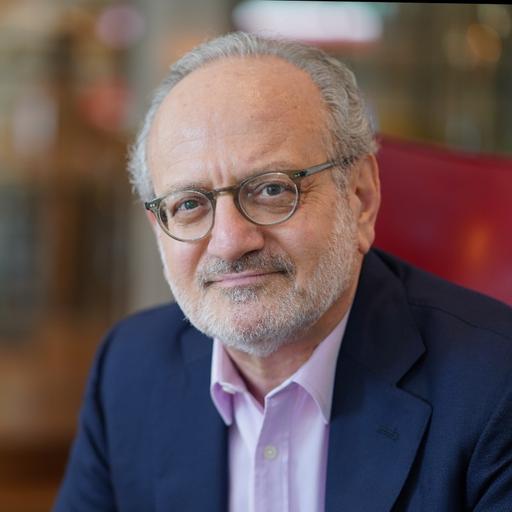
Retirement Mindset Mentor, Creator of The DARE Method® Author and Speaker
12 Award-winning books authored30 days Silent retreat that sparked his reinvention52 Age when a diagnosis led him to semi-retireDARE Method® Reinvention framework created
George Jerjian is a retirement mindset mentor who helps people rebuild meaning and direction after full-time work ends. Early in his work with retirees, he noticed a pattern. Most people prepare hard for the financial side of retirement, then get blindsided by what money cannot organise. There is instability when a job title disappears, and there is opportunity in the space it leaves behind. George calls that turning point the Identity Renaissance, and it sits at the heart of everything he teaches.
George did not arrive at this work from theory. At 52, he received a life-threatening diagnosis that led him to semi-retire. When the diagnosis proved wrong, he expected life to snap back into place. Instead, he spent years drifting, restless and uncertain, and surprised by how disorienting freedom can feel when identity has been tied to a role. A 30-day silent retreat became the reset. It gave him the pause to listen, follow his intuition, and eventually unretire, choosing a more intentional second act.
That lived experience became a framework. George created the DARE Method® to guide people through reinvention in later life, moving from confusion to clarity with practical steps and grounded self-inquiry.
More from George Jerjian
All episodes → Forward From 50 podcastRetirement is a turning point, not an endingAug 2026Play episode →
 Growing Older with GustoHow To Unretire And Build A Fulfilling Second Act with George JerjianAug 2026Play episode →
 Sustainable SuccessRetirement isn't the end—it's the beginning of a new odyssey | Business Influencers - 246Jul 2026Play episode →
 Message in the Middle: Midlife Women, Reinvention & Personal GrowthRetirement, Reinvention, and the Search for Purpose with George JerjianJul 2026Play episode →
 Mid-life Men: the mental health podcastWhy Do Men Lose Themselves In Retirement? with George JerjianJul 2026Play episode →
 The Personal Success Podcast with Ryan WattsRetire, Refire, Rewire: George Jerjian on Purpose After RetirementJun 2026Play episode →
 The Deep Wealth Podcast - Unlock Your Deep Wealth In Business and LifePost-Exit Entrepreneur George Jerjian: The Real Killer in Retirement (It’s Not Money) (#538)Apr 2026Play episode →
 The Aging Well PodcastUnretire with Purpose: Rethinking Retirement for a Longer Life | George Jerjian | Ep. 384Apr 2026Play episode →
 Retire TodayDARE to Re-Think Retirement with George JerjianMar 2026Play episode →