Relationships
Why you say yes when you mean no, and how to stop
Kinesiologist and coach Alfina Lofaro explains how childhood lessons about earning love become adult people-pleasing, and how curiosity and value-based boundaries can break the cycle.
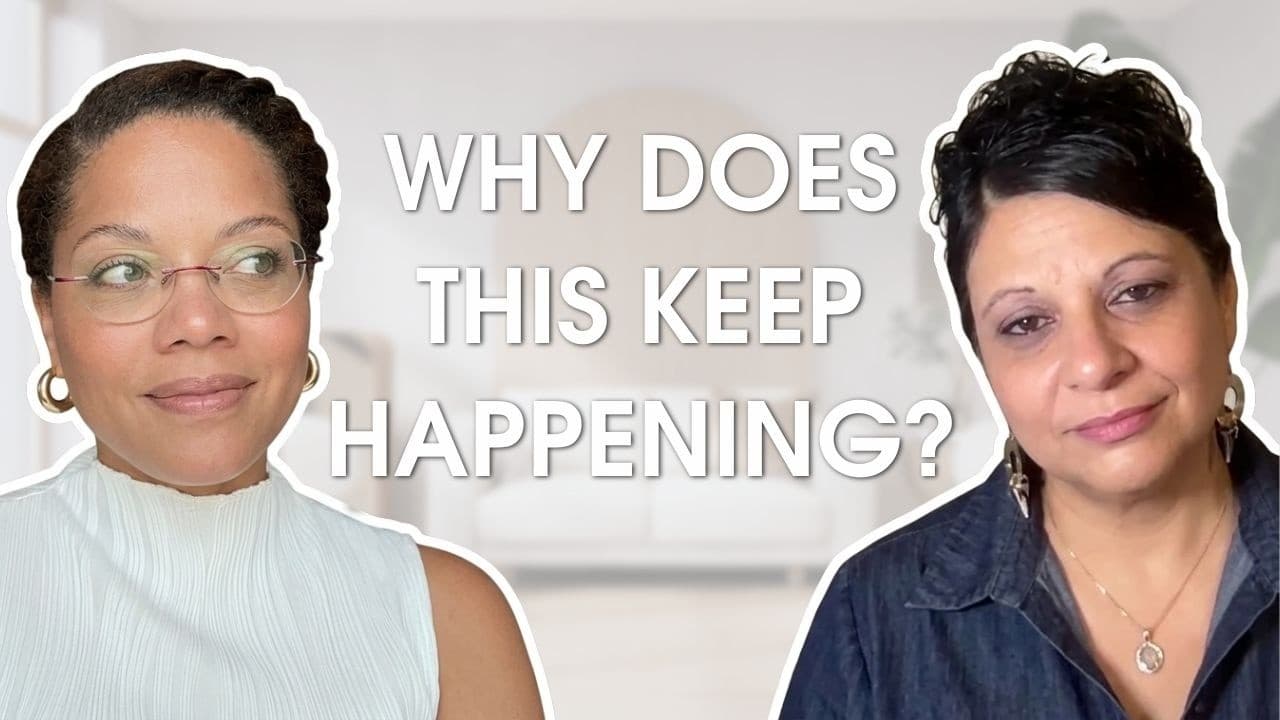
You're Not Choosing the Wrong People… You're Repeating a Pattern
Video from Life Over 40 With Jese Podcast.
Generated from the canonical interview transcript and validated against source data by Guests on Air.
Why do people keep saying yes when they mean no?
People keep saying yes when they mean no because of unconscious beliefs formed in childhood, such as the belief that love has to be earned by helping. Alfina Lofaro says the unconscious mind replays these lessons to keep us safe. Change starts with noticing the pattern, getting curious about it, and setting boundaries that explain your values instead of blaming others.
Alfina Lofaro has spent more than 20 years as a kinesiologist, coach and educator, helping women understand the invisible weight they carry in their relationships. On the Life Over 40 podcast, she explained why so many capable women keep saying yes when they mean no, and why the pattern usually starts long before any partner, friend or boss arrives.
Her answer is not a list of rules but a way of noticing. Lofaro argues that the unconscious mind stores childhood lessons about what makes a person worth loving, then quietly replays them for decades. Until someone looks at those lessons directly, knowing better changes very little, because well informed people still tend to take the same action.
The conversation moved from where people-pleasing comes from, to what silence really costs, to how to set a boundary with someone you love without starting a fight. Running through all of it is a simple idea: relationships improve when people choose their behaviour on purpose instead of repeating what they absorbed as children.
Key takeaways
- People-pleasing often begins in childhood as an unconscious belief that love has to be earned through helping.
- Saying yes when you mean no feels kind, but it breeds resentment that can quietly end a relationship.
- A healthy boundary explains what you value and what it gives you, instead of telling someone they are wrong.
- The smallest first step is curiosity: ask why you said something and whether it is still true for you.
1. Where the need to earn love begins
Lofaro uses her own story to show how early the pattern forms. She was a middle child, and when her mother came home with twins nobody had expected, the four and a half year old was suddenly old enough to look after herself. She believes she then spent almost a lifetime trying to win back her mother's attention and feel as important as she had before.
The result was what she calls the quintessential good girl: do everything right, help out, anticipate what everyone needs. Those habits made her excellent at managing logistics and reading the mood of a room. They also left her with an unconscious belief that she had to earn everybody's love, which showed up in her work, her friendships and her romantic relationship.
Lofaro explains that the unconscious mind is designed to keep us safe, so it holds on to these lessons and runs them automatically, much as it keeps us breathing. That is why the women who come to her are often tired of repeating the same pattern. By the time they arrive, many have met the same man three times over in three different bodies.
2. Why staying quiet does not keep the peace
For many women, Lofaro says, the pressure to stay small is reinforced by culture. In her world, little girls were seen and not heard, and into her early forties she felt that anyone older or more senior held opinions that mattered more than hers. Breaking free from that conditioning is hard, but she argues it becomes a decision once the pattern takes more than it gives.
Looking back, she realised her silence was not helping anyone. She was saying yes when she meant no and doing things out of obligation rather than opportunity. As a kinesiologist, she believes people feel the energy behind what we do, so a reluctant yes is rarely the gift it appears to be. Hiding in the background simply fails to get the result anyone wants.

The cost tends to show up later. Lofaro points to relationships that end with one partner saying they never saw it coming because the couple never argued, while the other had been seething with resentment for years. When she works with couples early enough, that resentment can be reversed. Left too long, she compares it to a bridge that cannot be reconnected.
3. Setting boundaries that teach rather than accuse
Lofaro admits she almost left boundaries out of her book, Love Deliberately: How to Be Less Sh!t At Relationships, because they are so often sold as a cure for everything. Her own problem was never a lack of boundaries but a habit of moving them whenever someone disliked them. Healthy boundaries, she says, start with knowing what is good for you and what is not.
How a boundary is communicated matters as much as the boundary itself. Framing it as proof that the other person is bad and wrong guarantees defensiveness. Instead, she suggests explaining what you value and what it gives you. Her example is a couple arguing about money: a partner who feels safe with ten thousand dollars in the bank is calmer and far less likely to snap.
For anyone who feels too stretched to change anything, Lofaro recommends one small first move: curiosity. When a familiar complaint or label comes out of your mouth, ask why you feel that way and whether it is still true. Noticing that the same blame keeps landing on every partner or every friend is often the first sign of a pattern worth examining.