Relationships
Why Better Relationships Start With the One You Have With Yourself
Kinesiologist and author Alfina Lofaro explains why people who come to her wanting to fix everyone else usually find the real work is inside.
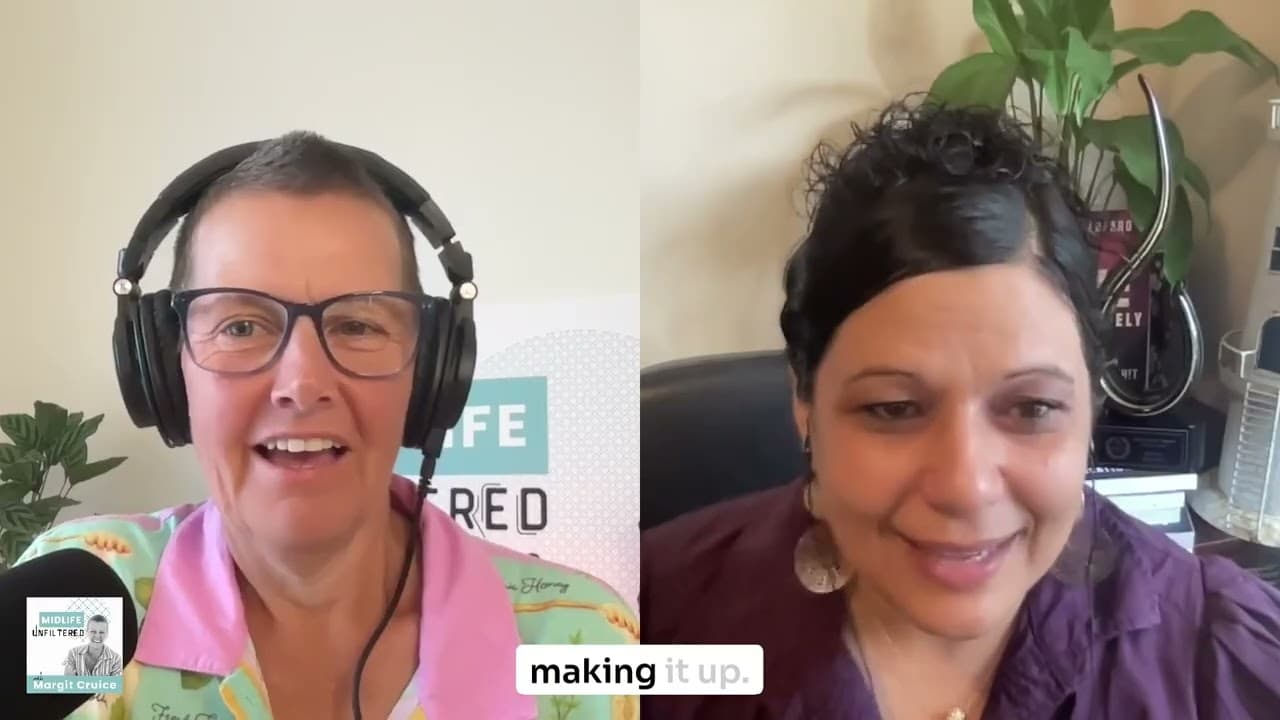
What If the Problem in Your Relationships is You? (And That's Actually Good News) with Alfina Lofaro
Video from Margit Cruice.
Generated from the canonical interview transcript and validated against source data by Guests on Air.
Why does improving your relationship with yourself improve your other relationships?
Alfina Lofaro starts every client with their relationship with themselves, because the patterns people bring to partners, family and friends are the same ones they run on their own. When someone stops trying to make others change and looks at how they trust, communicate and receive, the dynamics around them often begin to shift.
Most people who want better relationships arrive with a list of what everyone else should do differently. Alfina Lofaro, a Queensland-raised kinesiologist, transformational coach and author, has spent more than two decades hearing that list. Speaking on Midlife Unfiltered, she explained why she now starts somewhere else entirely: with the relationship her client has with themselves.
Her reasoning is simple. Nobody is taught how to relate. We learn it from the homes we grew up in, from well-meant advice passed on by friends, or from education that usually arrives in a crisis. If the environment we came from carried unhelpful habits, those unconscious patterns play out later in life and follow us from one relationship into the next.
That is why so many of the women she sees in midlife describe the same quiet dissatisfaction. They have attracted the same kind of partner or friend again and again, they feel unappreciated at home, and they are starting to suspect they may be part of the pattern. Saying that out loud, she says, takes real courage and a safe place to say it.
Key takeaways
- Lofaro begins with a client's relationship with themselves, not with the partner or family they want to change.
- Unconscious patterns learned at home tend to repeat across romantic, family and work relationships until they are named.
- Many of her midlife clients are generous givers and people pleasers who find receiving far harder than giving.
- Her book closes on the one practice she says makes the biggest difference: listen and speak with curiosity.
1. Start with yourself, not everyone else
When someone tells Lofaro they simply want better relationships, she no longer begins with scripts or advice about the other person. She looks at the building blocks inside the client: trust, forgiveness, compassion, how they communicate, and which values and beliefs they carry. People often arrive hoping everyone around them will change to fit those values, so that they can finally be happy.
Her question turns that around. Do you know who you are, and how are you showing up? Instead of asking how to make a partner or a sibling behave differently, she asks what the client allows to affect them and how they perceive what happens. With the right information, she says, relating gets a little easier each day, and then much easier.

The idea came from her own life. When she muscle tested herself before starting a personal development program, expecting her priority to be money, the answer pointed to relationships, and specifically the one with herself. Her goal became to be her own best friend, someone she enjoyed being around. She says the people and conversations in her life have shifted to match.
2. The giver who struggles to receive
Lofaro describes herself as very good at giving and rubbish at receiving. She saw how true that was on her way to collect a book award in the United States, when a woman she knew only from an online course invited her to stay, looked after her and did her hair for a wedding. She had not known she needed that care until it was offered.
The same pattern runs through her client list. Many of the people who come to her are women who have spent years people pleasing and trying to be the good girl, often after traditional or religious upbringings. They cook, clean and drive everyone around, then feel unvalued. For Lofaro, changing that means working on worthiness and deserving, and on what a person believes they are allowed to have.
Small moments are where that work shows up. When her sister kept joking that even Lofaro had found someone to marry, the old habit would have been to stay quiet and keep the peace. Instead she said the words were not kind, and her sister heard it and apologised. Naming what mattered to her, she says, is how people come to know themselves better.
3. Love deliberately, one conversation at a time
Lofaro wrote Love Deliberately: How to Be Less Sh!t At Relationships because she wanted a book that was not only about romance. In her experience the same challenges show up everywhere: if trust is shaky with a partner, it tends to appear with family and friends too. She wanted something the one willing person could use, even when nobody else in the relationship was ready to change.
The book is built as a choose your own adventure, so a reader can work through it once for a partner and again for friends. Her suggested starting point is its final chapter, on listening and speaking with curiosity. Rather than judging behaviour as wrong or reacting defensively, she suggests pausing to wonder what is going on, including when the unkind words were our own.
Curiosity, she argues, gives compassion room to replace judgement, and that is where lasting change begins. Her closing reminder for listeners was that wherever you go, there you are. The practical point is to make sure the person who keeps turning up in every relationship is the one you actually want to be, rather than waiting for everyone else to change first.