Mental Health
Lisa Arrigo on Why Trauma Lives in the Body, Not Just the Mind
The New York trauma therapist draws on her own history of addiction and recovery to explain why healing starts in the nervous system, not in willpower.
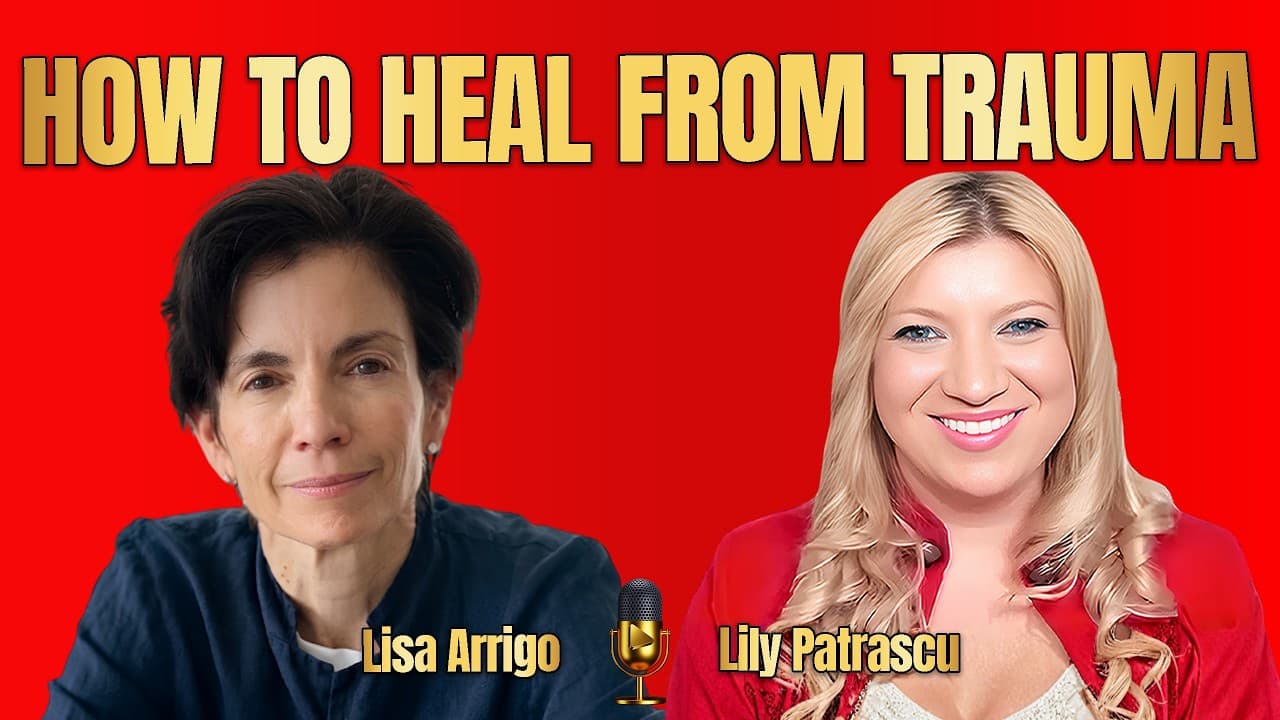
How To Heal From Trauma - Lisa Arrigo and Lily Patrascu
Video from Lily.Global.
Generated from the canonical interview transcript and validated against source data by Guests on Air.
Why does trauma get stored in the body, and how do people heal from it?
Lisa Arrigo says early survival patterns are wired into the nervous system, often before a child has words for them, so insight alone rarely shifts them. She argues healing works from the bottom up: noticing what the body holds, getting curious about reactions that feel out of proportion, and working with the nervous system rather than trying to think the pain away.
Lisa Arrigo has spent more than 30 years as a trauma therapist, and she is candid that her career began as an attempt to heal herself. A New York licensed clinical social worker and psychotherapist, she grew up in a close-knit Italian family where life felt unpredictable, and she learned early that being perfect was the price of feeling safe.
That strategy did not hold. On the Heal Podcast with Lily Patrascu, she describes developing an eating disorder, then a cocaine addiction in college, before deciding to help others. Looking back, she says, the work was really about understanding why it was so hard to feel okay inside and to feel worthy of love, success and care.
Her view of healing is shaped by that lived experience as much as by training. She tells listeners she is still healing and believes nobody is ever fully done. What she offers instead is a clear account of how trauma is stored, why it repeats across relationships and generations, and where real change begins.
Key takeaways
- Survival patterns are wired into the nervous system early, often before a child has the language to explain what is happening.
- Talk therapy alone rarely reaches the places where trauma is held; healing tends to work from the body up.
- Children in unsafe homes often blame themselves, because believing the world is unsafe would be too devastating.
- A reaction that is out of proportion to the moment is an invitation to get curious, not a reason for shame.
1. Trauma is encoded before we have words
Arrigo explains that trauma gets encoded in the nervous system very early, even in the womb, when a mother's stress and overwhelm reach the developing child. The tracks for survival are laid down long before a person can reason about them. Thoughts live in the prefrontal cortex, she says, but what drives behaviour sits deeper in the wiring of the brain.
That is why affirmations often fall short. A person can tell themselves they are worthy and still feel shame and self-loathing, because that lack of self-worth is held in the body in ways that are unconscious. Arrigo describes how constriction or discomfort in the gut, chest or throat can sometimes carry unexpressed anger, fear or loss.
She speaks from experience. At nine she was convinced she had a brain tumour. In reality she was so overwhelmed that she would dissociate and stop feeling real, a state known as derealization. She had no language for what she felt, and it was not safe to talk about her emotional life, so she reached for a physical explanation instead.
2. Healing works from the bottom up
Asked whether there is a shortcut, Arrigo laughs that if she had one she would write a book about it. Her position is that talk therapy does not reach the places where trauma can be released, because trauma does not know time and lives in the body. She has worked with clients with immune disorders who found relief through deeper emotional work.

The path she describes runs from the bottom up rather than the top down. People cannot will themselves to feel better, she says, but when they work with the body and release the blockages behind depression, anxiety and some physical symptoms, new pathways can open in the body and the brain. She promises no cures, only that the body wants to heal.
Arrigo also widens the lens to generational trauma. Research in epigenetics suggests that descendants of Holocaust survivors carry higher rates of depression, anxiety and PTSD even though the original events were not their own. For her, it is a reminder that some people are carrying more than their own story, encoded in a body that remembers.
3. Getting curious about survival strategies
Children in frightening homes adapt in predictable ways, Arrigo says. Many become compliant, trying to be good, thin, pretty or smart so they will be safe. A child's natural impulse is to blame themselves, because believing the world is unsafe would be devastating. In adolescence, fight or flight takes over, and some turn to drugs, alcohol or harmful relationships.
She calls the result traumatic reenactment: people are drawn to partners who are not good for them because they are unconsciously looking for a redo. The way out starts with naming the strategy. Do I submit, attach, over-function, fight or flee? Recognising these responses, she says, helps people notice when they are triggered and survival mode is running the show.
Her practical advice is to treat outsized reactions as information. If a driver cuts you off and you find yourself screaming, the reaction may be historical, and the task is to bring the nervous system back into a window where you can think and feel at the same time. Arrigo is now finishing Fall Risk, a teachable memoir on attachment wounds, addiction and recovery.