
Scott Ayscough media
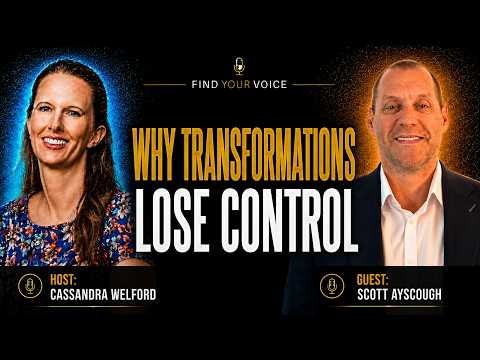



About Scott Ayscough
Author and Managing Director - IT Transformation and Recovery Specialist
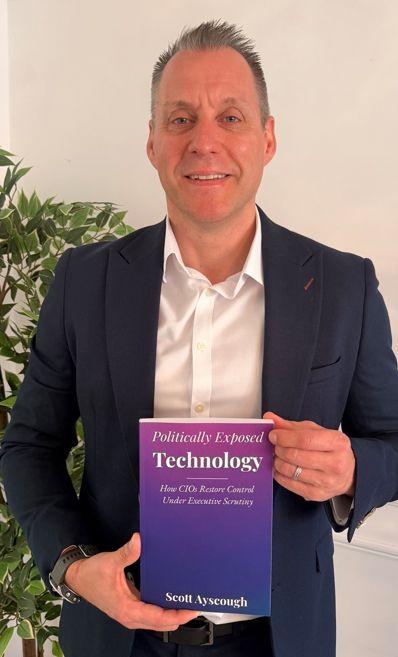
Scott Ayscough is the Founder and Managing Director of Valuecom, author of Politically Exposed Technology (PET™) and creator of the PET™ Transformation Framework for executive transformation control.
A former Royal Signals soldier who served in Germany and worked within NATO headquarters in a network management centre, Scott has spent more than two decades leading technology operations and transformations across government, healthcare, utilities, aviation, transport and enterprise organisations.
Following his military service, Scott built his career through senior technology, operations and transformation positions with Vodafone, National Grid and NTT, before moving into consultancy and executive leadership with Government, easyJet, GE Healthcare and National Highways. Repeated exposure to transformation recovery assignments led him to identify common patterns behind programme failure and ultimately shaped the thinking behind the PET™ Transformation Framework.
Today, Scott leads Valuecom, a UK technology consultancy specialising in IT strategy and architecture, transformation programmes, operations and service management, and cyber security and compliance. Valuecom is listed on the UK Government Digital Marketplace (G Cloud) and is certified to ISO 9001, ISO 27001 and Cyber Essentials.
Over the course of his career, Scott has led and directed major technology operations and transformation initiatives across both public and private sector organisations, including a £34 million service transformation programme delivered over a three year period.
Scott's central belief is that organisations rarely fail because of technology itself. Instead, failure occurs when governance becomes fragmented, accountability becomes unclear, supplier relationships become disconnected from business outcomes and architectural decisions drift away from strategic objectives. The PET™ Transformation Framework was developed from real world transformation and recovery experience and is designed to help boards and executive teams regain visibility, strengthen control and improve delivery confidence.
Built around four interconnected domains, Political Alignment, Governance Authority, Commercial Structure and Architecture Integrity, the PET™ Transformation Framework provides leaders with a practical approach to understanding where transformation programmes lose control and how to restore it.
As an author, speaker and podcast guest, Scott brings a practitioner's perspective to discussions on technology leadership, operational excellence, transformation governance, programme recovery, supplier management and executive accountability.
Episode angles ready to record
Adoption KPIs After Go-Live: user cohorts, feature utilisation and time to value
Go-live is not the same as adoption. Scott defines measurable adoption KPIs - active user cohorts, feature utilisation, operational handback rates and time-to-value metrics - that show whether change…
Military Discipline in Transformation Governance: handovers, escalation and change control
Scott draws a direct line from military operational discipline to effective transformation governance. He explains how clear roles, rehearsed processes and defined escalation found in military…
Systems Not Scapegoats: why capable people fail inside broken delivery environments
When a major programme starts to struggle, the instinct inside many organisations is to look for the person, team or supplier to blame. Scott reframes that response by showing how capable people…
Decision-Ready Board Briefings: reporting programme health so directors can act
Boards need concise, decision-ready intelligence rather than detailed project reports. Scott shows how to translate programme health into executive choices, focusing briefings on risks that require…