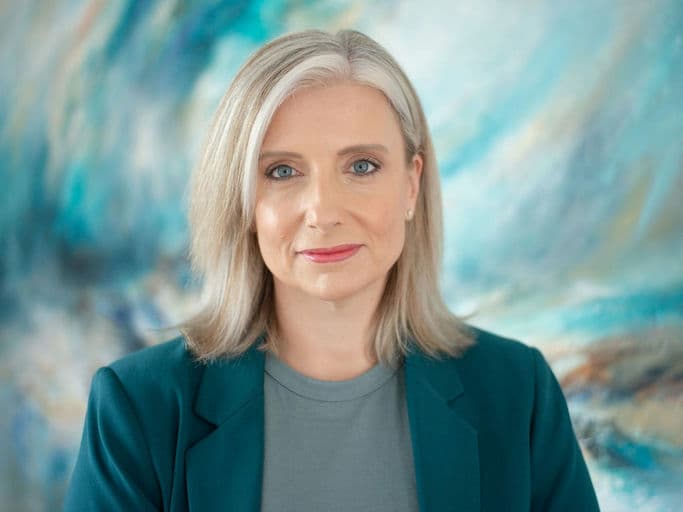
Nicola Anderson
Founder Freedom Consultant: Helping Business Owners Gain Invaluable Time, Freedom, and Control
Nicola Anderson Key Topics
A bigger business will not give founders freedom if they are still the operating system
Many founders chase more revenue, more clients, or another hire because they think growth will eventually create freedom, but often it just creates a bigger business that depends on them even more. Nicola helps founders look at the operating reality underneath the ambition: who owns what, where decisions keep bouncing back to the founder, and which parts of the business are being held together by personality rather than structure. Having managed fast-moving commercial, operational, and project delivery teams of up to 130 people, she brings a practical lens to what actually has to change before a founder can step back without everything wobbling. For founder, SME, scale-up, and business growth podcasts, this opens a grounded conversation about why freedom has to be designed into the business, not hoped for after the next stage of growth.
The business you built from scratch still has to learn how to run without you
For many older founders, stepping back is not just an operational challenge; it is an emotional one, because the business has carried their identity, sacrifice, relationships, and family security for decades. Nicola understands that letting go can feel like handing over something deeply personal, which is why succession, delegation, and next-generation leadership cannot be treated as a dry restructuring exercise. She works with founders who want more time with family, more travel, fewer working days, or a future where their children or senior team can lead with confidence, and she helps build the layers underneath that make that transition feel safe. For family business, succession, leadership, and later-stage founder podcasts, this creates a human conversation about how founders can protect what they built without staying trapped inside it.
Your team will not step up while you keep rescuing them
A lot of founders say they want their team to take more ownership, but every time something goes wrong, they jump back in, fix it, and accidentally train the business to keep relying on them. Nicola speaks directly to this pattern because she has seen how easily good intentions become founder dependency: helping too much, answering too quickly, and accepting work back because it feels faster in the moment. Her approach is about creating clear ownership, boundaries, expectations, and support so people can grow into responsibility rather than wait for the founder to save the day. For leadership, management, and SME podcasts, this is a highly relatable conversation about the difference between being helpful and becoming the bottleneck.
Founders do not find more time until the business stops borrowing it from them
Many founders do not realise how much of their life has been absorbed by the business until they try to take a holiday, reduce their hours, or stop being the person every decision comes back to. Nicola helps them trace where that time is really going: unclear ownership, weak middle management, messy systems, over-rescuing, or roles that have grown around the founder instead of the future business. Her work is not about abstract freedom; it is about giving a founder the confidence to step away for two weeks, move towards a three-day week, spend more time with family, travel, or focus on the parts of the business only they should be doing. For founder, SME, leadership, and business growth podcasts, this creates a highly relatable conversation about how time is not found by working harder, but rebuilt through better structure, stronger teams, and clearer systems.
How Redesigning Roles Unlocks Founder Freedom
Many founders feel stuck managing too many details because their businesses lack clarity around who owns what. When roles blur and responsibilities overlap, it creates confusion, delays decisions, and pulls founders into daily operations like a magnet. This tension drains energy and time from strategic growth initiatives. Nicola Anderson brings a practical, operational lens shaped by extensive leadership in multi-million-pound portfolios to the challenge of role clarity. She specializes in redesigning leadership structures and team roles to explicitly assign decision ownership and accountability, removing ambiguity that traps founders in micromanagement. Listeners will discover straightforward frameworks for assessing role clarity and redesigning teams that frees founders from constant intervention. Nicola’s approach empowers leaders to rebuild their organisation so that responsibility sits clearly, enabling founders to focus on vision and growth instead of day-to-day problem solving.
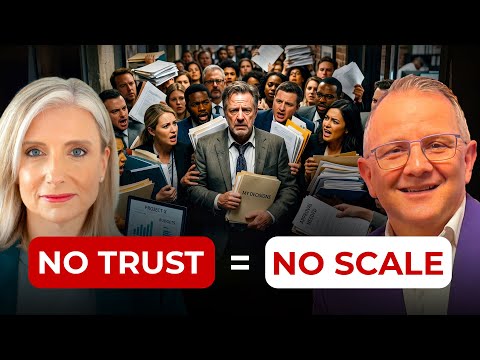
Latest episodes
Key topics
A bigger business will not give founders freedom if they are still the operating system
Many founders chase more revenue, more clients, or another hire because they think growth will eventually create freedom, but often it just creates a bigger business that depends on them even more. Nicola helps founders look at the operating reality underneath the ambition: who owns what, where decisions keep bouncing back to the founder, and which parts of the business are being held together by personality rather than structure. Having managed fast-moving commercial, operational, and project delivery teams of up to 130 people, she brings a practical lens to what actually has to change before a founder can step back without everything wobbling. For founder, SME, scale-up, and business growth podcasts, this opens a grounded conversation about why freedom has to be designed into the business, not hoped for after the next stage of growth.
How Redesigning Roles Unlocks Founder Freedom
Many founders feel stuck managing too many details because their businesses lack clarity around who owns what. When roles blur and responsibilities overlap, it creates confusion, delays decisions, and pulls founders into daily operations like a magnet. This tension drains energy and time from strategic growth initiatives. Nicola Anderson brings a practical, operational lens shaped by extensive leadership in multi-million-pound portfolios to the challenge of role clarity. She specializes in redesigning leadership structures and team roles to explicitly assign decision ownership and accountability, removing ambiguity that traps founders in micromanagement. Listeners will discover straightforward frameworks for assessing role clarity and redesigning teams that frees founders from constant intervention. Nicola’s approach empowers leaders to rebuild their organisation so that responsibility sits clearly, enabling founders to focus on vision and growth instead of day-to-day problem solving.
The business you built from scratch still has to learn how to run without you
For many older founders, stepping back is not just an operational challenge; it is an emotional one, because the business has carried their identity, sacrifice, relationships, and family security for decades. Nicola understands that letting go can feel like handing over something deeply personal, which is why succession, delegation, and next-generation leadership cannot be treated as a dry restructuring exercise. She works with founders who want more time with family, more travel, fewer working days, or a future where their children or senior team can lead with confidence, and she helps build the layers underneath that make that transition feel safe. For family business, succession, leadership, and later-stage founder podcasts, this creates a human conversation about how founders can protect what they built without staying trapped inside it.
View all topics →
Latest episodes
Key topics
A bigger business will not give founders freedom if they are still the operating system
Many founders chase more revenue, more clients, or another hire because they think growth will eventually create freedom, but often it just creates a bigger business that depends on them even more. Nicola helps founders look at the operating reality underneath the ambition: who owns what, where decisions keep bouncing back to the founder, and which parts of the business are being held together by personality rather than structure. Having managed fast-moving commercial, operational, and project delivery teams of up to 130 people, she brings a practical lens to what actually has to change before a founder can step back without everything wobbling. For founder, SME, scale-up, and business growth podcasts, this opens a grounded conversation about why freedom has to be designed into the business, not hoped for after the next stage of growth.
How Redesigning Roles Unlocks Founder Freedom
Many founders feel stuck managing too many details because their businesses lack clarity around who owns what. When roles blur and responsibilities overlap, it creates confusion, delays decisions, and pulls founders into daily operations like a magnet. This tension drains energy and time from strategic growth initiatives. Nicola Anderson brings a practical, operational lens shaped by extensive leadership in multi-million-pound portfolios to the challenge of role clarity. She specializes in redesigning leadership structures and team roles to explicitly assign decision ownership and accountability, removing ambiguity that traps founders in micromanagement. Listeners will discover straightforward frameworks for assessing role clarity and redesigning teams that frees founders from constant intervention. Nicola’s approach empowers leaders to rebuild their organisation so that responsibility sits clearly, enabling founders to focus on vision and growth instead of day-to-day problem solving.
The business you built from scratch still has to learn how to run without you
For many older founders, stepping back is not just an operational challenge; it is an emotional one, because the business has carried their identity, sacrifice, relationships, and family security for decades. Nicola understands that letting go can feel like handing over something deeply personal, which is why succession, delegation, and next-generation leadership cannot be treated as a dry restructuring exercise. She works with founders who want more time with family, more travel, fewer working days, or a future where their children or senior team can lead with confidence, and she helps build the layers underneath that make that transition feel safe. For family business, succession, leadership, and later-stage founder podcasts, this creates a human conversation about how founders can protect what they built without staying trapped inside it.
View all topics →