
Sample Podcast Questions for Georgina Woodley
- 1
Can you describe the moment that made you link stress and energy to customer experience and pivot your research focus?
- 2
What is the Joy-O-Meter and how does it differ from traditional employee engagement surveys?
- 3
How do you operationalise "joy" as a measurable metric inside organisations and on the customer-facing side?
- 4
What evidence have you seen that improving internal energy actually moves customer experience metrics or productivity?
- 5
How do your market research methods integrate with what you call technologies of consciousness in practical projects?
- 6
What common organisational patterns or structures typically suppress joy and create presenteeism you can identify quickly?
- 7
For a senior leader who wants to pilot the Joy-O-Meter, what are the first three steps you recommend?
- 8
How do you address scepticism from HR or CX leaders who see "joy" as a fluffy concept?
- 9
What outcomes or KPIs would you use to build a persuasive case study from a first pilot?
- 10
Where do you see this field going next and how should brands prepare to measure human energy at scale?
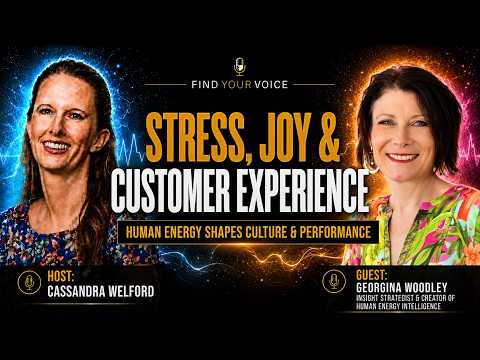
Key topics
The Hidden Cost of Reduced Human Capacity
When organisations talk about performance, they often focus on strategy, capability and execution. But what happens when the people responsible for delivering that strategy are operating with reduced capacity? Stress, cognitive load and emotional pressure quietly influence decision-making, creativity, collaboration and innovation long before they appear in business metrics. Georgina Woodley explores why organisations often mistake reduced human capacity for poor judgement, disengagement or underperformance, and why understanding human state is becoming a strategic leadership capability. Listeners leave with practical ways to recognise the hidden cost of reduced capacity and understand why performance is driven by more than strategy alone.
What If Organisations Are Measuring the Wrong Things?
Businesses have never had more data. They measure financial performance, customer satisfaction, employee engagement and operational efficiency with increasing sophistication. But what if the most important drivers of organisational performance remain largely invisible? Drawing on more than 20 years in customer insight and organisational consulting, Georgina Woodley explores why traditional business metrics may be telling only part of the story. She introduces Human Energy Intelligence as a new framework for understanding how human state influences leadership, decision-making, customer experience and organisational performance. Audiences leave with a fresh perspective on why understanding people-not just performance-may be the next frontier of business.
Why Customer Surveys Can Be Sending Organisations Distorted Signals
Most organisations assume customer feedback reflects the experience customers had today. But what if much of that feedback is actually shaped by emotional memories accumulated over months-or even years-of interactions with the brand? Drawing on more than 20 years in customer psychology and market research, Georgina Woodley explores how accumulated emotional memory can distort customer feedback, creating misleading signals that influence strategic priorities and capital allocation. While organisations invest to solve today's operational issues, customers may be responding to unresolved experiences from the past. Listeners discover how recognising these hidden signals leads to better decisions, smarter investment and stronger customer relationships.
View all topics →
Key topics
The Hidden Cost of Reduced Human Capacity
When organisations talk about performance, they often focus on strategy, capability and execution. But what happens when the people responsible for delivering that strategy are operating with reduced capacity? Stress, cognitive load and emotional pressure quietly influence decision-making, creativity, collaboration and innovation long before they appear in business metrics. Georgina Woodley explores why organisations often mistake reduced human capacity for poor judgement, disengagement or underperformance, and why understanding human state is becoming a strategic leadership capability. Listeners leave with practical ways to recognise the hidden cost of reduced capacity and understand why performance is driven by more than strategy alone.
What If Organisations Are Measuring the Wrong Things?
Businesses have never had more data. They measure financial performance, customer satisfaction, employee engagement and operational efficiency with increasing sophistication. But what if the most important drivers of organisational performance remain largely invisible? Drawing on more than 20 years in customer insight and organisational consulting, Georgina Woodley explores why traditional business metrics may be telling only part of the story. She introduces Human Energy Intelligence as a new framework for understanding how human state influences leadership, decision-making, customer experience and organisational performance. Audiences leave with a fresh perspective on why understanding people-not just performance-may be the next frontier of business.
Why Customer Surveys Can Be Sending Organisations Distorted Signals
Most organisations assume customer feedback reflects the experience customers had today. But what if much of that feedback is actually shaped by emotional memories accumulated over months-or even years-of interactions with the brand? Drawing on more than 20 years in customer psychology and market research, Georgina Woodley explores how accumulated emotional memory can distort customer feedback, creating misleading signals that influence strategic priorities and capital allocation. While organisations invest to solve today's operational issues, customers may be responding to unresolved experiences from the past. Listeners discover how recognising these hidden signals leads to better decisions, smarter investment and stronger customer relationships.
View all topics →